
Affiliate disclosure: As an Amazon Associate I earn from qualifying purchases. Learn more
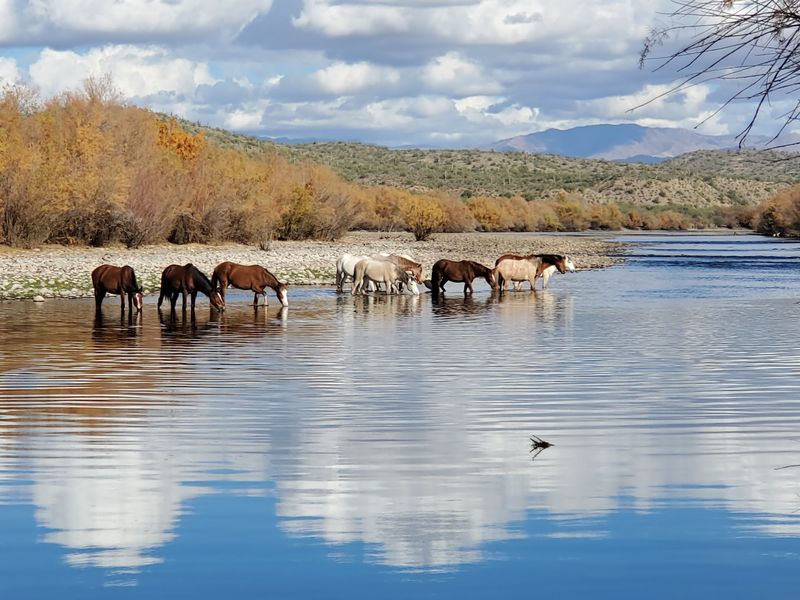
Out past the last stoplights on the edge of the Phoenix area, a band of wild horses wades into the river and pushes their faces right under the water to pull up the plants growing on the bottom. Families sit on the bank with snacks and folding chairs, and the cost of admission is a small day pass that fits in a glovebox.
It might be one of the best wildlife shows in Arizona, and plenty of longtime locals have never seen it. Keep reading to learn where it happens, when the horses tend to show up, and what to pack so the trip goes smoothly.
A Riverside Hideaway at the End of the Road
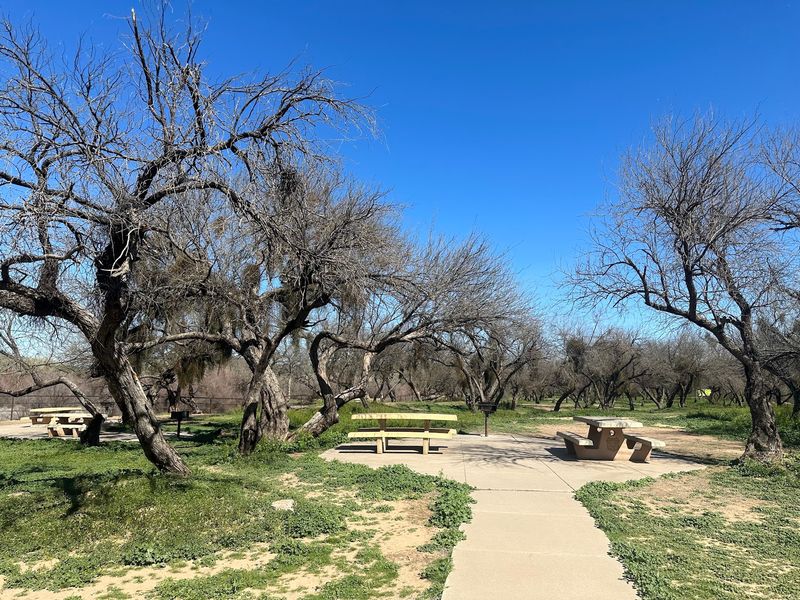
Some of the best places in Arizona sit right where the pavement runs out. Coon Bluff Recreation Area is one of them, found at Coon Bluff Rd, Mesa, AZ 85215, in the Tonto National Forest.
The area sits on the Lower Salt River northeast of Mesa. Coon Bluff Road ends here, so there is no through traffic rolling past while you sit by the water.
It is a national forest recreation site rather than a city park. That means fewer frills, more open land and a lot more wildlife.
The basic layout is simple. There is a parking area, a pavilion, picnic tables, restrooms and a stretch of riverbank with sandy beach spots.
Mature mesquite trees spread across the grounds and give the whole place a relaxed, shaded feel. Birdwatchers, anglers, hikers and river tubers all share the same patch of shoreline.
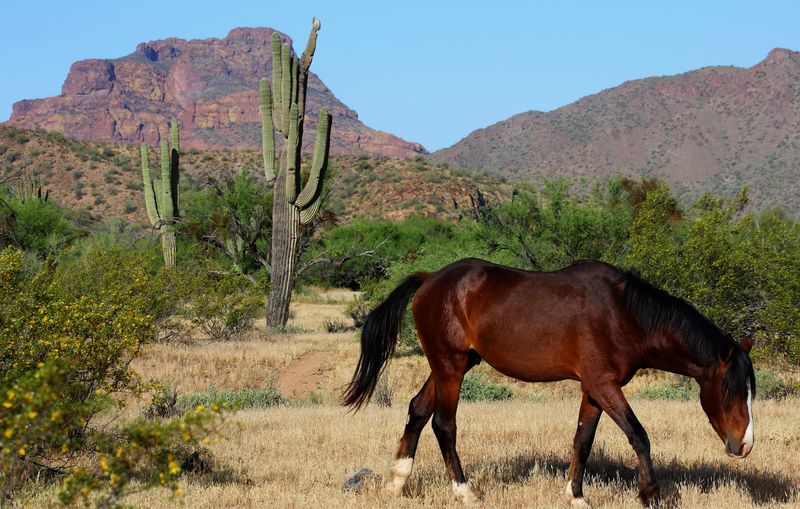
Its fame, though, comes from the four-legged locals. The Salt River wild horses roam this part of the river, and Coon Bluff has become one of the go-to places to look for them.
The site holds a 4.6-star average from more than a thousand people on Google Maps, which is a strong score for a spot with outhouses and a dirt road. Clearly, the horses are doing some heavy lifting in the publicity department.
Horses That Graze Below the Waterline
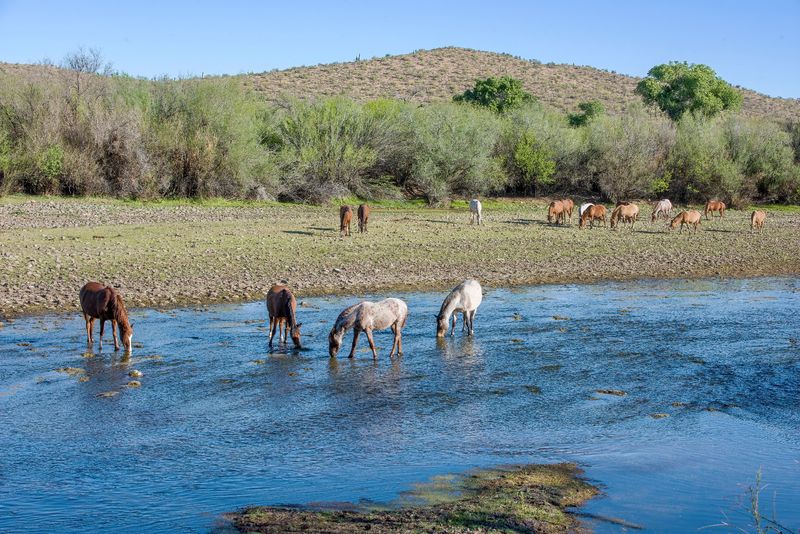
Most horses eat grass from a field. The Salt River herd prefers its salad served wet.
Along this stretch of river, the wild horses wade in and put their heads right under the surface to graze on the plants growing in the water. Seeing a full-grown horse disappear up to its ears is the moment that keeps people coming back.
The horses are a regular part of life at Coon Bluff. Wild horses are the single most talked-about feature of the area, and many people describe catching them relaxing in the river or moving down to drink.
Groups often travel together. One family spotted a band of five heading to the water, and the group included a colt only four days old.
The adults kept close to the youngster and moved as a unit. Watching that kind of teamwork from the bank turns a casual day trip into something people talk about for weeks.
Other animals sometimes join the cast. Cattle wander through the area, and a longhorn steer has made appearances too.
None of this is a scheduled show, of course. The herd keeps its own calendar, which is part of what makes a sighting feel like winning a small lottery.
Sunset, the Unofficial Showtime
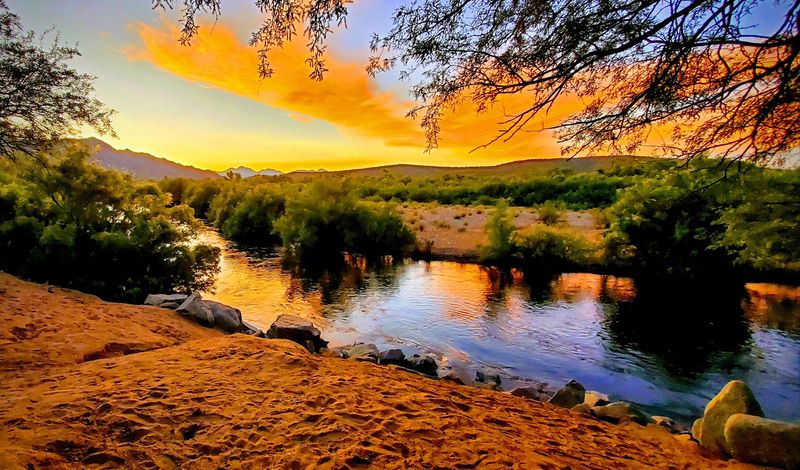
Timing matters here more than almost anything else. The late afternoon and sunset hours are when many people have the best luck seeing the herd.
Some regulars say the horses come out around sunset reliably, and that they can be watched from a comfortable distance. That makes the golden hour the prime window for families hoping for a sighting.
Still, nature does not sign contracts. Plenty of people have shown up at dusk, waited patiently and gone home with nothing but a nice view of the river.
The good news is that the sunset itself is worth the drive. The river corridor and surrounding mountains make for an excellent evening backdrop, and sunset is a popular topic among people who love this place.
Photographers have noticed that too. On some evenings, the area gets busy with groups taking portraits, including prom photos, so it may feel more crowded than expected.
A smart plan is to arrive with daylight to spare. That gives time to find parking, walk the riverbank and settle into a good viewing spot before the light drops.
Bring patience along with the snacks. The horses tend to reward those who are willing to wait quietly.
Rules of the Road for Horse Watching
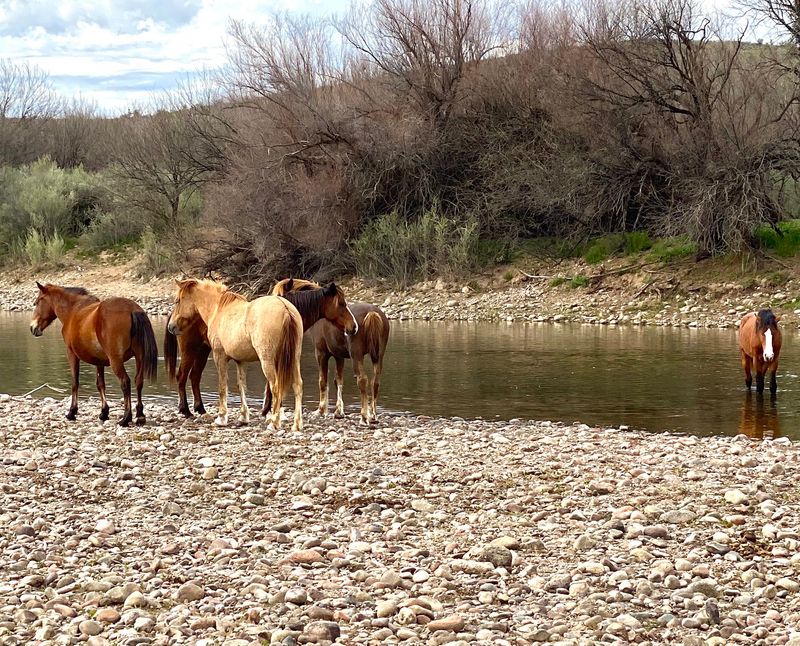
Wild means wild. These horses are not part of a petting zoo, and the best sightings happen when people keep their distance.
The most important tip is simple: give the horses plenty of space. Never stand between them and the water, and never block the path they use to reach the river.
That matters even more when foals are in the group. Adult horses are protective of their young, and crowding them can stress the whole band.
Finding them sometimes takes effort. A good approach is to park near the end of the area and walk upstream along the bank.
Horse manure along the trail is a strong clue that the herd has been nearby recently. One group followed those signs and soon heard the horses moving toward the river.
Quiet voices help, and so does staying still once the horses appear. Phones and cameras with zoom features are the best way to get close-up photos without getting physically close.
Kids usually love the hunt as much as the sighting. Turning the walk into a quiet game of spotting hoofprints and trails can keep younger ones focused and calm.
An Easy Trail Along the Salt River
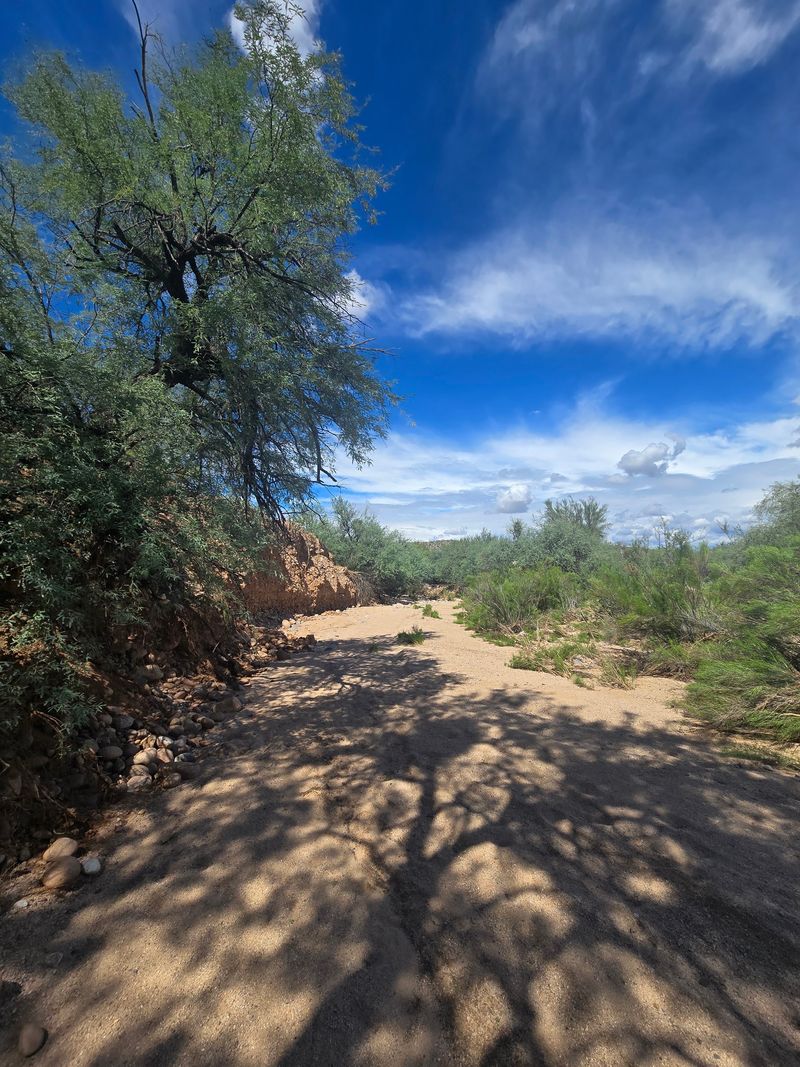
Good news for non-hikers: the main walk here is mostly flat. The trail follows the Salt River and is easy enough for people who would never call themselves outdoorsy.
It is one of the most popular activities at Coon Bluff, right behind horse watching. Many people combine the two by walking the riverbank while scanning the water for the herd.
There is a catch. The loop trail has no clear entry or exit, and signs are scarce, so it is easy to wander off the intended path.
Some hikers enjoy that freedom and simply go with the flow. Others have ventured deep into the surrounding desert and found themselves a little lost for a while.
A downloaded map or GPS app is a wise backup. Telling someone your plan is also smart if you head far from the parking area.
The path can be messy in spots. Watch your step for natural debris and the many signs that horses use the same route.
Hikes here can stretch to an hour and a half or more. Ending with a rest on the shaded sand by the river is a popular way to finish the loop.
The Bluff Above the Water
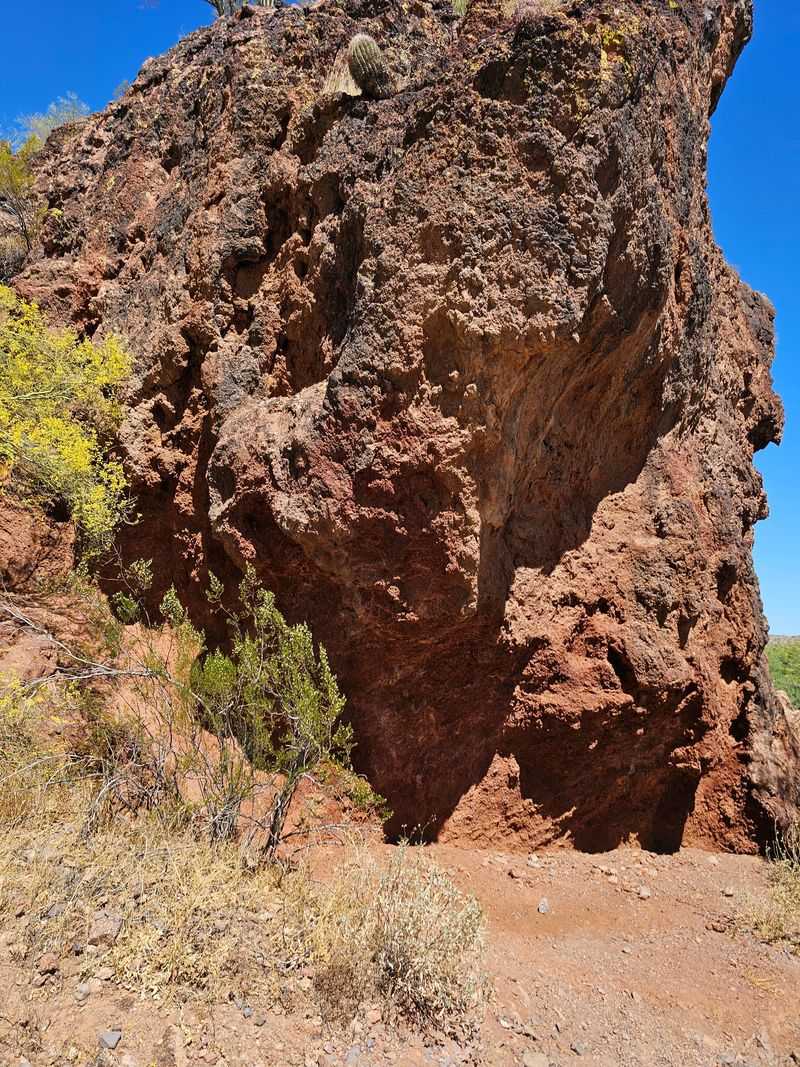
Every recreation area needs a namesake, and this one has a rocky bluff rising above the river. It gives the place both its name and some of its best extras.
Hikers can explore around and on top of the bluff for wider views of the river corridor. It is a nice change from the flat riverside path below.
Paddlers have their own reason to love it. Four ropes hang down from the bluff, and kayakers can tie off to them for a break from the current.
A few adventurous folks have also mentioned rappelling here. It is a niche activity at Coon Bluff and is best left to people with proper gear and experience.
For the rest of us, the bluff works well as a landmark. It helps with orientation on a trail system that does not come with many signs.
Motorcycle riders also enjoy the route out to the area, making the bluff a favorite turnaround point for a ride and a short hike. The road leading out here is part of the fun for people who like scenic drives.
Not bad for a pile of rock at the end of a dead-end road.
Kayaks, Paddleboards and Tubes Drifting By
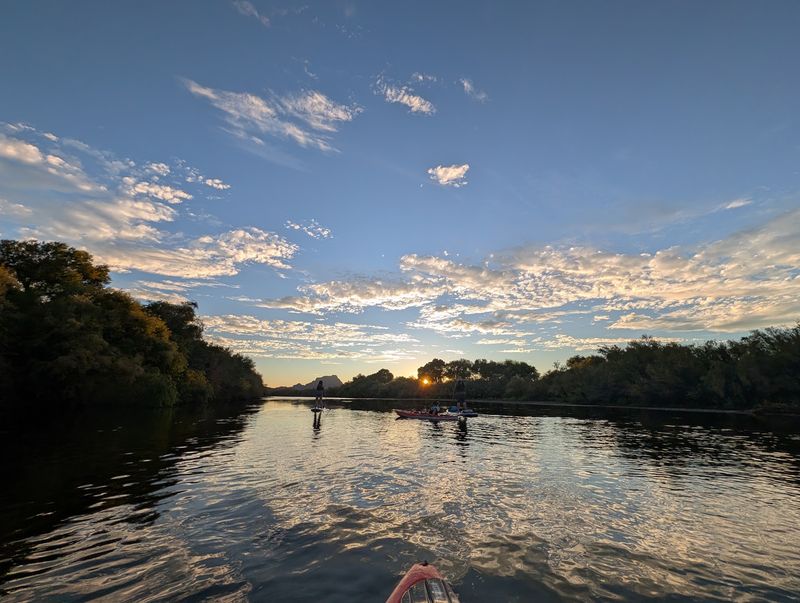
The river here is not just scenery. It is a working waterway for paddlers, tubers and floaters who drift through all day.
Kayaks and paddleboards are a common part of the view. On a quiet weekday, a few boats might roll by while you sit at a picnic table.
River access is one of the area’s draws, and people use it to launch, float or paddle downstream. Tubers are part of the mix as well.
The boaters tend to stick to the faster channel where the current runs strongest. That keeps them out of the way of families relaxing along the beach areas.
Getting down to the water is not always simple. Some sections of the bank have small hills that make carrying gear to the river a bit of a workout.
Paddlers should plan their trip with care. Check river conditions, wear proper safety gear and know where you plan to get out before you get in.
Even for people who never touch a paddle, the parade of boats adds energy to the riverbank. It also makes for good people-watching while waiting on the horses.
Swimming Holes and a Rope Swing
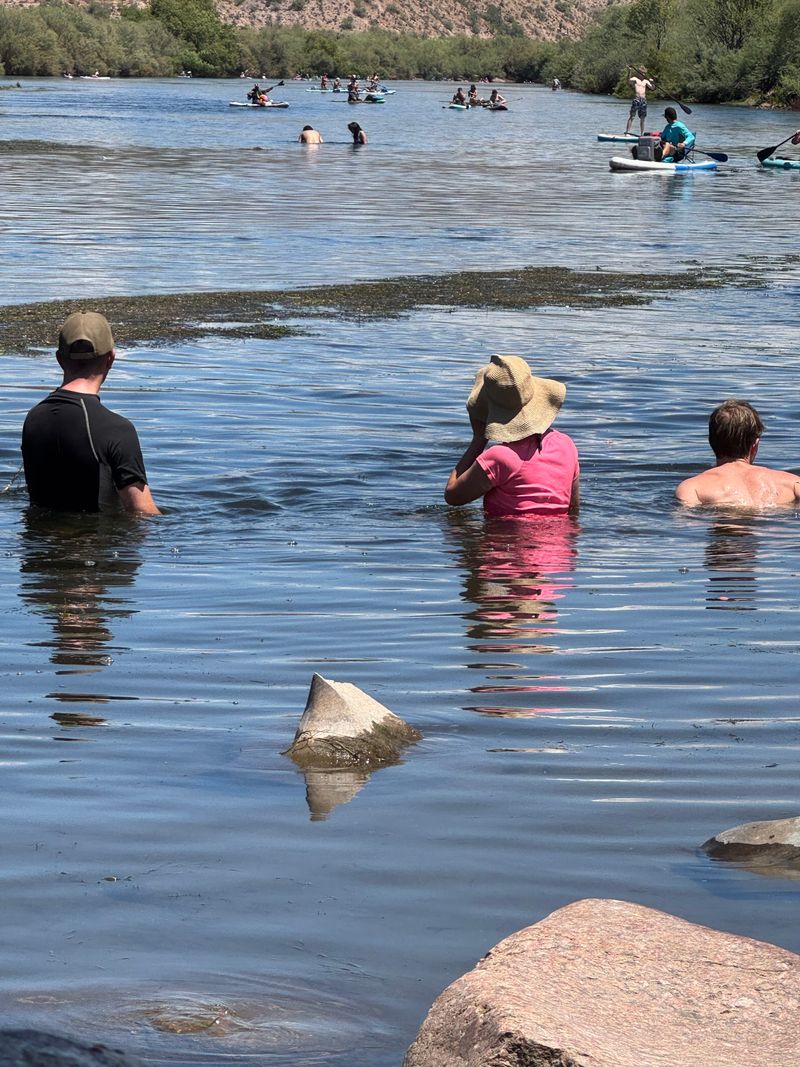
Arizona summers make any patch of river feel like treasure. Coon Bluff is a local favorite for cooling off when the valley heats up.
There are beach areas along the shore, and people find swimming holes up and down this stretch. A rope swing adds a bit of extra fun for confident swimmers.
The water stays refreshingly cool even on a hot August day. That makes it a solid summer escape without driving all the way up to the high country.
Families need to stay alert, though. The current moves quicker than it looks, so little kids should be watched closely at all times.
Life jackets are a smart idea for young children and weak swimmers. Picking a calmer spot away from the main channel helps too.
Water levels can change. On some trips the river looks low, yet people still find spots to splash and relax.
Shade from the mesquite trees makes long afternoons easier. A blanket under a tree and a cooler full of water bottles is the classic Coon Bluff setup.
Winter Fishing and a Riverbank Bird List
When the swimmers head home for the season, the anglers take over. Fishing is a big part of the Coon Bluff story, and winter is often called a great time to cast a line.
It is one of the most discussed activities here after the horses, the river and hiking. Many consider this one of the best stretches around for fishing.
Remember to carry a valid Arizona fishing license. Rules can change, so check current regulations before heading out.
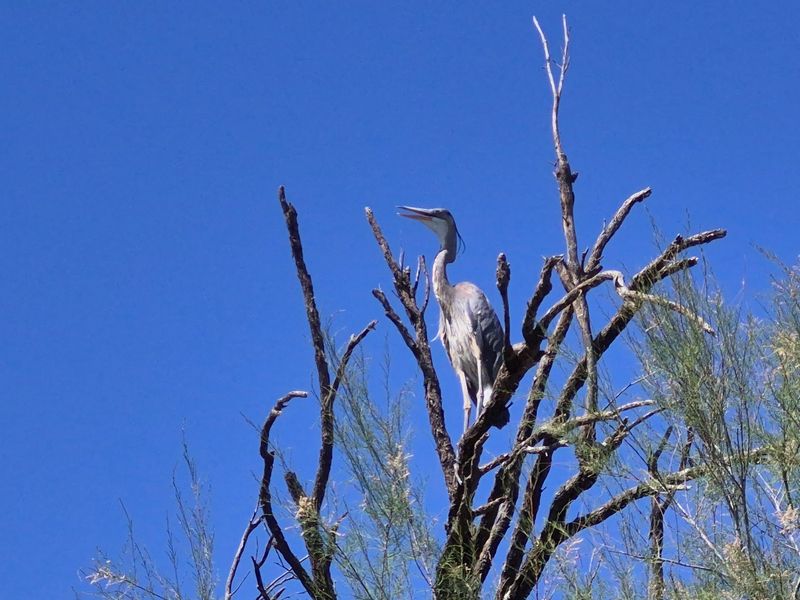
Birdwatchers have plenty to do as well. Grey herons and snowy egrets work the shallows, while turkey vultures circle overhead.
Other wildlife pops up too. Javelinas have been spotted on the trails, so keep food secured and give them room.
Snakes also live in the area. Watching where you step and where you put your hands is a good habit on any desert trail.
Bug spray is worth packing. Flies can be a nuisance, especially in warmer months and near areas where the horses spend time.
A day here can easily fill a nature checklist, with or without a single fish on the line.
Starry Nights and Superstition Views
Daylight gets most of the attention, but the sky after dark deserves its own fan club. The area is far enough from the city lights to make star photography a real draw.
People who stay into the evening have called it a fantastic place to photograph the stars. Bring a tripod if you want sharp shots.
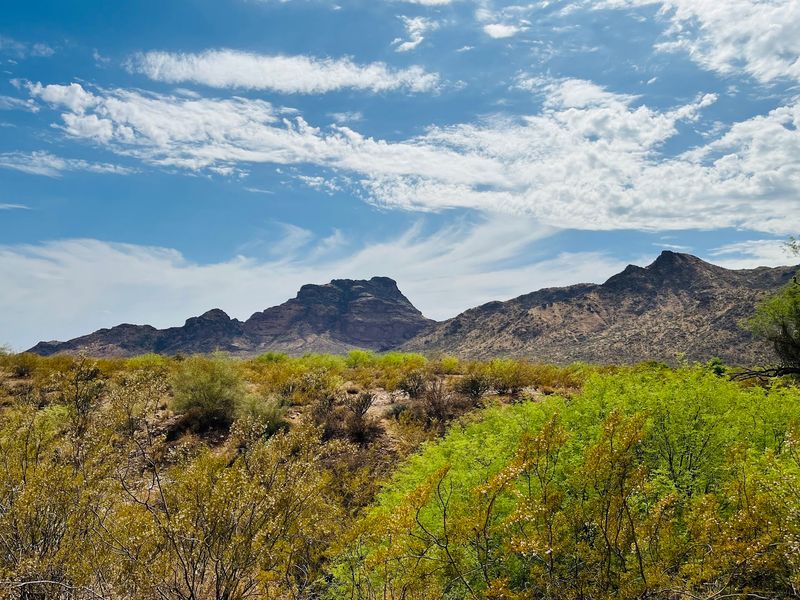
Before dark, the views are wide and easy to enjoy. Mountains surround the river, and Superstition Mountain shows up in the distance far downstream.
That distant peak gives the scenery a true Arizona signature. It is a reminder of how much open land lies just outside the metro area.
Many people describe Coon Bluff as a quick way to get out of the city and back in touch with nature. The short drive makes it practical for an after-work or weekend outing.
Check posted rules on site hours before planning a late visit. Forest Service sites can have specific day-use limits.
Pack a flashlight or headlamp for the walk back to the car. The ground is uneven, and nobody wants a twisted ankle at the end of a great night.
Passes, Pavilions and Practical Prep
Here is the part that saves headaches. A Tonto Pass is required for parking at Coon Bluff, so do not forget it.
The pass is easy to grab on the way. Circle K stores sell them, including one on Power Road as you head out of town, and they can also be found through other retailers online.
The daily pass is what keeps a family outing in the roughly $6 range. Prices can change, so confirm the current cost before you go.
An America the Beautiful pass is also accepted. That is great news for people who already carry one for national parks.
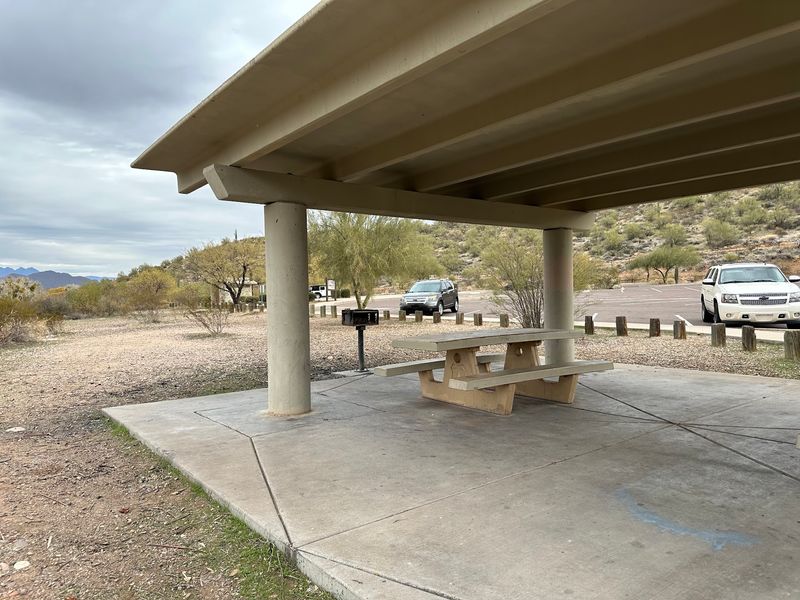
Facilities are basic but useful. Expect a pavilion, picnic tables, beach areas and outhouse-style restrooms.
Bring plenty of water, snacks and sturdy shoes. The trails are rough in spots and can be dusty or uneven.
Weekdays are the quiet choice. Crowds are light, and the whole area feels peaceful compared with busy weekends.
Above all, pack in and pack out. The site is kept clean by people who bring garbage bags and carry their trash home.
Worth the Drive Past the Last Stoplight
Coon Bluff is not fancy, and it does not try to be. Its charm comes from wild horses, a working river and wide desert views just beyond the Mesa city limits.
Families will find shady picnic spots and room to splash. Hikers get an easy riverside loop, while anglers and birders have reasons to come back in every season.
There are a few honest trade-offs. Trails lack signs, flies can be annoying, and sunset can draw crowds.
The horses also make no promises. Some trips end with a herd in the river, while others end with a few cows and a nice sunset.
Even people who miss the horses still call it a beautiful place. That says a lot about the setting on its own.
For Arizonans looking for a low-cost outing close to home, it is hard to beat. A day pass, a cooler and a bit of patience are all it takes.
Come quietly, keep your distance and leave the riverbank cleaner than you found it. With a little luck, a horse will lift its dripping head from the water just as the sun starts to set.


