
Affiliate disclosure: As an Amazon Associate I earn from qualifying purchases. Learn more
Every winter, a quiet patch of southeastern Arizona turns into one of the busiest airports in the state, and not a single plane is involved. Thousands of sandhill cranes drop out of the sky in waves, calling to each other loud enough to hear from a long way off.
Arizonans who have never made the trip are missing a show that happens right in our own backyard, south of Tombstone and not far from Bisbee. The best part is that it costs nothing to watch and the gates never close.
Stick around to learn where this crane hotspot sits, when the flocks arrive in the biggest numbers, what to bring, and how to avoid getting your car stuck in the mud on the way in. Your winter weekend plans may be about to change.
A Wetland Hiding in the Sulphur Springs Valley
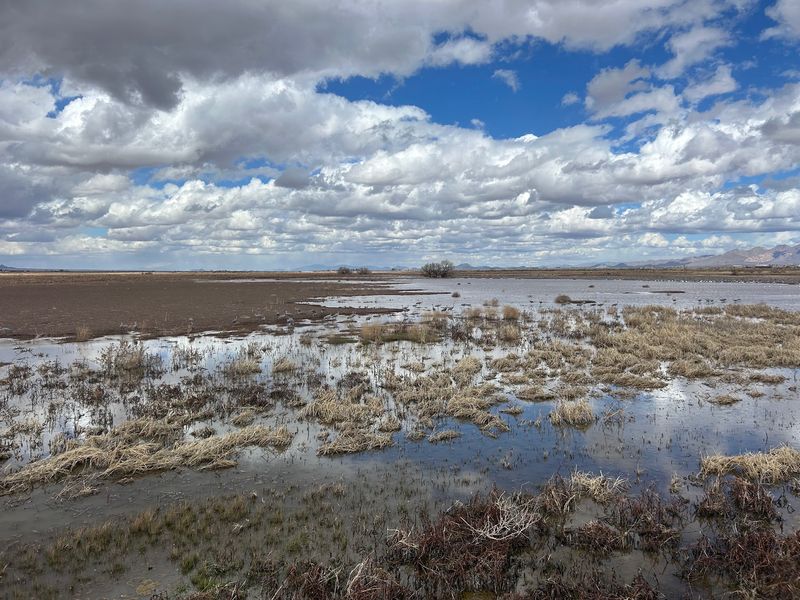
Out where the pavement gives way to dirt roads, Whitewater Draw Wildlife Area sits at 8469 N Coffman Rd, McNeal, AZ 85617, in Cochise County. It is managed as a wildlife area by the Arizona Game and Fish Department, and its official website lists it among the state’s wildlife viewing spots.
The place is a wetland, which already makes it unusual in this part of Arizona. Shallow water, marshy edges, and open ground give migrating birds a reason to stop and stay.
Maps tag the spot with the name Whitewater Draw Wildlife Area raptors, a nod to the hawks that patrol the area. The real headliners, though, are the cranes.
Getting there takes some commitment. The drive runs south past Tombstone from Tucson, and plenty of people pair the trip with a stop in nearby Bisbee.
That remote setting is part of the charm. There are no gift shops or snack bars here, just open sky, water, and a lot of birds with somewhere to be.
Arizona has plenty of famous landmarks, but few of them can claim a guest list that flies in from out of state every single winter.
Winter Guests by the Thousands
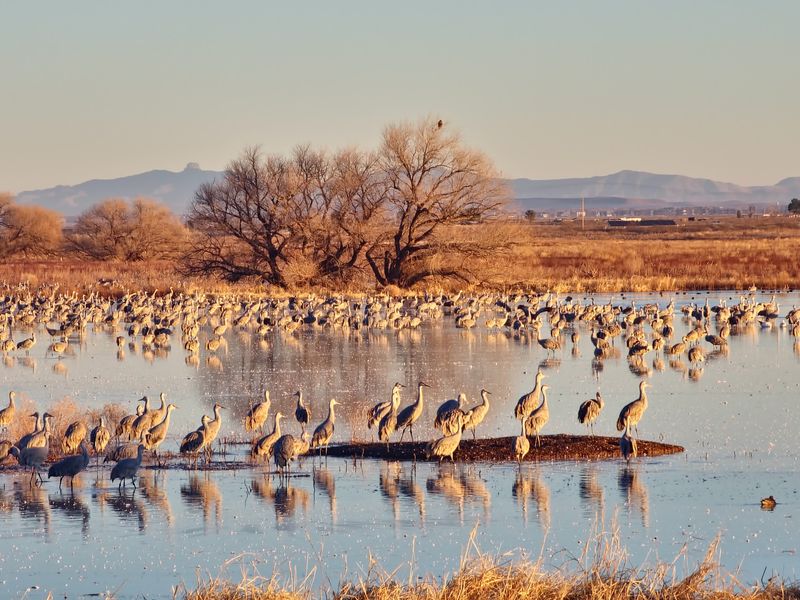
Head counts here are not measured in dozens. Crowds of 1,500 to 2,000 cranes are common, and on a strong day the numbers climb well past that.
Sandhill cranes use Whitewater Draw as a winter roosting area. They spend the colder months in the valley, then head off again as the season turns.
Prime season generally lands in late January and early February. That said, the birds arrive earlier, and trips in early December have produced thousands of cranes overhead.
Even early March can still deliver solid numbers. Groups of cranes and Ross’ geese have been spotted close to the walking paths during that window.
The takeaway is simple. If the calendar says winter, there is a good chance the cranes are home.
For locals who think of winter as the off season for outdoor adventures, this flips the script. Southeastern Arizona saves one of its biggest wildlife moments for the months when the rest of the country is shoveling snow.
Mark the calendar early, because the best weekends tend to fill with birders and photographers who know exactly when to show up.
The Dusk Return Everyone Talks About
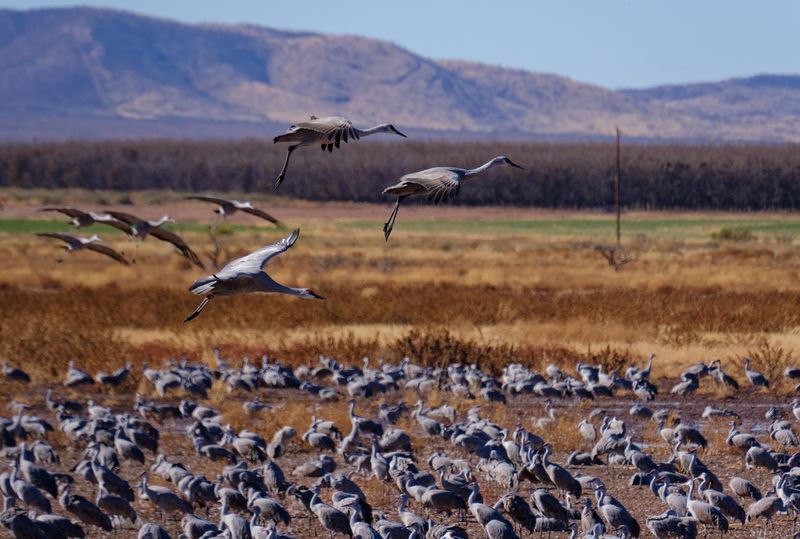
Timing is everything at Whitewater Draw. The cranes leave during the day to feed in the surrounding fields, then come back in waves to settle on the water.
That return trip is the moment most people chase. V formations cross the sky, break apart as they circle, and drop in to join the birds already standing in the shallows.
Hundreds can land every minute during a busy stretch. On one afternoon, the crane population at the wetland doubled within about two hours.
Dusk is a classic time to catch the action. Many people stay until dark, watching the final groups glide in.
Midday can surprise you too. On one late morning, only four or five cranes stood in the water around 10:15, yet within 15 minutes wave after wave began arriving, and by 12:30 there were hundreds.
So the schedule is not strict, but the pattern is reliable. Feeding flights go out, and the birds come back home.
Patience pays off here more than anywhere else in the state, and the payoff arrives on wings.
Crane-nados Before Breakfast
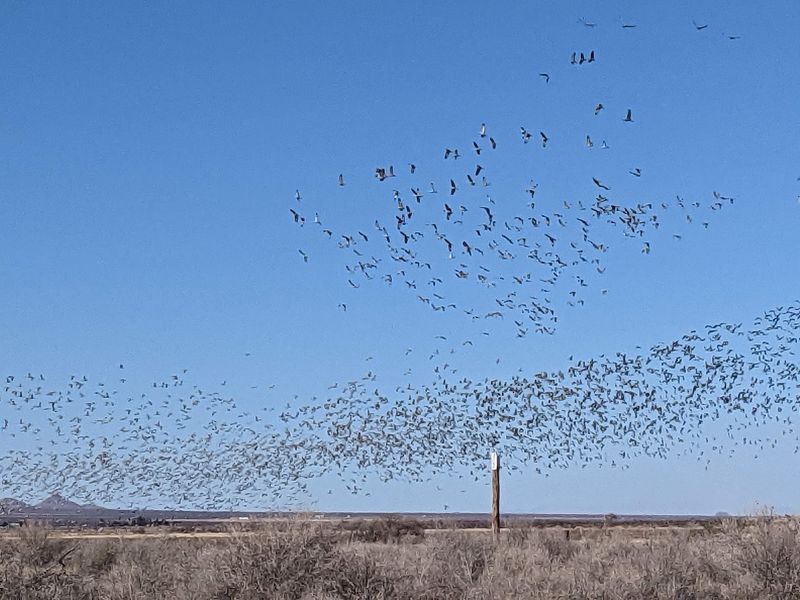
Early risers get their own reward. The cranes that roost overnight on the water lift off in the morning to go feed, and the departure can be massive.
Longtime fans of the place call the swirling morning lift-offs crane-nados. Arriving a little before dawn is widely considered the biggest payoff of the whole trip.
Sunrise viewing has become a tradition for some families who return every year. They time their visit so they are in position before the first group takes off.
Fair warning: winter mornings in this valley get cold. Pack layers, gloves, and something warm to drink if you plan on standing by the water for a while.
The benches near the water are metal, so bringing your own folding chair is a smart move. Nobody wants a frosty seat at 6 a.m.
Morning and evening each offer a different side of the same story. One sends the birds out, the other brings them back.
Choosing between them is a tough call, which is exactly why some people simply stay overnight and catch both.
Family Groups in the Flock
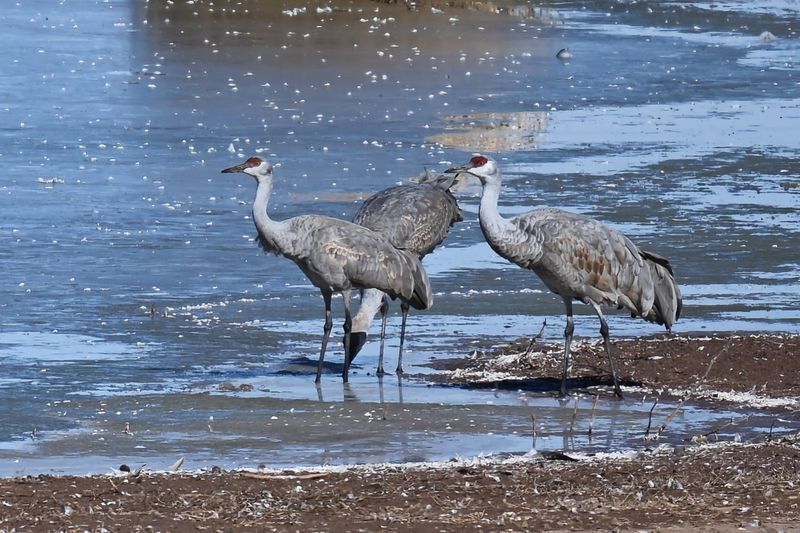
Look closely at the crowd and a pattern appears. Many of the cranes travel in small family units.
Most move two by two, since sandhill cranes form pair bonds. Sometimes a yearling tags along with its parents for the journey.
Spotting these little groups adds a fun layer to the visit. Instead of one giant blur of gray birds, the flock starts to look like a neighborhood full of households.
The cranes are also vocal. Their calls carry across the draw, and you can often hear incoming groups before you see them.
Even at night, the birds stay chatty. Anyone sleeping nearby should not expect total silence until morning.
Watching groups glide in and land near birds already on the ground gives a real sense of how social these cranes are. Families seem to find each other in the crowd with ease.
Fun fact for the road: those tall gray birds with the red patch on the head have been making this winter trip to the valley long enough that some Arizonans have been coming to watch for thirty years.
Snow Geese, Ducks, and a Few Hawks
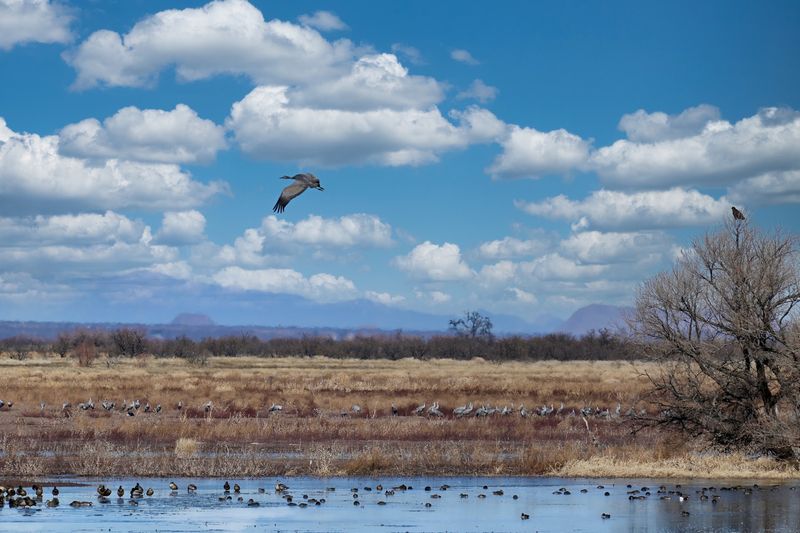
Cranes steal the spotlight, but they are not the only birds on the bill. The wetland supports a wide mix of waterfowl, raptors, and songbirds.
Snow geese often stand out against the sea of gray cranes. Ross’ geese show up too, along with northern shovelers, pintails, and green-winged teal.
Raptors patrol the area, which explains the place name on the map. Hawks are a regular sight, including what appears to be a Cooper’s hawk on at least one winter outing.
Smaller birds deserve attention as well. Vermilion flycatchers and ruby-crowned kinglets have been spotted in the shrubs and along the edges.
Some days bring starling murmurations, those big shifting clouds of birds moving together. Several sizable ones have been seen on a single trip.
The variety comes from the mix of habitat here, with water, brush, and open ground all close together.
Birders who arrive for cranes often leave with a longer checklist than they expected, and that bonus round is a big part of the appeal.
Loop Trails and Viewing Platforms
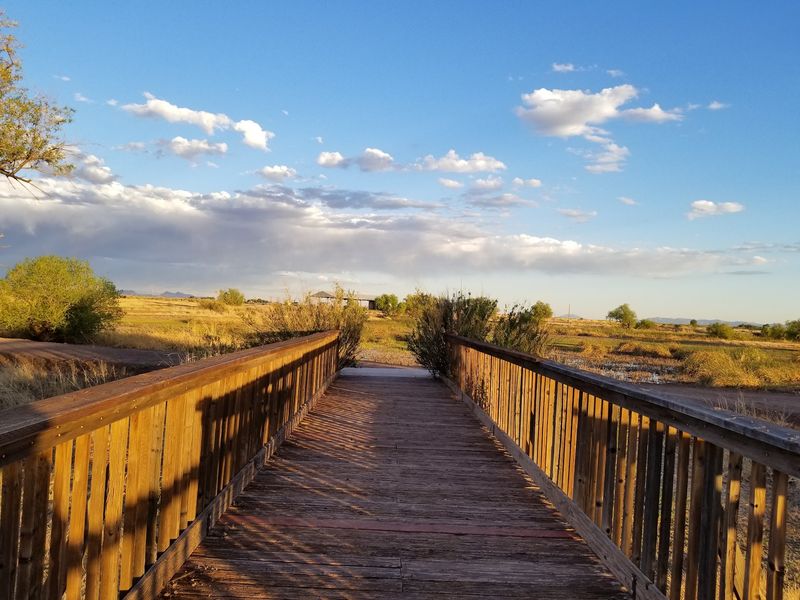
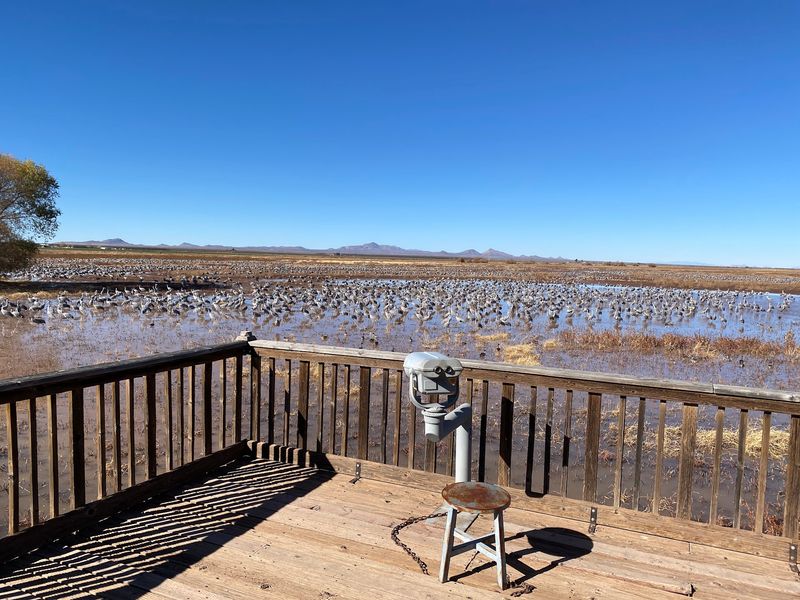
Getting close to the action is easy on foot. A loop trail runs around the water, with benches along the way for resting and watching.
Viewing platforms add an elevated spot to scan the flock. Some have wheelchair access, and small spotting scopes have been set up at chair level.
The walk from the parking area to the shoreline is longer than some expect. Plenty of places to stop make the distance manageable.
One recent season, the best crane views were around a bend in the trail not far from the parking area. Bird locations shift a bit from year to year and even day to day.
Paths are dirt, and they can turn muddy after rain. After a wet night, some trails may be too sloppy to walk comfortably.
A heads-up on the boardwalks: some boards are aging, and holes or taped-off sections have been reported on the platforms. Watch your step and respect any closures.
The setup is simple, but it puts you right where the birds are, which is all most people need.
Bring Binoculars and a Long Lens
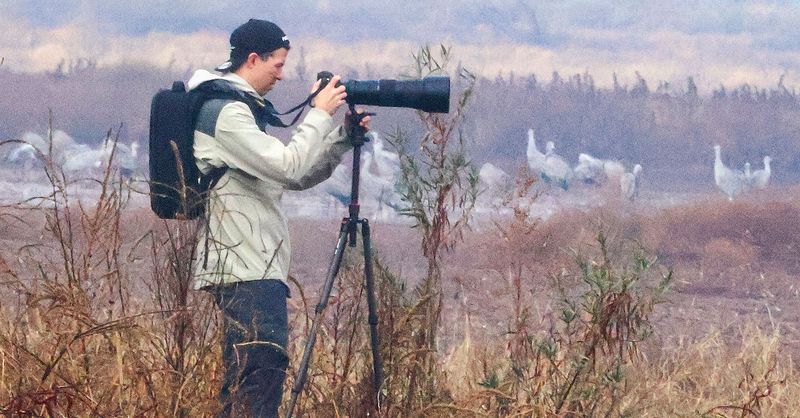
Photographers and birders gather here in force, and their gear tells you what works. Binoculars and telephoto lenses are the tools of choice.
Many cranes stand far out in the water, so a long lens makes a real difference. Without one, you will still enjoy the show, but close-up shots may be tough.
Video is popular too. The mass take-offs and landings, along with all those calls, make for footage that captures the scale better than a single photo.
Timing affects photo opportunities. Dawn lift-offs and late-day returns bring the most movement in the sky.
Patience matters more than fancy equipment, though. Some days the birds land close to the paths, and the views from a bench are excellent.
Charge batteries and pack extra memory cards. Waves of cranes have a way of filling them up quickly.
Even those who skip the camera entirely find plenty to enjoy. Sometimes just watching the sky is enough to make the drive worthwhile.
Camping Under a Crane-Filled Sky
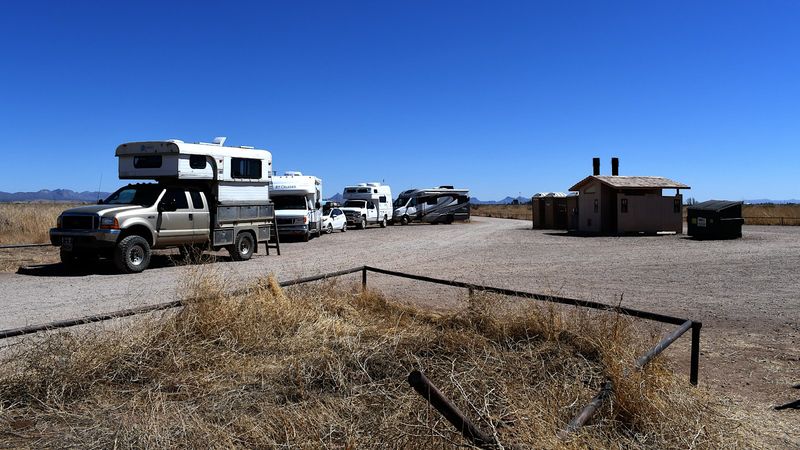
Sleeping next to thousands of cranes is an option here. A few official camping spots come with picnic tables, and there is more space to simply park if you do not need one.
Free camping is a big draw for van and RV travelers. Most campers arrive in self-contained vehicles.
Facilities are basic. Expect pit toilets and trash service, plus extra portable toilets during busy times, and overflow parking has been added as well.
Waking up on New Year’s morning to thousands of sandhill cranes has become a memorable tradition for at least some birders. Staying overnight makes catching the dawn lift-off much easier.
Remember the birds do not go fully quiet overnight. Light sleepers may want earplugs.
The camping crowd tends to be friendly, made up of fellow bird lovers who share tips about where the flocks are settling.
For budget-minded Arizonans, a free night in this valley might be the best value winter getaway in the state.
Dirt Roads, Mud, and Smart Timing
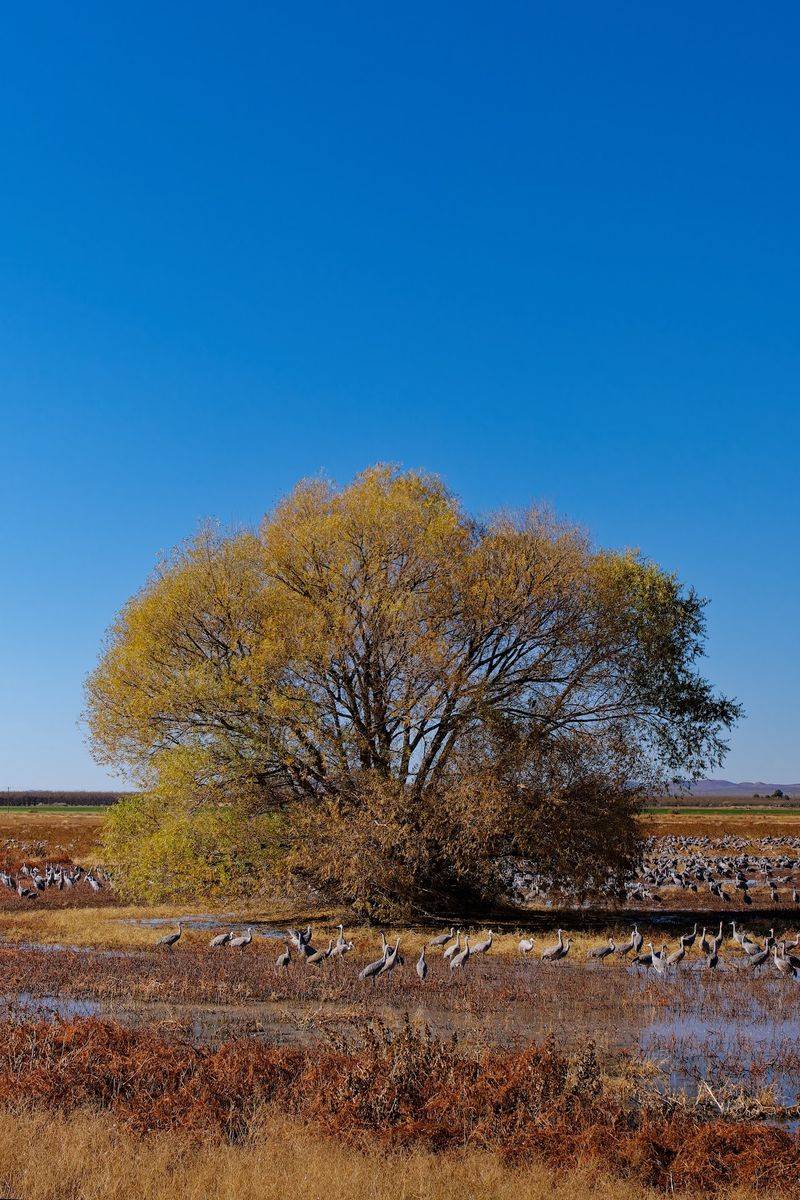
Here is the most practical tip in this whole article. The final stretch to the wildlife area is a dirt road, and it does not handle rain well.
After wet weather, deep mud can trap ordinary cars. Without four-wheel drive, staying away until things dry out is the wise call, unless you enjoy waiting for a tow truck.
The area is open 24 hours, every day of the week. No entry fee is mentioned in the official information, and the space is widely treated as a free outing.
Plan for a longer drive from most cities. From Tucson, the route heads south past Tombstone, and folks within about an hour’s drive find it an easy trip.
Amenities are sparse, so pack water, snacks, warm clothes, and anything else you need for the day.
Dogs are welcome on a leash. Volunteers have even handed out dog cookies on busy winter days.
For current conditions, the Arizona Game and Fish Department website is the best first stop before you load up the car.
A Backyard Spectacle Worth the Drive
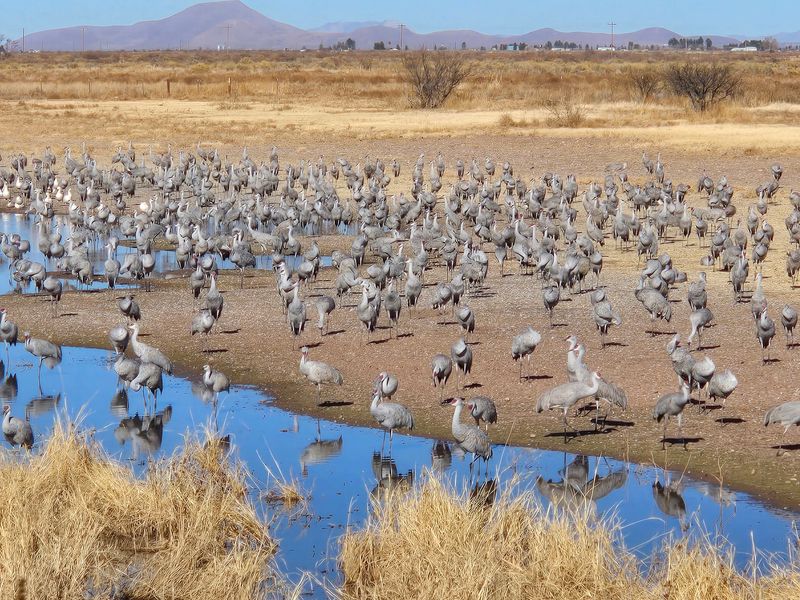
Some Arizona trips are about famous views. A winter visit to Whitewater Draw is about timing, patience, and being in the right spot when the sky fills up.
The appeal stretches across age groups. Kids, leashed dogs, serious birders, casual walkers, and out-of-town guests all find something to enjoy.
Some regulars have been coming for decades and visit year round. Winter, though, is clearly when the place hits its peak.
It is not polished. Facilities are simple, some platforms show their age, and parts of the grounds could use more upkeep.
Still, the overall picture holds up. Seeing well over a thousand cranes in one place strikes many people as a once-in-a-lifetime moment that just happens to repeat every winter.
Pair it with a stop in Bisbee, check the road conditions, and pack a warm chair. The cranes will handle the rest.
Arizona has plenty of bragging rights, but this one arrives on schedule, makes a lot of noise, and asks for nothing more than a little of your time.


