
Affiliate disclosure: As an Amazon Associate I earn from qualifying purchases. Learn more
Somewhere in the middle of Texas, down a gravel road with no gas station in sight, a single lane of wooden planks hangs high above the Colorado River. Cars still cross it, one at a time, and the whole thing moves while they do.
People stand on it at sunset and feel it bounce when someone walks by. It is one of the last bridges of its kind still open to vehicles in the state, and it costs nothing to see.
Getting there takes some planning, a full tank, and a little nerve. The reward is a quiet spot that many Texans have only seen on television.
Keep reading to find out where it is, why it sways, and how to plan a trip that ends with the best free view in Central Texas.
A Swinging Crossing on a County Road
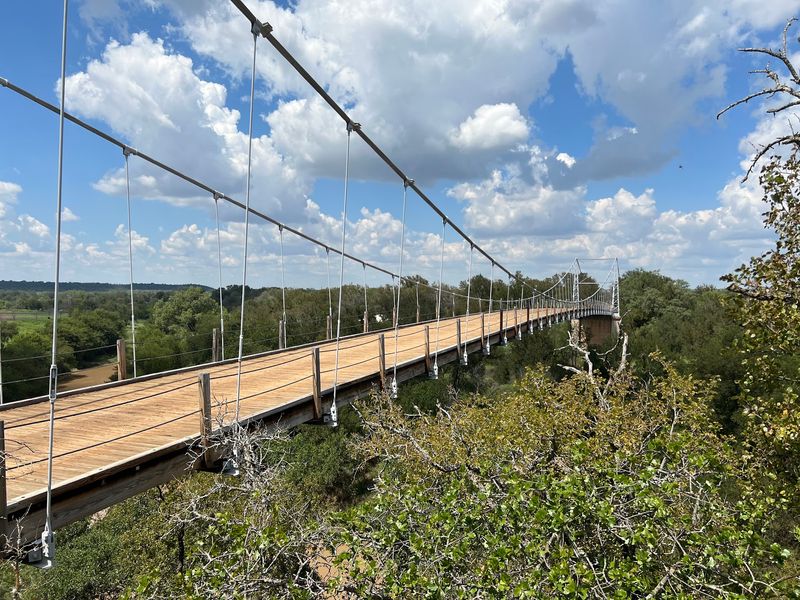
The address sounds plain enough, but the destination is anything but ordinary. Regency Bridge sits at 987 County Rd 137, Richland Springs, TX 76871, in the rolling ranch country of Central Texas.
The bridge spans the Colorado River right on the county line between San Saba County and Mills County. Locals have long called it the Swinging Bridge, and the nickname is earned.
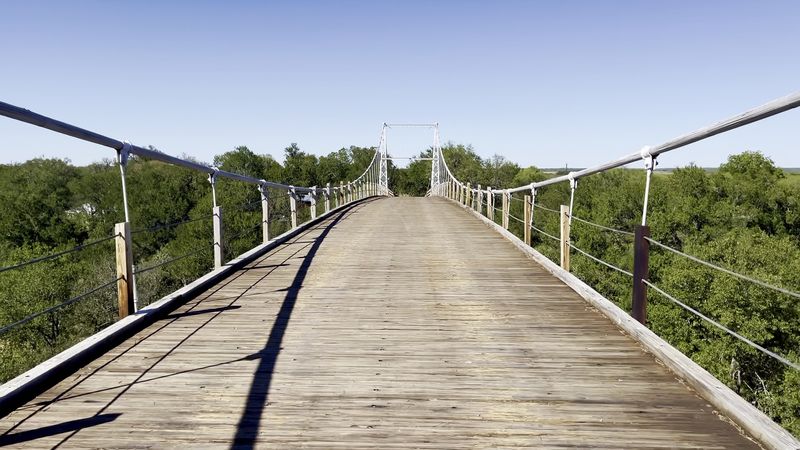
It is a wooden suspension bridge with a single lane, held up by cables and set high above the water. Cars can drive across it, and people can walk it too.
That combination makes it rare. It is often described as the last functioning suspension bridge in Texas, and one of the last wooden bridges in the state that still carries vehicle traffic.
There is no gate, no ticket booth, and no admission fee. The bridge is listed as open 24 hours, every day of the week.
The setting is remote, so expect to share the space with the river and maybe a few other curious travelers. It is a short, simple stop on paper, yet it tends to stick with people long after the drive home.
Saved by People Who Cared
Plenty of old bridges get replaced and forgotten. Regency Bridge took a different path.
The structure is one of the oldest suspension bridges in Texas, and it has been restored rather than torn down. Many who make the trip say the best part of the story is that people cared enough to save it.
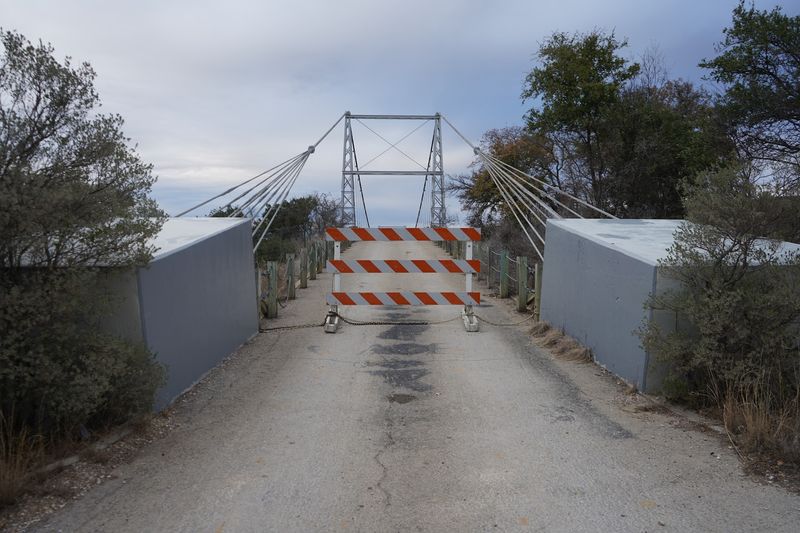
Its history has not been a straight line. At various times it has been closed to through traffic, and at least one period saw cars barred because the bridge was considered too weak.
Today it is open to vehicles again. That return is a big part of its appeal, since most historic bridges of this age are now walk-only or museum pieces.
The bridge also has a small dose of fame. It has appeared regularly on Texas Country Reporter, the long-running show about life around the state, so some travelers arrive already knowing what it looks like.
Seeing it in person is a different matter. It is a working piece of Texas history, and the planks under your feet are part of the lesson.
Why the Planks Move
Here is the part that gets everyone talking. The bridge moves.
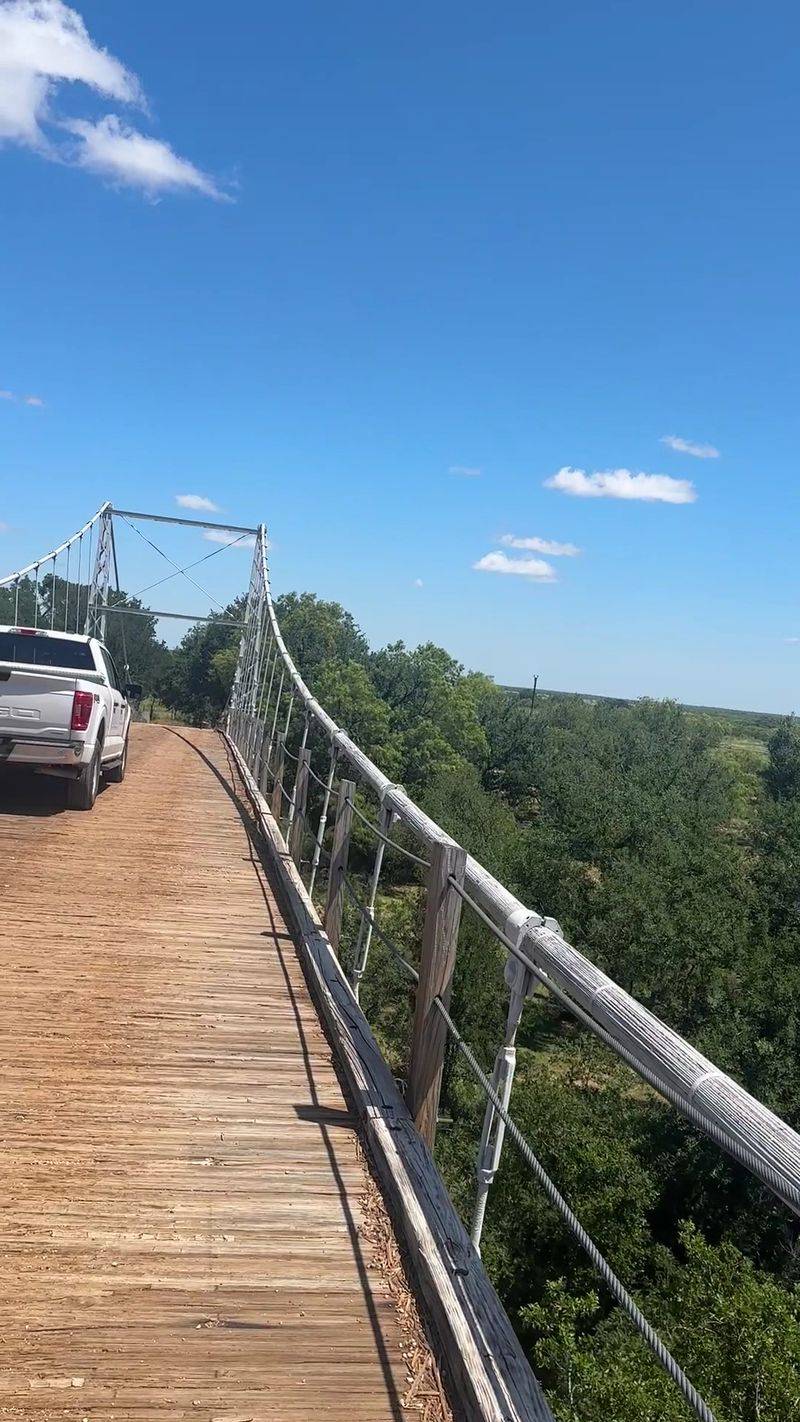
When a car drives over it, the deck sways, and people standing on it can feel the motion clearly. Wind can set it shaking too, and so can someone jumping on the planks.
Some people find that thrilling. Others find it a bit dizzying, especially with the river so far below.
The experience changes depending on how you cross. People who have both walked and driven it often say the walk is where you notice the movement most, while inside a car it can feel fairly normal.
That has not stopped first-time drivers from gripping the wheel. A common pattern goes like this: the first pass is nerve-racking, the second is easier, and by the third crossing confidence is high but speed stays low.
- Drive slowly and one vehicle at a time.
- Expect a bounce when another car passes.
- Walkers should hold their ground when vehicles cross.
Signs on the bridge set limits, including a cap on the number of people at once. Read them and follow them, since this is an old structure.
High Above the Colorado River
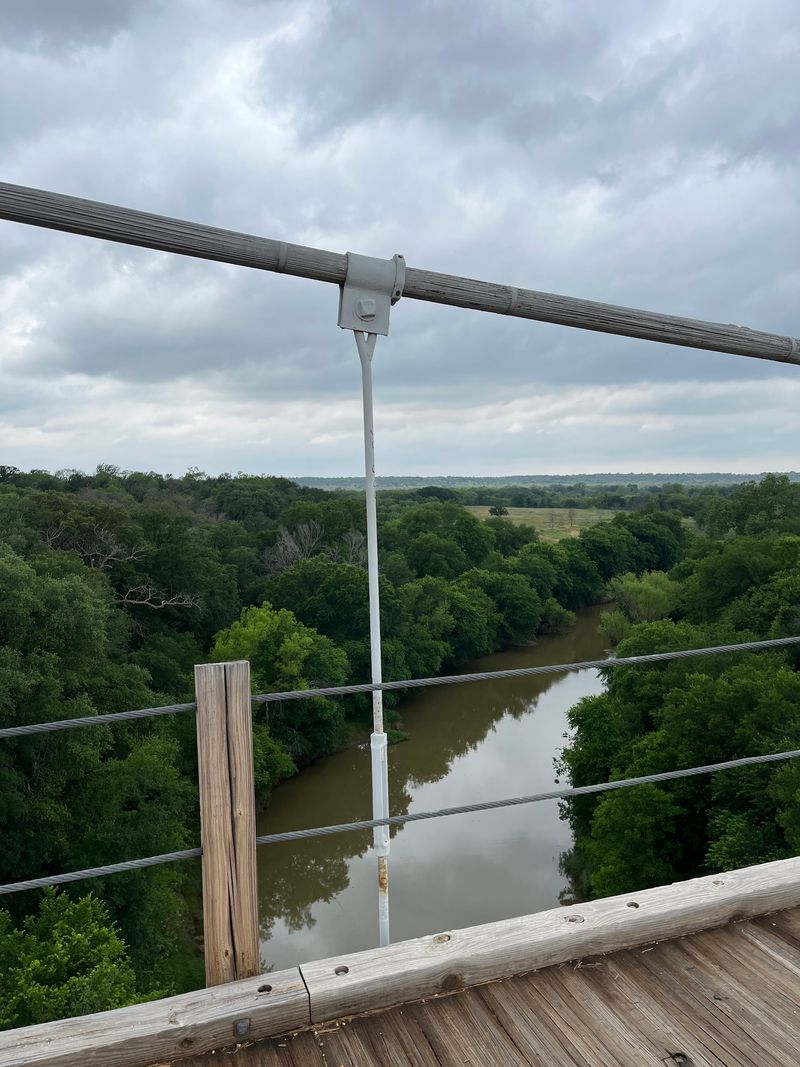
The height surprises a lot of people. The bridge sits well above the Colorado River, giving it a lookout feel.
From the deck, the river stretches out in both directions with open countryside around it. It is one of the most remote crossings of the Colorado anywhere in the state.
Anyone uneasy with heights may want to keep some distance from the edge. The railings are there, but the drop is real.
Wildlife watchers can stay busy here. Turtles, fish, and snakes have all been spotted in the water below.
There is one limit to know about. The bridge does not offer public access down to the river itself.
River access is tied to a private RV camp on the far side, so guests staying there have a route the general public does not. For everyone else, the bridge deck is the viewing platform, and it does the job well.
Golden Hour on the Cables
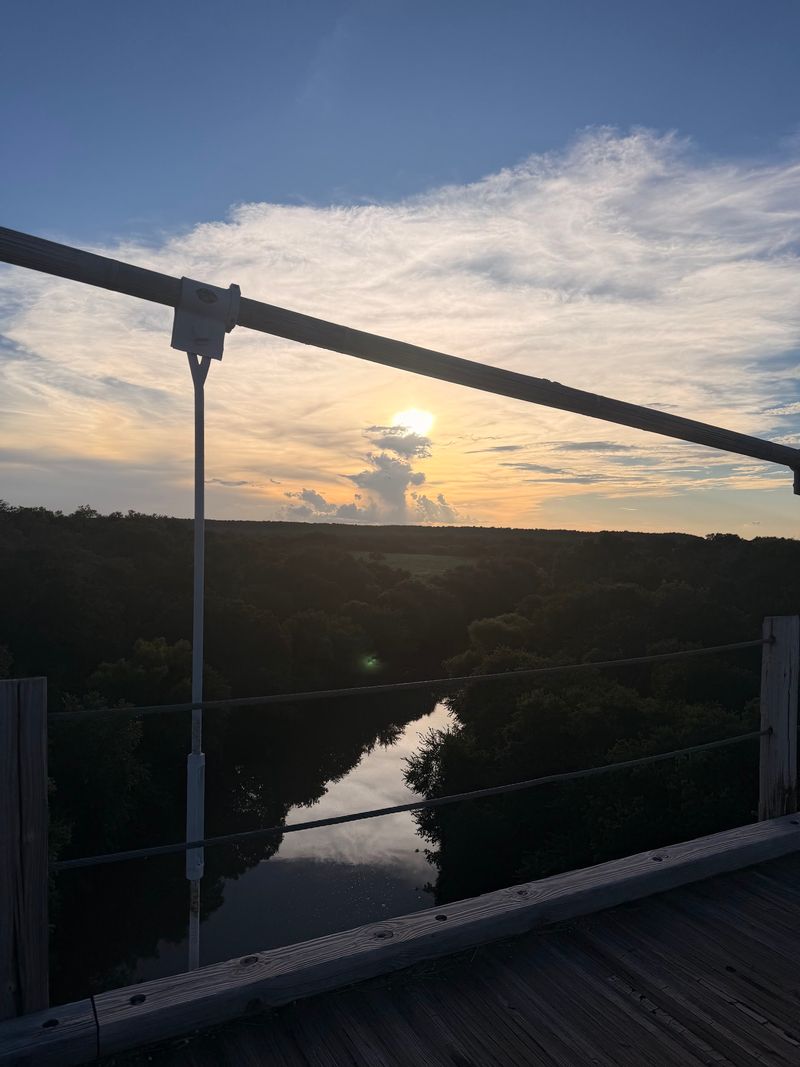
Timing matters more than usual at this bridge. Sunset is the favorite hour, and it is easy to see why.
Texas summers can be brutal in this area. Temperatures over 100 degrees are common in the heat of the day, and there is not much shade on an open bridge deck.
Arriving in the evening, after dinner, can knock the heat down and remove the direct sun. It also lines up with the best light of the day.
Many of the most loved trips here end with the sky changing color over the river. Some people stay until dusk and never see another car on the road.
That quiet is part of the payoff. Since the bridge is open around the clock, there is no closing time to rush against.
Just remember the drive out is on dirt roads. Leave enough daylight, or drive with extra care after dark.
Prom Photos and Quiet Afternoons
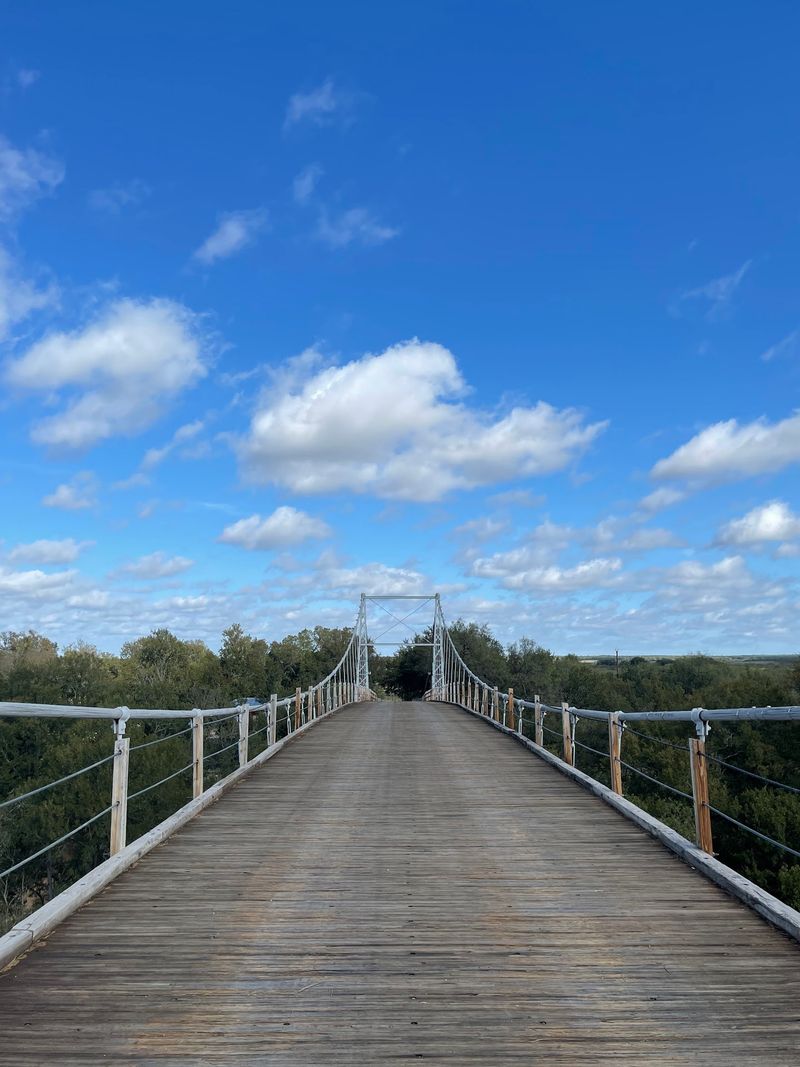
Cameras come out fast here. The towers, cables, and long wooden deck make a strong backdrop.
Photographers and history fans tend to love it equally. Families have even used the bridge for senior portraits and prom pictures.
The mood is calm most of the time. Long stretches pass with no traffic and little noise beyond nature.
That said, it can get busy on certain days. A small crowd of curious travelers and locals can gather, and friendly chats with nearby residents are part of the experience.
Who will enjoy it most?
- Road-trippers looking for a free stop with a story.
- Photographers chasing a classic Texas scene.
- History buffs who prefer touching the past over reading about it.
- Families with kids old enough to follow bridge rules.
Those who dislike heights or motion might prefer to watch from solid ground at either end. The view from the approach still delivers.
Gravel Roads and a Full Tank
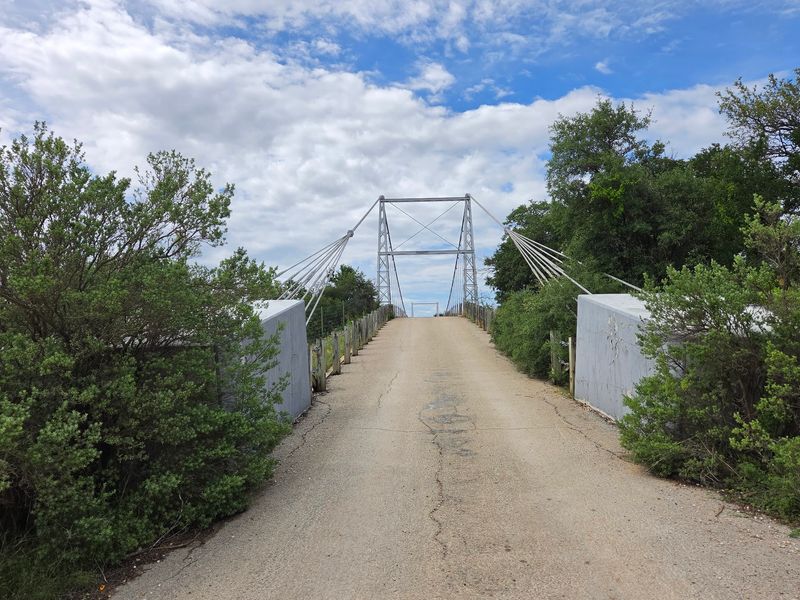
Getting there is half the adventure. Every approach involves an unpaved road.
From downtown San Saba, the trip runs about 25 minutes. After crossing the bridge, expect roughly 3 more miles of dirt road before reaching the main road again.
Gas is the big warning. Fuel stops are scarce out here, so fill up before leaving town.
Rain changes things. When the roads have been wet, conditions can get rough, and a low car may struggle.
The area also sits fairly close to the geographic center of Texas, which gives the trip some bonus bragging rights. The exact center point itself is on private land, so do not plan to visit it.
Treat the drive like a small expedition. A little preparation keeps it fun instead of stressful.
Parking, RVs, and Weight Limits
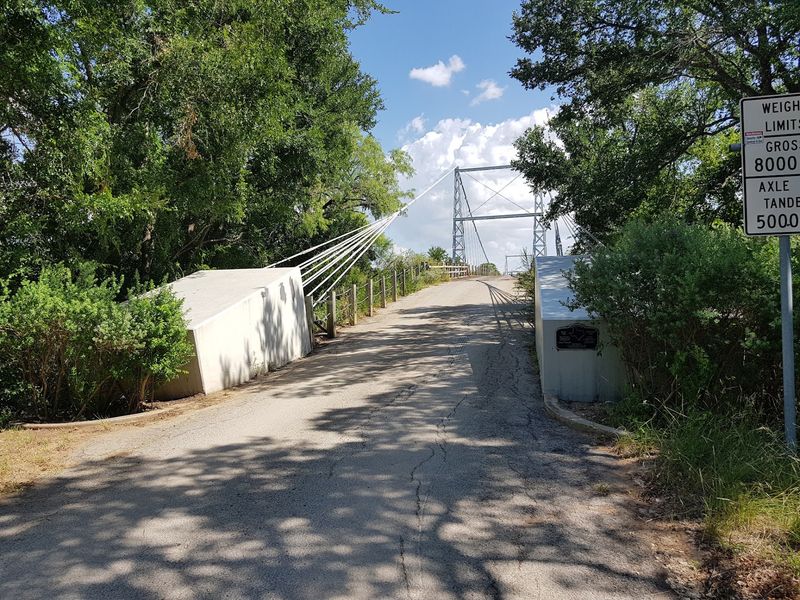
The practical details are simple, but they matter. Admission is free, and the bridge is open 24 hours a day.
Parking is limited. There are only a few spots along the side of the road, so pull off carefully and avoid blocking the lane.
Walking the bridge is the way to get the full effect. Park, get out, and cross on foot at least once.
RV drivers need extra planning. An RV park sits right on the other side of the bridge, but a heavy rig could exceed the bridge weight limit.
Check with the RV park before assuming you can cross, and plan an approach that avoids the bridge. Posted signs also limit how many people can be on the deck at once.
Compact cars are the most comfortable fit for the single lane. When in doubt, walk instead of drive.
A Free Ride Worth the Miles
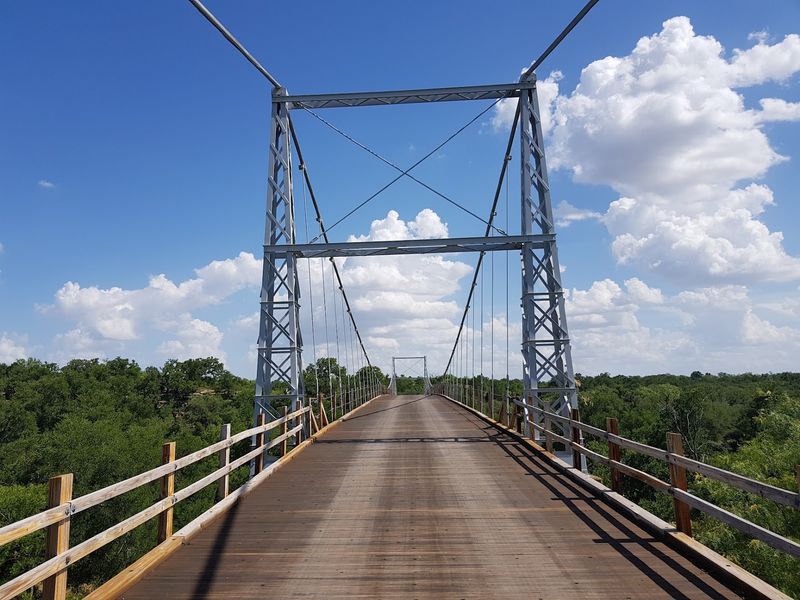
Some road trip stops are about checking a box. Regency Bridge is about the feeling of crossing something that has outlasted most of its peers.
It costs nothing, it never closes, and it delivers history, river views, and a gentle bounce in one stop. The overall praise is close to universal, with a 4.8-star average across hundreds of opinions.
For Texans, it has extra pride attached. Few states still have a wooden suspension bridge carrying cars, and this one sits right in the heart of the state.
Bring a full tank, aim for the evening, and walk it before driving it. Then watch how quickly a quiet county road turns into a favorite story to share.
It may be narrow, but the memories it leaves are anything but.


