
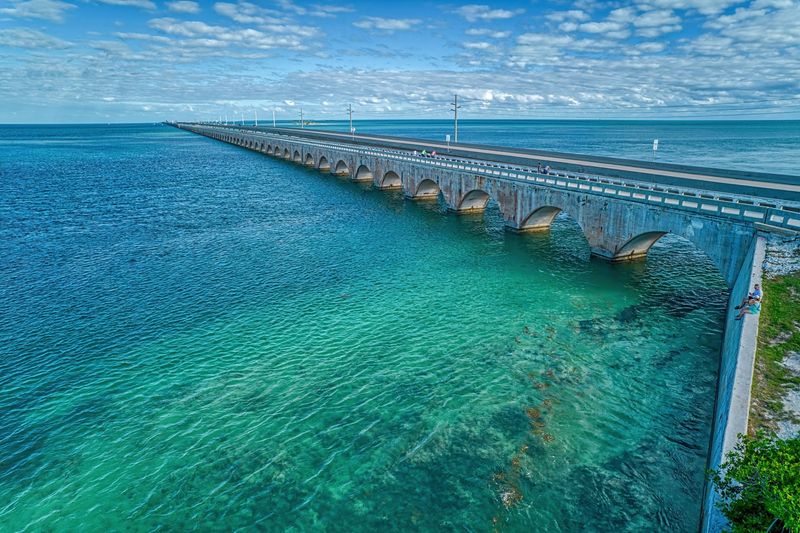
Affiliate disclosure: As an Amazon Associate I earn from qualifying purchases. Learn more
Somewhere between Marathon and the Lower Keys, your phone’s map quietly gives up. The little blue dot sits in the middle of open water, with no road drawn beneath it, and the app offers no comment at all.
For a few minutes, every car on this stretch of the Overseas Highway seems to be crossing the sea with nothing below but blue. Plenty of famous drives look smaller in real life, but this one has a reputation for living up to the buzz.
It also hides a second story right beside the highway: an older span you can walk or bike for free, a tiny historic island, and some of the best sunset spots in South Florida. Here is what makes this crossing so memorable, plus the practical tips that help you enjoy it without getting stuck in traffic.
A Highway Laid Across the Sea
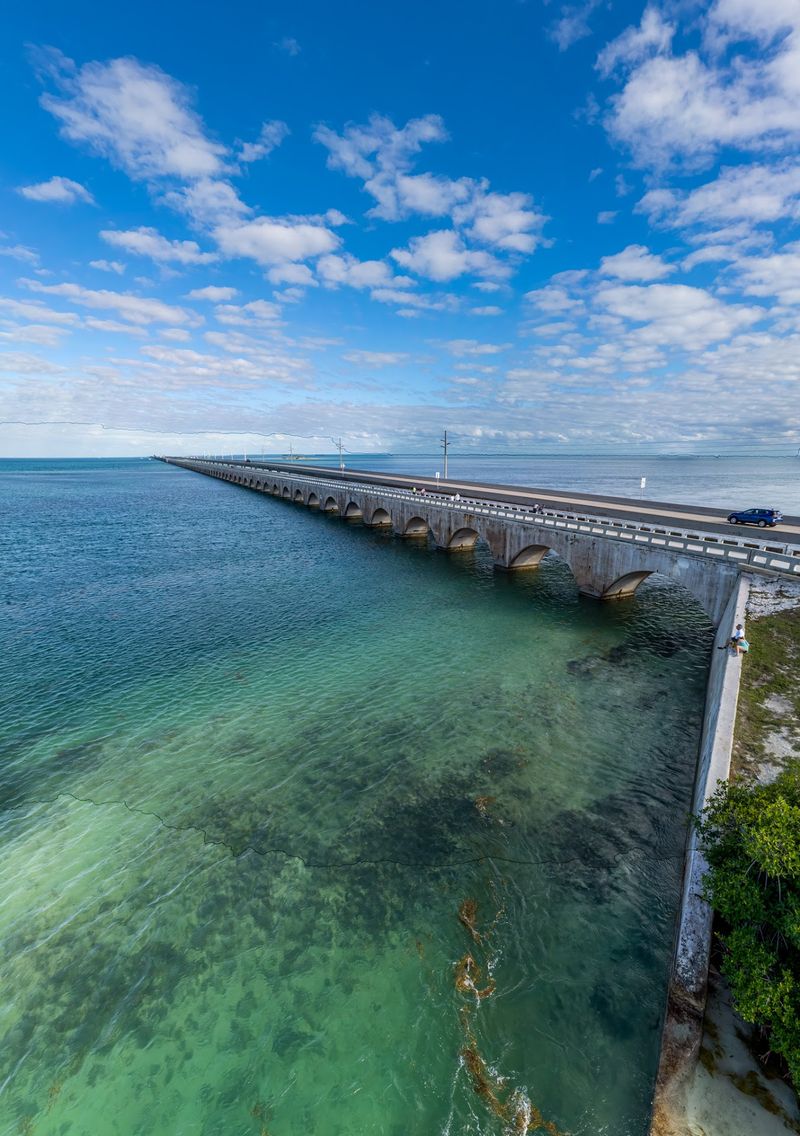
Seven miles of roadway, and almost no land in sight. That simple fact explains why so many road trips through the Florida Keys build up to this one moment.
The Seven Mile Bridge is found on US Route 1, the Overseas Highway, in Florida, United States. Its official address is simply Seven Mile Bridge, Florida.
The span links Knight’s Key, part of the city of Marathon in the Middle Keys, with Little Duck Key in the Lower Keys. It serves as a centerpiece of the 113-mile Overseas Highway that runs down to Key West.
Its place in the American road trip story is hard to overstate. The bridge holds a 4.8-star standing across more than 4,000 Google opinions, which is a remarkable showing for something that is technically just a piece of highway.
Many people call it one of the most beautiful drives in the entire country. Open water stretches out on both sides, and the road runs long and mostly straight across it.
There is more here than a quick crossing, though. Parking lots, walking paths, an old rail bridge and a small island with deep history all sit within reach.
Consider the drive itself the opening act, because the bridge has a few more surprises waiting.
Flagler’s Folly and the Eighth Wonder
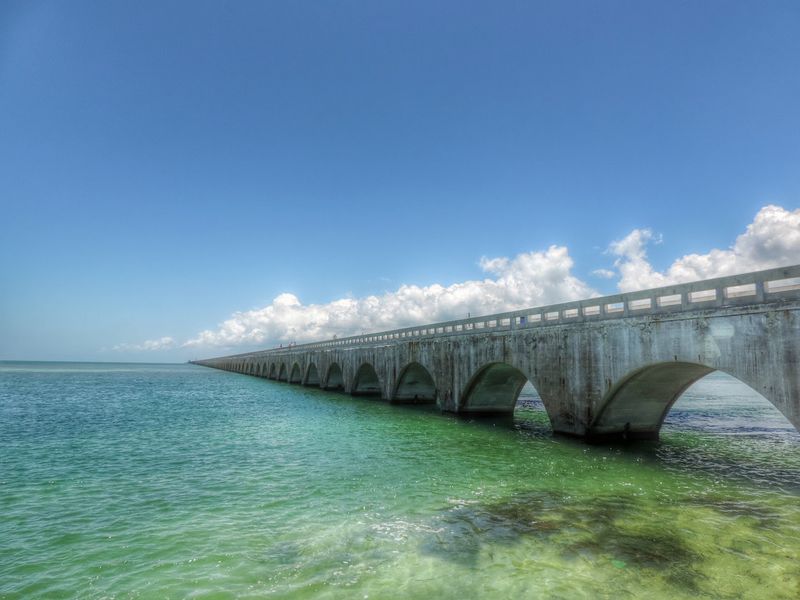
Skeptics once laughed at the idea. Railroad tycoon Henry Flagler pushed ahead anyway, building an Overseas Railroad for the Florida East Coast Railway across the Keys.
The original bridge opened in 1912. Doubters had nicknamed the project Flagler’s Folly, yet it later earned the title of the Eighth Wonder of the World.
Construction took place under grueling conditions. Workers also faced several intense hurricanes during the effort.
Then came the 1935 Labor Day Hurricane, which destroyed parts of the railroad. Rather than let the route disappear, the federal government bought the structure and converted it into a highway for cars.
That conversion kept the Keys connected by road for decades. Drivers used the old span long after the last trains were gone.
Today the weathered structure still stands next to the modern highway, known affectionately as the Old Seven. Some find it nostalgic, and it gives the whole scene a sense of layered history.
Few highways let you see their own past running right alongside them, and that is exactly where the story turns next.
Two Bridges, Side by Side
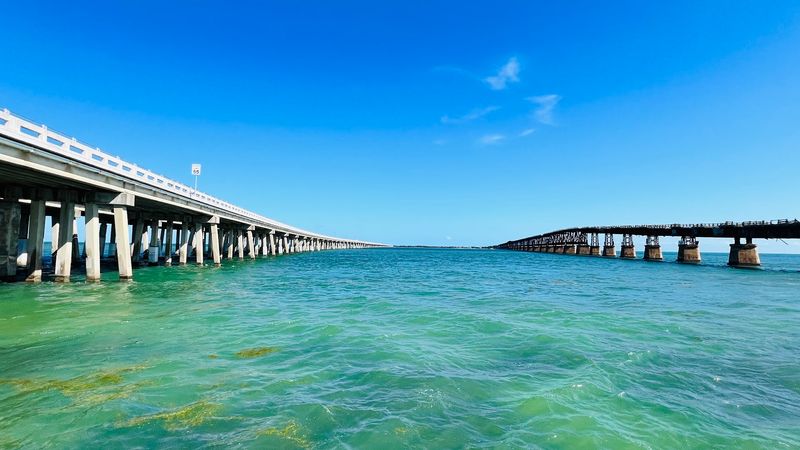
Look closely from the car window and you will spot a twin. Two parallel structures run side by side here, separated by a strip of water.
The old bridge had problems that grew over time. It was narrow, its structure was aging, and an old swing span caused long delays for boat traffic.
So a brand-new bridge went up right next to it. Crews built the wider concrete box-girder span between 1978 and 1982.
That newer bridge is the one carrying cars today. The pavement is smooth, and the road runs mostly straight, so the ride feels easy.
Meanwhile, the older span found a second career. A section of it now welcomes people on foot and on bikes instead of trains or cars.
The pairing makes for a striking photo. Modern engineering and early twentieth century ambition share the same horizon.
One bridge moves you along, and the other invites you to slow down, which sets up the most famous quirk of all.
The Blue Dot in Open Water
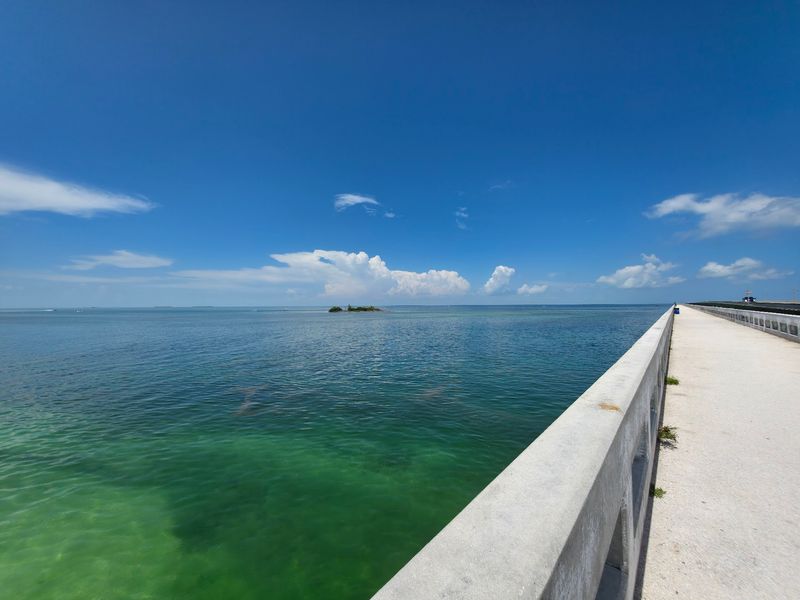
Your GPS has seen a lot of roads, but it may never look this confused. Halfway across, the map shows a lonely blue dot floating in the middle of the ocean.
No rerouting. No recalculating.
The app simply accepts that you appear to be boating in a rental car.
That odd screen is part of why drivers say they feel like they are floating. With water on every side and little land visible, the line between road and sea seems to disappear.
Time plays tricks out here too. Look at the oncoming lane, and traffic zips by quickly, yet glance far out at the water and it feels like you are barely moving.
The speed limit is 55 mph, which gives plenty of time to take in the scene. Passengers usually get the best view, since drivers need their eyes on the road.
Many people describe the crossing as the highlight of the whole Keys drive. After miles of island hopping, this stretch tops what came before it.
The experience stays with people long after the tires roll back onto solid land.
Wheels and Sneakers on the Old Seven
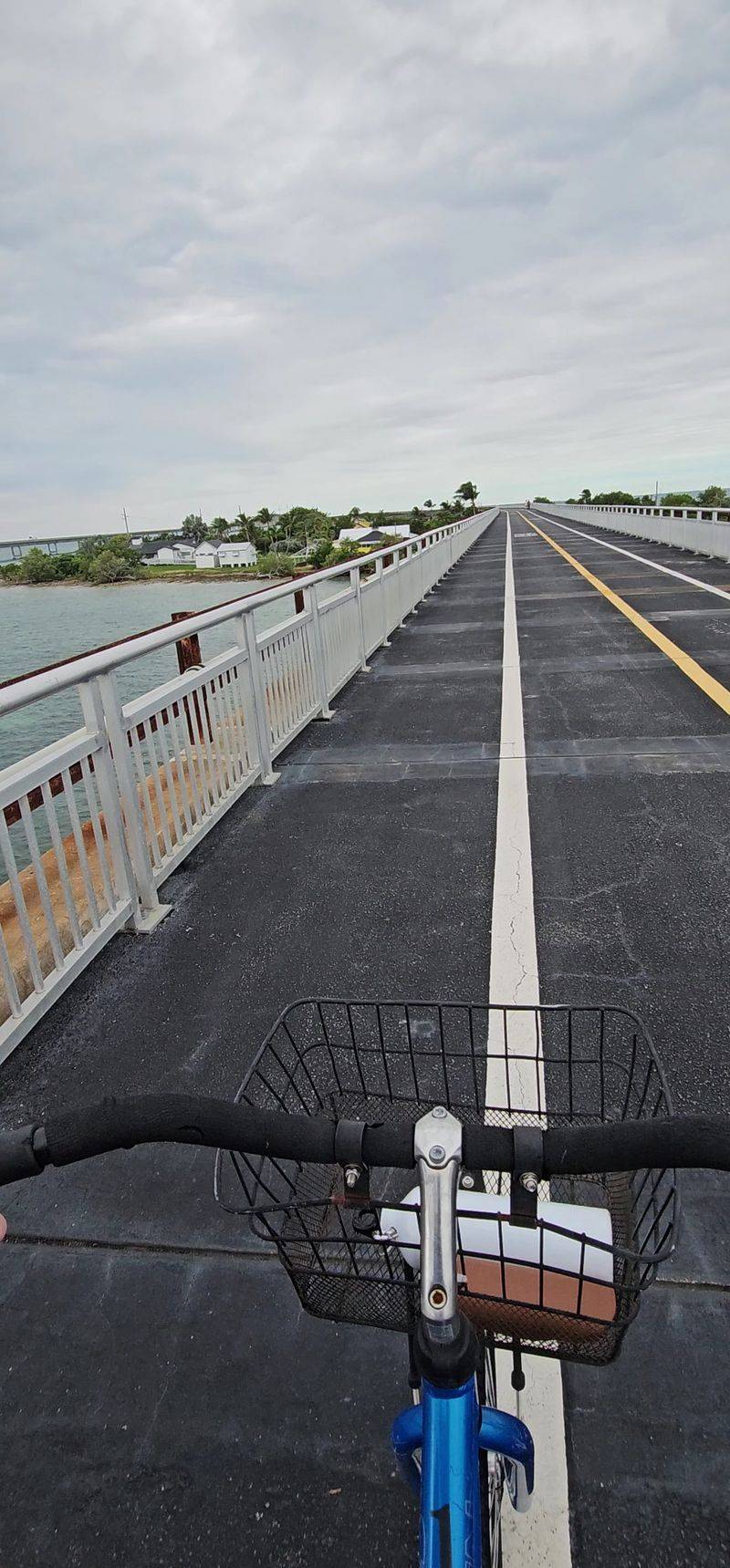
Some of the best moments here happen at walking pace. The restored section of the old bridge welcomes walkers, runners and cyclists.
The trip out to Pigeon Key covers about 2 miles each way. That makes a round trip of roughly four miles, which can take more stamina than people expect.
Shorter outings work just as well. You can walk out about half a mile and still get wide views of the water.
Runners like the flat, open route. Cyclists often head out early for sunrise rides as a way to start the day.
Fishing is popular along the span, too. On a calm day, you will often spot people casting lines over the side.
One small tradeoff comes with the scenery. The path runs parallel to US 1, so expect some highway noise along the way.
There is also a newer pedestrian bridge section with partial coverage, though it does not run the whole way. Either path gives you a chance to linger over the water, and the water has company worth meeting.
Stingrays Below the Railing
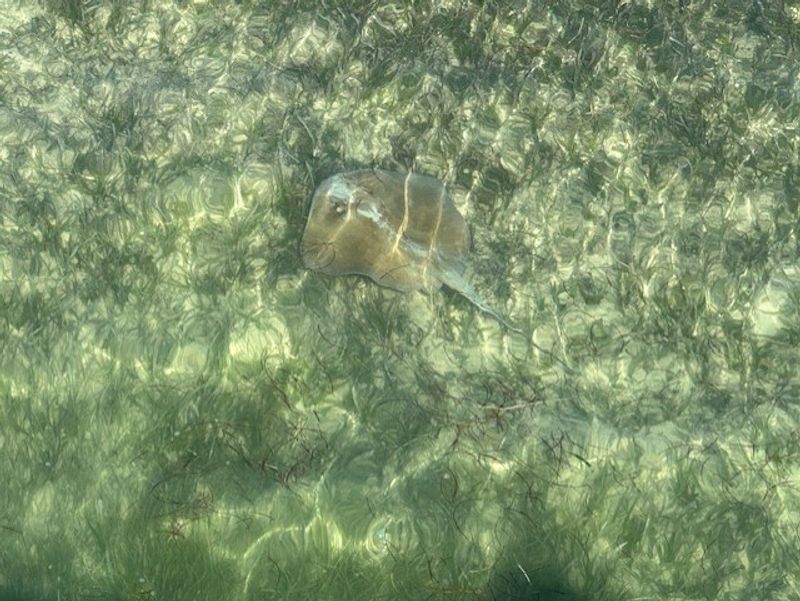
Keep an eye on the water beneath the old span. Stingrays often glide through the clear shallows below.
Fish show up regularly too, which explains the many people fishing from the bridge. The calm, clear water makes spotting marine life easier than you might guess.
This area sits where the Gulf meets the Atlantic. That meeting of two big bodies of water creates a wide open setting for wildlife watching.
Wildlife viewing ranks as one of the favorite activities here. It costs nothing, needs no gear, and fits into any walk or bike ride.
Bring patience rather than a schedule. Some days the water is busy, and other days you may need to wait a bit before something swims by.
Families tend to enjoy this part most. A simple stroll turns into a game of who can spot the next ray.
A quick tip: clear, sunny days make it easier to see into the water. Clouds can hide what is swimming just below the surface.
Pigeon Key, the Island at Mile Two
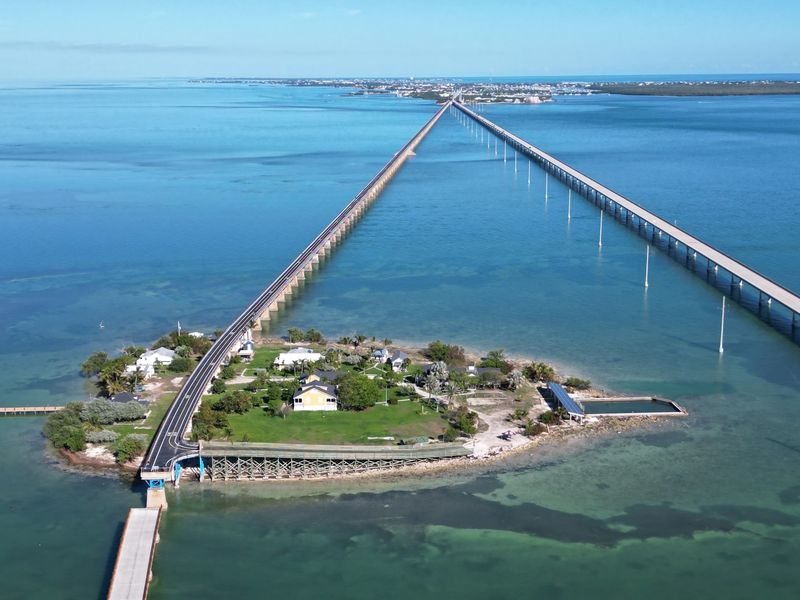
Two miles out along the old bridge sits a tiny island with a big backstory. Historic Pigeon Key draws walkers, bikers and history fans alike.
There are a few ways to get there. You can walk, ride a bike, or take the tram from the Marathon side.
Guided tours share plenty of Keys history. Good guides bring the island’s past to life and make the trip feel like more than just a destination at the end of a path.
The island connects directly to the railroad era. It gives context to everything you see on the bridge itself.
Pigeon Key comes up often when people talk about this area. Many consider a visit one of the most rewarding ways to spend time here.
Plan the outing with your energy in mind. Walking both ways adds up to about four miles, so the tram is a handy option for anyone who prefers to save their legs.
History buffs may end up staying longer than planned, and that is never a bad problem to have.
Golden Hour Over the Gulf and Atlantic
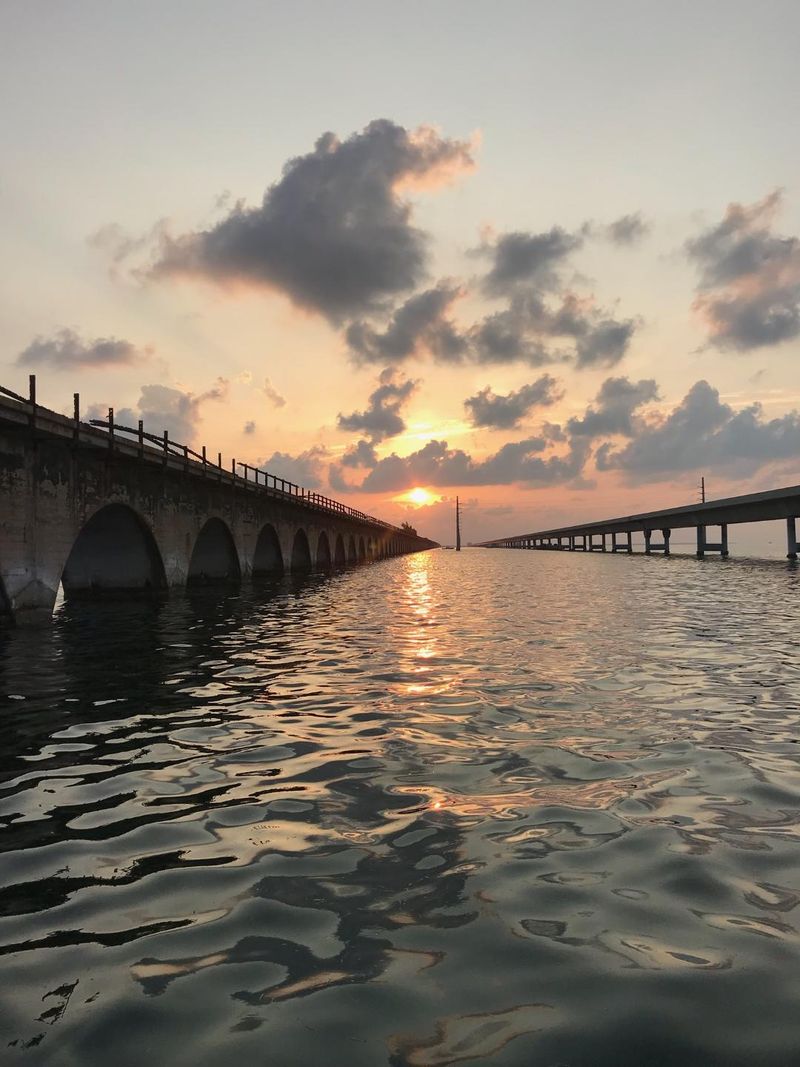
Sunset might be the bridge’s true claim to fame. It is the single most talked about topic connected to this spot.
Many people time their visit for the evening. Catching a sunset here turns a quick drive into a memory that lasts.
Light traffic sometimes allows a brief pause at the top of the span. Still, safe stops at the parking areas are the smarter choice for photos.
Sunrise has its fans too. Early risers often bike or walk the old bridge as the day begins.
Mornings tend to be calmer for walking. Evenings bring the crowds who want that classic shot.
Clear days make the biggest impression. When the sky is open, the bridge looks especially impressive against the water.
Plan to arrive a bit early if sunset is your goal. Parking fills, and you will want time to find your spot on the path before the show starts.
Morning or evening, the bridge has a way of making people slow down and stay a little longer.
A Little Tree Named Fred
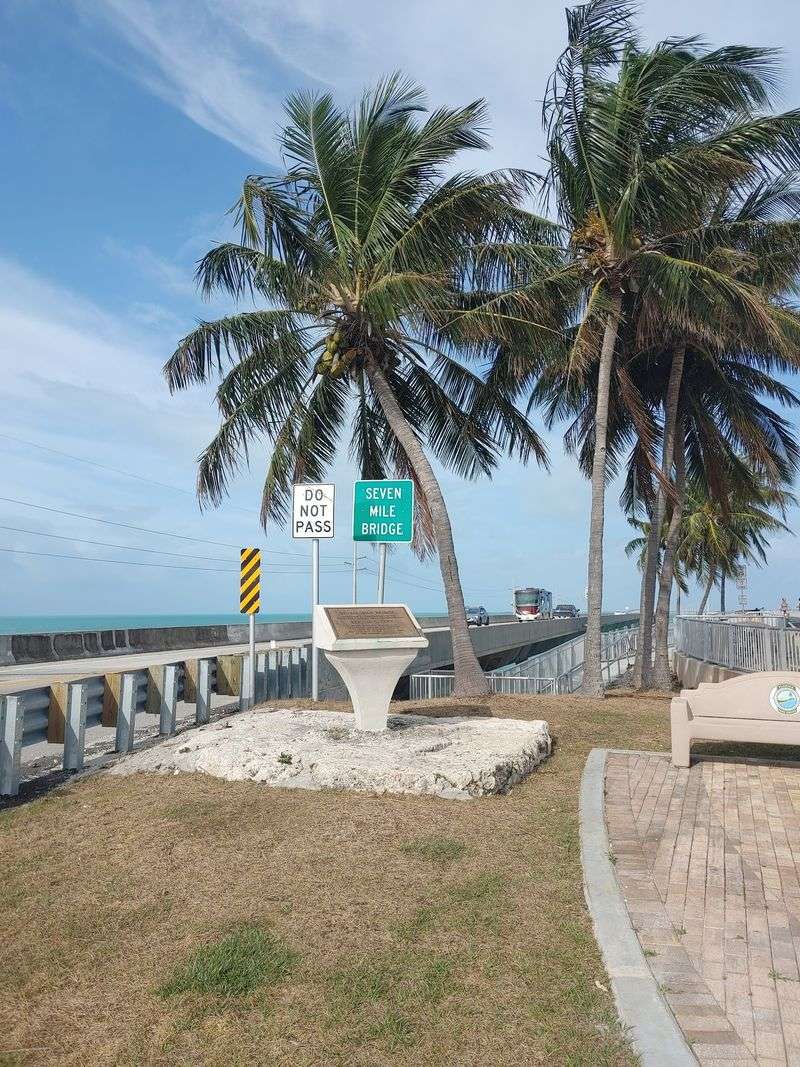
Not every landmark here is made of concrete. Fans of the bridge keep bringing up a small celebrity known as Fred the Tree.
Fred has become a fun spotting challenge for people crossing or walking the area. The name alone makes curious travelers want to find it.
Little details like this give the bridge personality. It is not only a road, but a place with its own inside jokes and local lore.
Spotting Fred works best when you are a passenger or on foot. Drivers should stay focused on the lane ahead.
Kids especially enjoy having a mission during the trip. Ask them to keep watch and the long crossing passes quickly.
Fred also shows how people form a bond with this place. Many come back again and again and still look for the same familiar features.
Small, quirky and free to enjoy, Fred fits right in with the relaxed spirit of the Keys.
Free Parking, Picnics and Traffic Tips
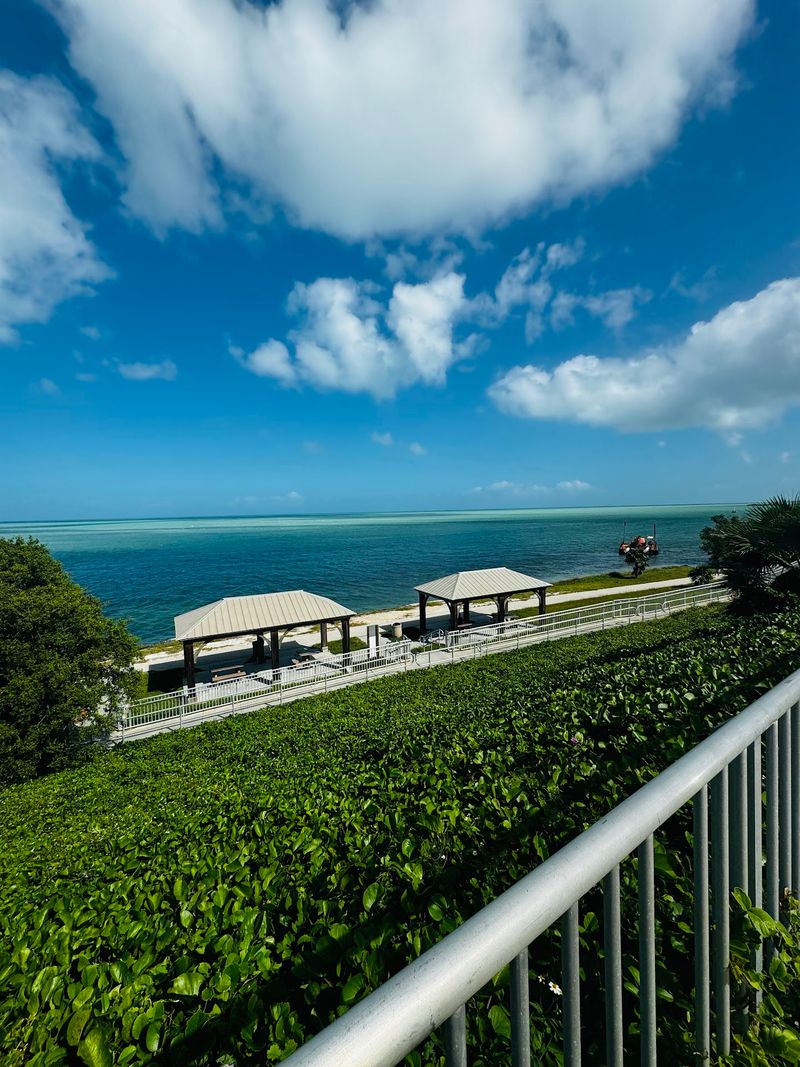
Good news for budget travelers: the bridge and its parking lot are free. That makes it one of the easiest no-cost outings in the Keys.
The official lot is quite small. Extra parking is available across the road when it fills up.
There are parking areas on either side of the crossing. Both give access to walking options along the old or newer pedestrian sections.
A covered picnic area offers a shady place to rest. You can also head down the hill for a closer look at the clear water, though swimming is not allowed.
Traffic deserves some planning. The highway is a single lane in each direction, and drivers often slow down to admire the view.
That can cause backups quickly. Give yourself extra time, especially if you are heading to Key West on a schedule.
Take the token photo, too. Even a short stop at the lot is better than zooming past without a souvenir.
Worth the Hype, Mostly
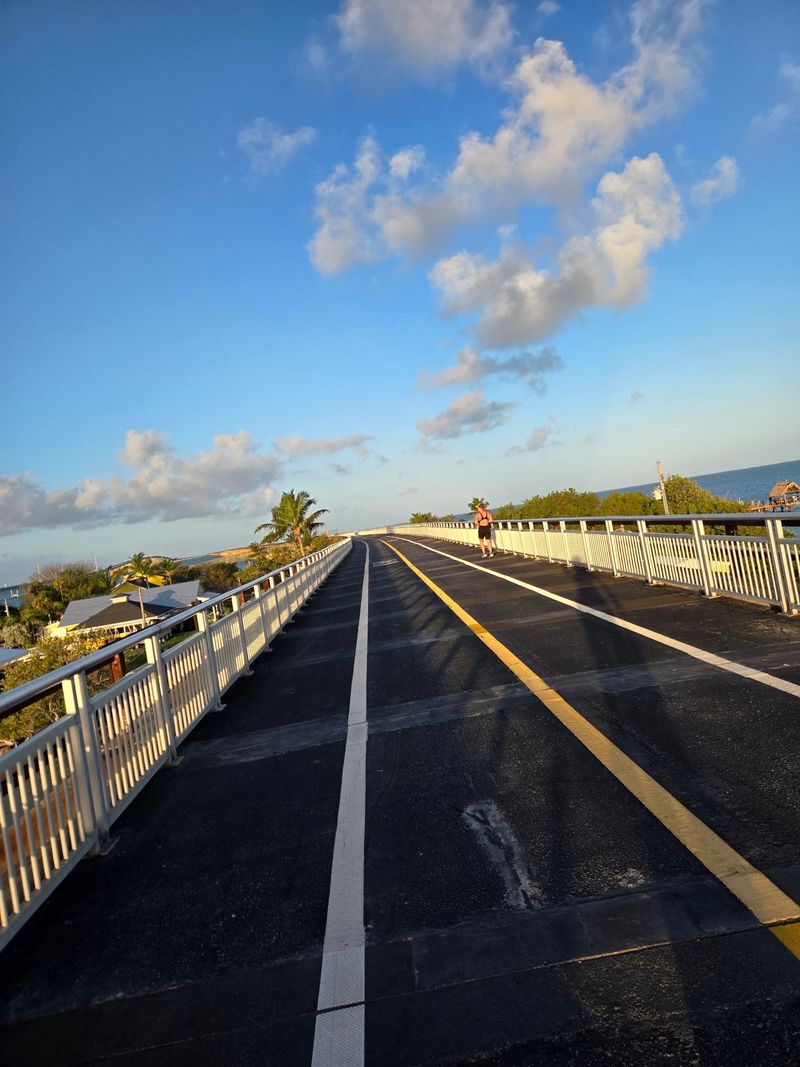
Not everyone falls in love with it. A few travelers find the hype bigger than the experience, and the old rail bridge does not charm every eye.
Most people, though, walk away impressed. The bridge regularly earns praise as one of the rare famous places that truly lives up to its reputation.
The secret seems to be how you spend your time. Simply driving over it is iconic, but it can pass by quickly.
Stopping changes things. Walking the span, visiting Pigeon Key, fishing, biking or catching a sunset turns the bridge into a real outing.
It suits a wide range of travelers. Road trippers, runners, families, history fans and wildlife watchers all find something here.
Best of all, much of it costs nothing. For a value-minded day trip in the Florida Keys, that is hard to beat.
So plan a stop, pack some patience for traffic, and let the blue dot float. The crossing is short, but the feeling of gliding over the sea tends to stick around for years.


