
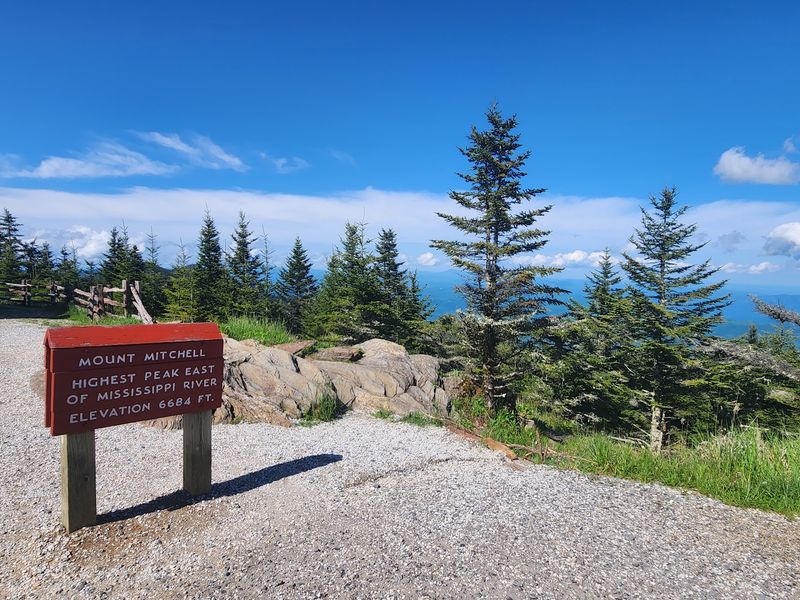
Affiliate disclosure: As an Amazon Associate I earn from qualifying purchases. Learn more
Somewhere in the western part of North Carolina, there is a road where the trees lean in so close overhead that the sunlight breaks into flickering patches on your windshield. The pavement winds past waterfalls that drop around nearly every bend, mountain overlooks that stretch for miles, and rivers that tumble over smooth stone.
This is a place where you can slow down, roll the windows down, and let the forest do the talking. Half a million acres of wilderness wait here, with hundreds of miles of trails and more waterfalls than most people can count in a single trip.
Keep reading, because the story behind this backroad and the mountains around it is even better than the drive itself.
A Half-Million-Acre Playground Near Asheville
Tucked into the mountains of Western North Carolina, Pisgah National Forest covers roughly 500,000 acres of ridges, rivers, and deep woodland. Its main address is simply North Carolina, with the heart of the forest sitting close to Asheville and reachable from towns like Hendersonville, Cherokee, and Hot Springs.
The scale here is hard to overstate. Regulars describe it as remote but not too remote, a place you can reach in about fifteen minutes from Cherokee yet feel a world away once you are inside.
Holding a 4.8-star rating across more than fourteen thousand impressions, this forest has earned a loyal following. People come back season after season, chasing waterfalls and quiet corners they have not yet explored.
The forest works as a full-day outdoor adventure for families, couples, and solo wanderers alike. Ample parking, marked viewpoints, and a friendly welcome make it easy to start.
And once you are under that leafy cover, you will understand why so many folks keep circling back.
The Name Borrowed From A Mountain Peak
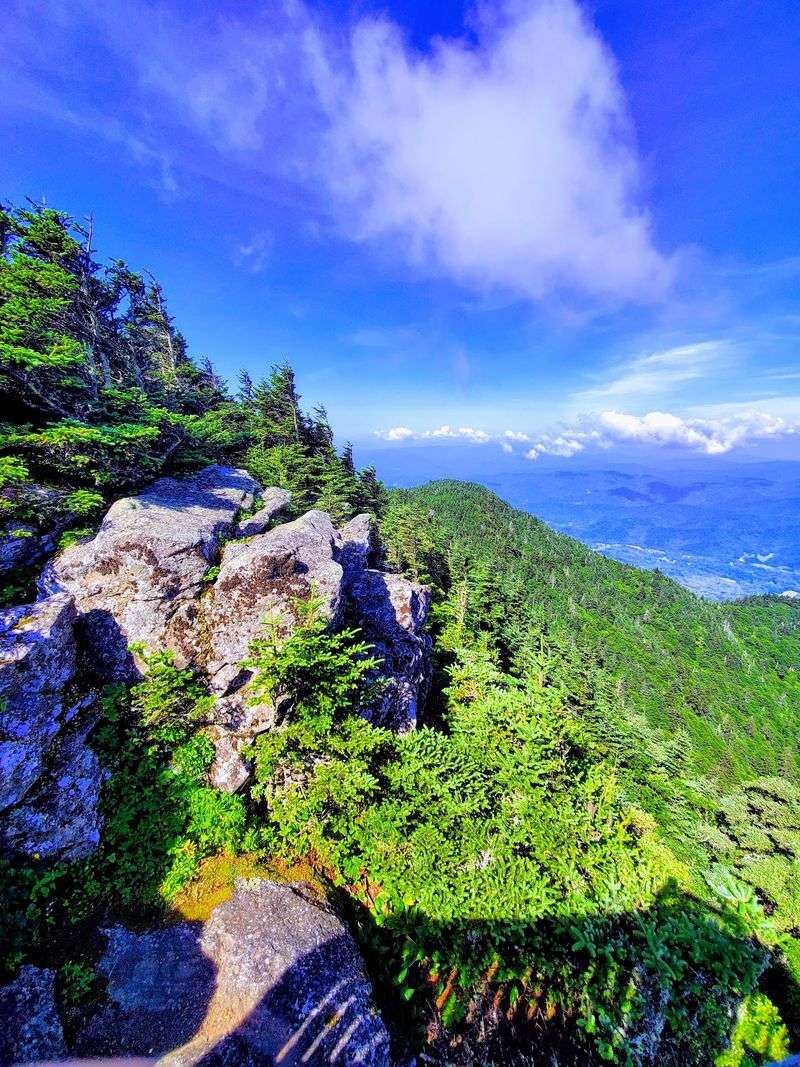
Here is a fun bit of backstory. The forest takes its name from a Presbyterian minister, Reverend James Hall, who was struck by the sweeping views from the top of a mountain rising more than 5,700 feet.
Hall named that peak after the biblical Mount Pisgah, the spot from which Moses looked out over the promised land. The name stuck, and today it covers the whole forest.
That naming story fits the place perfectly. From the high points here, the layered ridges roll out toward the horizon in every direction, and it is easy to see why someone wanted to mark the moment with a name that carried weight.
Knowing the origin adds a little depth to the drive. As you climb toward the higher overlooks, you are following in the footsteps of someone who stood there centuries ago and decided the view was worth remembering.
History and scenery blend together in this forest more often than you might expect. The name is just the first hint of the layered stories waiting along these roads.
Driving Under Nature’s Green Ceiling
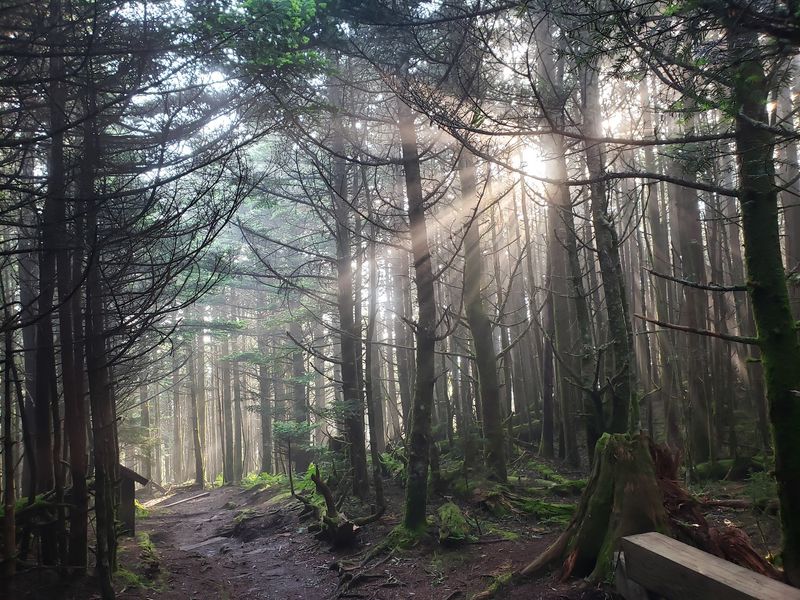
The star of the show, the reason this whole story exists, is the tree canopy that arches over the road as you wind through the forest. Branches meet overhead and turn long stretches of pavement into a shaded green tunnel.
People love simply rolling down the windows and taking a slow ride beneath it. There is no rush, and the drive itself becomes the destination.
The Blue Ridge Parkway travels through large parts of Pisgah, and the route is famous for being scenic and relaxing. Every viewpoint along the way is marked, with parking set up for an easy stop, view, and go.
Some sections of road have been narrowed after severe flooding damaged part of one lane, so certain stretches move slower than usual. Locals suggest embracing the slower pace and soaking in the surroundings rather than rushing through.
Whether the sun is out or fog drifts in after rain, that canopy keeps the drive feeling cozy and enclosed. It is the kind of road you want to take twice, just to catch what you missed the first time.
Looking Glass Falls And Its Roadside Wow
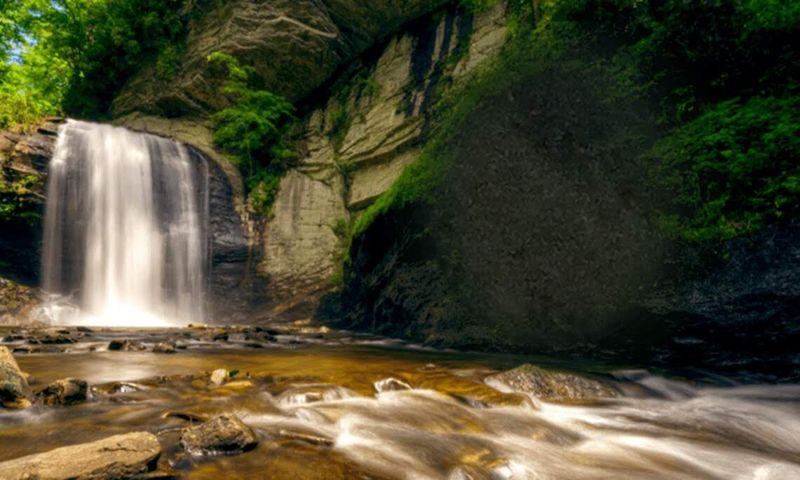
Few waterfalls make a first impression like Looking Glass Falls. The 60-foot plunge sits just a short walk from its parking area, about a third of a mile, which means almost anyone can reach it.
The falls are dramatic and framed by thick green forest, and the short stroll makes it a favorite quick stop. It is one of those rare roadside wonders that requires almost no effort to enjoy.
Described again and again as absolutely beautiful and serene, this waterfall shows up on nearly every trip through Pisgah. It works as a warm-up before bigger hikes or a satisfying stop all on its own.
Because it is so easy to reach, the spot draws a steady flow of people, especially on warm days. Even so, the scene stays peaceful, and there is room to pause and take it all in.
If you only have time for one waterfall in the whole forest, this is the one folks point you toward. It sets the tone for a place where water seems to fall around every corner.
The Hidden Cove Behind Moore Cove Falls
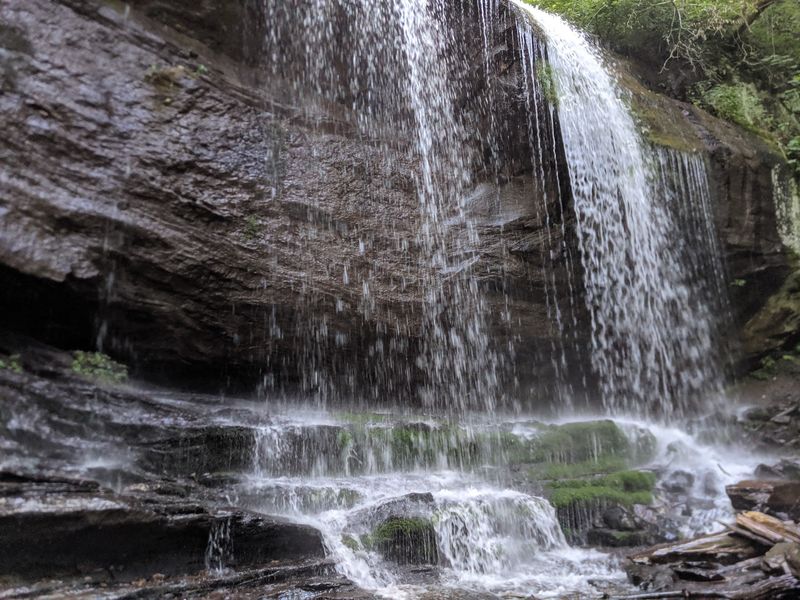
Quieter and a little more tucked away, Moore Cove Falls rewards a gentle 0.7-mile round-trip walk through the woods. The trail leads into a cove where a 50-foot ribbon of water slips over a rocky ledge.
The best part is that you can walk behind the falls, right into the sheltered space beneath the overhang. It is a dreamy little pocket of the forest that feels tucked away from the busier spots.
People describe it as a refreshing change from the crowds. The short distance makes it doable for families, yet the setting feels like a genuine discovery.
The path is easygoing, winding along a small stream with a few log crossings that add a bit of fun. It is the kind of trail where kids and grandparents can both keep pace.
Moore Cove often gets grouped with the forest’s other favorites like Sliding Rock and Whalebone Falls. Add it to your list, and you will see why it earns a spot among the hidden corners worth finding.
Sliding Rock, The Natural Waterslide
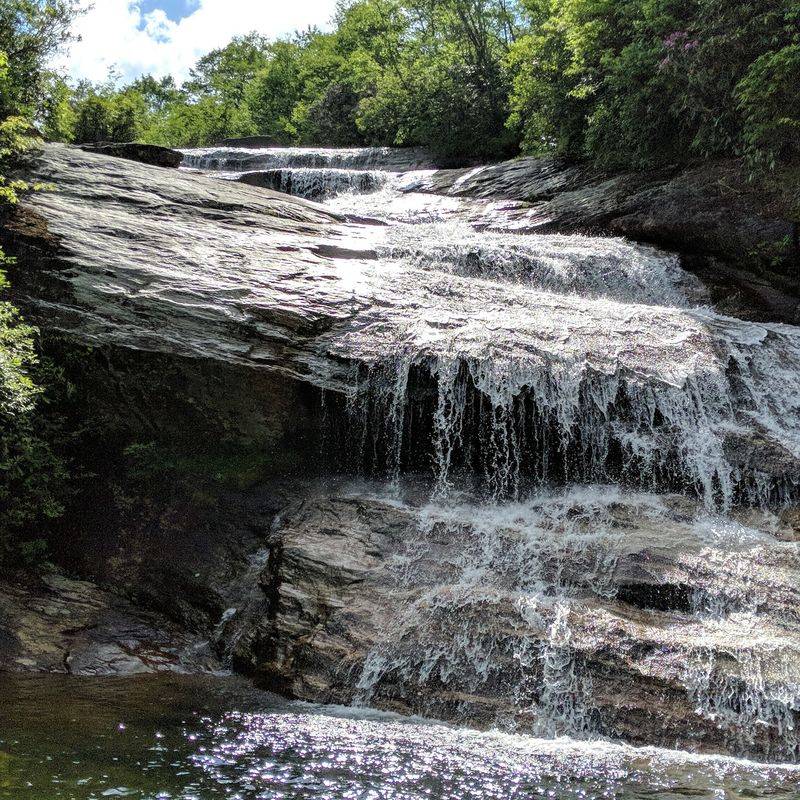
Summer in Pisgah has one thrill that keeps folks coming back with a grin. Sliding Rock is a natural stone waterslide where you sit down and ride the flowing water into a pool about eight feet deep.
The pool runs chilly, which is exactly the point on a hot day. Lifeguards keep watch during the busy season, and there is dedicated parking to handle the crowds.
The vibe here is active and fun, drawing families and thrill-seekers of every age. Even those who would rather stay dry find plenty of entertainment.
Plenty of older folks say watching the sliders is half the fun, no wetsuit required. It has become a spot where onlookers cheer and laugh alongside the ones taking the plunge.
Named on nearly every must-see list for the forest, Sliding Rock captures the playful side of Pisgah. Between the waterfalls and the trails, this is where the forest lets loose a little.
Over A Thousand Miles Of Trails
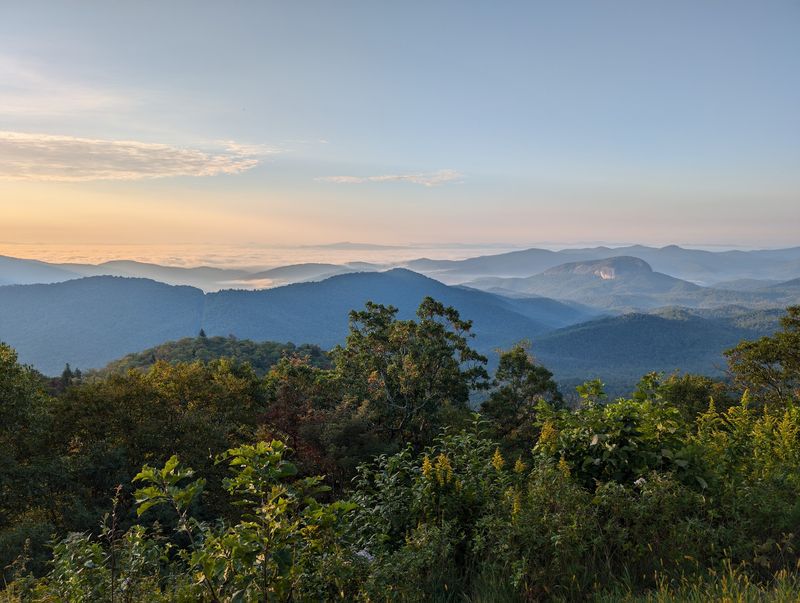
Calling this a hiker’s dream is not an exaggeration. The forest holds more than a thousand miles of trails, with routes for gentle strolls and routes that make you work for the view.
Some paths climb roughly a thousand feet of elevation over a short distance, with uneven rocks, roots, and stairs along the way. Those are best left to folks with steady knees and no fear of heights.
Plenty of easier options exist too, and hiking is one of the most talked-about activities in the whole forest. Trails lead to waterfalls, overlooks, and quiet stretches where you can just sit with the woods.
People often stop to simply pull off the road and rest with nature, no destination required. The mix of difficulty means everyone can find something that fits their day.
Fall brings out crowds of walkers, cyclists, and families all sharing the paths. Whatever season you choose, there are more trails here than you could ever cover in a single visit, which is a fine problem to have.
Overlooks That Steal The Scene
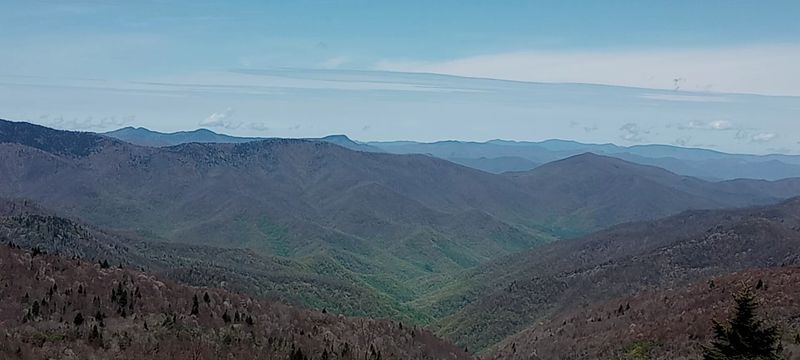
High points in Pisgah deliver views that make the drive worth every mile. Devil’s Courthouse ranks among the best spots for panoramic pictures, sitting near the highest ground in the area.
Another can’t-miss stop looks out toward Looking Glass Mountain, a smooth-sided peak you can spot from many overlooks scattered across the forest. Its rounded face stands out against the surrounding ridges.
The overlooks come up often when people talk about the scenery, and there are nearly thirty different viewpoints folks single out. Each one frames the Blue Ridge Mountains from a slightly different angle.
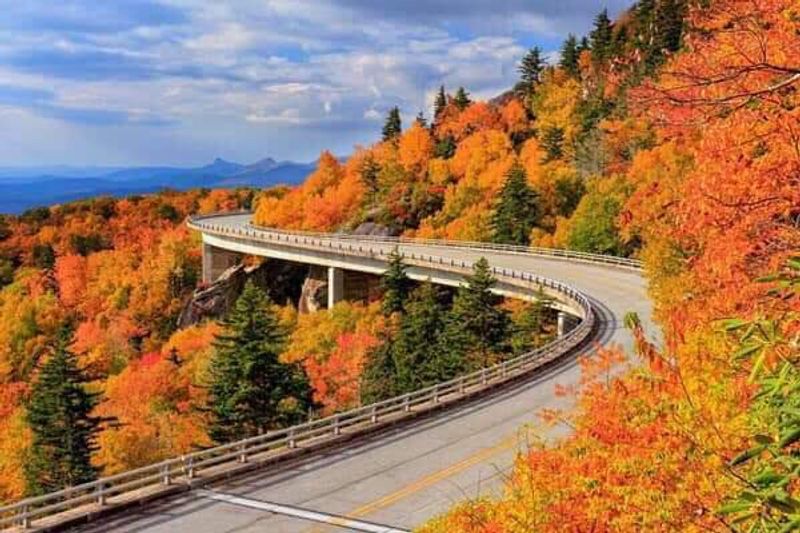
Autumn turns these lookouts into something extra special. The changing leaves burst with orange, yellow, and red against the deep green, and the effect is described as nature’s own fireworks.
Because each viewpoint is marked with parking, hopping from one to the next is simple. String a few together and you get a highlight reel of the whole forest without ever hitting a strenuous trail.
Views From The Frying Pan Lookout
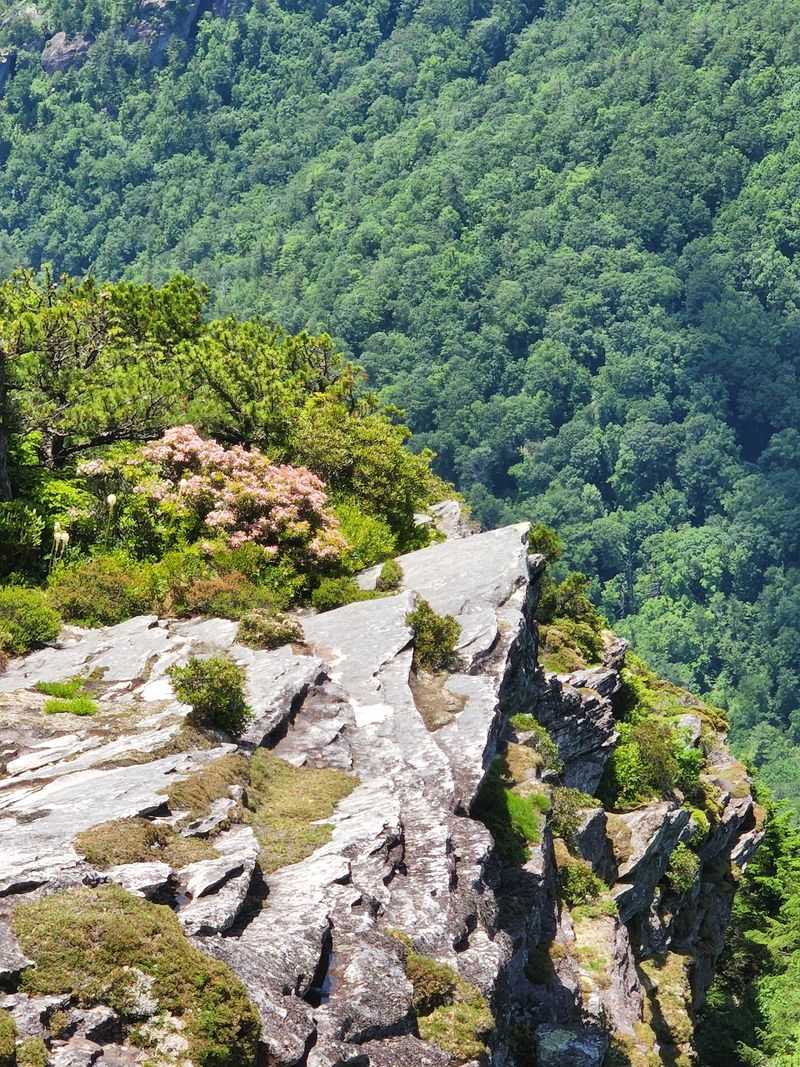
For a reward that comes after a bit of climbing, the Frying Pan Lookout delivers. A hike up to the old fire tower opens onto sweeping panoramic views of the forest and the Blue Ridge Parkway.
The tower makes a fine perch for a peaceful mountain escape. It is often mentioned as an ideal spot to catch the sky glowing as the day winds down.
The climb takes some effort, but the payoff spreads out in every direction once you reach the top. Ridge after ridge stacks up toward the horizon.
Lookouts like this one give the forest a sense of vertical drama that the roadside stops cannot quite match. You earn the view, and that makes it stick with you.
Pair it with a waterfall hike earlier in the day, and you have a full outdoor itinerary that mixes water and sky. The Frying Pan Lookout is where Pisgah shows off its high side.
The Cradle Of Forestry In America
Not everything in Pisgah is about waterfalls and peaks. The Cradle of Forestry in America marks the birthplace of forestry education in the country, and it carries real historical weight.
The site pairs rich history with woodland trails and interpretive exhibits. It is called a meaningful stop for anyone curious about how these forests came to be protected and studied.
Nature buffs and history lovers both find something to appreciate here. The exhibits help explain the story behind the trees you have been driving under all day.
Adding this stop turns a scenic outing into something a little more thoughtful. You come away understanding why the land looks the way it does.
The visitors center inside the forest also holds plenty of information about Pisgah’s history, so you can pick up context before or after. Between the two, the forest’s past becomes part of the adventure rather than an afterthought.
Camping, Fishing, And Riding The Trails
Staying overnight opens up a whole other side of Pisgah. Camping here can be found for free in certain areas, and folks recommend planning three or more days to really soak it in.
Off-road fun is part of the package too. A five-dollar day pass lets you ride ATVs and OHVs along designated routes, adding a dose of adventure to the mix.
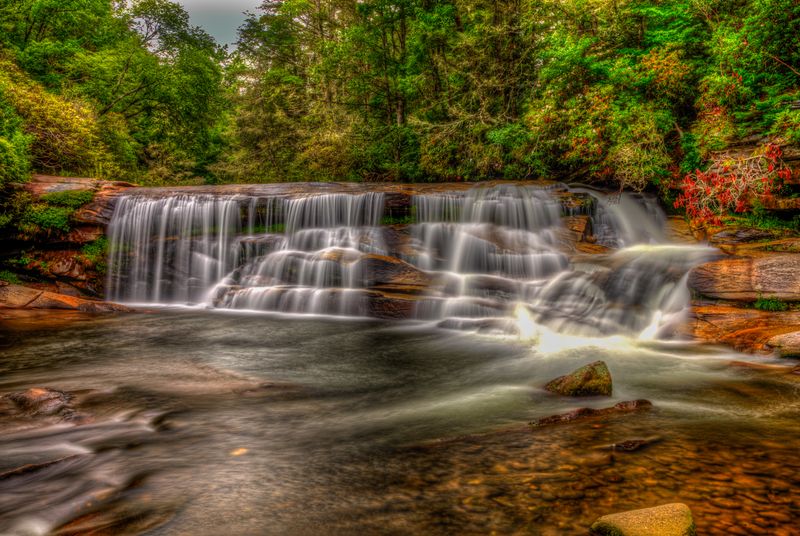
Fishing draws its own steady following, with the forest’s white-water rivers and streams ranking among the popular activities. The rivers run clear and cold through the mountains.
Swimming holes give hikers a chance to cool off after a long trail, and they are scattered throughout the forest. On warmer days, they turn into welcome rest stops.
Between camping, riding, fishing, and swimming, this is far more than a place to pass through. People describe it as a wonderful spot to be one with nature, and the range of options backs that up completely.
Fall Colors Turn The Forest Electric
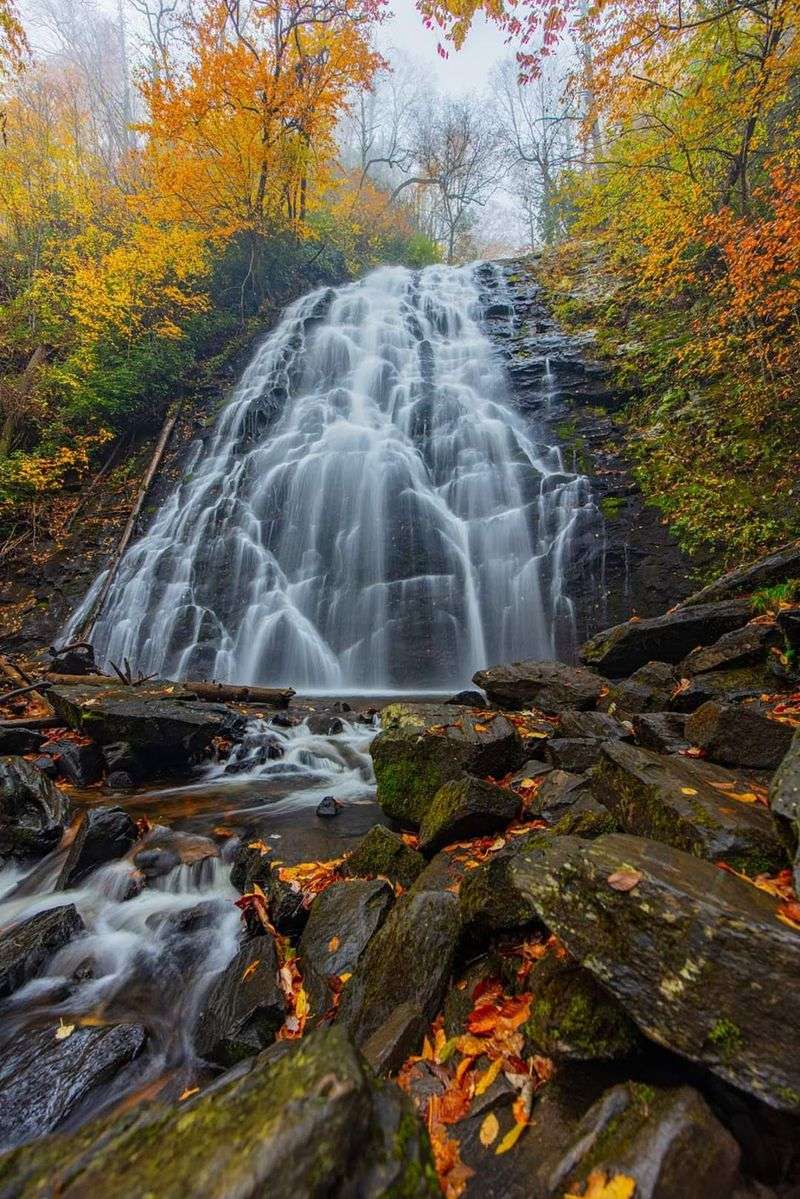
If timing matters to you, aim for autumn. When the leaves peak, the forest lights up with orange, yellow, and red popping against the lingering green.
The Blue Ridge Parkway during this season gets called spectacular, with the color show compared to fireworks lit up across the mountains. It is the busiest and most photographed time of year for good reason.
Crowds of people head out to walk and cycle the trails as the temperatures cool. The energy is lively, yet there is still room to find quiet corners.
Many folks plan their trips specifically to circle back when the foliage is at its brightest. The waterfalls and overlooks all take on a richer backdrop.
Even outside of fall, the forest earns praise in every season, from snowy December quiet to summer swimming. But there is something about those autumn weeks that makes the leafy canopy overhead feel almost magical.
Practical Tips Before You Go
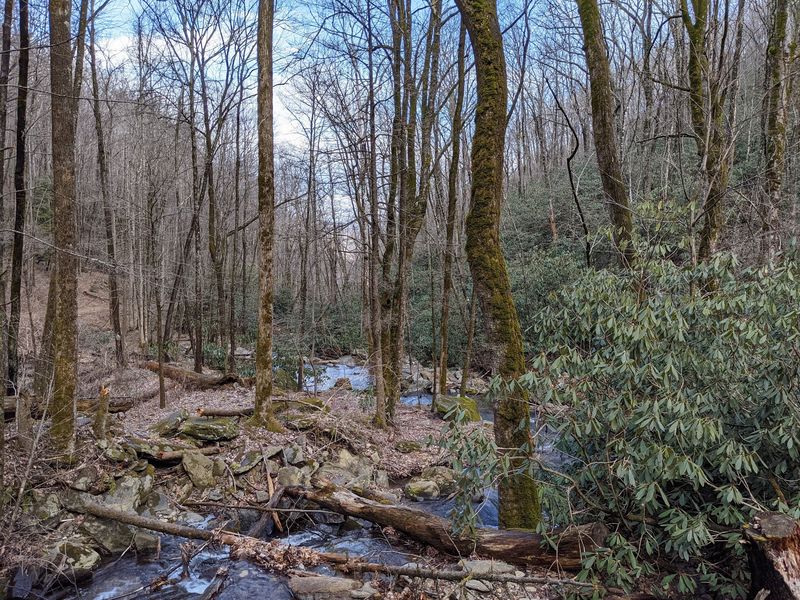
A little planning goes a long way here. Entrance to the forest is free, though some activities inside charge a small fee, and off-road passes run about five dollars a day.
Cell service is basically nonexistent once you are away from the ranger station. People strongly suggest downloading an app for navigation or grabbing a printed map from the visitors center just inside the park.
There are no shops within the forest, so packing your own food and drinks is smart if you want to stay all day. Gas stations and places to eat sit just outside the park boundaries.
Parking is generally ample, with plenty of marked pull-offs, though holidays can make popular lots fill up faster. Arriving early helps on busy weekends.
The forest is dog-friendly and family-friendly, with responsible owners cleaning up after their pets and kids welcome throughout. You can reach the ranger office at +1 828-257-4200, and the official site through the U.S.
Forest Service has more details for planning.
Why This Backroad Stays With You
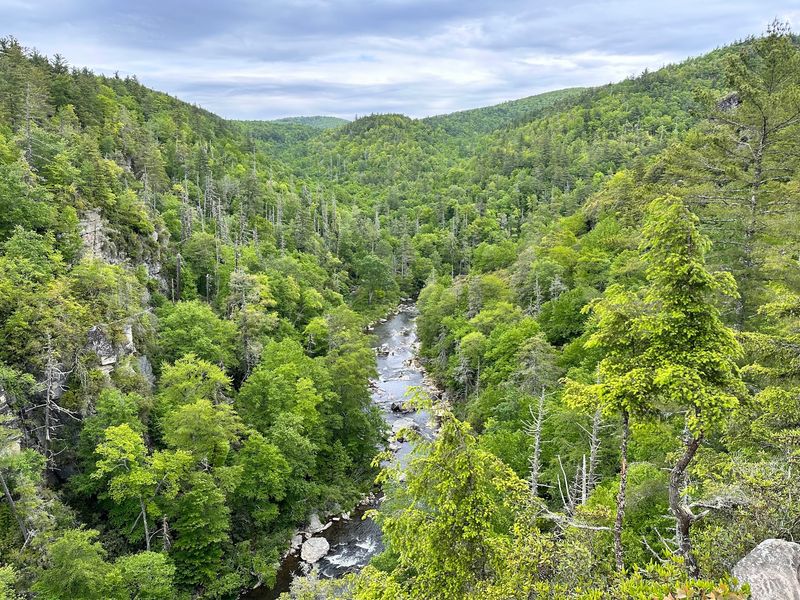
Some places you visit once and check off a list. This forest is not one of them, and the loyalty it inspires says everything.
People return trip after trip, chasing new waterfalls, fresh overlooks, and quiet stretches of trail they have not walked yet. With 500,000 acres to explore, there is always a reason to come back.
The magic really lands on that shaded backroad, where the canopy closes overhead and the pace slows to match the surroundings. Rolling the windows down and taking the slow ride turns a simple drive into a lasting memory.
Waterfalls around every corner, mountains rising in every direction, and rivers threading through it all make the case on their own. Add the history, the camping, and the friendly welcome, and the picture is complete.
Western North Carolina has plenty of beautiful spots, but this leafy stretch of Pisgah National Forest earns its reputation honestly. Come for the drive, stay for the falls, and leave already planning your next trip back.