Affiliate disclosure: As an Amazon Associate I earn from qualifying purchases. Learn more
After hundreds of miles of highway, a green-and-orange sign at the Florida border can feel like the whole trip finally clicking into place. For winter travelers making the annual drive south, that moment of crossing into the Sunshine State carries a weight that is hard to explain to someone who has never done it.
This essay explores why that sign might feel so meaningful, where you can safely stop to mark the moment, and what the sign actually says these days.
A state-line sign can feel like a small homecoming
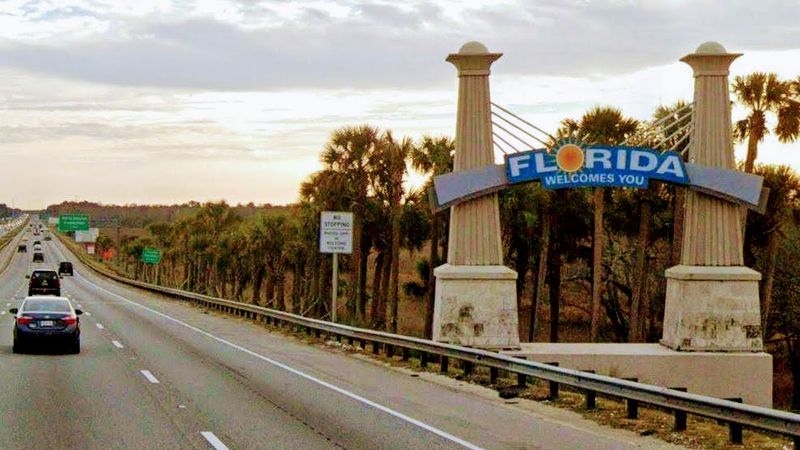
Somewhere around the Georgia-Florida line, the pine trees seem to straighten up a little taller, the air coming through the vents carries a different weight, and then there it is: the welcome sign. For a traveler who has been on the road for two or three days, that green rectangle is not just a piece of aluminum on a post.
It is the sentence at the end of a very long paragraph.
The sign itself does an ordinary job. It marks a legal boundary and tells drivers they have crossed from one jurisdiction into another.
Highway engineers and transportation planners think of it in those practical terms, and they are not wrong to do so. But a returning winter traveler might read it differently, the way a person reads a familiar front porch after being away for months.
That personal reading is worth taking seriously, even if it is not a universal experience. Not every driver slows down emotionally when they see the sign.
Plenty of people cross into Florida on business trips, family moves, or quick weekend runs without feeling a thing beyond mild relief at the GPS recalculating. The affection some travelers bring to that moment belongs to them, shaped by their own history of making the trip, not by anything the sign promises.
What makes the arrival feel tangible, for those who do feel it, is probably the accumulation of miles behind them rather than any magic in the sign itself. The sign just happens to be the first fixed object that confirms the journey is over.
For a snowbird pulling a car full of winter coats south in November, that confirmation can feel surprisingly good.
Florida has welcomed highway travelers for generations
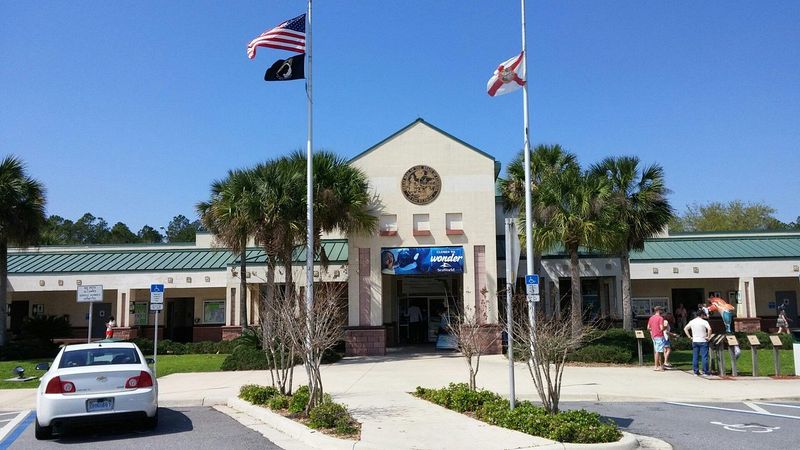
Florida’s tradition of formally greeting road travelers stretches back further than most people realize. Visit Florida’s Welcome Center program traces its origins to 1949, making it one of the longest-running highway hospitality programs in the country.
The state says millions of auto travelers have passed through its centers over the decades, which gives some texture to the idea that crossing into Florida has long been treated as an occasion worth marking.
The centers were built around a practical insight: travelers arriving by car needed somewhere to stop, stretch, use a restroom, and get their bearings before continuing south. Tourism officials understood early that a good first impression could shape the entire visit.
That logic still holds, even if smartphones have replaced the paper maps that once drew people inside.
Winter migration to Florida among older adults is a well-documented pattern, not just a stereotype. Research on seasonal migration among elderly adults in Florida found that a meaningful share of older residents spend part of the year elsewhere and return seasonally, a rhythm that shapes everything from traffic counts to grocery store staffing in certain parts of the state.
That research describes a migration pattern, though, not a set of feelings about highway signs. The two things are related only loosely: the same travelers who make the seasonal trip south are also the ones most likely to have made it before, which means they are the ones most likely to have a personal history with the welcome sign.
Whether that history produces a deeper attachment is a question each traveler answers for themselves.
The welcome sign’s message has changed
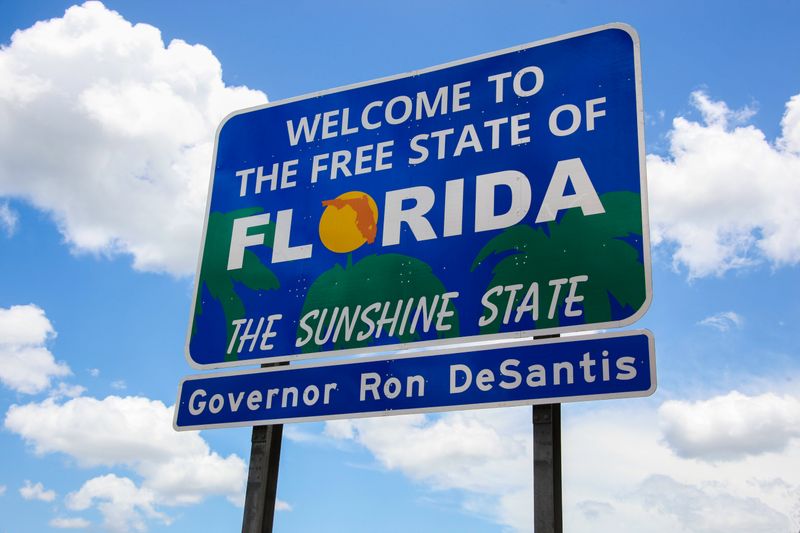
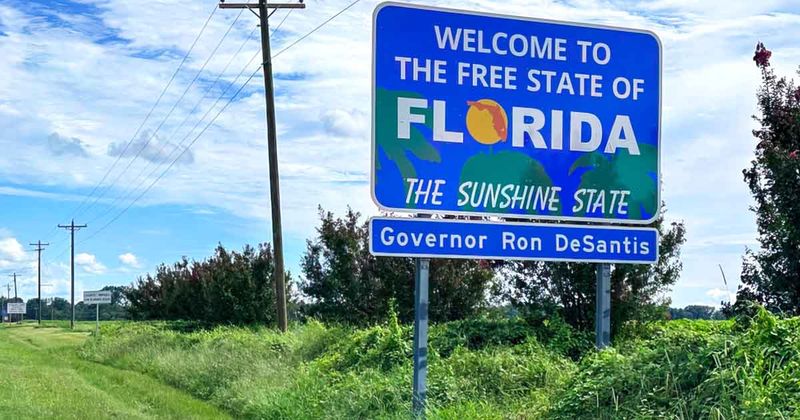
Travelers who have been making the Florida run for years may notice that the sign looks a little different now. On July 9, 2024, the Florida Department of Transportation announced that “Free State of Florida” had been added to welcome signs on major state roadways, updating wording that many drivers had known for decades.
The same announcement noted that “Hurry Back” signs were being added for motorists leaving the state.
That change is worth knowing about before you build up a mental picture of what you will see at the border. The familiar phrasing suggested by the title of this essay may not be exactly what greets you on every route.
Sign designs and wording can also vary by location, so the version on I-95 near Yulee may not look identical to the one on I-75 near Jennings or I-10 near Pensacola.
None of that makes the moment less meaningful for a traveler who has been anticipating it. The sign’s job is still the same: it marks the line.
What the new wording adds is a layer of current political identity that was not part of the older design, which is context worth carrying into the experience rather than a reason to be disappointed. Arriving in Florida is arriving in Florida, whatever the sign says.
Where can you pause along the main routes?
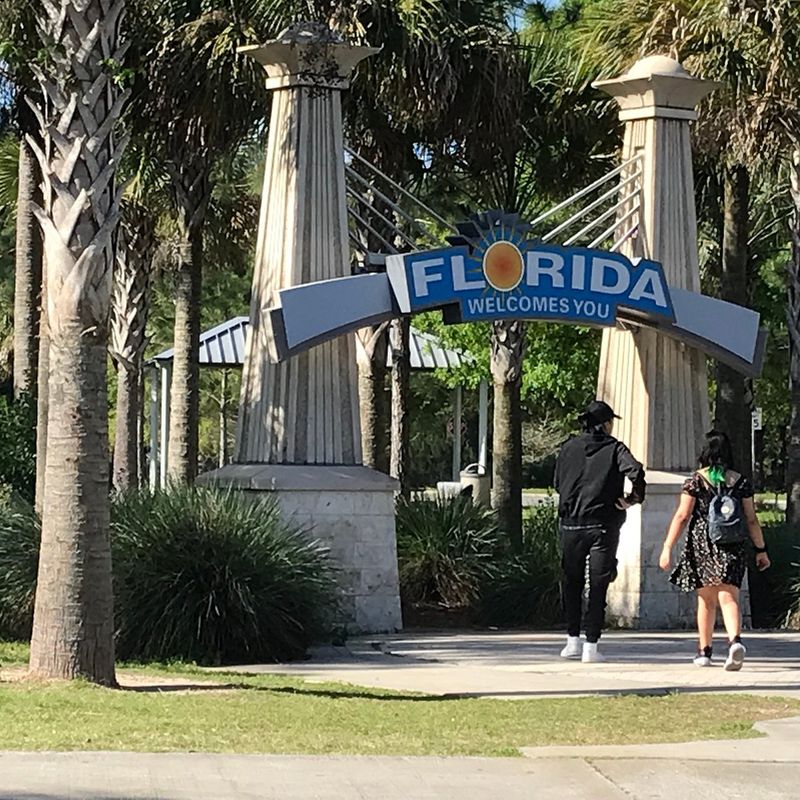
Florida maintains official highway Welcome Centers at three main interstate entry points, and knowing where they are before you leave home makes the stop much smoother. Visit Florida’s Welcome Center page lists facilities on I-10 near Pensacola, I-75 near Jennings, and I-95 near Yulee, covering the three corridors most commonly used by snowbirds driving south from the Carolinas, Georgia, Tennessee, and points north.
One detail that surprises some travelers: the centers are not necessarily sitting right at the state line. Official Welcome Center location information places the I-10 center approximately 16 miles west of Pensacola, and the I-75 center about four miles north of Jennings.
That means you will cross into Florida before you reach the center, not at it. Plan for a short additional drive after the border rather than expecting the two to coincide.
Two other options are worth noting for travelers on different routes. A center on U.S. 231 in Campbellton serves drivers coming in from Alabama on that corridor, and the Capitol Welcome Center in Tallahassee is a distinct facility for those who are stopping in or passing through the capital.
These are not substitutes for the interstate centers but separate stops with their own character and access.
All five locations are practical places to take a trip photo, use the facilities, and get your bearings before continuing south. They are not presented here as a ranked list or as guaranteed sign-photo vantage points, because the state-line sign and the Welcome Center are different stops on the same road.
Think of the center as the place where you can safely celebrate the arrival that the sign announced a few miles back.
A safe photo stop takes a little planning
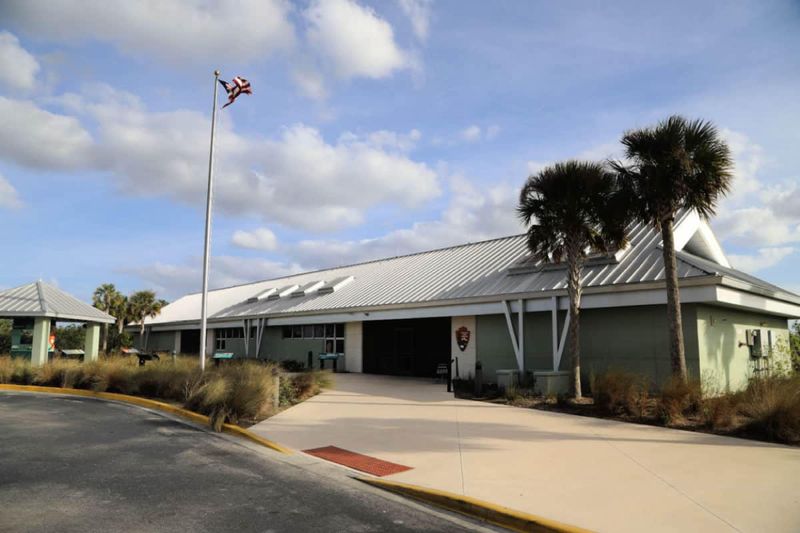
Pulling off the highway to photograph a welcome sign sounds simple, but the logistics matter more than most people expect. Florida law, specifically Florida Statutes Section 316.1945, prohibits stopping, standing, or parking on the roadway or shoulder of a limited-access facility.
The statute does include exceptions, such as a disabled vehicle or assisting in an emergency, but stopping to take a photo is not among them. Pulling onto an interstate shoulder for a quick picture is not a legal or safe option, regardless of how tempting the shot looks.
The right move is to plan your celebration stop at a signed Welcome Center or rest area, where pulling off the road is exactly what the facility is designed for. You get a safe parking spot, restrooms, often a shaded picnic area, and sometimes travel literature, all of which make for a more comfortable pause than a roadside scramble anyway.
Before setting out, check FDOT’s rest area and facility information to confirm the specific center you plan to use. Welcome Center facilities and interstate rest areas are open 24 hours a day, seven days a week, so a late-night or early-morning arrival is not a problem for accessing the grounds.
Tourist-information service inside the centers, the staffed counters where you can pick up maps and ask questions, operates on a separate schedule: 8 a.m. to 5 p.m. daily, with closures on Easter, Thanksgiving, and Christmas.
Knowing that distinction in advance prevents the mild disappointment of arriving at 7 a.m. and finding the information desk dark. The parking lot and facilities will still be open; the brochures and the friendly face behind the counter will be there a couple of hours later.
Let the arrival be yours
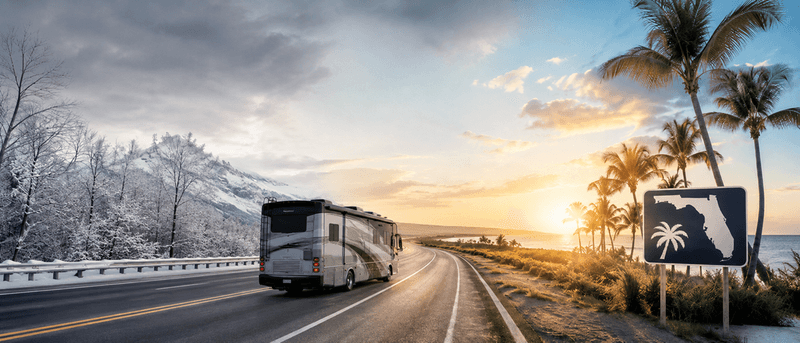
No study has measured whether a snowbird feels more moved by a Florida welcome sign than a first-time visitor does. That comparison was never really the point.
The point is that a long drive has a finish line, and for a traveler who has made this trip before, the sign is the moment the finish line becomes visible.
Mark the arrival at a proper stop, take the photo if you want one, and let the moment be whatever it is for you. The sign will do its ordinary job, and you can do yours: deciding that getting here was worth the miles.