
Affiliate disclosure: As an Amazon Associate I earn from qualifying purchases. Learn more
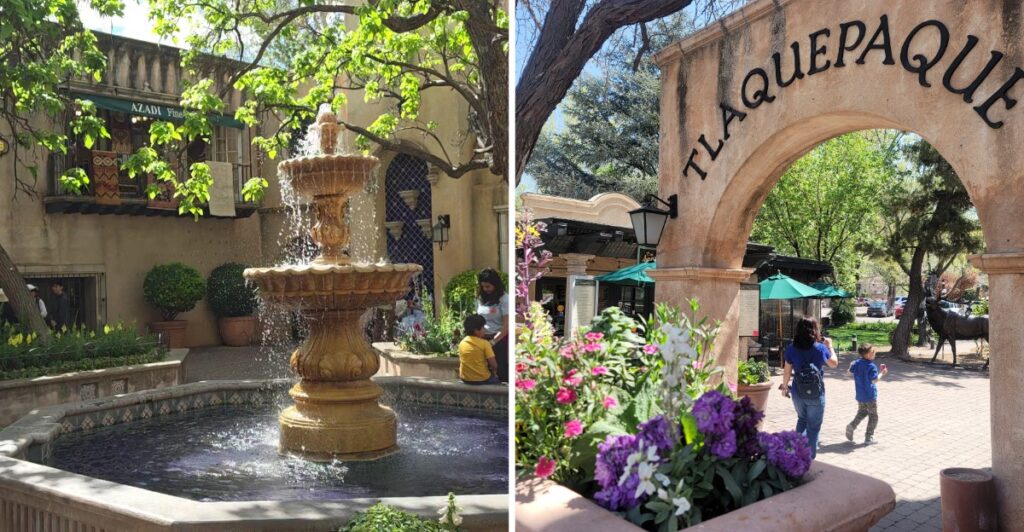
Sedona gets most of its fame from red rock trails and vortex hunts, yet one of its best surprises requires no hiking boots at all. Just off a busy highway sits a cluster of stucco walls, cobblestone lanes, tiled staircases, and archways designed to look like a traditional Mexican village, complete with fountains, courtyards, and more than 50 shops, galleries, and restaurants.
Plenty of Arizona locals have driven right past it on the way to a trailhead without ever pulling in, and that is a mistake worth fixing on the next trip north. Keep reading for the story behind its unusual name, the hidden corners worth hunting down, the smartest hours to show up, and the parking strategy that can save a lot of circling.
A Mexican Village Hiding on Highway 179
Arizona has a talent for tucking world-class places into spots most people zoom past, and this one sits right along the main road into Sedona’s red rock country.
Tlaquepaque Arts & Shopping Village is found at 336 AZ-179, Sedona, AZ 86336, just past the busiest stretch of downtown Sedona in north-central Arizona.
On paper, it gets filed under the humble label of shopping mall. In person, that description falls flat almost immediately.
The village is an enduring outdoor market built around art galleries, craft shops, cobblestone paths, and decorative arches. It stands as a long-running landmark for artisanal shopping in Sedona rather than a row of chain stores.
More than 50 shops, galleries, restaurants, cafés, and boutiques are spread across the grounds. Paths twist, courtyards open up without warning, and stairways lead to second-level storefronts that are easy to miss on a quick pass.
Size is part of the appeal. The layout is large enough that some guests spend over four hours poking into shop after shop, while others simply wander the grounds without buying a thing.
Many people treat it as a post-hike stop, and it works well that way. Still, the village holds its own as a destination, especially for Arizonans who want proof that their state can deliver a slice of Mexico without a passport.
So what exactly is a Tlaquepaque, and why does a Sedona landmark carry the name of a place near Guadalajara?
The Story Tucked Inside a Tricky Name
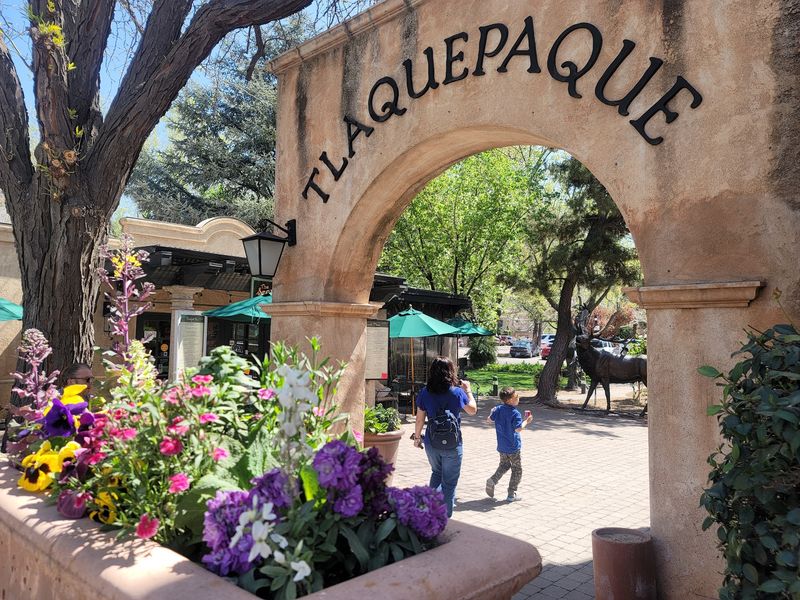
Few place names in Arizona trip up first-timers quite like this one. Most folks give up halfway through and settle on a confident mumble.
Locals tend to shorten it to Tlaq, a nickname so common that the village website itself lives at tlaq.com.
The name comes from Tlaquepaque, a town in the Guadalajara area of Jalisco, Mexico, known for its artisans and crafts. That connection explains a lot about the Sedona version.
The Arizona village was designed to look like a traditional Mexican village, a place where art, culture, and community come together in one walkable setting. Galleries and workshops take the place of department stores, and plazas take the place of parking-lot storefronts.
Many people describe it as a historical site worth seeing even without any plans to shop. Others say the courtyards and alcoves feel like an old-world European village instead.
Both descriptions land, because the Spanish-inspired design borrows from traditions shared across Mexico and Europe. The result sits somewhere between a plaza in Jalisco and a hillside town overseas, dropped into the Arizona high desert.
For Arizona residents, the fun part is ownership. A trip here gives a small taste of the Guadalajara region with nothing more than a scenic drive up the highway.
Understanding the name is only the first layer, though. The real story is written in stone, stucco, and tile.
Cobblestones, Arches, and Tiled Steps
Architecture is the headliner here, and it earns top billing without trying too hard.
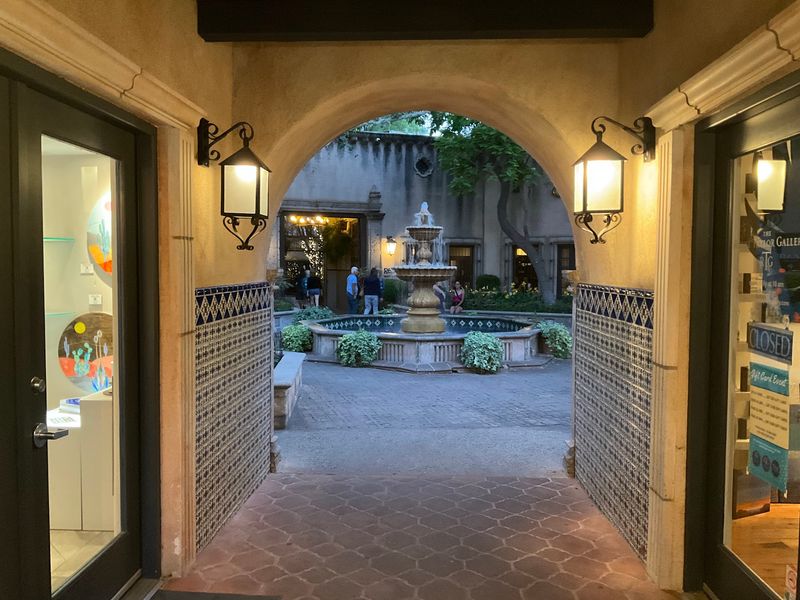
Cobblestone paths wind between stucco walls, and archways frame nearly every passage from one courtyard to the next. The adobe-style buildings and Spanish-inspired details give the grounds the look of a village that grew over generations.
Keep an eye on the staircases. Several old-style stairways feature intricate tile designs on each individual step, and they rank among the most photographed details in the entire village.
Storefronts get the same level of care. Elaborate entrances, carved details, and small alcoves turn window shopping into something closer to a scavenger hunt.
The layout itself deserves credit. Paths twist and turn in a charming maze, so every corner seems to lead to one more courtyard, one more staircase, or one more shop that was invisible a minute earlier.
Photographers love it for obvious reasons. The architecture photographs well at almost any hour, and arriving before the shops open gives a nearly empty set to work with.
Even the restaurants follow the rules. Dining spaces keep the same aesthetic as the exterior, so the design never breaks character.
Architecture buffs could easily spend an hour here without entering a single store. Of course, the buildings are only half of the design, and the other half grows right out of the ground.
Fountains, Courtyards, and a Frog Worth Finding
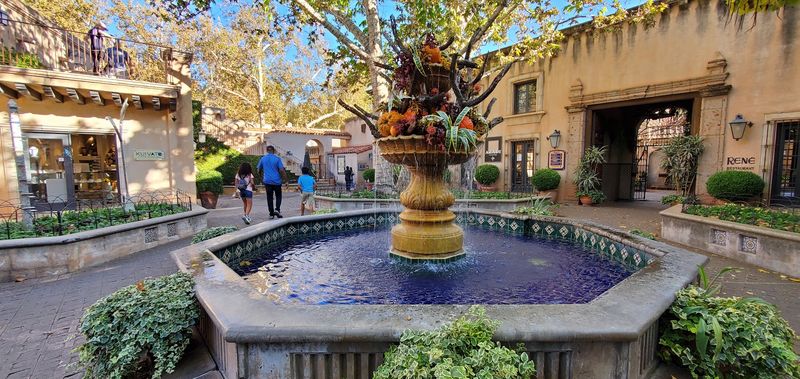
Here is a detail that surprises plenty of first-timers: the builders worked the village around the existing trees and habitat instead of clearing the land.
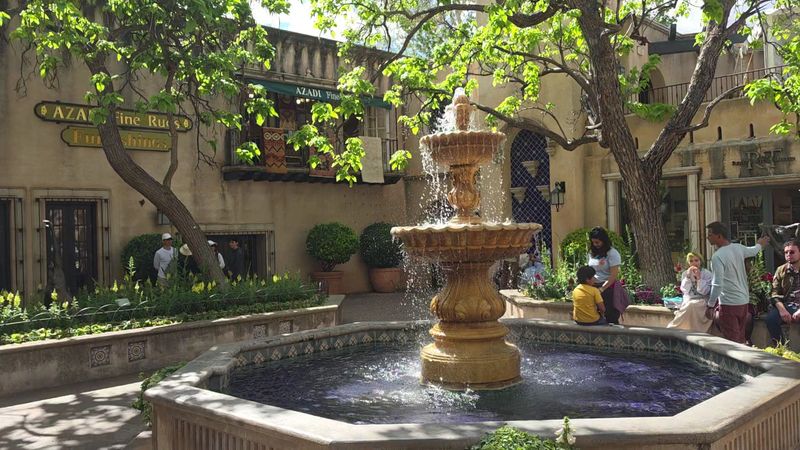
That choice shaped everything. Paths bend around mature trees, and courtyards open up beneath their branches, which is why the grounds feel organic rather than planned by a spreadsheet.
Fountains are scattered throughout the property. They serve as natural meeting points, photo backdrops, and resting spots between rounds of shopping.
Vine-covered courtyards, flower planters, and sculptures fill in the gaps. Colorful plants, foliage, and artwork line the walkways and make even the quiet corners worth a look.
Shade is a big bonus for Arizona travelers. The covered paths and tree canopy make the village a comfortable place to wander when the sun is out in full force over the red rocks.
Housekeeping also stands out. The grounds are known for being spotless, and the planters and fountains look well maintained.
Now for the side quest. Somewhere in a corner of the village sits a small frog figure that rewards anyone patient enough to hunt for it.
Nobody needs a map to find it, just a little curiosity and a willingness to peek into nooks that most shoppers skip. Consider it the village’s way of rewarding people who slow down, and the galleries reward that same patience.
Galleries That Steal the Spotlight
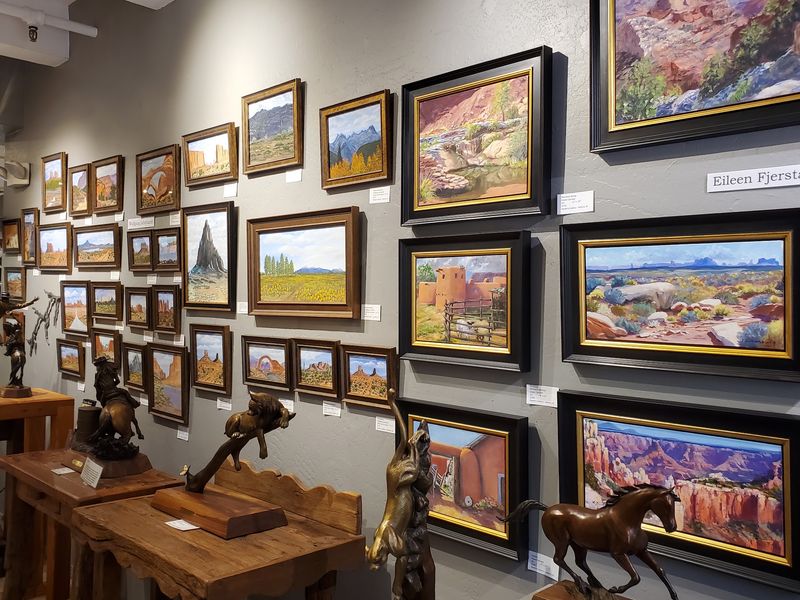
Galleries are the backbone of the village, and they outnumber almost everything else on the property.
Many are locally owned, and a good share showcase work from local artists. Paintings, sculptures, and handcrafted pieces fill the rooms, and each space has its own personality.
Native American art and wares appear in several shops as well. That mix gives the collection a strong regional identity instead of a generic souvenir feel.
One of the best parts is the chance to interact with artists and gallery staff. Conversations about technique and inspiration happen naturally, especially on slower weekday mornings.
Art lovers will find plenty to study. Even casual browsers who could not name a single art movement tend to wander from room to room longer than planned.
A quick word on budgets. The village leans heavily toward the gallery side, and the prices reflect original, professional work rather than mass-produced prints.
That does not mean anyone has to buy something to enjoy it. Plenty of people treat the galleries like a free museum tour, admiring the pieces and moving on.
Friendliness varies a bit from shop to shop, with most owners welcoming and a few more reserved. Overall, the gallery scene is the main reason the village has kept its reputation as a landmark for fine art in Sedona, but the smaller shops have tricks of their own.
Sedona’s Strongest Vortex Pulls on Wallets
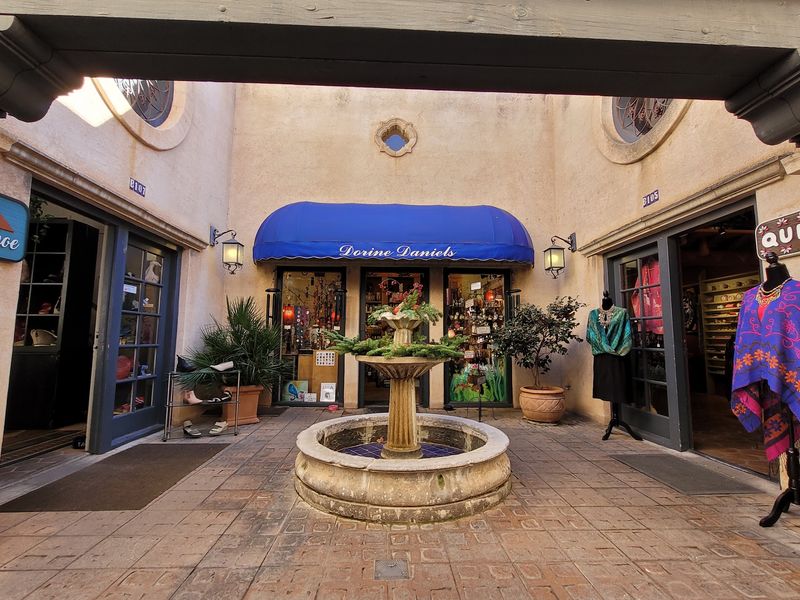
Sedona is famous for its vortex sites, but the strongest pull in town might be the one steering wallets toward the boutiques at Tlaq.
It is a running joke with real truth behind it. Shoppers stop in for a quick look, and somehow an entire hour disappears.
The range of shops is impressive. Pottery, crystals, beads, handcrafted jewelry, clothing, music, and home décor all have a place here.
Some of the more unusual finds include a handmade quilt store and a record and book shop. Those small specialty stores add variety between the larger galleries.
Unique gifts are a strength of the village. Many items are one-of-a-kind pieces that are hard to track down anywhere else in Arizona.
Price points vary more than first-timers expect. A handful of touristy shops offer more reasonable options, while the pottery and quilt stores sit on the pricier end.
That spread makes it easy to set a budget and still leave happy. A small trinket can be just as satisfying as a statement piece for the living room.
For deal hunters and browsers alike, the real pleasure is the abundance. Door after door opens onto something different, and the temptation to check just one more shop rarely lets up.
All that browsing builds an appetite, and luckily the village planned for that too.
Patio Tables Between the Archways
Restaurants rank as the single most talked-about topic at the village, ahead of the galleries and even the architecture.
That popularity makes sense. The eateries are tucked throughout the grounds, so a break is never far away when legs start to protest.
Choices cover a lot of ground. Mexican, Italian, vegan, and classic American grill options all share the property, along with coffee shops and dessert stops.
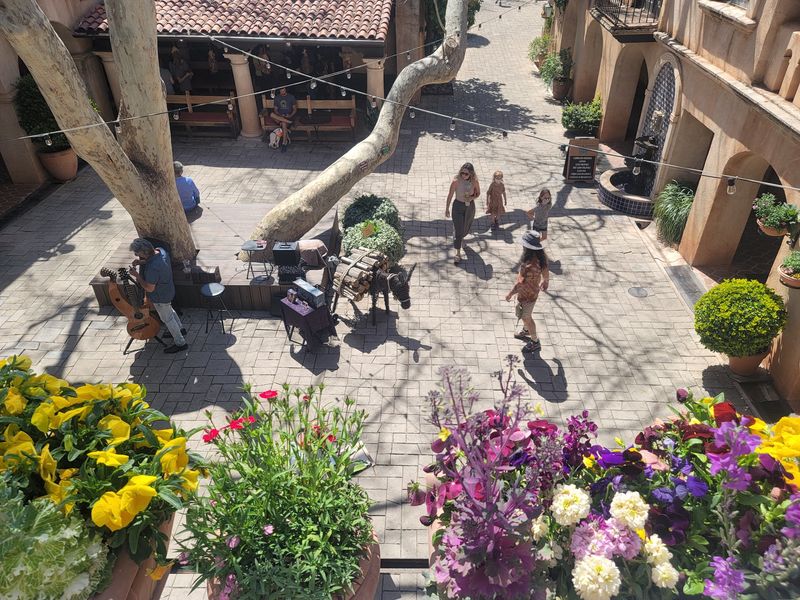
The setting may be the biggest draw. Tables sit among mature trees, greenery, flowers, and Spanish-style design, making a meal feel like part of the sightseeing instead of a pause from it.
Patio seating appears nearly everywhere. Some spots offer second-story views over the courtyards, which is a nice perch for watching the crowds drift by below.
Many hikers roll in for a post-trail meal after a morning on the red rocks. The location right off State Route 179 makes that plan easy to pull off.
Inside, the restaurants keep the same aesthetic as the rest of the village. Nobody walks through a door and suddenly lands in a generic dining room.
A meal here turns a quick shopping stop into a full afternoon. And if the timing works out, the entertainment might even come free with the view.
Live Music, Holiday Lights, and Golden Hour
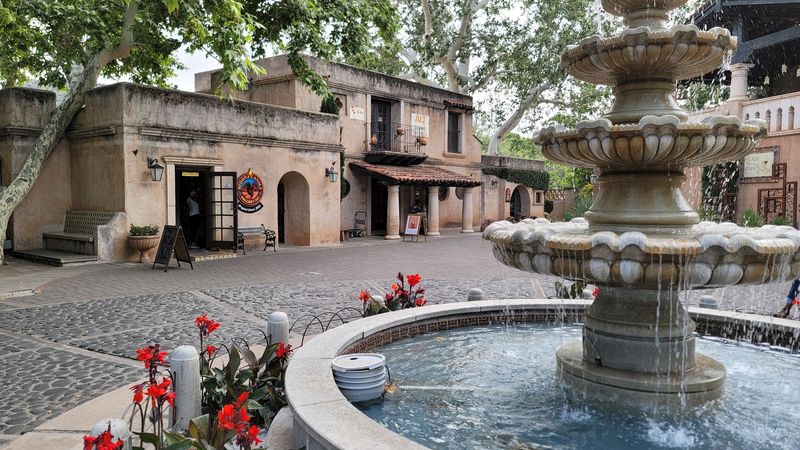
Timing can change the whole personality of the village, and late afternoon is when it tends to shine brightest.
Around sunset, the adobe-style architecture and courtyards take on a softer look in the evening light. Photographers and couples often plan their visits around that window for good reason.
Live music is a regular part of the scene. Musicians and performers often set up around the grounds, and multiple events sometimes happen at the same time.
That entertainment turns the courtyards into gathering spots. People grab a bench, pause by a fountain, and let the afternoon slow down for a while.
Crowds usually thin out later in the day. With lights coming on and fewer people on the paths, the atmosphere becomes noticeably cozier.
Then there is the holiday season. During Christmas, the village is dressed up and lit throughout, which makes it a favorite seasonal outing for Arizona families.
A romantic evening stroll fits here too. The scenic courtyards and relaxed pace make it a strong pick for date nights in Sedona.
One catch comes with all that evening charm, though. Showing up too late can mean missing a big chunk of the shops, so the clock matters more than most people expect.
Opening Bells and Early Closings
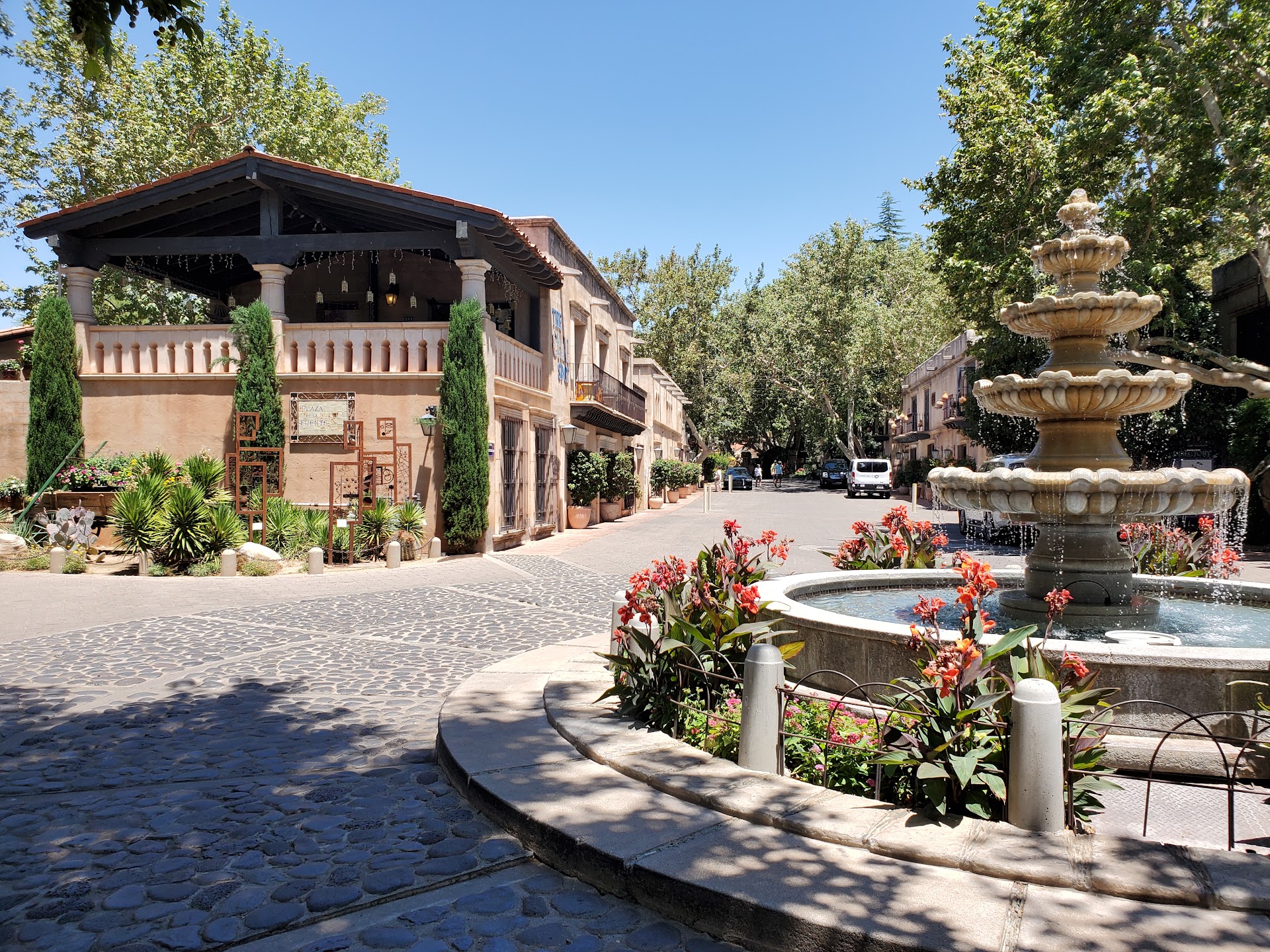
Mornings belong to the early birds at Tlaq, and the reward is a village with room to breathe.
Hours run from 10 AM to 5 PM Monday through Thursday. On Friday, Saturday, and Sunday, the village stays open a little longer, from 10 AM to 6 PM.
Arriving right at opening, even on a weekend, can mean having the paths nearly to yourself. The crowds build steadily as the day goes on.
Photographers sometimes show up before opening time to capture empty courtyards. That strategy works well for pictures, but shops and facilities stay closed until the official start.
At the other end of the day, plan carefully. Some shops close before the posted closing time, so a late arrival can leave several doors locked.
The safest window is early in the day or just after lunch at the latest. That timing gives enough room to explore without watching the clock.
Budget generously. Many people spend a couple of hours here, while dedicated shoppers can easily push past four.
A common wish is that the village stayed open later. Since it does not, a quick check of tlaq.com before heading out can confirm current hours and events.
Getting through the front door is one challenge. Finding a place to leave the car is another story entirely.
The Parking Puzzle Worth Solving
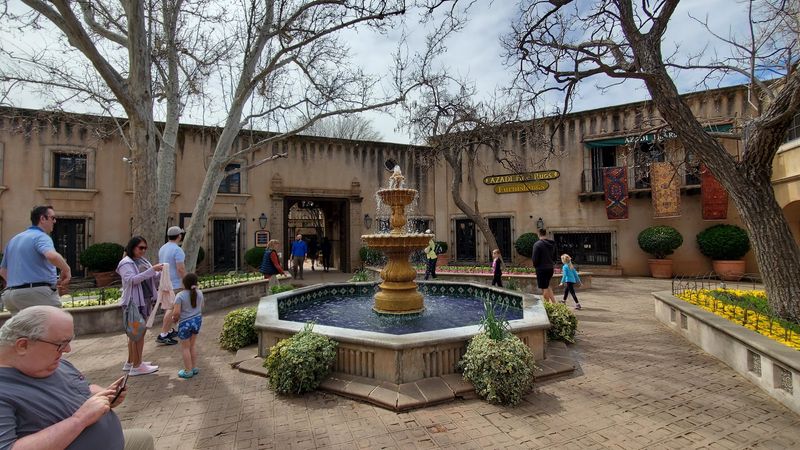
Every great village has a weak spot, and here it comes down to a few precious parking spaces.
On crowded Sedona days, finding a spot can take real patience. Circling for 20 minutes or more is not unusual when the town is packed.
The lot entrance is on the narrow side. Cars trying to enter and exit at the same time can create a small traffic knot right at the gate.
Street parking along the nearby roads helps absorb the overflow. It can be a little hit or miss, but a spot usually opens up for anyone willing to wait.
Signage for any off-site parking is not especially clear. Newcomers should not count on spotting an obvious backup lot.
The good news is that timing solves most of the problem. Arriving right at opening typically makes parking easy, and late afternoon tends to be calmer as well.
Midday on weekends and busy holiday stretches are the toughest times. That window is when patience becomes the most valuable thing in the car.
Most people agree the wait pays off once they are through the arches. The frustration fades quickly after the first courtyard.
A simple strategy works best: pair the village with an early hike or plan it as the first stop of the day. Once the car is parked, the only question left is whether the whole outing lives up to the buzz.
A Passport-Free Trip to Jalisco
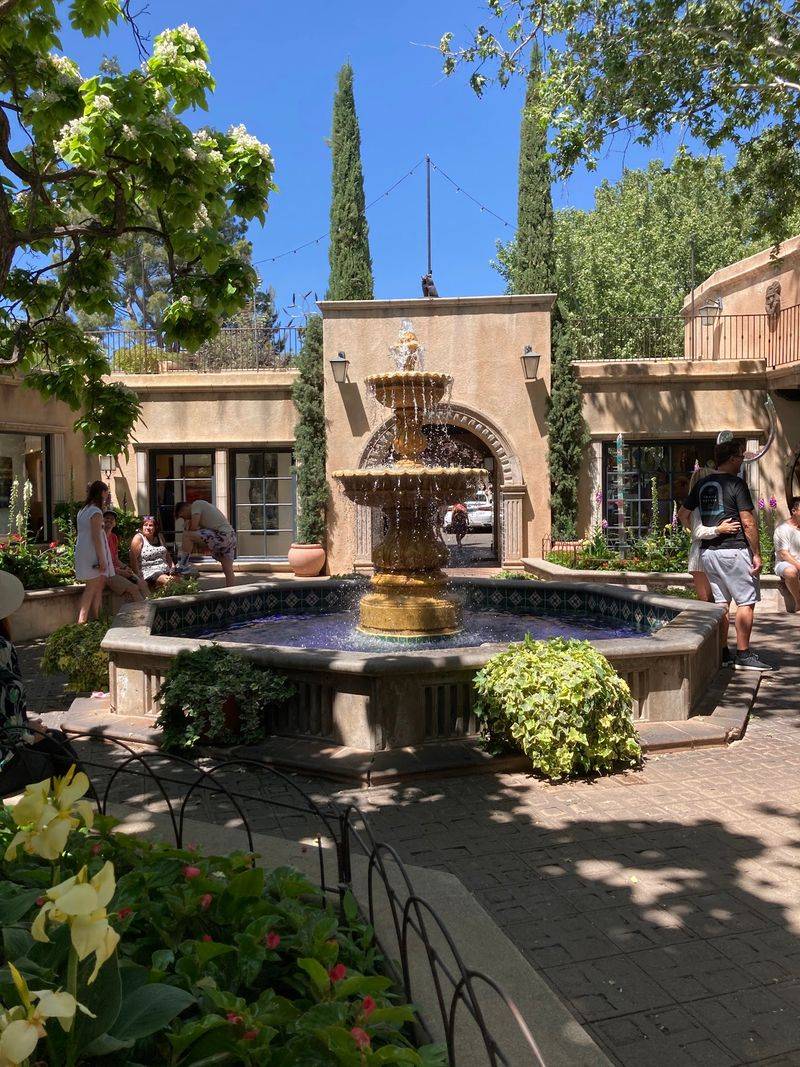
Arizonans love bragging about their backyard, and this village hands them one more reason to do it.
It works for a surprisingly wide crowd. Art lovers get galleries packed with local and Native American work, while families get fountains, courtyards, and a frog hunt to keep kids busy.
Couples find a scenic, romantic setting for an evening stroll. Photographers get tiled staircases, arches, and empty early-morning paths to frame.
Shoppers will want a budget in mind. Gallery prices are serious, even though a few smaller stores offer friendlier price tags.
Non-shoppers are not left out either. Many people enjoy the grounds more than the stores, and simply wandering the courtyards is reason enough to stop.
A few tradeoffs come with the charm. Parking can test patience, some shops close early, and not every owner is equally chatty.
Still, the overall experience holds up well. The design, the cleanliness, and the relaxed pace make it one of Sedona’s most charming stops for anyone who appreciates local culture.
Some treat it as a quick detour on the way back from a hike. Others make it the main event and stay for hours.
Either way, Tlaq proves that a taste of a Guadalajara-area village is only a drive up Highway 179 away. The red rocks may be the reason people come to Sedona, but this little Mexican-style village is often the reason they come back.