
Affiliate disclosure: As an Amazon Associate I earn from qualifying purchases. Learn more
Long before Clarkdale had a name, a village of stone rooms rose along the spine of a ridge above the Verde River. People raised families there, stored their harvests there, and looked out over the same valley that Arizona drivers now cross on their way to Sedona and Cottonwood.
Most of us have zipped past it without a second thought. That is a shame, because this hilltop is one of the most approachable windows into Arizona’s ancient past, and it takes less than an hour to explore.
A short paved loop climbs right up to the old walls, a small museum holds pottery and tools found on site, and one ticket can cover two famous monuments. Keep reading for the history, the views, the trail, and the smart tips that make this backyard treasure an easy win.
A Pueblo Perched Above Clarkdale
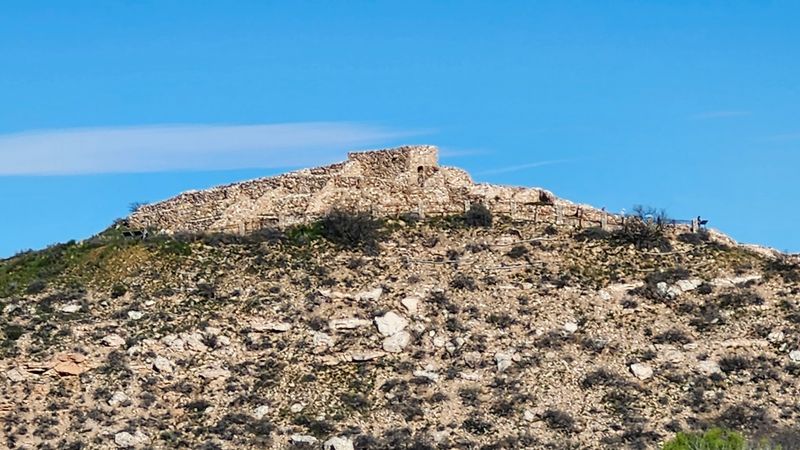
Some landmarks shout from the roadside, but this one simply waits on its ridge. Tuzigoot National Monument sits at 25 Tuzigoot Rd, Clarkdale, AZ 86324, in the heart of Arizona’s Verde Valley in the United States.
The site is an ancient Native American pueblo built on a hilltop. It is managed as a national monument, and a visitor center near the entrance displays artifacts connected to the Sinagua people who once lived here.
The location makes it a natural stop for locals already heading toward Sedona, Cottonwood, or the Verde Canyon train in Clarkdale. Plenty of people treat it as a final stop before driving back to Phoenix, and they rarely regret the detour.
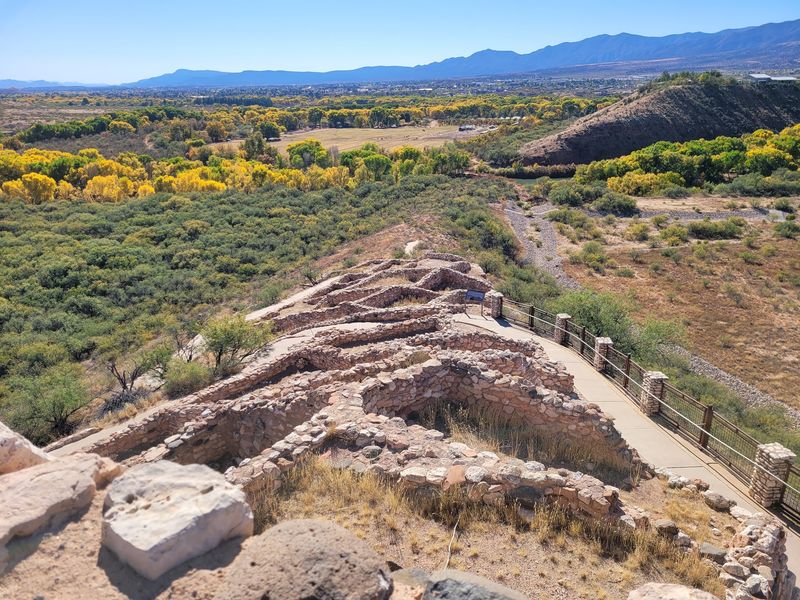
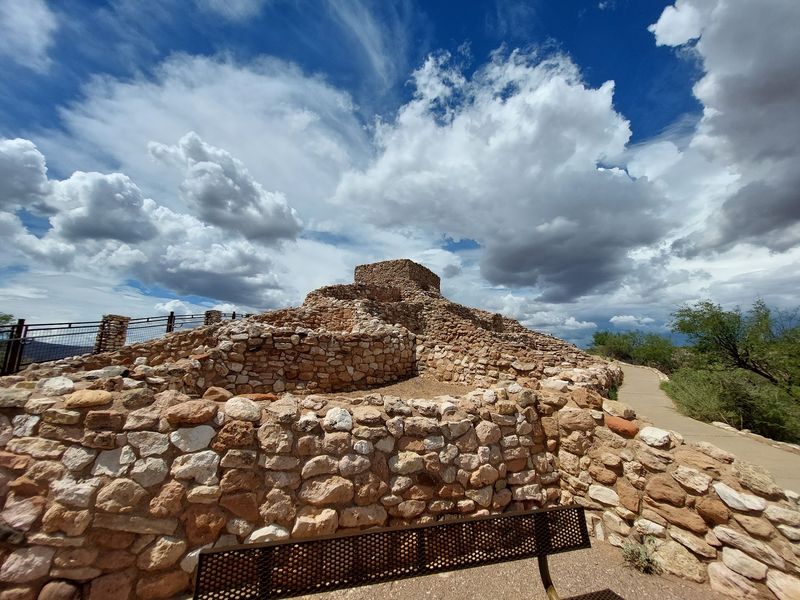
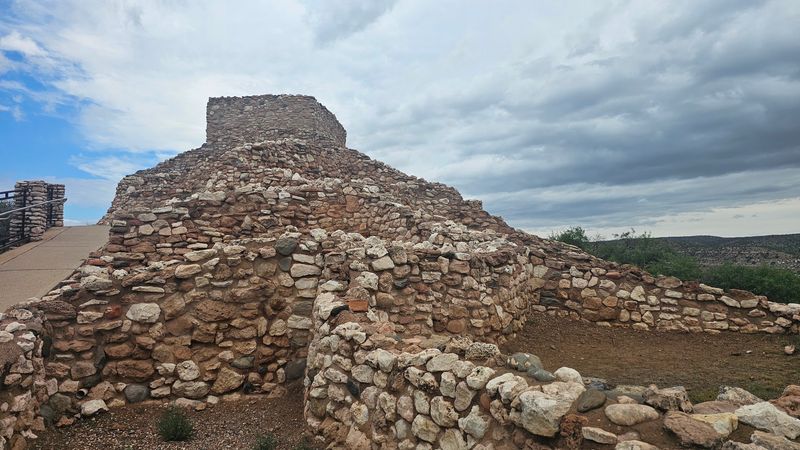
The pueblo stretches along a ridge, with stone rooms stacked and connected in a layout that still reads clearly today. From the base, the walls rise above the valley floor and catch the eye long before the parking lot comes into view.
Arizonans love to brag about their big names, like the Grand Canyon and Montezuma Castle. This quieter neighbor deserves a spot on that list, especially for anyone who likes history served in a manageable portion.
Before heading up the hill, though, it helps to know who built this place and why.
The Sinagua Story Behind the Stones
Around 1100 CE, builders began shaping a village on this ridge. Over time it grew into a large pueblo that, at its peak, housed roughly 225 people from the Sinagua culture of the Verde Valley.
The Sinagua were farmers and builders. They chose a spot with a commanding position above the river and the fertile land below, a smart choice for people who depended on crops.
The rooms were not ceremonial halls. Exhibits and signs explain that these were homes, kitchens, and storage rooms, places where everyday life unfolded for generations.
That detail changes how the ruins feel on a walk. Instead of a mysterious monument, the hilltop becomes a neighborhood, with families tucking away food and tools much like any household would.
The pueblo has stood for close to nine centuries, which is longer than most nations on the map today. Some walls are original, while parts of the structure have been reconstructed to help the public understand the layout.
Not everyone can tell at a glance which stones are old and which are newer, and that is fine. The ranger staff can help sort it out, and the signs offer helpful context along the way.
With the backstory in place, the next question is obvious: what does that ridge actually look out over?
Front Row Seats to the Verde Valley
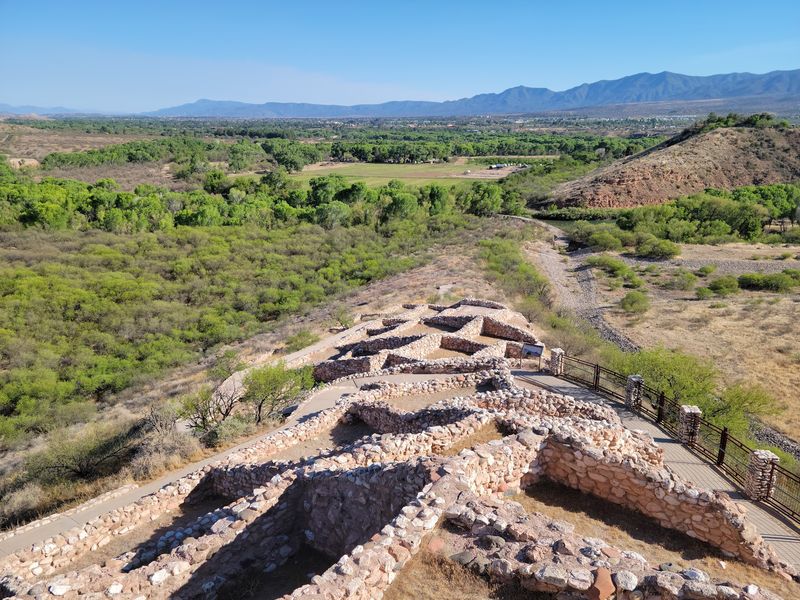
Location, location, location was apparently a priority roughly 900 years ago too. The ridge gives the pueblo a sweeping outlook over the Verde Valley.
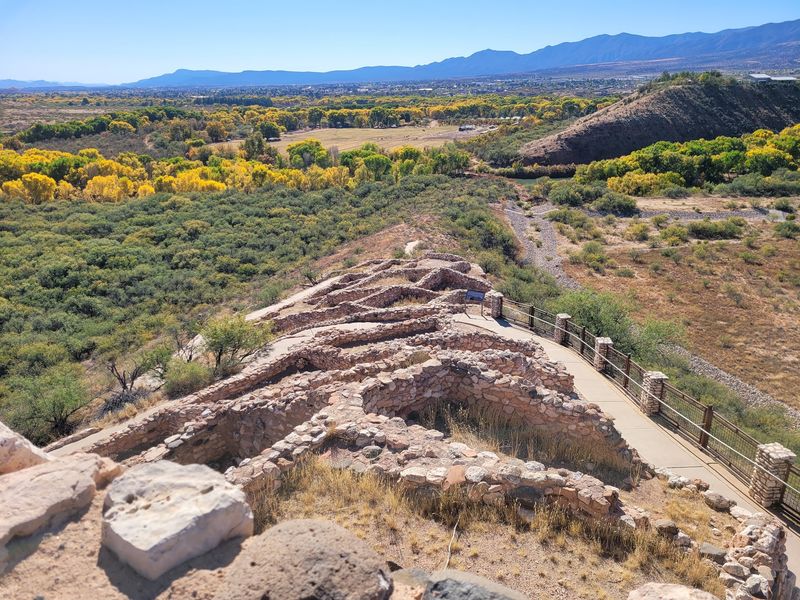
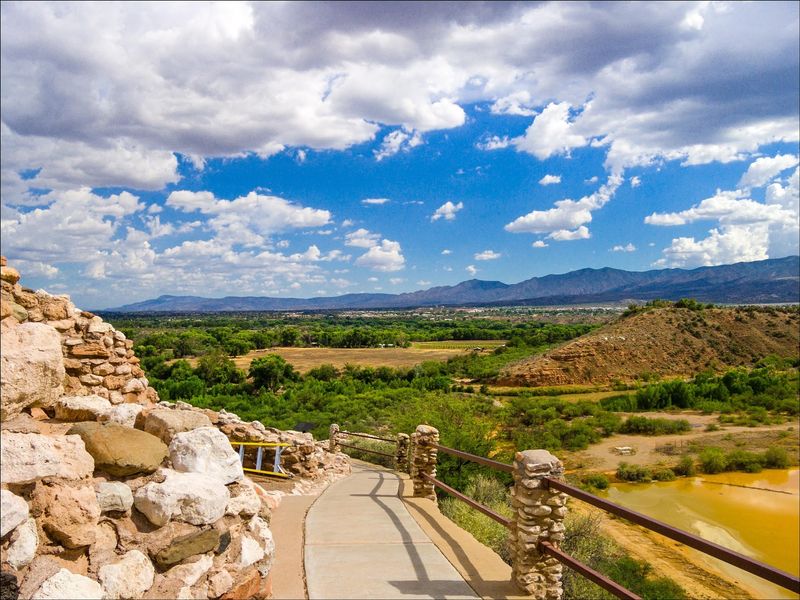
From the top, the river winds below, farm fields spread across the valley floor, and Mingus Mountain rises across the way. Mountain ranges line the horizon in several directions.
The valley has been farmed for about a thousand years. Seeing plowed fields below the old village draws a clear line between the past and the present.
In fall, cottonwood trees along the river turn gold. That makes autumn an especially rewarding season for anyone carrying a camera.
The views are a big reason this stop punches above its size. Even before reading a single sign, the setting explains why people would want to live here.
Photographers tend to slow down near the summit. There is room to pause, frame a shot, and take in the scale of the valley without feeling rushed.
Those views do have to be earned, however, and the path up is shorter than it looks but steeper than some expect.
One Short, Steep Loop
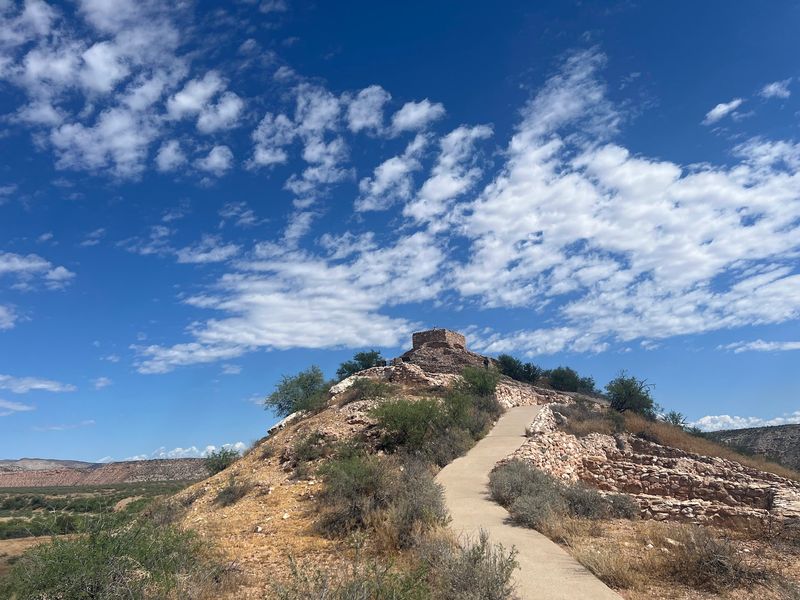
Good news for anyone who dreads long hikes: the main trail is about a third of a mile. Bad news for anyone hoping for flat ground: parts of it climb at a noticeable grade.
The self-guided loop is paved and well maintained. It climbs gradually toward the ruins, then winds through and around the stone rooms before returning toward the visitor center.
Many people describe it as an easy walk. Others point out that the walkway is steep in places and can be tricky for anyone who is not sure-footed.
Both statements are true, depending on the walker. Taking it slowly makes a real difference, and there is no prize for reaching the top first.
Some guests choose to walk only partway and still feel the trip was worth the drive. The ruins are large enough to appreciate even from the lower portions of the path.
Plenty of informational signs line the route. They explain the rooms, the people, and the surrounding landscape in clear, readable chunks.
Native desert plants grow along the trail, and in spring some may be in bloom. A morning stroll here doubles as both exercise and a history lesson, which is about as efficient as an outing gets.
Inside a Restored Room
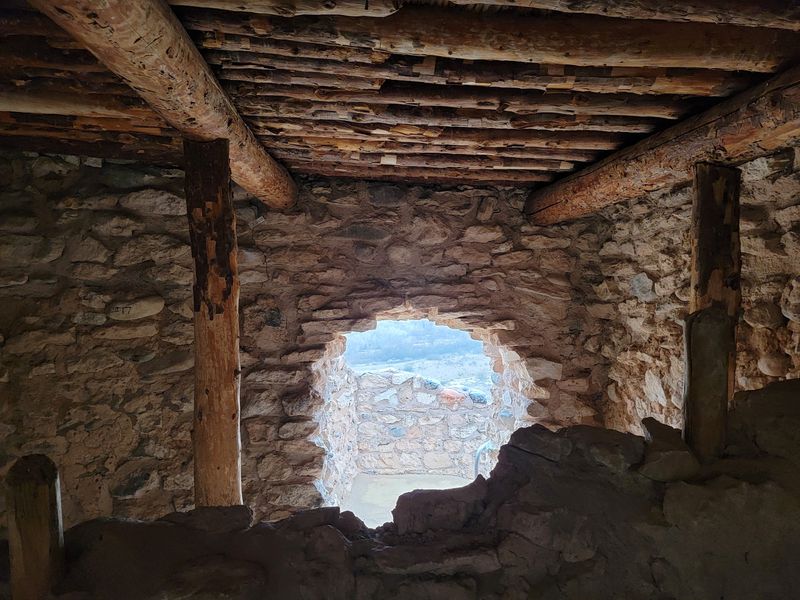
Plenty of ancient sites keep you behind a rope. Here, guests can step inside one of the rooms, which has been restored to show how it would have looked.
The interior features stone walls and wooden support beams. Those beams help explain how the Sinagua built multi-level structures from local materials.
For kids, this is often the highlight. Walking through a doorway into a centuries-old style room turns abstract history into something physical and memorable.
The room also tends to stay noticeably cooler than the open hilltop. On a warm afternoon, that comes as a welcome surprise.
Spending a minute inside offers a sense of scale. The rooms were working spaces, built for cooking, sleeping, and storing what the fields produced.
Respect matters here. The area is open for walking, but treating the walls with care helps keep the site intact for the next nine hundred years, or at least the next few generations.
And once inside, the adventure keeps going upward.
Standing on the Citadel Roof
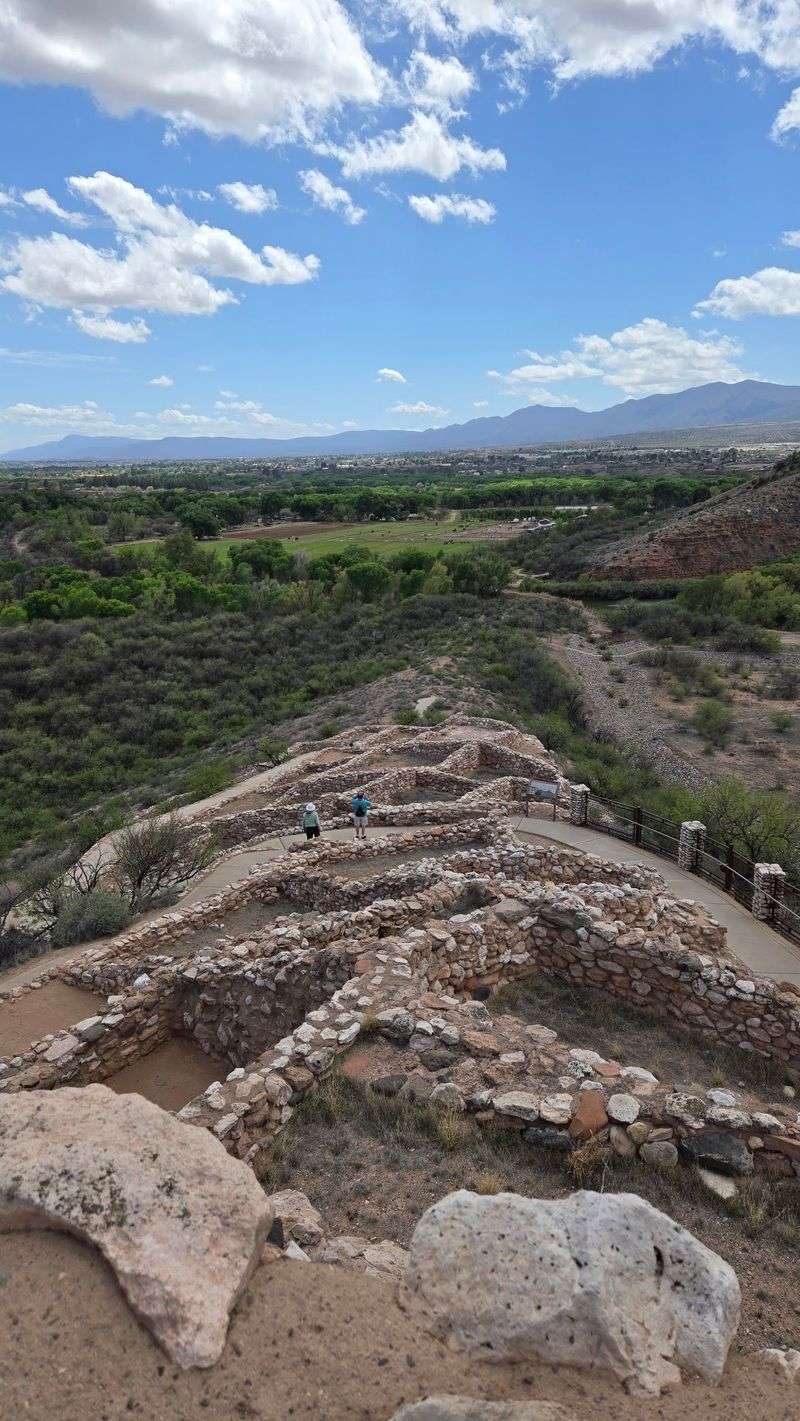
Few archaeological sites let you climb on top of the past. At this monument, guests can head up onto the roof of the citadel.
The roof marks the highest point of the pueblo. From there, the view across the valley lines up with what the Sinagua would have seen centuries ago.
That perspective makes the trip click for many people. The river, the fields, and the surrounding mountains are all laid out below.
It is also the best spot to understand the full footprint of the village. Stone room outlines spread across the ridge, showing dozens of interconnected rooms.
The rooftop is exposed, so sun protection matters here more than anywhere else on the site. A hat goes a long way.
Families often linger for photos at this point. It is the classic shot, with the ruins underfoot and the Verde Valley stretching out behind.
After taking in the big picture up top, the small museum down below fills in the fine print.
Small Museum, Big Collection
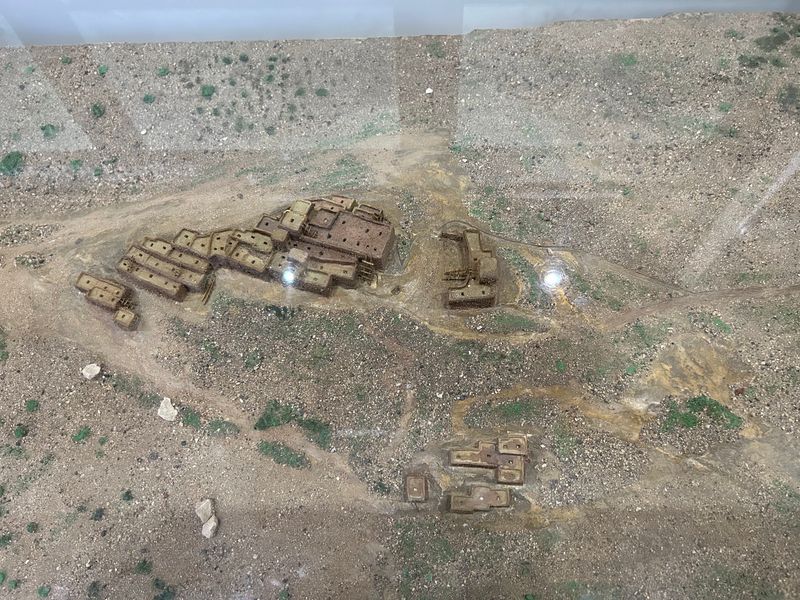
Here is the insider move: start in the museum before hitting the trail. The exhibits give the ruins a human scale that architecture alone cannot provide.
The visitor center is small but packed with material. Pottery, tools, and shell jewelry recovered from the site are on display.
Shell jewelry in central Arizona raises a fun question. Shells are not exactly local to the desert, which hints at the connections the Sinagua had beyond their valley.
Displays explain how the people of the valley lived, worked, and organized their days. The information covers culture and history without becoming overwhelming.
Many guests call the museum the best part of the visit. It turns a collection of walls into a story about real people.
Plan at least a few minutes here, and longer for curious kids. The displays reward a slow look.
A gift shop is also on site, handy for picking up a souvenir that is not a rock from the trail. Speaking of help, the people working here deserve their own mention.
Rangers With Answers
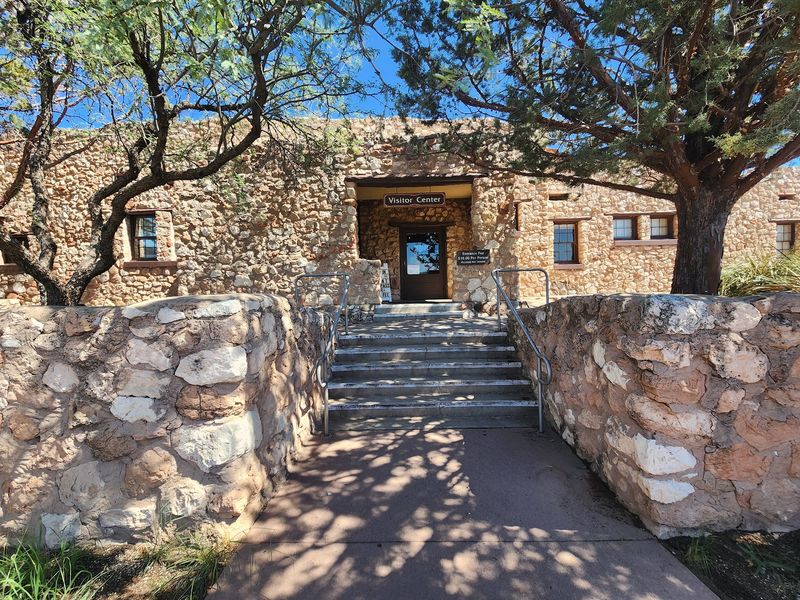
Ask a question at the desk and prepare for a thorough answer. The rangers and docents here have a reputation for being friendly and knowledgeable.
Staff can explain the structure, the people who built it, and the surrounding area. That expertise adds depth that signs cannot always match.
Questions are encouraged. Asking about which parts are original, how rooms were used, or what the valley looked like centuries ago often leads to great conversations.
The helpful attitude extends to practical matters as well. Staff can point out the trail, the restrooms, and how admission works with nearby sites.
For families, a chat with a ranger can turn a quick stop into a memorable lesson. Kids often remember the person who told the story long after they forget the signs.
Collectors of park passport stamps will be glad to know stamps are available too. It is a small perk that makes the stop feel official.
Of course, a site is only as enjoyable as the atmosphere around it, and that is where this place really separates itself.
Room to Roam at Your Own Pace
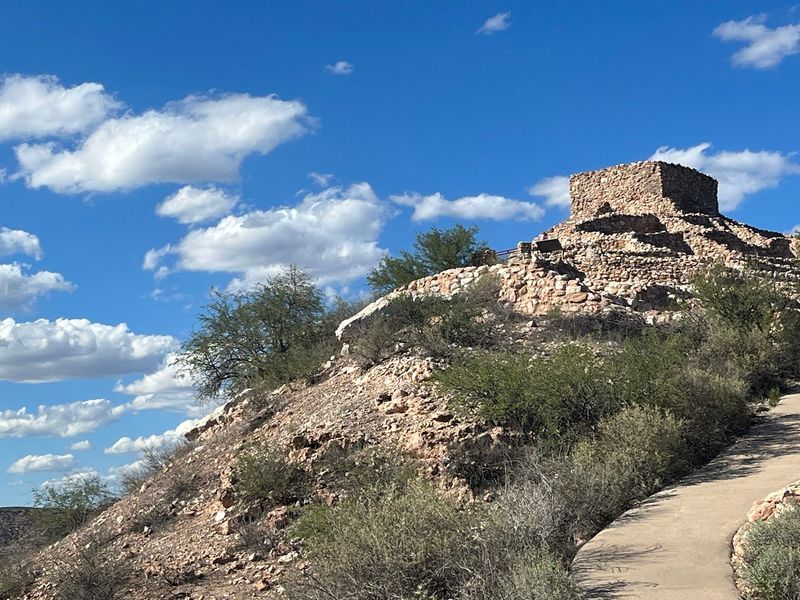
Crowds can make history feel like a checkout line. This ridge often offers the opposite.
One weekday arrival around 11 a.m. found the grounds with no one else around. That kind of quiet is not guaranteed, but it shows how calm the site can be.
Compared with busier monuments nearby, the hilltop feels more open and more hands-on. Guests can move at their own speed, stop for photos, and read every sign without feeling pushed along.
The sense of open space is part of the appeal. The ruins spread out along the ridge rather than squeezing into a single viewpoint.
That relaxed pace suits slow learners, careful photographers, and anyone who simply wants a peaceful hour. Nobody needs to rush the experience.
Rainy days are not a dealbreaker either. Some guests have enjoyed the site in wet weather, and the trail remains easy to follow.
Still, a calm atmosphere means little if the timing does not work, so here is how long to plan for.
Forty Minutes or Ninety
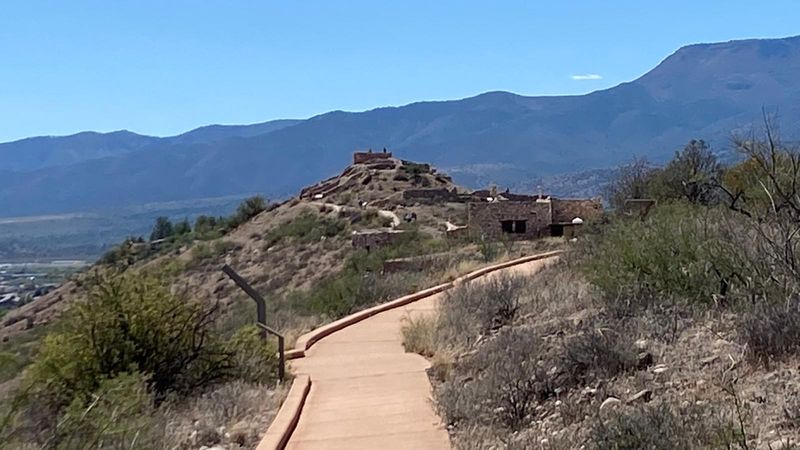
Short on time? Good news.
Many people see everything in about 40 to 45 minutes and leave feeling they missed nothing.
A more relaxed visit runs 60 to 90 minutes. That allows time for the museum, the trail, the rooftop, and plenty of photos.
The compact size makes it ideal for families with kids. A short outdoor activity with a big payoff is hard to beat when little legs are involved.
History fans and photographers tend to stay longer. The signs and the views both reward a slower approach.
Anyone expecting a long hike or a sprawling complex may find the visit brief. As a focused, meaningful stop, though, it delivers both history and scenery without demanding a whole day.
That flexibility is why many locals fit it in before the evening Verde Canyon train ride or as a last stop on a Sedona trip. It slots neatly into an existing plan.
Timing the season matters too, especially in a state famous for its sunshine.
Beat the Heat on the Hill
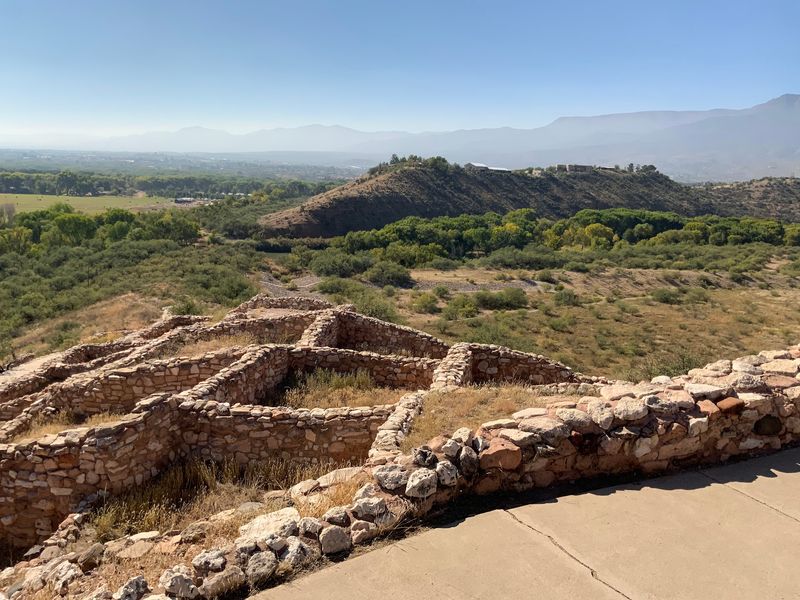
Arizonans already know the drill, but the hilltop has a way of reminding everyone. The sun can be intense, and there is little shade on the ridge.
Bring water, sunscreen, and a hat. Even on a short third-mile walk, staying hydrated makes the climb far more pleasant.
Mornings are a smart choice in warmer months. The site opens at 9 a.m., which gives early risers a head start on the afternoon heat.
Fall brings golden cottonwoods along the river, adding color to the valley views. Spring can bring desert plants into bloom along the trail.
Cooler days are also simply easier on the steeper stretches of the path. Anyone less steady on their feet may appreciate gentler temperatures.
Restrooms are available on site, which is a relief after a drive. Refilling and regrouping at the visitor center before the trail is a solid strategy.
With comfort covered, the next detail is the one budget-minded Arizonans will love most.
Two Monuments, One Ticket
Here is a deal worth bragging about at the next family gathering. Admission is $10 per adult, and kids get in free.
That same ticket also covers Montezuma Castle. Buy at one site, and the other is included.
Keep the receipt. It can be used for seven days at the partner monuments, so the second visit does not have to happen the same day.
Some people tackle both sites in one outing. Others spread them across a few days during a longer Verde Valley trip.
Comparisons between the two are natural. Montezuma Castle is famous for its cliff dwelling, while this pueblo feels more open and lets guests walk among and even onto the ruins.
Seeing both offers a fuller picture of how the Sinagua lived across the valley. It is a history double feature at a single-feature price.
For anyone living on a budget or planning low-cost weekends in retirement, that value is hard to ignore. Now for the logistics of actually getting there.
Hours and Getting There
Planning is refreshingly simple. The monument is open every day of the week from 9 a.m. to 4:45 p.m.
Those consistent hours make spontaneous trips easy. A weekday or a Saturday works equally well, as long as arrival leaves enough time before closing.
The site sits in Clarkdale, close to Cottonwood and within reach of Sedona. That puts it on the natural route for many Verde Valley outings.
Drivers from Phoenix often add it on the way home. Those staying in Sedona can make it part of a day of exploring.
It also pairs easily with the Verde Canyon train, which departs from Clarkdale. Many people stop at the ruins shortly before boarding.
Paved paths, restrooms, a visitor center, and a gift shop round out the practical amenities. The National Park Service website, nps.gov/tuzi, offers current updates before heading out.
Arriving with time to spare means a more relaxed walk, and the ruins deserve that kind of unhurried attention.
A Quiet Classic Worth the Climb
Not every Arizona treasure needs a giant canyon or a famous cliff. Sometimes a stone village on a ridge says plenty.
This monument packs nearly 900 years of history into a compact, approachable visit. A short paved loop, a restored room, a rooftop outlook, and a museum full of real artifacts make it rewarding for almost anyone.
The value is strong, the staff is helpful, and the views over the Verde Valley stick with people. Families, history fans, photographers, and budget-minded locals all find something to like.
It is not a long hike or a massive complex. What it offers instead is depth in a small space, with room to slow down and actually think about the people who built it.
For Arizonans who assume they have seen the highlights of their state, this hilltop is a reminder that some of the best stories are hiding in plain sight.
Pack water, grab a hat, hold onto that receipt, and give the old pueblo an hour. It has been waiting patiently for centuries, so it can certainly wait for your next free Saturday.


