
Affiliate disclosure: As an Amazon Associate I earn from qualifying purchases. Learn more
There is a place near Flagstaff where the temperature drops to freezing even when the desert above bakes at 80 degrees. A mile-long tunnel sits hidden underground, carved by molten rock more than 600,000 years ago, and most Arizonans have no idea it exists just off a bumpy forest road.
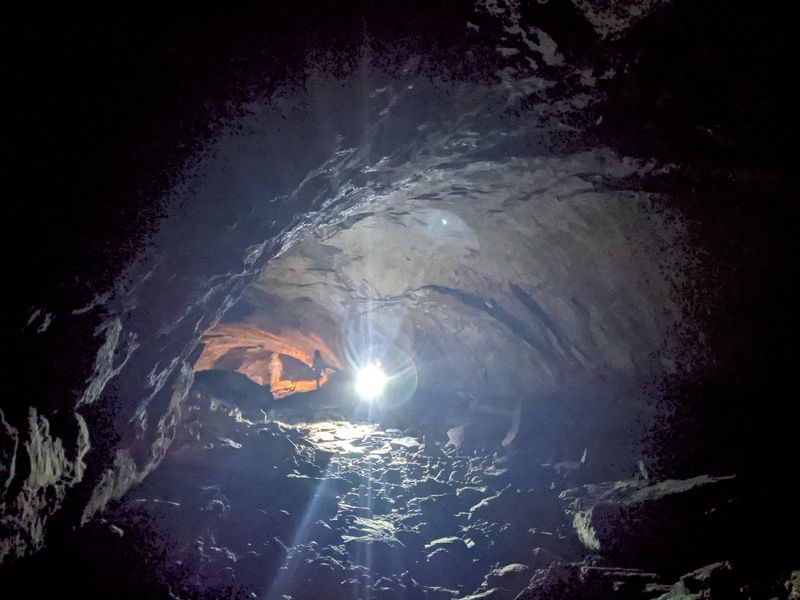
Inside, the darkness is so complete that when you switch off your light, you cannot see your own hand. Homesteaders once used it to gather ice, and today families climb down its rocky mouth for one of the strangest adventures the state offers.
What you find down there feels nothing like the pine forest waiting up top. Keep reading to learn where it is, how to reach it, and what to pack before you go.
A Tunnel Hiding Beneath the Coconino Pines

Roughly 14 miles northwest of Flagstaff, tucked into the Coconino National Forest, sits a doorway into the ground that longtime residents keep quietly on their must-do lists. The official address is 171B Forest Rd, Flagstaff, AZ 86001, and the cave falls under the care of the U.S.
Forest Service.
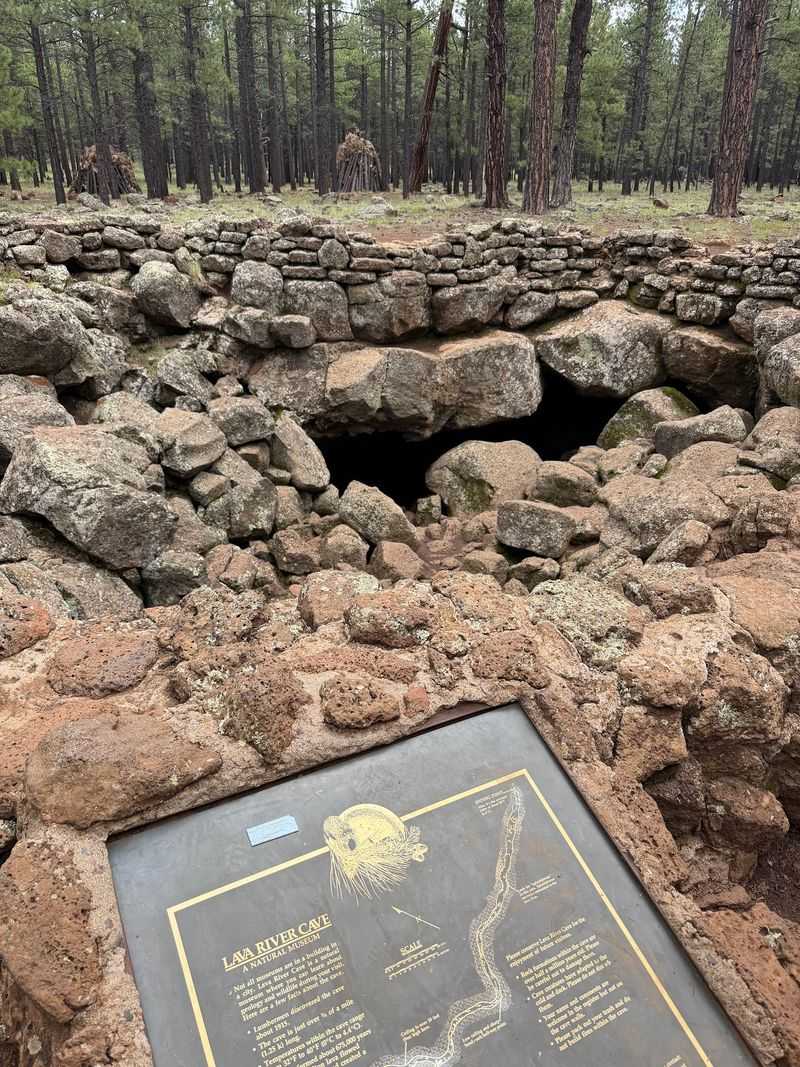
The mouth of the tunnel is ringed by a circular stone wall, which makes sense the moment you spot the boulder-strewn opening dropping into shadow. It is a short, flat walk of a few hundred feet from the parking lot to reach it.
Underground, the passage runs about three-quarters of a mile in one direction, so an out-and-back trip covers close to two miles. The Forest Service simply describes it as a rugged path for hiking and exploring.
What makes this spot special is how ordinary the surface looks. Tall ponderosa pines, picnic tables, and a gravel lot give no hint of the world waiting below.
That contrast between quiet forest and eerie tunnel is exactly why people drive out here.
Born From a River of Molten Rock
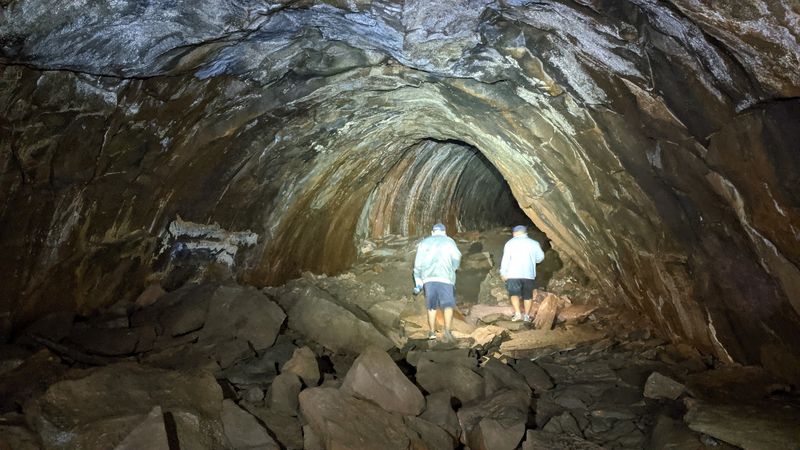
Around 675,000 years ago, a vent unleashed a stream of lava that flowed through this ground at a scorching 2,000 degrees Fahrenheit. As the outer edges cooled and hardened, the still-liquid center kept draining away, leaving behind the hollow tube people walk through today.
Evidence of that fiery origin is written all over the walls. Frozen flow ripples, splashdowns, and cooling cracks show exactly how the molten rock moved and settled inside the passage.
There are even formations called lavacicles clinging to the ceiling, shaped as the surface dripped and set in place. Reading these features is a bit like flipping through a geology textbook you can actually touch.
The whole structure formed in a geologically short window, which is remarkable given how permanent it feels now. Standing inside, it is hard to believe this quiet, cold corridor was once a roaring channel of fire.
That deep history is part of the draw. Few hikes let you walk straight through something so ancient and so dramatically made.
Where Homesteaders Once Gathered Ice
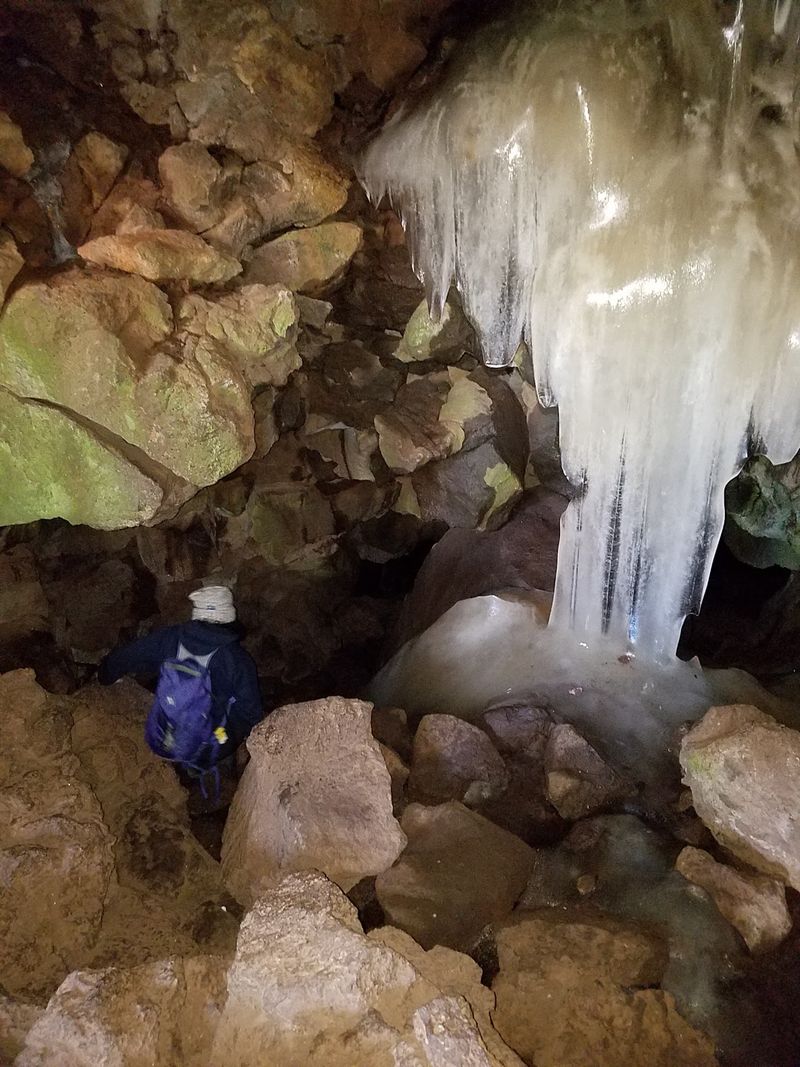
Long before it became a weekend adventure, this cave served a practical purpose. It was rediscovered in 1915, and early homesteaders used it primarily for collecting ice and keeping goods cold, since the tunnel stays freezing even through summer.
Indigenous residents of the region are believed to have known and used the cave for thousands of years before that, making its human story far older than any homestead claim.
The ice-keeping tradition makes perfect sense once you understand the temperature down there. When December arrives, visitors often find real ice near the entrance, and the chill never fully leaves the deeper sections.
Knowing this backstory changes how the place feels. You are not just poking around a rock tunnel; you are walking through a spot that generations relied on before refrigerators existed.
It adds a layer of quiet respect to the trip. History and geology overlap here in a way that rewards anyone curious enough to look past the boulders.
Freezing Air Waiting on an 80-Degree Day
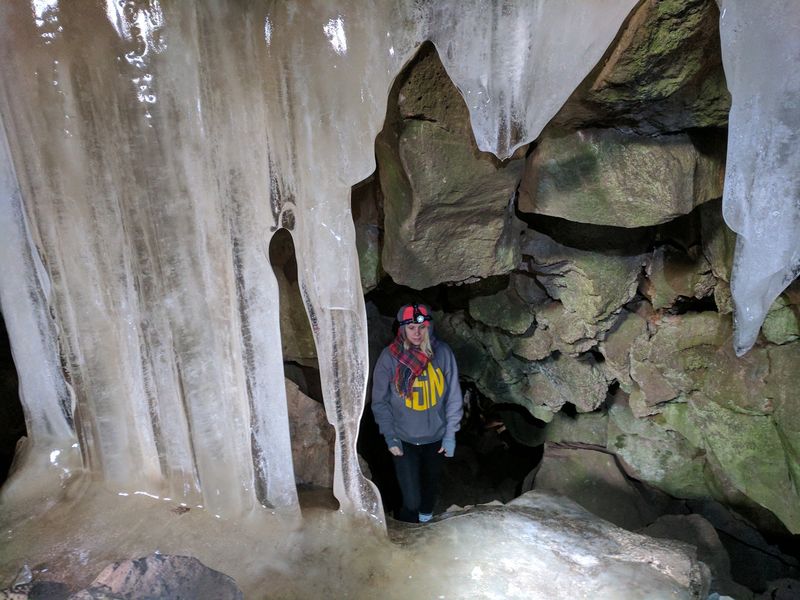
Escaping the desert heat has never been so literal. The temperature inside can drop as low as 32 degrees Fahrenheit, and even on an 80-degree week, the deeper sections sit somewhere around 35 to 45 degrees.
The cold hits fast. Many people report feeling a sharp temperature drop the instant they pass the stone wall at the entrance, long before they reach the middle of the tunnel.
Because of that, a jacket or sweatshirt is not optional for most folks. A long-sleeve top with long pants tends to be plenty, though some overdress and end up carrying layers instead.
For Arizonans hunting a break from summer, this is about as effective as it gets. The relief is constant and dramatic, with no shade or breeze required.
Dress for a brisk spring morning and you will be comfortable. Show up in shorts and a T-shirt, and the tunnel will remind you very quickly who is in charge.
Darkness So Complete You Vanish
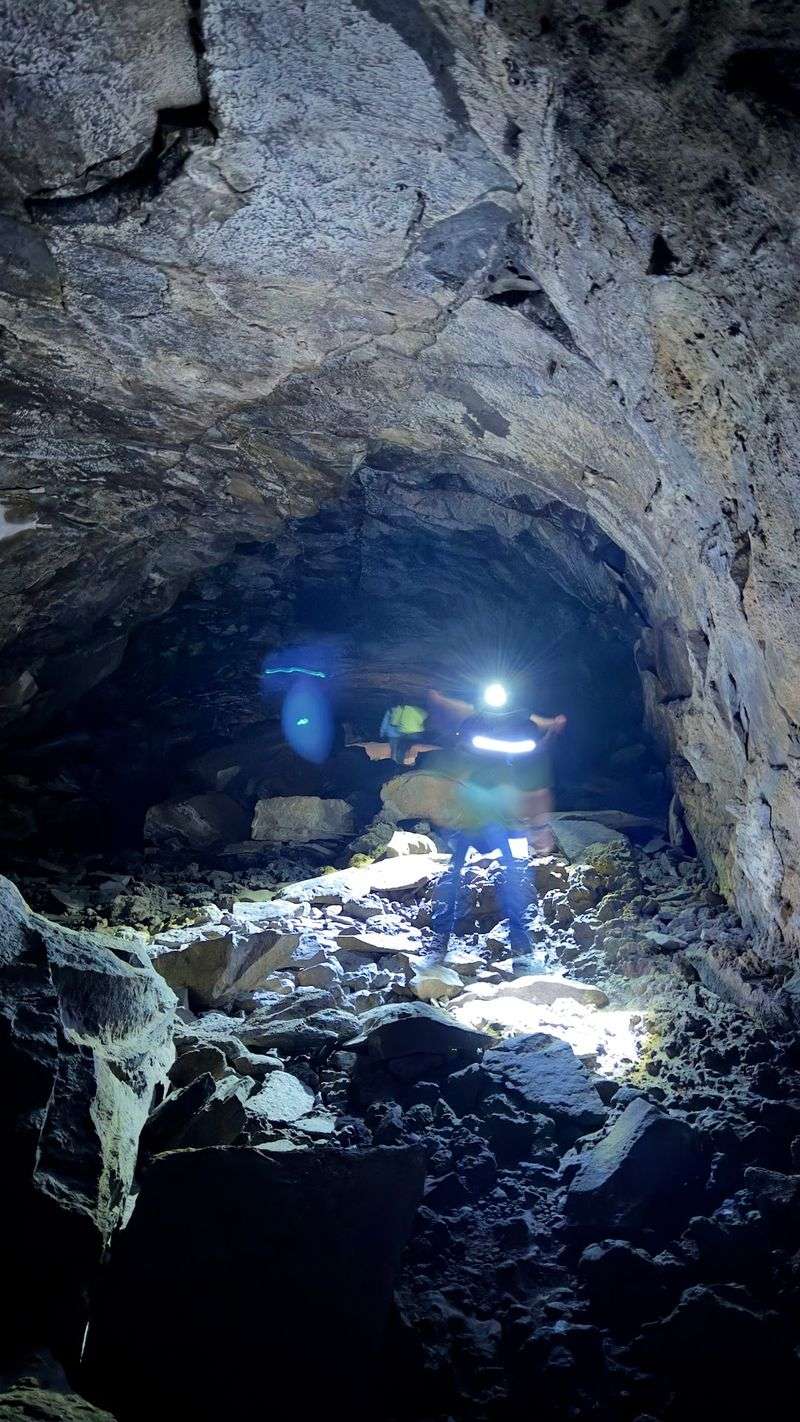
Switch off every light and the tunnel delivers a darkness that has to be experienced to be believed. People consistently mention that you cannot see your own hand in front of your face once the lights go out.
That is why light sources are treated as absolutely mandatory here. A single flashlight often is not enough, especially in the wider chambers where the beam gets swallowed by open space.
Headlamps rank as the top recommendation because they keep your hands free for climbing and scrambling. A common suggestion is that each person carry three light sources, plus extra batteries for backup.
Phone flashlights can work for some, but they leave your hands full at exactly the moments you need to grip rock. Relying on a cracked screen glow is a gamble the tunnel does not reward.
Come prepared and the blackness becomes thrilling rather than scary. There is something unforgettable about carving your own pool of light through absolute dark.
The Steep, Rocky Climb at the Mouth
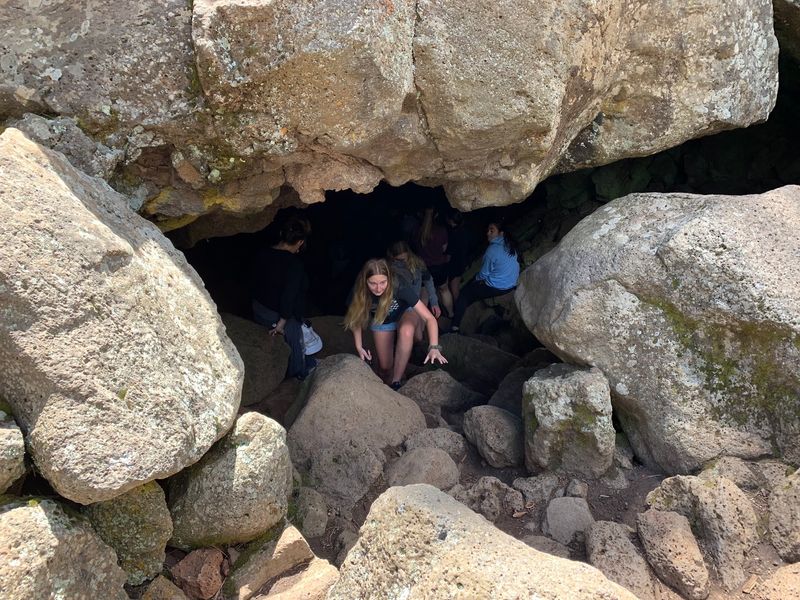
Do not let the entrance rattle you. The opening is steep and demands a careful climb down over boulders, and the first stretch is easily the hardest part of the whole trip.
The initial rock fall drops down without any need for ropes, though a slip could mean a fall of five or six feet in one steeper spot. Taking it slow is the name of the game.
Roughly the first fifth of a mile is rugged and slow, with layers of broken flat rocks and a few that shift underfoot. After that, most of the passage flattens out and becomes far easier going.
Kids as young as five and six have handled the terrain when families move at a patient pace. Plenty of parents note their children scrambled down the boulders faster than the grown-ups did.
Clear the beginning and the reward is a wide, open corridor that feels like another planet. The tough entrance is simply the price of admission.
The Fork That Decides How Low You Go
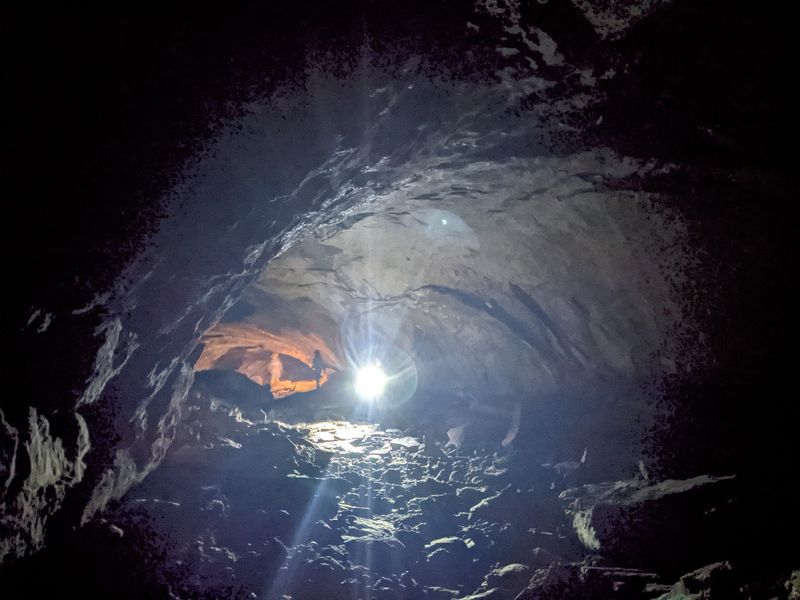
Somewhere in the middle of the tunnel, the passage splits, and the choice you make matters. Stay to the left and you can walk mostly upright with far less crouching.
Head right, however, and the ceiling drops dramatically. People who took that path describe having to duck low, and one section is tight enough that a person ended up belly crawling to get through.
Both routes are enjoyable, so the split is really about comfort. Those who want to avoid squeezing pick left, while adventurous types who do not mind a challenge lean right.
A useful tip floats around among regulars: remember which direction you came from at the fork, since it is easy to get turned around in the dark. The passage curves, and trackers and GPS units simply stop working underground.
Even at 6 feet tall, hikers manage the low spots with a good crouch rather than a full crawl on the left side. Knowing your route ahead of time keeps the surprises fun instead of frustrating.
A Family Adventure That Feels Bigger Than It Is
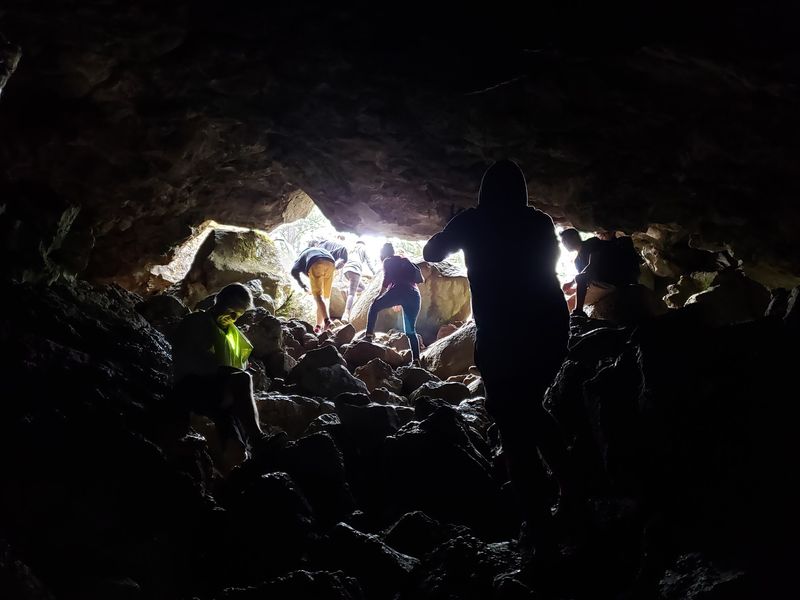
Bring the kids and watch their eyes go wide. Families flock to this tunnel, and children as young as five have completed the entire hike on their own two feet.
The appeal for little ones is obvious. Climbing over boulders, aiming flashlights into the dark, and discovering a hidden crawl space near the end turns the whole outing into a real-life treasure hunt.
That crawl space at the far end is a favorite for adventurous kids, though it proves too tight for some adults who prefer to sit it out. No shame in letting the small crew handle the tight squeeze.
The trip works for a wide range of ages and fitness levels because you can turn back whenever you like. There is no pressure to reach the end to enjoy it.
For a memorable family day near Flagstaff, few outings pack this much wonder into two miles. It is beginner friendly while still feeling genuinely wild.
Gearing Up Before You Head Down
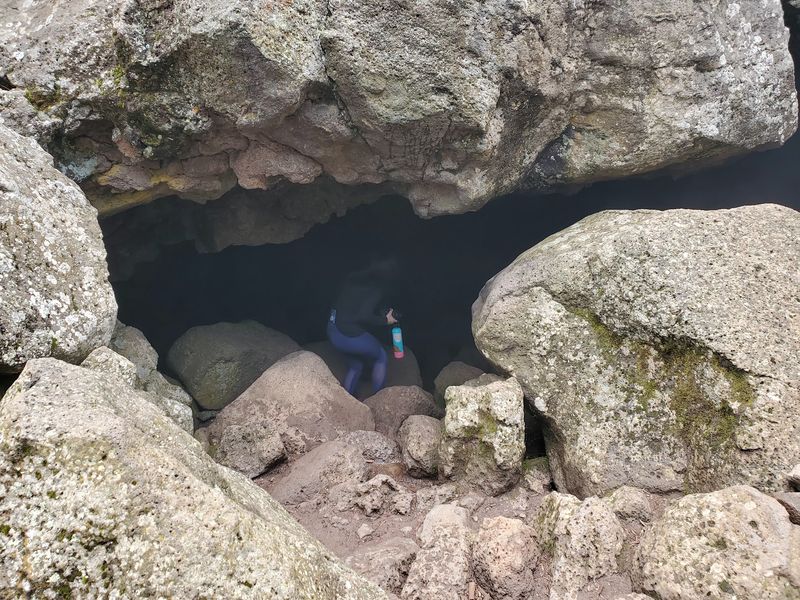
A little packing goes a long way here. Sturdy hiking shoes or boots top nearly everyone’s list, since the ground is rocky, uneven, and dotted with loose stones and spiky lava.
Beyond footwear, plan on a jacket or sweatshirt for the cold, and headlamps backed up by flashlights and spare batteries. Keeping your hands free is the whole reason headlamps win over handheld lights.
Many hikers wish they had brought gloves, since you end up gripping rocks while climbing up and down through the rugged first section. Kids in particular tend to ask for them.
A small backpack with water bottles rounds out the kit, again keeping your hands available for scrambling. Researching the route ahead of time is strongly encouraged so nothing catches you off guard.
Dogs can come along, but only well-behaved ones with tough paws, since the sharp lava rock can hurt sensitive feet. Prepare properly and the tunnel becomes an absolute blast instead of a struggle.
The Bumpy Road, the $5 Pass, and Other Nuts and Bolts
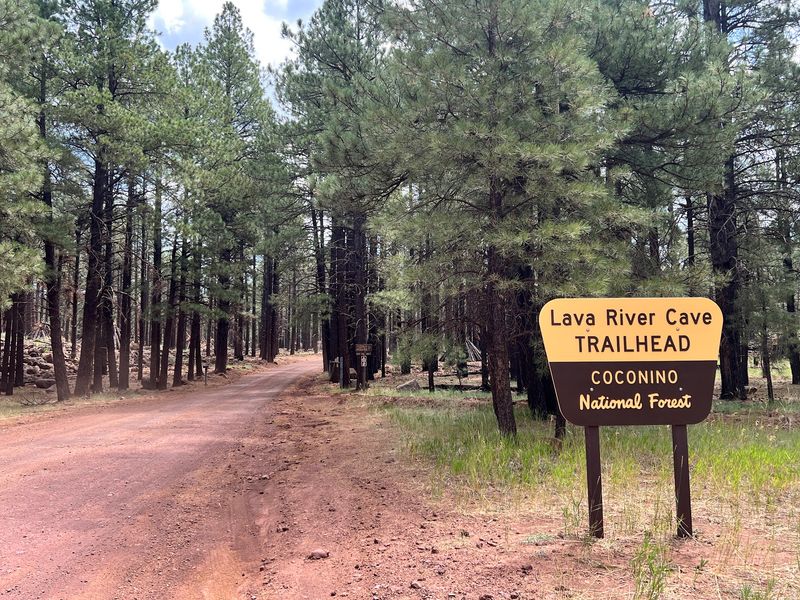
Getting there is part of the adventure. Google Maps typically routes drivers onto several miles of unpaved forest service roads, some well-maintained and marked, others narrow and rough enough that your vehicle needs to handle bumps.
A few GPS routes even lead through cattle pastures with gates you open and must close behind you. Plan for a slow, careful drive rather than a quick zip off the highway.
The cave is open access, meaning no staff is posted on site and the gates never close; it is listed as open 24 hours, every day. A $5 day-use fee is charged and can be purchased in the parking lot, with credit cards accepted, and some national parks passes work as well.
Portable toilets sit at the parking lot, though many suggest handling that business before arriving. Signs near the lot explain conservation rules meant to protect the site from vandalism and air-quality damage.
Packing out all trash is expected, and respecting the posted rules keeps this place open for everyone. The official info lives on the Coconino National Forest Service website.
Why This Underground Detour Is Worth the Drive
Holding a 4.8-star average across more than 1,900 reviews, this tunnel has earned a loyal following among people who love a real adventure. The praise is nearly unanimous, with folks calling it a super fun, must-do experience they would happily repeat.
What keeps them coming back is the sense of stepping into another world just minutes from the surface. Between the freezing air, the total darkness, and the ancient lava formations, the payoff far outweighs the bumpy road and rocky climb.
It is challenging in spots yet forgiving enough that families, first-time cave explorers, and curious locals all find their footing. You can push all the way to the crawl space or turn back early and still walk away thrilled.
Plan on one to three hours depending on how often you stop to take photos and poke around. Come prepared, tread lightly, and leave the place better than you found it.
For an Arizona day trip that feels genuinely otherworldly, few spots deliver like this hidden tunnel outside Flagstaff.