
Affiliate disclosure: As an Amazon Associate I earn from qualifying purchases. Learn more
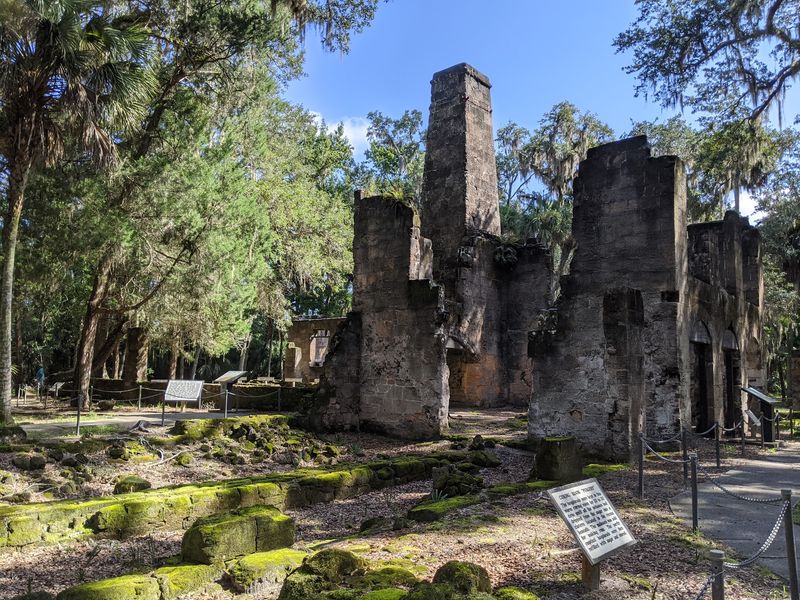
A long, narrow dirt road slips off the pavement near Flagler Beach and disappears under a canopy of oaks. At the end of it, tall stone walls rise out of the saw palmetto like they were left there on purpose.
They belong to a sugar mill that burned in 1836, during the Second Seminole War, and nobody ever rebuilt it. Today the site is a quiet state park with trails, a creek for paddling, and signs that tell a story many Floridians have never heard.
It costs about four dollars to get in, and it stays fairly uncrowded. Keep reading to learn where it is, what happened here, which trail to take, and the small planning details that can save a wasted drive.
A Hidden Park on Old Kings Road
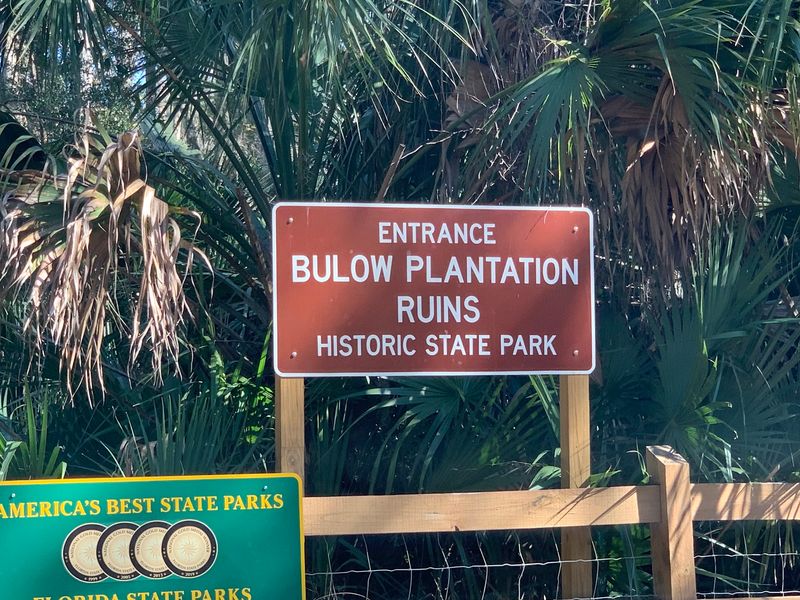
Bulow Plantation Ruins Historic State Park sits at 3501 Old Kings Rd, Flagler Beach, FL 32136, in Flagler County, Florida. It is a small state park built around the remains of an 1800s sugar and cotton plantation.
The park mixes two things that rarely share the same parking lot. One side is history, with stone ruins and interpretive signs.
The other side is nature, with trails, a boat ramp, and access to Bulow Creek.
Many people find it by accident. Folks staying in Flagler Beach often spot the brown road signs and decide to take a look, then leave surprised by how much history was tucked away so close to the coast.
It is also handy to other spots in the area. The Loop scenic drive and the beaches of Ormond and Flagler are all nearby, which makes the park an easy add-on to a coastal day.
Still, it feels far from everything once the trees close in. That sense of distance is a big part of its charm, and it starts with the road in.
The Dirt Road That Sets the Mood
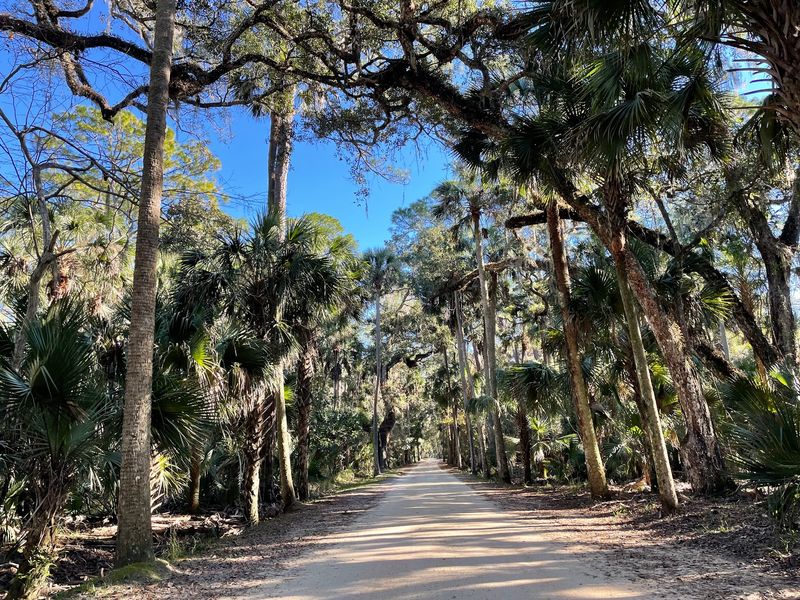
Some parks greet guests with a paved drive and a big welcome center. This one hands over a long, narrow dirt road instead.
The route winds through a coastal hammock, and it feels like a trip back to old Florida. Plenty of people count the drive itself as a highlight rather than a hassle.
Patience helps here. The road is slim, so drivers should go slowly and watch for oncoming cars.
Low-slung vehicles can usually manage it, but this is not the place for speed. Think of it as a warm-up lap for the history ahead.
By the time the trees open up, the modern beach towns feel a long way back. The ruins have not even appeared yet, and the mood is already set.
The Rise and Fall of the Bulow Plantation
Back in the 1800s, the Bulow family ran what became the largest plantation in East Florida. They grew sugar cane, cotton, rice, and indigo on this land.
The work was done by enslaved people. That fact sits at the center of the story, and the park does not hide it.
In 1836, during the Second Seminole War, the plantation was destroyed. The sugar mill and main house were burned, and the operation never came back.
Because of that, the site offers a direct look at Florida’s antebellum sugar economy and how fragile it was. It is a chapter of state history that many people have simply never learned.
The story is not all pleasant, and the place can feel heavy. Many leave with fresh questions and a plan to read more once they get home, which may be the best compliment a historic site can earn.
Coquina Walls of the Old Sugar Mill
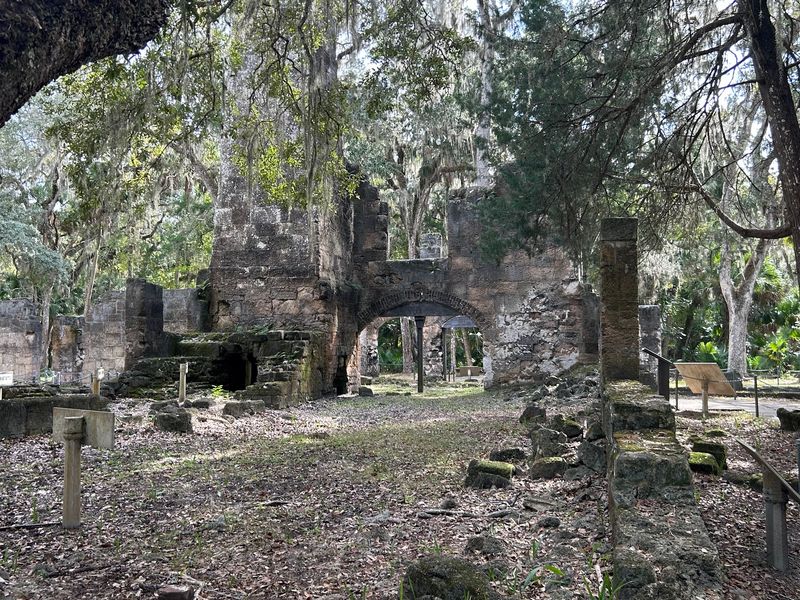
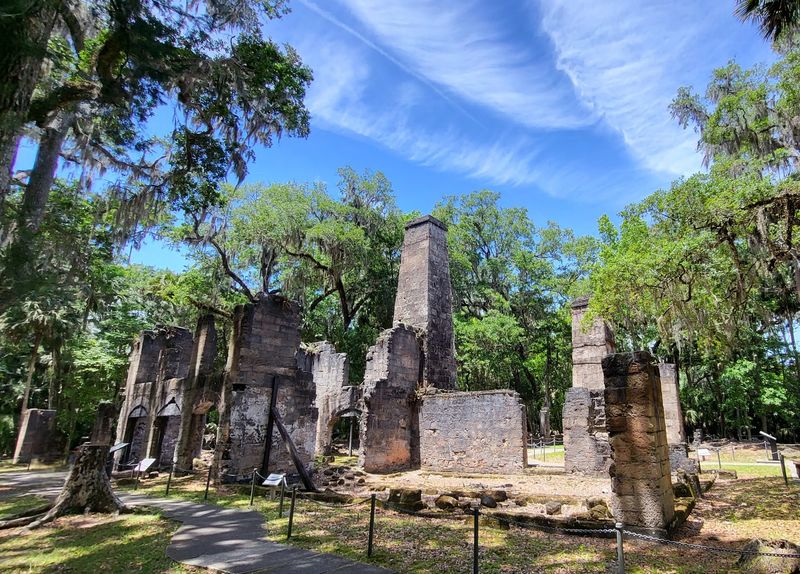
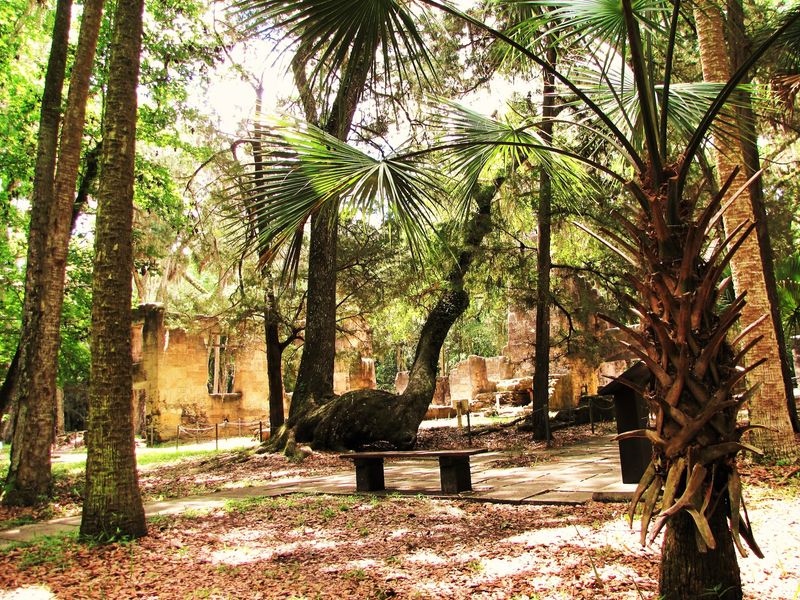
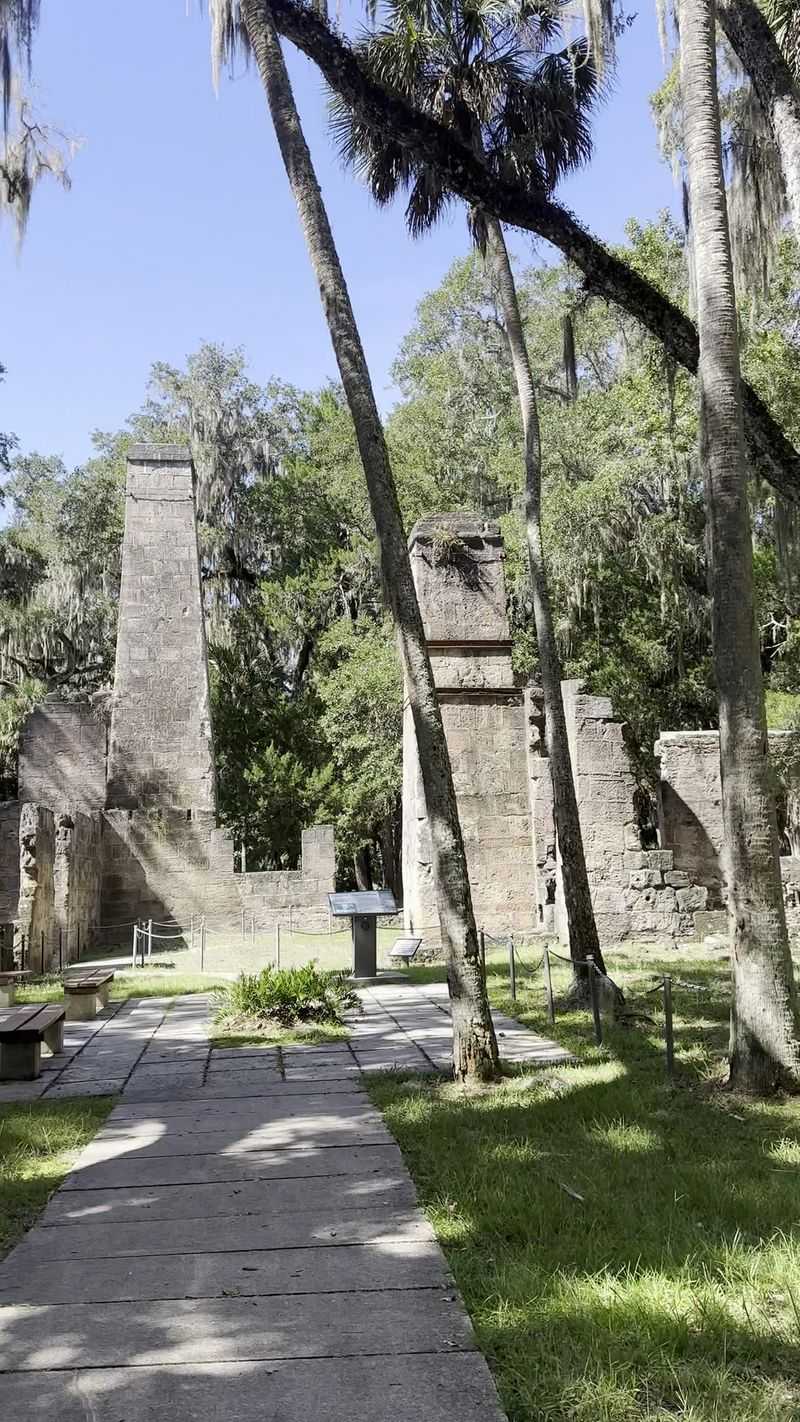
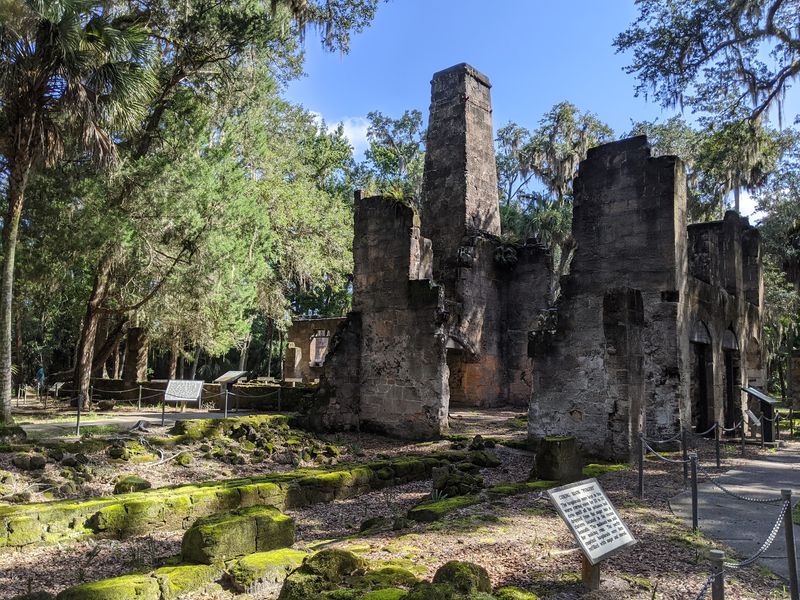
Here is the star of the show. The towering coquina walls of the sugar mill still stand among the trees, nearly two centuries after the fire.
Coquina is a local stone made from shells, and it held up well enough to leave a clear outline of the old works. Walking around the walls gives a real sense of the mill’s size.
Signs along the way explain how sugar cane was turned into sugar. They also point out how hard that process must have been in the steamy Florida climate.
The mill does not look restored or polished. It looks exactly like what it is, a ruin, and that honesty is part of why it stays memorable.
Photographers tend to love it. The mix of old stone, shade, and greenery makes it a good place to test your camera skills.
Plan to linger a bit here before heading back to the trail.
Foundations, Cabins, and Quiet Clues
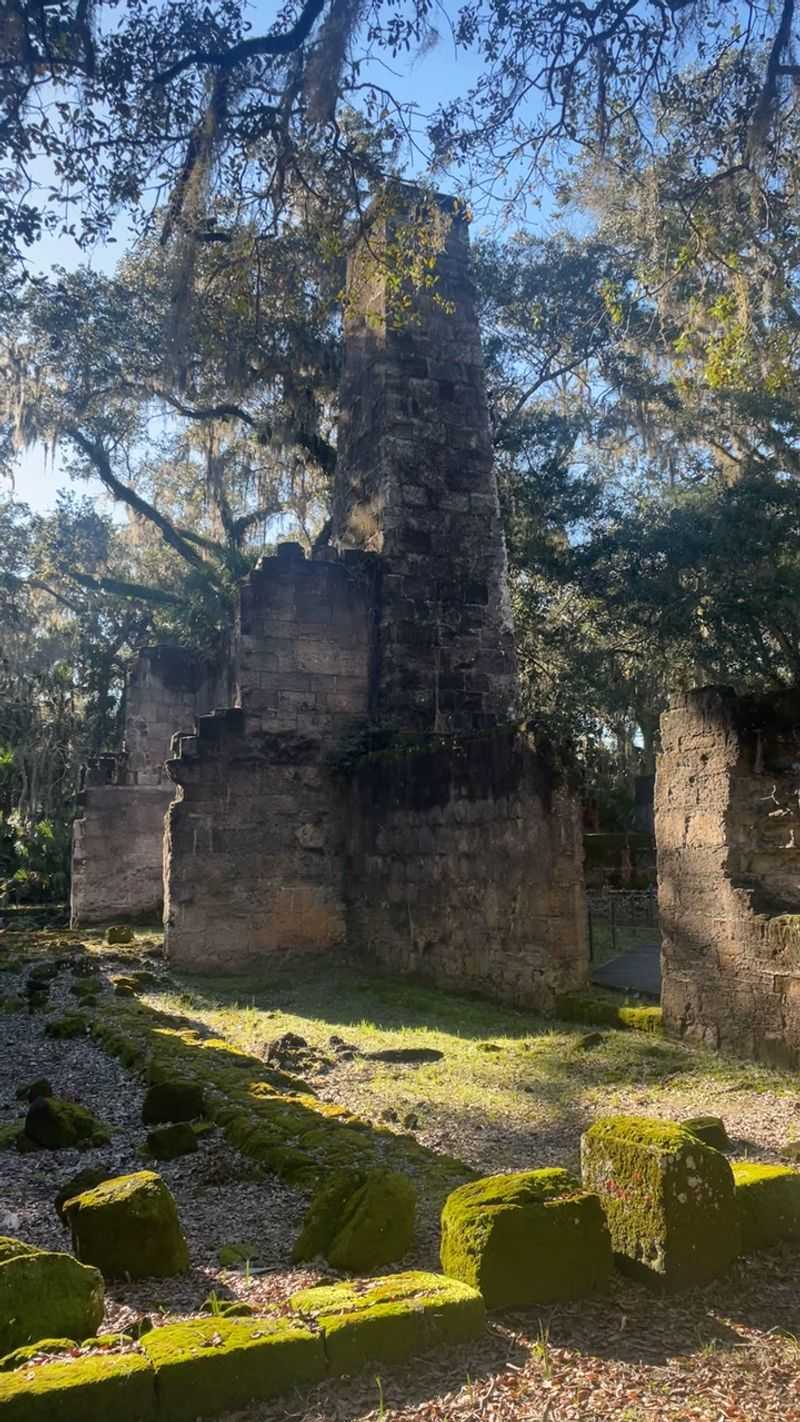
Not much is left of the plantation house. Only an outline of its foundation remains on the ground.
That small trace still matters. It shows where the family lived, close to the fields and the mill that powered their fortune.
A short path leads from the picnic area to the remains of the former slave cabins. These were built from tabby, a mix that includes shell and lime.
The trail is tucked away in the back and easy to miss. It is worth seeking out, since it adds the lives of the enslaved workers to the bigger picture.
Together, the house outline and the cabins make the site feel more complete. They remind guests that the mill was only one piece of a much larger and harder story.
Plaques, Tools, and a Glass-Case Time Capsule
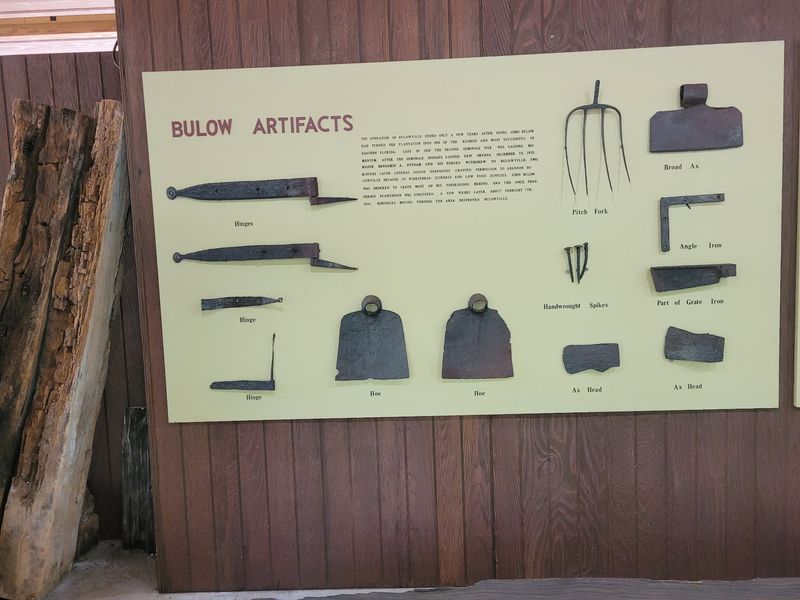
Reading is part of the adventure at this park. Information plaques line the paths and explain each piece of the ruins.
There is also an interpretive display with old tools and household items. These artifacts are housed behind glass and kept in careful condition.
The care shown in these exhibits stands out. It helps fill in daily details that stone walls alone cannot show.
Parts of the display may feel a little dated. Even so, the information is clear and easy to follow for older kids and adults.
Families often treat it like an outdoor classroom. Kids can match what they read on a sign to the actual wall standing in front of them, which beats any textbook page.
The Short Walk to the Ruins
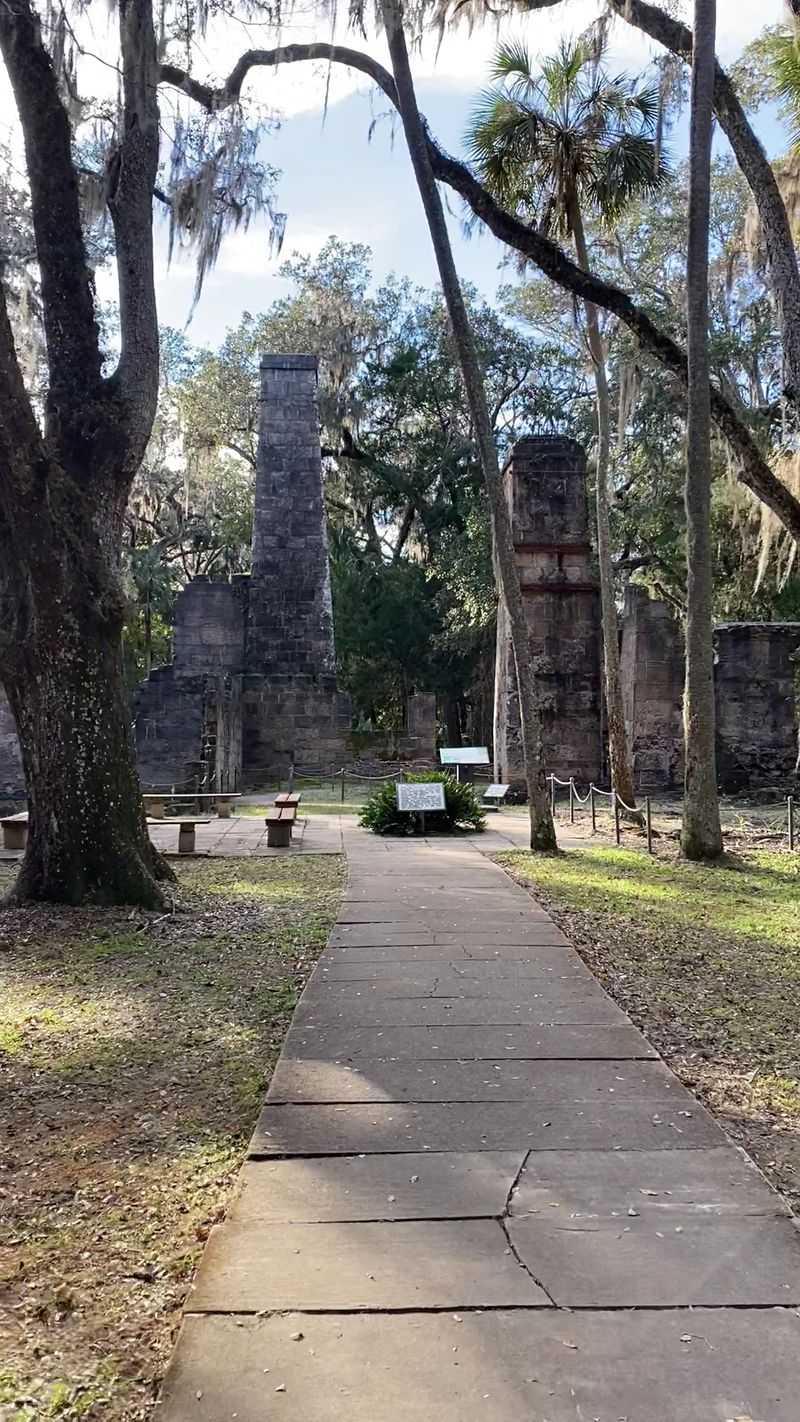
Short on time? A 0.3-mile trail connects a parking area to the ruins.
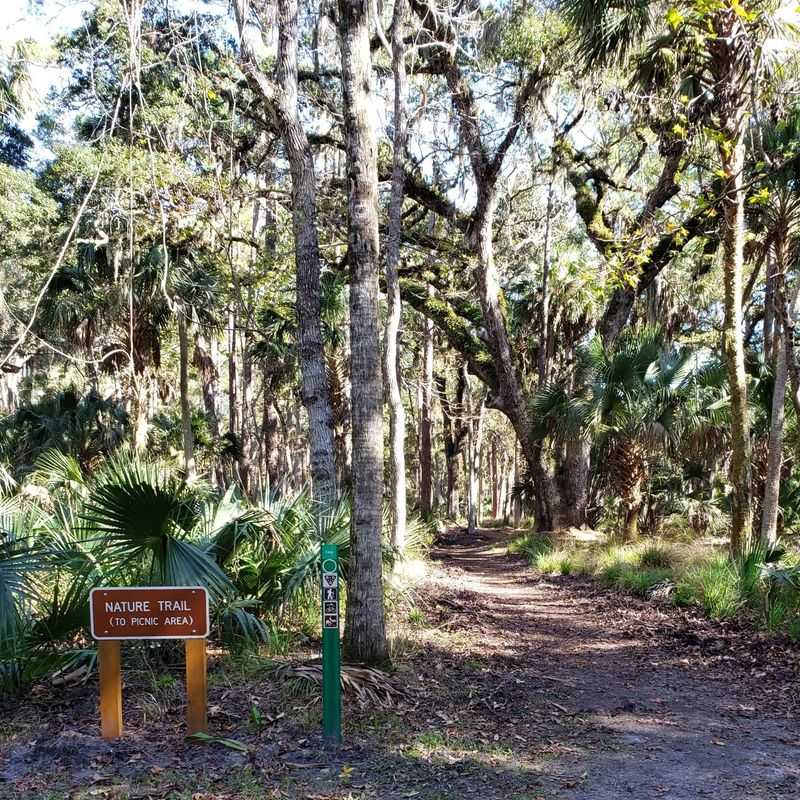
It is a pleasant, shaded walk through the woods. For many, this brief stretch is the moment the spooky reputation makes sense, with the ruins slowly appearing between the trees.
A short hike also links the picnic area in the northern section to the sugar mill. It works well for families with young kids.
Those who prefer not to walk can drive closer and park near the ruins. That option makes the site easier to reach for anyone with limited mobility.
Either way, the walk is short enough to fit into a quick stop. Plenty of people find an hour is just right here, though few seem in a hurry to leave.
Bulow Woods Trail for Bigger Legs
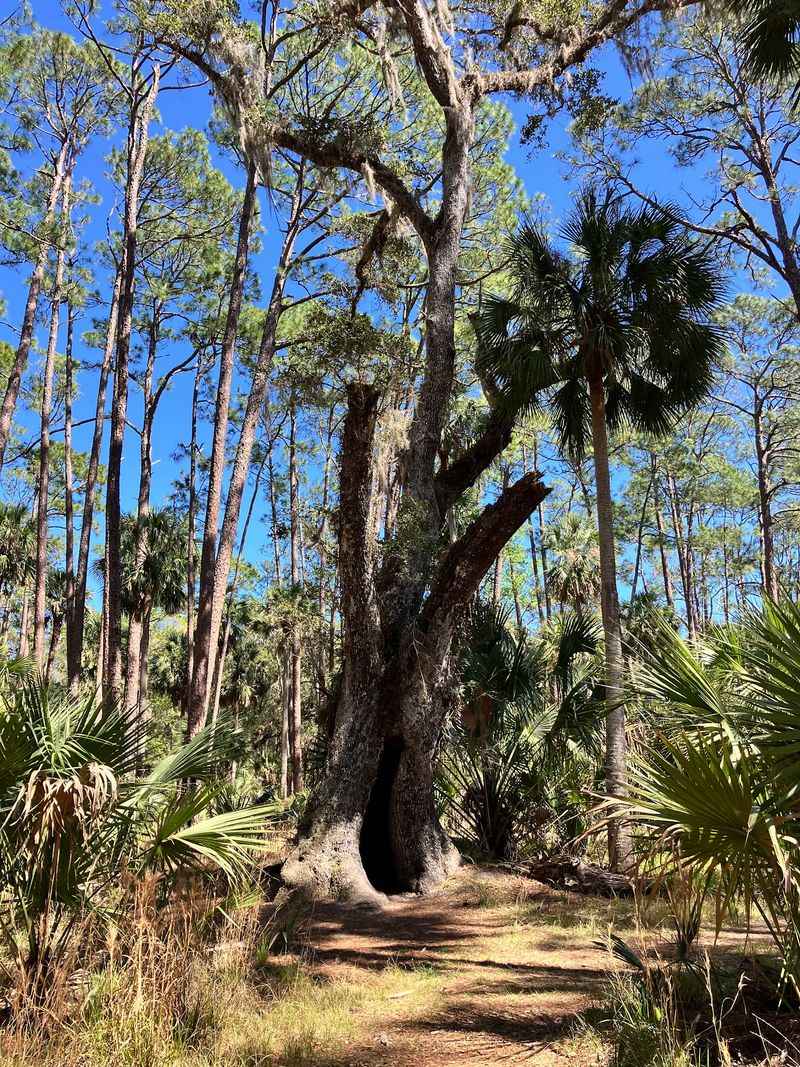
Ready for more than a stroll? The park connects to a longer trail of roughly six to almost seven miles through the woods.
The southern parking lot has a grand old live oak, plus two trails. One is a short loop, and the other is the southern entrance to the longer route.
Hikers who head out a ways can reach Cedar Creek. A small footbridge there offers one of the best views on the walk.
Plan with the weather in mind. Florida sun and humidity can turn a brave start into a quick turnaround.
Storms have sometimes closed trail sections in the past. Checking the park website before heading out is a smart move.
The scenery rewards the effort, with oak hammocks, hardwood swamps, and saltmarsh creeks along the way.
Paddling Bulow Creek
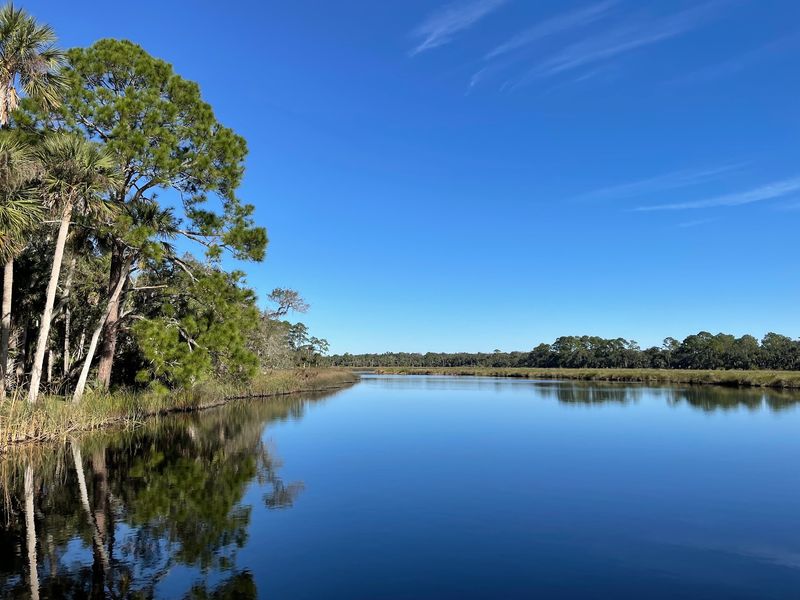
Some of the best views of the park come from the water. Bulow Creek runs alongside the property and is a favorite for kayaking and canoeing.
The kayak launch is roomy, so getting in and out is fairly easy. Canoe rentals have been mentioned as well, though it is wise to confirm availability before you go.
A canoe trail follows the creek through the surrounding marsh. It gives paddlers a calm way to explore without a long hike.
People also fish from a small dock near the water. It is a laid-back scene, and nobody seems rushed.
Pairing a paddle with a ruins walk makes for a full, budget-friendly day.
Boat Ramp and Picnic Spots
Anglers and boaters have their own reason to visit. The boat ramp is easy to access and includes parking for trucks and trailers.
Picnic areas are spread around the park. Many tables sit under big trees, so shade is easy to find.
Clean restrooms and benches add to the comfort. They make a longer stay much easier, especially with kids in tow.
The grounds are well kept overall. Credit goes to the state park team for keeping the site in such good shape.
Packing a lunch turns a quick history stop into a relaxed afternoon by the creek.
Who Feels at Home Here
History lovers are the obvious fans. Nature lovers often end up just as happy.
The park is dog friendly, which is a nice bonus for pet owners. Kids also do well on the shorter loops, with artifacts and signs to keep them curious.
It is not a big tourist stop. That quiet feel is part of the appeal for people tired of crowds.
The tone is thoughtful. The ruins can feel sad and wistful, almost as if they are meant to stay broken.
Cooler days are popular, and late fall gets a special nod. A visit after Thanksgiving is one well-loved idea, when hiking feels much easier.
Hours, Fees, and the Honor Box
Timing matters more here than at most parks. Bulow Plantation Ruins is open Thursday through Monday, 9 a.m. to 5 p.m.
It is closed on Tuesdays and Wednesdays. Showing up midweek means a long dirt road to a closed gate.
Entry is about $4 per vehicle, paid through an honor box. Guests place cash in an envelope and take a tag to display while parked.
Bringing exact change is a good idea. A QR code option for card payment has been available too, though having cash on hand is safest.
Walkers and bike riders have paid a smaller fee. A trail outside the gate can also be walked for a bit after hours, so a late arrival is not a total loss.
Worth the Detour From the Beach
Few places in Flagler County pack this much story into such a small, low-cost stop. For around four dollars, the park offers ruins, trails, creek access, and a lesson in Florida history.
It is not flashy, and that is the point. The quiet road, the old walls, and the shaded paths all ask guests to slow down.
The site works for a quick hour or a full day. History buffs, hikers, paddlers, and curious beachgoers can all find a reason to stay.
Just remember the closed days and keep some cash ready. With those details handled, the trip is simple.
Sometimes the best Florida finds sit at the end of a dirt road. This one has been waiting there since 1836.


