
Affiliate disclosure: As an Amazon Associate I earn from qualifying purchases. Learn more
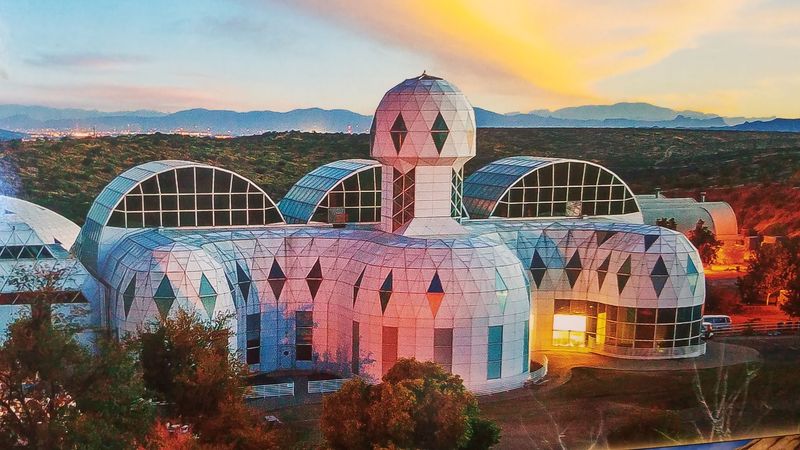
Tucked into the high desert north of Tucson sits a cluster of white glass structures that hold a rainforest, a million-gallon ocean, and a fog desert all in one place. Back in the late 1980s, eight people sealed themselves inside for two years to test whether humans could survive in a closed world of their own making.
Today it stands as one of the strangest science landmarks in the country, and plenty of Arizona locals have driven right past it for years without realizing what it is. The story behind the glass involves engineering that breathes, coral reefs growing in the desert, and research that still matters for the planet.
Keep reading, because this place is far more surprising than it looks from the road.
The Glass Marvel North of Tucson
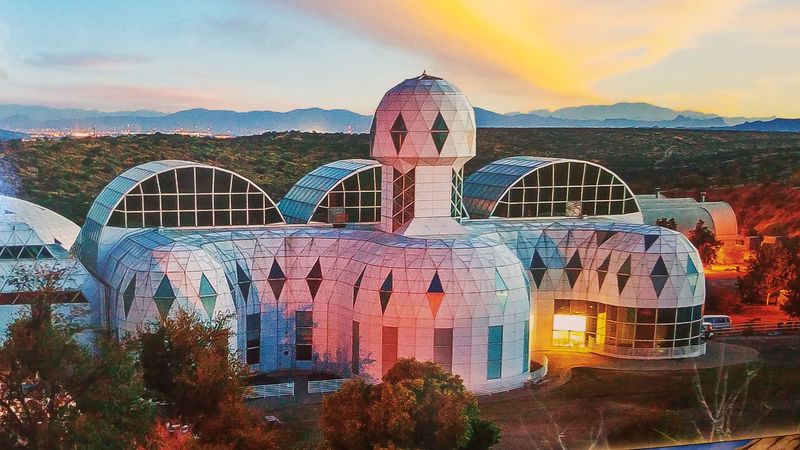
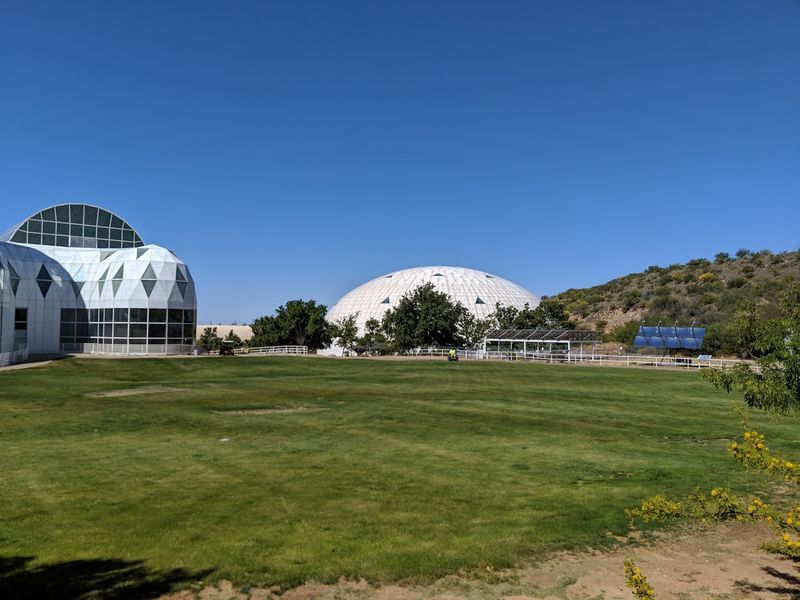
About 45 minutes north of Tucson, a set of gleaming glass pyramids and domes rises out of the Sonoran high country like something dropped in from the future. The address is 32540 S Biosphere Rd, Oracle, Arizona, and the drive out there feels wonderfully isolated before the structures come into view.
Officially a research institute managed by the University of Arizona, the site packs a rainforest, an ocean, and a desert into a three-acre greenhouse. The description barely does it justice.
Rated 4.5 stars across nearly 5,000 opinions, it has earned a reputation as one of the most unusual stops in the state. People often mention arriving with low expectations and leaving genuinely impressed.
The setting adds to the appeal. The parking lot is enormous, so finding a spot is never a worry, and the grounds feel pleasantly uncrowded even on busy days.
For Arizona residents who have spent years assuming it was just a science oddity off the highway, the reality is far richer. This is a working laboratory disguised as an attraction, and it happens to be sitting in your own backyard.
Eight People, Two Years, One Sealed World
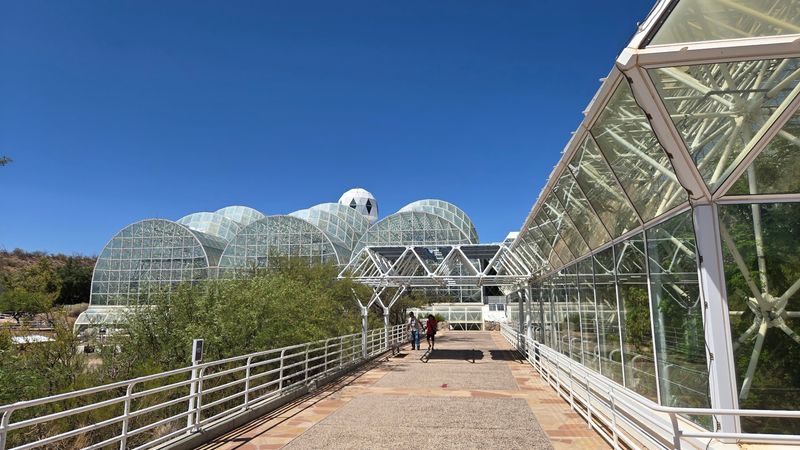
The whole idea started as a daring experiment. In the late 1980s, a crew known as Biospherians set out to discover whether a small group could live self-sufficiently inside a sealed environment stocked with plants and animals of their choosing.
The plan was originally built for ten people, but the team later realized there would not be enough food, so the number dropped to eight. Those eight stayed sealed inside for two full years.
Some of the discoveries were unexpected. Without wind, the trees inside grew weak and snapped, and oxygen levels became a serious challenge.
The closed system revealed just how delicate and interconnected life really is.
The original concept was tied to testing the feasibility of long-term space colonization, which explains why the place feels like a cross between a survival station and a botanical garden.
Longtime fans of the site love this history most of all. The story of the crew and their mission is the emotional heart of the place, and it turns a walk through glass rooms into a genuinely gripping tale of ambition and trial.
A Rainforest Growing in the Desert
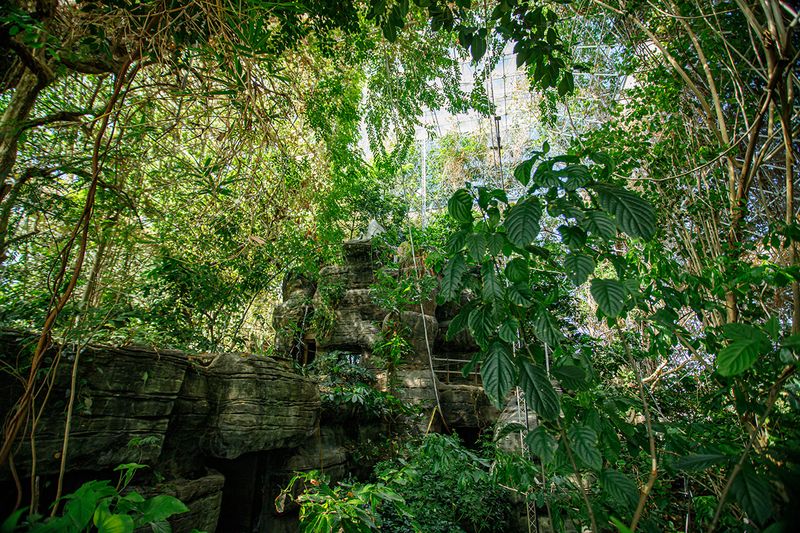
Step through one set of doors and the arid desert vanishes. Inside the rainforest biome, dense tropical growth climbs toward the glass ceiling, complete with the high humidity you would expect deep in the tropics.
Humidity here can climb above 80 percent, which makes the contrast with the surrounding Sonoran landscape genuinely startling. Photographers love the incredible flora tucked into every corner.
There is even a coffee shrub or two growing among the greenery, with beans sprouting little seedlings underneath. Guava and other tropical plants turn up throughout the space.
Some who remember the original experiment note that the biomes can blend together more than they used to, and the layout feels a bit looser than the tightly staged version from decades past. Still, the sheer novelty of a working jungle in the desert holds up.
Walking a slice of the tropics while the Arizona sun beats down outside is exactly the kind of surreal experience that makes this place worth the drive.
The Million-Gallon Ocean Under Glass
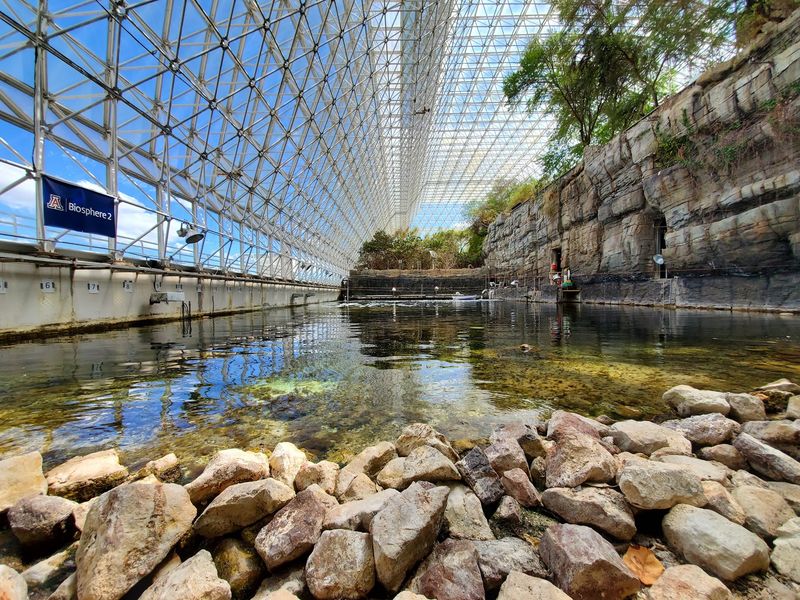
Few things capture the strangeness of this site like its ocean. A coral reef holding roughly a million gallons of water sits inside a glass structure planted firmly in the desert.
Seeing an ocean biome in the middle of Arizona is the sort of sight that sticks with you. It is one of the most talked-about features on the grounds.
The area is a favorite for its sheer improbability, though a few honest observations pop up here and there. Some feel the ocean section is a touch underwhelming compared to what they pictured, and expectations can run high after decades of hearing about it.
Even so, the engineering that keeps a coral reef alive so far from any coastline is a marvel in its own right. It shows just how much thought went into recreating the planet in miniature.
For Arizona locals who think the desert has no business housing a reef, this room is a friendly reminder that the state still has a few surprises left to hand out.
The Lung That Makes the Building Breathe
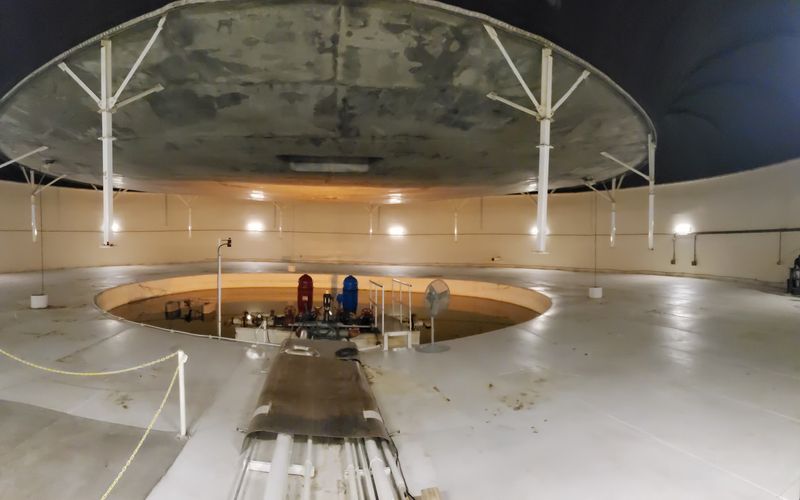
Hidden away from the greenery is a piece of engineering that steals the show for many. The structure known as the lung expands and contracts to handle changes in air pressure, almost as if the entire building is breathing.
Standing in front of it, the whole system suddenly makes sense. It is a clever, memorable demonstration of how sealed environments manage the invisible forces that keep them stable.
The Lung Tour is offered as an extra add-on, and it comes highly recommended by those who want a peek at the behind-the-scenes machinery. It is a favorite for anyone curious about how the place actually works.
People who toured the site years ago fondly recall the air handlers and mechanical guts, and the lung remains one of the most fascinating stops for that engineering crowd.
If you have any interest in how humans might one day build livable worlds, this quiet chamber may be the highlight of your entire visit.
Touring at Your Own Pace With the App
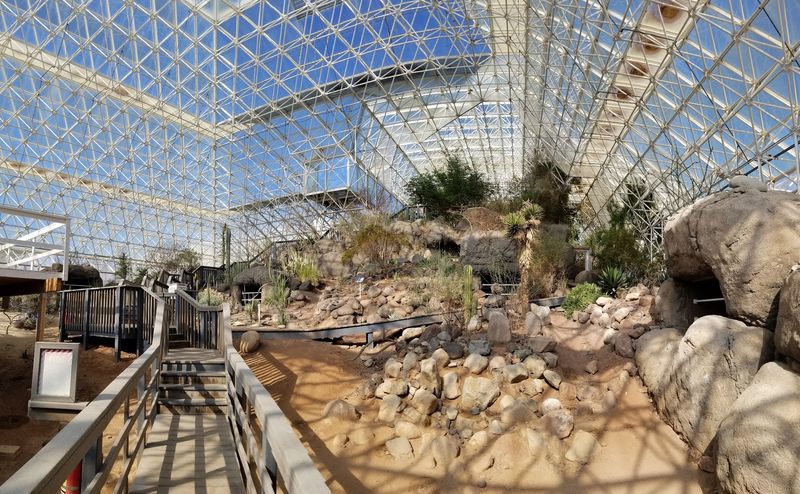
The way you explore has changed over the years. The tour is now self-guided through the Biosphere 2 app, which narrates the experience as you walk and lets you set your own rhythm.
Plenty of people appreciate the freedom of the format. You can linger where you like and breeze past what you already know, and the general tour runs about an hour for most.
A word to the wise: the app needs to download well over 200 steps to function, and the full download can take around 30 minutes. Opening it and letting it update before you arrive saves a lot of standing around.
There is WiFi on-site to help, and arrows marked on the ground make the route easy to follow. Staff members are also stationed throughout to answer questions.
Not everyone loves staring at a screen instead of chatting with a live guide, and a few miss the old narrated walks. Still, the app format is polished, easy to use, and lets curious minds wander at whatever speed suits them.
Who Will Love It and Who Might Not
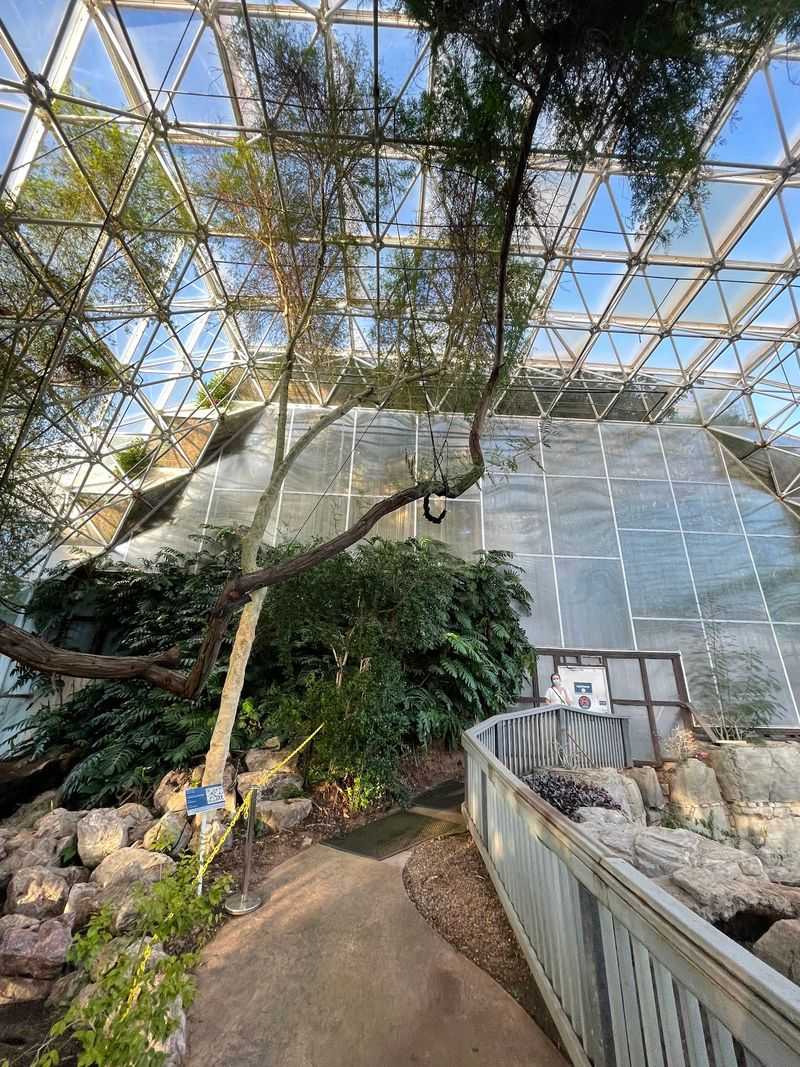
Not every attraction fits every traveler, and this one has a clear sweet spot. Older kids and teens who enjoy science and history tend to get the most out of it, soaking up the engineering and the story behind the mission.
Younger children may find it less engaging, since the experience leans more toward walking through displays and watching videos than hands-on play. A few wish there were more interactive elements to keep little ones busy.
The mood is calm and unhurried, closer to a peaceful garden stroll than a bustling theme park. That quiet quality is exactly what draws in science lovers and curious adults.
Accessibility gets real praise too. Staff have gone out of their way to help older members of a group take shortcuts and avoid stairs where possible, which speaks to the friendly crew stationed around the grounds.
For anyone who grew up watching documentaries about the sealed experiment, the visit can completely reshape how they see the place. Several arrive expecting a quirky stop and leave genuinely inspired.
Planning Your Visit the Smart Way
A little preparation goes a long way here. The site is open daily from 9 AM to 4 PM, and setting aside about two hours lets you see everything without rushing.
Hydration matters more than you might think. Even inside the glass you are still in the desert, so bring your own water bottle.
There are refill fountains near the start and stations scattered throughout the grounds.
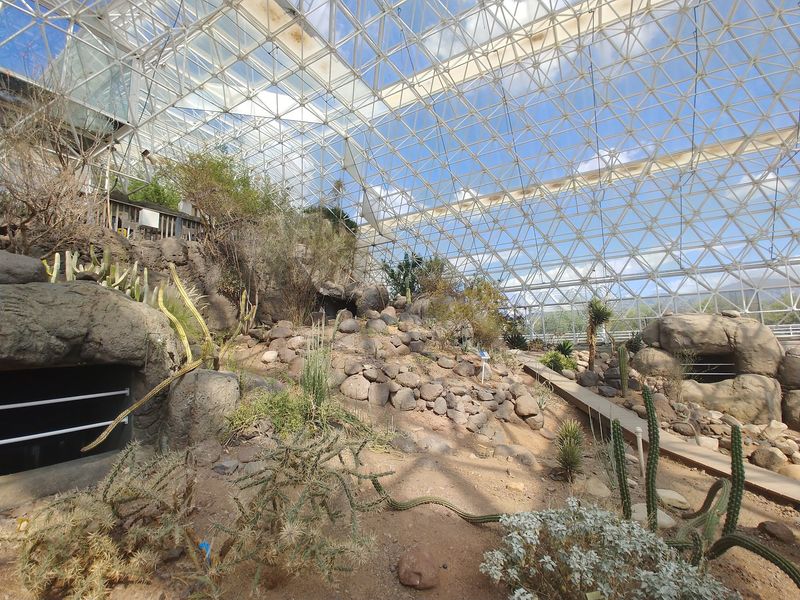
Dressing in layers is smart because you move between very different climates. You will feel dry desert heat, high rainforest humidity, and cooler air near the technical lung area, so a light removable layer helps.
Since part of the walk happens outdoors between glass structures, a hat and sunscreen are worth packing, especially in summer when it gets quite warm. Sturdy walking shoes handle the stairs and varied terrain well.
The general self-guided tour is all most people need, though bonus tours like the lung and library visits cost extra. There is also a unique gift shop worth a look before or after your walk.
You can reach the site by heading to Biosphere Rd in Oracle, with an easy drive from the Tucson and Phoenix areas.
A Backyard Wonder Worth the Drive
Some places reveal their magic slowly, and this is one of them. What looks like a quirky roadside curiosity turns out to be a working research center studying the very planet we all share.
The blend of ambitious history, breathing engineering, and living biomes gives it a character no other Arizona stop can match. Many walk in curious and leave admiring the ongoing work being done for climate and conservation.
Yes, a few feel the current format leans too much on screens and misses the drama of the original crew story. Those honest notes are worth keeping in mind, and expectations set decades ago can be tough to meet.
Even so, the overwhelming sense is that the trip pays off. People from across the state and beyond describe it as one of the most surprising and memorable places they have found.
For Arizona locals hunting for something world-class hiding close to home, this glass world in Oracle delivers. It is a reminder that wonder sometimes waits just off the highway, quietly breathing in the desert sun.