
Affiliate disclosure: As an Amazon Associate I earn from qualifying purchases. Learn more
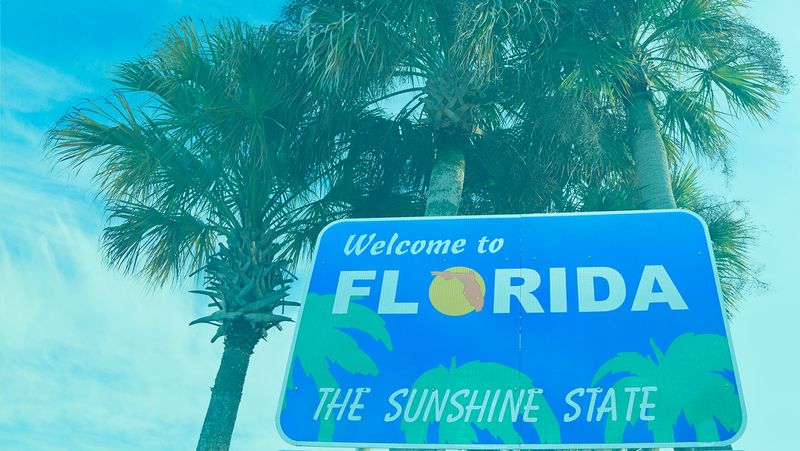
Somewhere along a long stretch of highway heading south, a green-and-white sign appears and something shifts. For many drivers returning to Florida, that roadside marker feels like the moment the trip officially ends and the homecoming begins.
Whether Florida means a permanent address, a winter escape, a childhood vacation, or a place where family still lives, that sign carries weight that goes well beyond its painted letters.
A roadside marker can make arrival feel real
Spotted from the passenger seat or glimpsed through a windshield after hours on the road, a Florida welcome sign has a way of making the final miles feel official. Travelers on some of the state’s major entry routes will encounter one of these markers near the state boundary, though not every road crossing into Florida carries one.
Federal Highway Administration guidelines distinguish a state welcome sign from a jurisdictional-boundary sign, noting that a welcome sign may be placed at or near a state boundary and may display a state motto or slogan, as long as it does not interfere with traffic-control devices.
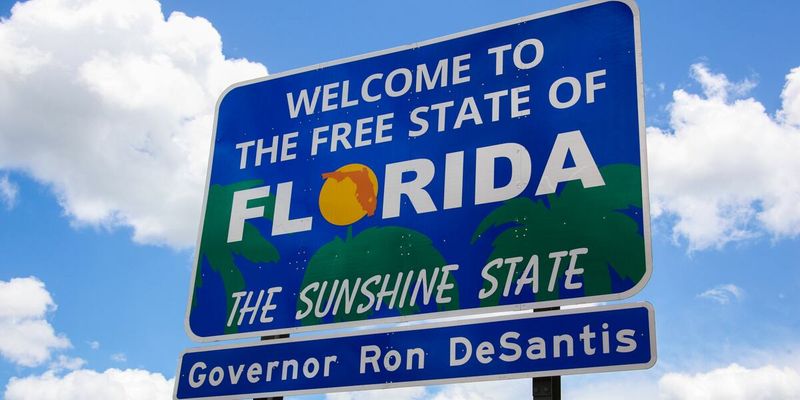
Florida updated its welcome-sign messaging in 2024. FDOT announced that “Free State of Florida” language had been placed on welcome signs appearing on major state roadways, while “Hurry Back” signs were being installed for motorists leaving the state.
That wording reflects official state branding and a political identity the state has chosen to project. Travelers will read it differently depending on their own relationship with Florida, and not everyone will see it as a personal statement.
What gives the sign its emotional pull is not the lettering itself but the associations travelers bring to it. A driver returning after months up north, a college student heading back after a holiday break, a family arriving for a long-planned vacation – each person carries a different set of memories and expectations into that moment.
The sign becomes a concrete symbol of transition: behind you is the long stretch of road; ahead of you is the place you came to reach. That shift in feeling is real, even if the sign is simply a roadside marker on some routes and not a universal gateway at every Florida entrance.
Returning to a meaningful place can feel like coming home
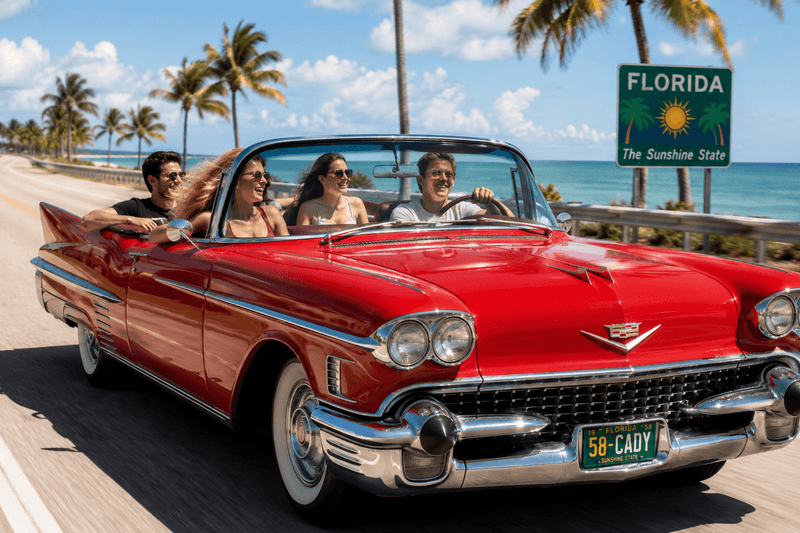
Research on place attachment and homecoming travel finds that returning to a location tied to personal history can bring up feelings of belonging, nostalgia, comfort, and identity. Studies on place attachment describe how people form emotional bonds with locations that hold memory, routine, or personal meaning – and that revisiting those places can reactivate those feelings even after a long absence.
A related examination of homecoming travel found that returning to a meaningful destination is often tied to a sense of continuity and self – the place reflects back something about who the traveler is or was.
For Florida travelers, those findings play out in different ways depending on personal history. A lifelong resident returning from a long work trip may feel an immediate and familiar ease.
A seasonal resident heading south after a cold autumn may feel relief at the anticipated warmth. A former resident passing through may feel a bittersweet pull toward neighborhoods and routines that no longer belong to daily life.
Research on alma mater tourism shows that even travelers returning to places they once lived but no longer call home can experience strong emotional responses rooted in identity and memory.
None of that research was conducted specifically on Florida state-line crossings, and it does not establish that every Florida-bound traveler feels pride or relief at the same moment. A first-time visitor, a traveler passing through on the way to somewhere else, or someone arriving under difficult circumstances may feel something entirely different – or nothing in particular.
The emotional weight of a welcome sign belongs to the traveler who brings meaning to it, not to the sign itself.
The return drive builds the feeling before the sign
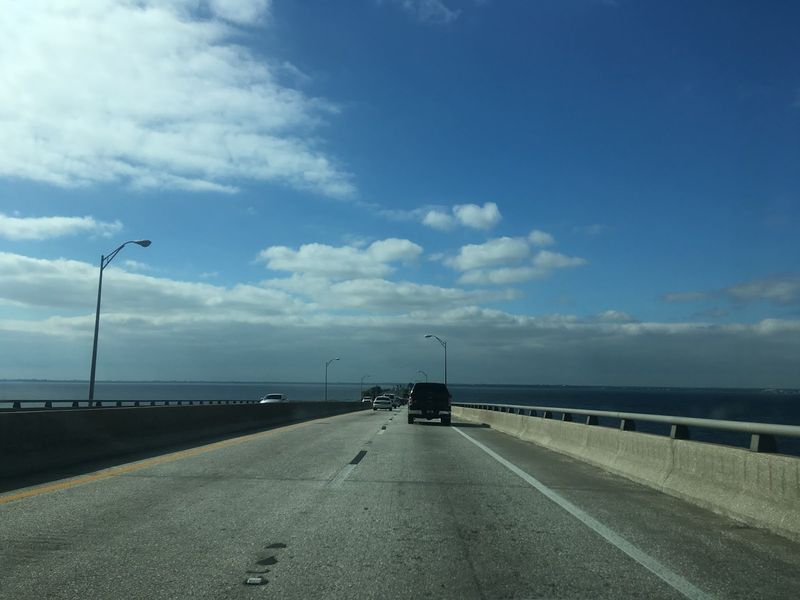
Long before the sign appears, the drive itself starts doing something. The landscape changes gradually as travelers move south through Georgia – the pines grow taller and the air feels heavier, and familiar highway exits begin showing up with names that belong to Florida.
For many returning travelers, the emotional shift happens not at a single marker but across the final hour or two of the trip, as recognizable routes and anticipated scenery start to close the distance between where they are and where they are going.
Homecoming travel research suggests that the anticipation of return can itself be meaningful – the journey toward a significant place carries emotional content before arrival ever happens. A driver who has made the same run from Atlanta or Charlotte a dozen times may feel a kind of muscle memory kick in: the particular rest stop, the overpass with the familiar billboard, the radio station that finally comes in clearly.
Those small cues accumulate and create a sense of arrival that begins well ahead of any state sign.
Not every traveler will experience that buildup the same way. One person may feel genuine relief after leaving behind cold weather or a stressful stretch of road.
Another may feel quiet anticipation – the specific kind that comes from knowing exactly what waits at the other end. Someone arriving for the first time may feel curiosity rather than homecoming, and someone traveling under difficult circumstances may feel little of anything except the need to get there safely.
Florida’s warmth, its particular quality of light, and its familiar geography are real and recognizable, but they land differently depending on who is sitting behind the wheel and what they are returning to.
A welcome center is a separate kind of welcome
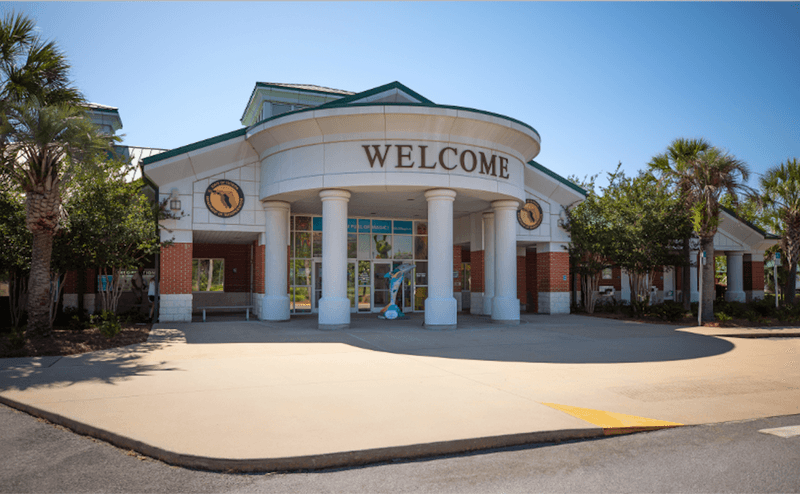
Seeing a welcome sign and pulling into a welcome center are two different experiences, and it helps to know which one you are looking for before you get there. Florida operates four official highway welcome centers at major entry routes, and they are not the same as the roadside signs travelers may notice near a state boundary.
The centers are dedicated facilities with staffing, services, and parking – a proper stop rather than a glimpse from the fast lane.
According to VISIT FLORIDA’s official welcome center listing, the four highway locations are on I-10 west of Pensacola, I-75 near Jennings, I-95 north of Yulee, and U.S. 231 near Campbellton. A separate welcome center is also maintained at the State Capitol in Tallahassee.
Each highway facility offers visitor information, printed maps, restrooms, vending machines, accessible facilities, and parking sized for buses, RVs, and trucks. The centers have served auto travelers since 1949 and have a long-standing tradition of offering complimentary Florida citrus juice to arriving guests – a detail that has become part of the welcome-center identity for many longtime Florida travelers.
FDOT’s rest area and welcome center information notes that the facilities are open and maintained 24 hours a day, seven days a week, while tourist information services are available from 8 a.m. to 5 p.m. daily, with some holiday exceptions. Overnight camping is not permitted, and visitors may generally stay for up to three hours.
Before making a dedicated stop, check current hours and available amenities directly with FDOT or VISIT FLORIDA, since services can vary by location and conditions change. The welcome center is worth the short detour if you want maps, a knowledgeable staff member, and a quiet place to stretch your legs before the final push to your destination.
Make the final miles safe enough to remember
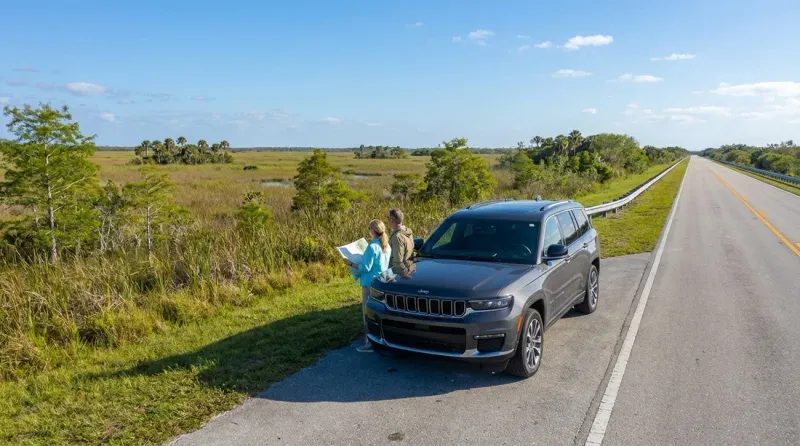
The emotional pull of being close to the destination is real, and it can quietly work against safe driving. Fatigue tends to accumulate over a long trip, and the sense that the end is near does not make a tired driver less dangerous.
NHTSA recommends getting adequate sleep before a long trip, avoiding alcohol and medications that cause drowsiness, and scheduling breaks during peak sleepiness windows – midnight to 6 a.m. and late afternoon. If drowsiness sets in, the right move is to pull over safely at a rest area or welcome center, not to push through.
Coffee and music may feel helpful, but NHTSA is clear that those measures offer only limited and temporary relief and are not a substitute for actual rest or a driver change.
Before leaving, check FL511, Florida’s official traveler-information system, for current conditions on your route. FL511 provides real-time data on crashes, congestion, construction, closures, travel times, and road-weather alerts, along with camera views.
Have a passenger handle any updates while you are moving – checking a phone behind the wheel is not a safe trade-off, regardless of how close you are to the end.
Florida’s heat and humidity add another layer to consider, especially during warm months. CDC guidance for travel to hot climates recommends staying hydrated with nonalcoholic fluids, wearing lightweight clothing, applying sunscreen, and seeking shade during the hottest parts of the day.
CDC heat health guidance advises that confusion, dizziness, heavy sweating, or nausea require immediate cooling and hydration, and that suspected heat stroke is a medical emergency. Florida’s afternoon thunderstorms can develop fast and with little warning.
National Weather Service guidance for South Florida and the NWS lightning safety overview both state that if you can hear thunder, you are close enough to be struck by lightning and should seek a substantial building or an enclosed, all-metal vehicle with windows fully closed. Never stop on a highway shoulder to photograph a welcome sign or wait out a storm.
Use a designated rest area, welcome center, or legal off-road location for any stop.
The meaning belongs to the traveler
No two people read the same sign the same way. For one driver, a Florida welcome sign on I-95 or I-75 represents the end of a hard winter and the start of something warmer – not just in temperature but in feeling.
For another, it marks the last leg of a vacation that will be over too soon. For a military family relocating to a new base, it may signal the beginning of an unfamiliar chapter rather than a return to anything known.
Place attachment research is consistent on one point: the emotional meaning of a location comes from the person, not the place itself.
That distinction matters for how you think about the sign. Federal highway standards describe a state welcome sign as a roadside marker that may appear at or near a state boundary on some routes – not a universal gateway installed at every point of entry.
And as noted earlier, FDOT’s 2024 signage update placed the “Free State of Florida” message on major state roadways, while welcome centers remain separate facilities at four specific highway locations. Encountering the sign is not the same as crossing the exact state boundary, and neither is the same as stopping at a welcome center.
What holds across all those different experiences is something simpler: the sign works as a personal cue because travelers let it. The miles behind you, the people waiting ahead, and the particular version of Florida that belongs to your own story – those are what give the moment its weight.
Arrive safely, and the sign will mean exactly what you need it to mean.