

Affiliate disclosure: As an Amazon Associate I earn from qualifying purchases. Learn more
Film photography never really died; it just took a breather while digital caught up. Now, shooters everywhere are rediscovering the magic of emulsion, and autofocus film cameras offer the perfect blend of classic analog soul and modern convenience. Whether you’re chasing street candids, landscapes, or family memories, these cameras deliver sharp focus without the guesswork, making film accessible to everyone ready to load a roll and shoot.
1. Canon EOS-1V (2000)

Canon built this beast to last through rainstorms, deserts, and countless weddings. Weather seals and a magnesium-alloy shell protect the guts while the motor screams through 36 exposures in seconds flat.
With the optional Power Booster PB-E2, you unlock a blistering 10 frames per second, perfect for action and sports. The 45-point autofocus array mirrors what Canon later used in early digital flagships, so reliability is baked in.
Production ended in 2018, marking the end of an era for Canon film pros.
2. Canon EOS-3 (1998)
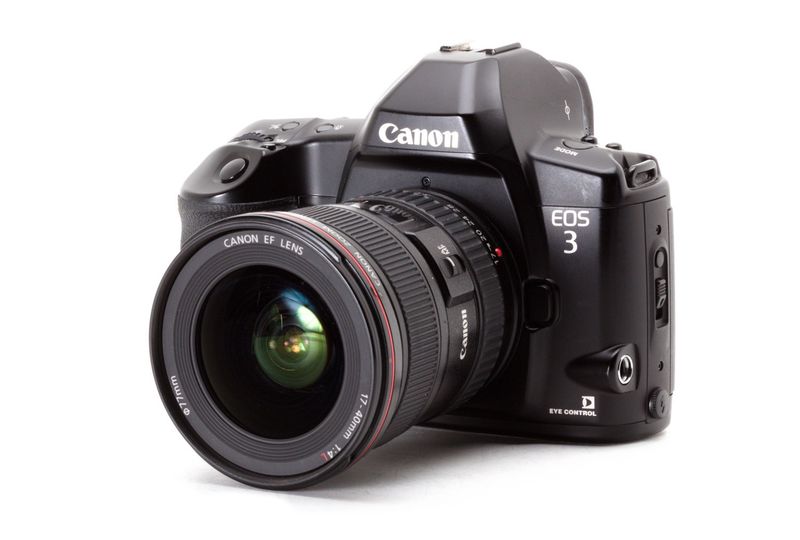
Eye-Controlled Focus sounds like science fiction, but Canon made it real with this body. Glance at one of the 45 autofocus points through the viewfinder, and the camera locks onto it instantly.
Pair it with the PB-E2 Power Booster and you reach 7 frames per second, more than enough for wildlife or fast-moving kids. The build quality strikes a sweet spot between pro toughness and manageable weight.
Many photographers still call the EOS-3 the ultimate Canon film camera for its blend of innovation and affordability.
3. Canon EOS 5 / A2E (1992)

Before the EOS-3, there was this trailblazer: the world’s first SLR to let you focus with your eyes. Five autofocus points respond to your gaze, a trick that still feels futuristic decades later.
Canon gave it a semi-pro build, a lightning-fast 1/8000 second shutter, and a pop-up flash for convenience. Today, these cameras sell for bargain prices because many shooters overlook older tech.
If you want a taste of Canon’s wildest autofocus experiment without emptying your wallet, grab an EOS 5.
4. Nikon F6 (2004–2020)
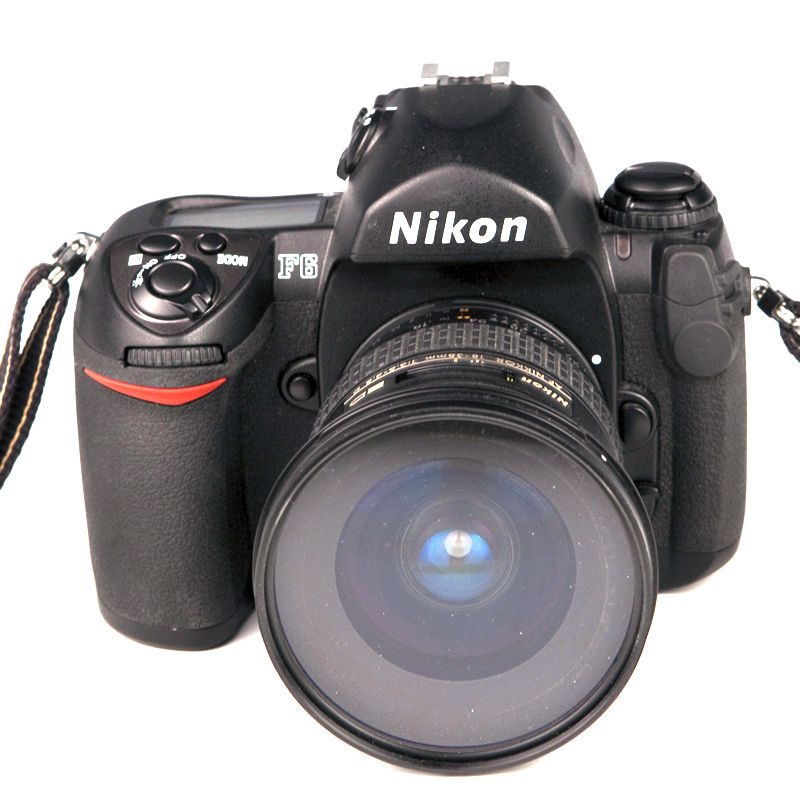
Nikon’s final F-series flagship carried the torch into the 2020s, outlasting nearly every other film camera in production. Eleven phase-detect autofocus zones track subjects with digital-era precision, and the motor hits 5.5 frames per second without breaking a sweat.
Add the optional battery grip and you jump to 8 fps, rivaling many DSLRs. Full compatibility with most F-mount AF lenses means your entire Nikon glass collection works flawlessly.
This is the camera that refused to quit, even when the world went digital.
5. Nikon F100 (1999)
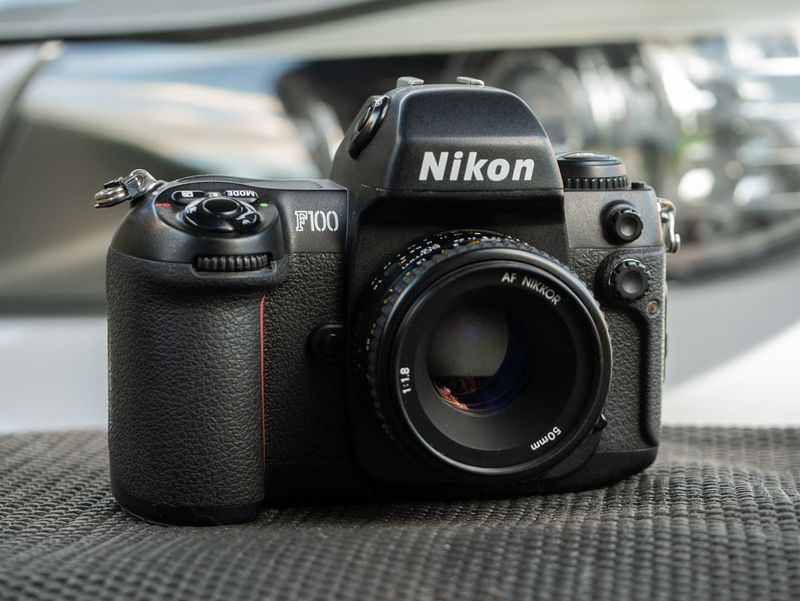
Photographers nicknamed it the “mini-F5” because it delivers flagship performance in a lighter, more affordable package. Rugged construction meets fast handling, making it ideal for travel and action work where every ounce matters.
The 10-segment 3D Matrix metering reads scenes intelligently, and you can switch to center-weighted or spot modes when precision matters. Autofocus snaps onto subjects quickly, whether you’re shooting street scenes or sprinting athletes.
Many pros chose the F100 over heavier bodies for its perfect balance of features and portability.
6. Nikon N90s / F90x (1994)
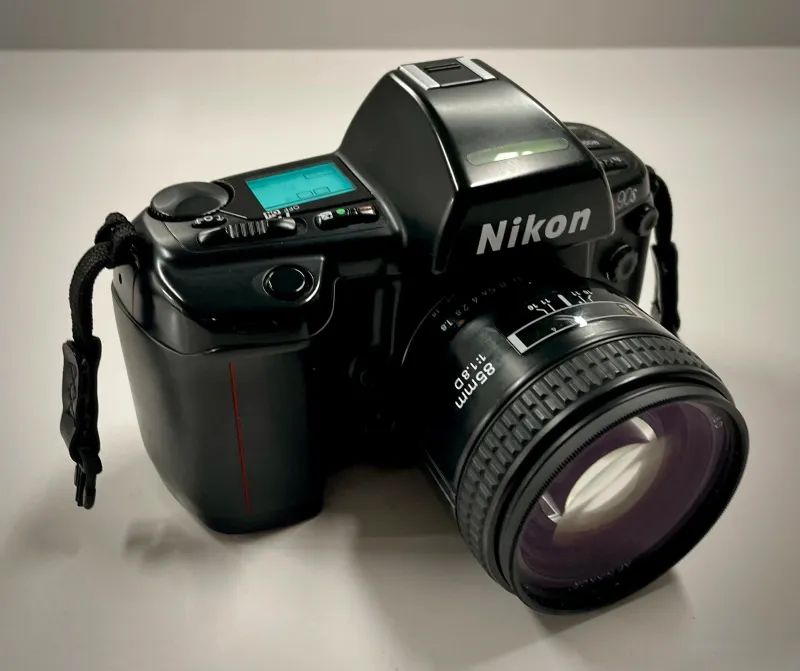
Kodak trusted this body enough to use it as the foundation for several early DCS digital SLRs, a testament to its solid bones. Dependable autofocus and metering make it a workhorse for anyone exploring Nikon’s AF lens lineup.
The prosumer designation means you get pro features without the weight or expense of a flagship. Controls fall naturally under your fingers, and film advance is smooth and reliable.
If you’re hunting for an affordable entry into Nikon film photography, the N90s delivers quality without drama or sticker shock.
7. Minolta Maxxum/Dynax 9 (1998)
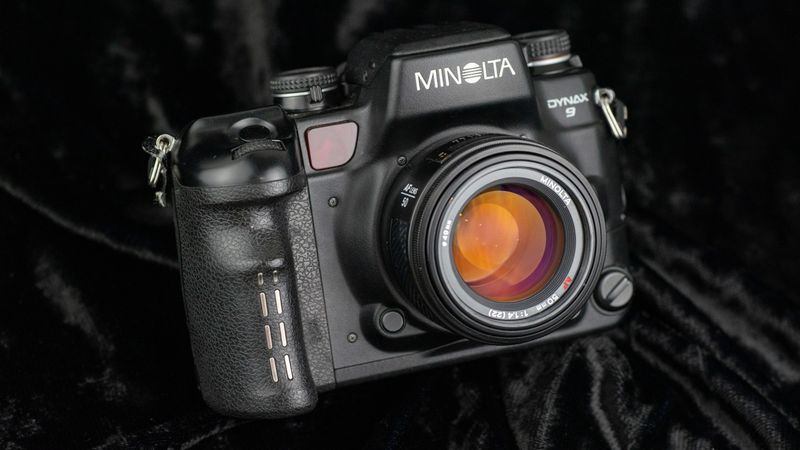
Minolta’s swan song in the pro film world arrived with a metal chassis built like a tank and weather seals to match. The shutter screams to 1/12,000 second, one of the fastest in any film camera, freezing motion others miss.
Film advance clips along at roughly 5.5 frames per second, and every control feels deliberate and precise. This body was designed to survive hard use in demanding conditions, from dusty deserts to humid rainforests.
Few cameras wear their durability as proudly as the Maxxum 9.
8. Minolta Maxxum/Dynax 7 (2000)
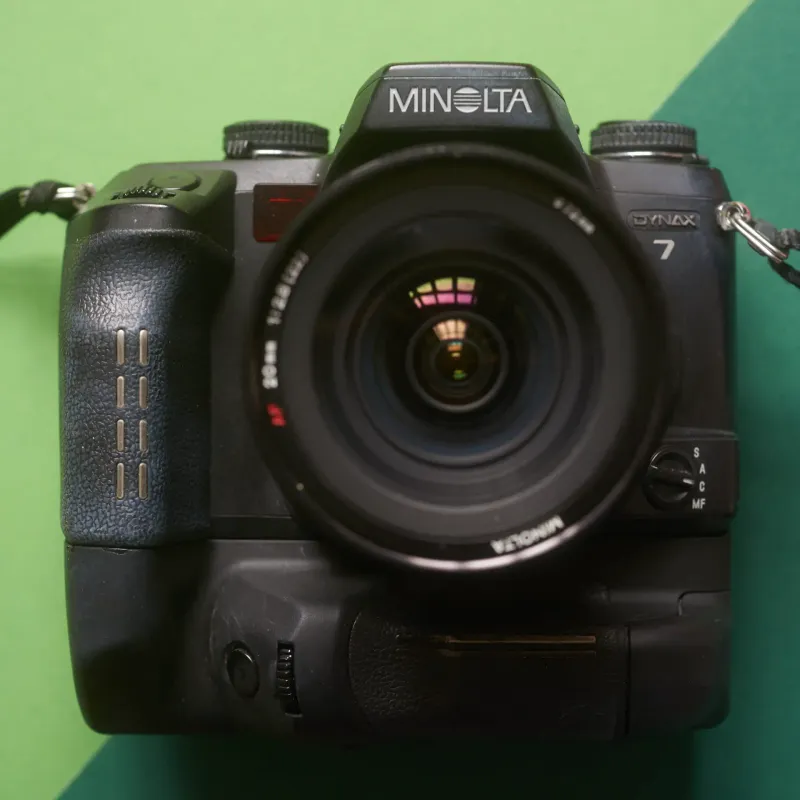
Nine autofocus points might not sound like much today, but the central double-cross sensor nails focus with startling accuracy. Minolta’s clever rear “Navigation” display makes changing settings intuitive, almost fun.
Pair this body with Minolta’s legendary A-mount G lenses and you unlock sharpness and color rendition that rival anything from Canon or Nikon. The ergonomics feel refined, each button and dial placed exactly where your thumb expects it.
Shooting the Maxxum 7 is a joy, plain and simple.
9. Pentax MZ-S (2001)
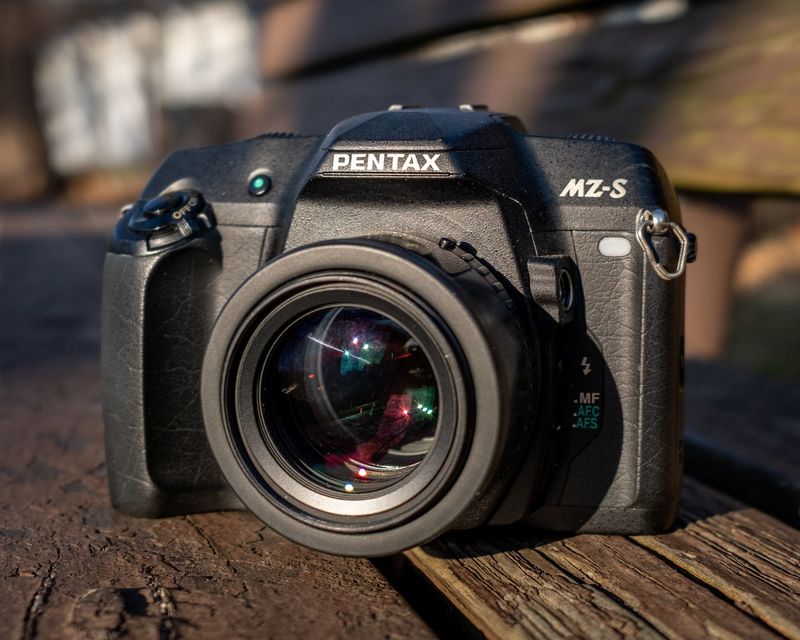
Pentax fans waited years for a true flagship, and the MZ-S delivered with a magnesium-alloy body that feels dense and purposeful. The KAF2 mount supports Pentax’s full AF lens range, and the 1/6000 second shutter handles bright sunlight without neutral density filters.
Dial-forward controls give it a tasteful, almost retro aesthetic that stands apart from bulkier rivals. Compact dimensions mean it disappears into a small bag, yet it never feels flimsy.
Pair it with FA primes for a shooting experience that’s refined and deeply satisfying.
10. Contax G2 (1996)
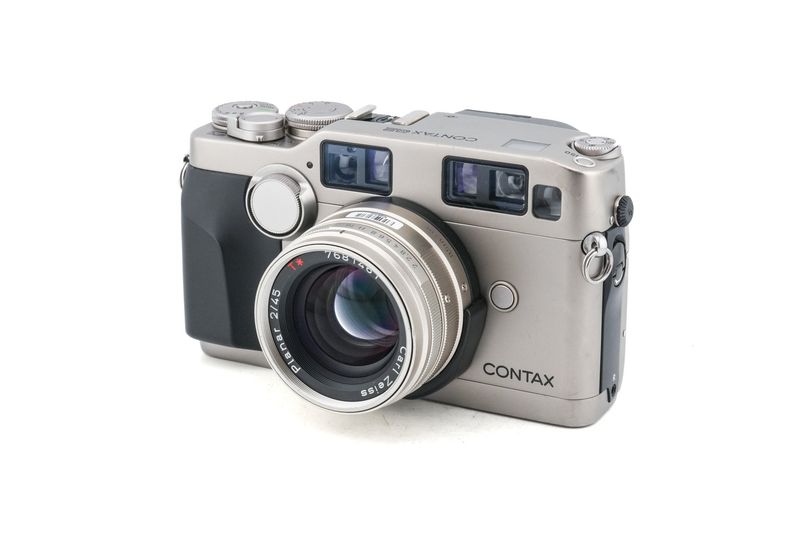
Rangefinders and autofocus rarely played nice, but Contax cracked the code with the G2. Faster and smarter than its predecessor, it pairs a refined AF system with Carl Zeiss G-mount lenses that deliver optical excellence.
The shooting experience blends automation with the tactile pleasure of a rangefinder: quiet, discreet, and beautifully built. Interchangeable lenses expand creative options, from wide-angle street work to portrait telephoto compression.
If you crave something different from the SLR crowd, the G2 offers a unique path forward.
11. Contax N1 (2001)
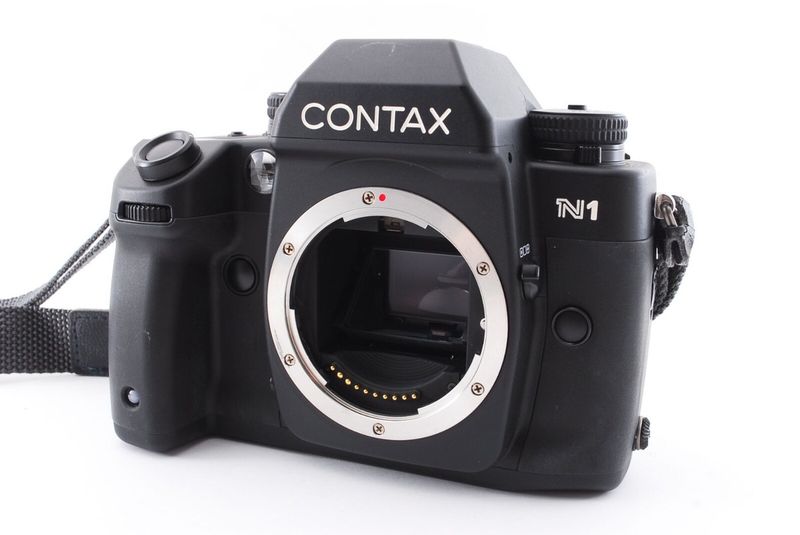
Contax’s final autofocus SLR launched the short-lived N-mount system, and the N1 remains underrated to this day. Sophisticated five-point AF and pro-level controls deliver performance that punches above its current market price.
Build quality is solid, and the ergonomics feel deliberate, even if the N-mount never gained the lens ecosystem it deserved. Today, you can find these bodies for less than they’re worth because collectors chase Canon and Nikon instead.
Smart shoppers recognize the N1 as a hidden gem with capabilities that outshine its reputation.
12. Konica Hexar AF (1993)
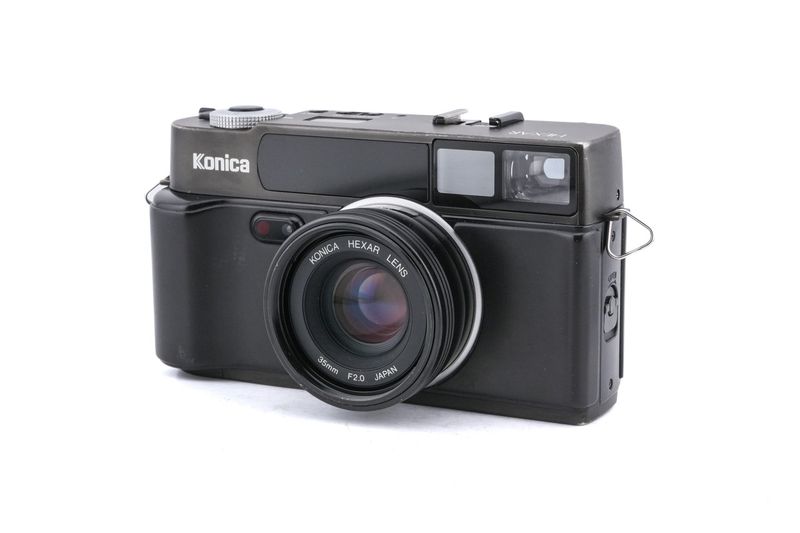
Street photographers whisper about this camera like it’s a secret handshake. The fixed 35mm f/2 lens is stellar, rendering scenes with clarity and character that few compacts match.
Silent Mode lives up to its name, making the shutter nearly inaudible for candid work where a loud click ruins the moment. The Hexar AF feels purposeful in hand, built for shooters who value discretion and image quality equally.
Cult-classic status means prices have climbed, but devotees insist it’s worth every penny for its unique shooting experience.
13. Ricoh GR1v (2001)
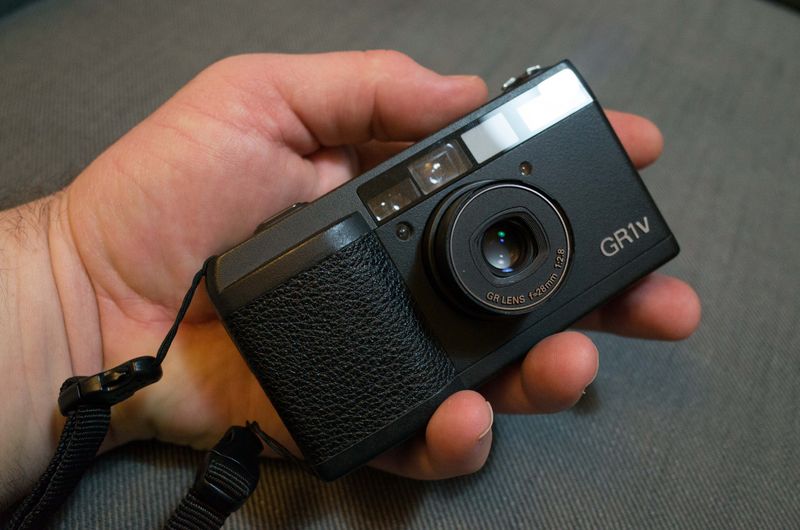
Luxury and compact rarely coexist, but the GR1v nails both with a tiny body that hides enormous image quality. The legendary 28mm f/2.8 GR lens delivers sharpness that embarrasses much larger glass, and aperture-priority mode gives you creative control.
Manual ISO override and bracketing add flexibility most compacts skip, making this a serious tool for travelers and documentary shooters. The build feels premium, every detail considered and refined.
Slip it in a jacket pocket and forget it’s there until the perfect moment arrives.
14. Olympus Stylus Epic / µ[mju:]-II (1997)
![Olympus Stylus Epic / µ[mju:]-II (1997)](https://we3travel.com/wp-content/uploads/2025/12/Ricoh-GR1v-2001.jpg)
Pocketable, splash-proof, and sharp: the Stylus Epic checks every box for everyday carry. The 35mm f/2.8 lens punches well above its weight class, delivering crisp images that rival cameras twice its size.
Autofocus snaps quickly, and the simplicity means you spend less time fiddling with settings and more time shooting. Splash resistance adds peace of mind when weather turns ugly or you’re near water.
Trusted by casual shooters and serious photographers alike, this compact earned its reputation through consistent, reliable performance in all conditions.
15. Yashica T4 / T4 Super (1990s)
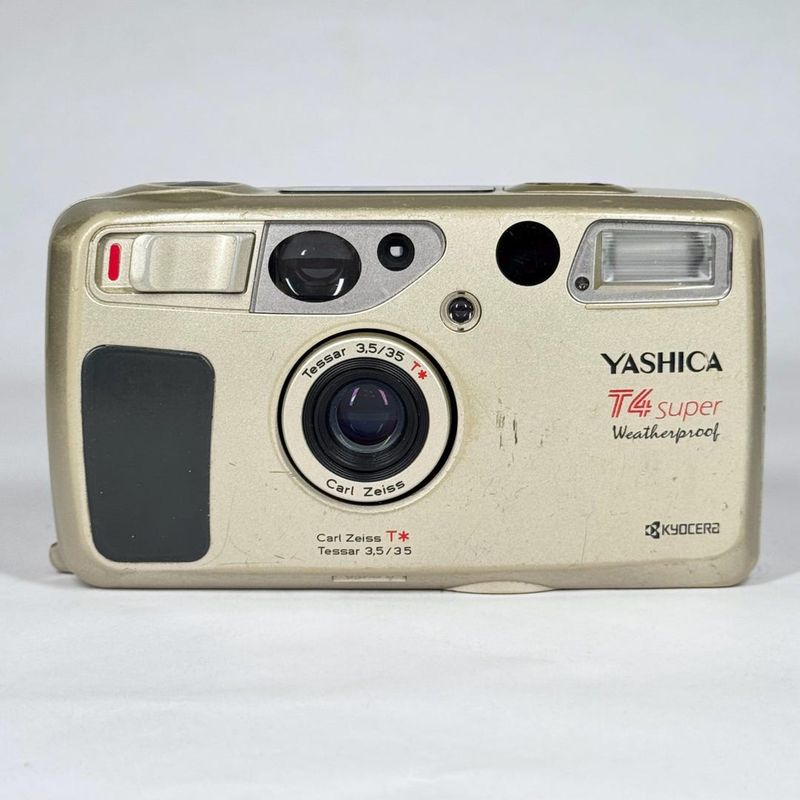
Carl Zeiss glass in a compact body? That’s the magic that turned the T4 into a cult hero among film shooters. The Tessar T* 35mm f/3.5 lens delivers color and contrast that make every frame pop.
The weather-resistant T4 Super variant adds a top-plate waist-level finder, perfect for shooting from the hip or unusual angles. Build quality feels solid, and the autofocus rarely misses.
Celebrities and pros carried these cameras, driving prices skyward, but the image quality justifies the hype for anyone serious about compact film photography.