Affiliate disclosure: As an Amazon Associate I earn from qualifying purchases. Learn more
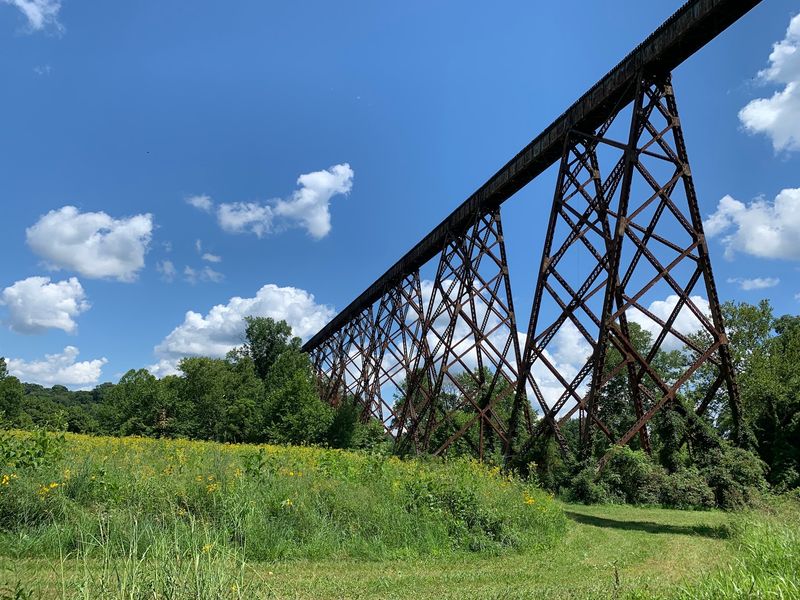
A steel giant stretches across a quiet valley in Greene County, Indiana, and it has been doing its job since 1906. It stands 157 feet tall, and trains still rumble across it today.
Getting there means winding along country roads, past farms and wooded patches, with a few hills that hide what is coming next. This article walks through the story of the trestle, the deck built for looking up at it, the best times to catch a train, and the small details that make the trip easier.
Keep reading to find out why a bridge in the middle of farm country has people planning return trips for every season.
Finding a Steel Giant Near Bloomfield
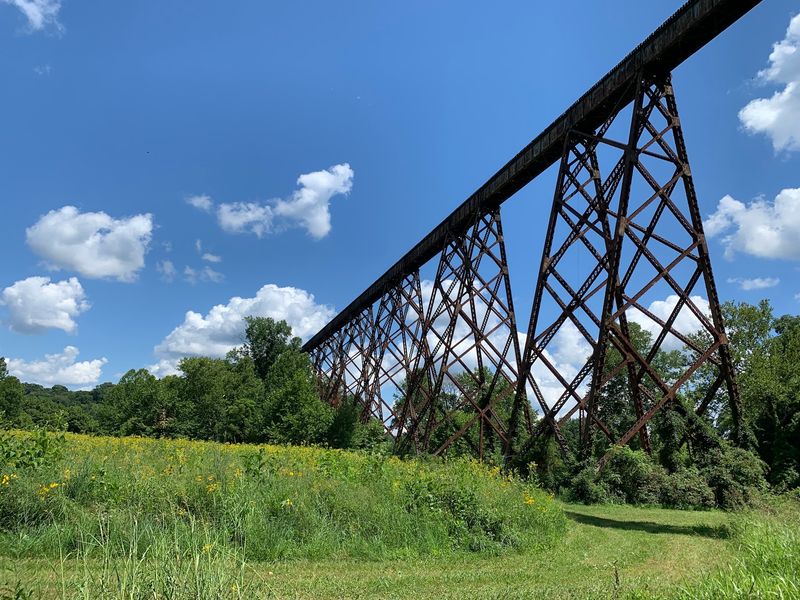
Tulip Trestle sits at County Rd 480 E, Bloomfield, IN 47424, United States, in Greene County in southwestern Indiana. It is a bridge in the most dramatic sense of the word, a steel viaduct that crosses the Richland Creek valley.
The structure is also known as the Greene County Viaduct and Bridge X75-6. Many people simply call it a train nut’s dream, and the numbers back that up.
It stretches roughly 2,300 feet from end to end and rises 157 feet above the ground at its highest point. When it was finished in 1906, it was among the longest steel-girder trestles anywhere in the world.
The site has a website at tuliptrestle.org for anyone who wants to read up before heading out. The area around the base is open, tidy, and set up for visitors to stop and look up.
Most people come from the small town of Worthington or from the Yoho General Store, and the drive is part of the plan. The trestle is the destination, but the countryside leading to it sets the tone well before the first glimpse of steel.
A Railroad Built for Big Ambitions
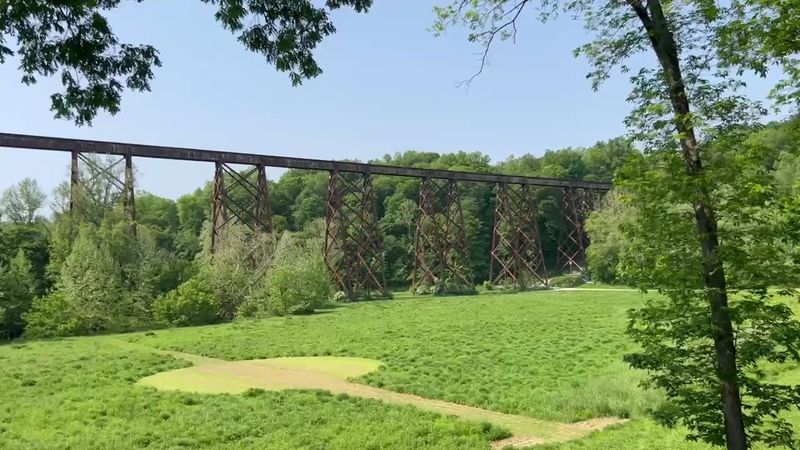
Back in 1906, the Indianapolis Southern Railway completed this viaduct as a bold piece of early twentieth-century engineering. The line later became part of the Monon and is now run by the Indiana Rail Road.
Building something this tall and long across a creek valley was no small task. Visitors still talk about how impressive it is for a structure from 1905 and 1906.
Its length is listed at about 2,307 feet, though some sources round it to 2,295 feet. Either way, it was the longest of its kind when it opened.
Plenty of locals and travelers also repeat the claim that it once ranked among the tallest or longest trestles in the world. The safest fact is the one that sits in plain steel: it has been standing for well over a century.
Information boards at the site walk through how it was constructed, and readers pick up plenty of surprising facts there. Knowing the backstory makes the first look up at those towers feel a bit more earned.
Still Working After All These Years
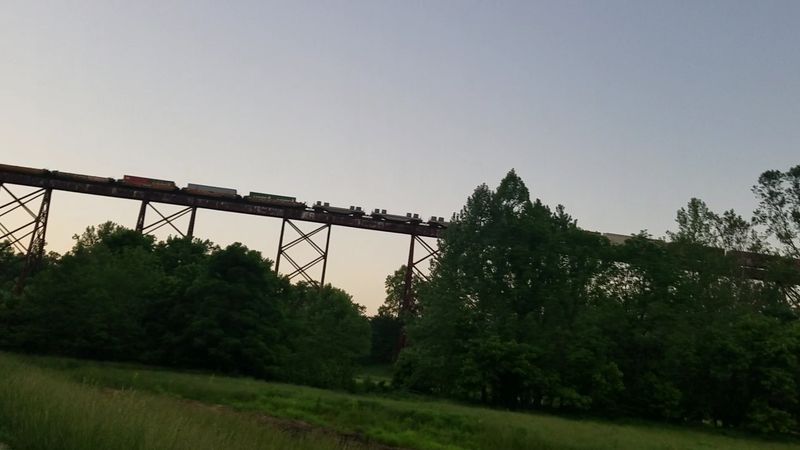
Plenty of historic bridges become museum pieces, but this one never retired. It is still in active use and carries modern freight trains over the valley.
That makes it the largest functioning trestle in Indiana, a detail that train fans love to point out. It also adds a bit of suspense to every visit.
No schedule is posted publicly, so seeing a crossing takes some luck. Locals suggest weekday mornings or early afternoons, when freight traffic is most common.
Another long-ago note from a past visit suggested evenings between 4 and 6 p.m. Since timing is unpredictable, patience is the best strategy.
One cyclist who returns every year mentions catching a crossing only once, which shows how special it feels when it happens. Even without a train, the visit holds up, but the right timing gives the steel a chance to show its purpose.
The Observation Deck Climb
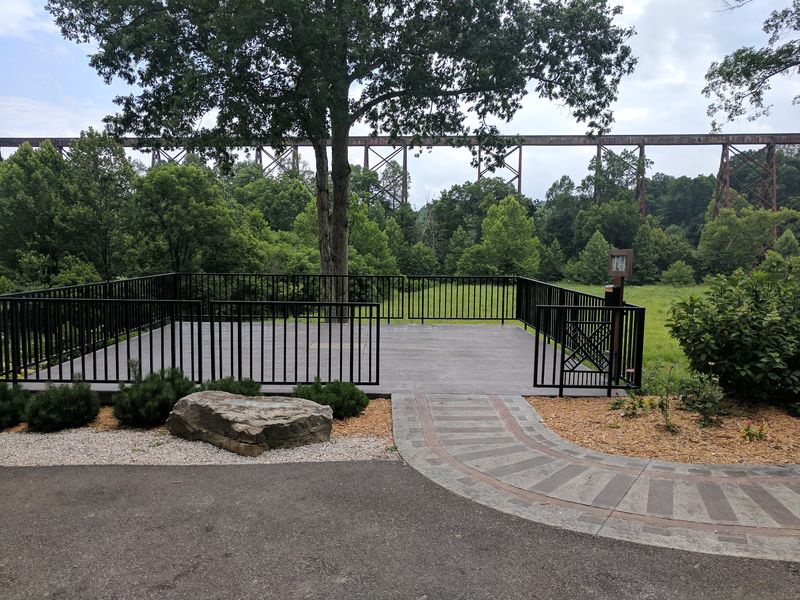
The observation deck is the star of the visit. It is well built and placed to give wide views of the landscape and the tall steel structure.
Getting to the top takes some effort, and some visitors call the climb a small victory of its own. The reward is a view that makes the effort feel worthwhile.
The walkway leading out to the deck has painted train tracks that add a playful touch. It is a small detail that gives the approach some personality.
The deck is kept up through donations and volunteers. Bringing a few dollars is a thoughtful way to help keep it welcoming.
Earlier visitors remember a time when people could climb the hill and walk out onto the structure itself. Today the deck offers a safer and more organized way to take in the scale.
A Lookout for Every Pace
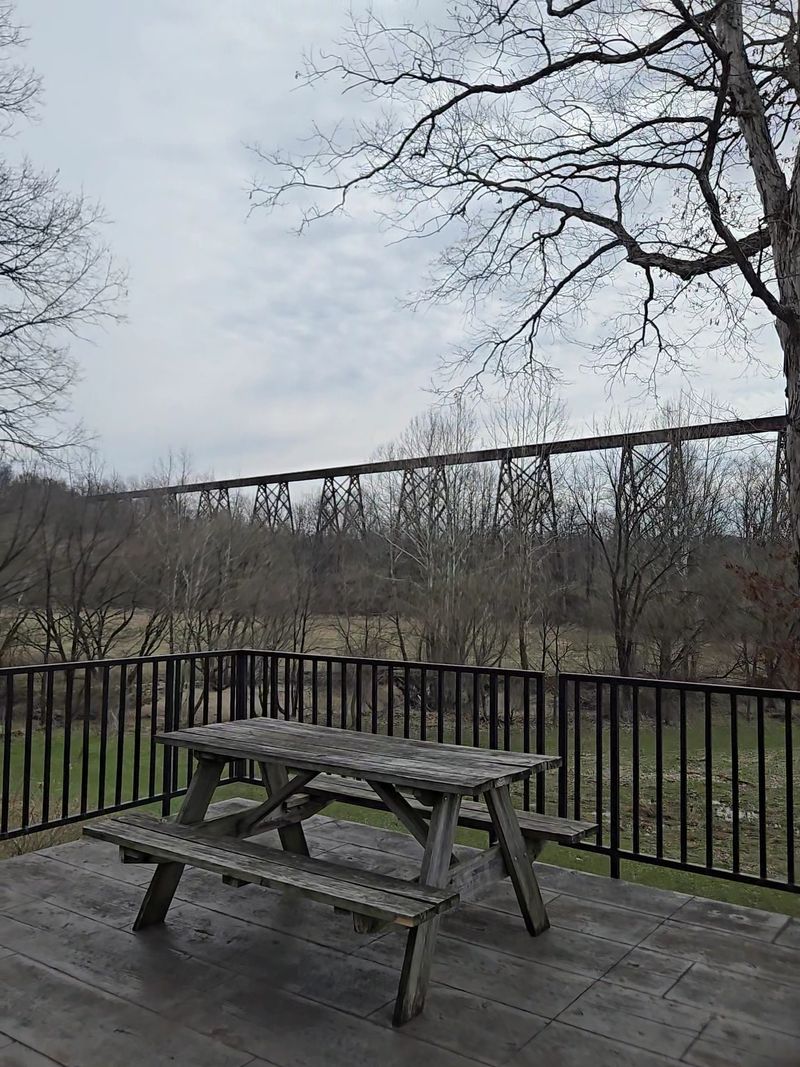
Access to the area has improved over the years. A lookout with a picnic table sits there for people who prefer not to climb or descend the hills.
That means the view is open to those who just want to sit and enjoy it. It also makes the stop easy for families with children.
Information boards were added about local attractions and history. They give the stop a bit of a learning angle without taking over the experience.
The overlook area is described as welcoming, clean, and well kept. Reading about the construction while looking at the real thing makes the facts stick better.
A picnic table is a nice excuse to linger. Bringing a snack and taking a slow break fits the mood of the place.
Roads That Make the Ride
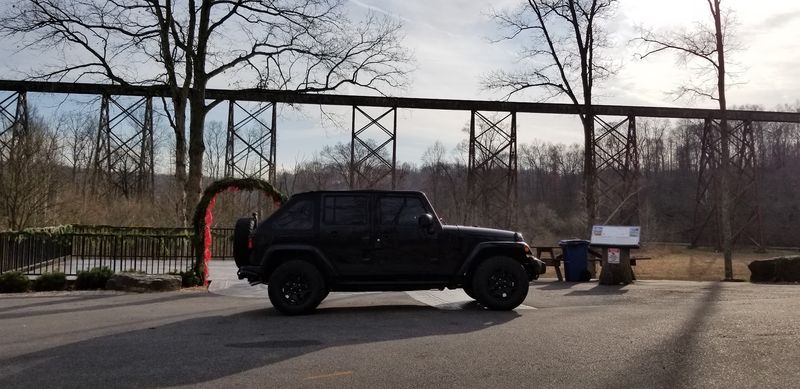
Motorcycle riders come up again and again in the stories about this stop. The winding roads leading out are a big draw, and riders enjoy views of the Richland Creek valley below.
The route passes rolling fields, wooded patches, and small farms. Some of it is paved and some is gravel, so it helps to know that ahead of time.
One note of caution is worth repeating. There are hills that hide oncoming traffic, so staying in your lane matters.
The road also runs near the base of the trestle, which lets riders get right up close. It is a fun way to understand just how tall the structure really is.
Riders also use the area as a rest stop. One even stopped to work on a motorcycle, which says plenty about how relaxed the place feels.
Following the Brown Signs
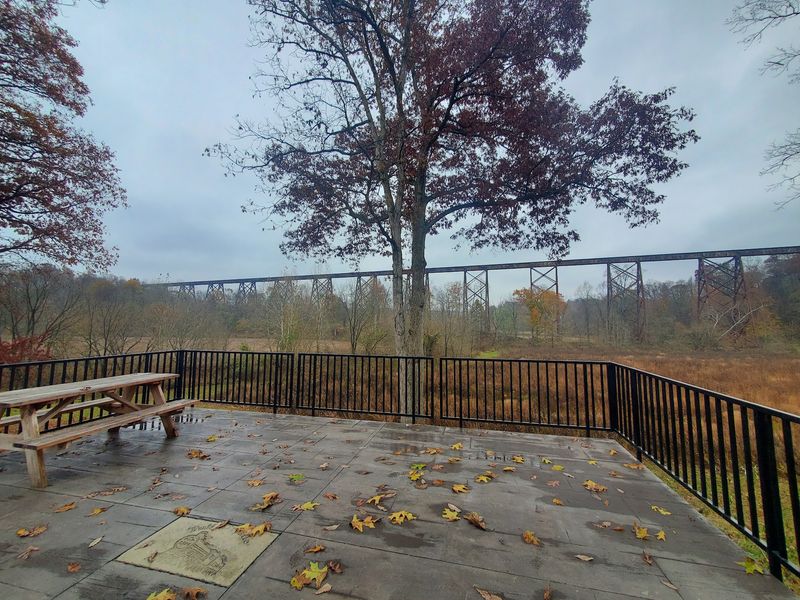
Finding the trestle is easier than it sounds, thanks to helpful signs along the way. From the Yoho General Store, the route heads west on Tulip Road and follows brown Tulip Trestle signs.
The drive winds through classic Indiana countryside. It ends at the overlook area, where the steel comes into full view.
One caution comes from a traveler who found that a GPS route was a poor choice. Following the signs is the safer bet when the map and the road seem to disagree.
The small town of Worthington is also a common starting point. People call the drive a small trip that is well worth making.
Planning ahead pays off, especially with a mix of gravel and paved sections. Leaving a little extra time makes the trip more relaxed.
A Quiet Corner of Greene County
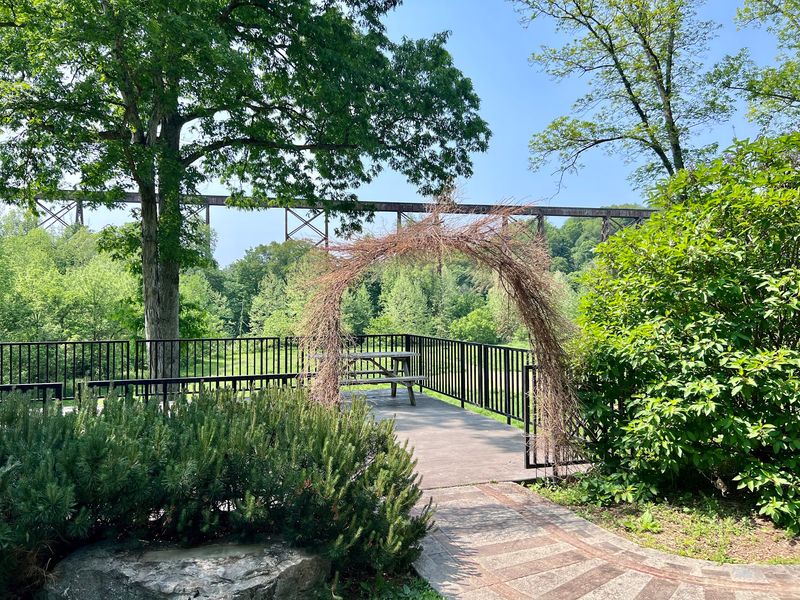
Calm is the main mood here. The property is open, with plenty of room to take in the scenery and think about the history that has rolled across the rails.
Visitors describe the area as serene, even within a state known for pretty landscapes. It feels like a slow break from busy days.
The grounds are clean and well kept. That care shows in the details, from the deck to the paths.
Wildflowers add a nice touch in season. Some people plan to return in fall and winter to capture different looks of the landscape.
It is a place where an hour can pass without much fuss. A quiet stop like this suits anyone who likes to take their time.
Photo Spots Worth Hunting Down
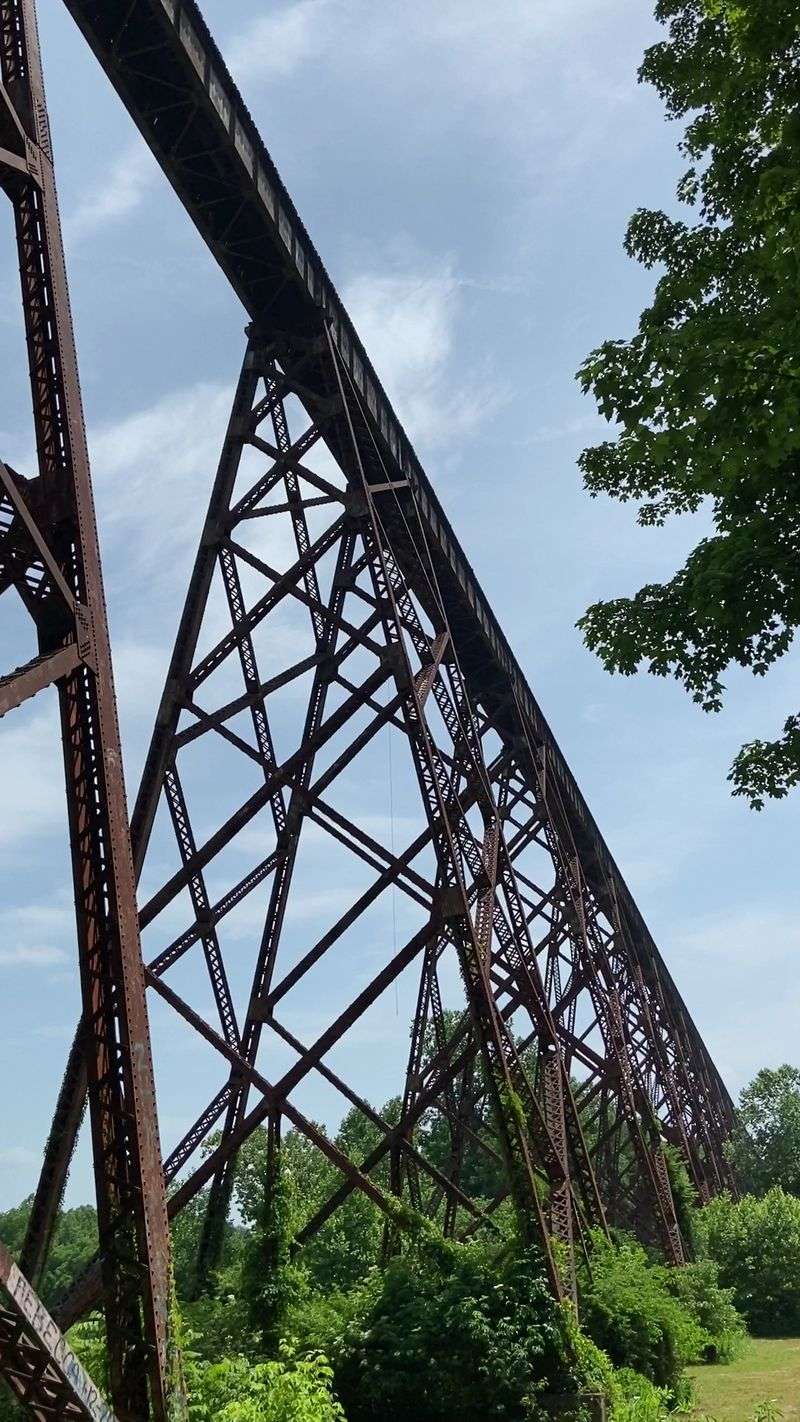
Photographers have plenty to work with here. The deck gives sweeping views, and the structure towers over the valley from nearly every angle.
One family went farther down the road for a different view and was glad they did. The road passes the base of the trestle, which offers a close-up perspective.
Seasons change the scene. Spring brings wildflowers, and fall and winter promise different pictures of the same steel.
The painted tracks on the walkway add a playful foreground. Some people may spot the marriage proposal painted nearby, though one guest was less fond of the graffiti.
A few different spots can make a visit feel fresh. Taking the time to move around gives more variety in the final photos.
Facilities That Make It Easy
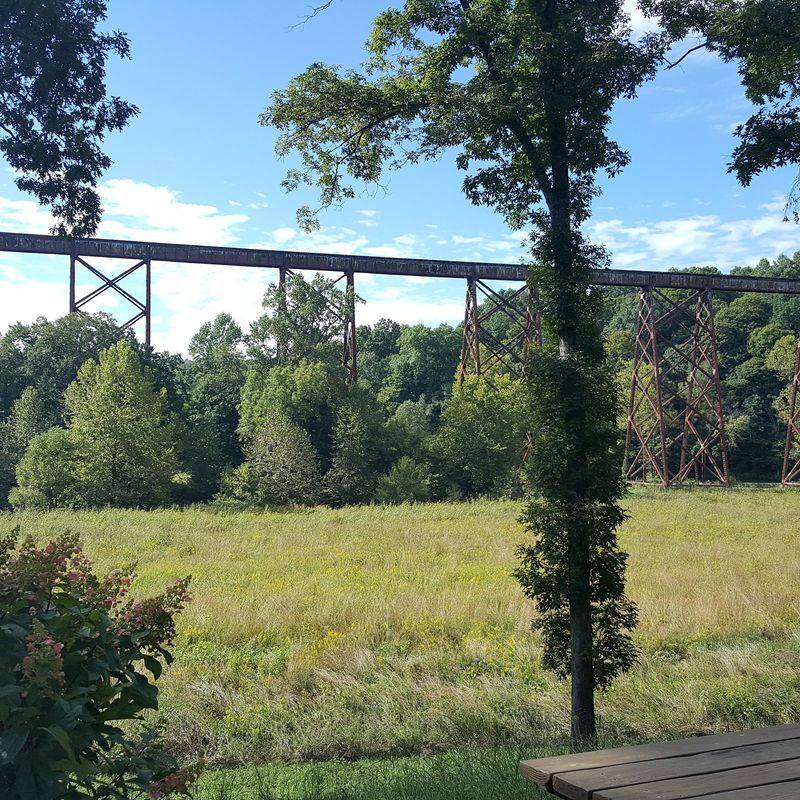
Recent upgrades have made the stop more comfortable. Newly added, clean bathrooms and a nice parking area have been noted by recent guests.
Earlier trips mention a portable toilet on site. The newer setup is a welcome improvement for longer stays.
The parking area gives easy access to the overlook. That helps those who arrive after a long ride or drive.
Since the deck is supported by donations, a few dollars is appreciated. It helps keep the grounds in the good shape people describe.
With these basics covered, there is less to worry about. The visit can stay focused on the view and the history.
A Trip for the Whole Family
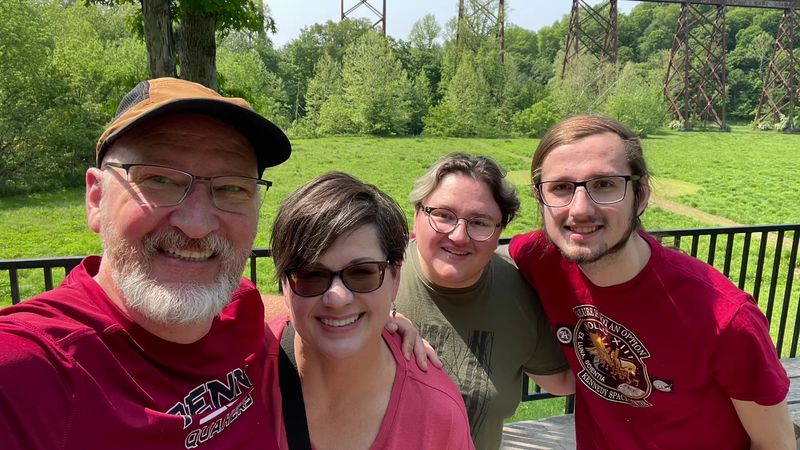
Families treat this as a simple outing with a big payoff. Children get to see a huge working trestle up close, and parents get a lesson in local history.
One local who had lived nearby most of their life visited for the first time and planned to bring their children back. Another returned with their own kids after remembering a high school visit.
The ride out is described as lovely with kids. The information boards give young readers some facts to chew on.
The lookout and picnic table make it easy to keep the pace relaxed. Not everyone has to climb to enjoy it.
Train fans of any age find plenty to love. It is a stop that can be shared across generations.
Changes Over the Decades
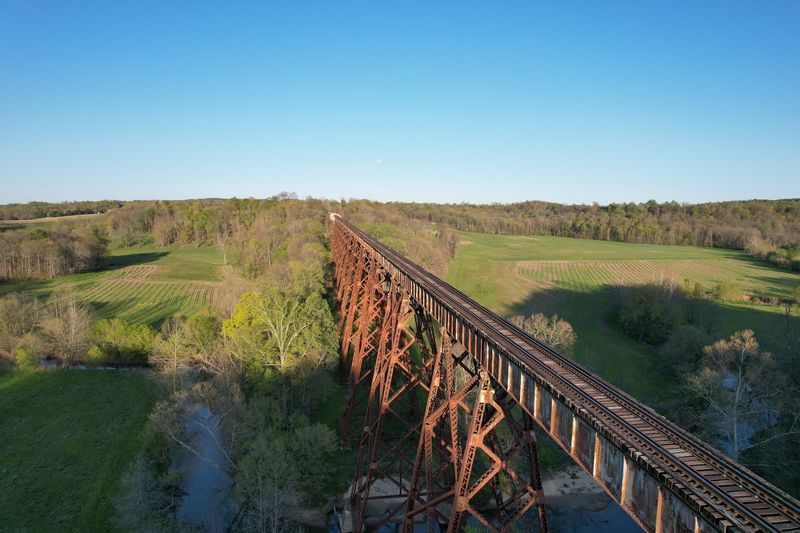
Long-time fans remember a different experience. Years ago, people could climb the hill to reach the top, and walking out on the structure was only for the very brave.
Later, damage to the area made getting to the top difficult. The addition of a proper deck and the care of volunteers changed that story.
Today the focus is on safe viewing. The deck, lookout, and boards give a clear way to enjoy the trestle.
Some people have been visiting for years, even cycling there every year. Their return trips show how the place keeps its pull.
The site has grown more welcoming without losing its character. That balance is a big part of its appeal.
Best Times to Go
Timing can shape the visit. Weekday mornings or early afternoons may offer the best chance of a train crossing.
An older note suggests evenings between 4 and 6 p.m. Since schedules are not posted, flexibility helps.
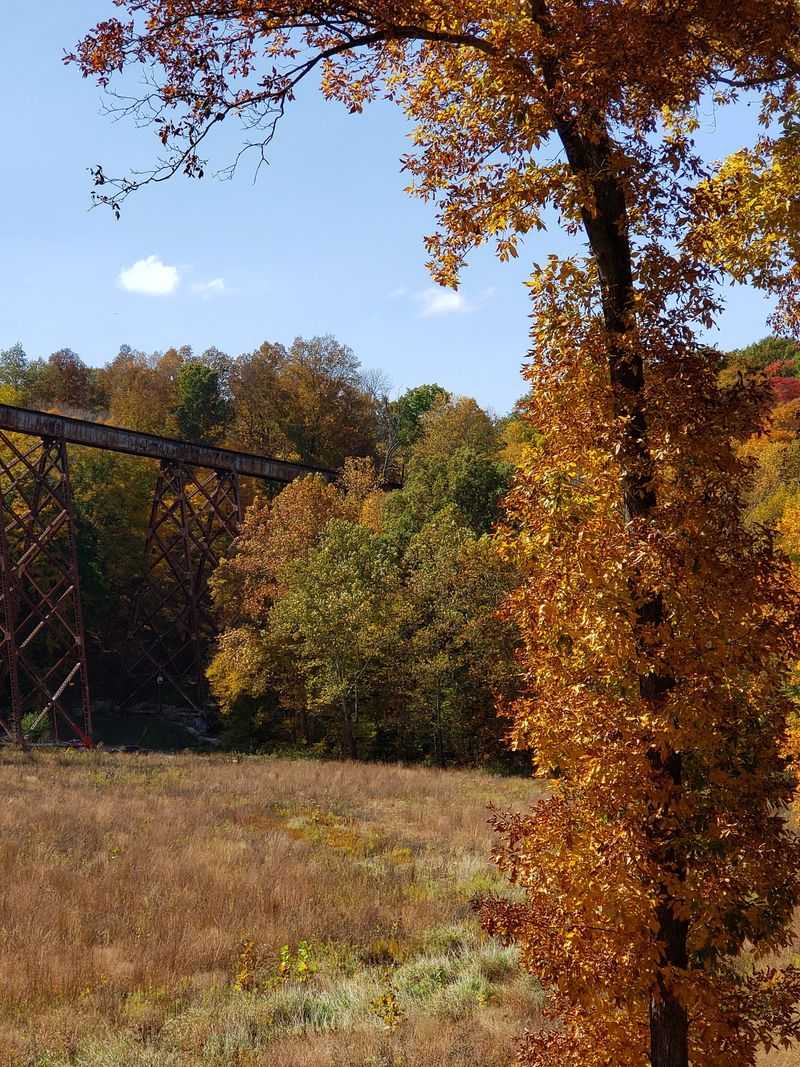
Seasons bring variety. Wildflowers appear in warm months, and fall and winter promise a different landscape.
Roads can be a mix of gravel and pavement. Allowing extra time keeps the drive relaxed.
Arriving early or staying a while gives more chances to see the structure in action. Patience tends to be rewarded.
Worth the Wobble
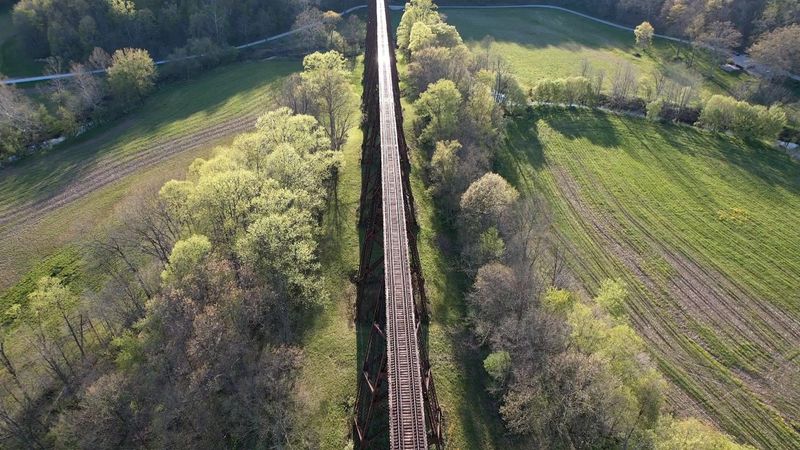
Tulip Trestle earns its 4.8-star standing with history, scenery, and a peaceful setting. It is a working piece of railroad heritage that people enjoy for different reasons, from train watching to motorcycle rides.
The deck, lookout, and information boards make the stop easy and informative. A few dollars in donations helps keep it that way.
Anyone exploring Greene County or looking for a quiet slice of Indiana history will find this a fine detour. It is a simple trip with a memorable view.
Bring patience for the train, caution for the hills, and curiosity for the story. The steel has been standing since 1906, and it is happy to wait for you.