
Affiliate disclosure: As an Amazon Associate I earn from qualifying purchases. Learn more
A whole convention built around sharks rolled into Tampa last summer, and it was bigger than most people expected. SharkCon 12 filled the Florida State Fairgrounds Expo Hall on July 18-19, 2026, drawing shark scientists, conservationists, aquariums, photographers, television personalities, and ocean educators under one roof.
The next officially advertised event, SharkCon 13, is already on the calendar for July 17-18, 2027, at the same Tampa venue. Whether you missed the 2026 edition or are planning ahead for next year, here is what the convention actually offers and how to get ready for it.
SharkCon 12 already happened in Tampa
SharkCon 12 took place at the Florida State Fairgrounds Expo Hall in Tampa on July 18-19, 2026, running from 9 a.m. to 5 p.m. each day. The fairgrounds address is 4800 U.S.
Highway 301 N., Tampa, Florida 33610, a location familiar to many Tampa Bay residents as a large, accessible events complex. According to the Florida State Fairgrounds event listing for SharkCon 12, the expo brought together shark scientists, conservationists, photographers, television personalities, aquariums, nonprofits, and ocean-education exhibitors for a full weekend of programming.
If you heard about a shark convention happening “this July” in Tampa and started making plans, that event has already passed. The good news is that SharkCon keeps coming back to the same venue.
SharkCon’s official site now promotes SharkCon 13 for July 17-18, 2027, also at the Florida State Fairgrounds Expo Hall. The 2027 program, ticket prices, and full schedule have not been finalized and confirmed in the sources reviewed, so treat those details as pending until the organizers publish them.
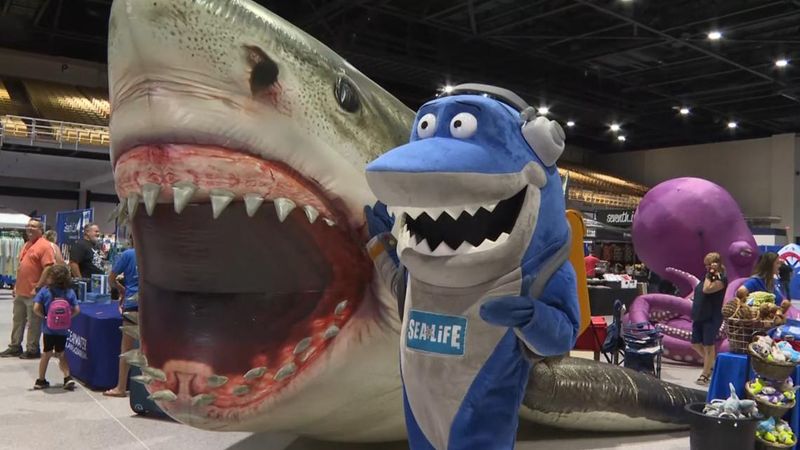
SharkCon is best described as a major shark and ocean expo rather than a narrowly academic conference. It blends science, conservation, family entertainment, merchandise, and pop culture into a single weekend event.
No independent source reviewed here ranks it against every other shark convention in the country, so calling it “the nation’s biggest” goes beyond what the available evidence supports. What the documented record does show is a large, well-attended event with a broad lineup of speakers, exhibitors, and activities that drew serious ocean enthusiasts and curious first-timers alike.
A broad shark and ocean expo, not just a science conference
Walking into SharkCon feels less like entering a university lecture hall and more like stepping into a weekend-long celebration of everything ocean-related. The SharkCon official event page describes a lineup that spans shark scientists, marine conservationists, underwater photographers, television personalities from programs like Shark Week and National Geographic’s SharkFest, aquarium representatives, and nonprofit organizations focused on ocean health.
That mix is intentional: the event is designed to reach people across a wide spectrum of interest and expertise.
For serious shark enthusiasts, the appeal is clear. Researchers and conservationists present work grounded in field science, and nonprofit organizations share ongoing conservation efforts that attendees can support.
For casual Tampa visitors or families looking for an unusual summer outing, the convention offers an accessible entry point into marine science without requiring any background knowledge. You do not need a biology degree to enjoy a talk about shark behavior or to browse an exhibit on ocean conservation.
The fairgrounds listing and the organizers’ own materials confirm that SharkCon 12 included aquarium exhibits, vendor booths, family-friendly activities, and conservation programming alongside its speaker sessions. That combination means a single admission ticket can cover a meaningful educational experience, a look at shark-inspired art and merchandise, and hands-on activities for younger visitors.
The event is not a replacement for formal marine-science education, but it complements that kind of learning by making ocean topics approachable and engaging for a general audience. SharkCon sits at the intersection of science communication, conservation advocacy, and community entertainment, and that positioning is exactly what makes it worth the drive for Tampa Bay day-trippers.
Learn from experts through talks and public programming
One of the strongest draws at SharkCon is the speaker lineup. The 2026 speaker page identifies participants with genuine scientific and conservation credentials.
Brent Winner, an associate research scientist whose work focuses on sharks and rays, was among those featured. Tonya Wiley, whose research includes smalltooth sawfish conservation in Florida, also appeared on the lineup.
Speakers like these bring field experience and peer-reviewed knowledge into a public-facing format that most people would never encounter at a typical museum or aquarium visit.
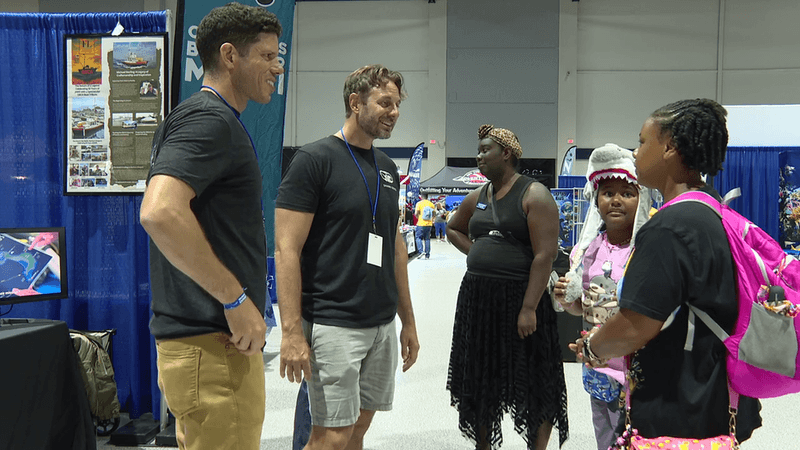
The realistic expectation for attendees is learning through scheduled talks and by visiting the institutional booths and exhibits set up throughout the convention floor. Aquariums, nonprofits, and research organizations staff their own spaces, where representatives can explain their work and answer questions from visitors who approach them.
That kind of interaction, moving through a hall full of ocean-focused organizations and stopping to engage with the people staffing each booth, is one of the more underrated aspects of an event like SharkCon.
The official SharkCon event page promotes the speaker programming as a core feature of the weekend. What the available sources do not confirm is a guaranteed personal meet-and-greet schedule, private consultations with individual researchers, or confirmed formal question-and-answer sessions built into every talk.
Some speakers at events like this do take questions from the audience; others present and move on. Plan to attend the talks as the primary route to expert-led education, and treat any direct conversation with a presenter or exhibitor as a welcome bonus rather than a promised feature.
The programming alone offers more substantive shark and ocean science than most Tampa-area events can match.
The documented interactive activities require careful wording
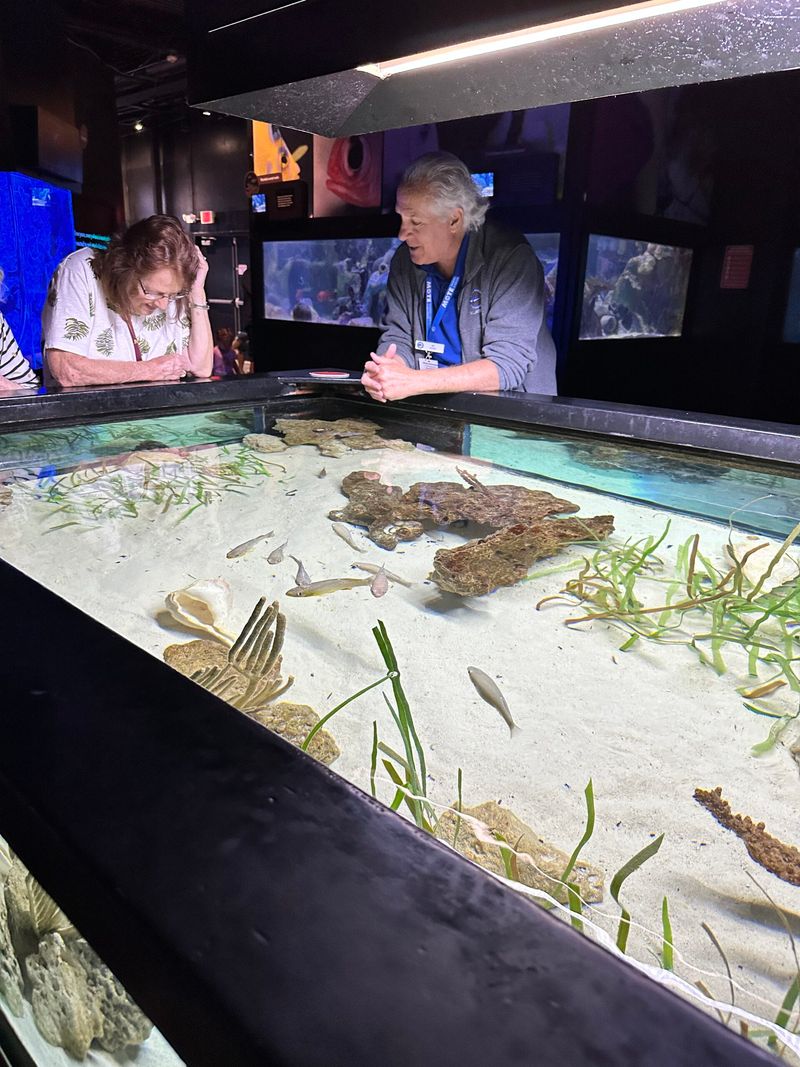
SharkCon 12 offered several hands-on and demonstrational attractions that set it apart from a standard lecture series. The official event page confirms touch tanks supplied by Clearwater Marine Aquarium and Mote Marine Laboratory, two well-regarded Florida marine institutions.
Both organizations brought their exhibits to the fairgrounds floor, giving visitors a chance to observe marine animals up close in a controlled setting.
A few things are worth clarifying before you picture what those touch tanks involved. The available sources confirm that the tanks were present and that they were supplied by those two institutions.
What the sources do not specify is which animals were in the tanks during SharkCon 12. Describing them as shark touch tanks, or suggesting that visitors could handle live sharks, goes further than the documented record supports.
Approach those exhibits expecting an engaging marine-animal experience without assuming the animals will be sharks specifically.
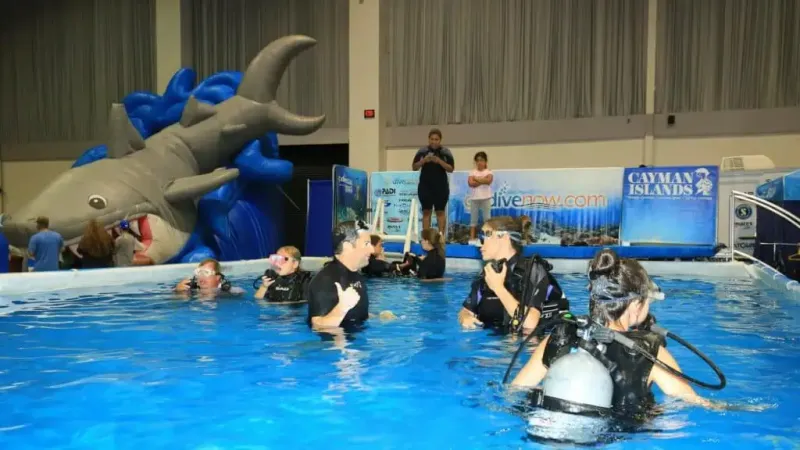
The convention also featured an indoor shallow scuba pool operated with trained professionals. That is a genuinely interesting offering for an inland expo, but the framing matters.
This was a supervised, shallow-water activity inside a convention hall, not an ocean shark-diving excursion or an open-water encounter with wild sharks. The supervision claim applies to the scuba pool based on the event’s own description; the sources reviewed do not separately confirm that the touch tanks or other interactive stations were staffed by the same kind of trained supervision.
Other documented activities included aquarium exhibits and conservation stations spread across the floor. Taken together, the interactive programming gave SharkCon 12 a hands-on dimension that goes well beyond what a typical science talk or documentary can provide.
Family attractions make the convention accessible
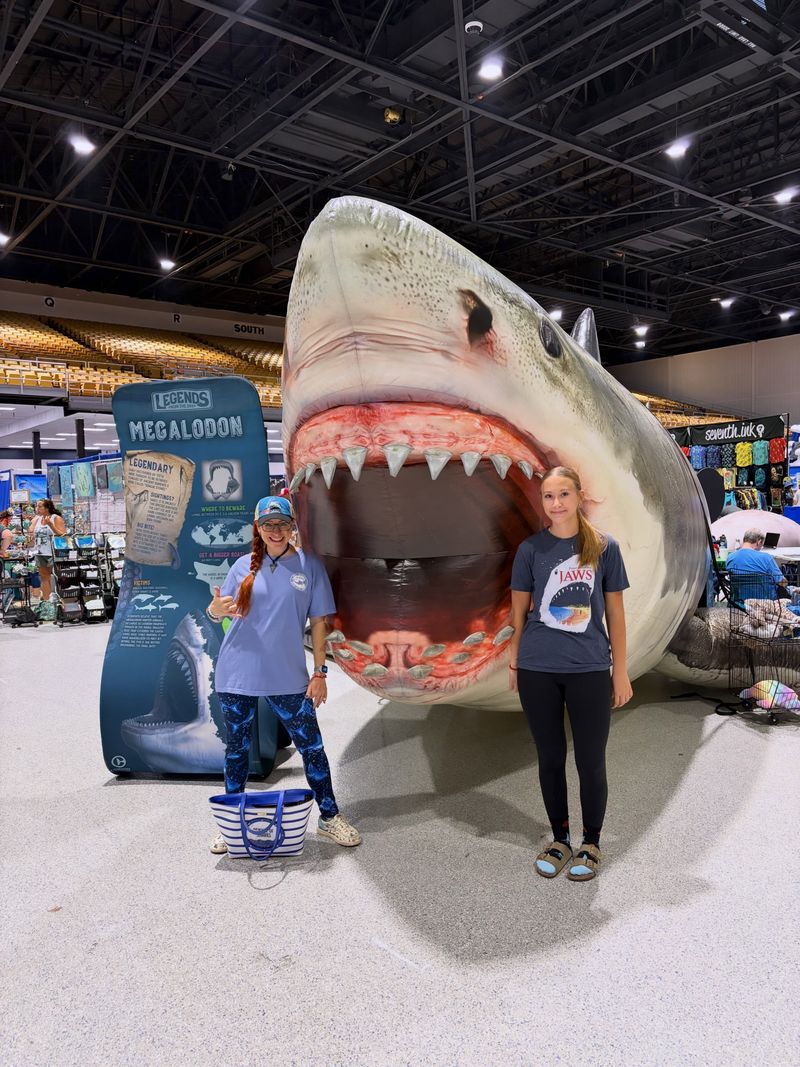
SharkCon is genuinely built for mixed-age groups, and the family-oriented programming documented for 2026 makes that clear. Beyond the speaker sessions and institutional exhibits, the event featured a shark-tooth sand dig where younger visitors could search for fossil teeth, a large inflatable megalodon that made for an obvious photo moment, and a shark slide that kept kids entertained between educational stops.
These attractions are not filler: they are deliberate additions that keep families moving through the event at a comfortable pace.
Aquarium exhibits and conservation activity stations rounded out the family-friendly offerings documented for SharkCon 12. The official SharkCon page describes these as part of the broader weekend experience, not as separate ticketed add-ons.
For parents trying to plan an outing that holds a child’s attention for several hours, that variety matters. A kid who loses interest in a speaker presentation can move to the sand dig or the inflatable attractions while an adult continues through the exhibit floor.
Because SharkCon 13 has not yet published a confirmed activity list for 2027, it would be premature to guarantee that every 2026 family attraction will return in exactly the same form. Organizers may add new features, adjust existing ones, or change how certain activities are operated.
The overall character of the event, a weekend expo with programming aimed at both adults and children, is unlikely to change dramatically from year to year, but the specific lineup is worth checking on the official site before you arrive. Bringing kids to SharkCon 12 required minimal planning beyond buying tickets; applying that same approach to 2027 means confirming the activity details closer to the event date.
More than 150 vendors add a marketplace component
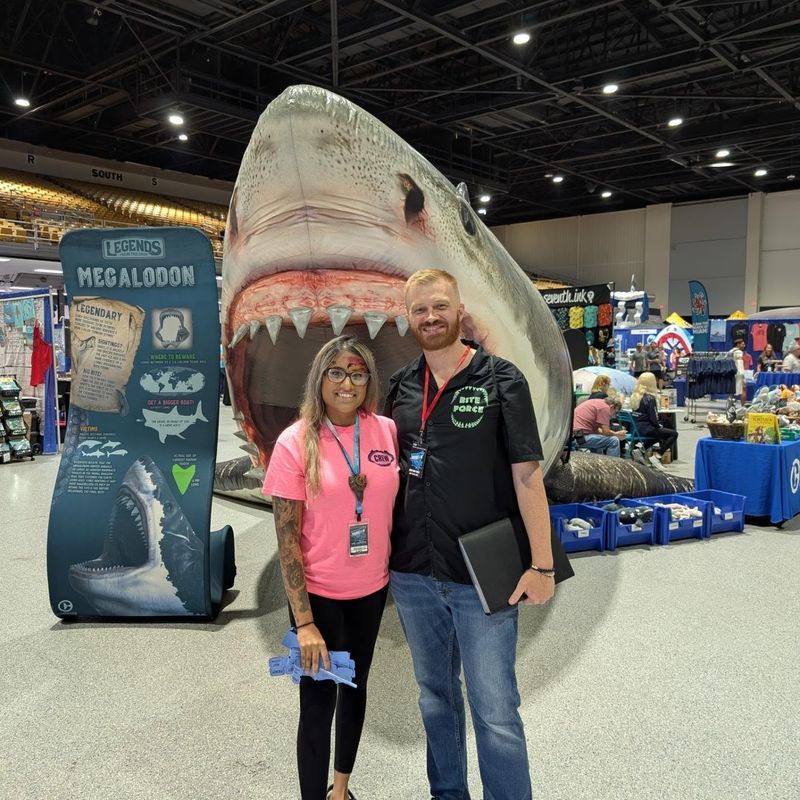
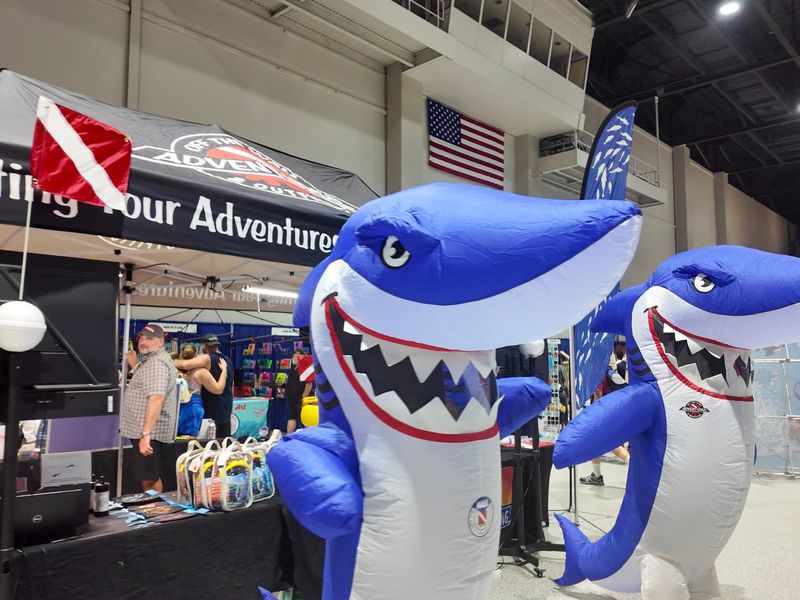
Alongside the educational programming, SharkCon 12 featured a substantial marketplace. The organizers promoted more than 150 shark- and ocean-related vendors for the 2026 event, according to the official SharkCon event page.
The vendor categories included original art, jewelry, clothing, and collectibles, all centered on ocean and shark themes. For visitors who appreciate handmade or specialty items, the vendor floor alone offered several hours of browsing.
A marketplace of that size changes the character of the event. SharkCon is not purely an educational expo where every stop involves a lecture or a scientific exhibit.
The vendor floor gives attendees a chance to support independent artists and small businesses whose work connects to the ocean, which aligns naturally with the conservation themes running through the rest of the weekend. Buying a piece of shark-inspired art from an independent creator at a conservation-focused event feels different from picking up a mass-produced souvenir at a gift shop.
For practical planning purposes, keep in mind that the vendor roster documented for 2026 reflects what SharkCon 12 attracted. There is no confirmed guarantee that every vendor who participated in 2026 will return for SharkCon 13 in 2027, and merchandise prices at individual booths are set by vendors rather than the event organizers.
Budget for the vendor floor as you would for any open-air market or craft fair: bring cash as a backup, know roughly how much you want to spend, and treat browsing as part of the experience rather than a shopping mission with a fixed list. The variety documented for 2026 suggests there will be plenty worth seeing regardless of which specific vendors return.
Plan ahead for the next advertised SharkCon
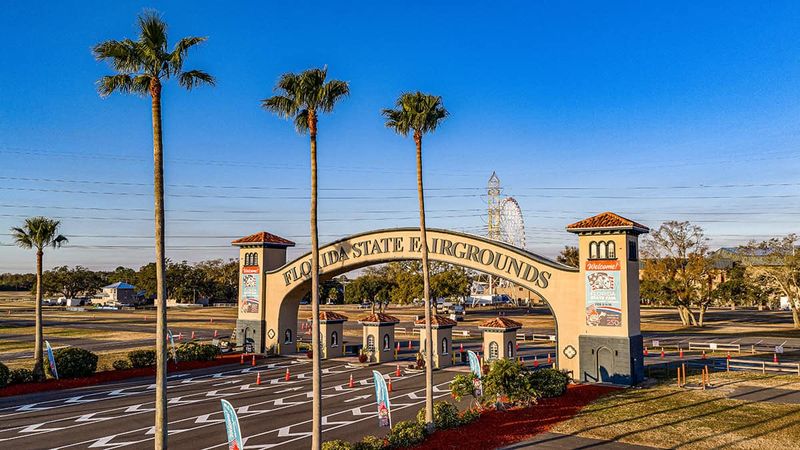
Getting the logistics right before you drive to Tampa makes the day significantly more enjoyable. For SharkCon 12, the Florida State Fairgrounds event listing documented admission priced at $6-$28 and parking at $10 if purchased online in advance or $12 if paid onsite.
Those are 2026 figures. Treat them as a general reference point for what the event has cost in the past, not as confirmed pricing for SharkCon 13.
Ticket prices, parking rates, and any age-based or group discounts for 2027 will need to come directly from the official SharkCon or fairgrounds pages once they are published.
The venue is the Florida State Fairgrounds Expo Hall at 4800 U.S. Highway 301 N., Tampa, Florida 33610.
SharkCon 12 ran from 9 a.m. to 5 p.m. on both Saturday and Sunday, July 18-19, 2026. The official SharkCon site now advertises SharkCon 13 for July 17-18, 2027, the same venue and a very similar weekend slot.
The 2027 daily hours have not been confirmed in the sources reviewed, so do not assume the 9-to-5 schedule carries over without checking.
A few other planning details are worth building into your preparation. The fairgrounds are accessible by car, and parking is on-site, but arriving early on a busy summer weekend helps you avoid the longest lines.
If you plan to attend both days, check whether multi-day tickets are available and whether any activities or speakers differ between Saturday and Sunday. Confirm the speaker schedule, touch tank availability, and family activity lineup in advance, since programming details for 2027 have not yet been announced.
Following SharkCon’s official social media accounts or signing up for their mailing list is the most reliable way to catch updates as they are released. The combination of a central Tampa location, documented family programming, and a vendor floor of more than 150 exhibitors makes SharkCon worth the effort of planning carefully rather than showing up unprepared.
Use SharkCon to replace shark myths with context
One of the quieter but more lasting benefits of attending SharkCon is walking away with a more accurate picture of sharks than most media provides. NOAA explains that most sharks are not dangerous to humans and that people are not part of most sharks’ natural diets.
Only a small number of the hundreds of known shark species have ever been involved in attacks on people, and even those incidents are rare given how many millions of people swim in the ocean every year.
General water-safety habits remain worth knowing for anyone spending time at Florida beaches, separate from anything happening at an indoor expo. The Florida Museum of Natural History recommends practical precautions such as swimming with a buddy, staying near shore, and avoiding the water at dawn and dusk when sharks are more active.
Those are outdoor ocean recommendations. They have no bearing on attending a convention inside an air-conditioned Tampa fairgrounds building, where the only water present is a supervised shallow scuba pool and a set of marine touch tanks.
NOAA’s shark myth-busting guidance also pushes back on the idea that sharks are becoming dramatically more aggressive or that attacks are surging in a simple, alarming way. More people in the water, better incident reporting, and recovering shark populations all factor into how encounter numbers are interpreted.
SharkCon’s speakers, conservation organizations, and educational exhibits address exactly this kind of nuance, giving attendees the background to evaluate shark headlines more critically after they leave. That kind of informed perspective is harder to pick up from a documentary or a news story than from an afternoon spent among researchers and conservationists who study these animals for a living.