Affiliate disclosure: As an Amazon Associate I earn from qualifying purchases. Learn more
Somewhere in the Santa Cruz Mountains, a narrow gauge steam train still grinds up steep grades, switches back and forth, and carries families deep into a redwood forest. It is not a museum piece behind glass.
It is a working ride, complete with a chatty conductor, open-air cars, and a camp that looks like it wandered out of the Old West. Kids treat it like the best day ever, and plenty of grown-ups quietly agree.
Stick around to learn where this railroad hides, which route suits your crew, how the famous vertical piston engines work their magic on the hills, and the one address tip that can save you a long, confusing walk before you ever reach the platform.
A Station Tucked Into the Felton Redwoods
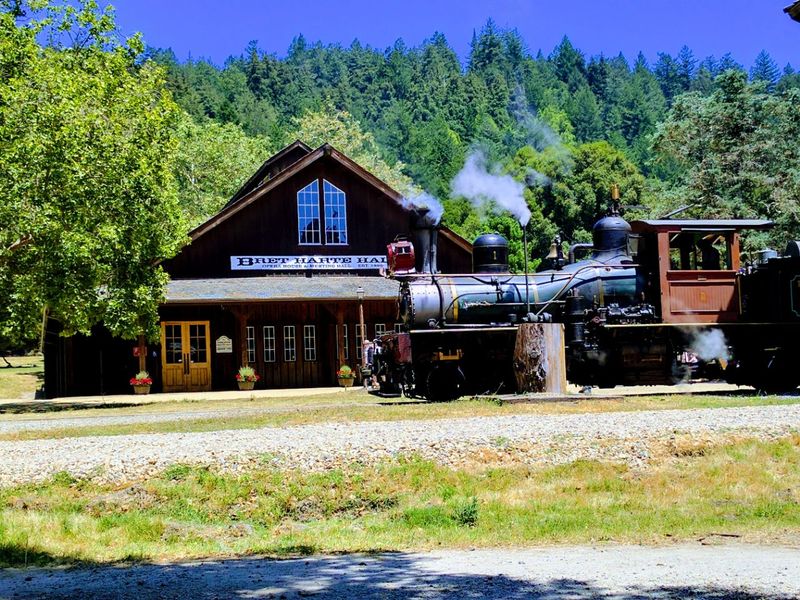
Tall trees and tiny tracks make an unusual pairing, and that pairing is exactly what waits at Roaring Camp, Big Trees and Pacific Railroad Station.
Google lists the station at N Big Trees Park Rd, Felton, CA 95018, in the Santa Cruz Mountains of California, United States. It sits a short drive inland from Santa Cruz, surrounded by forest.
There is a catch worth knowing before you set your GPS. That Big Trees Park Rd address points toward the state park next door rather than the main Roaring Camp entrance.
The main entrance sits at 5401 Graham Hill Rd in Felton. Parking fees are the same either way, but arriving through the state park side can mean a long and confusing walk on a busy day.
Once there, the setting delivers a working steam railroad, an Old West-style camp, a grassy field, and a large pond. The whole place reads like a small village built around trains.
It is a spot where the station is only the starting line. The real story begins the moment the whistle blows.
Old West Charm With a Nonprofit Heart
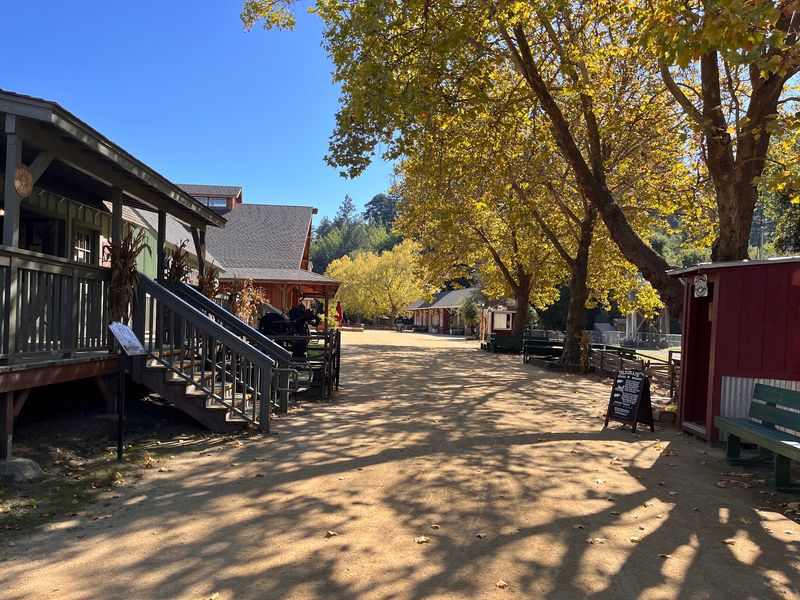
Dusty paths, a covered bridge, and wooden storefronts give the camp its frontier personality.
Anyone who enjoys Old West-looking places tends to feel right at home here. The main area is mostly dirt, which suits the theme perfectly.
Getting in involves a walk through a covered bridge, a small detail that many people end up remembering fondly. It works like a front door to another era.
The organization runs as a nonprofit and depends on tourism to keep the engines running. Every ticket helps keep this piece of railroad history alive and moving.
That mission shows up in the way the rides double as history lessons. Conductors share stories about the railroad and the forest along the way.
Scenery and story go hand in hand here. The camp itself is less a theme park and more a living snapshot of logging country, with plenty of room to wander between rides.
Call it history with a head of steam.
Vertical Pistons and Steep Grades
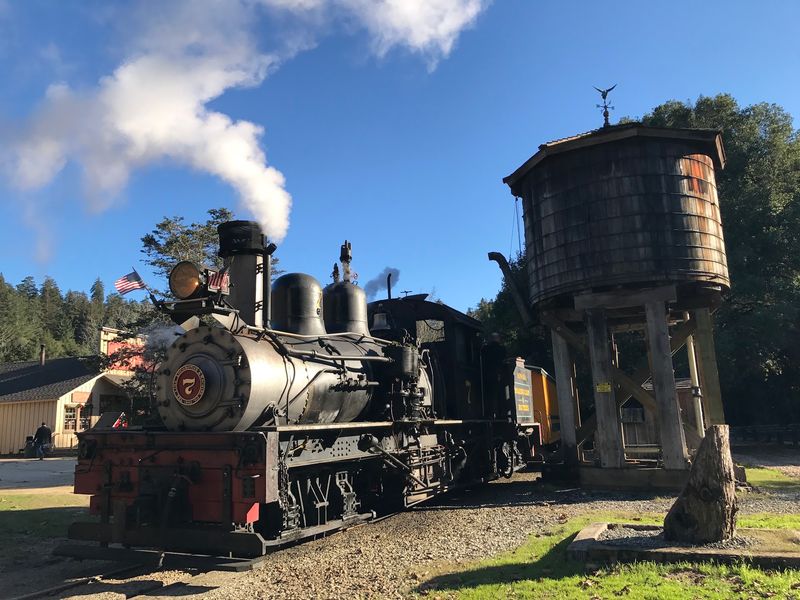
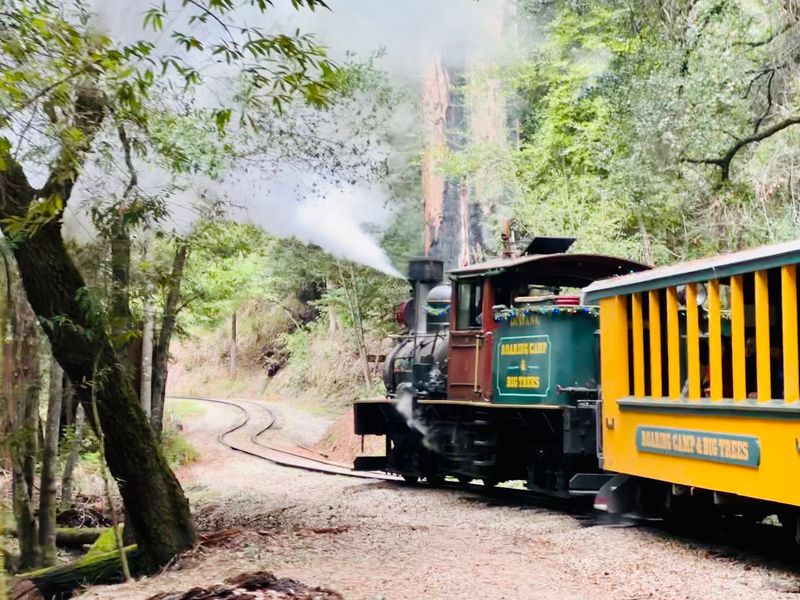
Train fans, look closely at the side of the engine. Those vertical pistons are the star attraction for many riders.
The steam locomotives here are narrow gauge engines of the style built to haul logs, which is why the pistons stand upright instead of lying flat. Watching them pump away is a treat for anyone curious about how machines work.
The design matters because the route is no gentle loop. It tackles a challenging set of up and downhill maneuvers with steep grades.
Along the way, the train performs several switchbacks, moving back and forth between tracks to gain elevation. It is the kind of engineering problem-solving that makes the ride feel clever.
These are real steam engines doing real work on a mountainside. The whistle, the smoke, and the slow, determined climb all come from genuine old-school railroading.
For kids who love trains, this is the moment the ride becomes unforgettable. For adults, it is a small mechanics class on wheels, no textbook required.
Redwood Scenery That Steals the Show
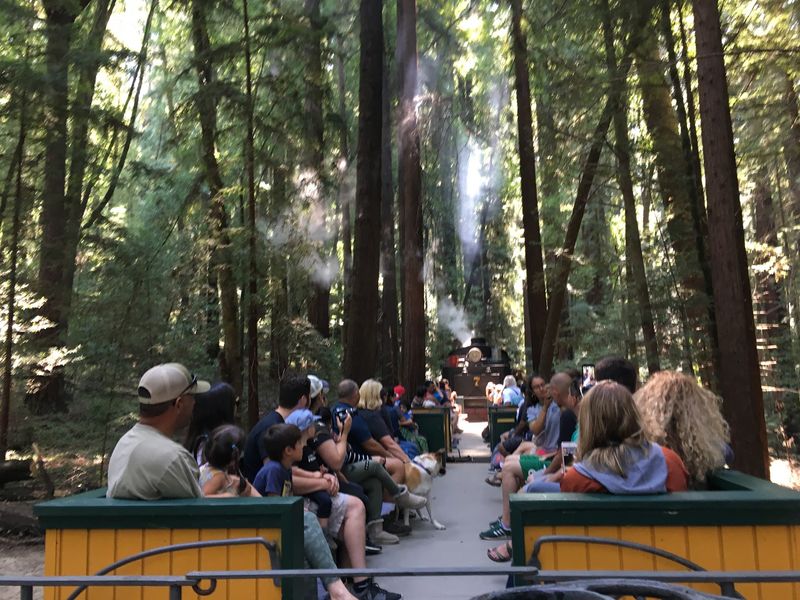
Giants line the tracks, and nobody on board seems to mind looking up the entire time.
The forest route carries riders through a wooded area and alongside a stream. Some of the tallest redwoods in California rise beside the rails.
Much of this route stays shaded, so the best seats are in the open cabins. Choosing an enclosed car can mean missing the full height of the trees.
Conductors explain how the forest has grown back since the era of heavy logging. That context turns a pretty ride into a story of recovery.
The classic forest trip heads to the top of Bear Mountain and back as a round trip. Plan for somewhere between 45 minutes and about an hour and a half, depending on the trip.
Some adults find the scenery stays fairly similar the whole way. Most riders, though, treat the redwoods as the highlight, and more than a few leave calling them the most remarkable living things they have seen.
Tickets get you a ride. The trees give you the memory.
Conductors Who Talk Like Storytellers
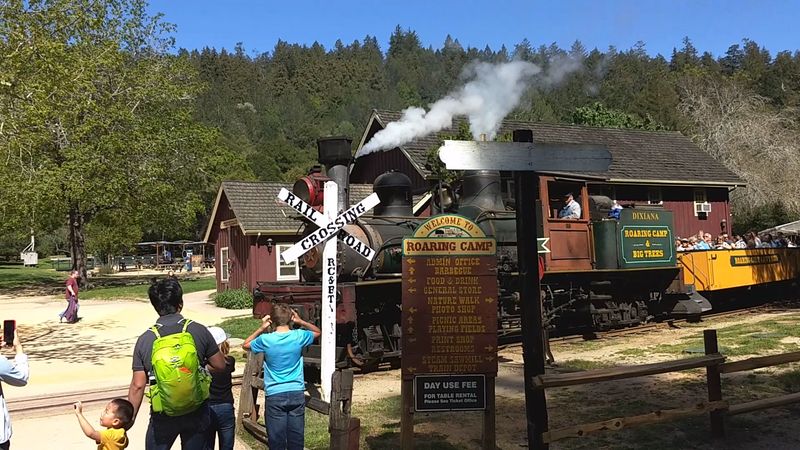
Some train rides come with a map. Here, they come with a narrator.
Conductors are a big part of why people leave smiling. They are known for being funny, energetic, and packed with facts about the train and the surrounding trees.
Expect history lessons about the railroad, the old logging days, and how the forest bounced back. Guides tend to be very knowledgeable, and kids often pick up more than they expect.
One small hitch is the sound system. The PA can make the conductor hard to hear in certain spots, so sitting closer to the front of a car may help.
There is also no written version of the narration currently offered. Families with Deaf members may want to research the history ahead of time to follow along.
Still, the personality on board is a genuine perk. A good conductor can turn a slow climb into a lively show, and several of them have fans who remember them by name.
Laughter, it turns out, travels well on narrow gauge rails.
From the Mountains to the Beach Boardwalk
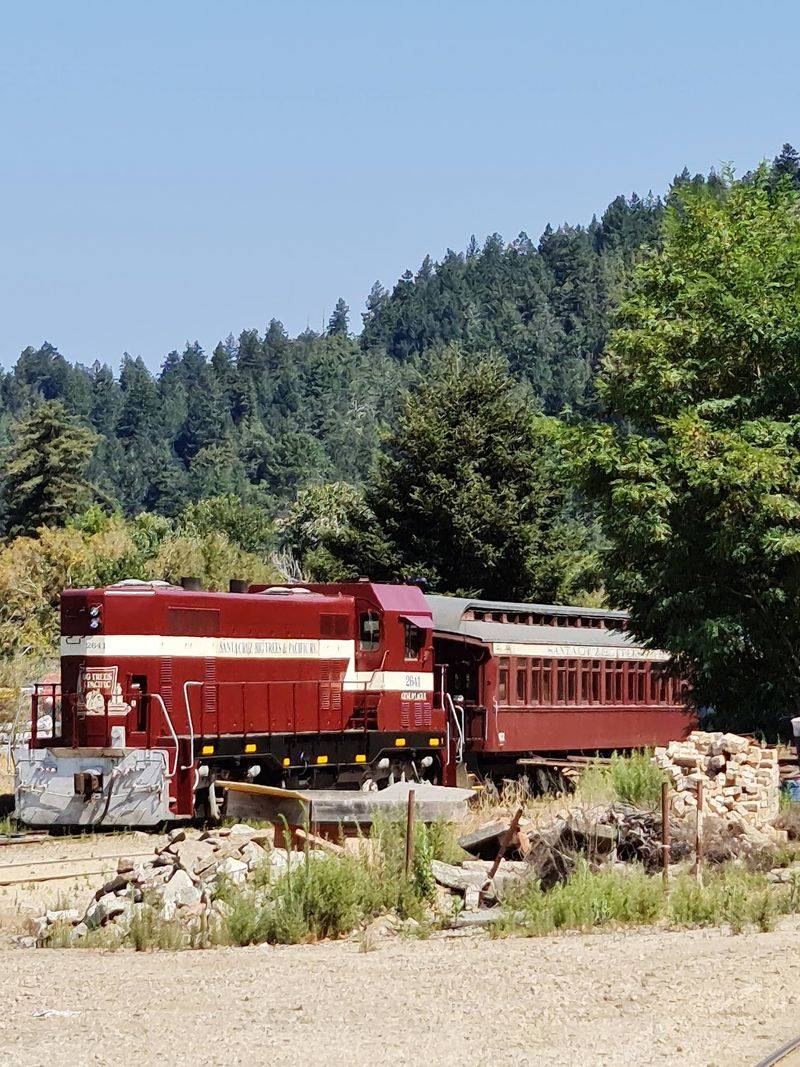
Two very different rides leave from the same camp, and choosing between them is half the fun.
The forest trip, sometimes nicknamed the jungle ride by first-timers, climbs through the redwoods to Bear Mountain. The other route heads down to the Santa Cruz Beach Boardwalk.
The beach route is popular and can sell out. Booking ahead is a smart move if the coast is on your list.
Riders often call the redwoods-to-boardwalk trip a fun first-time experience. Some feel it runs on the expensive side for the train amenities, so it may be a once-in-a-while treat.
There is also a seasonal evening option. The Santa Cruz Starlight dinner train leaves the Boardwalk in the early evening and heads up to Roaring Camp for a barbecue dinner, music, and dancing.
Then it rolls back down the mountain after dark. Even riders who expected a kid-focused outing found it brought out their inner child.
Mountains in the afternoon, coastline by evening. Not a bad way to spend a day on the tracks.
Gold Panning, Thomas Days and Family Fun
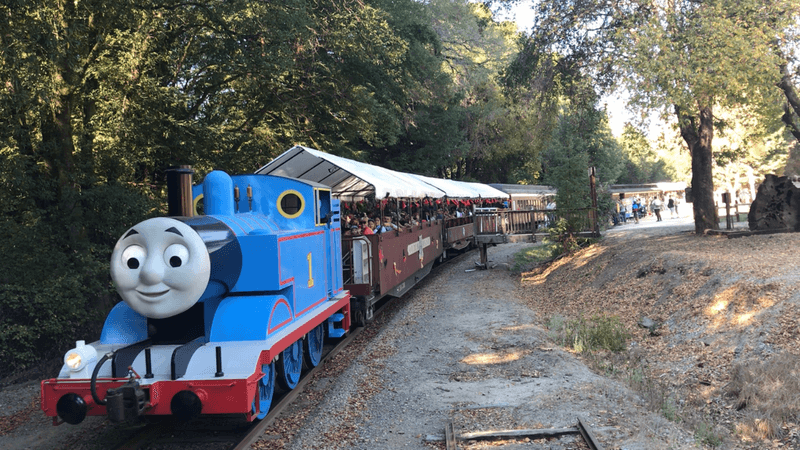
Kids treat this place like a serious mission, and parents rarely argue.
Beyond the trains, gold panning is a favorite activity. Nobody seems to strike it rich, yet everyone seems to have fun trying.
On certain dates, the camp hosts Thomas the Tank Engine and Percy rides. These events come with photo opportunities, games, and activities for kids and adults.
In late October 2019, Thomas ride tickets were $25 per person. Prices can change, so checking current rates before visiting is wise.
Holiday events add another layer. Christmas trips are a hit with families, and Easter brings an egg hunt, though hunts are divided by age, and parents are not allowed in the areas to help.
School field trips fit naturally here too. It is easy to see why teachers bring classes to learn about trains and forests in one stop.
A gift shop rounds things out with reasonably priced items, including mini redwoods to take home. Growing your own giant might take a while, though.
Picnic Tables, Weddings and Accessibility
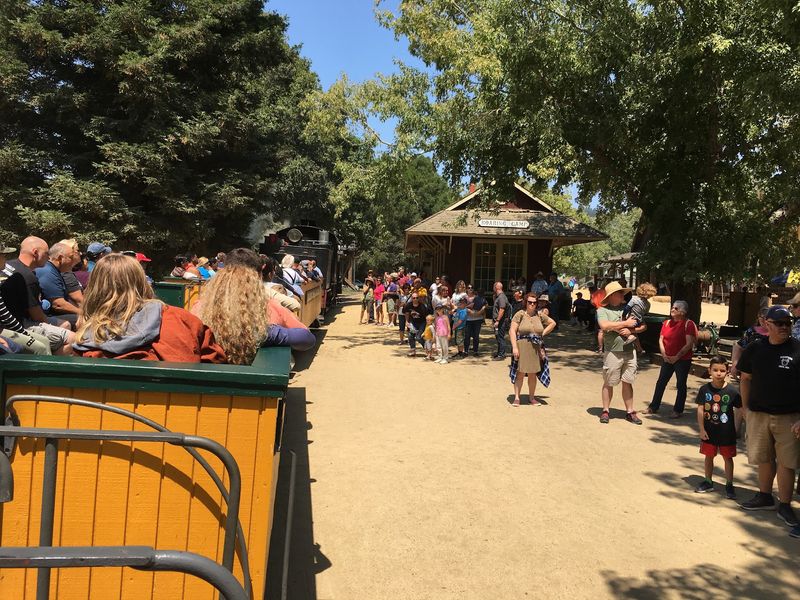
Between rides, the camp has room to linger, eat, and even celebrate big life moments.
Picnic tables sit beside the grassy field near the food area. On calm days they are a pleasant spot, though strong winds can blow dirt and leaves across them.
There is only one main place to get food, and lines can run long. Seating also fills quickly on busy days, so packing a picnic is a practical plan.
Food comes in compostable containers, a nice eco-friendly touch. Bringing plenty of water is recommended, especially for the train trips.
The forest setting also makes the camp a lovely wedding venue. Event coordinators here have helped couples pull off big celebrations smoothly among the redwoods.
On the accessibility side, the grounds offer disabled parking, wheelchair ramps, and accessible picnic areas. The walk from the parking lot to the station is long, however.
The trains themselves currently have limited accommodations, with no special seating or stroller space. Boarding can feel rushed, so families needing extra support should plan ahead.
Worth the Whistle Stop
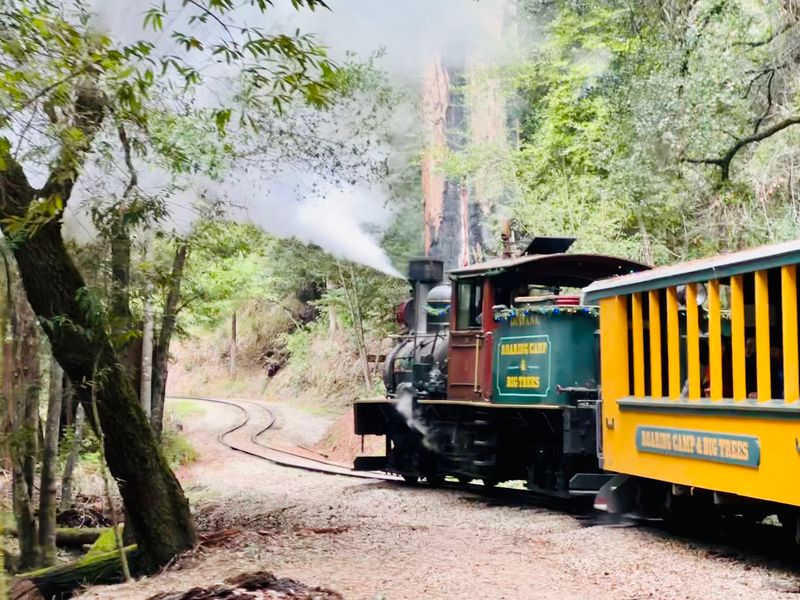
A handful of places let you ride real history, and this one does it with a smile and a puff of steam.
With a 4.5-star standing on Google Maps, Roaring Camp earns its reputation as a family-friendly outing. The mix of steam trains, redwoods, and Old West flavor is hard to find anywhere else.
A few planning notes help the day go smoothly. Use the 5401 Graham Hill Rd entrance, expect parking around $5 to $10, and arrive about 20 minutes before departure, even if the ticket suggests 45.
Grab an open car for the best views. Pack water and snacks, since food lines can stretch, and a restroom stop happens partway through the forest trip.
Young train lovers will likely call it the best day of the year. Adults may find the longer trips slow in spots, yet many still leave planning a return ride to Santa Cruz.
It is not flashy, and it does not try to be. It is simply a chance to climb a mountain behind hardworking steam engines, surrounded by some of the tallest trees in California.
All aboard seems like the only fitting sign-off.