
Affiliate disclosure: As an Amazon Associate I earn from qualifying purchases. Learn more
Some Florida rivers are so clear that paddlers can watch turtles cruising along the sandy bottom from the seat of a kayak. One of them flows out of a spring near Dunnellon that holds steady at about 72 degrees all year, no matter what the calendar says.
Entry costs a few dollars, kayaks rent by the hour, and a tube rental with a tram ride runs about $25. There are also waterfalls, old stone cages left from a 1930s attraction, and even the occasional monkey.
Below is everything a budget-minded day-tripper needs to know, including reservations, crowd timing, and where the tubing actually starts.
A Spring-Fed Park Outside Dunnellon
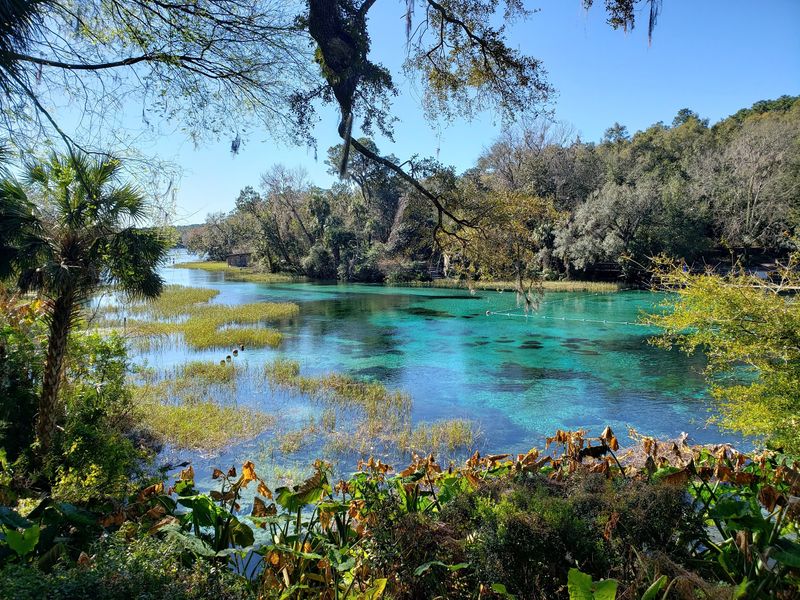
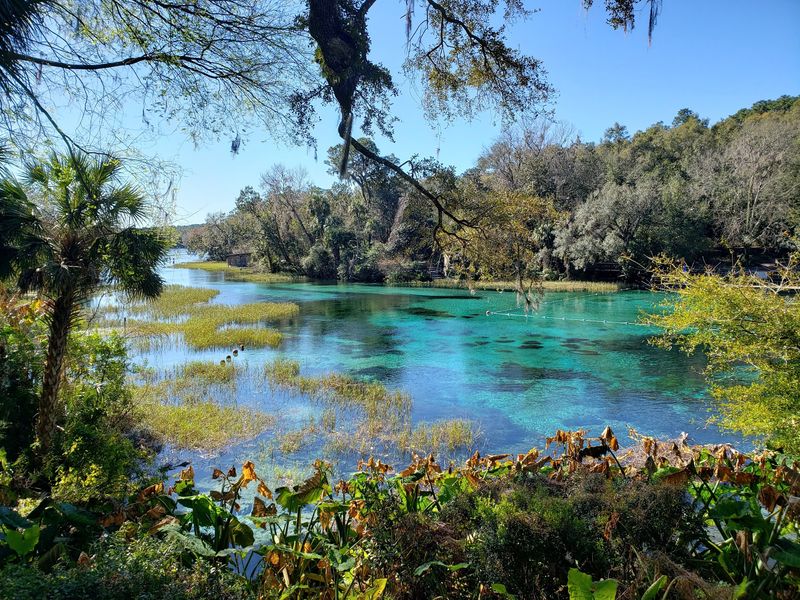
Florida has hundreds of springs, but only a few have water clear enough to make people forget they are looking at a river at all.
Rainbow Springs State Park sits at 19158 SW 81st Pl Rd, Dunnellon, FL 34432, in the United States. It is a public green space built around natural springs and the Rainbow River, with campgrounds and picnic areas spread across the property.
The park opens every day of the week from 8 AM to 6:45 PM. That schedule stays the same on weekends, which helps when planning a Saturday or Sunday outing.
Many people drive in from Tampa, Orlando, and elsewhere in Florida for the day. Some folks who have lived in the state for a decade admit they only discovered it recently, then promptly started planning a return trip.
The park carries a 4.7-star average across more than 11,000 opinions on Google Maps. That kind of consistency is rare for a place that draws big summer crowds.
The main entrance leads to the headsprings area, with the swimming zone, lawn, trails, and kayak rentals. A separate tubing entrance and campground sit a couple of miles away on the other side of the river.
Knowing which entrance matches the plan for the day saves plenty of driving later.
Monkeys, Cages, and a 1930s Past
Long before it became a state park, this spot was a roadside tourist attraction, and it left behind some surprising souvenirs.
Back in the 1930s, the property ran a private zoo. Stone cages from that era still stand along the paths, offering a quiet peek at old Florida tourism.
Then there are the monkeys. Some descendants of those zoo animals are reportedly still hanging around the area, so a lucky guest might spot one between paddle strokes.
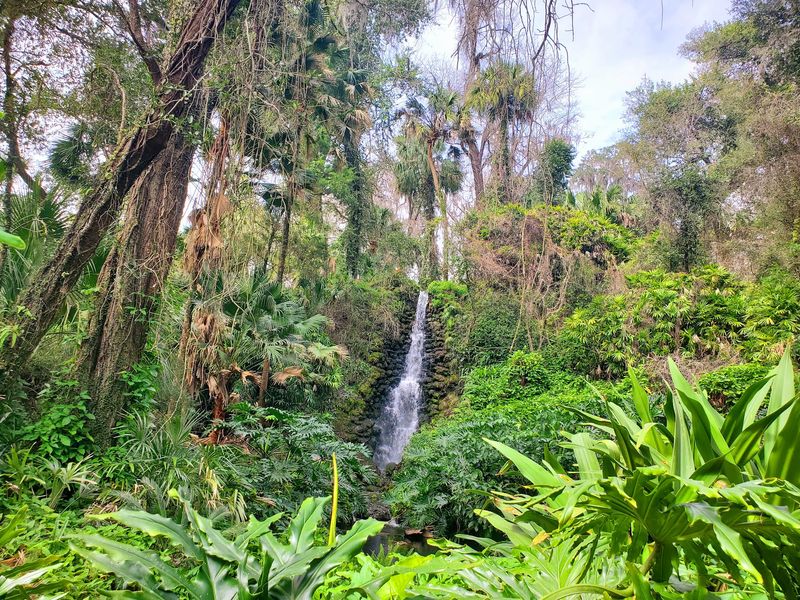
The waterfalls in the park are man-made as well. They were part of the old attraction design and now serve as one of the most photographed features on the grounds.
Most guests come for the water, then leave talking about the history they did not expect. It gives the park a layered feel that a plain swimming hole cannot match.
The remnants are easy to reach on the walking paths near the headsprings. No guided tour is needed to see them, and they add a fun detour after a swim.
Not every state park comes with a monkey footnote, and this one wears it well.
Water That Holds at 72 Degrees
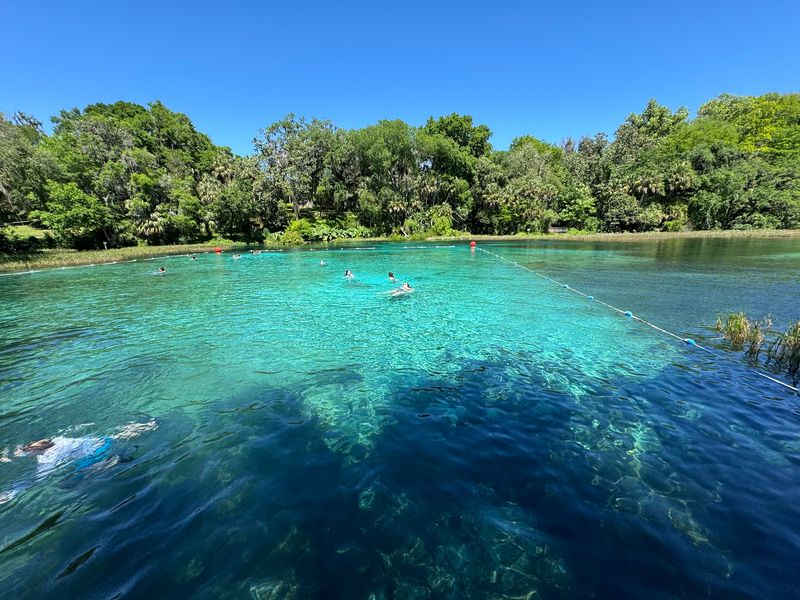
Here is the number that gives the park its fame: 72 degrees, every day of the year.
The headspring pumps out water at that constant temperature, so it feels cool in July and comparatively mild in January. Many swimmers recommend jumping in all at once, since easing in slowly only drags out the adjustment.
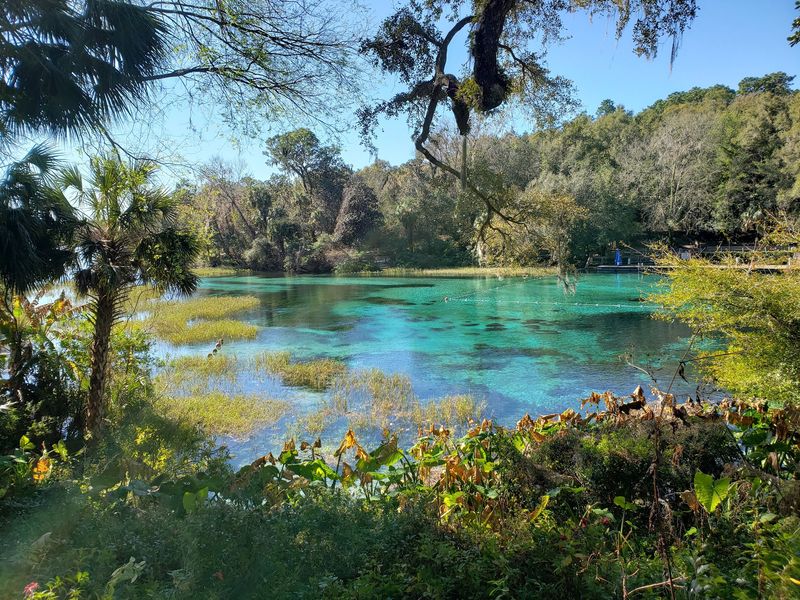
Clarity is the other headline. Visibility can reach well beyond 100 feet down to the sandy bottom, and colors shift between blues and greens depending on depth.
The swimming area runs about 10 to 12 feet deep. Most people cannot touch the bottom, which surprises first-timers who expected a shallow wading pool.
Some swimmers say the water is clear enough to open their eyes underwater comfortably. That makes the spring a favorite for a quick look at the bottom without goggles.
The steady temperature also explains why the river draws wildlife all year. Turtles, fish, and birds stick around because conditions barely change.
For anyone tired of bathtub-warm summer lakes, this spring offers a real reset.
The Roped-Off Swimming Zone
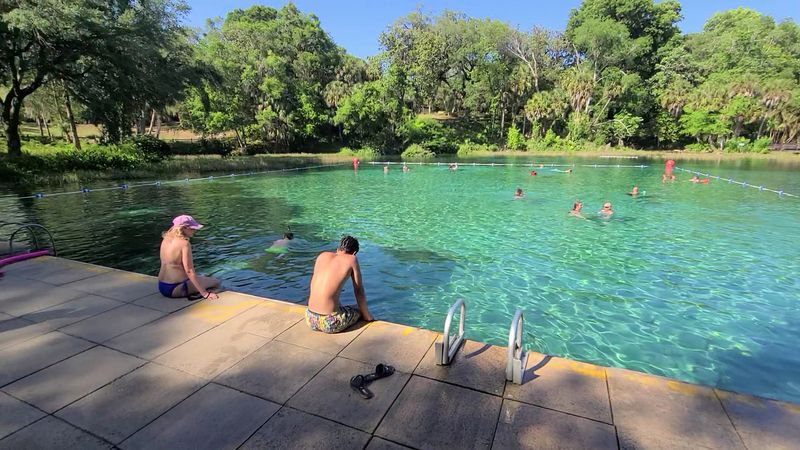
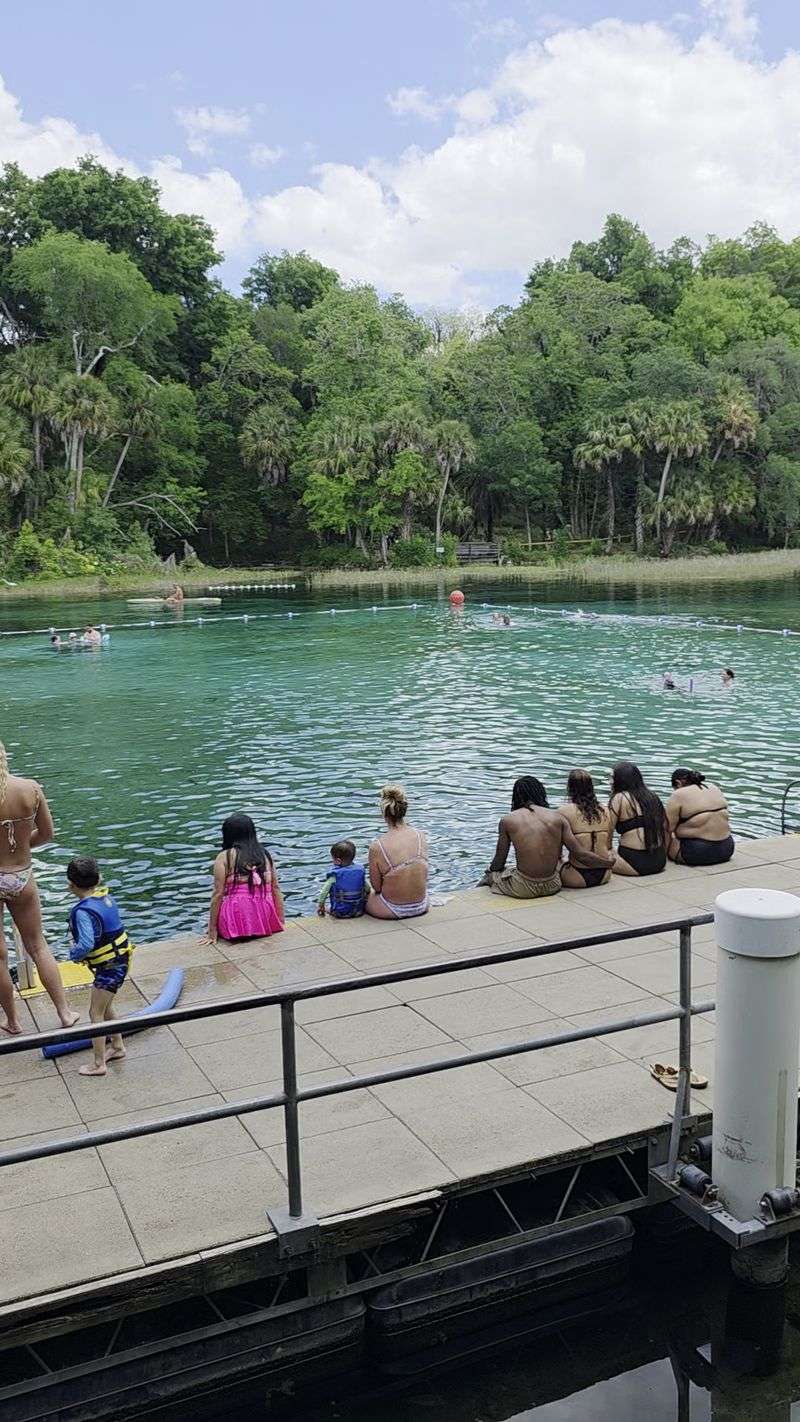
Floating barriers mark off a designated swimming section right at the headspring, giving families a safe and defined place to splash.
Because the water is deep, pool noodles and floaties are a smart addition to the packing list. Plenty of guests bob around on them for hours.
Snorkeling is popular here too. Fish sightings in the swim zone are modest because of the number of people in the water, but turtles and a few fish still make appearances.
Crowds are the main drawback. On busy days the swimming area fills up quickly, and some regulars feel it is small for the number of people who come.
A clever workaround is to rent a kayak and carry snorkel gear downriver. Away from the swim zone, the river reveals birds, turtles, gar, and other fish.
Showers are not part of the setup, though clean restrooms are available. Packing a towel and a change of clothes keeps the drive home comfortable.
Arriving early usually means more room to float and fewer elbows in the water.
Tubing for About Twenty-Five Dollars
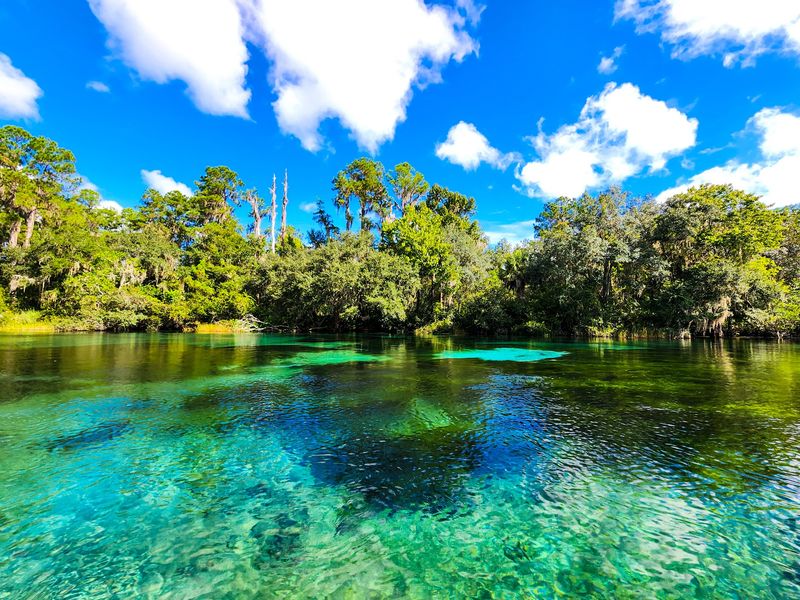
Lazy rivers at theme parks charge a lot more for a lot less scenery.
The tubing entrance sits a couple of miles from the main state park gate. A tube rental plus a tram ticket costs about $25, and bringing a personal tube trims the cost even further.
Hold on to that receipt. Tubers who keep it can enter the headsprings side for free, as long as that area has not reached capacity.
The tubing route is shorter and less work than a long kayak trip. Paddlers who wore themselves out on extended kayak routes often say the blue tubes are their plan for next time.
Wildlife shows up on the float as well. Fish are common, and some tubers have watched groups of otters along the way.
Saturday mornings can be busy on the river. Getting there at opening helps beat both the crowds and the midday sun.
A smart combo is tubing in the morning, then heading across to the headsprings for a swim. That turns one modest ticket into a full day.
Kayak Rentals Paid at the End
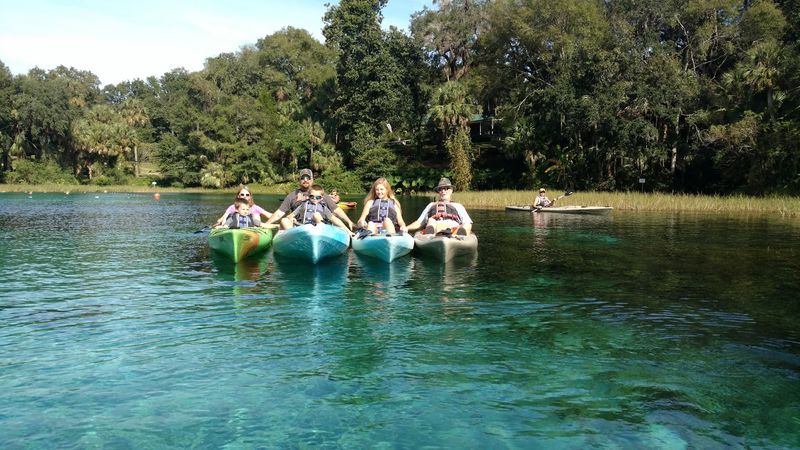
Kayaking ranks as the single most talked-about activity at the park, and the rental setup makes it easy.
Kayaks can be rented right at the headsprings entrance. Rates have been around $19 per hour or $56 for the full day, with shorter 30-minute rentals around $13.
Payment happens at the end. Paddlers do not have to guess their timing in advance, which takes pressure off the whole outing.
Canoes and paddleboards are available too. One recent paddleboard rental came in at only $4, a price that makes it hard to say no.
Personal boats are welcome, but the carry from the parking area to the water is long. Bringing a cart or extra help makes that walk easier.
Two people renting single kayaks for about two hours spent around $60 total. That works out to roughly $30 each for a morning on one of Florida’s clearest rivers.
Reserving kayaks ahead of time is a good move on weekends and holidays.
Downstream Is Easy, Upstream Is Not
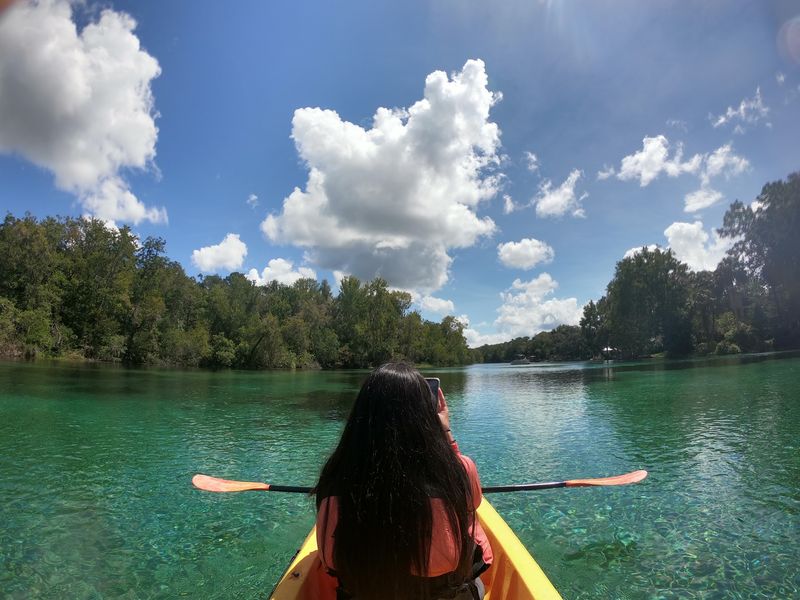
A little river math can save tired arms.
Paddling downstream from the headsprings goes quickly, but returning against the current takes about twice as long. One hour-long rental split into 20 minutes down and 40 minutes back.
The river is wide and spacious, so traffic rarely feels cramped once boats spread out. Still, the full kayak tour can stretch much longer than expected.
Some paddlers planned on two hours and ended up out for four, partly because the current slowed and the take-out point was hard to spot. Others spent six hours in a canoe and called it a great long day.
Indian Creek is a popular side trip. Paddlers who reach it describe it as exceptionally clear and full of wildlife.
Staying out of the brush along the banks is wise. Wasp nests can hide there, and one paddler ran into a painful encounter.
Plan the route with energy and daylight in mind, and the river rewards every stroke.
Otters, Turtles, and the Odd Gator
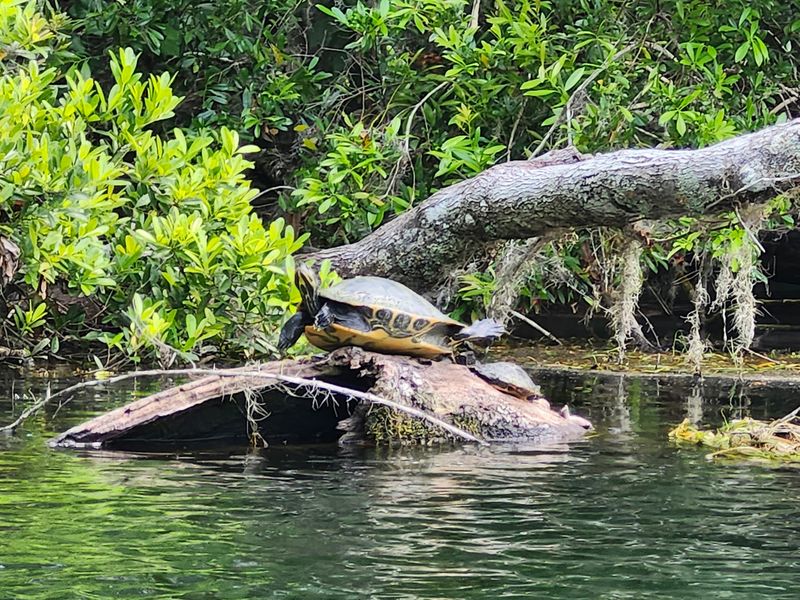
The river acts like a free wildlife show that changes every hour.
Turtles appear constantly, along with ducks, wading birds, and birds that swim underwater to fish. Otters are a crowd favorite, sometimes seen in groups.
Manatees have been spotted in the river as well. Gar and other fish cruise below, easy to see through the clear water.
Alligators live here too, usually small ones resting on the banks. They tend to leave people alone, but keeping a respectful distance is essential.
Staff sometimes alert guests about river otters, which can be bold. Watching from a polite distance keeps both people and animals comfortable.
Early mornings tend to offer the best wildlife viewing. Fewer boats means calmer water and more active animals.
Keep a phone in a waterproof pouch, because the next turtle could be a perfect photo.
Three Waterfalls on a Short Walk
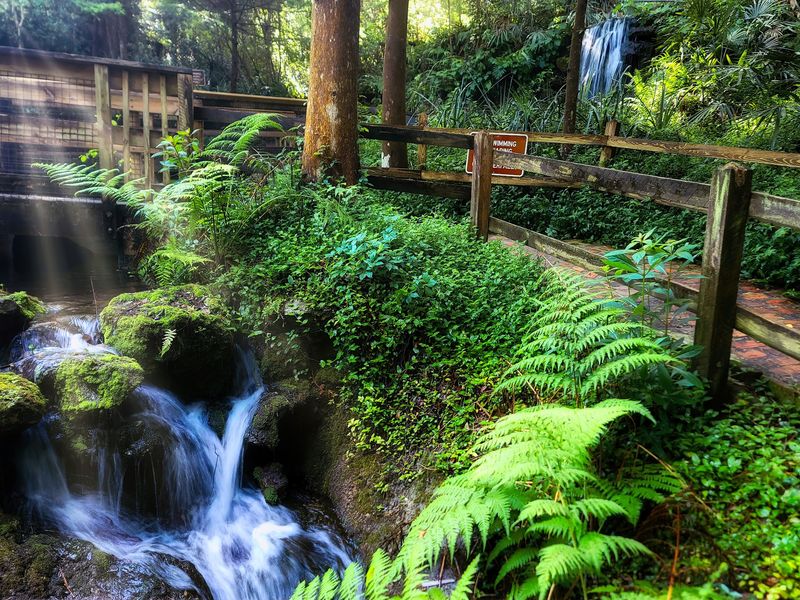
Waterfalls are not common in Florida, which is exactly why these draw so much attention.
Three man-made waterfalls sit along the paths near the headsprings. They date back to the park’s tourist attraction days and remain one of its most loved features.
The walk to reach them takes about 10 minutes. A favorite routine is to visit the falls first, then cool off in the spring afterward.
Gardens and walking paths around the falls are well maintained and easy to follow. Families with young children and older relatives can manage them comfortably.
Some guests call the falls breathtaking, while others appreciate them as a pleasant surprise between swims. Either way, they add variety to a day that might otherwise be all water.
Photographers tend to linger here. The falls make a nice backdrop for family pictures without any extra fee.
Consider it a bonus round that comes included with admission.
Trails With a Prehistoric Look
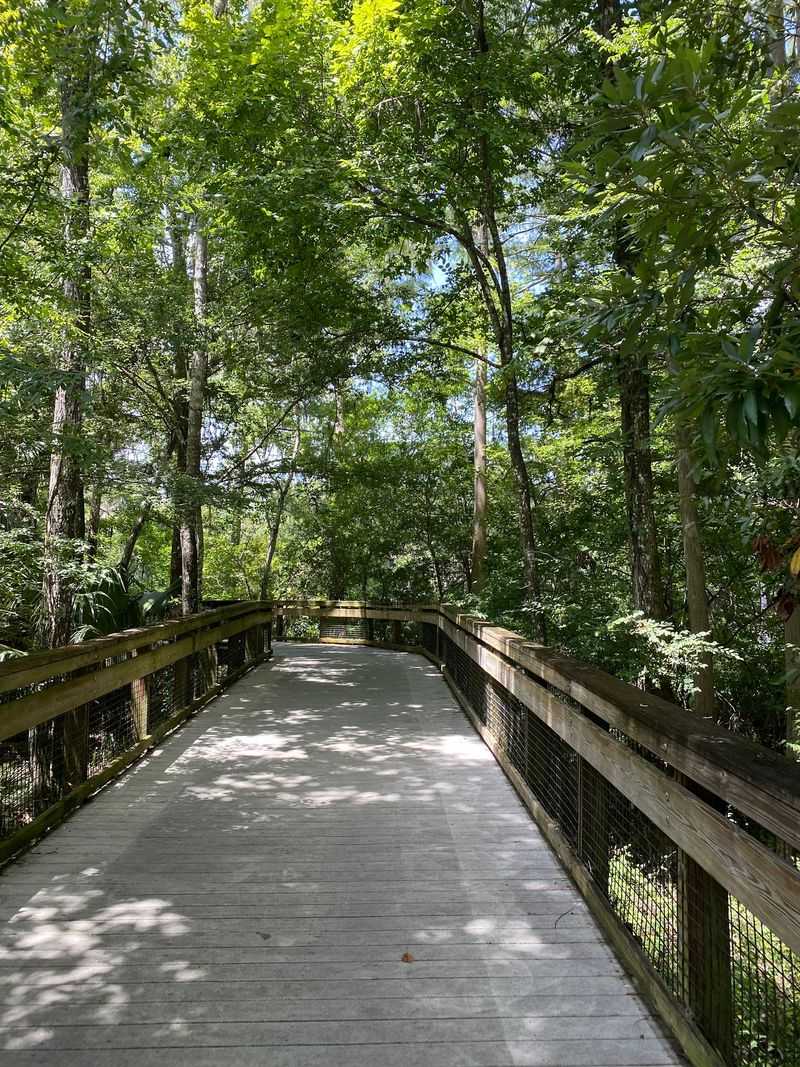
Lush, leafy, and quiet, the trails here have earned more than one comparison to a dinosaur movie set.
The park offers three walking trails, including a loop of about 3.5 miles at its longest. The scenery is classic natural Florida, with dense greenery and tall trees.
Dogs are welcome on the trails when kept on a leash. They are not allowed in the water, so pet owners should plan accordingly.
A trail walk makes a smart break between swims or paddles. It also works well on cooler days when jumping into 72-degree water feels less tempting.
The Rainbow River trail comes up often among regulars. Some say there are many miles of nature paths to explore across the area.
Bring water and wear sturdy shoes for the longer loop. Shade helps, but Florida humidity still makes itself known.
Hikers who think springs are only for swimmers will be pleasantly corrected.
Lawns, Pavilions, and Picnic Days
Some people barely touch the water and still call it a perfect day.
A large grassy area near the headspring fills with blankets, chairs, and books. Families spread out with snacks and spend hours lounging.
Four pavilions with grills surround the open lawn. Cooking a meal on site is easy, which keeps costs down for groups.
Shade is limited in the middle of the lawn, though trees around the edges offer cover. Arriving early helps claim a shaded spot.
A few rules are worth knowing before packing. Large coolers are not allowed, and ice is not sold on site, so plan accordingly.
Staff enforce the rules firmly but explain them politely. Many regulars credit that strictness for keeping the park clean and beautiful.
A blanket, a packed lunch, and a refillable water bottle are all a family really needs here.
Cafe, Gift Shop, and Camping Perks
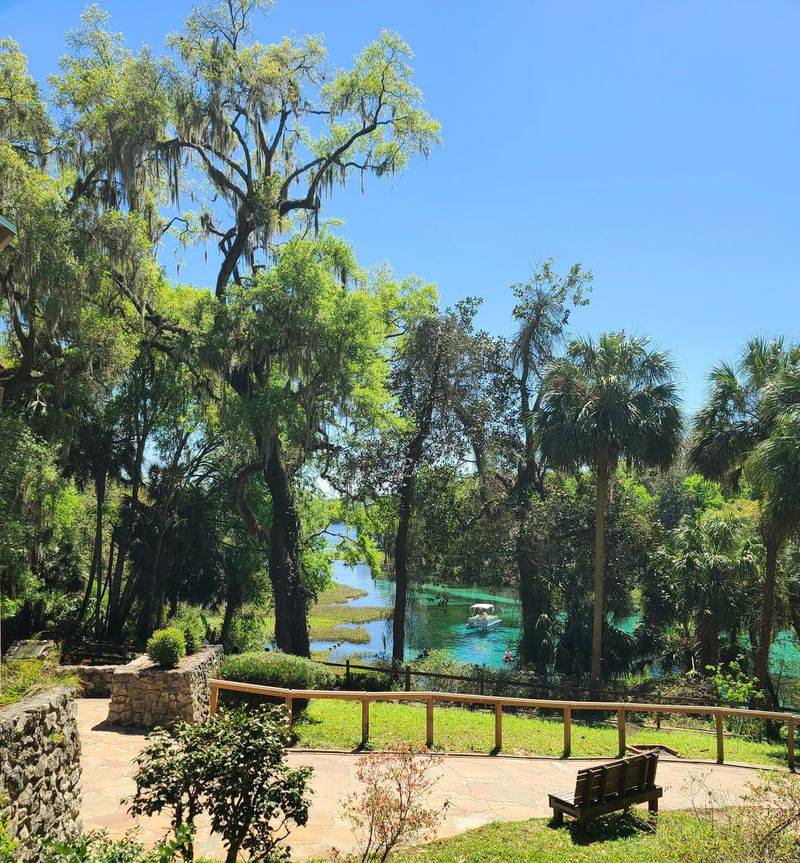
Facilities here go beyond what many people expect from a state park.
There is a cafe, a gift shop, and an ice cream stand near the exit that tends to catch guests on their way out. Glass bottom boats are also part of the scene and catch plenty of interest.
Clean restrooms are available, though showers are not part of the day-use area. Parking is plentiful and straightforward.
Camping happens on the other side of the river, near the tubing entrance. Campers have enjoyed free access to the headsprings, making multi-day stays a strong value.
Some families camp for three nights and visit the spring every single day. Others turn it into an annual tradition.
Leashed pets are allowed in the campground area as well. That makes it easier for traveling families with dogs.
For budget-minded travelers, camping may be the best deal in the whole park.
Reservations, Fees, and Timing
Showing up without a plan no longer works at this park.
Day-use reservations are now required for entry, and space is limited to ticket holders. Booking online is quick and simple.
Costs remain low. Guests mention about $5 per vehicle, or around $2 per person at the headsprings, depending on the entry type.
Timing matters as much as booking. Arriving right at the 8 AM opening, or close to 9 AM, beats both the crowds and the strongest sun.
One Friday group got on the water at 9 AM and returned at noon to a packed park. Thursdays in June still drew crowds, though they felt manageable.
Bring floats, a blanket, food, and plenty of water. Since ice is not sold and large coolers are not allowed, small insulated bags work best.
A few minutes of planning turns a crowded outing into a smooth one.
Worth the Drive to Dunnellon
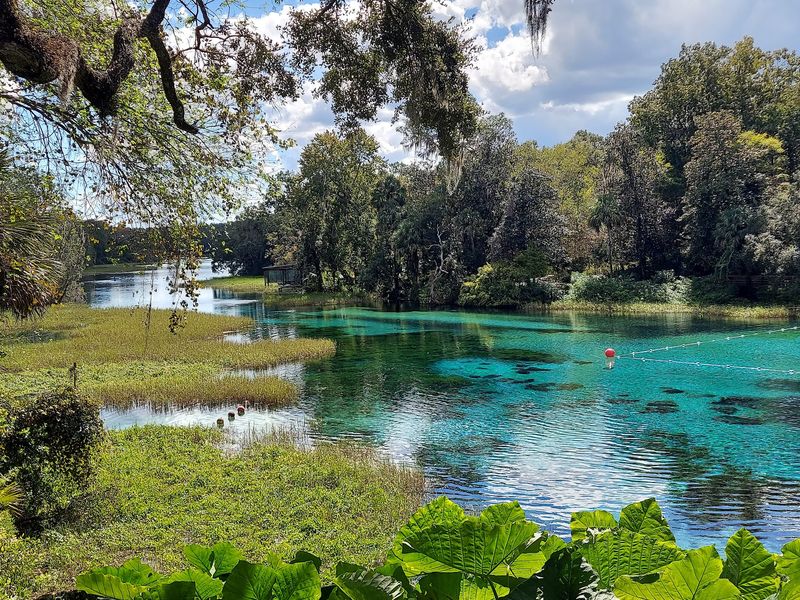
Few Florida day trips deliver this much for this little money.
A few dollars covers entry, kayaks rent by the hour, and tubing with a tram ticket sits around $25. Add the waterfalls, trails, wildlife, and 1930s history, and the value becomes obvious.
The park suits families with kids, couples looking for a quiet paddle, dog owners hitting the trails, and campers chasing a slower weekend. It works for both Florida locals and out-of-state travelers.
Crowds and limited shade are real considerations. Early arrival and a little planning take care of most of that.
Many guests describe a sense of calm that makes them slow down and enjoy the moment. Others simply love that the strict rules keep the water clean.
Mother’s Day trips, weekend escapes, and annual camping traditions all happen here. That variety says a lot about the park’s broad appeal.
Book the reservation, pack a noodle, and let the 72-degree water handle the rest.


