
Affiliate disclosure: As an Amazon Associate I earn from qualifying purchases. Learn more
Most covered bridges are short, quiet relics you tiptoe across on foot. Ashtabula County has one that stretches 613 feet, carries two lanes of everyday traffic, and costs nothing to cross.
Locals walk dogs beneath it at sunrise, families picnic nearby, and road-trippers swing through on the county’s famous covered bridge tour. Here is what makes this record-holder worth the drive, plus the trails, the second bridge hiding below, and the practical tips that help you plan a smooth visit.
A Record Holder on State Road
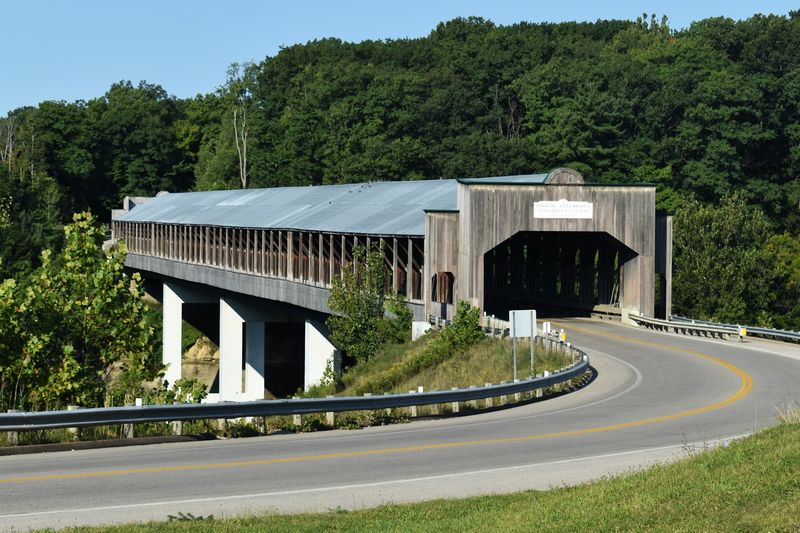
Northeast Ohio quietly holds a national title. The Smolen-Gulf Covered Bridge sits at 4800 State Rd S, Ashtabula, OH 44004, in Ashtabula County near the shore of Lake Erie.
At 613 feet, it is known as the longest covered bridge in America. That is longer than two football fields laid end to end.
The best part is that it is not a museum piece behind a rope. Cars, trucks, and local drivers use it every day as a regular road over the gorge.
The bridge is listed as a historical landmark, yet it looks surprisingly modern. Its clean lines and solid build show that covered bridges are not only a thing of the past in Ohio.
For anyone keeping score on the drive from Cleveland or Youngstown, this is a free stop with bragging rights attached. Few road trips let you say you drove across a national record on a Tuesday afternoon.
Built for Traffic, Not Just Photos
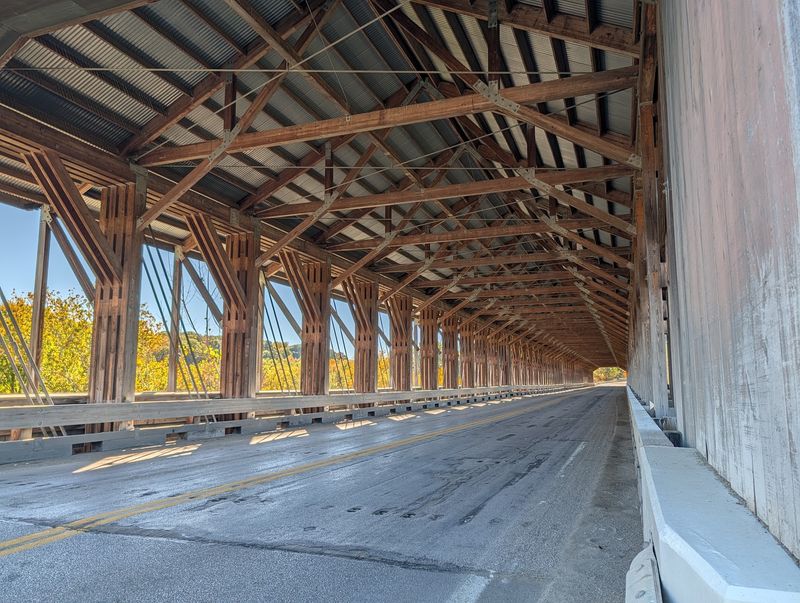
Plenty of people call it a masterpiece of engineering, and the design backs that up. The bridge carries two full lanes of traffic, which is rare for a covered structure.
Walkways run along both sides. That matters because the road is heavily traveled, and pedestrians get their own safe path across.
The surface is paved throughout, so the crossing is smooth for drivers. Many suggest driving over it even if your route does not require it, just for the experience.
Walking across is just as popular. The view of the river and the gorge from the walkway gives you a different angle than the one from behind the windshield.
Ashtabula County clearly built this one to work hard and still look good doing it. It is a working road first and a landmark second, and somehow it nails both jobs.
The Second Bridge Down Below
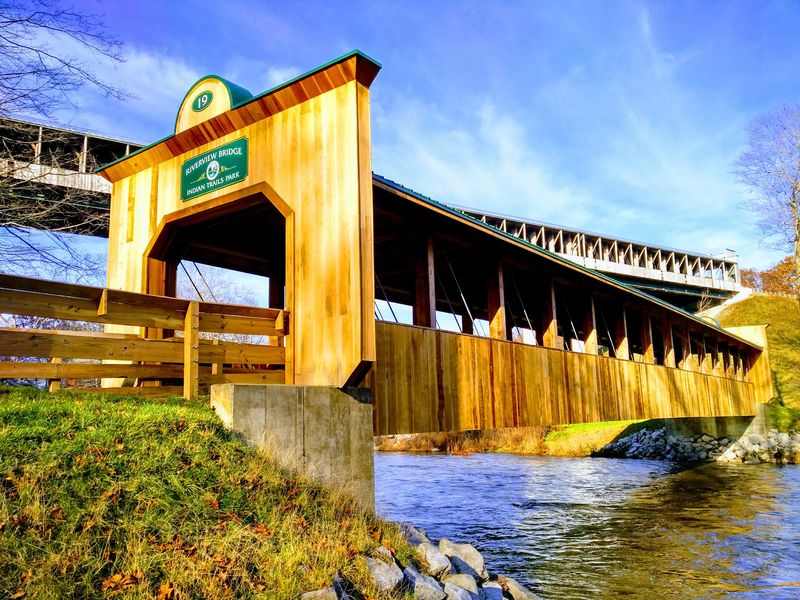
Here is the twist many first-timers miss. There is a second covered bridge tucked in the valley below the big one.
The lower bridge is for people and horses only, with no car traffic at all. It makes for a calm, unhurried crossing.
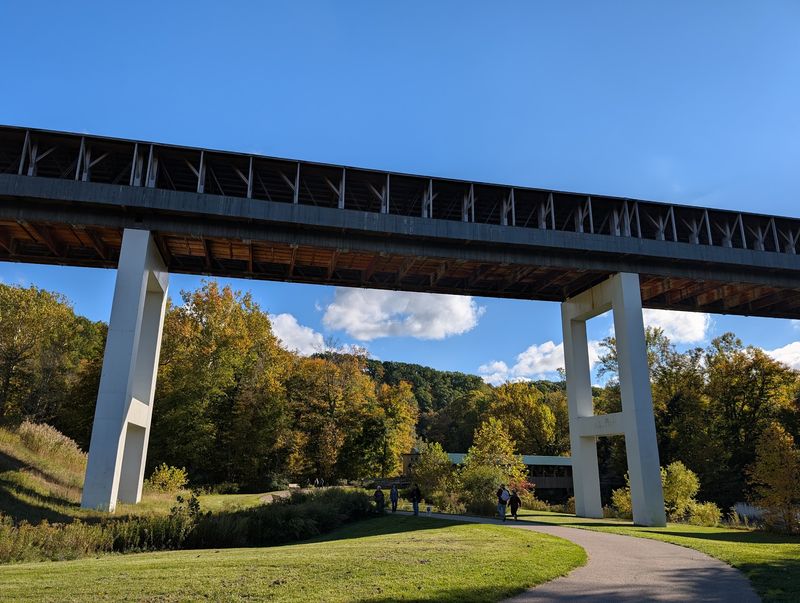
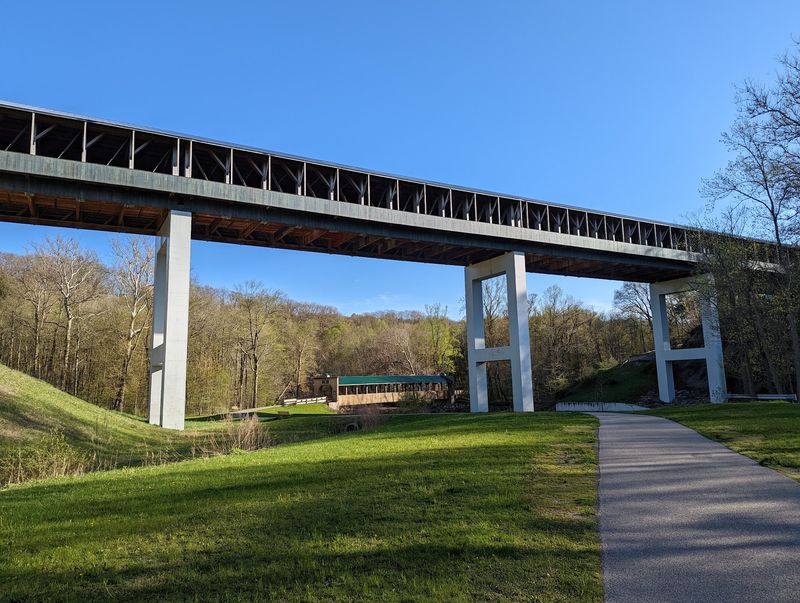
To reach it, drive down to the bottom parking lot. A walking trail connects the area, and it also gives you a view of the main bridge from below.
That angle is the one many photographers chase. Seeing the full 613-foot span from the valley floor shows off its true size.
So the stop really comes with two bridges for the price of zero. Skipping the lower lot would be like leaving a double feature halfway through.
Trails, Picnics, and a Shallow Creek
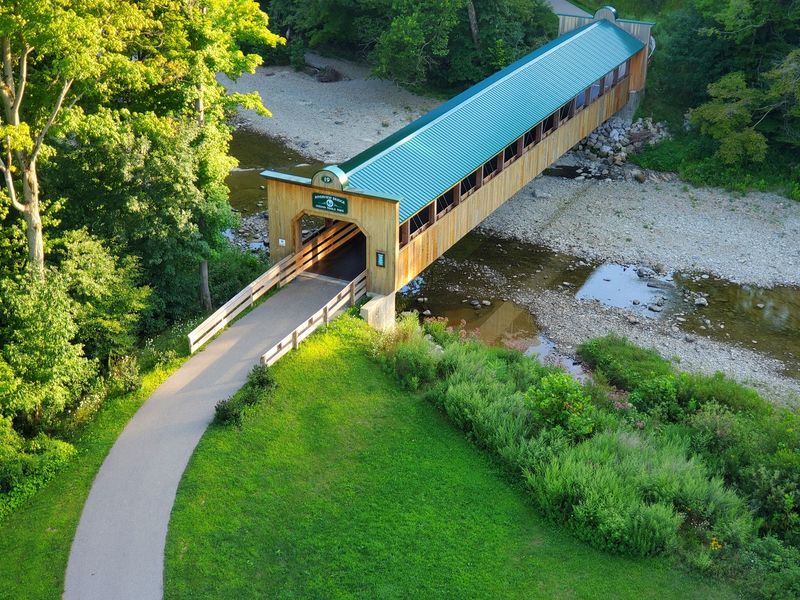
Trails are a big reason people return again and again. A paved walking trail and other paths wind through the small park near the bridges.
The hike is short and sweet, good for a walk, a jog, or an easy outing with kids. Dog owners are regulars here too.
A picnic area offers a spot to sit and take a break. The grounds are kept clean and well manicured.
The creek below is shallow enough to wade through in spots. Skipping rocks is a small but beloved pastime here.
Some folks say they could lose track of hours wandering the river, the bridges, and the trails. Plan for more time than you think you need.
Overlooks and History Boards
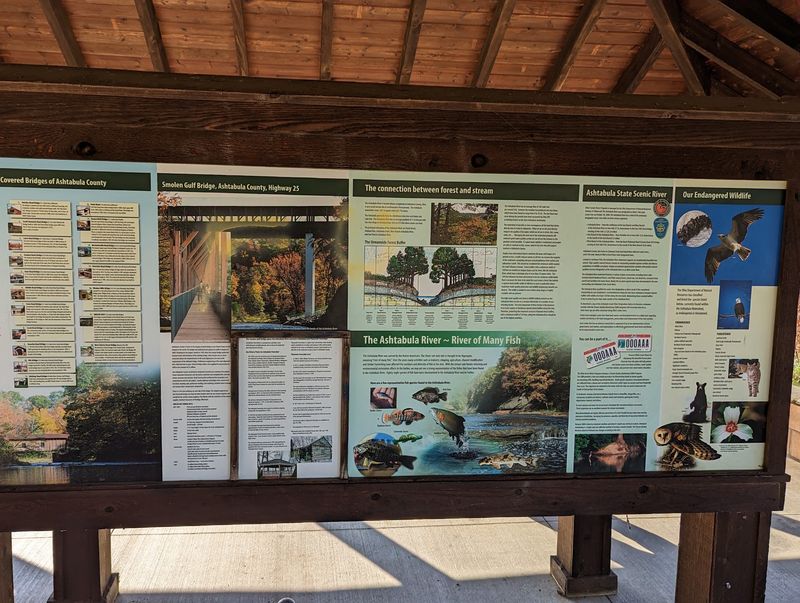
A good lookout makes a landmark easier to appreciate. Near the bridge, a convenient parking area lets drivers pull over before crossing.
An informational pavilion and history boards share background on the bridge. They also explain the other covered bridges across the county.
You can choose your view from above or below. Either way, parking is ample.
The overlook is ideal for a quick stop if your schedule is tight. Read a few boards, snap a photo, and get back on the road.
Those signs often spark a bigger plan. Many people leave determined to see the rest of the county’s bridges.
Seasons Change the Scene
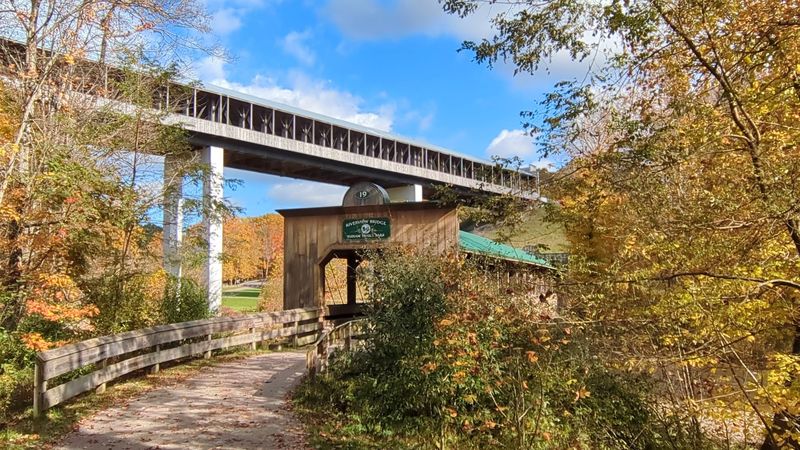
Autumn is when this spot truly shows off. Fall foliage around the gorge turns the trees bright orange and red, especially in late October.
Sunrise is a favorite time for early walkers. Quiet mornings make for calm strolls and clear photos.
Winter is a different story. After heavy snow, plowed piles can block the overlook, and pulling over safely gets tricky.
Cold days also cut walks short. Spring through fall is the easier window for exploring the trails.
A colorful fall drive pairs nicely with the county’s other bridges. Pick a clear day and the gorge does the rest.
Free Access, Any Hour
Good news for budget road-trippers. There is no cost to park or to cross the bridge.
The landmark is open 24 hours, seven days a week. You can stop on your schedule.
Parking lots sit at the top overlook and at the bottom near the trail. Both are easy to find.
One honest note about restrooms. They have been reported as in rough shape, so plan ahead before you arrive.
For families measuring value, a free landmark with trails is hard to beat. Pack snacks, bring the dog, and stay a while.
Worth the Drive, and Then Some
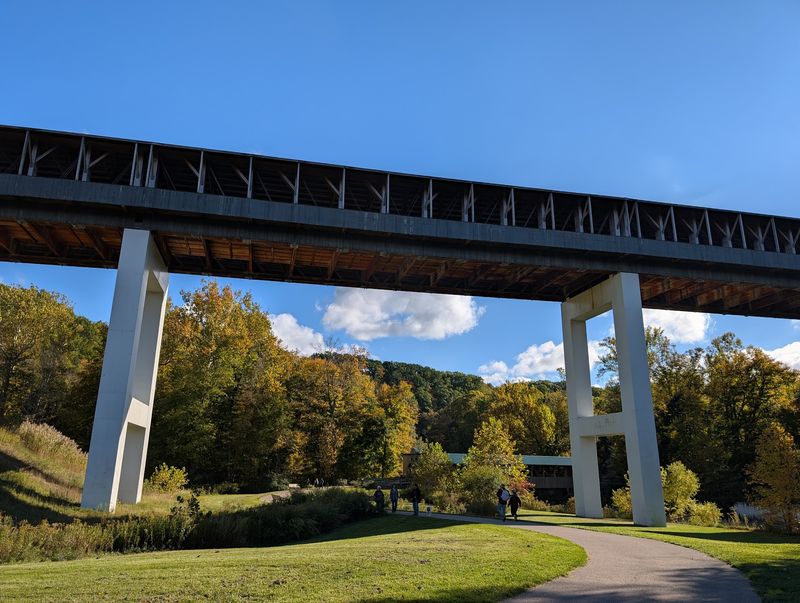
Ashtabula County is home to many covered bridges, including both the longest and the shortest. Smolen-Gulf is the natural headliner of any tour.
The area has around 18 bridges by some counts. Locals insist the covered bridge tour is a must.
This stop suits families, dog walkers, hikers, and history fans alike. It also works for drivers who just want a quick, impressive detour.
Some arrive by accident and leave planning a return trip. That says plenty about the place.
Drive it, walk it, then see it from below. Ohio’s record-setting bridge earns its spot on your next road trip.


