
Affiliate disclosure: As an Amazon Associate I earn from qualifying purchases. Learn more
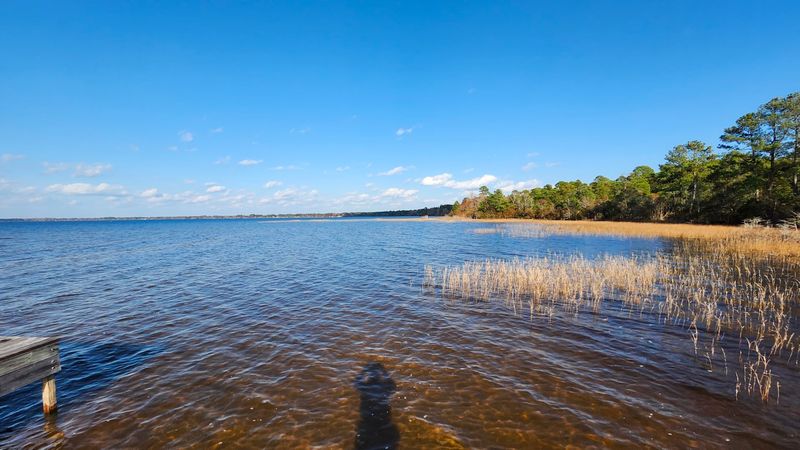
There is a lake in southeastern North Carolina so unusual that scientists study it, yet most people drive right past without a second thought. Its water stays oddly clear because of a limestone bluff, and it shelters fish and mussels that live nowhere else on the planet.
Add carnivorous plants, wild alligators nearby, and a boardwalk that lets you walk straight out into a Carolina Bay, and you have a spot that quietly outshines flashier parks. There is even a fossilized whale skull tucked inside the visitor center.
The story of how this lake formed remains a puzzle, with theories ranging from an ice age origin to a meteor crater. Keep reading, because this quiet corner of Columbus County holds more wonders than its modest reputation suggests.
A Quiet Address in Columbus County
Tucked along the shore of its namesake lake, this park sits at 1866 State Park Dr, Lake Waccamaw, NC 28450, in Columbus County in the southeastern corner of the state.
The setting feels wonderfully off the beaten path. It is the kind of place regulars describe as underrated, a calm escape into nature that rarely draws heavy crowds.
The park now spans roughly 2,300 acres, though it began much smaller at 273 acres before more land was gradually acquired over the years.
Getting here means leaving the busy highways behind, and some folks admit it can feel a bit out of the way. That distance is exactly what keeps it peaceful.
Managed by the North Carolina state park system, the grounds center on the lake itself, with trails, boardwalks, and a welcoming visitor center anchoring the experience.
For anyone chasing quiet over commotion, this address delivers a laid-back day surrounded by rare scenery. It rewards those willing to make the drive with something you simply will not find at more famous parks.
The Largest of the Carolina Bays
Among the many oval-shaped lakes scattered across the Carolinas, Lake Waccamaw claims the title of the largest of all the Carolina Bays.
These bays are mysterious depressions likely formed over the last ice age, though the exact cause still sparks debate. Their tidy oval shapes have puzzled geologists for generations.
The lake is so wide that some who arrive expecting a modest pond say it looks almost like an ocean stretching toward the far shore.
Despite its size, the water is not especially deep, so the scale comes from its sprawling surface rather than its depth.
What truly sets it apart is the clarity. A limestone bluff along the edge neutralizes the acidity that usually clouds bay lakes, keeping the water unusually clear.
That single geological quirk turns an ordinary-looking lake into one of the most scientifically remarkable bodies of water in the region. Standing at the shoreline, it is easy to underestimate just how special the view really is.
A One-of-a-Kind Ecosystem
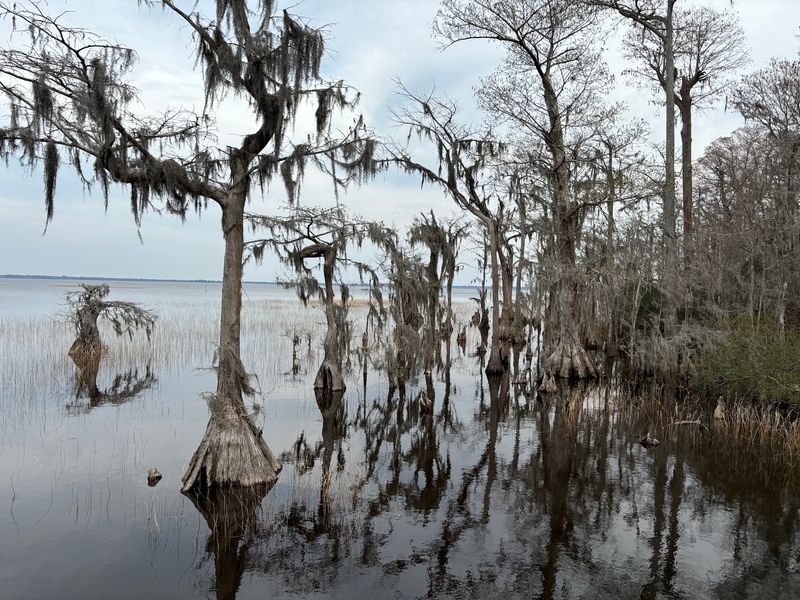
Rare does not begin to cover what lives beneath the surface here. The alkaline conditions created by the limestone bluff support species found nowhere else on Earth.
The Waccamaw spike mussel and the Waccamaw darter fish are two of these globally unique residents. They exist only in this lake and its connected waters.
Scientists consider the whole system a hyper-unique ecosystem, a phrase that sounds like an exaggeration until you learn how many endemic creatures call it home.
The clear, mineral-rich water is the secret ingredient. Without that natural chemistry, these fish and mollusks simply could not survive.
Beyond the water, the surrounding land shelters black bears, bobcats, and American alligators, adding to the sense that this is a living laboratory of wild things.
It is remarkable that such biological rarity hides in a park many people breeze past. For nature lovers, knowing these species exist here and only here transforms a simple lakeside walk into something far more meaningful.
Walking Out Into a Bay
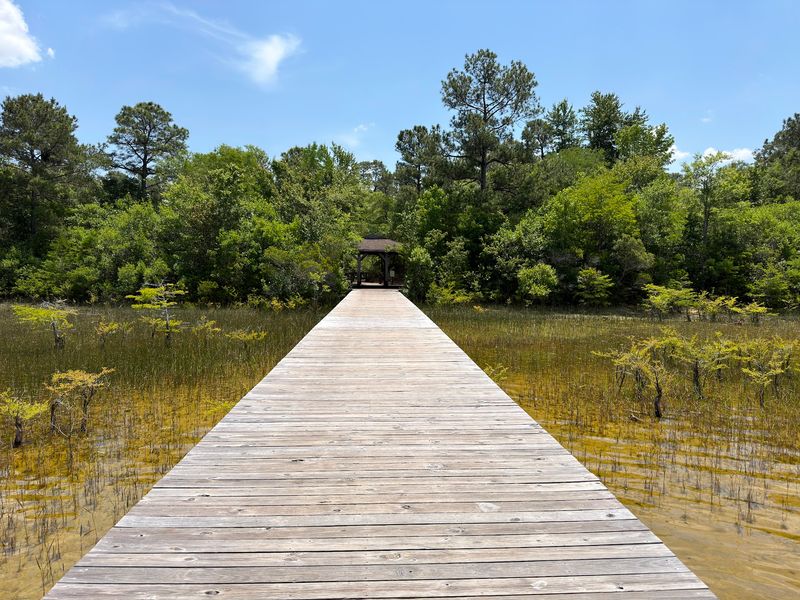
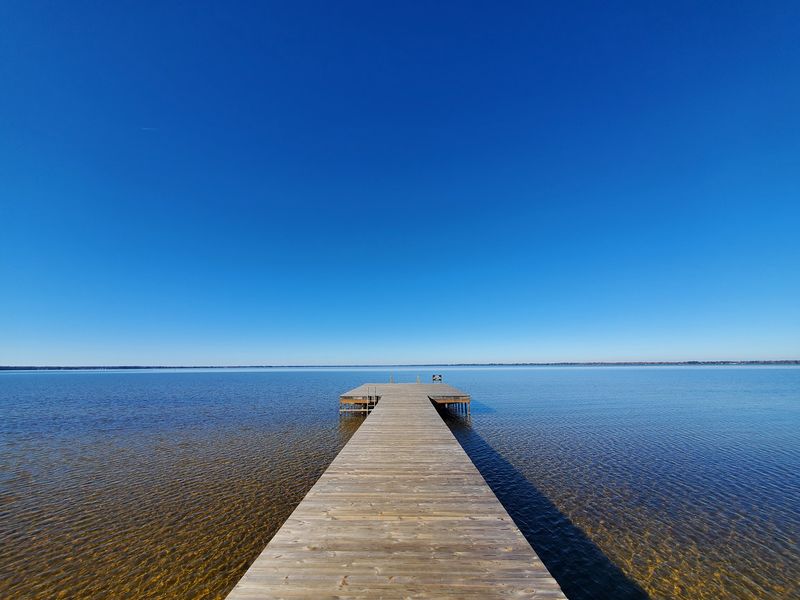
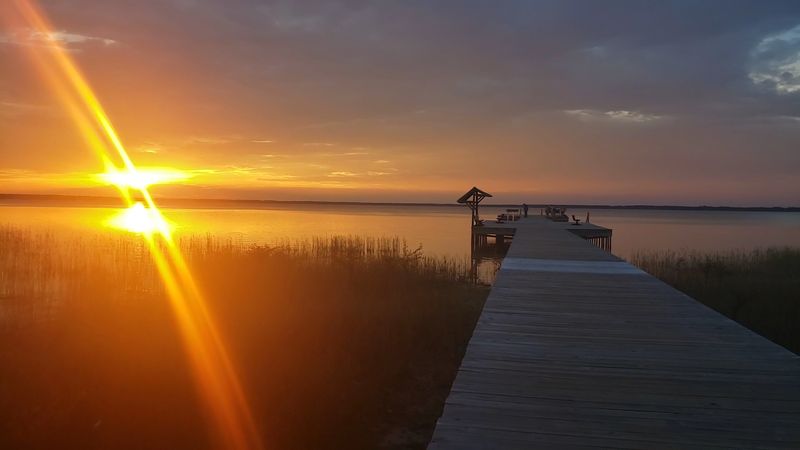
Few experiences feel as novel as strolling out onto a dock that carries you straight into the heart of a Carolina Bay.
Most bays keep visitors at arm’s length, so the chance to walk directly into one here is genuinely uncommon. The dock offers a clear view down into the bay itself.
The pier and boardwalk are frequent favorites, mentioned again and again by those who make the trip. They provide open sightlines across the water that trails alone cannot match.
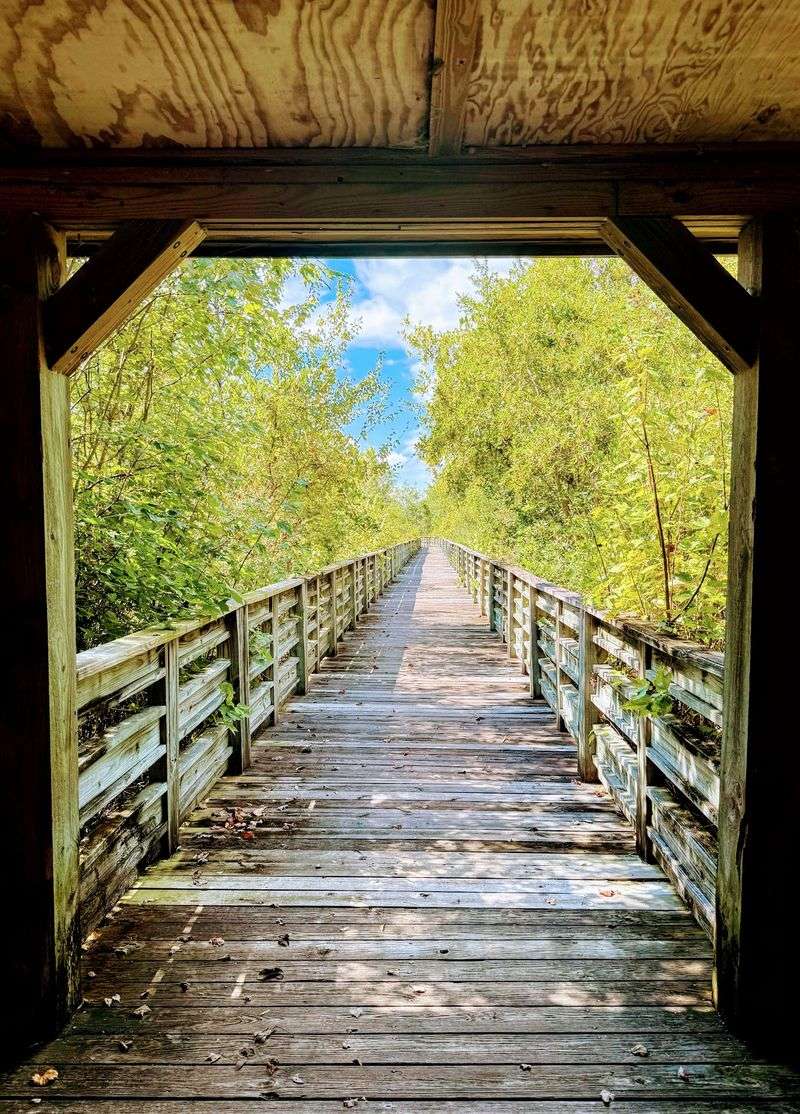
Boardwalks also stretch over the surrounding wetlands, giving you access to spots that would otherwise be soggy and unreachable.
The swim area dock received an upgrade in recent years, and it sits just a short walk from the parking area for easy access.
Because the lake has no tides or rip currents, the dock area feels calm and approachable. It stands as one of the park’s signature features, a simple wooden pathway leading you into a landscape most people only glimpse from a distance.
The Lake Trail and Its Winding Paths
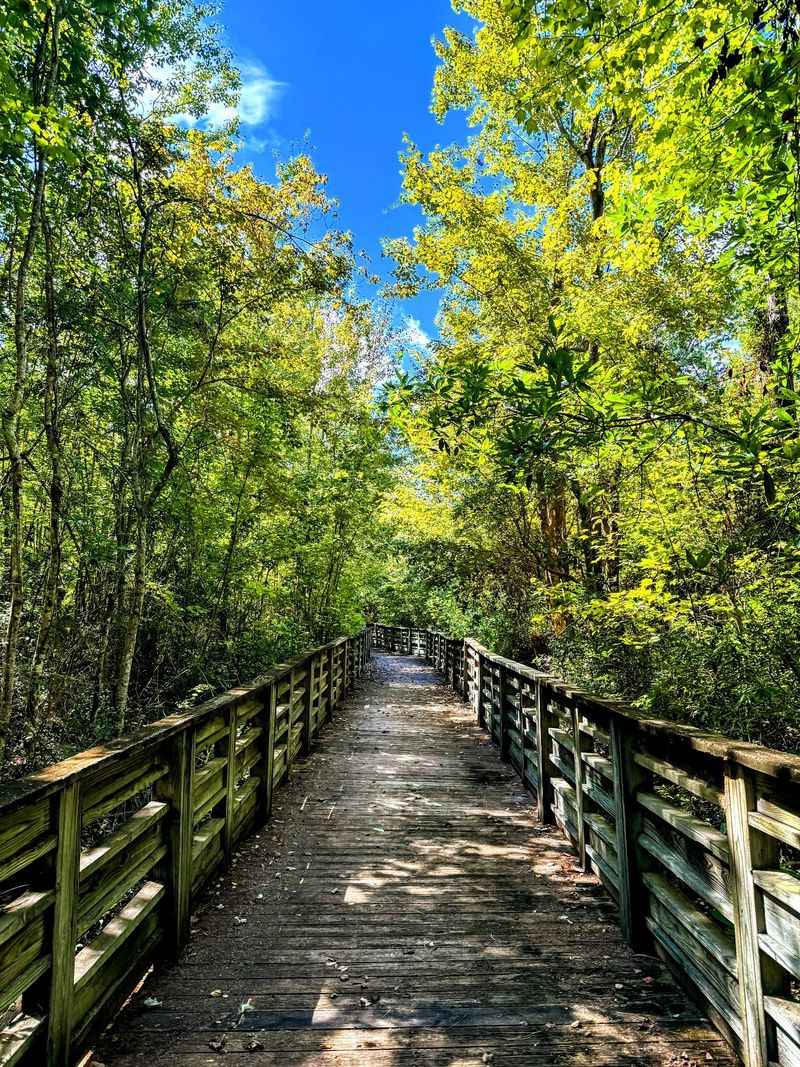
Lace up comfortable shoes, because the trails here are the main event for many who visit. The Lake Trail is the headliner, tracing the water toward the dam.
Signs mark it as five miles each way, though hikers often clock it closer to four miles out and four miles back. It is a route, not a loop, so plan accordingly.
A popular option loops from the Lake Trail past the pier and back to the visitor center, coming in around four and a half miles total.
Distances are flexible, with hikes ranging from a mile or two up to roughly ten miles depending on which paths you string together.
The trails stay mostly level and shaded, making them friendly for novice walkers. Even those with mobility challenges often manage the moderate routes, though walking sticks help when leaves make the ground slick.
Boardwalk access points along the way let you step out for lake views at specific spots. It adds up to a rewarding day hike through genuinely pretty woods.
Wildlife Around Every Bend
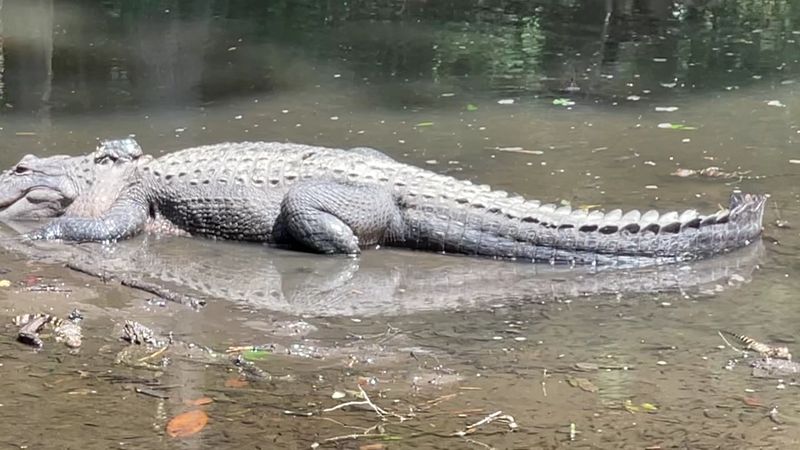
Keep your eyes open, because critters here show up in abundance. The wetlands and swampy edges are known for their lively cast of wildlife.
Birds, turtles, and the occasional alligator make appearances along the boardwalks, delighting anyone who pauses to look. Alligators are one of the most talked-about sights in the area.
Just beyond the park boundaries, wild alligators lurk in the swampier zones, adding a jolt of excitement to the outing.
The broader park is home to black bears and bobcats too, though these shyer animals keep their distance far more often.
Warmer months bring the wildlife out in force, and they also bring plenty of insects, so bug spray is a smart companion.
Cooler months like January offer a calmer window when the bugs quiet down and the trails feel serene. However you time it, the sheer variety of creatures makes this a place where the natural world stays front and center.
Preparedness turns wildlife surprises into memorable highlights rather than nuisances.
The Visitor Center Full of Stories
Rainy day plans need not fall apart, because the visitor center makes indoor time genuinely worthwhile. It is packed with history and ecology despite being on the smaller side.
A freshly painted mural inside captures the flora and fauna of a Carolina Bay, and it earns admiration from those who wander in.
The exhibits dedicate real space to the history and artifacts of the Waccamaw Siouan Indian Tribe, whose story is woven into the lake’s past.
Little touches add charm too, from print-outs of jokes to temporary tattoos that keep younger guests entertained.
Staff at the welcome desk are frequently praised as helpful, friendly, and knowledgeable, going out of their way to be sweet to kids.
Restrooms and trail maps are available here, making it the natural first stop before heading outdoors.
For a building that some describe as modest in size, it delivers a surprising depth of information. It transforms a soggy afternoon into a fascinating lesson about one of the state’s strangest landscapes.
Echoes of the Waccamaw Siouan Tribe
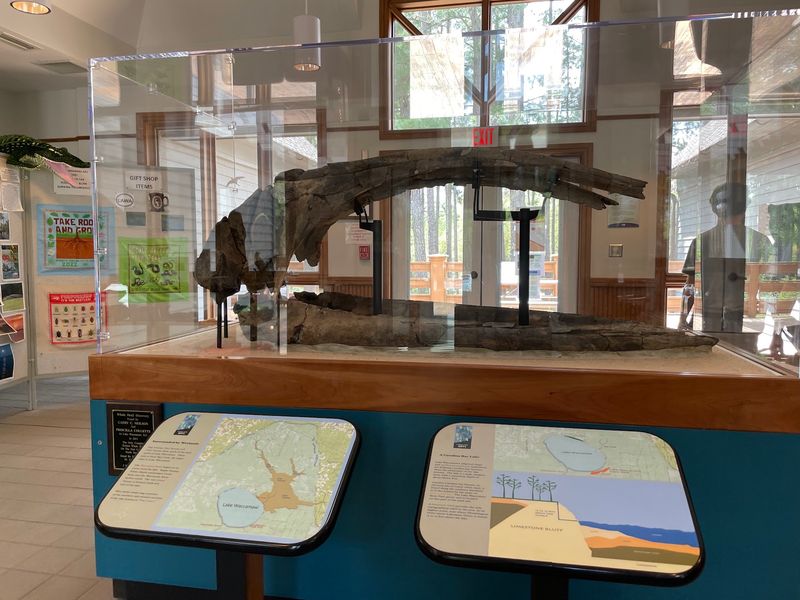
Long before the park existed, the Waccamaw Siouan Indian Tribe held their own understanding of how this remarkable lake came to be.
Their tradition viewed the lake’s formation as the result of a meteor that left a deep crater in the earth. It is a striking origin story that still resonates today.
The visitor center explores that theory alongside other scientific explanations, letting guests weigh the possibilities for themselves.
Artifacts and dedicated exhibit space honor the tribe’s connection to the land and water, giving the park a cultural dimension beyond its natural wonders.
That blend of indigenous lore and modern science makes the history here feel layered rather than one-dimensional.
Learning about the people who lived alongside these shores adds depth to every step along the trails afterward.
It is a reminder that the lake has meant something to communities for a very long time. Their perspective enriches the whole visit, turning geology into a story with human roots stretching back through generations.
A Logging Town and a Presidential Connection
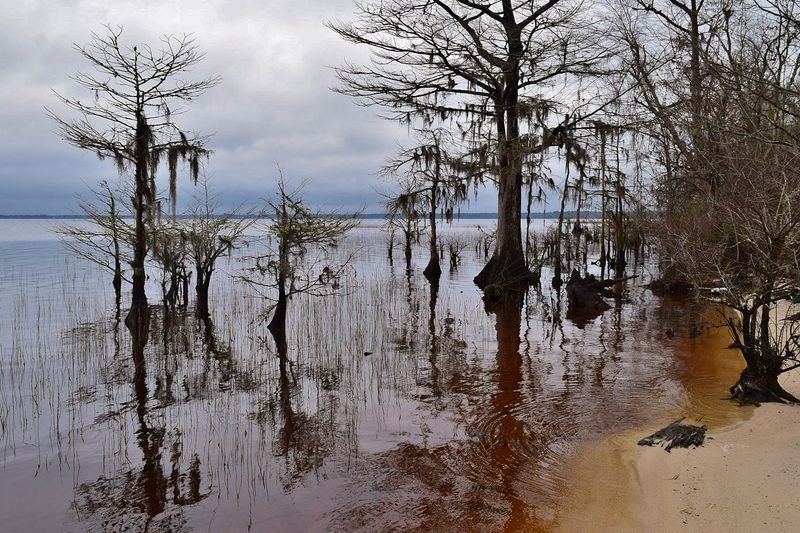
Behind the peaceful scenery lies a working past that once buzzed with industry. Lake Waccamaw was a logging town in its earlier days.
Cypress trees harvested here were turned into shingles, prized for their weather-resistant qualities. Durability made them a sought-after building material.
Those very shingles earned a place in American history, chosen for George Washington’s home at Mount Vernon.
It is a surprising thread connecting this quiet lake to one of the nation’s most famous residences.
The Lake Waccamaw Dam eventually shaped the modern shoreline, and fifty years after it was built, the state established the park.
What started as a modest 273-acre preserve grew steadily into the sprawling 2,300 acres you can explore today.
Knowing that timber from these shores helped build a landmark home adds an unexpected layer of pride to the visit. History buffs will appreciate how a small logging community left its mark far beyond its own borders, tying local cypress to national heritage.
The Fossilized Whale That Once Swam Here
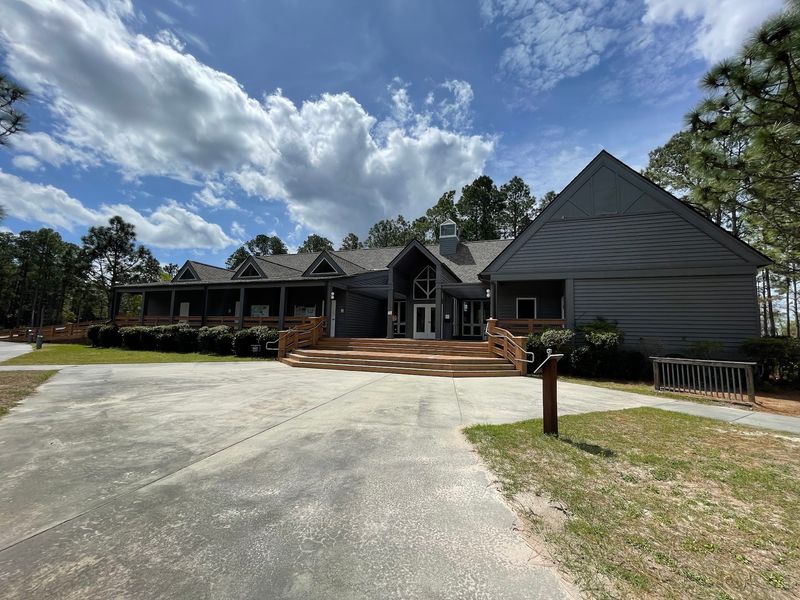
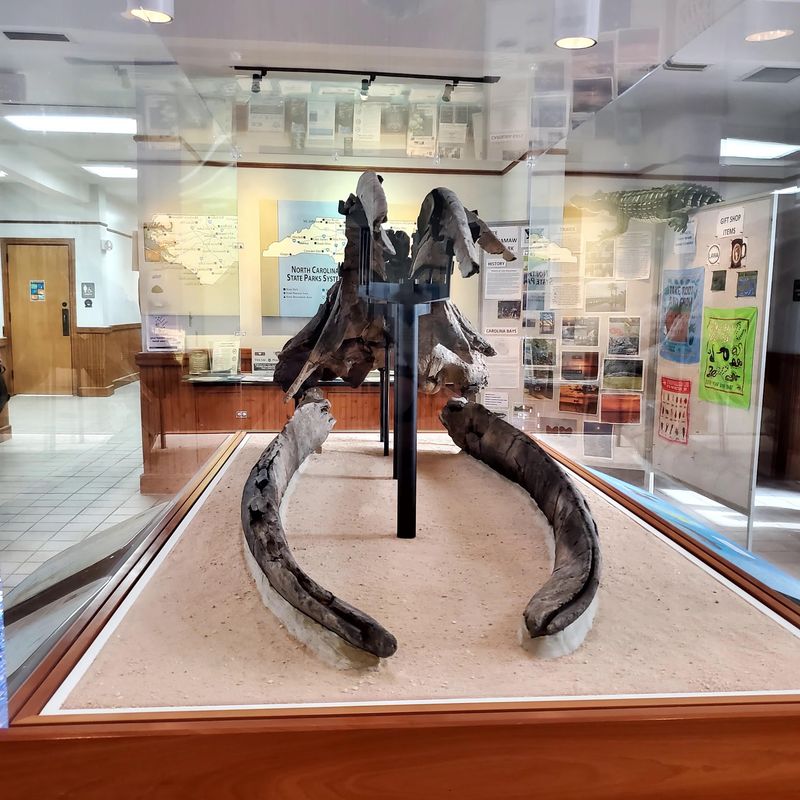
Nothing quite prepares you for learning that a whale once swam where pine forests now stand. The visitor center displays a fossilized skull of a Balaenula whale.
This ancient creature glided through the coastal plain millions of years ago, back when the ocean reached far inland.
The fossil is a tangible link to a vanished sea, sitting quietly among the center’s exhibits.
It underscores just how dramatically this landscape has changed over deep stretches of time.
For curious minds, especially younger ones, the whale skull becomes an instant highlight and a spark for big questions about the distant past.
It is the sort of unexpected treasure that makes a small visitor center punch well above its weight.
Few people expect prehistoric marine life in a lakeside park in Columbus County. That element of surprise is exactly what makes the discovery so memorable, giving the whole park an ancient backstory that stretches millions of years beyond human memory.
Carnivorous Plants and the Hunt to Find Them
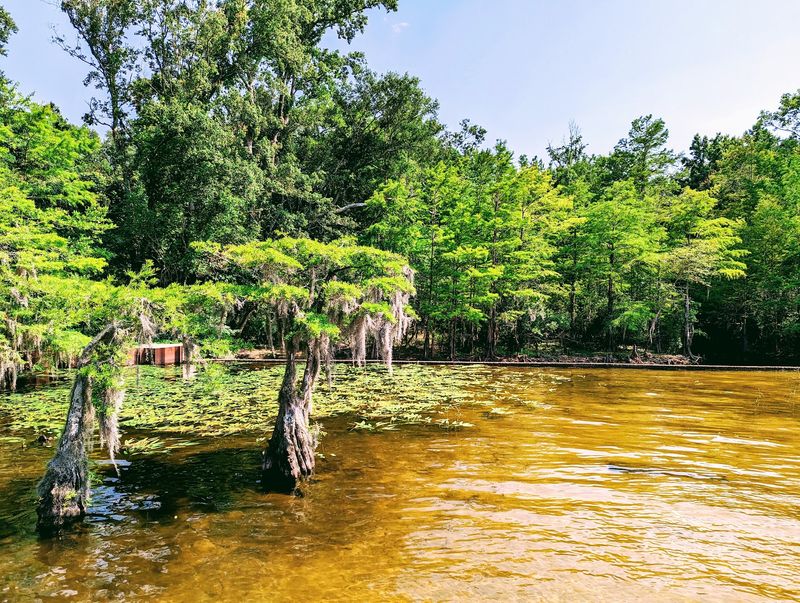
Plant enthusiasts arrive hoping to spot something wonderfully bizarre, since the park is home to carnivorous plants.
Venus fly traps and pitcher plants are the stars people dream of finding among the bogs and wetlands.
Honesty helps here, though. Locating them can be genuinely tricky, and some hunters have combed the trails without spotting a single one.
Evidence of former bog gardens, trenching, and ditches hints that managed populations once existed in accessible spots.
The trail signage does not always match the maps, the website, or the bulletin boards, which can turn the search into a frustrating detour.
The best advice is to set expectations accordingly. Come for the wildlife, the flora, and the scenery, and treat any carnivorous plant sighting as a happy bonus.
Even without flytraps in view, the surrounding plant life stays pretty and varied. The lesson is simply to enjoy the botanical adventure for what it is rather than banking everything on one elusive prize.
Hours, Camping, and Practical Notes
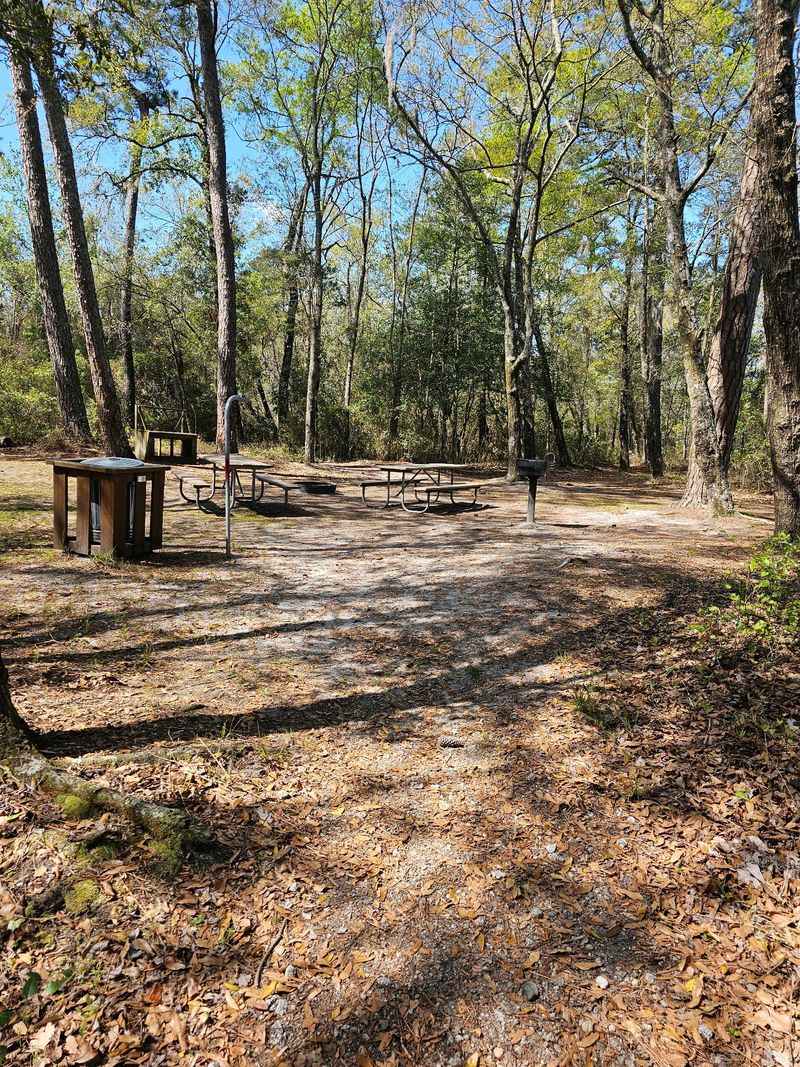
Planning a trip is refreshingly straightforward here. The park opens at 7 AM and closes at 9 PM every day of the week, giving you plenty of daylight to roam.
Picnic areas are clean and relaxing, ideal for spreading out lunch between hikes.
Overnight guests will find primitive camping available for those who enjoy a simpler outdoor setup. The campground is described as basic but comfortable.
Restrooms sit at the ranger station and visitor center, and they are generally kept clean and stocked, though the facilities lean toward the smaller side.
Parking is usually easy, but keep in mind it can fill up during club events like group bike rides.
This is an older, more primitive park, so expect some worn trails rather than polished modern amenities. That rustic character is part of its appeal.
The website at ncparks.gov offers current details before you head out. A little preparation, especially bug spray in warm months, sets you up for a smooth and rewarding visit.
Why This Overlooked Lake Deserves a Visit
Holding a 4.6-star rating across more than 700 pieces of feedback, this park quietly earns a lot of affection despite its low profile.
Regulars call it a peaceful, underrated escape into nature, perfect for slowing down and enjoying the environment without heavy crowds.
It is not built for high-adventure thrills, and that restraint is precisely its charm. The appeal lies in calm walks, rare scenery, and a laid-back atmosphere.
The trails suit novice hikers and families, dogs are welcome for swims in the tide-free water, and the visitor center keeps rainy days engaging.
A few honest notes stand out too, from occasional worn boardwalks to trail signs that can confuse. Setting realistic expectations helps.
What lingers is the sense of standing beside the largest Carolina Bay, surrounded by species found nowhere else and stories reaching back millions of years.
For travelers craving something genuinely unusual and unhurried, this quiet lake rewards the detour. Most people never realize how special it is, which just makes discovering it feel like a small triumph.