
Affiliate disclosure: As an Amazon Associate I earn from qualifying purchases. Learn more
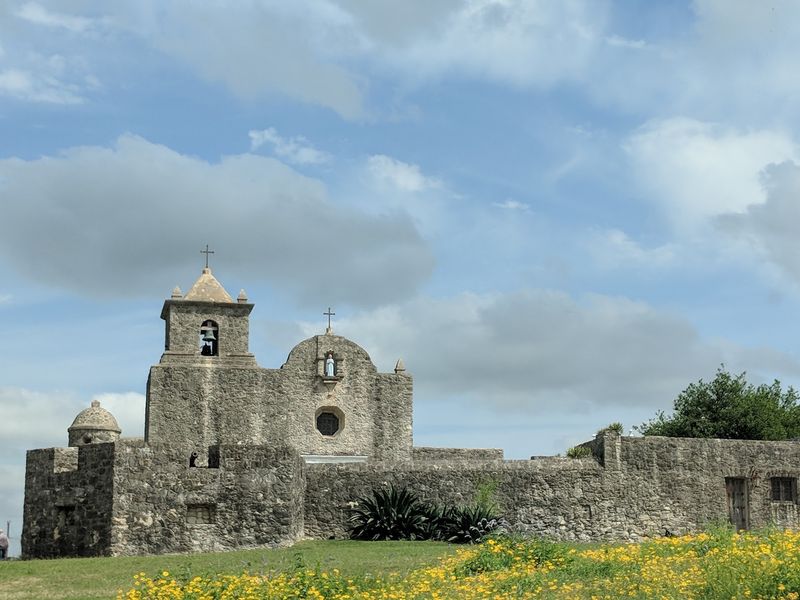
Plenty of Texans cruise down the highway through Goliad without tapping the brakes even once. That is a shame, because a stone fort with roots in the 1700s sits right beside the road, waiting for someone to notice.
Its walls once guarded the Spanish frontier, and later they watched one of the most important chapters of the Texas Revolution unfold. Many historians rank its story right alongside the Alamo, yet far fewer people know it.
A ticket costs about the same as a fast food meal. Inside, there is a chapel, a museum packed with artifacts, a courtyard, and even rooms where guests can spend the night.
This article walks through the fort’s history, its standout spots, the big yearly reenactment, and the practical details for planning a stop. Keep reading, and that drive through Goliad may never feel the same again.
A Fort Hiding in Plain Sight
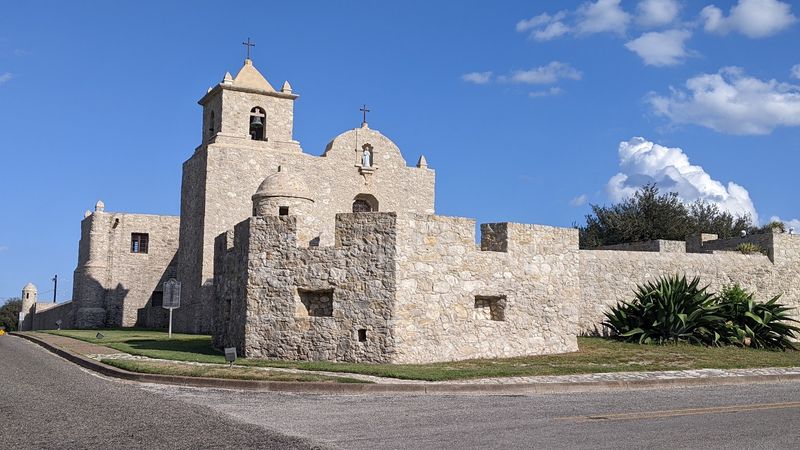
Some landmarks shout for attention, while others simply wait patiently by the side of the road. Presidio la Bahía State Historic Site is firmly in the second group.
The fort sits at 217 US-183, Goliad, TX 77963, in South Texas. Drivers heading along the highway can spot its stone walls without any detour at all.
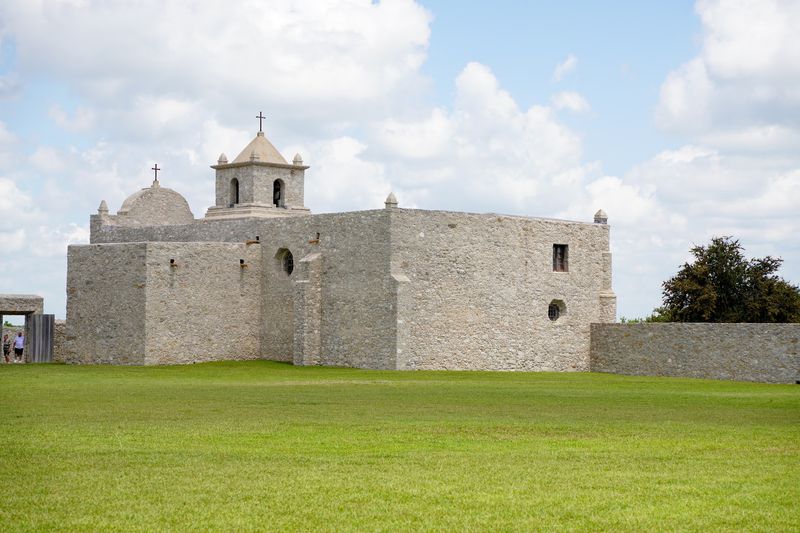
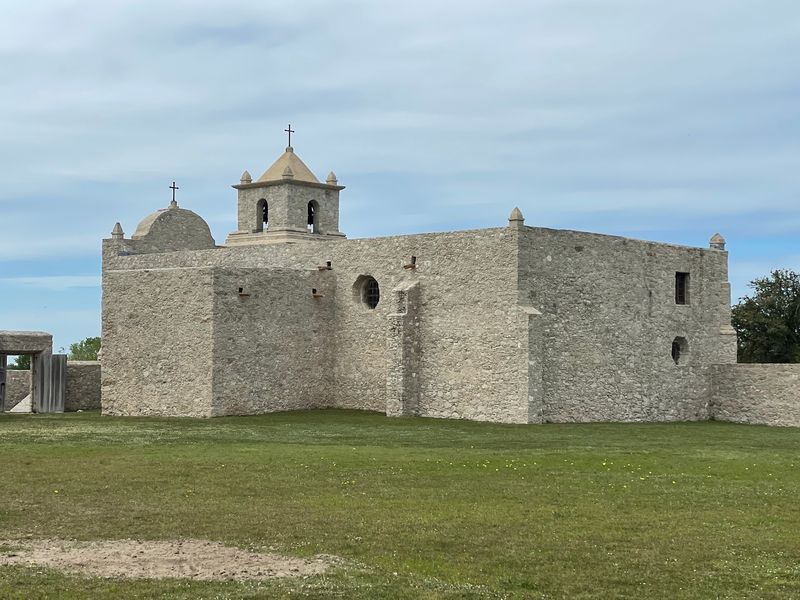
Officially, it is a rebuilt Spanish colonial fort and chapel. It served as a Spanish Army stronghold in the 18th century, and it later became famous as a battle site during the 1836 Texas Revolution.
The full Spanish name translates to Fort of the Bay of the Holy Spirit. It is a mouthful, which may explain why most folks just call it the Presidio.
What makes the place unusual is how complete it feels. Reconstructed Spanish colonial sites of this kind are very rare, so the compound offers a look at frontier life that is hard to find anywhere else in the country.
It also happens to be much bigger than many first-timers expect. A quick photo stop tends to turn into a long afternoon once the gates are behind you.
Three Flags, One Set of Walls
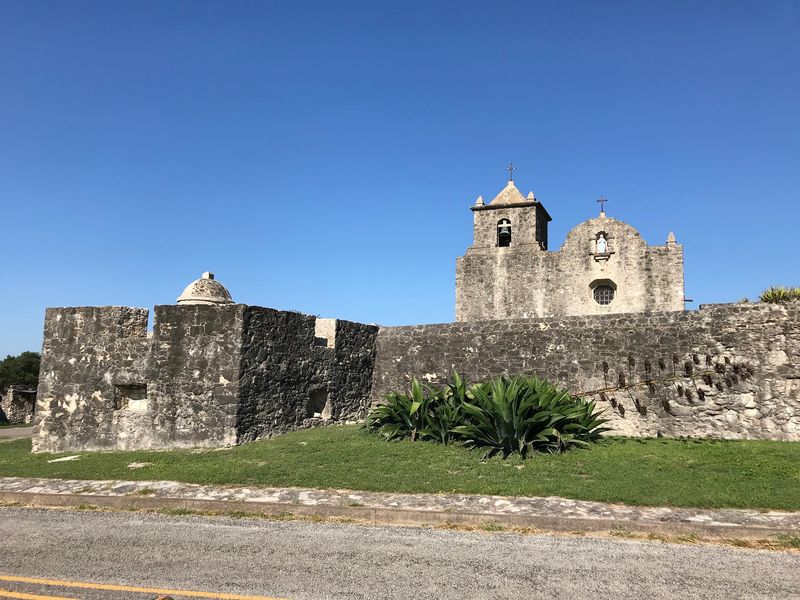
History buffs love a site that refuses to pick just one era. The Presidio covers Spanish, Mexican, and Texas history all inside the same perimeter.
Spain built the fort as a military outpost on its frontier during the 1700s. Soldiers stationed here guarded the region long before Texas was a state, or even a republic.
Later, the walls became part of the struggle between Mexico and the Texians. That chapter is the one that turned Goliad into a name that still echoes in Texas classrooms.
The phrase Remember Goliad carries real weight here. Many students of Texas history point out that the site is just as significant as the Alamo, even though it gets far less fame.
More Texians lost their lives in the area around this fort than at the Alamo. That fact alone surprises plenty of people who grew up in the state.
For anyone just starting to study the Lone Star story, the Presidio works as an ideal first chapter. It sets the stage for everything that came after.
The 1836 Chapter Texas Cannot Forget
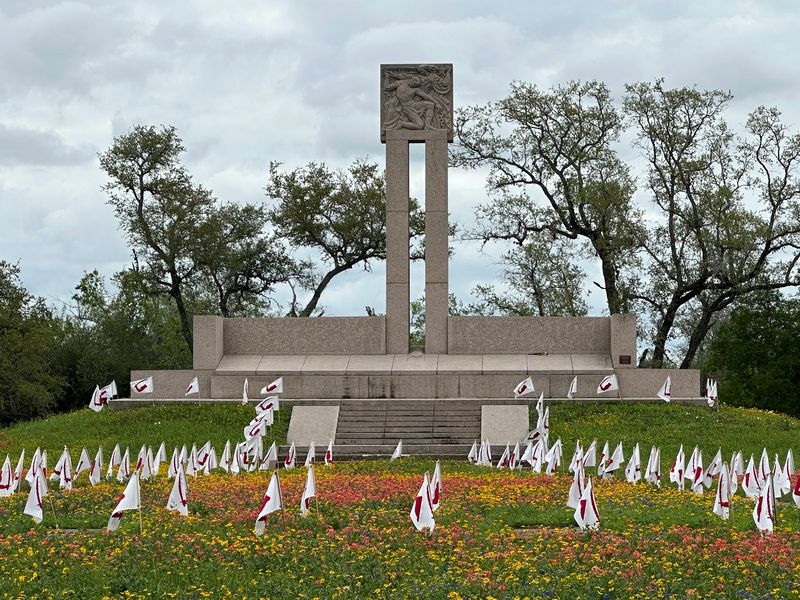
Spring of 1836 changed this quiet fort forever. During the Texas Revolution, Colonel James Fannin and his men became the central figures of the Goliad story.
Fannin and the Texian prisoners held here met a tragic end, an event remembered today as the Goliad Massacre. It became a rallying cry for the Texian cause.
The Fannin monument stands just down the street from the Presidio. Many people pair the two stops, since they tell different parts of the same story.
There is another twist that catches people off guard. The site’s history connects to the story behind Cinco de Mayo, giving it a link to celebrations far beyond Texas.
The staff are happy to explain how these threads tie together. Their knowledge turns names and dates into a story that actually sticks.
It is a heavy chapter, but the site handles it with respect. Visitors leave understanding why the walls matter so much to the people who care for them.
Start With the Short Film
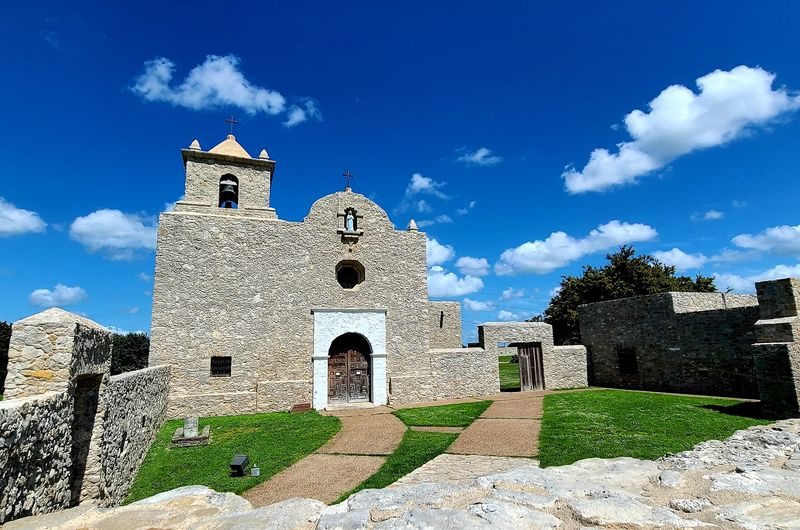
Good stories need a strong opening scene. At the Presidio, that job belongs to a short educational video that kicks off the experience.
The film lays out the history of the fort before you explore the grounds. It gives the artifacts and rooms much more meaning once you see them in person.
Families with kids find it especially helpful. Even people who knew nothing about Goliad before arriving come away with a solid grasp of the basics.
Watching it first is a smart move. Without that background, a stone wall is just a wall, but with it, the same wall becomes part of a bigger drama.
The video also sets a nice pace for the rest of the visit. It takes only a short time, yet it makes every following stop feel connected.
Consider it the trailer before the main feature. Skipping it would be like starting a novel on chapter five.
A Museum Packed With Period Pieces
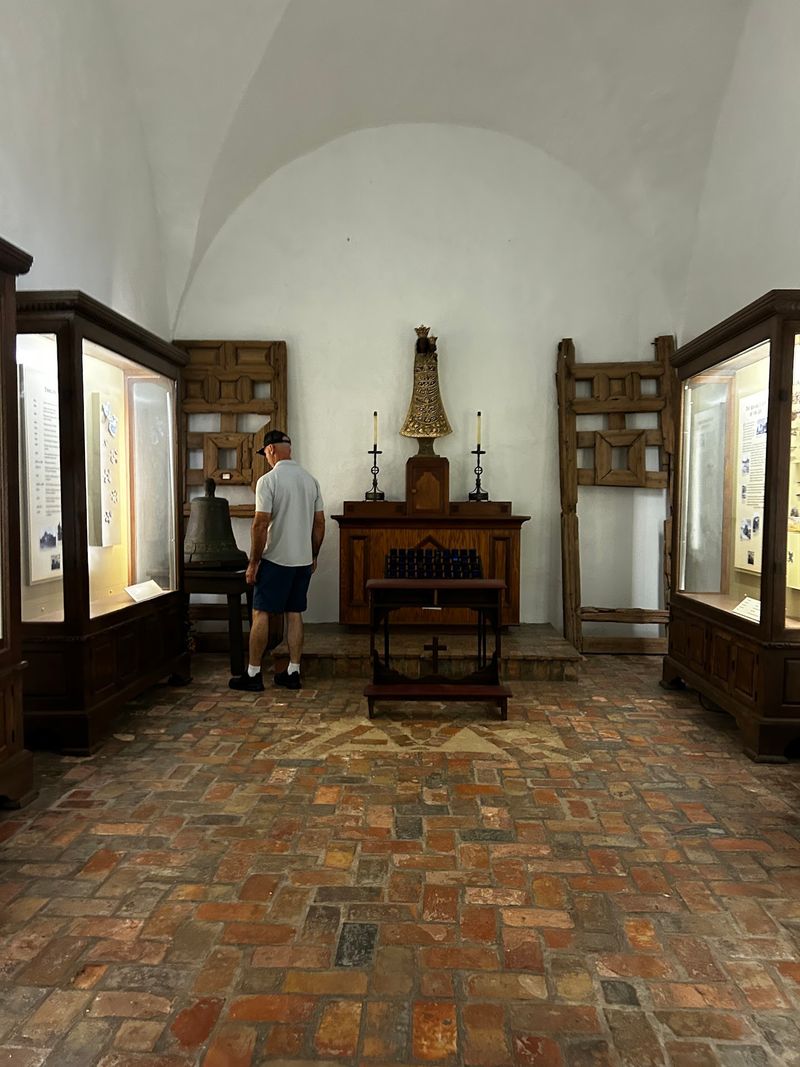
Small town, big collection. The museum inside the Presidio houses a ton of significant artifacts, and it tends to surprise people who expected a room or two.
Exhibits walk through the fort’s long timeline. Period pieces help connect the Spanish colonial years to the revolutionary era that followed.
Information panels are thorough, so it pays to slow down and read. The site goes very deep into historical detail, which history lovers will appreciate.
Nobody needs a degree to enjoy it, though. The displays are clear enough for casual travelers and kids to follow along.
Many people say the museum alone justified the trip. It is the kind of place where a planned half hour quietly becomes an hour or more.
Plan on several hours for the whole compound if you like to read every label. Speed walkers can move faster, but they will miss some good stories.
Our Lady of Loreto Chapel
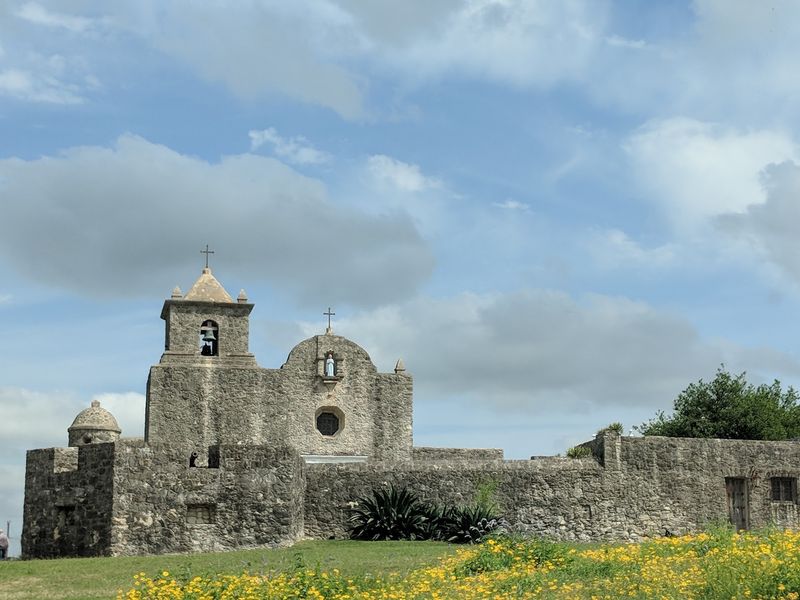
Ask people about their favorite part of the Presidio, and the chapel comes up again and again. Many call it one of the prettiest chapels they have ever seen.
The chapel sits within the fort grounds, and its bell tower helps define the site’s skyline. It has been part of the compound since its Spanish colonial days.
Inside, the space feels calm and respectful. It offers a quiet pause between the museum rooms and the open courtyard.
Photographers tend to linger here. The architecture is a highlight of the reconstruction and shows the care that went into restoring the site.
The chapel also reminds guests that the fort was more than a military post. Faith and daily life mixed with soldiering inside these walls.
Take a moment on the way out. It is easy to rush, but this is one corner where slowing down pays off.
Courtyard Views and Wall-Top Walks
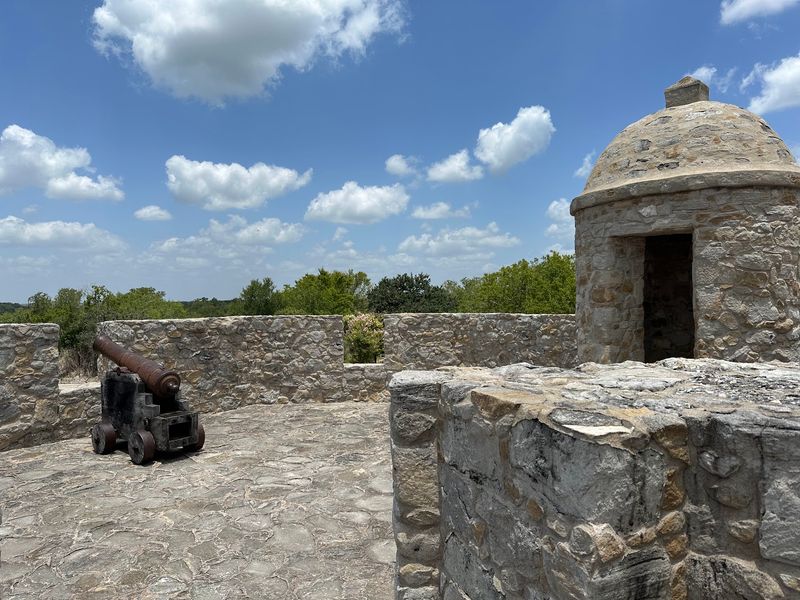
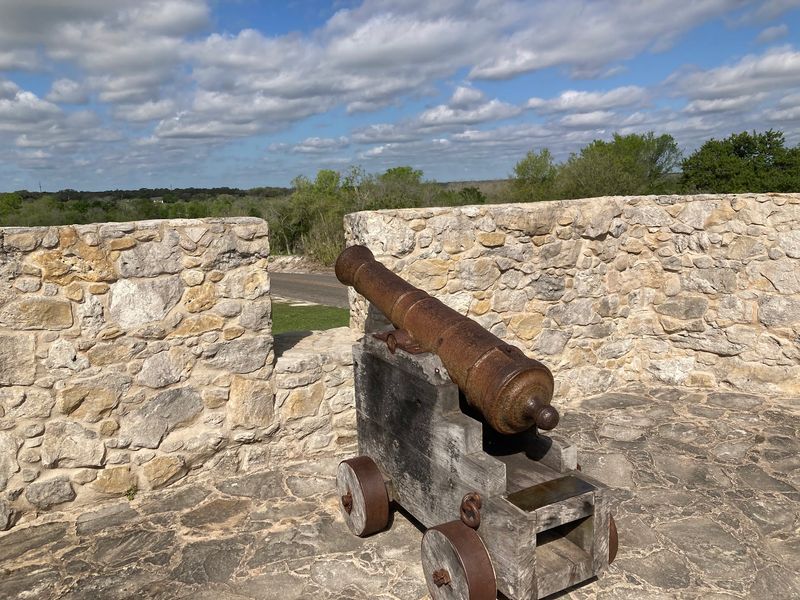
Open space is a big part of the Presidio’s appeal. The fort’s courtyard stretches out inside the walls, giving the compound a true frontier fort layout.
Guests can walk the grounds and even stand up on the walls. On a clear day, that wall-top view helps make sense of how soldiers once watched over the area.
The grounds are well maintained, which shows how much the site honors its place in Texas history. Some people even like it more than the neighboring state park.
Bring a sack lunch and a couple of chairs on event days. Relaxing on the grounds is part of the fun during bigger gatherings.
The site is also wheelchair accessible, which opens it up to more families. That counts for a lot at a centuries-old fort.
Up on those walls, history feels a little less like a textbook. It becomes a place you can actually stand inside.
Guides Who Love Their Jobs
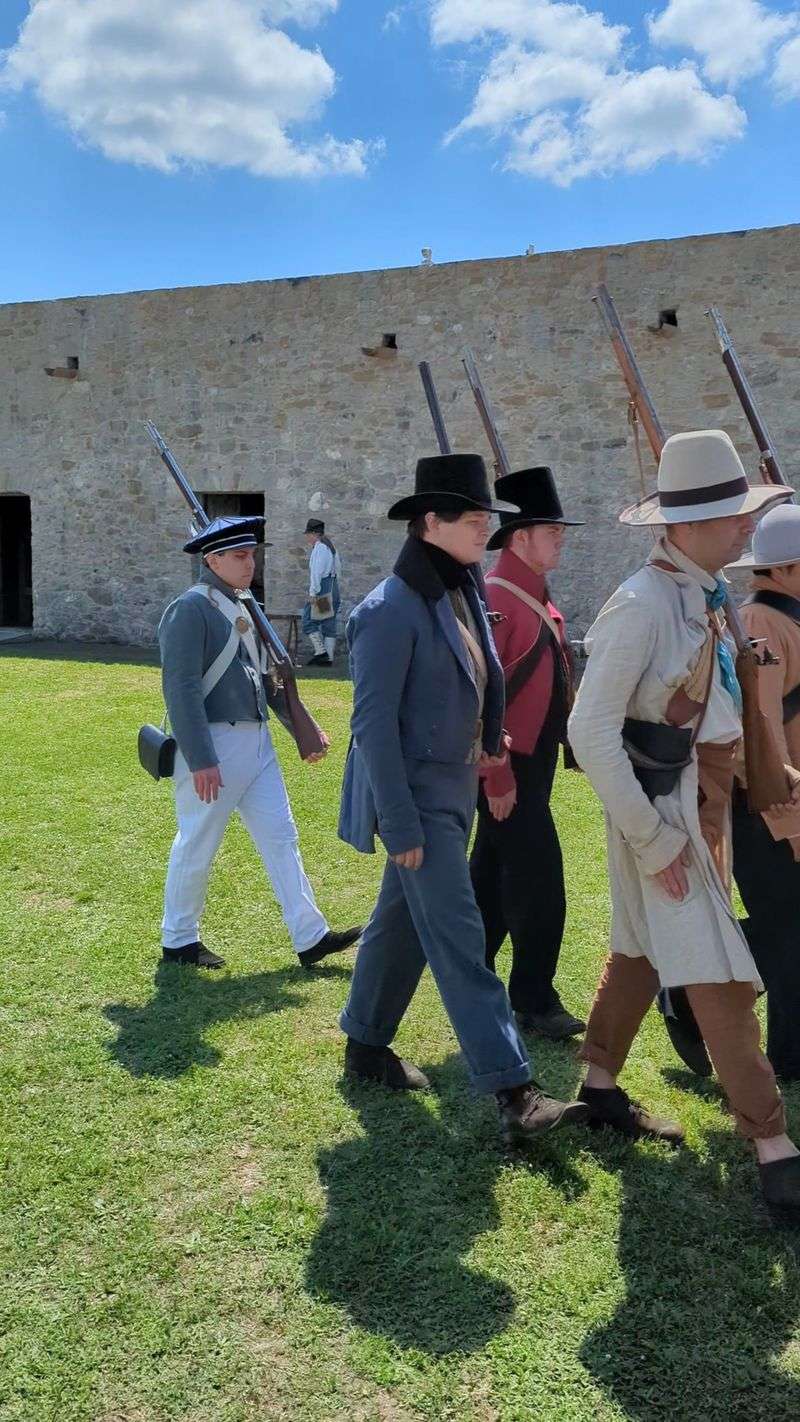
A fort is only as lively as the people telling its story. At the Presidio, the staff earn constant praise for being friendly and seriously knowledgeable.
Tour guides can pack a surprising amount of early Texas history into a single hour. People leave saying they learned more than they thought possible in that time.
The welcome starts at the front counter. Staff there are known for making first-time guests feel at home right away.
Guides also handle big groups with ease. Even two busloads of teenagers arriving at once do not rattle them.
Their enthusiasm stands out. These are people who clearly enjoy sharing what they know, and that energy rubs off.
Questions are welcome, so bring a few. The answers often turn into stories you will repeat on the drive home.
Reenactment Weekend Brings the Past Back
Once a year, the fort fills with people dressed like it is 1836 again. The annual reenactment, held in March, is one of the biggest draws on the calendar.
Period correct tents go up inside the grounds. Reenactors in costume share scenes of camp life and are eager to chat with guests.
Saturday night has featured candlelight tours and history lessons. Sunday has included a reenactment of the prisoners’ and Colonel Fannin’s final moments, followed by a memorial service at the monument.
The 190th anniversary of the Goliad Massacre drew crowds to this event. It shows how strongly people still connect with the story.
Parking is free, and bringing chairs and a packed lunch makes the day more comfortable. Plenty of folks make a full outing of it.
For history fans, this weekend is the headline act. Check the site’s calendar before planning, since dates matter here.
A Night Inside the Fort
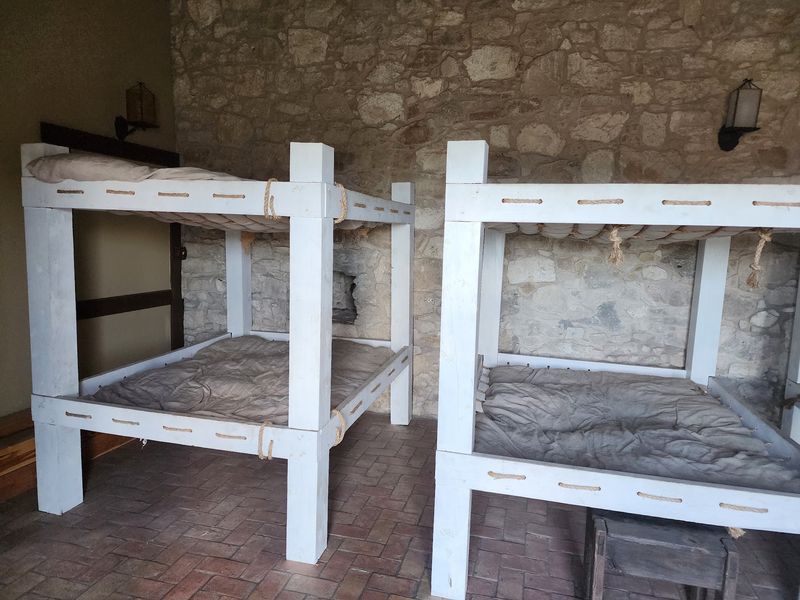
Most historic sites shoo everyone out at closing time. The Presidio offers something different, a chance to stay overnight in the Quarters.
Overnight guests can have the whole compound to themselves after hours. That is a rare perk for anyone who loves history.
Do not expect a modern hotel setup. There is no TV, no WiFi, and no phone, which is exactly the point for many guests.
It is a true unplugged getaway. Without screens, the evening becomes about the fort, the quiet, and good conversation.
Book ahead through the site if this sounds appealing. Details and availability are best confirmed directly with the staff.
Few people can say they slept inside a Spanish colonial fort. This is one bragging right that does not cost much at all.
Hours, Fees, and the Handy Passport
Planning a stop is refreshingly simple. The Presidio is open every day of the week from 10 am to 5 pm.
Admission is about five dollars per person, a price that many call dirt cheap. Anyone who bought admission to Goliad State Park on the same day can get a discount here.
Guests also receive a nifty passport. It can be stamped at various other historic sites, which turns a road trip into a collecting game.
The on-site lot is small, but street parking is available nearby. Arriving early helps on busy days.
A gift shop offers souvenirs at many price points. It is easy to find something for every member of the family.
Kids enjoy the visit too, and a scavenger hunt can keep younger explorers busy. For school groups within a few hundred miles, it makes an excellent field trip.
Worth Hitting the Brakes For
So, should the Presidio earn a spot on your next Texas road trip? With a 4.8 star average from more than 1,400 opinions, the answer seems pretty clear.
The fort blends deep history, a striking chapel, a full museum, and friendly guides into one affordable stop. It also sits right next to Goliad State Park and close to the Fannin monument.
Families, students, and history lovers all find something to enjoy. Even people with zero Goliad knowledge leave with a new favorite chapter of Texas history.
Some guests stay an hour, while others linger all afternoon or stay the night. There is no wrong way to do it.
The biggest mistake is simply driving past. Plenty of people have done exactly that for years.
Next time US-183 rolls through Goliad, slow down and pull over. The walls have been waiting a long time to tell their story.


