
Affiliate disclosure: As an Amazon Associate I earn from qualifying purchases. Learn more
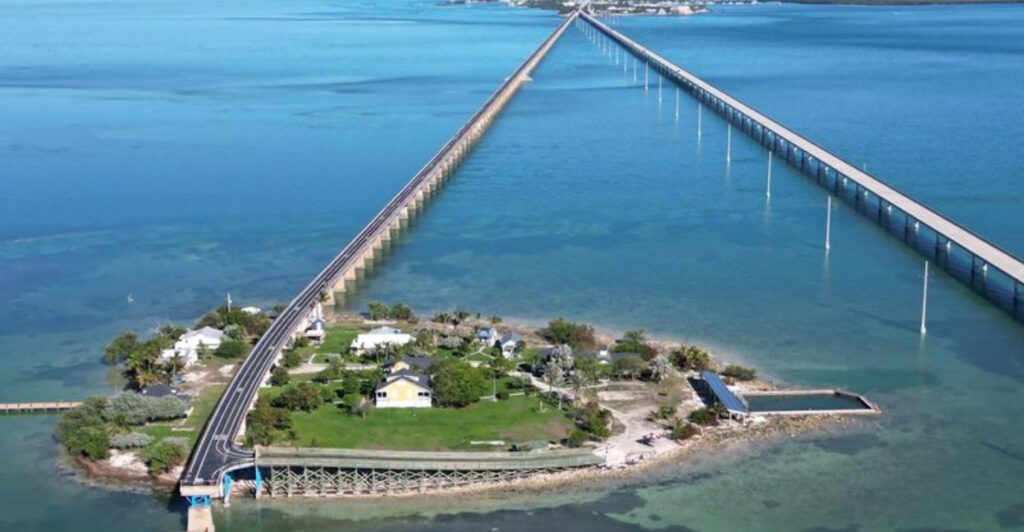
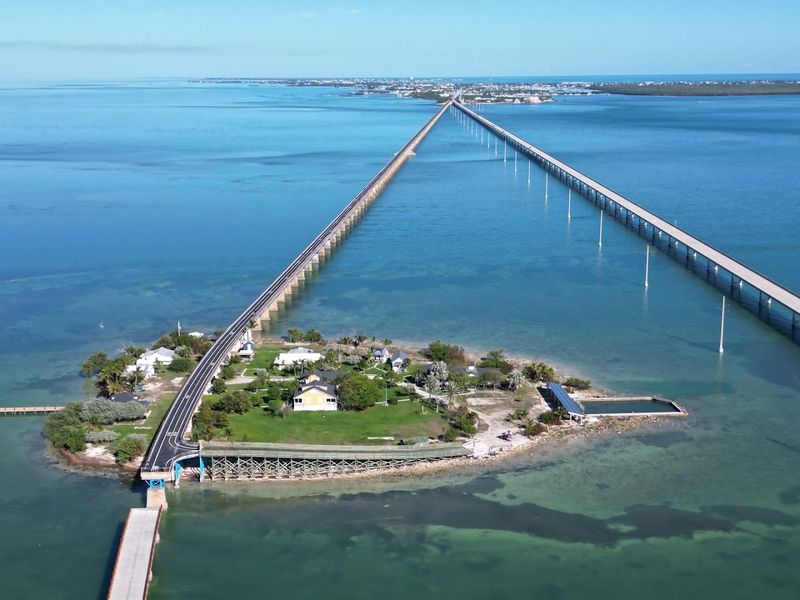
Tucked beneath the famous Seven Mile Bridge in the Florida Keys lies a tiny island that most people drive right past without a second glance. Pigeon Key is a 5-acre historic island packed with old buildings, fascinating stories, and crystal-clear waters that feel worlds away from the mainland.
Once home to over 400 railroad workers, this little gem has quietly held onto its past while welcoming curious visitors who stumble upon its secrets. If you love history, adventure, and hidden places, Pigeon Key is exactly the kind of spot that will leave you speechless.
The Fascinating History of Pigeon Key
Back in the early 1900s, Pigeon Key was buzzing with activity in a way that seems almost unbelievable today. Over 400 workers lived on this tiny 5-acre island while constructing Henry Flagler’s Overseas Railway, the bold project that connected Miami to Key West by rail.
Imagine hundreds of men crammed onto an island barely bigger than a few city blocks, battling mosquitoes, brutal heat, and powerful hurricanes just to lay tracks across the open ocean. The sheer willpower it took is staggering.
After the railroad era ended, the island quietly faded from public memory, earning its ghost town reputation. Today, the Pigeon Key Foundation preserves those stories so nobody forgets the workers who made one of Florida’s greatest engineering feats possible.
Visiting feels like stepping into a time capsule that most Floridians never even knew existed.
Henry Flagler’s Overseas Railway Connection

Henry Flagler was the kind of man who looked at the ocean and saw a road. His Overseas Railway, completed in 1912, was nicknamed the Eighth Wonder of the World, and Pigeon Key sat right at its heart as a base camp for workers tackling the legendary Seven Mile Bridge section.
Flagler poured enormous resources into this project, determined to connect Key West to the American mainland by rail. The workers on Pigeon Key were the backbone of that dream, living in crowded wooden quarters while enduring conditions that would make most people quit on day one.
When a devastating hurricane destroyed much of the railway in 1935, the dream ended abruptly. The tracks were eventually replaced by the Overseas Highway we drive today.
Pigeon Key stands as a quiet memorial to Flagler’s audacious vision and the forgotten laborers who made it real.
Eight Historic Buildings Still Standing on the Island

Walking onto Pigeon Key feels like time stopped somewhere around 1910. Eight original historic buildings still stand on the island, each one telling a different chapter of life during the railroad construction era.
Some served as worker housing, others as offices or storage facilities.
One of the most charming buildings has been converted into a small but surprisingly rich museum. Inside, you will find artifacts, photographs, dioramas, and detailed exhibits that paint a vivid picture of what daily life looked like for the men who built the bridge.
Many buildings remain closed to casual visitors because a local university actually uses them as student living quarters for marine science programs, which adds a cool layer of living history to the place. Keep your eyes peeled for architectural details that hint at the island’s rugged past.
Every weathered plank has a story worth knowing.
Getting to the Island: Walk, Bike, or Take the Tram

Reaching Pigeon Key is half the adventure. You cannot simply drive up and park at the island’s doorstep.
Instead, visitors make the journey across the old Seven Mile Bridge on foot, by bicycle, or aboard a tram that shuttles guests across the historic span.
Most visitors agree that biking is the best option. The 2-mile ride across the bridge offers jaw-dropping views of the turquoise water stretching endlessly in every direction.
Walking is also a solid choice if you enjoy a slower pace and want to soak everything in.
One important tip from experienced visitors: the tram does not pick up at the main parking lot right at the bridge entrance. You need to head about a quarter mile down the road to the correct lot.
Also, tram tickets sell out fast, so booking online in advance is strongly recommended to avoid disappointment on arrival.
The $15 Entry Fee and What You Get for It

Some visitors arrive expecting a free beach stroll and leave pleasantly surprised by how much the $15 entry fee actually covers. For that price, you get access to the entire island, including the museum, guided tours, the small swimming area, and the chance to watch a shark feeding.
A few reviewers mentioned feeling caught off guard by the fee structure, especially since restrooms on the island also come with a charge if you have not paid admission. Going prepared makes a huge difference in how much you enjoy the experience.
Most people who pay the fee walk away saying it was absolutely worth it. The guided tours alone deliver enough fascinating history to justify the cost several times over.
Think of it less as a beach entry fee and more as a ticket to one of Florida’s most underrated living history experiences, complete with ocean views that money genuinely cannot improve.
The Guided Tours That Bring History to Life

Ask almost any visitor what made their Pigeon Key trip unforgettable, and the answer almost always comes back to the tour guides. Names like C.T. and Eric pop up repeatedly in reviews, with guests describing them as passionate, deeply knowledgeable, and genuinely enthusiastic about the island’s story.
Tours typically last about an hour to an hour and fifteen minutes and cover everything from the railroad construction era to the devastating 1935 hurricane and the island’s modern-day role as a marine research site. The guides have a talent for making century-old history feel immediate and personal.
One reviewer described their guide’s passion as contagious, saying it completely changed how they felt about the Florida Keys as a whole. If you visit, do not rush the tour to get to the water.
The stories you hear on that guided walk will stick with you long after the tan fades.
Snorkeling and Swimming in Crystal-Clear Waters

Once the history tour wraps up, the island transforms into a totally different kind of playground. The waters surrounding Pigeon Key are strikingly clear, with visibility good enough to spot fish from the dock without even getting wet.
Snorkelers consistently rave about what they find just beneath the surface.
Packing your own snorkel gear is highly recommended since rentals are not guaranteed. Water shoes are also a smart call because the ocean floor around the island tends to be rocky in spots.
Bring a beach towel too, because once you see that water, skipping a swim feels nearly impossible.
Visitors who arrive on early tours have the luxury of spending the whole afternoon in the ocean before catching the last tram back. If you come on a later tour, swimming time gets a bit squeezed, so planning your schedule around an early arrival is the move for maximum water time.
The Shark Feeding Experience

Not many historic island museums also offer shark feeding, but Pigeon Key plays by its own rules. The island features a small enclosed pool area where visitors can watch sharks and tropical fish up close, and at 3:30 p.m. daily, a shark feeding session draws a crowd that tends to press in close with cameras ready.
Two small hammerhead sharks have been spotted by multiple visitors, swimming lazily in the pool alongside an impressive variety of colorful fish. It is the kind of unexpected wildlife encounter that makes you do a double take when you first spot it.
Families with kids absolutely love this part of the visit. Seeing sharks from just a few feet away, safely behind the pool barrier, turns an already interesting history trip into something that feels almost like a bonus zoo experience.
Arriving on an earlier tour gives you extra time to enjoy the feeding without rushing back to catch the tram.
Packing Smart: What to Bring to Pigeon Key

Preparation makes or breaks a Pigeon Key visit. The island has very limited food and drink options, with only a water fountain available in most parts of the grounds.
Packing your own lunch and snacks is not just a suggestion here; it is practically a survival strategy for a full day trip.
Water is equally critical. Florida heat combined with a 2-mile bridge crossing can drain your energy faster than expected, especially in summer months.
A reusable water bottle that you can refill at the fountain will serve you well throughout the day.
Beyond food and water, toss in sunscreen, snorkel gear, water shoes, a beach towel, and a good camera. The views from the old bridge alone deserve documentation.
Reviewers who came fully prepared consistently described their visit as one of the highlights of their entire Florida Keys trip, while those who arrived unprepared spent more energy managing logistics than enjoying the island.
Views from the Old Seven Mile Bridge

Even if you never set foot on Pigeon Key itself, the walk or bike ride across the old Seven Mile Bridge is worth the trip on its own. The bridge stretches over open ocean in both directions, offering 360-degree views of water so brilliantly blue and green that photographs barely do it justice.
The original bridge, built during the railroad era, now serves as a pedestrian and cycling path alongside the newer vehicle bridge. Standing on it feels like being suspended between two worlds, with nothing but sky and sea surrounding you in every direction.
Sunrise and early morning visits reward those who show up before the crowds. The light hits the water differently in the morning hours, turning the surface into something that looks almost painted.
Multiple reviewers described the bridge walk as a spiritual experience of sorts, one of those rare moments where Florida’s natural beauty completely overwhelms the senses.
Marine Science Students Living on the Island Today

Here is a detail that surprises almost every visitor: Pigeon Key is not just a museum frozen in time. University students actually live on the island as part of a marine science research program, giving the place a quietly vibrant energy that mixes past and present in an unusual way.
Several of the historic buildings are closed to the general public because they serve as student living quarters and research facilities. This means the island is genuinely occupied, with real academic work happening just a few doors away from the history museum.
For visitors, this adds an extra layer of intrigue to the tour. Your guide might point out which buildings are active student residences versus which ones are open for exploration.
It makes Pigeon Key feel less like a preserved relic and more like a living community, one where history and modern science share the same 5-acre footprint in the middle of the Florida Keys.
Wildlife and Nature Surrounding the Island

Nature enthusiasts will find plenty to love beyond the history lessons at Pigeon Key. The island sits within a rich marine ecosystem, and the wildlife both above and below the waterline tends to steal the show for visitors who take time to look around carefully.
Ospreys have been spotted nesting on the island, and patient birdwatchers often catch them swooping dramatically over the water in search of fish. Tarpon and nurse sharks regularly visit the dock area, a fact that guides love to point out while guests are waiting to begin their tours.
The botanical variety on the island also impresses visitors who arrive expecting a barren sandbar. Tropical plants, shaded seating areas, and lush greenery make the grounds feel surprisingly comfortable for a place so exposed to the open ocean.
Bring a pair of binoculars if birdwatching is your thing, because the skies around Pigeon Key are rarely empty.
Tips for Making the Most of Your Visit

A little planning goes a long way at Pigeon Key. Tickets, especially tram passes, sell out quickly, so booking online before your trip is genuinely important.
Showing up without a reservation on a busy weekend can mean missing out entirely on the tram and facing a long walk in the Florida heat.
Arriving early is the single best advice experienced visitors offer. Early tours give you maximum time to explore the museum, do the guided walk, snorkel, watch the shark feeding, and still have energy left to enjoy the bridge crossing on the way back.
Budget-wise, come with cash or card for the $15 entry fee and any extras. The commissary on the island sells refreshments, but options are limited.
Tipping your tour guide is also strongly encouraged by past visitors who say the guides pour real heart into every tour they give. A generous tip honors the passion they bring to keeping Pigeon Key’s story alive.