
Affiliate disclosure: As an Amazon Associate I earn from qualifying purchases. Learn more
North of Flagstaff, Highway 89 carries a steady stream of cars toward the Grand Canyon and Page. Most of them never slow down.
Just off that road, red stone walls built roughly 800 years ago still rise from the desert, with doorways and windows you can look through today. Plenty of longtime Arizonans have driven past the turnoff for years without knowing what sits out there.
The site holds multi-story pueblos, an ancient ball court, a strange natural blowhole, and wide views stretching to the Painted Desert. It also costs very little time to reach from town.
Keep reading to learn the story behind these ruins, which stops matter most, and the practical tips that make a visit go smoothly.
A Monument Hiding North of Flagstaff
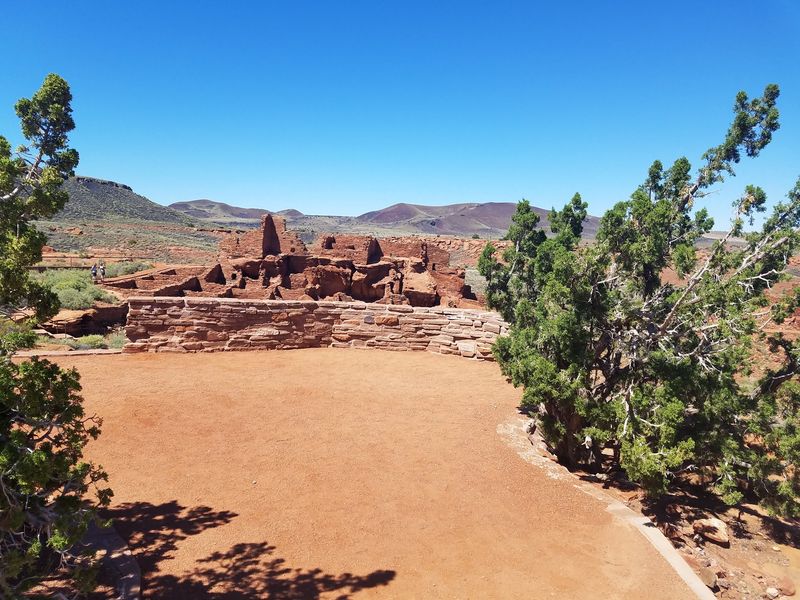
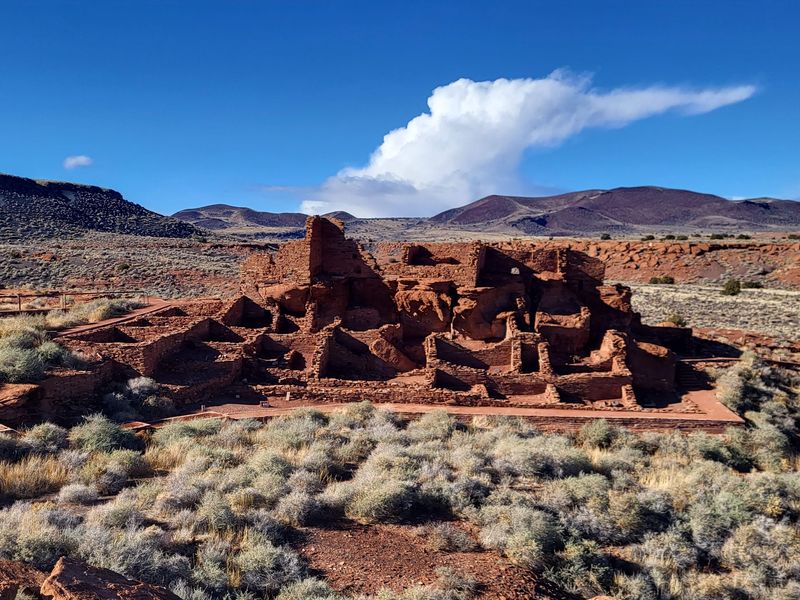
Turnoffs along Highway 89 are easy to ignore, and that is exactly how this place stays quiet. Wupatki National Monument sits in northern Arizona, United States, in the high desert north of Flagstaff.
The park is a protected national reserve. It preserves the remains of five prehistoric pueblos, linked by a scenic road and short self-guided trails.
The named sites include Wupatki, Wukoki, Lomaki, Box Canyon, and the Citadel. A visitor center sits near the heart of the park, with the largest pueblo right behind it.
Getting there takes a little commitment. The visitor center is at least a half hour from the main highway, on a well-maintained road that winds through open country.
That distance is part of the charm. It filters out the rushed crowd and leaves the ruins feeling calm and uncrowded on many days.
The monument holds a 4.8-star standing across more than 1,900 opinions, which says a lot for a spot so many locals have never visited. Not bad for a place most drivers treat as a blur outside the window.
Communities That Thrived in a Hard Land
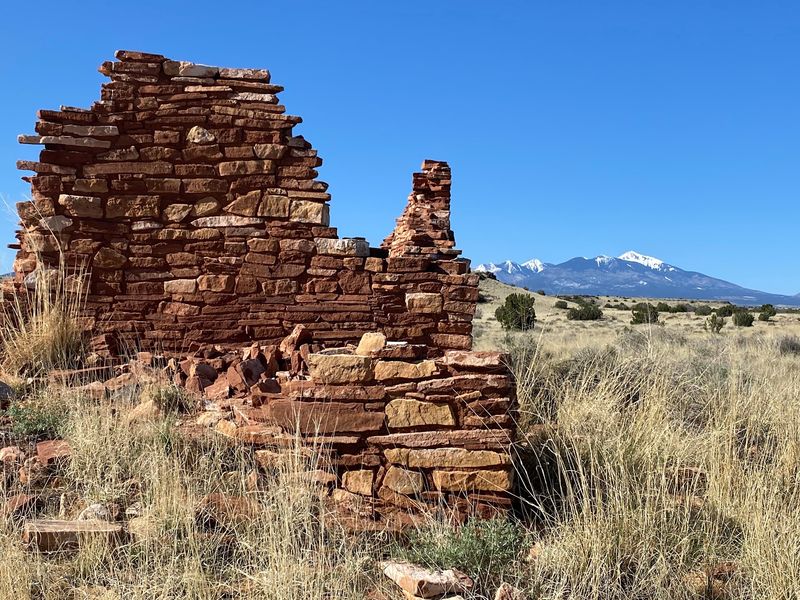
Today the land around these walls looks dry and unforgiving. Around 800 to 1,000 years ago, though, people built thriving communities here.
The Flagstaff area and the slopes below the San Francisco Peaks were busy with life during that era. Families farmed, traded, and gathered in these stone homes.
The pueblos show remarkable skill. Builders stacked local red stone into rooms and multi-story structures that still stand centuries later.
What surprises many people is how well these communities adapted. Interpretive signs explain how they found ways to grow food and live well in a place that seems uninviting at first glance.
Standing in one of the old rooms and looking out through an original doorway puts that history in perspective. The same openings framed the same horizon for the people who lived here.
The signs strike a nice balance. They give enough history to understand the scene without burying anyone in detail.
Taking time with each panel pays off. The ruins become homes, and the homes become a story about ingenuity and resilience.
Red Rock With a Watery Past
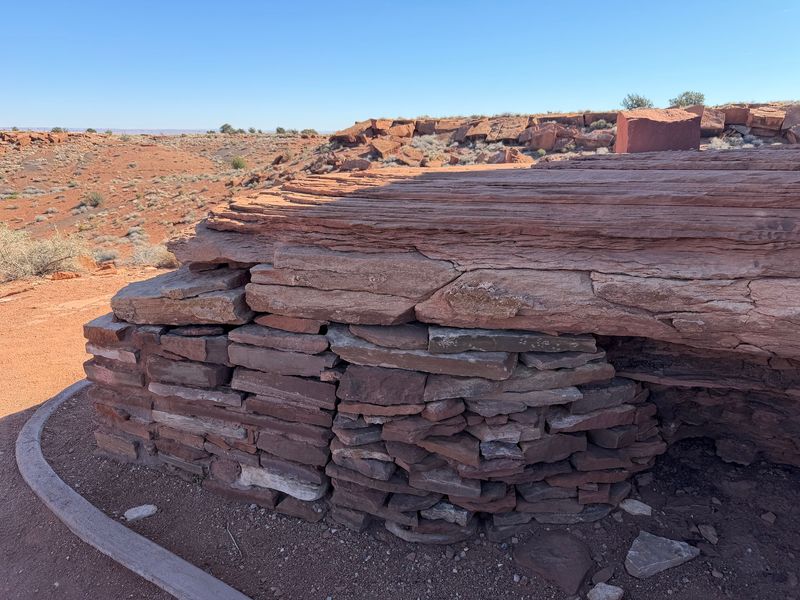
Geology fans get a bonus lesson at this park. The red sandstone that forms the pueblos has a backstory far older than the walls themselves.
Exposed rock layers here tell of a much wetter ancient environment. The stone formed millions of years ago from freshwater rivers, tidal flats, and other near-shore settings.
That is quite a plot twist for a landscape that looks so dry today. The same rock that once sat near water later became building material for desert communities.
Volcanic features add another chapter. Nearby Sunset Crater and the surrounding cinder hills show how fire also shaped this part of Arizona.
Between the sandstone and the volcanic ground, the park offers two kinds of history at once. Natural history and human history sit side by side on every trail.
Curious minds will want to read the panels about rock layers along the way. They turn a pile of red stone into a timeline worth pondering on the drive home.
The Big Pueblo Behind the Visitor Center
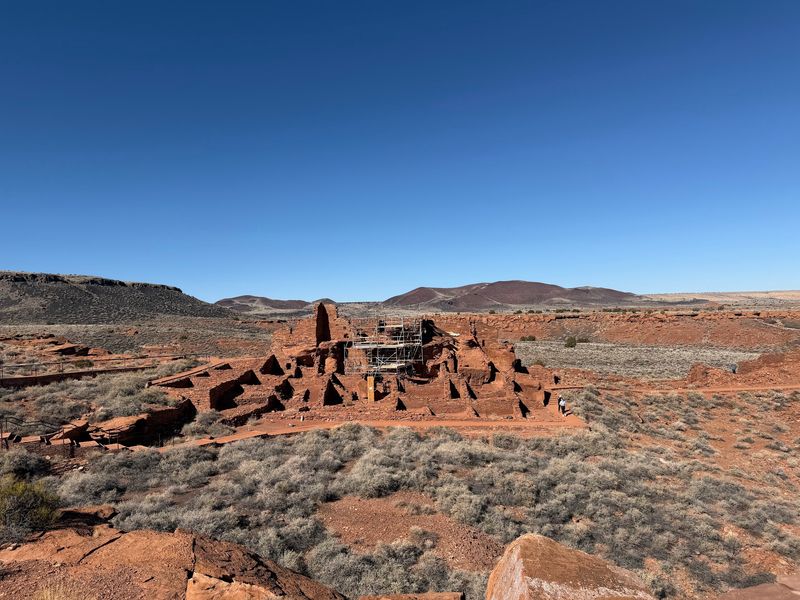
Start with the headliner. The largest ruin in the monument sits right behind the visitor center, and it sets the tone for the whole trip.
Wupatki Pueblo is the site that gives the park its name. A short, well-marked walking trail leads down among its rooms and walls.
The path is accessible for most people. Signs point the way, and the walkways are well maintained.
Volunteers sometimes stand near the top of the trail, ready to answer questions. They add helpful context for anyone curious about how the rooms were used.
Here is one quirk worth knowing. The layout lets some people walk straight to this pueblo without passing through the building, so make a point of heading inside first to pay the entrance fee and see the exhibits.
Nearby, staff have planted corn and cotton the way the original farmers did. It is a small living exhibit that connects the ruins to daily life.
Plan to linger. This is the stop where most of the park’s story comes together.
Ball Court and Amphitheater
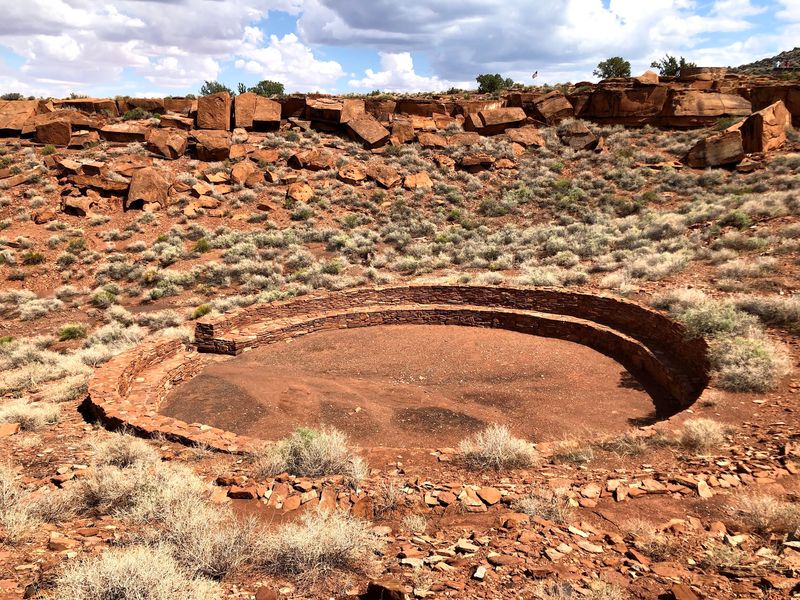
Sports fans, there is something here for you too. Near the main pueblo sit two gathering areas that often steal the show.
The ball court is one of the most talked-about features in the park. Its oval stone walls hint that people here played organized games long before any modern stadium existed.
Close by is a circular space often called the amphitheater. It suggests a place where the community came together.
Both spaces stand out because they show life beyond simple survival. People had time and reason to gather, compete, and connect.
Many people describe these two areas as among the most interesting parts of the visit. They add a social layer to rooms that otherwise focus on homes and storage.
Spend a moment at each and read the nearby signs. Turns out the desert has been hosting home games for centuries.
A Blowhole That Breathes
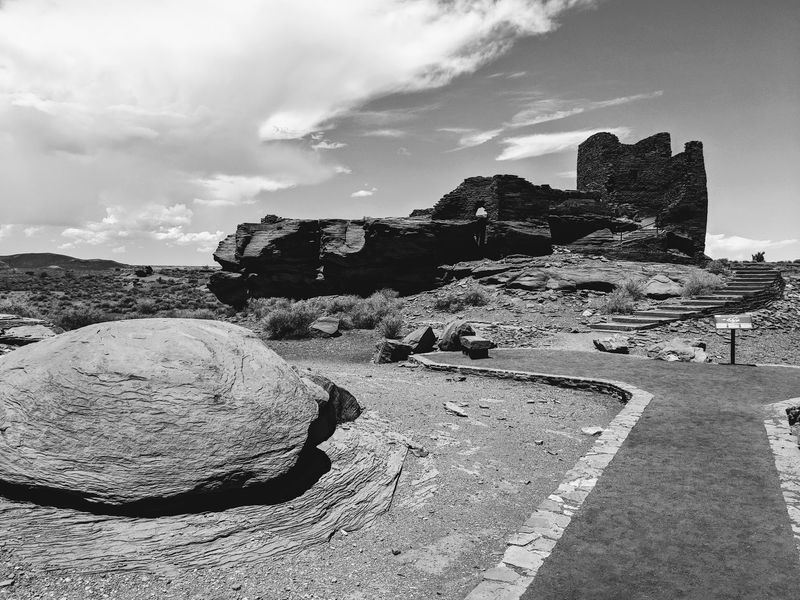
Few people arrive expecting the ground to put on a show. Then they find the blowhole.
This natural feature sits near the main pueblo trail. It is a crack in the earth connected to underground passages, and air moves in and out of it depending on conditions.
On some days air pushes out of the opening. On others it pulls inward.
The blowhole has become a favorite with many guests, and some call it the coolest natural feature they have seen in a while. Given the moving air, that may be a fitting choice of words.
It earns plenty of chatter for a small spot. Mentions of it come up again and again among people who have explored the park.
Kids especially tend to love this stop. It turns a geology lesson into something hands-on and memorable.
Do not walk past it on the way back to the car. Skipping it would be a missed breath of fresh air.
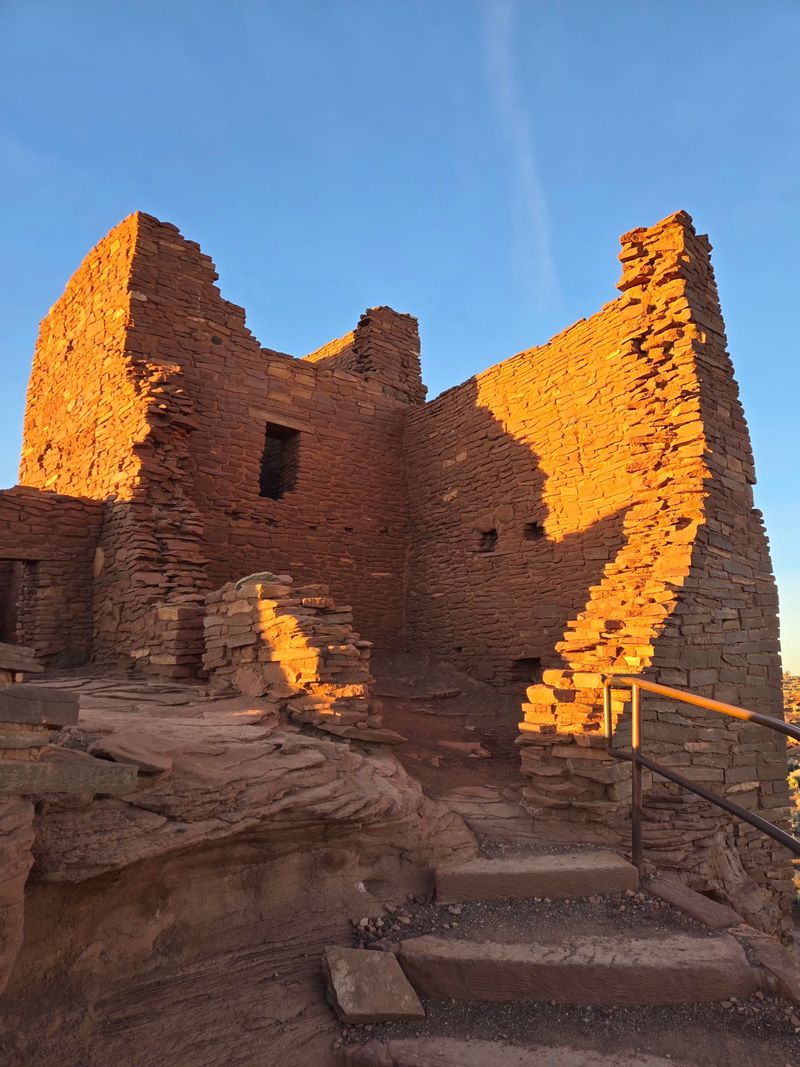
Wukoki, the Tower on the Rock
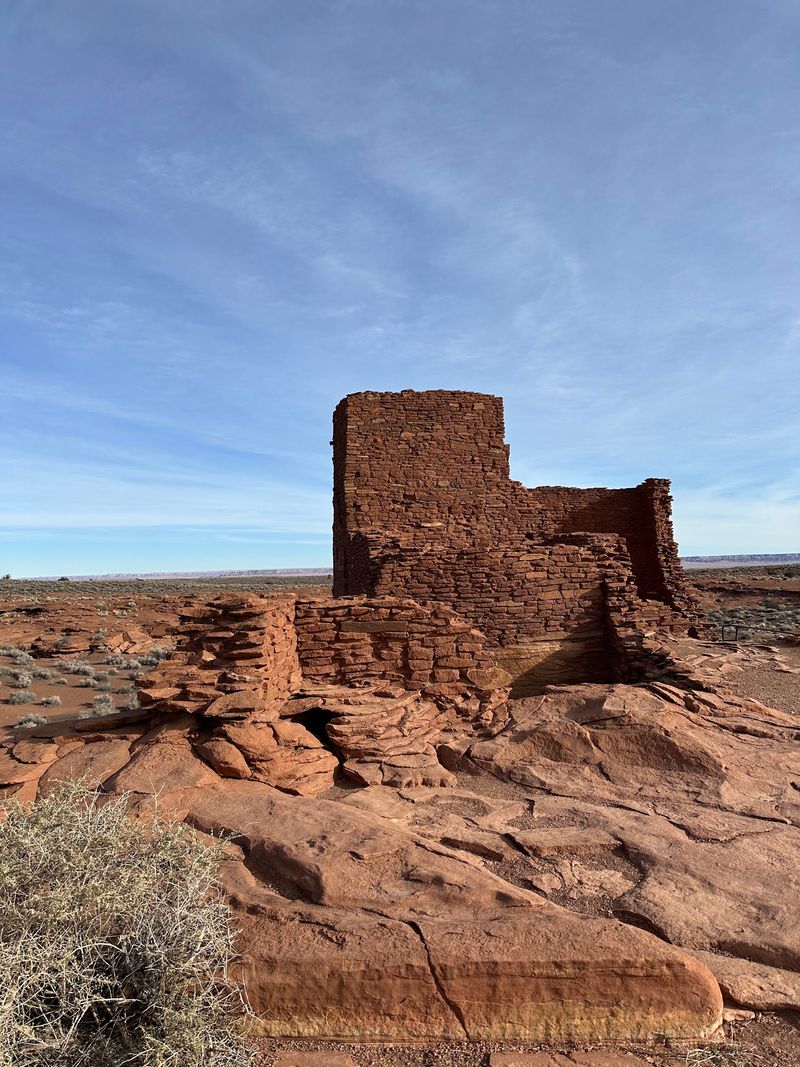
Some ruins hide in the landscape. Wukoki does the opposite.
This pueblo rises from a sandstone outcrop and stands out against the open plain. It is one of the most recognized stops in the monument.
A short drive and walk bring you close to its walls. The trail is easy, and the views around it reach far across the desert.
Wukoki pairs nicely with the main pueblo. Seeing both shows how different sites used the land in their own ways.
Photographers will appreciate its outline against the sky. The structure looks especially striking in the later part of the day.
Like every site here, it rewards patience. Walk the loop slowly, read the panel, and give the tower a few extra minutes of your attention.
Lomaki, Box Canyon, and the Citadel
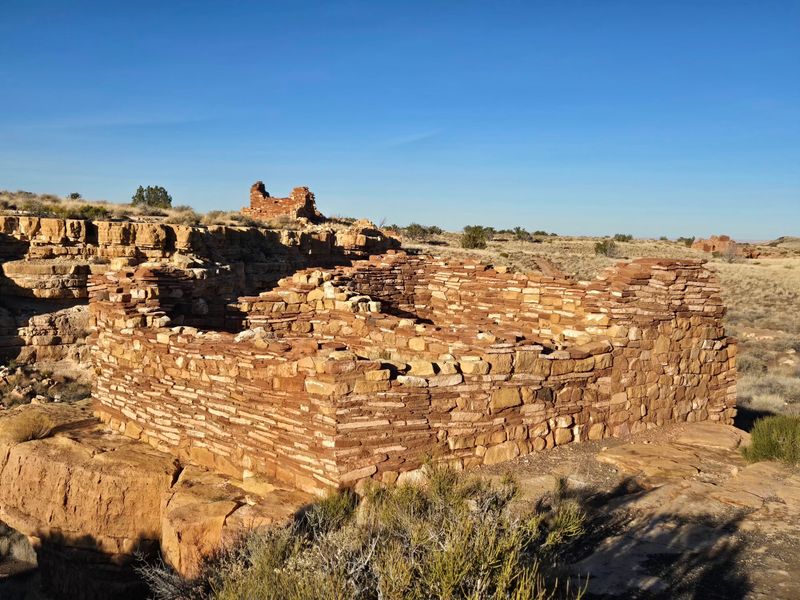
The main road keeps delivering. Beyond the headliners, the park holds Lomaki, Box Canyon, and the Citadel.
These stops sit along the drive, each with its own parking and short trail. Restrooms are available at several of them.
The Citadel perches on a hilltop and offers wide views. Lomaki and Box Canyon sit near small canyon edges, giving each a slightly different character.
Hopping between them is part of the fun. Every site adds a new piece to the picture of how people lived across this landscape.
The walks are short and manageable for most ages. Grandparents and grandkids can explore together without much strain.
Since the stops are spread out, budget time for the whole route. Rushing would mean missing the quieter pueblos that many people end up loving most.
Views From Peaks to Painted Desert
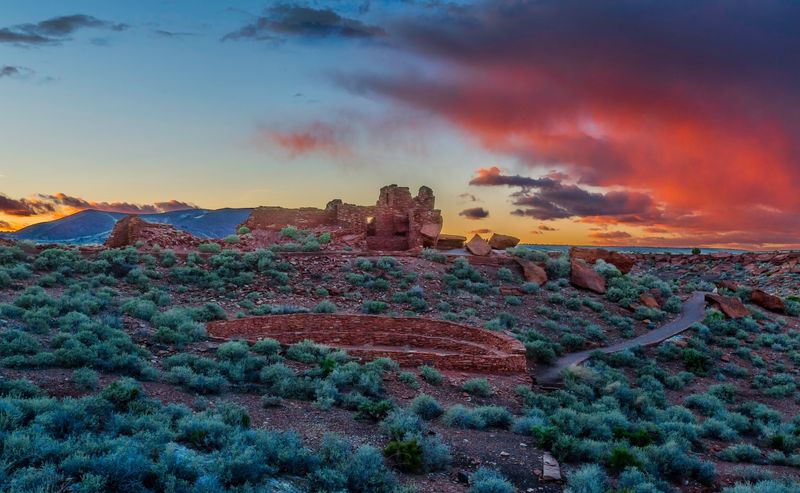
Scenery here works on a giant scale. On a clear day the view stretches from the San Francisco Peaks to the Painted Desert.
The red ruins sit against a backdrop of open plateau, cinder hills, and distant mesas. Many people call the views across the plateau stellar.
Sunrise and sunset draw special praise. Reaching a good viewpoint takes only a small, easy hike.
Arriving before sunset can pay off with dramatic light on the standing walls. Just remember that darkness falls quickly once the sun drops.
The drive itself adds variety. Traveling from Flagstaff, the landscape shifts through several climates and types of terrain.
A sense of solitude adds to the experience. Some people report having nearly the whole park to themselves.
Bring a camera and some patience. The horizon here has plenty to say.
Rangers, Exhibits, and a Small Gift Shop
Helpful rangers get mentioned a lot here, and for good reason. Staff are described as funny, fun, and informative.
The visitor center holds plaques and an interactive exhibit about the area’s history and the people who called it home. Its coverage of Indigenous history stands out compared with other spots in northern Arizona.
Inside you will find clean restrooms and a small gift shop. Water is sold there, which is handy in this dry setting.
Picnic tables and trash cans sit outside near the parking lot. It is an easy place to take a break before heading to the next pueblo.
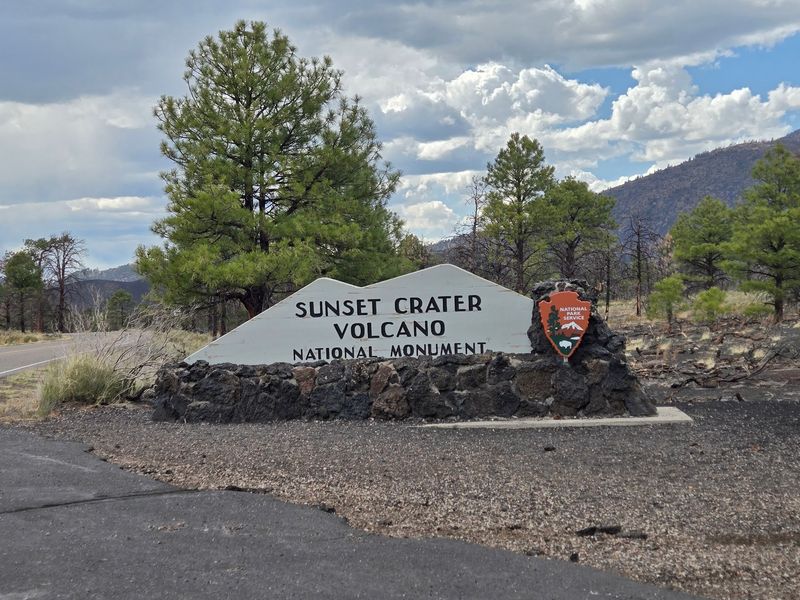
National park passport fans can collect a cancellation stamp. If the center is closed, the stamp may be available at Sunset Crater instead.
One small note: the water bottle refill station has not always been working. Packing your own supply is a smart backup plan.
Smart Planning for the Loop Drive
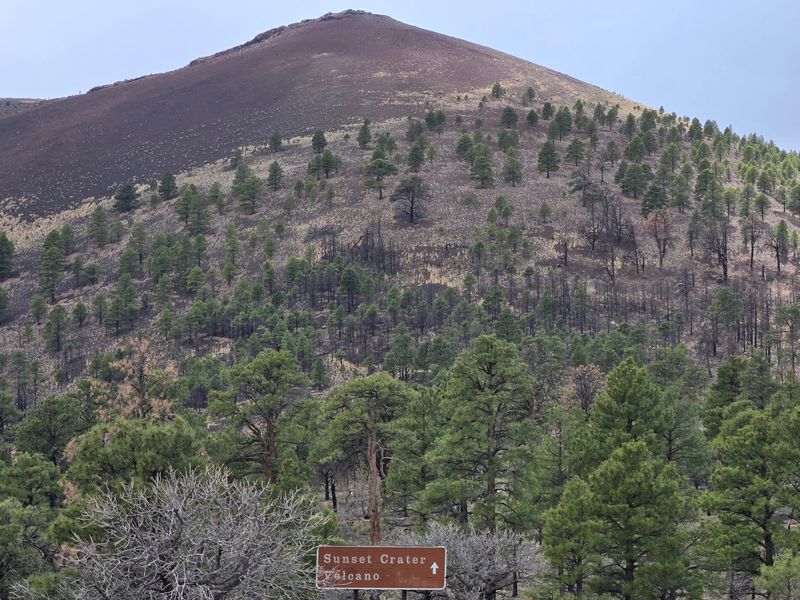
Route choice makes a real difference. The park connects with Sunset Crater Volcano National Monument by a scenic loop road off Highway 89.
From the Sunset Crater entrance, the ruins are about 30 miles along a well-maintained road. Many people visit both monuments in one trip.
One popular plan is to enter from the northern entrance off 89, explore the pueblos, then loop south past Sunset Crater on the way out. The scenery along that stretch earns plenty of praise.
The park also works well as a stop between Flagstaff and the Grand Canyon, or on a drive between Page and Phoenix. Plenty of people discover it by accident and are glad they did.
Entrance is free with the America the Beautiful Pass. For current hours and fees, check the official National Park Service website before you go.
Cell service can be spotty. Downloading the offline map in the free NPS App helps with trails and viewpoints.
Why the Detour Earns Its Miles
Shade is scarce out here, so bring plenty of water. Stay on marked trails too, both to protect the archaeological sites and because signs warn about snakes.
Services are limited beyond the visitor center. Plan fuel and supplies before you leave town.
With those basics covered, the payoff is big. The ruins are well preserved, the paths are easy, and the crowds stay light.
History buffs, families, geology fans, and sunset chasers all find something to enjoy. Many say it climbed straight into their list of favorite national monuments.
Respect goes a long way at a place like this. Leaving every wall and stone untouched keeps the site intact for the next generation.
So next time Highway 89 tempts you to keep cruising, take the turn. Eight centuries of Arizona history are waiting just a short drive away.


