
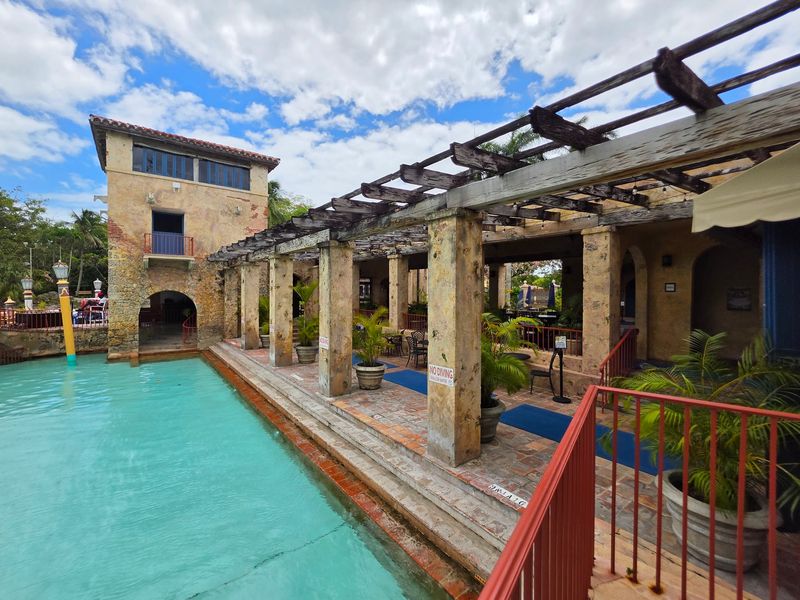
Affiliate disclosure: As an Amazon Associate I earn from qualifying purchases. Learn more
Most public pools in South Florida are rectangles of blue paint and chlorine. One pool in Coral Gables started life as a coral rock quarry and became a swimming lagoon in 1923, complete with waterfalls, caves, and Mediterranean-style towers.
It is filled with spring water, and during high season the whole thing is drained and refilled. You can bring your own lunch and eat it a few steps from grottoes carved a century ago.
That combination makes it one of the more unusual and affordable summer outings in the Miami area. This guide covers the history, the caves, the kiddie pool, the sandy lounging area, the picnic rules, and the ticket tricks that keep you from getting turned away at the gate.
Read on before you pack the sandwiches.
A Lagoon Hiding on De Soto Boulevard
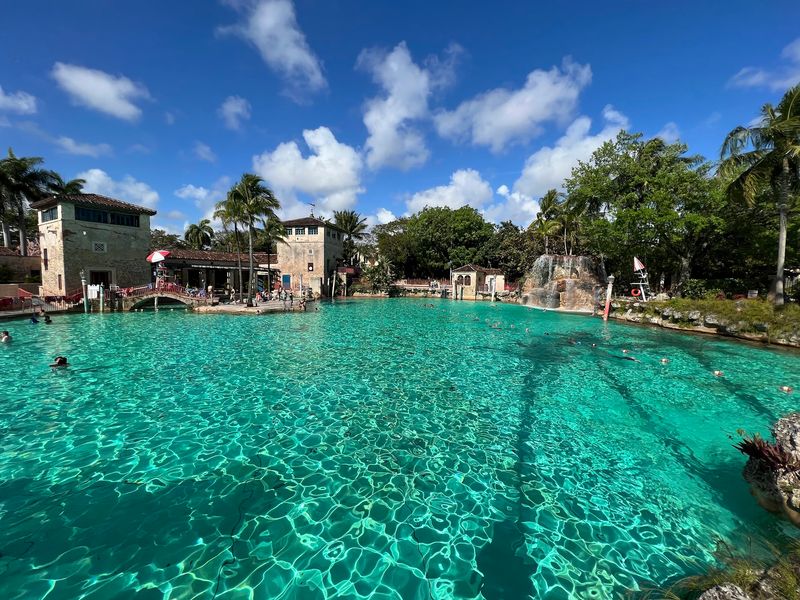
Few city pools come with a spot on the National Register of Historic Places, but this one does.
The Venetian Pool sits at 2701 De Soto Blvd, Coral Gables, FL 33134, in the United States, a short drive from downtown Miami. It is run by the City of Coral Gables as a public swimming pool.
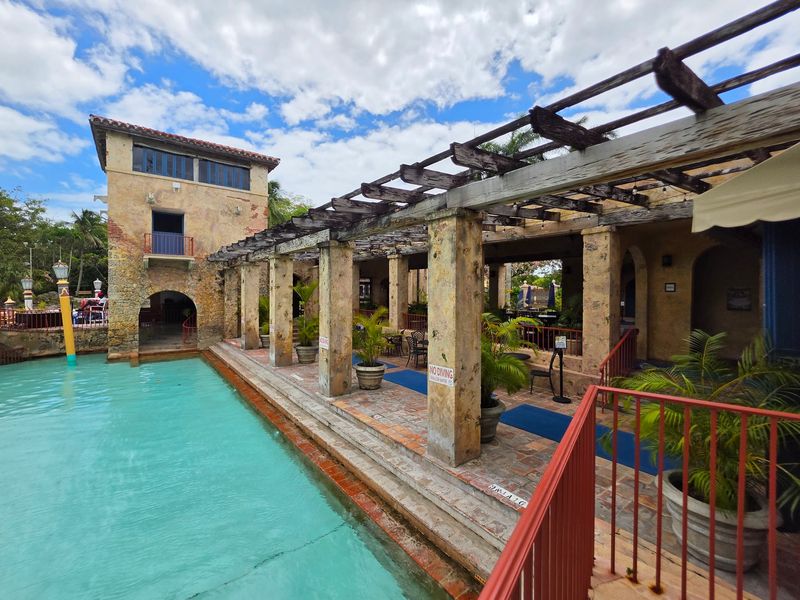
Calling it a pool undersells it a little. The space holds waterfalls, coral rock grottoes, a kiddie pool, and a small sandy beach area, all wrapped in Mediterranean-style architecture.
The official description sums it up as an iconic, spring-water-filled pool built in 1923 with waterfalls, grottos, and a tropical backdrop. That year matters, because almost everything about the place traces back to the 1920s.
Locals and tourists both show up here, often side by side on the same lounge rows. Some Miami residents admit they lived nearby for years before finally visiting, then wondered why they waited so long.
The overall rating sits at 4.4 stars across more than 4,000 opinions, which says a lot for a century-old swimming hole. Next comes the story of how a rock quarry turned into a lagoon.
From Coral Rock Quarry to Venetian Lagoon
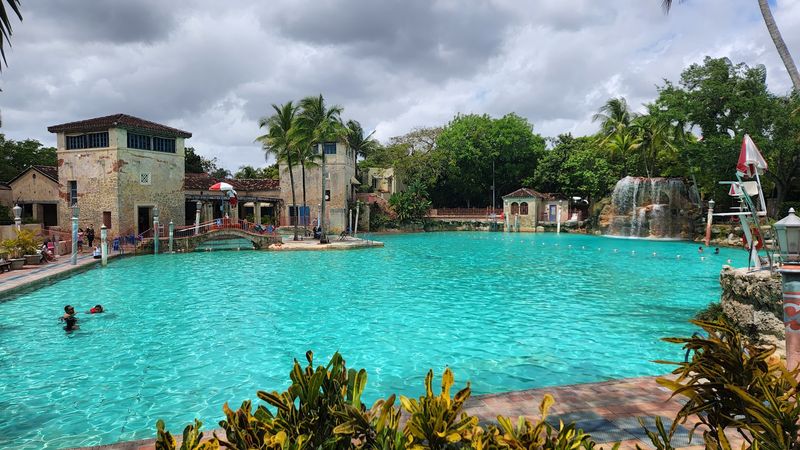
Some landmarks are built from scratch. This one was carved out of what was already there.
The pool was created in 1923 from coral rock and designed to resemble a Venetian lagoon. The result is a swimming area framed by rocky walls, arches, and towers that look nothing like a modern aquatic center.
The Mediterranean-style design fits the wider look of Coral Gables. It gives the pool a dressed-up, old-world feel that has held on for over a century.
Its listing on the National Register of Historic Places adds weight to that history. People who grew up nearby talk about taking swimming lessons here in the 1970s and later bringing their own kids back year after year.
The pool has also gone through a renovation closure in recent years. It reopened by summer 2026, and longtime fans were glad to return.
Some guests say walking through the grounds feels like stepping into living history. The mood leans toward the Jazz Age, with names like Esther Williams coming to mind for fans of old Hollywood swimmers.
History is fun, but the real headliners are underground. The caves deserve their own chapter.
Caves and Grottoes Worth the Swim
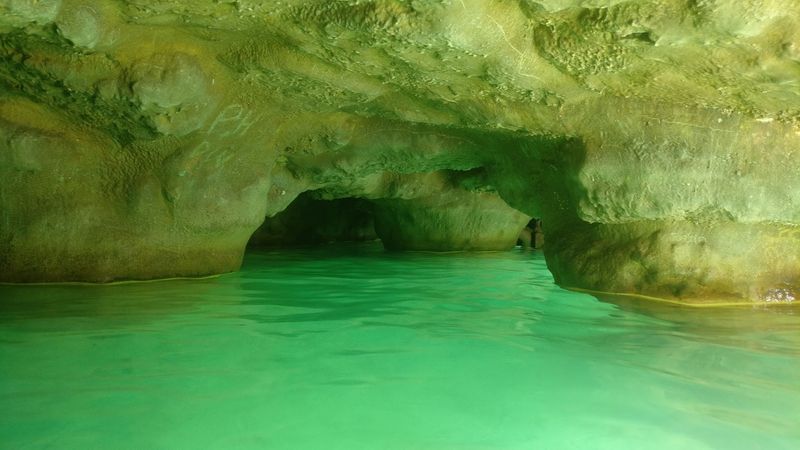
No feature gets talked about more here than the caves, with well over a hundred mentions in guest chatter.
The coral rock grottoes let swimmers paddle inside rocky hollows that date back to the pool’s 1920s origins. It is the part most first-timers head for right away.
Staff keep an eye on these areas. Lifeguards have been known to help swimmers around the caves, which is handy since the water gets deep nearby.
A small cave opens from time to time rather than all day. On some visits, the caves have been fully blocked off, especially during construction periods, so it pays to check ahead.
The rocks themselves are natural, and natural rock in spring water grows algae. That makes certain surfaces slippery, so water shoes are a smart packing choice.
Even with those quirks, the grottoes are what set this spot apart from every hotel pool in Miami-Dade. Few places let you eat lunch, then swim straight into a century-old cave.
Of course, caves are only half the scenery. The waterfalls bring their own show.
Waterfalls You Can Swim Behind
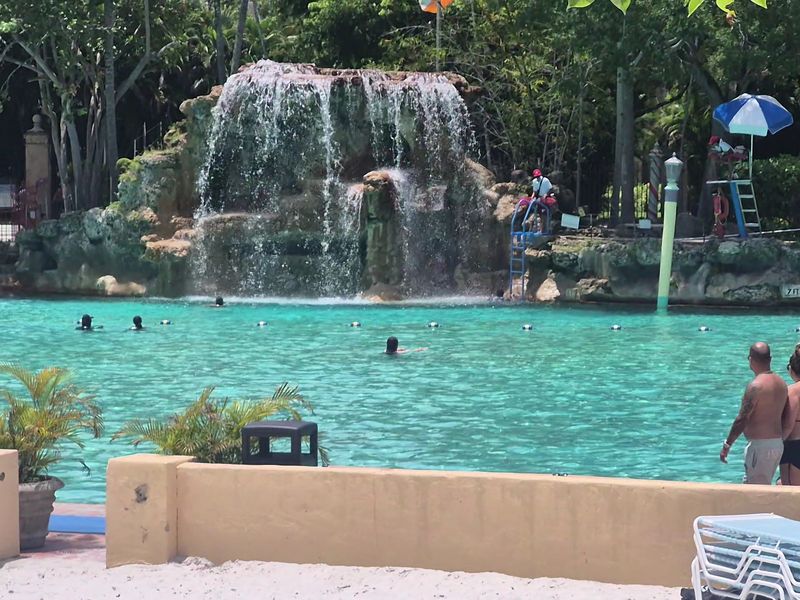
Most pools have a ladder. This one has waterfalls.
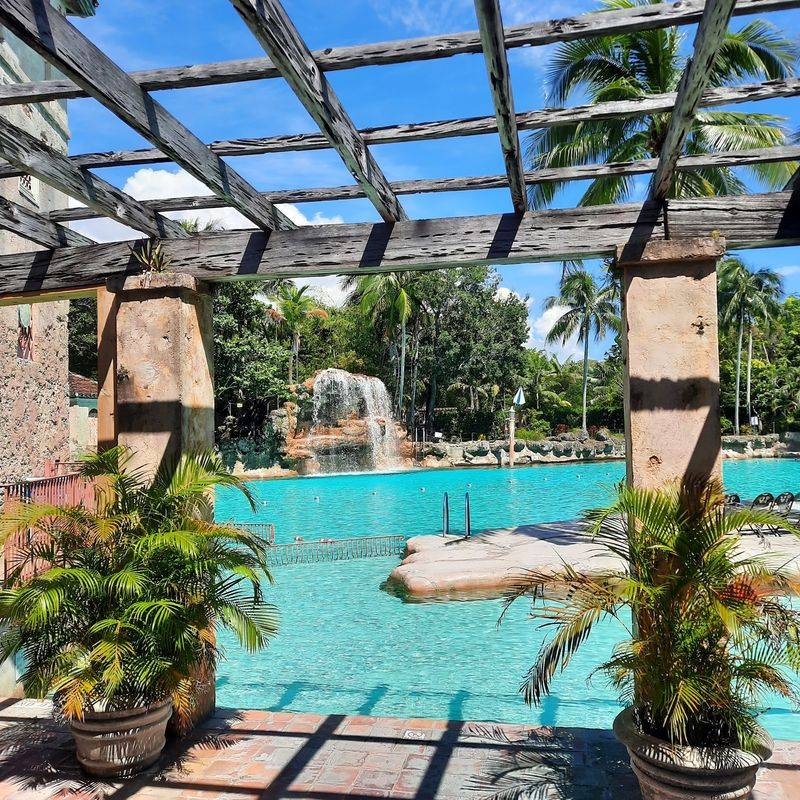
Several falls spill over the coral rock into the main swimming area. One small waterfall is set up so you can swim right behind it, which tends to become a favorite stop for kids.
The falls are among the most mentioned features after the caves. They help give the space its tropical lagoon look and pair nicely with the palm trees around the deck.
Timing matters, though. During construction work, the waterfalls have been switched off and the caves closed, and some guests wished that had been posted more clearly online.
A quick look at the city website or a phone call before heading out can save disappointment. When everything is running, the falls and grottoes work together as a full backdrop for an afternoon.
Higher jump points near the rocks are sometimes closed for jumping. Rules can shift, so follow the lifeguards, who stay busy with their whistles.
All that water has to come from somewhere, and its source is part of the appeal.
The Spring Water Question
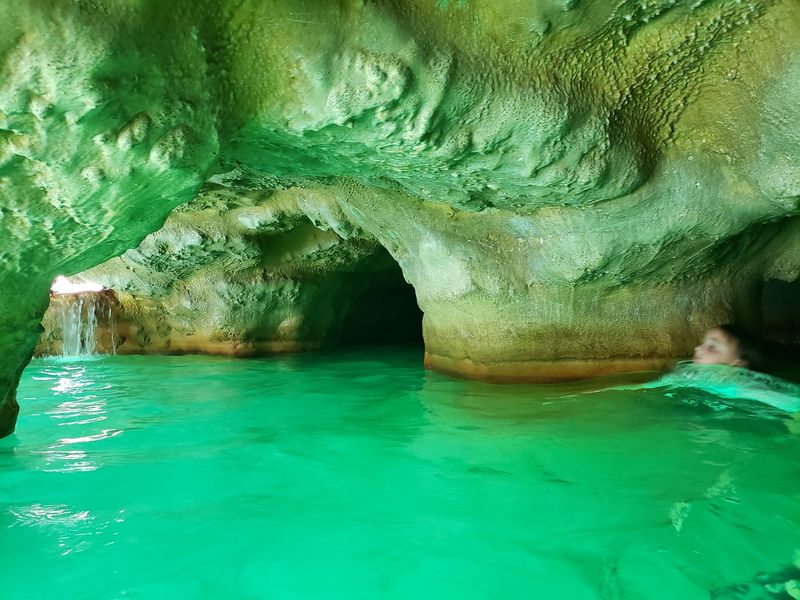
Chlorine fans, take note. The water here comes from a natural spring.
The pool is filled with spring water, and during high season it is drained and refilled daily. That fresh supply is a big reason people keep coming back.
Expect it to run cool. Guests describe it as chilly, refreshing, or downright cold depending on the day, since the pool is not heated.
On a hot August afternoon, that is a selling point. On a cloudy morning, it may take some bravery to get in past your knees.
Natural water also brings natural extras. Algae grows on rocks and the pool bottom, leaves can drift in, and the floor gets slippery in spots.
Opinions on cleanliness vary from visit to visit. Some find it clean and well kept, while others wanted more scrubbing, so arriving earlier in the day is a sensible move.
Depth is the other thing to know. Main areas run about 4 to 5.5 feet, and the deepest section reaches 7 feet, which brings us to the gear and the little ones.
Kiddie Pool, Life Vests, and Family Ground Rules
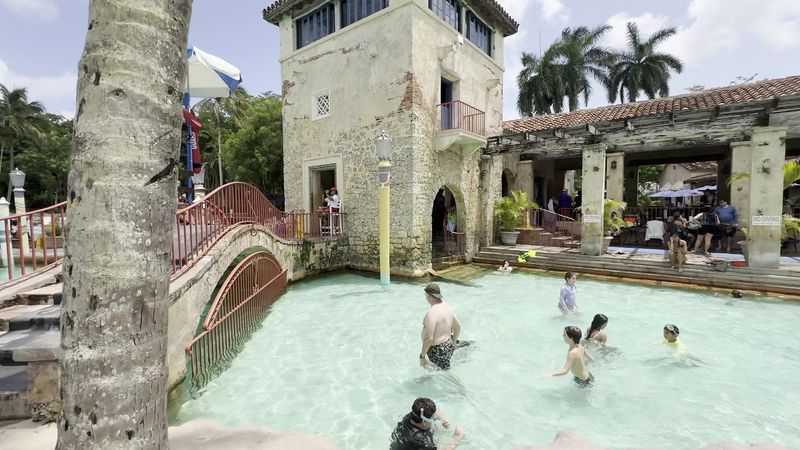
Families make up a big share of the crowd, and the setup reflects that.
A kiddie pool about 2 feet deep gives younger children their own space. It sits apart from the deeper main lagoon, so parents can relax a bit more.
Life vests are available free of charge for both kids and adults. That is a nice perk at a pool where the deep end hits 7 feet.
You may also bring pool noodles, small floaties, and goggles. Parents of very young swimmers often pack their own safety gear anyway for comfort.
One firm rule surprises some families. Children under 3 are not permitted, so this outing works best for preschoolers and up.
Plenty of lifeguards are on duty. They tend to be friendly and even help set up chairs, though the steady whistle blowing is part of the soundtrack.
Summer camps also bring groups in the morning. They usually leave early, so by around 2 PM the pool can feel much quieter.
Once the kids are wet and hungry, it is time for the main event: lunch.
Picnic Rules Beside the Grottoes
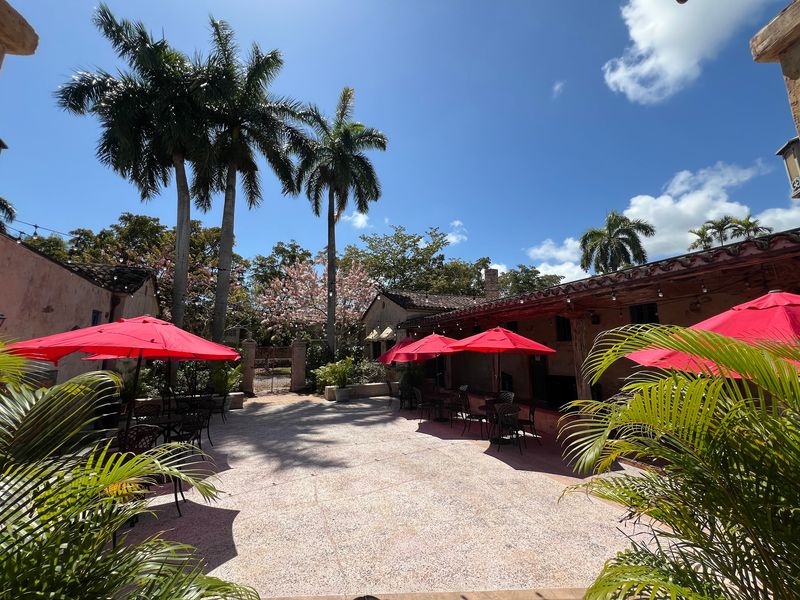
Here is the budget-friendly secret. You can bring your own lunch.
Outside food and drinks are permitted, which makes a day here far cheaper than many attractions. The one catch is that coolers are not allowed, so pack in bags instead.
Picnic tables sit around the grounds within view of the coral rock. Eating a homemade sandwich a few feet from 1920s grottoes is the whole charm of the title.
Those tables fill up fast. Arrive later in the day and you may struggle to find a seat, especially when large groups claim big sections.
An on-site concession stand and snack bar exists too. Some guests found the offerings a bit pricey for what you get.
Two practical warnings help. The cafe has been cash only, and food service has not always run on weekdays, so packing a lunch is the safer bet.
Vending machines are around as a backup. Still, a packed lunch keeps the cost down and the plans simple.
After eating, most people look for somewhere to stretch out.
Sand Lounges and the Shade Shortage
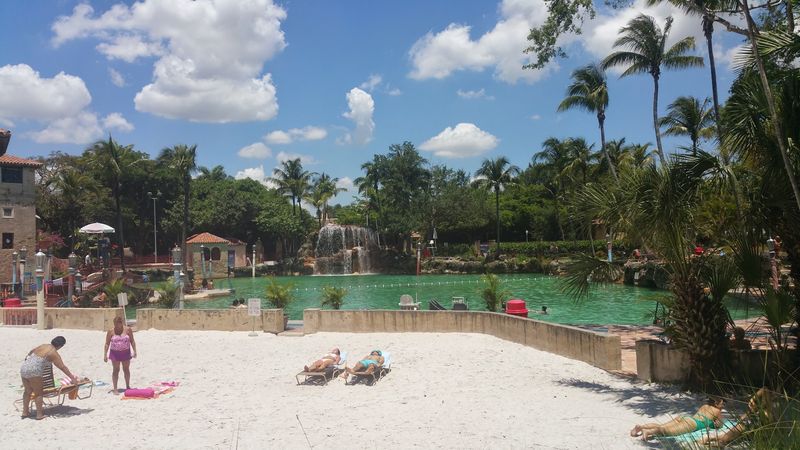
A beach in the middle of a pool complex sounds unlikely, yet there is one.
A small sandy area with chaise lounges mimics a beach. Parents often settle there while kids splash nearby.
Lounge chairs rent for $7 each. You can also bring your own chair, which plenty of regulars do.
The big trade-off is shade, or the lack of it. Natural shade is limited, and rented sunbeds go on the open sand where cover is rare.
Shaded benches exist, but they are better for stashing bags than lying down. Early arrivals grab the few shady spots first.
Bring plenty of sunscreen and reapply often. More than one guest has left with a sunburn after underestimating the Florida midday.
A hat and a lightweight cover-up are smart additions. So is a plan to take breaks in the water, which stays cool even on hot days.
With lounging sorted, the next question is how much the whole day will cost.
Tickets, Hours, and the Resident Discount
Good planning pays off here more than at most pools.
Hours are Tuesday through Friday from 11 AM to 5:30 PM, and Saturday and Sunday from 10 AM to 4:30 PM. The pool is closed on Mondays.
Admission has been about $22 for adults and $17 for children ages 3 to 12. Prices have shifted over time, so check the city website before you go.
Coral Gables residents get a major break, with admission around $6 to $7. Often only one person in the group needs a Coral Gables ID.
The biggest tip is to buy tickets online early. Purchasing at least 48 hours ahead guarantees a spot, while walk-ups risk being turned away once capacity is reached.
That capacity limit has an upside, since it keeps the pool from getting packed. Extras add up, though, with lockers at $10, a $5 refund when you return the key, and towels around $10.
Bring your own towel and lunch, and the day stays affordable. Then all that is left is getting there and parking.
Parking, Packing, and a Fair Verdict
Free parking is a rare treat in greater Miami, and it comes standard here.
The lot sits across or a little down the street. It fills up quickly, but grass parking is allowed when the main lot is full.
Facilities cover the basics. There are showers, dressing rooms, and lockers inside the restrooms.
Pack water shoes for the slippery rocks, sunscreen for the open deck, and lunch in a bag rather than a cooler. A towel and cash for the cafe round out the list.
So is it worth it? For history, scenery, and a chance to swim into coral grottoes, few spots in Florida compare.
The water is cold, the shade is scarce, and upkeep varies by day. Those who arrive early with tickets in hand tend to have the best time.
Families, couples, and curious locals all find something to like. A packed lunch beside a 1923 lagoon makes for an afternoon that feels both old-fashioned and refreshingly simple.


