
Affiliate disclosure: As an Amazon Associate I earn from qualifying purchases. Learn more
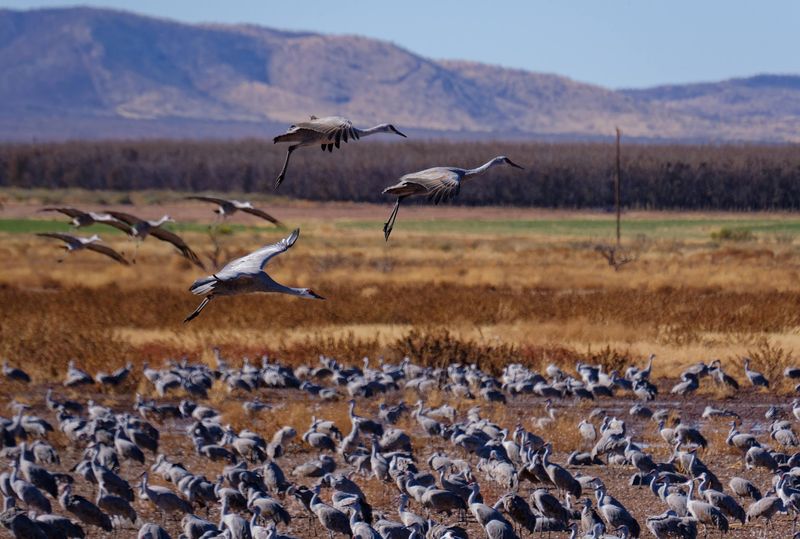
Every winter, thousands of sandhill cranes settle into a shallow wetland in far southeastern Arizona, and plenty of people who live an hour away have never made the drive. On a good morning, these big gray birds arrive by the hundreds every minute, landing in family groups on the same stretch of shoreline.
The site is open around the clock, camping is allowed, and the best viewing spots sit along a short walking loop from the parking lot. Keep reading to find out where this winter spectacle happens, when to show up, and what to pack so the trip goes smoothly.
A Wetland Hiding Near McNeal
Some of Arizona’s biggest winter crowds never buy a ticket, never park downtown, and never say a word to each other. They fly in on their own schedule.
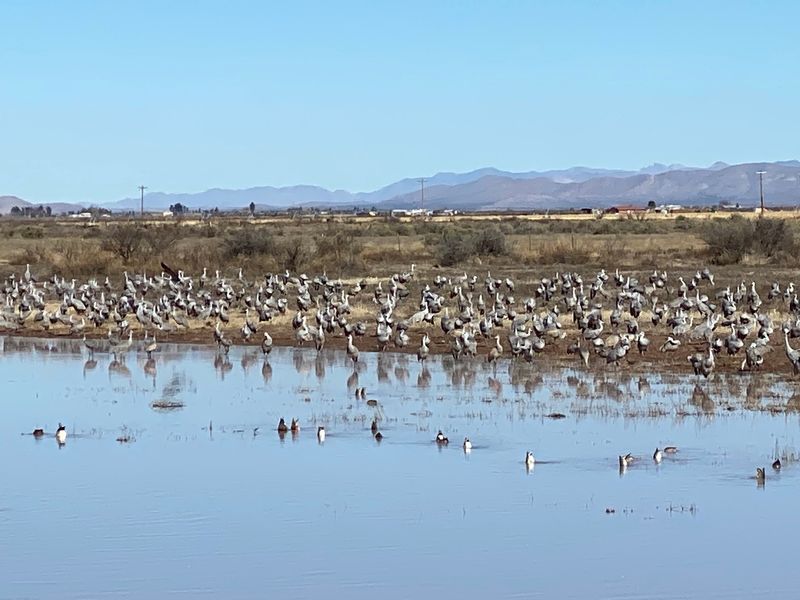
That crowd gathers at Whitewater Draw Wildlife Area, found at 8469 N Coffman Rd, McNeal, AZ 85617, in the southeastern corner of Arizona.
The site sits in Cochise County, a bit of a drive from Tucson. Most people head south past Tombstone to get there, and the historic mining town of Bisbee is close enough for a side trip on the same day.
Officially, the property is a wildlife area, and its web page lives on the Arizona Game and Fish Department site. Unofficially, it is the winter address for thousands of sandhill cranes that roost in the shallow water here.
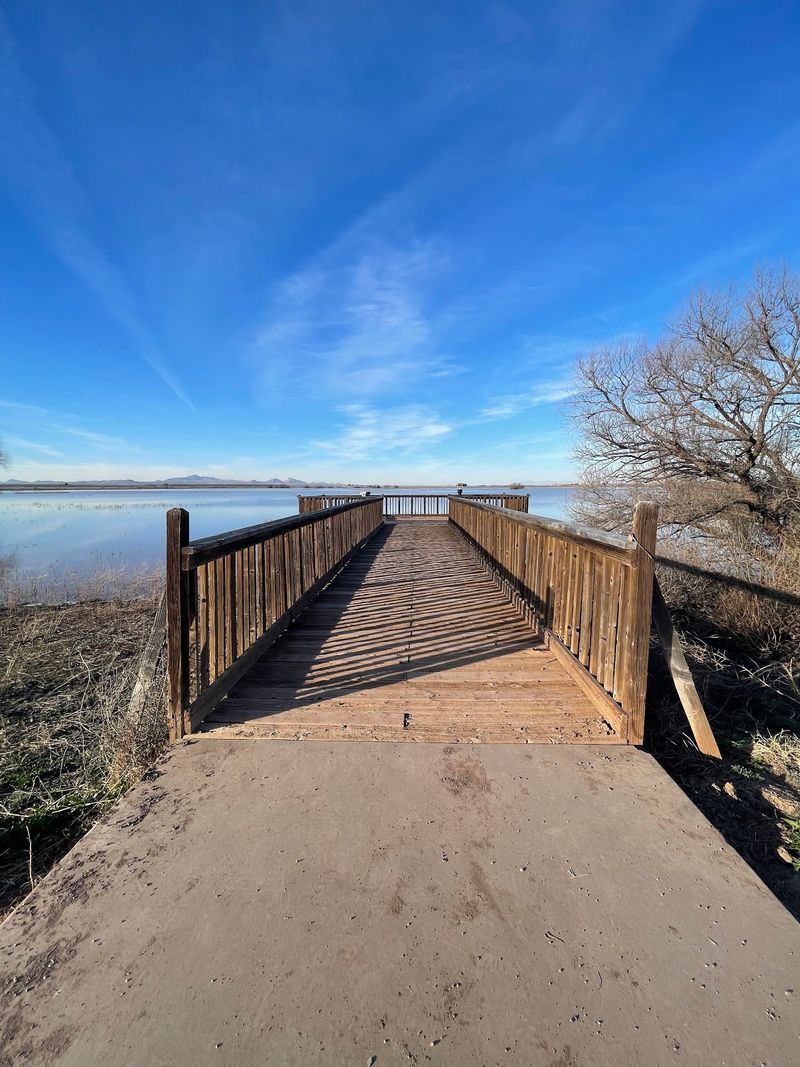
The layout is simple. A large parking lot leads to a short loop walk out into the draw, with benches and several viewing platforms along the way.
Amenities are sparse, and that is part of the appeal. There is no gift shop or snack bar, just open wetland and a whole lot of birds.
For a place so easy to overlook on a map, it holds a surprising amount of drama. Even better, the cast changes with the calendar.
The Calendar Behind the Crane Crowds
Timing is everything at the draw. Show up in July and the wetland is a peaceful place for a walk, but show up in January and it turns into crane central.
The first cranes can be around by October. Early December brings thousands of birds, and the numbers keep building through the heart of winter.
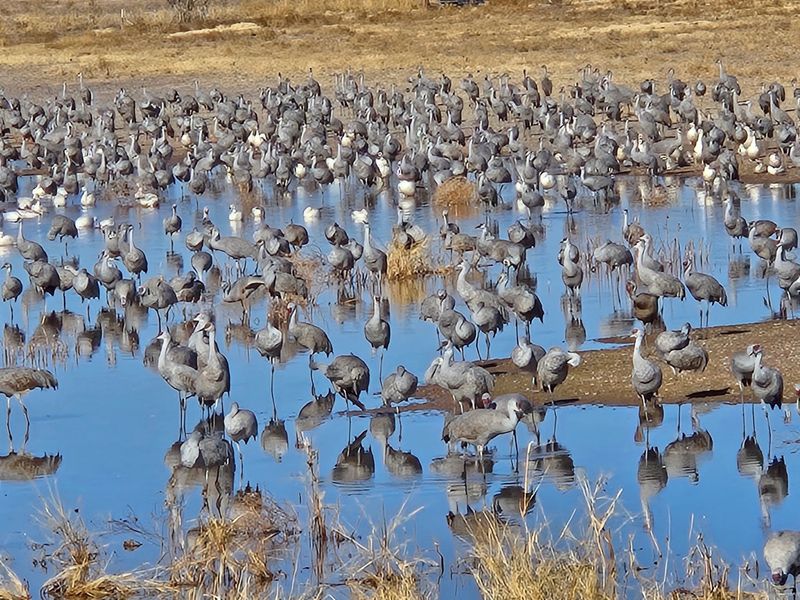
Peak season generally lands in late January and early February. Even before that stretch, counts of 1,500 to 2,000 cranes on the water are not unusual, and the totals can double in just a couple of hours as birds return.
The season stretches longer than many people expect. Sandhill cranes and Ross’ geese have still been on hand in early March, lingering close to the walking paths.
Winter is also festival time in the region. A crane festival held in nearby Willcox celebrates these same birds, giving crane fans another reason to plan a trip to this part of Cochise County.
Year-round regulars point out that the site works in every season for a quiet walk or a place to sit outdoors. One longtime fan has been coming for thirty years, in every month of the year.
Still, the cranes are the headliners. The winter months are when the real crowd arrives, and it arrives in numbers that are hard to believe until they are right in front of you.
Dawn Departures and Late-Morning Arrivals
Here is a twist that surprises first-timers: arriving at sunrise does not always mean finding the most cranes on the water.
The birds leave the wetland early to feed in the surrounding fields. One October trip found no cranes at all before sunrise, followed by a rush of returning birds around 10 a.m.
Dawn still has a loyal following. Regulars who camp on site describe the takeoff before and around first light as the biggest payoff, with swirling masses of birds they cheerfully call crane-nados.
The return trip is its own show. On one recent morning, only four or five cranes stood in the cienega at 10:15 a.m., and within 10 or 15 minutes wave after wave of birds had flown in.
By about 12:30 p.m., the arrivals had slowed. Hundreds of cranes filled a spot that had held just a handful a couple of hours earlier.
Midday can deliver, too. An early December trip that began just after noon still produced thousands of birds flying overhead and landing.
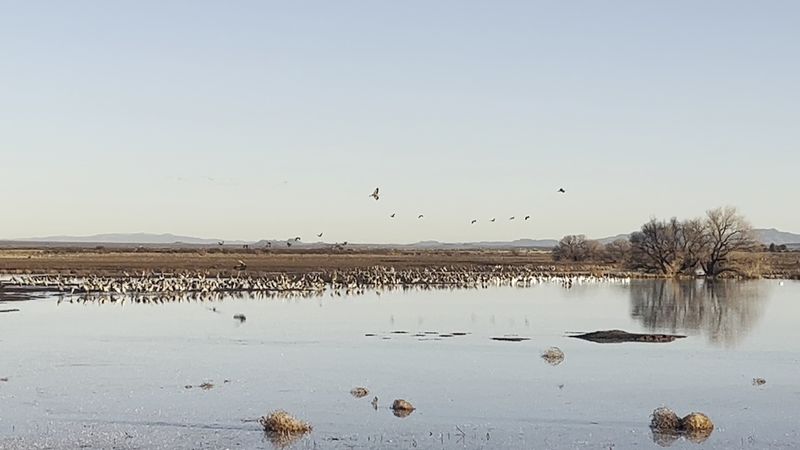
Evening is another strong window, with V formations crossing the sky until dark. The simple lesson is to pick a time, bring patience, and let the birds set the pace.
Crane Families in the Crowd
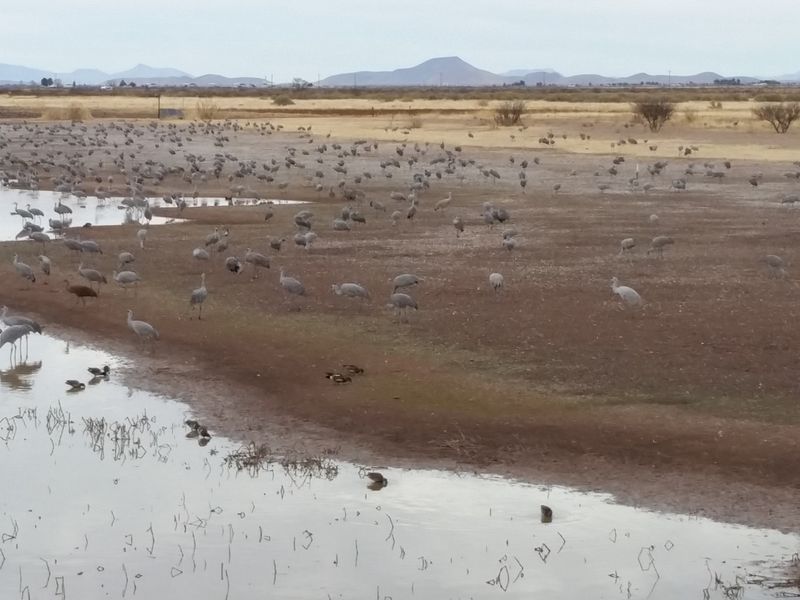
Thousands of cranes on one shoreline can look like a single gray mass at first. Look closer and the crowd breaks down into small households.
Sandhill cranes tend to travel in family groups. Most move two by two as bonded pairs, and some bring yearlings along for the trip.
That detail catches many newcomers off guard. Plenty of people have no idea this species forms pair bonds, and watching partners land side by side turns a big spectacle into something more personal.
The landings are a highlight on their own. Groups glide in quietly and settle near the birds already on the ground, sometimes arriving by the hundreds every minute.
Formations break apart as the birds circle before landing. Big V shapes loosen into loops over the water before each crane drops into place.
Then there are the calls. The cranes stay vocal much of the day, and campers note they do not go fully quiet overnight either.
Binoculars make all of this far easier to catch. With a good pair, the family groupings, the yearlings, and the steady shuffling on the beaches become a story rather than a blur.
A Supporting Cast With Feathers
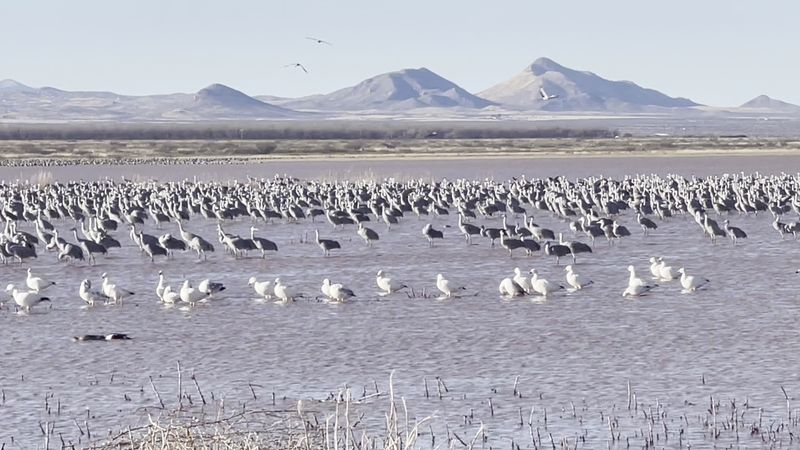
Cranes get top billing, but the draw is a wetland with plenty of other residents and seasonal guests.
Snow geese show up among the sandhills, often standing out in the middle of thousands of cranes. Ross’ geese have been spotted here in early March too.
Duck lovers have options. Pintails, green-winged teal, and northern shovelers all turn up in the water, with shovelers sometimes working the shallows right next to shore.
Smaller birds keep things interesting along the brush. Vermilion flycatchers have been seen here, and a ruby-crowned kinglet has been found tucked in a shrub.
Raptors pass through as well. A likely Cooper’s hawk made an appearance on one January outing, a reminder that not everyone at the wetland is here for a nap.
One of the more unusual sights is a starling murmuration. A longtime regular reported half a dozen good-sized murmurations in a single outing, on top of all the crane action.
For birders keeping a list, the variety is part of the fun. The cranes may bring people out the first time, but the extra species give them a reason to linger on the paths and scan every patch of water.
Boardwalks, Benches, and Viewing Platforms
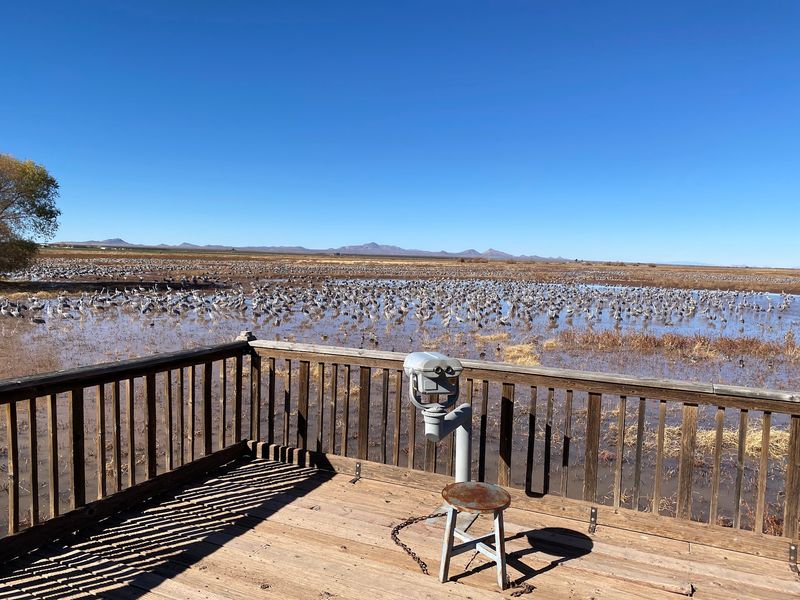
Getting close to the action takes a little walking, though nothing extreme. A short loop trail heads out from the parking lot into the draw.
Along the way are multiple benches and a few viewing platforms. The paths offer easy access to scenes around the water, with plenty of places to rest.
The distance from the parking area to the shoreline is longer than some expect. Depending on where the cranes settle, the walk can feel like a small hike, and in some seasons the birds gather around a bend in the trail from the lot.
Accessibility is a real plus. The viewing platforms have wheelchair access, and small spotting scopes are set up at chair level.
A few cautions come with the territory. The wood on the platforms is showing its age, and board-wide holes have appeared on parts of the boardwalk, so watch every step.
Weather plays a role too. After steady rain, trails can get too muddy to walk the full loop.
Photographers should pack a telephoto lens, and everyone else should bring binoculars. The birds are often a good distance out, and a little magnification goes a long way.
Camping Next to Thousands of Cranes
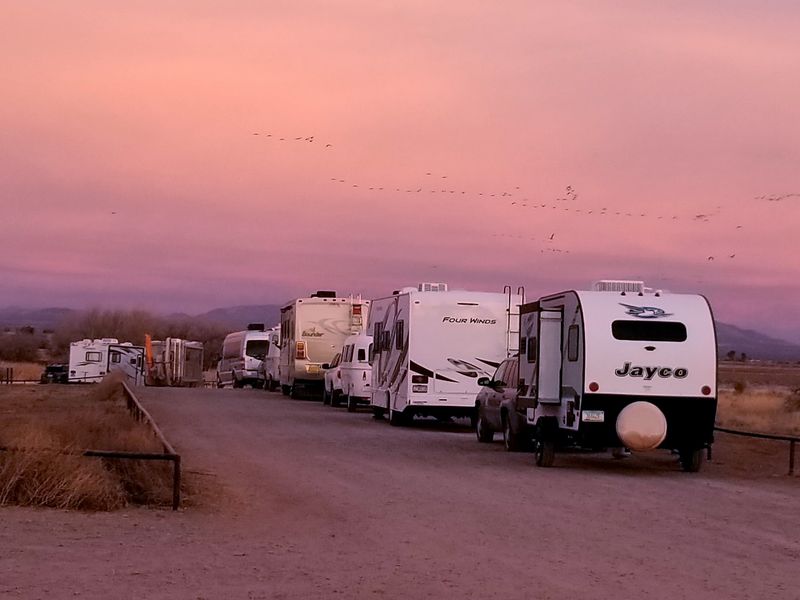
Few wildlife areas let people wake up next to thousands of cranes. This one does.
Overnight stays are allowed, and camping comes up often as a draw. There are a few official sites with picnic tables, plus extra room to park if a table is not needed.
Self-contained vehicles and vans are the usual setup. One birder even rang in the new year here, parking overnight and greeting New Year’s Day morning with thousands of sandhill cranes nearby.
Facilities stay basic. Pit toilets and trash service are on site, extra portable toilets often appear during busy stretches, and overflow parking has been added.
Winter mornings get cold. The benches by the water are metal, so seasoned campers bring their own chairs.
The overflow area comes with one note. Hunters have been known to drive back and forth through the parking lot at times, possibly even at night.
The crowd tends to be friendly. Birders share tips, photographers set up side by side, and the whole scene has a relaxed, neighborly quality.
Families fit right in, too. Kids are welcome, leashed dogs are allowed, and volunteers on site have handed out dog cookies, which makes this a rare bird outing where the pets come home happy.
Road Notes and a Soft Verdict
A little planning saves a lot of trouble here. The site is open 24 hours a day, every day of the week, so the schedule is set by the birds rather than a gate.
The final stretch runs on a dirt road. When it is wet, skip the drive unless the vehicle has four-wheel drive, since deep mud can trap regular cars and lead to a tow.
Plan on a real drive from most of Arizona. From Tucson, the route heads south past Tombstone, and the trip pairs nicely with an afternoon in Bisbee.
Pack for a cold, simple outing. Warm layers, a folding chair, binoculars or a telephoto lens, and a leash for the dog cover most needs, since amenities are limited.
For current conditions and crane updates, the Arizona Game and Fish Department page for Whitewater Draw is the best starting point.
So is it worth the trip? Wildlife lovers, photographers, and curious families all have a strong case for making the drive.
Thousands of cranes landing in family groups is the kind of thing many Arizonans assume requires a plane ticket. It turns out the show has been playing in Cochise County all along, one winter at a time.