
Affiliate disclosure: As an Amazon Associate I earn from qualifying purchases. Learn more
Florida is famous for flat beaches and theme parks, so a set of real underground caves can catch almost anyone off guard. In the quiet Panhandle, a short drive off I-10, guided tours lead groups under the ground past stalactites, stalagmites, and ceilings dotted with ancient shells and shark teeth.
Tiny bats sometimes hang overhead, and the cave stays near 65 degrees while summer outside pushes toward 100. The tour costs about the same as a casual lunch, which makes it one of the best bargains in the state.
This guide covers the history behind the caves, what the tour is really like, the trails and spring nearby, and the smart tips that make a visit go smoothly. Grab some bug spray and keep reading.
A Panhandle Surprise Below Marianna
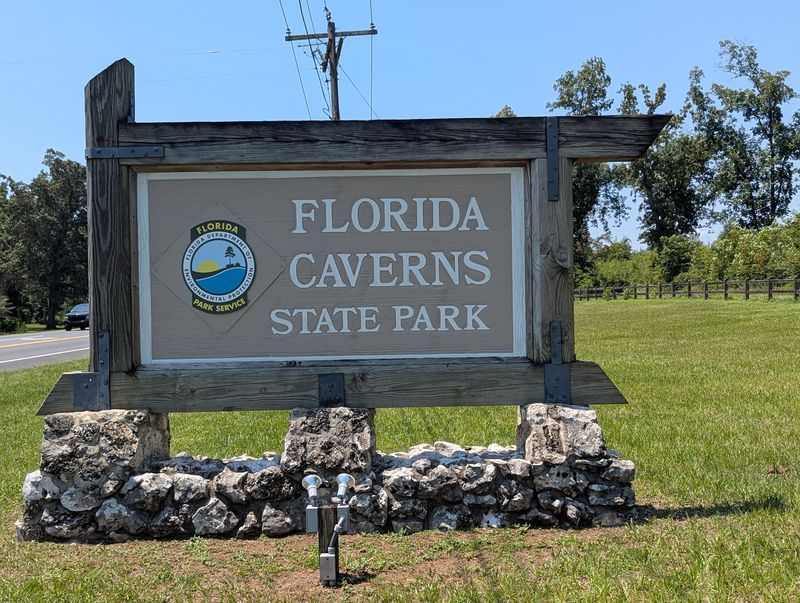
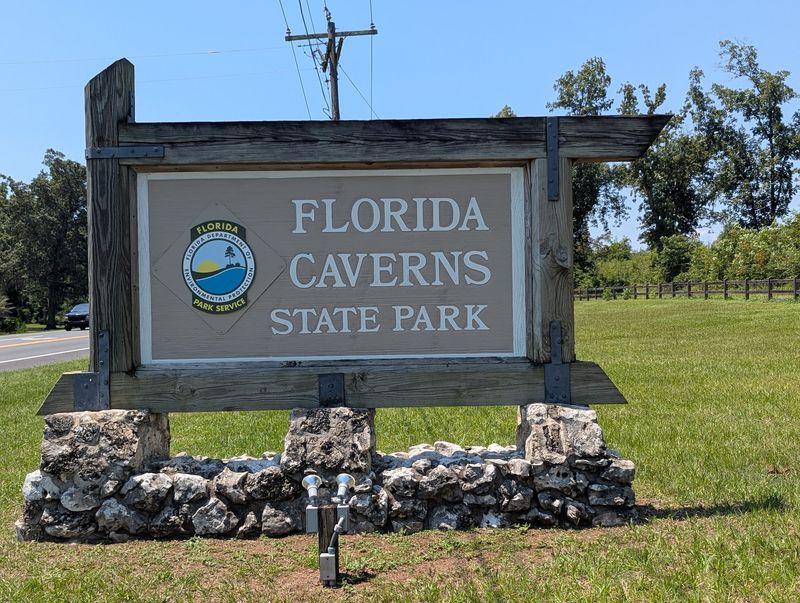
Caves in Florida sound like a joke until the stone archways come into view. Florida Caverns State Park sits at 3345 Caverns Rd, Marianna, FL 32446, in the northern Panhandle of Florida, United States.
The park is known for caves filled with stalactites and stalagmites, along with hiking trails and freshwater springs. Guided cavern tours are the main draw, and they are the only way to see the caves.
Getting there is simple for road trippers. The I-10 exit is not far from the park, so many people treat it as a detour on drives across the Panhandle.
Plenty of travelers have pulled off the interstate on a whim and left wondering why they never stopped before. Even lifelong Floridians often admit they had no idea their state hid something like this.
The park holds a 4.8-star average across nearly 6,000 Google ratings, which is a strong sign the detour pays off. Tour guides, the cave system, and the bats come up again and again in conversations about the place.
So what exactly is waiting underground, and how did it get there? The story starts with a very old sea.
Ancient Seas Written on the Ceiling
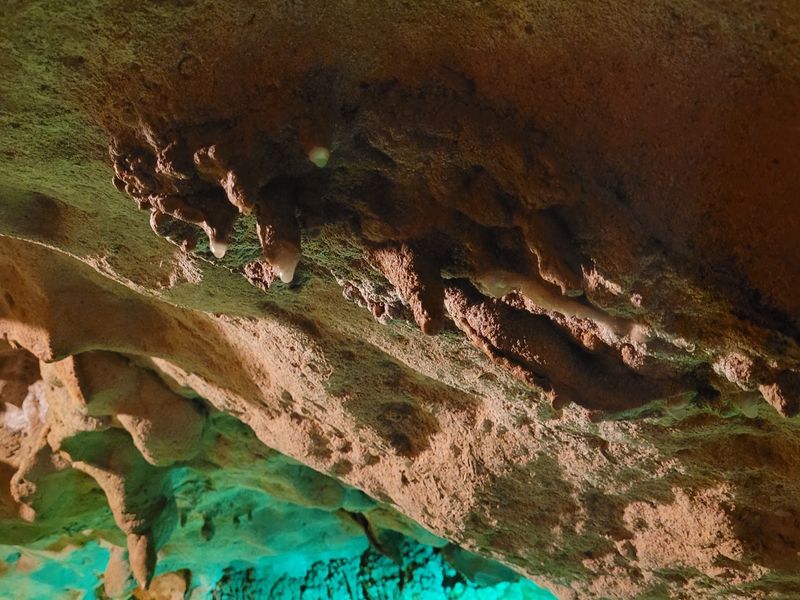
Millions of years ago, this part of Florida sat beneath the ocean. That watery past left clues behind, and the cave ceiling is where many of them show up.
Guides encourage groups to look up at the shells and shark teeth stuck in the rock overhead. Each one is a small reminder that the state was once submerged under ancient seas.
The caves formed in limestone, part of what scientists call karst topography. Water slowly carved spaces through the rock over a very long time, leaving rooms and passages behind.
The on-site museum explains this process in plain terms. It also covers the unusual plants that grow in the area, which tie into the same rocky landscape.
For kids, spotting a fossil shark tooth on a cave ceiling tends to beat any textbook lesson. Adults usually get just as curious once they realize how old the rock really is.
Geology rarely gets a fan club, but here it comes close. Next up is the crew of workers who made these caves open to everyone.
The Builders Who Opened the Underground
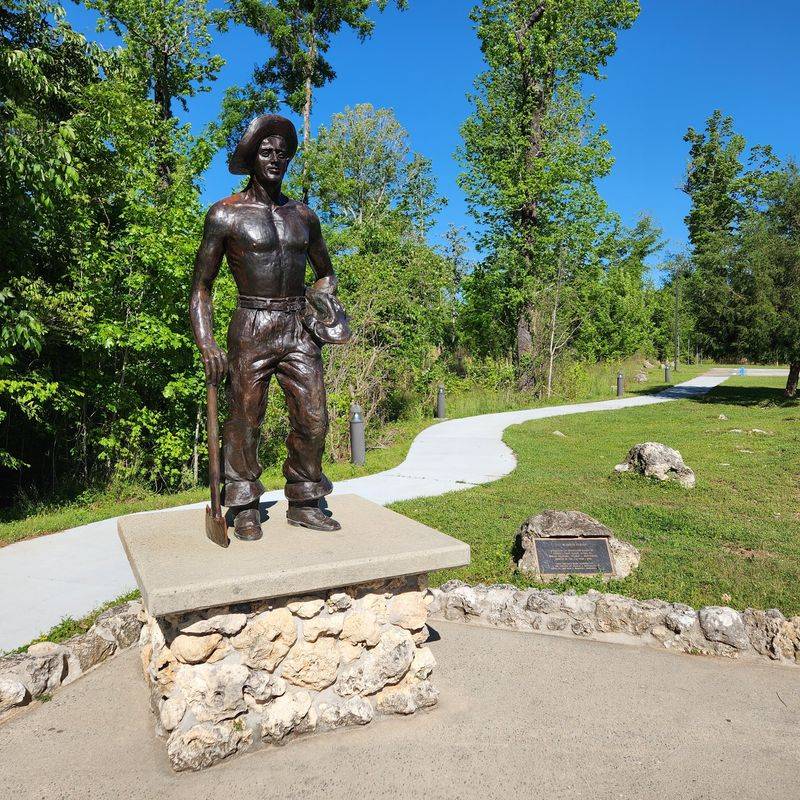
Back in the 1930s, a group of young workers took on a job few would volunteer for today. Members of the Civilian Conservation Corps dug out parts of the cavern so people could safely walk through.
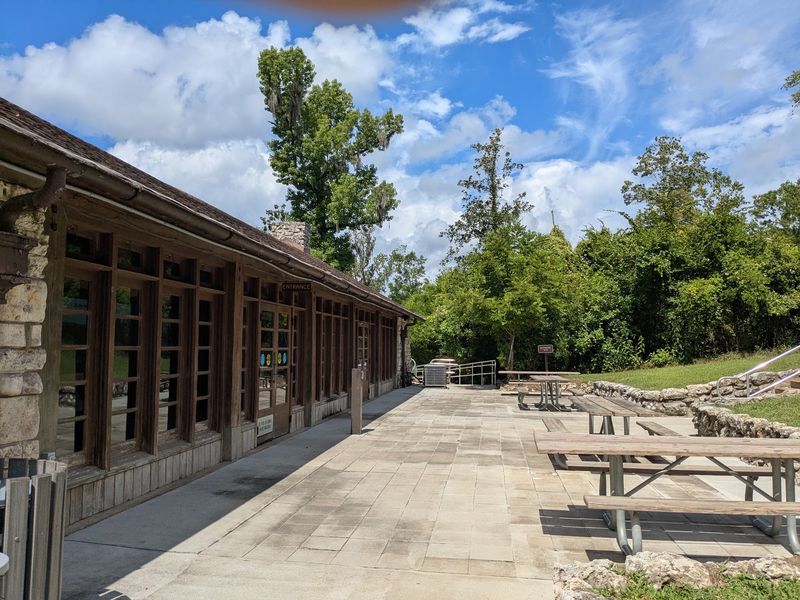
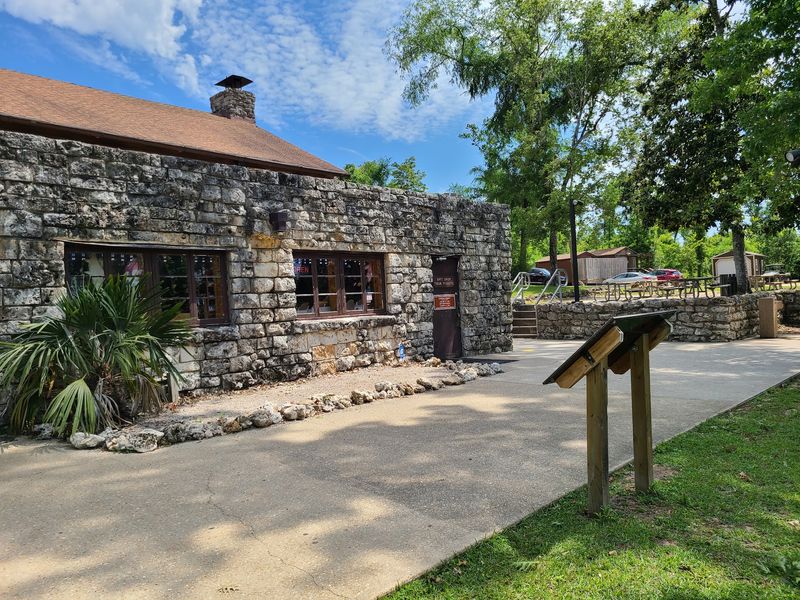
They did not let the removed rock go to waste. Workers used the stone pulled from the cave to build the visitor center, which gives the building a one-of-a-kind look.
A statue of a CCC worker now stands at the start of the path to the visitor center. It honors the hard labor that turned a wild cave into a public attraction.
Guides often weave this history into the tour. Hearing how the passages were shaped by hand adds a human layer to a place that is mostly about nature.
Above the visitor center sits a small museum display. It is a quick stop, but it fills in useful background before or after heading underground.
The CCC left a legacy carved in stone, quite literally. Their handiwork makes the next part of the trip possible: the tour itself.
Stalactites, Flowstones, and Draperies
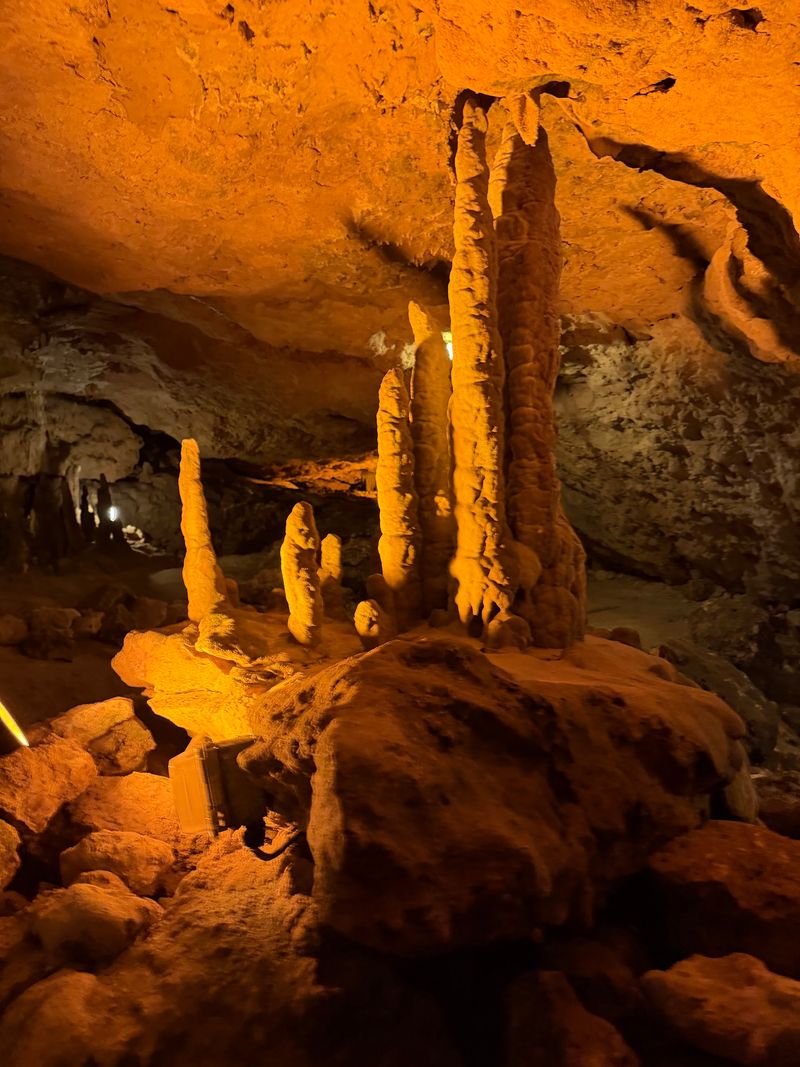
Stalactites hang down, stalagmites grow up, and remembering which is which becomes a running game on the tour. The caverns are packed with both.
Guides also point out flowstones and draperies. Flowstones look like frozen waterfalls of rock, while draperies form thin, wavy sheets along the walls.
Colored lights are placed throughout the cave. They bring out the details in the formations and give the rooms an unearthly, sci-fi look that matches the article’s promise.
Water still drips in places, so the cave keeps changing very slowly. The formations people see today took an incredibly long time to build.
Many travelers compare the experience to famous caverns in other states. More than a few say they never expected anything like it in Florida.
Photos are a challenge since belongings stay outside the cave. That just means paying closer attention to every room while the guide talks.
Guides With a Gift for Jokes
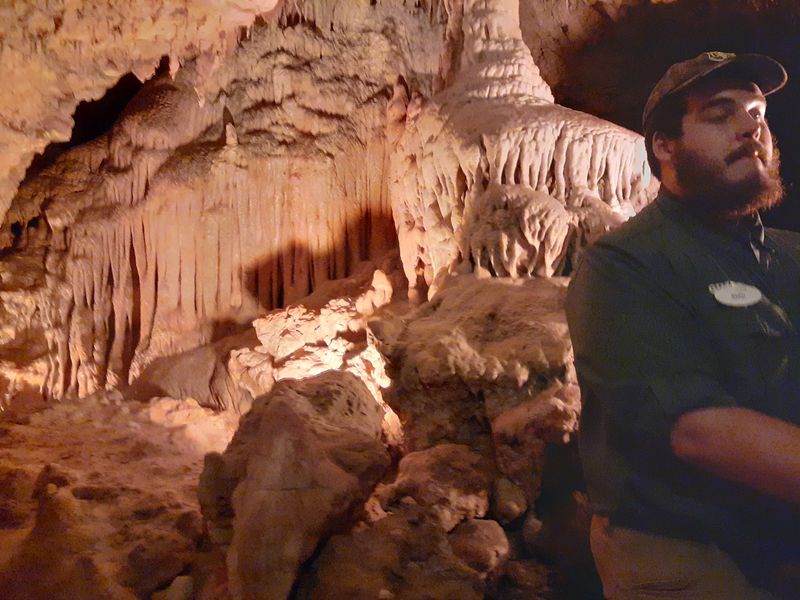
Ask anyone about this park and the conversation quickly turns to the tour guides. They come up more than almost anything else.
Guides here are known for being both knowledgeable and funny. Tours mix geology and history with a steady stream of jokes that keep groups laughing.
Several guides get mentioned by name over and over, including Steel, Ann, Jan, Josiah, Daniel, Jake, Joy, and Sam. Many families leave wishing they could request the same person next time.
Kids in particular seem to connect with the staff. Guides often answer young questions with patience and point out small details children might miss.
The tour runs roughly 40 minutes. That is long enough to cover a lot of ground without anyone getting restless.
A good guide can make rocks feel exciting, and this crew manages that with ease. Their skill is a big reason the tours are so well loved.
Tiny Bats, Big Fans
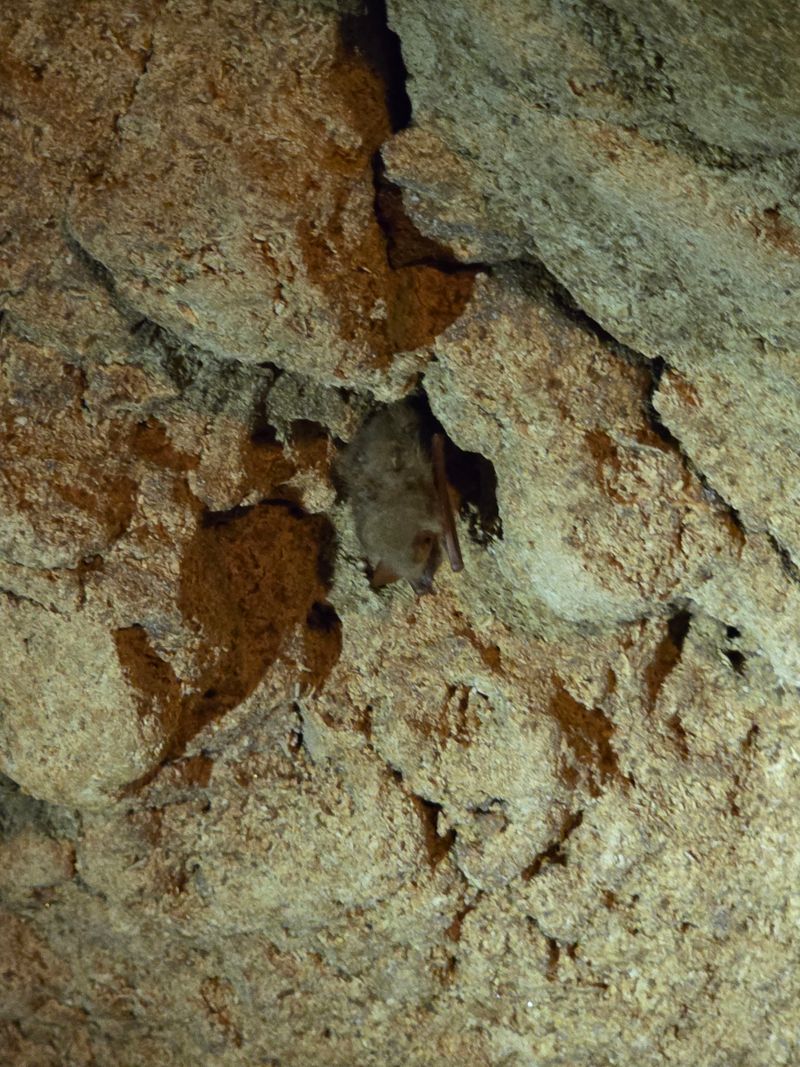
Some of the most popular residents of the caverns are about the size of a thumb. Small bats live in the cave, and spotting one is a highlight for many groups.
Guides are good at finding them. A quick point upward often reveals a tiny bat tucked against the rock, and the whole group tends to lean in for a look.
There is no guarantee of a sighting. Some tours see one or two, and others see none, which makes the moment feel special when it happens.
Bats are part of the reason the park asks everyone to follow its rules carefully. Protecting the cave also protects the creatures that call it home.
Kids usually rank the bats right up there with the fossils. For animal fans, it is a rare chance to see wildlife in a true underground setting.
Keep your eyes on the ceiling during the tour. The smallest guests can easily steal the show.
Crouching, Ducking, and Low Ceilings
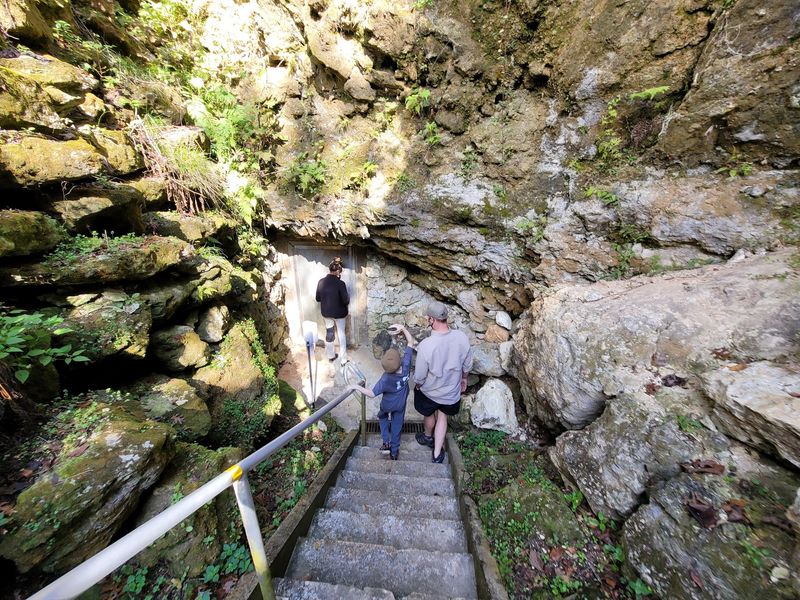
Tall travelers, consider this a friendly heads-up. Parts of the tour have low ceilings that require bending or crouching.
The good news is that the crouching sections are short. If someone can walk while bent over for about 20 seconds, the lower areas are usually manageable.
The park describes the tour as moderate to strenuous. Even so, people over 65 with good mobility and kids who walk well often handle it without trouble.
Worried about tight spaces? Many who consider themselves claustrophobic find there is plenty of room overall, and guides explain that anyone uncomfortable can be brought out in under five minutes.
Expect stairs and some wet ground with small puddles. Careful steps help, and so does watching for rock overhead.
Bumping a head on a stalactite is one souvenir nobody wants. A little caution keeps the trip fun from start to finish.
Nature’s Air Conditioning
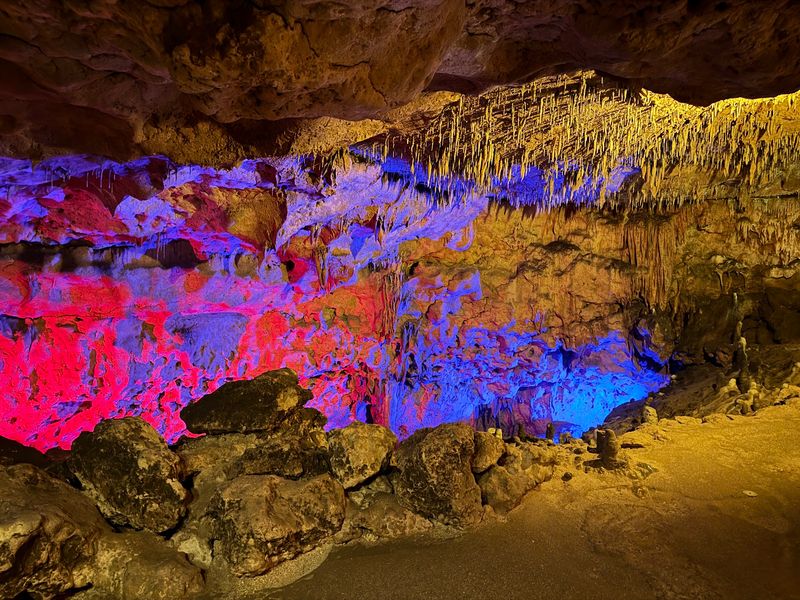
Here is a fun fact for summer planners: the cave stays around 65 degrees. Outside, Panhandle summers can climb close to 100.
That steady temperature makes the caverns a welcome escape on scorching days. Many groups finish the tour wishing it lasted longer just for the break from the heat.
Winter flips the script. On a cold day, the cave can actually seem warm by comparison.
Some people pack a light jacket, while others find the temperature comfortable in regular clothes. Since it is mild either way, layering is a safe choice.
Closed-toe shoes are a must no matter the season. Sneakers handle the wet floors and stairs far better than sandals.
It is hard to find a more natural way to cool down in Florida. The cave does the work without a single thermostat.
Hands Off, Bags Off
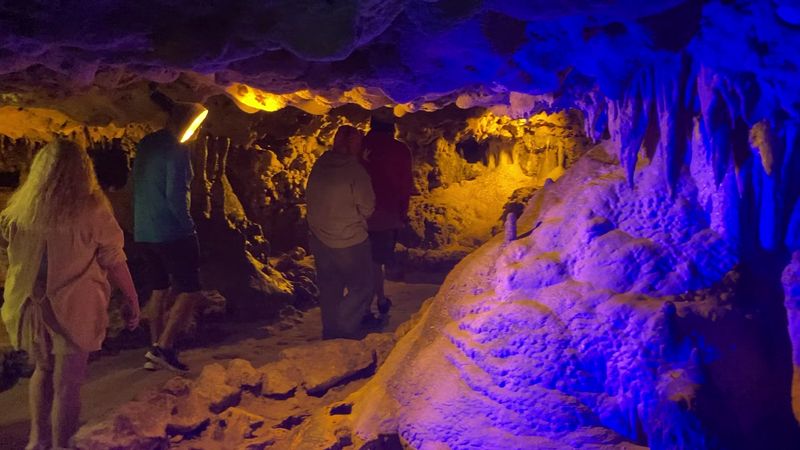
Rule number one on the tour sounds simple but matters a lot. Do not touch the walls or formations.
Natural oils from human hands can damage the rock. Guides explain this clearly, and following the rule helps keep the caves healthy for future groups.
Rule number two catches some people off guard. Nothing goes into the caverns, including bags, strollers, food, and drinks.
Belongings should stay in the car or a locker before the tour. It also helps to wait on gift shop purchases until afterward.
Restroom breaks are smart to take before the tour begins. Once underground, the group moves together until the end.
Traveling light makes the experience easier anyway. With empty hands, attention stays on the formations instead of a backpack.
Bluff Trail and Wild Florida
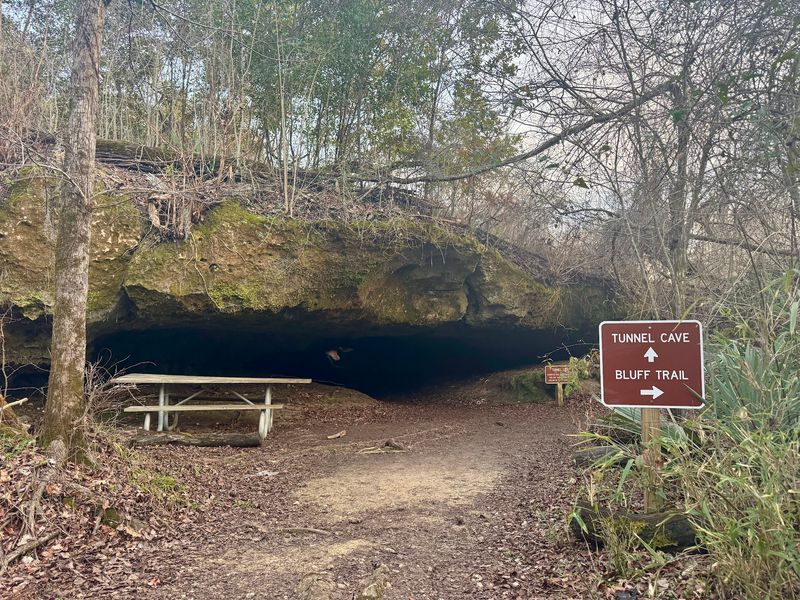
Most of Florida is flat, which makes the Bluff Trail a pleasant shock. The path has real elevation changes and rocks to scramble over.
The park offers two trails, and the longer one has a more primitive, wild feel. Hikers often describe it as classic untamed Florida.
Along the Bluff Trail sits a tunnel cave. From one side it looks too narrow to pass, but the other side opens up wider, and hikers can walk around it if they prefer.
The trails can be strenuous, especially in summer heat. Cooler months make hiking far more comfortable.
Heavy rains sometimes flood parts of the trails and even the caverns. Checking conditions before the trip is a good idea.
After seeing the caves from the inside, hiking the rocky ground above them rounds out the story nicely.
Blue Hole Spring’s Chilly Welcome
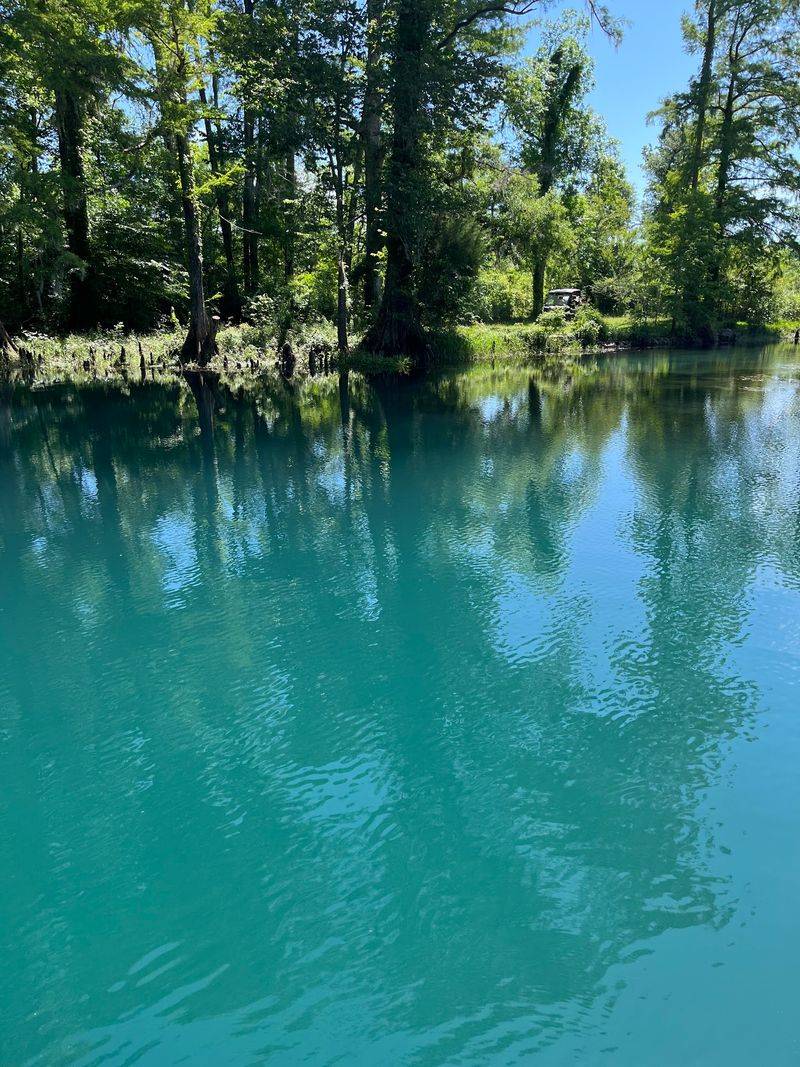
Swimmers looking for a jolt can find one at Blue Hole Spring. The water is famously cold, which feels like a dare on a hot day.
Some people love the swim and call it a memorable part of the trip. Others find it looks more like a blue pond than a classic spring.
Mosquitoes can be intense around the water. Bug spray is essential for anyone planning to linger.
The spring is a nice add-on rather than the main event. It gives families a chance to cool off after the tour or a hike.
Conditions vary through the year, including flooding at times. A quick check with the park before packing swimsuits can save a wasted trip.
For those brave enough, a plunge into Blue Hole makes for a great story later.
Camping, Kayaks, and E-Bikes
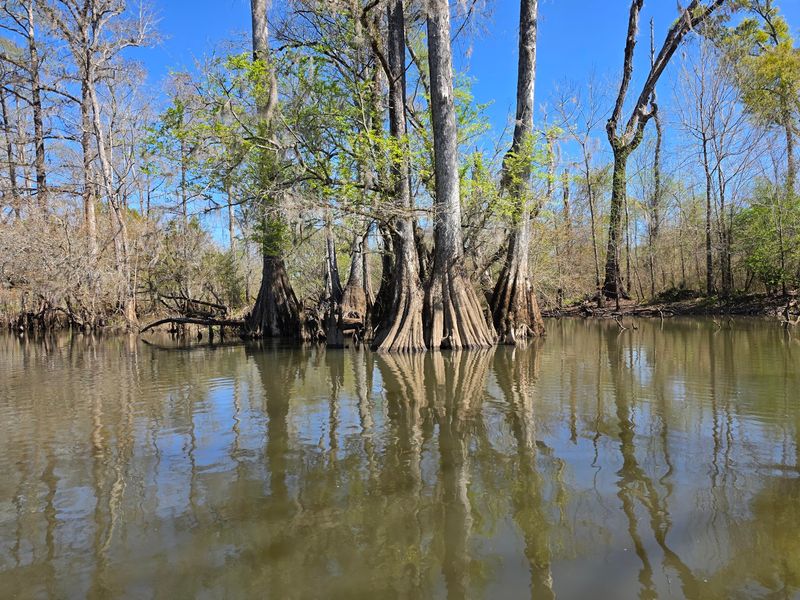
One day is enough for the tour, but the park offers plenty of reasons to stay longer. Several campgrounds sit within the park.
Kayak and e-bike rentals are also available. They give guests more ways to explore beyond the caves and trails.
Summer heat can make these activities tough. Cooler seasons are a better fit for paddling, biking, and overnight stays.
A food truck has been parked on-site, serving casual options like burgers and fries at fair prices. It is a convenient way to skip a drive into town for lunch.
The gift shop carries cute souvenirs and offers a cool spot to wait. The grounds also include a short walk through trees and bushes.
With this much to do, a quick stop can easily turn into a whole weekend.
Tickets, Timing, and Smart Prep
Budget travelers will like this part. The guided tour, which is required to enter the caves, costs about $17 per person.
Tours run on a schedule, and the operation is well organized. Staff may move groups to an earlier slot when there is room, which helps if arriving ahead of time.
Bug spray tops the packing list. Gnats and mosquitoes can be thick on paths and trails, sometimes even near the gift shop.
The wheelchair ramp to the visitor center is smoother and less steep than the sidewalk. Parking is plentiful, and restrooms are clean, though lines can form on busy days.
Hours and tour times can change, so checking the official Florida State Parks website before leaving is wise.
A few minutes of planning go a long way toward a smooth day underground.
Worth the Detour Off I-10
Some travelers drive five hours just for this tour and call it worth every mile. Others stumble on it during a cross-state trip and leave planning a return.
The appeal is easy to see. Fossils overhead, glowing formations, tiny bats, and guides with great jokes add up to something truly different for Florida.
It suits families with kids who walk well, history buffs, and anyone hunting for a cheap, unusual outing. Very young children and people with limited mobility may find it harder.
Cooler months open up more of the park, from trails to campsites. Summer still works for the tour thanks to the cave’s steady temperature.
Every ticket also supports the park through attendance. That is a nice bonus for a place clearly cared for and well maintained.
For a small price, this corner of Marianna delivers a trip that feels miles away from planet Florida.


