
Affiliate disclosure: As an Amazon Associate I earn from qualifying purchases. Learn more
Tucked into the Mule Mountains of southeastern Arizona, Bisbee packs more personality into its steep streets than many big cities manage in whole neighborhoods. Long before Phoenix sprawled across the valley, this little copper town was one of the largest cities in the Western United States.
Tons of copper came out of these hills, and that metal shaped everything from the town’s streets to its stubborn, colorful character. Today, one museum in the heart of Old Bisbee holds the full story, with dazzling minerals, mining gear, union battles, and even baseball history.
It is a Smithsonian affiliate, which is a big deal for a town this size. Keep reading to learn what sits inside, how much it costs, how long to plan, and why Arizona locals should make the drive this year.
A Museum Hiding in Plain Sight on Copper Queen Plaza
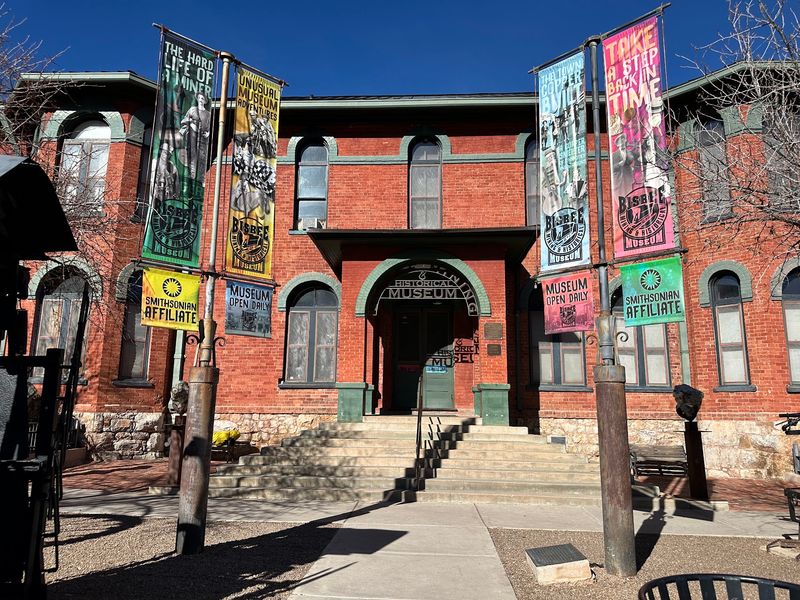
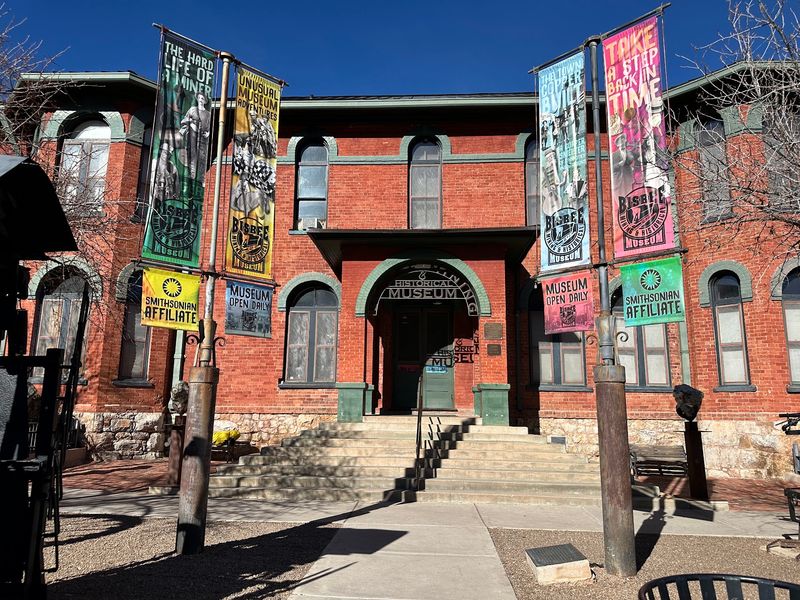
Right in the center of Old Bisbee, the Bisbee Mining & Historical Museum sits at 5 Copper Queen Plaza, Bisbee, AZ 85603, in the United States. It is the kind of spot you could walk past on the way to a shop, and that would be a real mistake.
The museum is officially a history museum, but its focus is sharply local. It tells the story of Bisbee and the copper that built it.
Bisbee itself sits in Cochise County in southeastern Arizona, a part of the state known for pleasant weather. The town’s historic district is packed with old architecture and small shops, and the museum works as a starting point for all of it.
Many people treat the building as an orientation center. Stop here first, learn how the town came to be, and the rest of Bisbee suddenly makes a lot more sense.
The museum holds a strong reputation, earning 4.7 stars across more than 650 public opinions online. That is an impressive track record for a small-town institution.
So what exactly turns a local history museum into a must-see? The answer starts with a famous partner from Washington, D.C.
The Smithsonian Connection
Here is a fact that surprises plenty of Arizonans: this small-town museum is a Smithsonian affiliate. That puts Bisbee in a national network of museums that meet high standards.
The partnership shows up in the quality of the exhibits. People often arrive expecting a few plaques and some old photos, then find a polished, cohesive story told through detailed displays.
A major exhibit on the top floor is linked with the Smithsonian and is often called a highlight of the visit. It focuses on minerals and mining, and it is organized with real care.
There is also a meaningful twist. Many of the mining artifacts on display were returned by the Smithsonian, which says a lot about how important these objects were to the community in the first place.
Think of it as a homecoming. Items that once traveled across the country now sit back in the town where they were used.
For a place with a small population, that level of recognition is rare. Bigger Arizona cities would be happy to claim a link like this, yet it lives in a historic mining town tucked into the mountains.
Of course, a famous partner only matters if the story is worth telling. And Bisbee’s story is a big one.
When Bisbee Was the Big City
Long before Arizona’s current skylines existed, Bisbee was one of the largest cities in the Western United States. That fact alone tends to stop people in their tracks.
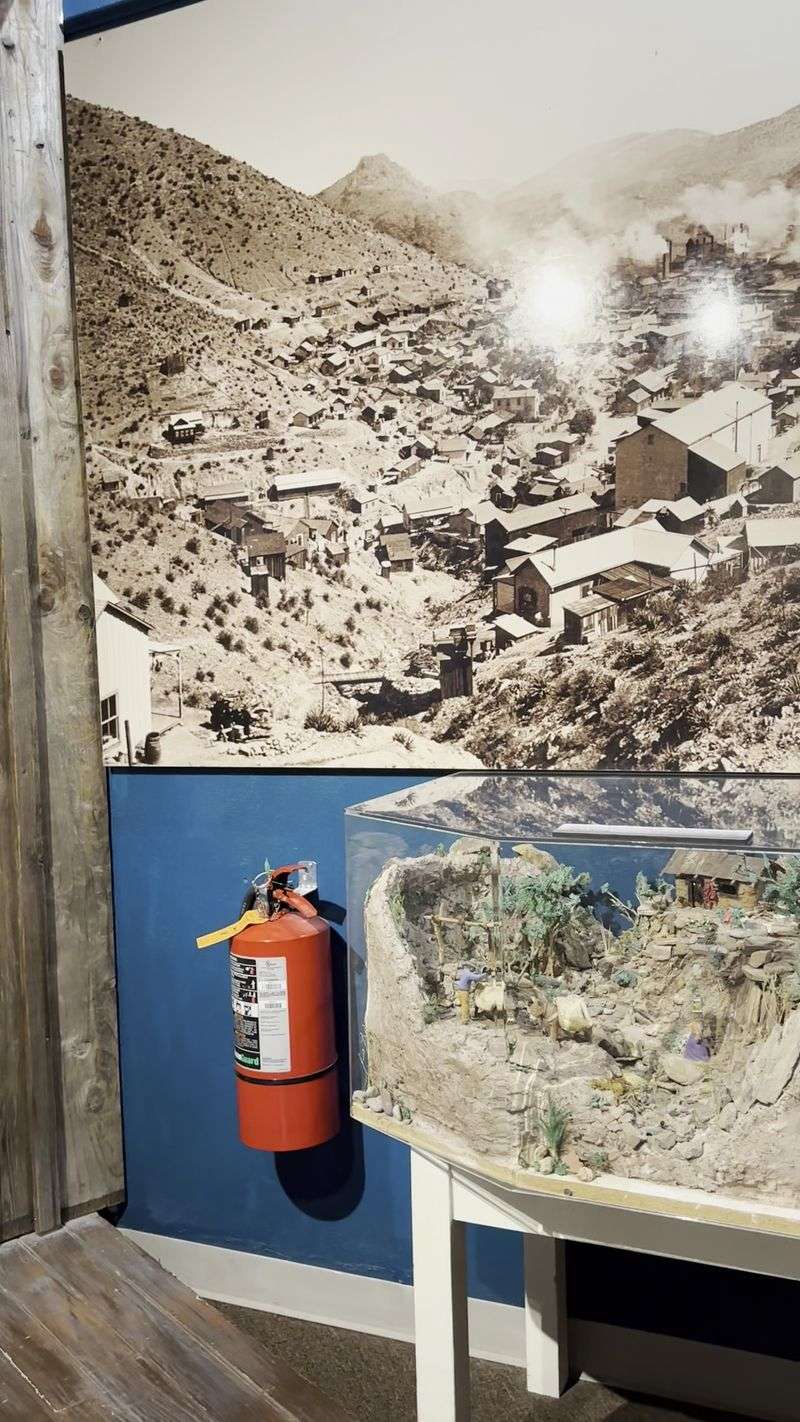
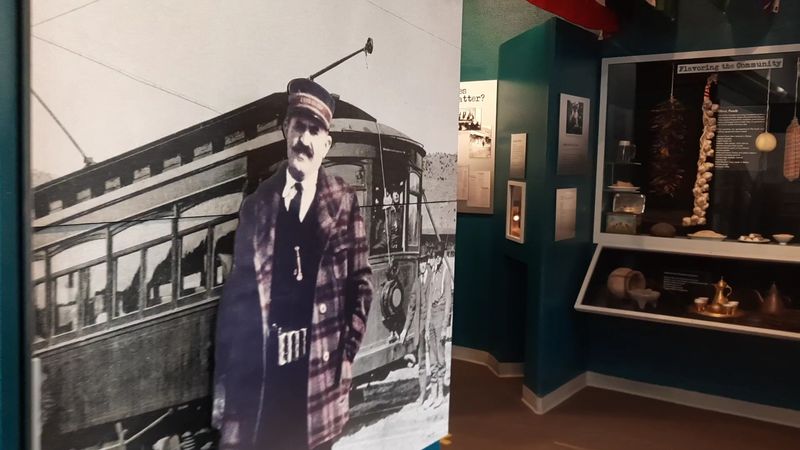
The museum makes this history clear on its main floor. The first level focuses on the history of the town, with displays that trace how a mining camp grew into a major Western city.
Copper was the engine. A remarkable amount of it came out of the ground here, and that output shaped the town’s growth, its people, and its role in the expansion of the West.
In the 1800s, Bisbee was, as many put it, the spot to be. The displays help explain why so many people chose to build their lives on these steep slopes.
The exhibits also show that life was not easy. Early settlers and miners faced hard work and tough conditions, and the museum gives a sense of that reality without turning it into a lecture.
Little stories are placed throughout the galleries. They turn big historical facts into personal moments that stick.
Once the town’s rise is clear, the next question is obvious. What did it actually take to pull all that copper out of the mountains?
Upstairs, Where the Mining Story Lives
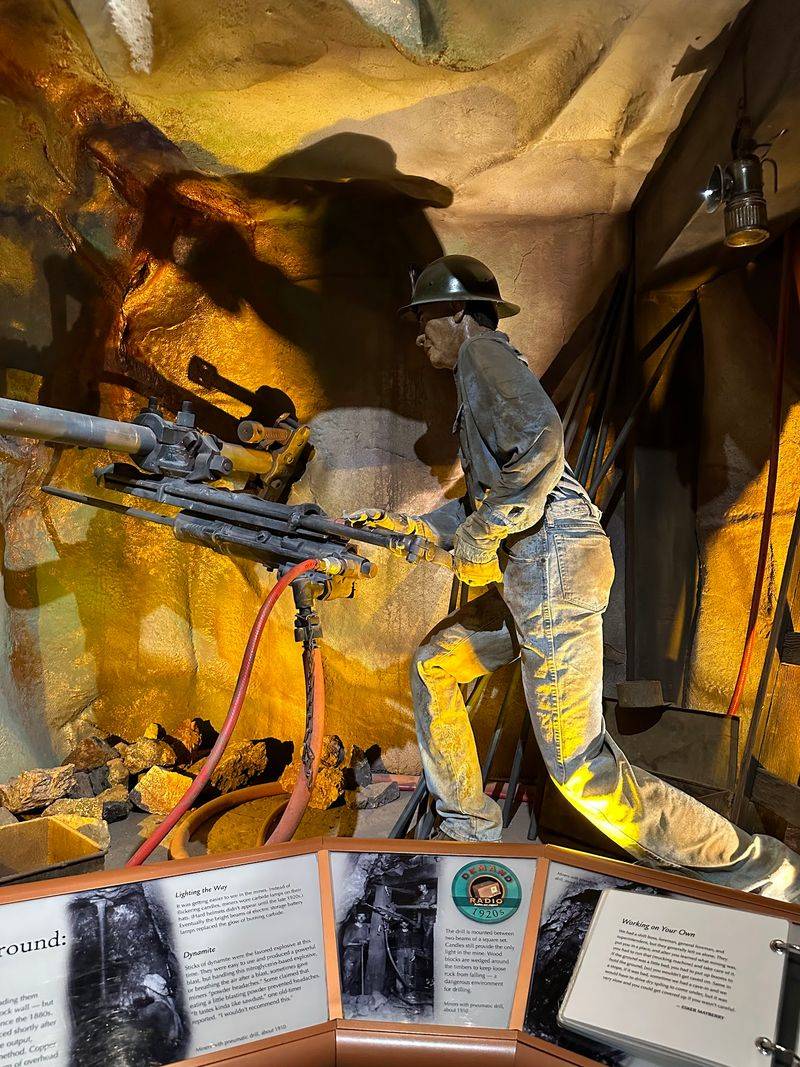
Climb to the second floor and the focus shifts from town life to the mines themselves. The whole level is dedicated to mining in Bisbee.
It works almost like a tutorial. The exhibits walk through how mining techniques changed over time, from early methods to later, more advanced approaches.
Mining safety gets real attention too. The displays explain the risks miners faced and how practices developed to protect them.
What sets this floor apart is the sense of daily life. Visitors come away with a clearer idea of what a working day looked like for the people who went underground.
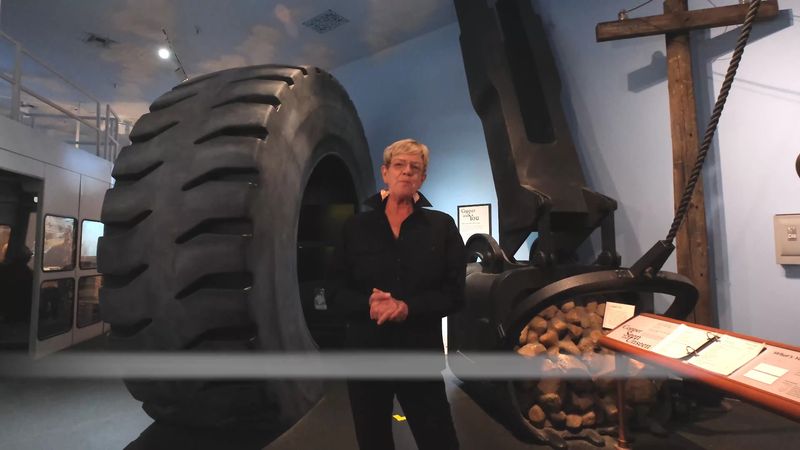
Mining artifacts fill the space. Tools, equipment, and objects tied to the work are presented in a well-organized way, so the story flows from one section to the next.
History buffs can spend a long time here reading every panel. Casual guests can skim and still leave with a solid understanding of how Bisbee’s economy worked.
Across the upper floor, the message is steady and clear. Copper did not simply appear, it was earned through skill, grit, and long shifts.
But the most eye-catching part of the museum is not a tool at all. It is what the miners were digging for.
Blue, Green, and Copper Gold
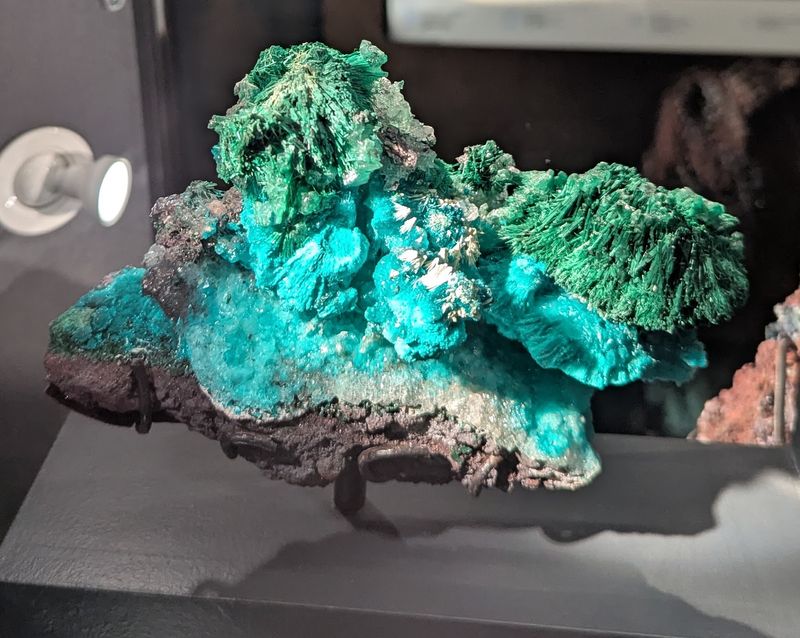
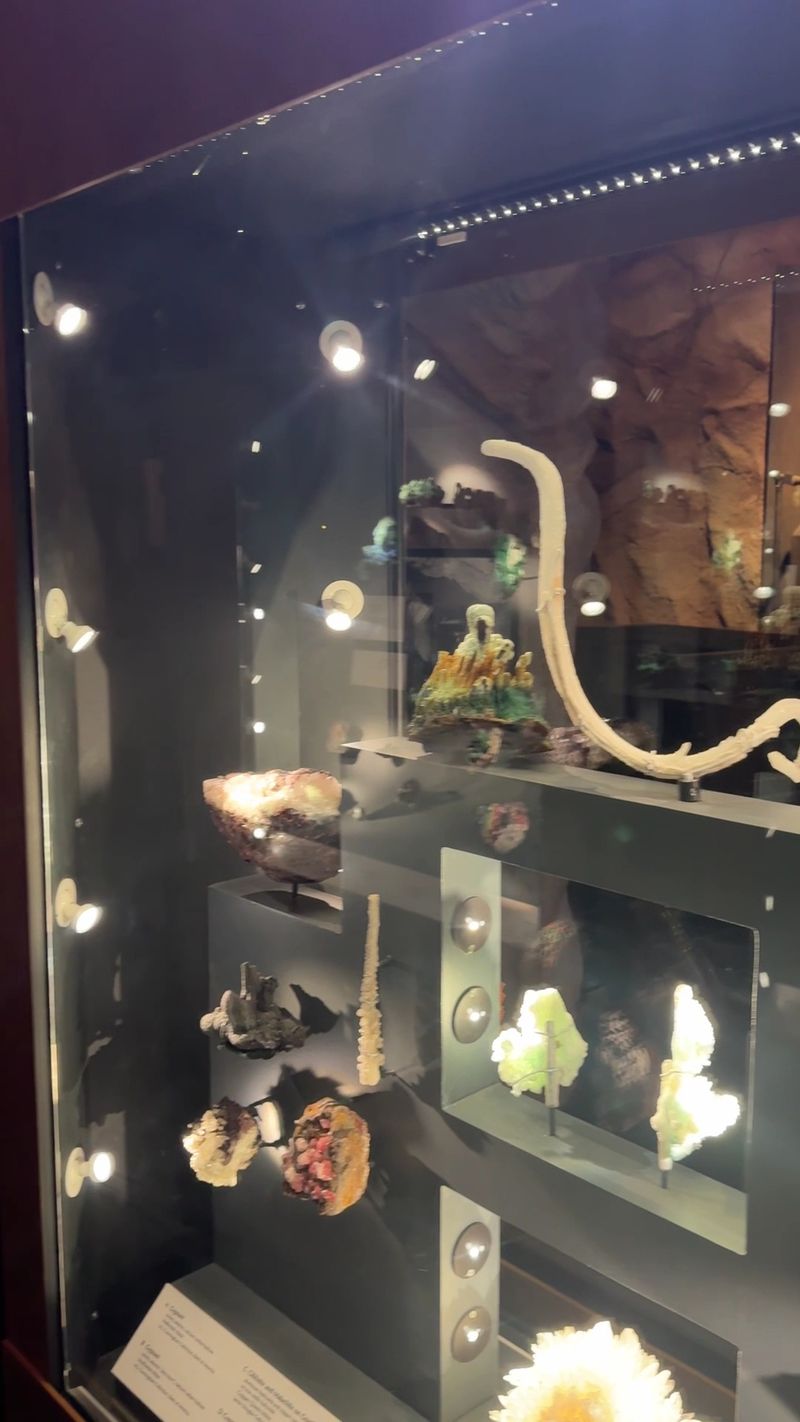
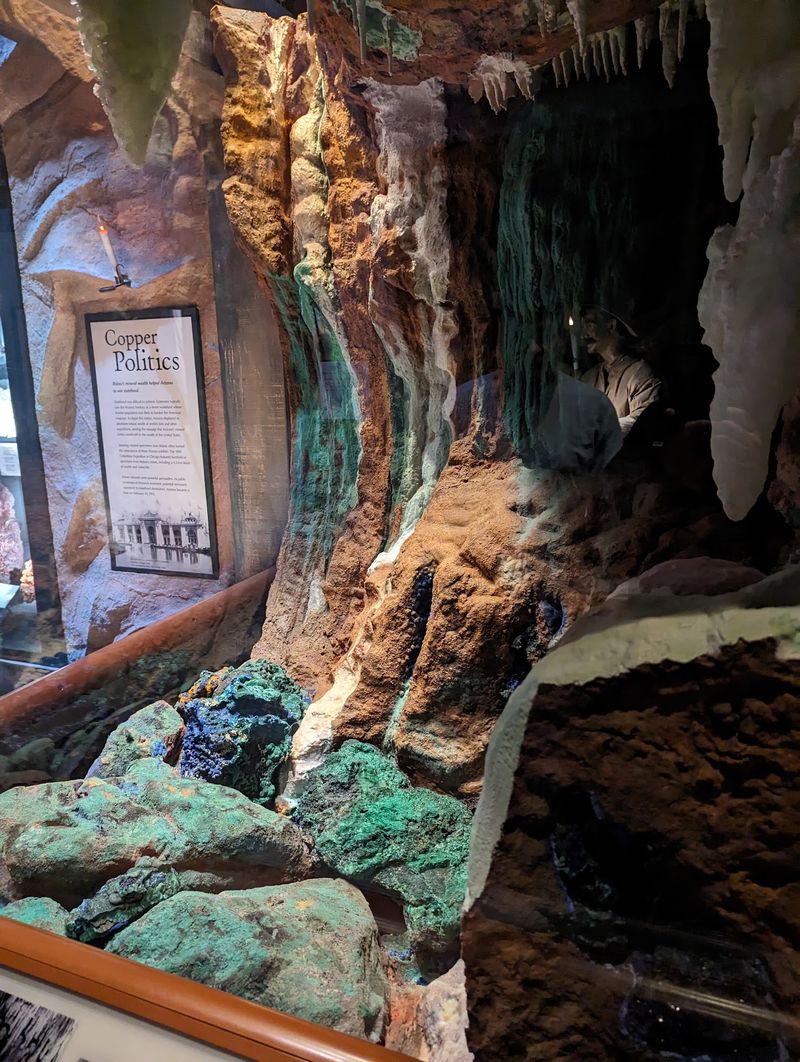
Minerals are the single most talked-about feature at this museum, and for good reason. The collection is widely described as fantastic.
The specimens on display were mined in the local area. That gives them extra meaning, since each piece connects directly to the ground beneath the town.
Azurite, with its deep blue color, is a standout. Malachite brings bright green tones, and calcite adds more variety to the mix.
Copper samples themselves appear throughout the displays. It is a fitting tribute, since copper is the reason Bisbee exists at all.
Rock fans tend to linger in this section the longest. Even those with no background in geology find the specimens striking and easy to appreciate.
The mineral exhibit upstairs ties into the Smithsonian-linked area mentioned earlier. It pairs visual appeal with context, so people learn what they are looking at and where it came from.
This part of the museum also reveals something quietly surprising about Arizona. Some of the finest mineral specimens in the country came from right here in our own state.
There is one more local treasure that deserves its own spotlight. It carries the town’s name.
The Turquoise That Carries the Town’s Name
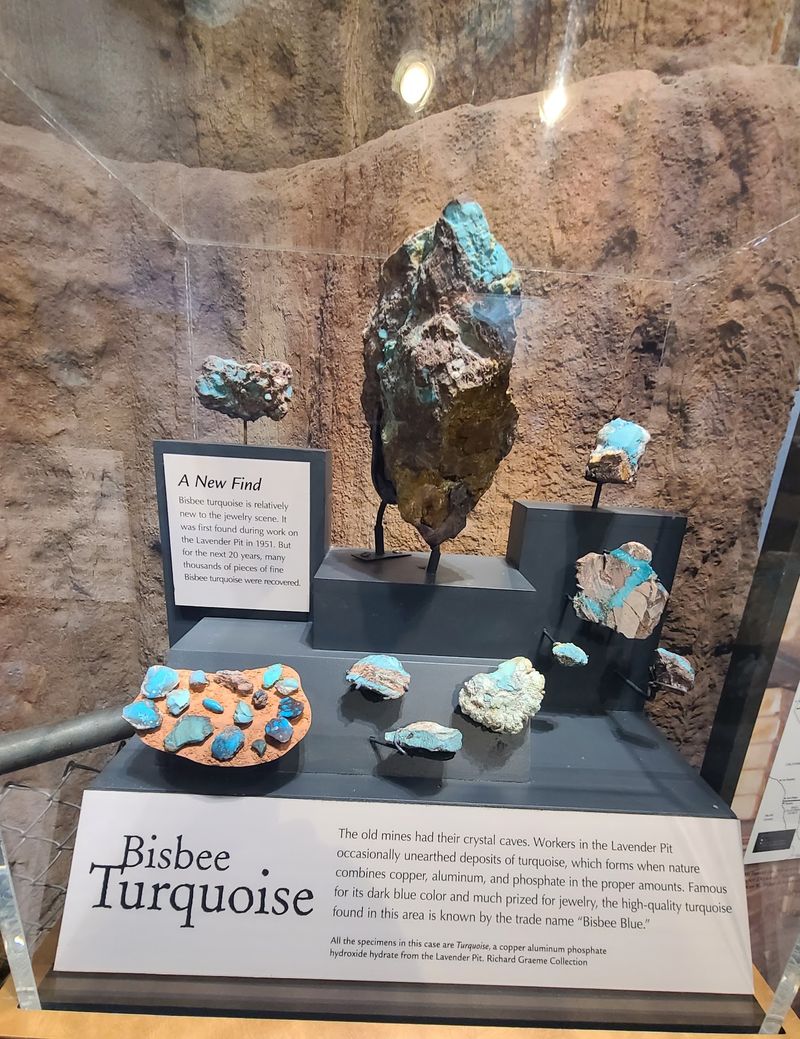
Some towns are known for a single landmark. Bisbee has a gemstone.
The museum features a Bisbee Turquoise collection, highlighting a stone tied closely to the town’s identity. It is a point of local pride and a favorite for jewelry lovers.
Alongside it, there is a collection of vintage Native American jewelry. These pieces add another layer to the region’s cultural story.
The combination works well. Visitors see raw minerals in one area, then see how people across the Southwest turned stones into art.
Some jewelry pieces are also available for sale. That means a visit can end with a piece of local heritage going home with you.
For Arizona residents, this section may spark a new appreciation for the state’s craft traditions. Turquoise shows up in shops across the state, but seeing a collection tied to one specific town makes it feel personal.
It also fits the larger theme of the museum. Everything connects back to the ground, the work, and the people who lived here.
Speaking of people, the museum does not shy away from one of the most dramatic chapters in local history.
Union Battles and Hard Truths
Mining towns were never only about rocks and paychecks. They were also places of conflict.
The museum offers an in-depth look at union-busting efforts in Bisbee’s past. It is one of the more serious parts of the visit, and it adds real weight to the town’s story.
Labor history can be complicated, but the exhibits present it clearly. Visitors learn how workers and companies clashed, and how those tensions shaped the community.
Many first-time guests arrive knowing nothing about this chapter. They leave with a much deeper understanding of Bisbee’s role in the development of the West.
That honesty is part of what makes the museum respected. It shows the achievements of the mining era alongside the struggles that came with it.
The topic also helps explain why Bisbee feels so different from many Arizona towns today. Its independent streak did not appear out of nowhere.
For older students and adults, this section may be the most thought-provoking part of the building. It invites conversation long after the visit ends.
Then, just when things feel heavy, the museum pivots to a topic that surprises nearly everyone. Baseball.
Baseball Legends in a Copper Camp
Few people drive to a mining museum expecting a sports history lesson. Bisbee delivers one anyway.
The museum highlights the surprising number of baseball legends who played in the area. It is one of those details that makes the town feel even bigger than its size.
Mining towns often built strong community life around sports. Games gave workers and families something to gather around outside of long shifts.
Seeing that side of Bisbee adds balance to the story. The town was not only a workplace, it was a home with hobbies, heroes, and weekend traditions.
Sports fans in Arizona will find this section especially fun. It connects a small mountain town to the broader story of America’s pastime.
It also fits the theme of this whole article. How many towns this small can claim a copper boom, a Smithsonian link, a signature gemstone, and a baseball legacy all at once?
The answer is not many. And it is exactly that stacking of odd, impressive facts that gives Bisbee its reputation for out-weirding much larger places.
Of course, stories hit harder when they are told by people with a personal stake. That is where the museum’s team comes in.
Docents With Deep Family Roots
Plenty of museums have helpful staff. This one has storytellers whose families have lived in the area for generations.
Many of the volunteer guides share personal anecdotes. Those stories add insights that no display case can offer.
The docents are known for being friendly and informative. Questions are welcomed, and the answers often come with a bit of local color.
Staff members are also known for being very helpful in general. Whether someone needs directions within the building or context on a display, support is close by.
Leadership plays a role too. The museum’s director and team work to keep things interesting and current by adding new exhibitions.
That effort matters for Arizona locals. A museum that changes over time gives people a reason to come back instead of treating it as a one-time stop.
Knowledgeable tour guides come up often when people talk about this place. The human element is clearly part of the appeal.
And for some guests, the people behind the scenes help with something very personal. The museum’s archives have drawn people from far and wide.
Archives for Family Detectives
Behind the public galleries lies something many people never expect. The museum’s archives are incredibly vast.
People come from far and wide to look up relatives from the past. For families with roots in Bisbee’s mining era, this can be a powerful experience.
Generations of workers passed through this town during its boom years. Many Arizona families, and families from across the country, trace part of their story back here.
The archives give those connections a place to be explored. Knowledgeable people working at the museum help make the search easier.
Genealogy fans often plan whole trips around research like this. A visit to Bisbee can become a chance to put names, dates, and places together.
Even for those without a family link, the existence of these records is impressive. It shows how seriously the museum takes its job of preserving the town’s memory.
Big-city museums often have large research collections. Finding something this extensive in a small mining town is another quiet surprise.
Now, after all that serious history, it is time for something a little more playful. Head outside.
Mine Cars Parked Outside, Including a Very Specific One
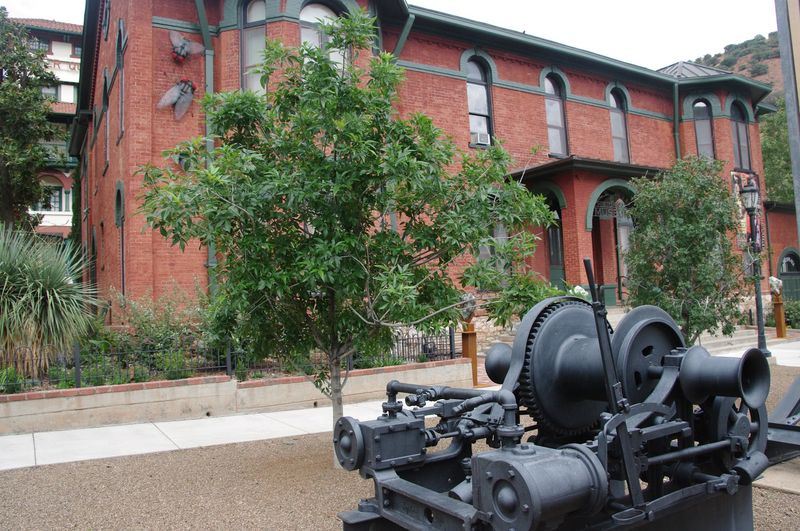
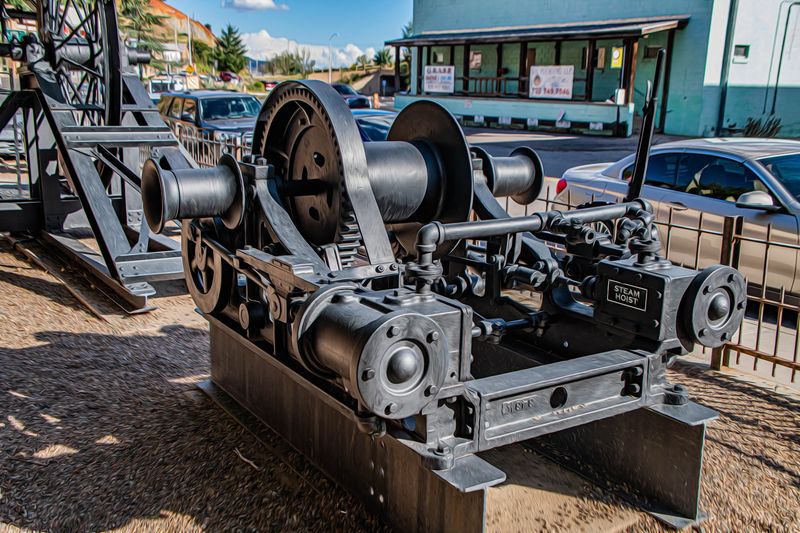
Not every exhibit waits behind the front doors. A collection of mining cars sits outside the museum.
These cars give a real sense of the equipment used underground. They are great for photos and easy for kids to enjoy.
One car in particular gets plenty of chuckles. It was designed for miners to relieve themselves underground, which answers a question most people never thought to ask.
It is a small detail, but it says a lot. Long shifts in the mines required practical solutions for everything, even the basics.
This quirky touch also fits Bisbee perfectly. The town has always had a sense of humor mixed into its history.
The outdoor display is a good way to start or finish a visit. It gives people a chance to stretch their legs before or after the galleries.
For families, it can be the moment that hooks younger visitors on the whole experience. Once they have seen the famous potty car, the rest of the museum suddenly looks more interesting.
Speaking of interest, the museum works hard to keep people engaged indoors too. Its exhibits go well beyond reading panels.
More Than Plaques on a Wall
A good museum keeps people moving from one display to the next without feeling tired. Bisbee’s does this with variety.
The exhibits mix reading with videos, sound bites, and props. That combination keeps things fresh for different kinds of learners.
There are also many interactive options. Hands-on elements help explain mining techniques and safety in a way that sticks.
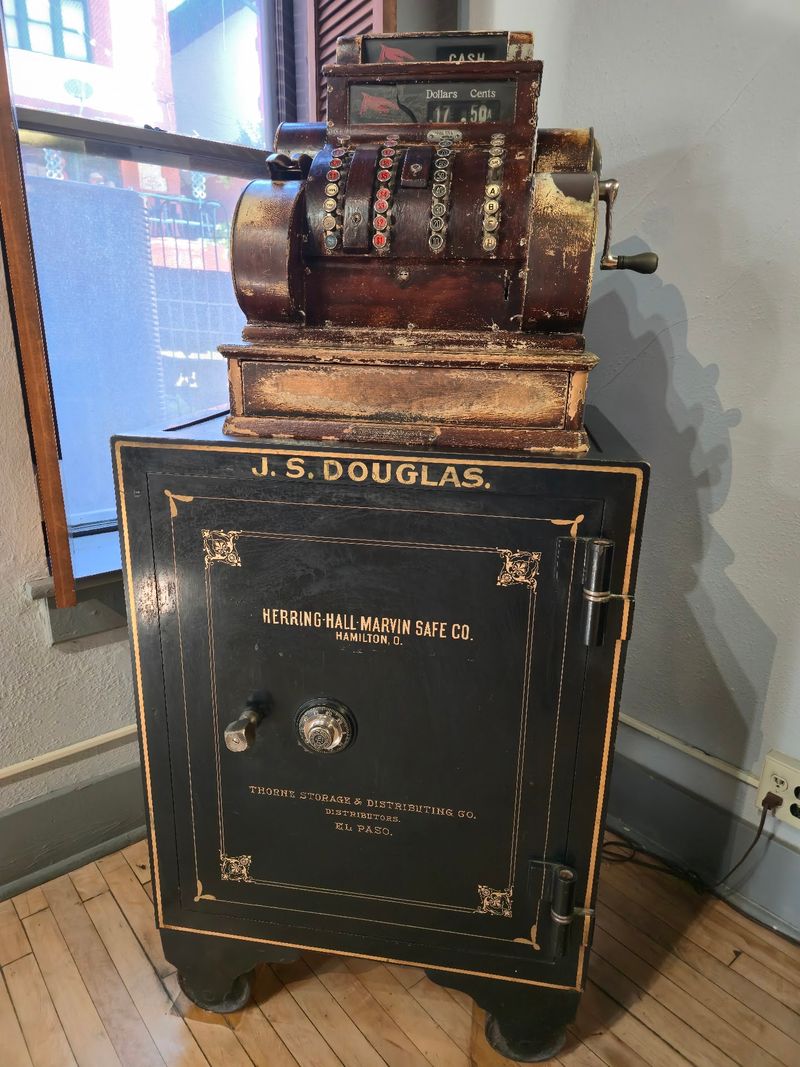
The museum also includes a room that remains original. It offers a direct connection to the building’s own past.
Everything is well organized, which matters in a place packed with this much information. Visitors can follow the story without getting lost.
People who arrive expecting a low-key visit are often surprised. Some even feel a little sad when they reach the end, because they wanted more.
A typical visit takes about one to two hours, depending on how much reading someone wants to do. That makes it easy to fit into a day in Bisbee.
The museum is also a nice, quiet break from busier parts of town. It works well as an indoor activity, especially on days when a pause from exploring sounds good.
And before leaving, there is one more stop that many people consider essential.
Hours, Admission, and the Tax-Free Gift Shop
Planning is simple here. The museum is open every day of the week from 10 AM to 4 PM.
Admission has been listed at around $10 for adults, with a discount for seniors and military. Recent figures show about $11 for seniors and veterans, so checking the museum’s website before a trip is a smart move.
Many people describe the entry fee as modest and well worth it. Supporting the museum also helps keep local history alive.
The first floor holds the town history, and the second floor covers mining. Clean restrooms are available as well.
Then there is the gift shop. It stocks books, memorabilia, jewelry, and plenty of interesting items that celebrate Bisbee’s heritage.
One detail stands out for bargain hunters. The gift shop is tax free, which makes browsing even more tempting.
Books about the town and region are a popular pick. Jewelry is another favorite, especially pieces connected to local stones and Native American traditions.
It is easy to spend extra time here after the exhibits. Many people leave with at least one small treasure.
With the basics covered, the next question is how to build a bigger Bisbee day around the museum.
Pairing the Museum With a Day in Old Bisbee
Timing can make a big difference in a small town. Historic Bisbee gets crowded, so weekdays tend to be the better choice.
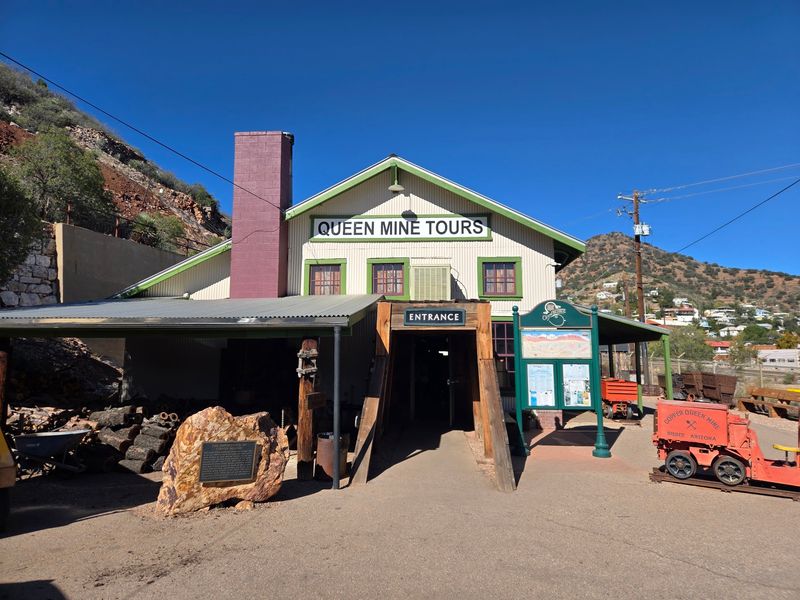
Many people pair the museum with the nearby Queen Mine Tour. Some do the mine tour first and then visit the museum, while others use the museum as their introduction.
Either order works well. Together, they give a complete picture of mining life, above ground and below.
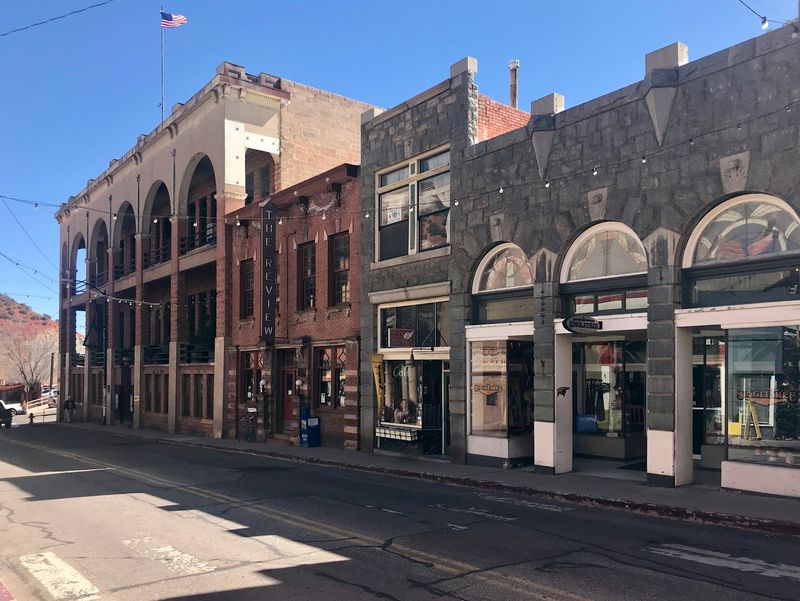
Beyond the museum, Old Bisbee is full of old architecture and interesting shops. The town has an authentic feel that many people prefer over more commercial tourist stops in the region.
Food options in the historic core can be limited. Heading into other parts of Bisbee past the copper pit opens up more choices.
Booking a place to stay in advance is also a good idea. Weekend demand can fill rooms quickly.
For Arizona locals, the drive to the southeastern corner of the state is part of the fun. It is worth the trip, and the museum turns a scenic getaway into something memorable.
In the end, Bisbee proves that size has little to do with significance. This small copper town holds a big story, and its museum tells it with heart, humor, and serious pride.


