
Affiliate disclosure: As an Amazon Associate I earn from qualifying purchases. Learn more
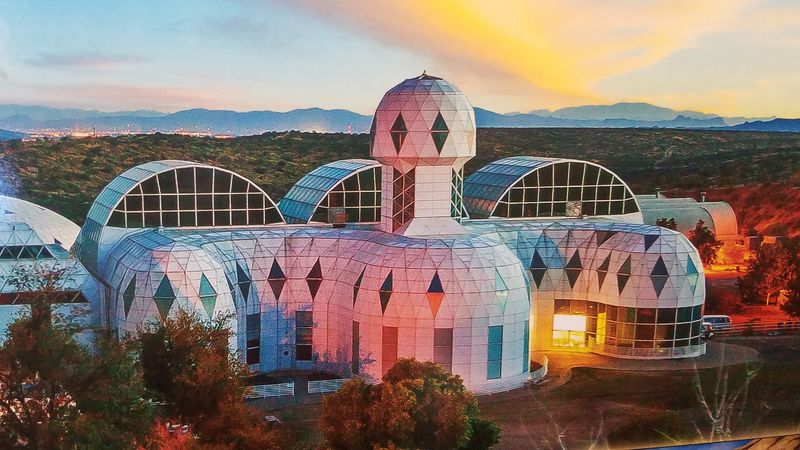
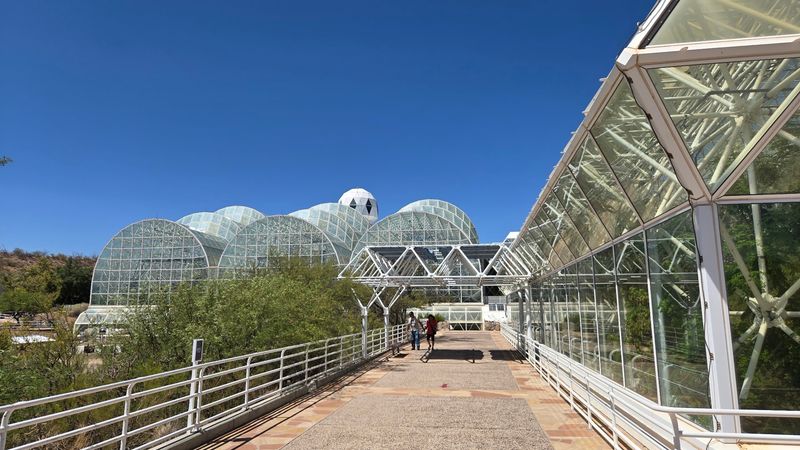
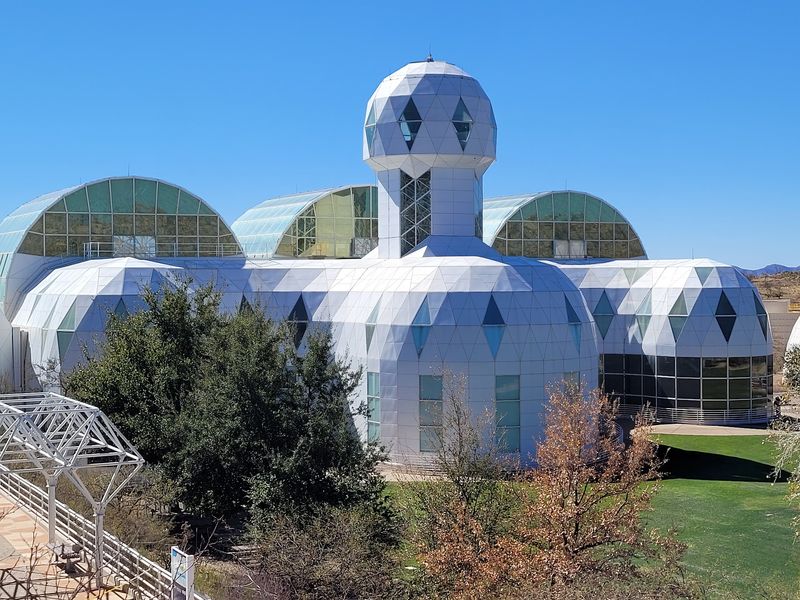
Out past the edge of Tucson, a lonely road climbs toward the foothills and ends at a glass structure that looks like it belongs on another planet. Inside, there is a rainforest, a fog desert, and a million-gallon ocean, all under one roof in the middle of the Sonoran Desert.
People once sealed themselves inside to test whether humans could live in a closed world, and the place still runs real climate research today. Many Arizonans have driven past the turnoff for years without ever stopping.
That is a shame, because few spots in the state pack this much science, history, and pure strangeness into a single visit. Keep reading to learn what waits inside, which add-on tour is worth the extra money, how long to plan for, and the simple tips that make the day far more comfortable.
A Glass World in the Foothills Near Oracle
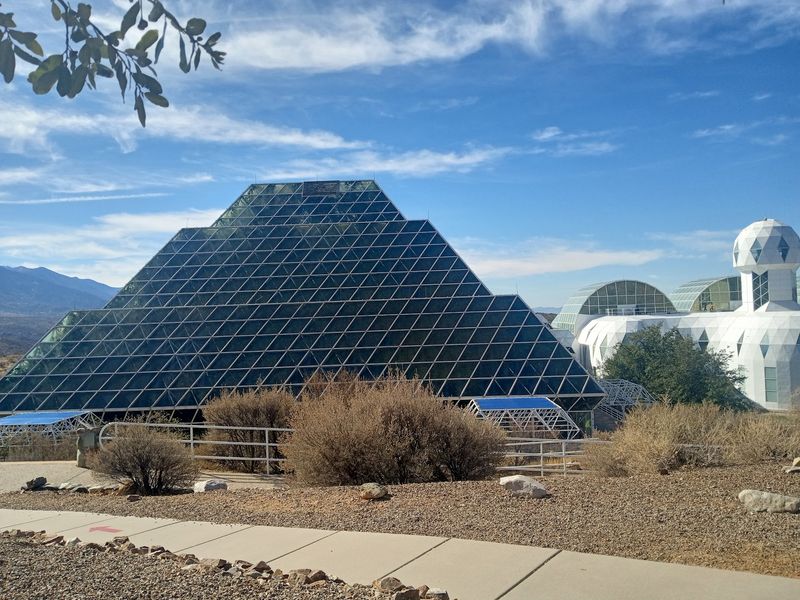
Few road trips in Arizona end at a building designed to copy the entire planet. Biosphere 2 sits at 32540 S Biosphere Rd, Oracle, AZ 85623, in the high desert north of Tucson.
Officially, it is a research institute. In practice, it works as one of the state’s most unusual science attractions, with tours that wind through a rainforest and an ocean inside a 3-acre greenhouse.
The name itself sparks questions. Staff at the front desk often explain that Biosphere 1 is Earth itself, and Biosphere 2 was built as a smaller, controlled version of our home.
That single idea frames the whole visit. Every room, pipe, and plant connects back to the question of how a living world keeps itself running.
The drive out feels isolated, which is part of the charm. Once there, the grounds tend to be pleasantly uncrowded, with plenty of space to roam and a huge parking lot, so finding a spot is never the stressful part of the day.
Locals who have heard the name for decades are often surprised by how much fits under that glass. The next stop on this story explains why it was built in the first place.
The Daring Experiment Behind the Glass
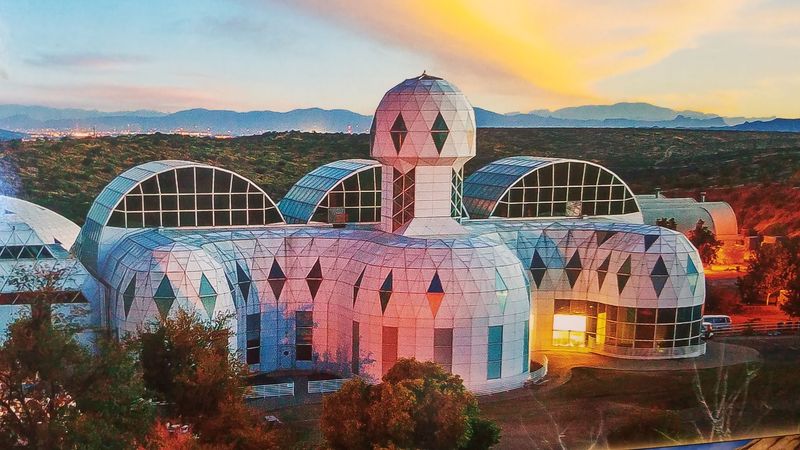
Back in the late 1980s, a group of people planned to live sealed inside a building in the Arizona desert. They were called Biospherians, and their mission tested whether humans could one day survive in closed habitats beyond Earth.
That story is the reason many people show up. Plenty of guests first learned about it through a documentary years ago and finally made the trip.
The tour keeps that history alive through short films placed along the route. They walk through the timeline in bite-sized pieces, so the background never feels like a lecture.
Parts of the old living quarters are still on the route. A walk through the kitchen and theater areas offers a glimpse of daily life for the crew who once called this place home.
Longtime fans do wish the tour leaned harder on the crew and the mission. Some who visited years ago remember more behind-the-scenes stories about the original team.
Still, the history behind the people who lived there remains one of the most talked-about parts of the experience. It is a space-age tale with an Arizona zip code.
Climate Science Under University Management
Here is the twist many people miss. Biosphere 2 is not a frozen relic of the 1990s.
Today, the University of Arizona manages the site, and it serves as a working center for climate and earth science research. Experiments are a frequent topic among those who tour it, and the current projects get plenty of screen time along the route.
That shift changes how the place feels. Guests who arrive expecting a quirky roadside stop often leave impressed by the research happening on the grounds.
Some even go home and add the institute to their donation lists. The mix of engineering, ecology, and environmental science gives the visit a hopeful tone instead of a purely nostalgic one.
Not everyone is thrilled by the focus, of course. History buffs sometimes say they care more about the original mission than the present-day studies.
For curious minds, though, seeing active science in a building with this past is a rare combo. Arizona gets to claim a world-class lab and a pop-culture landmark at the same address, which is a pretty good deal for one parking fee.
Rainforest Rooms in the Sonoran Desert
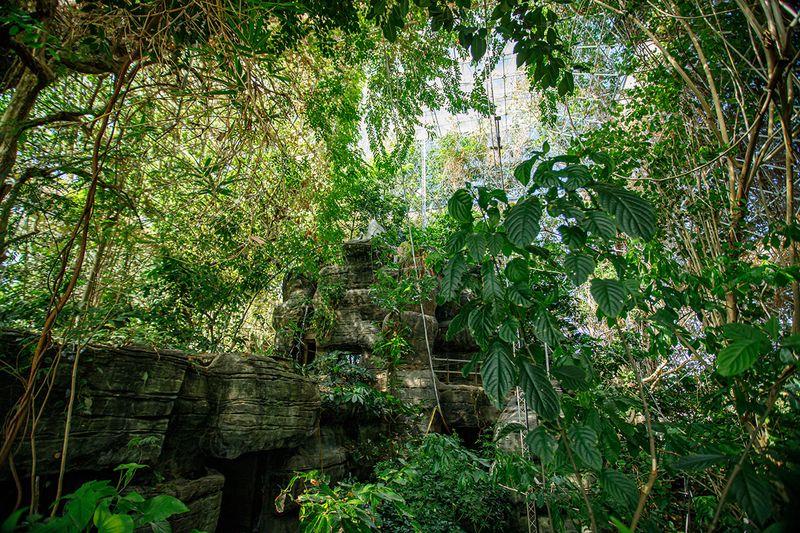
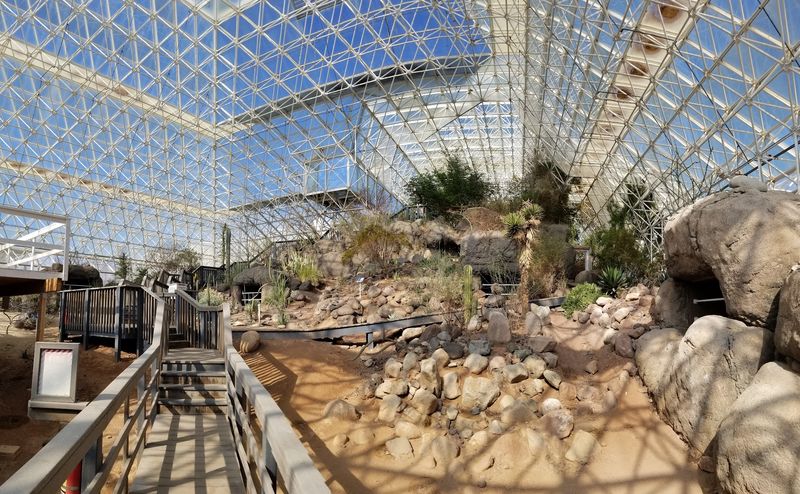
Ten minutes earlier, the view outside was cactus and rock. Then the doors open on a tropical rainforest.
That swing is the reason so many people call the visit a nice break from desert scenery. The rainforest biome is thick with greenery, and humidity inside can climb above 80 percent.
Coffee plants grow here, and guests have spotted seeds sprouting tiny seedlings all over the ground. Guava turns up in different corners too.
Photographers tend to love this stretch. The flora is a favorite subject, and the walkways let people move through at an easy pace.
Fair warning, though. Several rooms run warm and humid, so expect to work up a sweat.
Some guests say the biomes blend together more than expected. Others compare the calm mood to strolling through a botanical garden, only with a far stranger backstory.
Either way, standing in a jungle a short drive from Tucson is a hard trick to beat.
A Million-Gallon Ocean and a Fog Desert
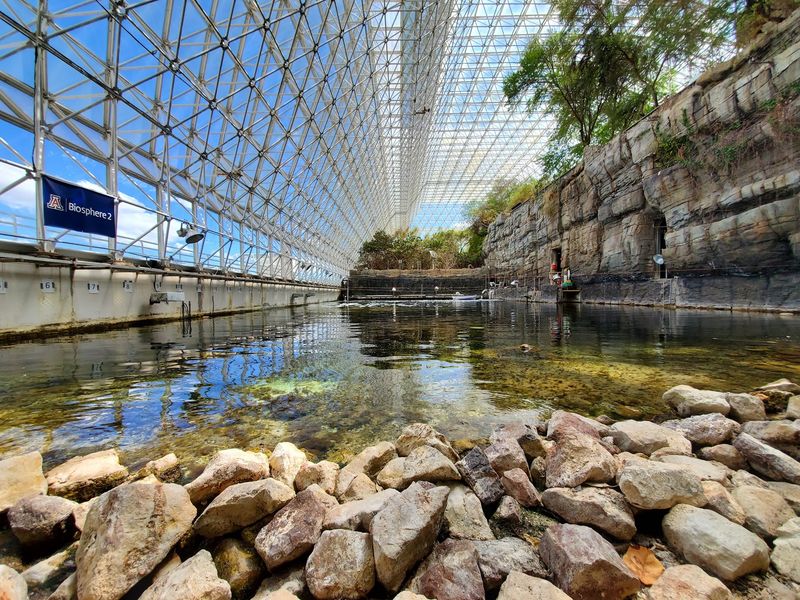
An ocean in Oracle sounds like a punchline. At Biosphere 2, it is a real exhibit.
The ocean biome holds a million-gallon coral reef setup inside the desert structure. Seeing that much water under glass, miles from any coast, strikes many guests as surreal.
Opinions on the ocean area do vary. Some people find it a little underwhelming compared with what they pictured, so expectations matter here.
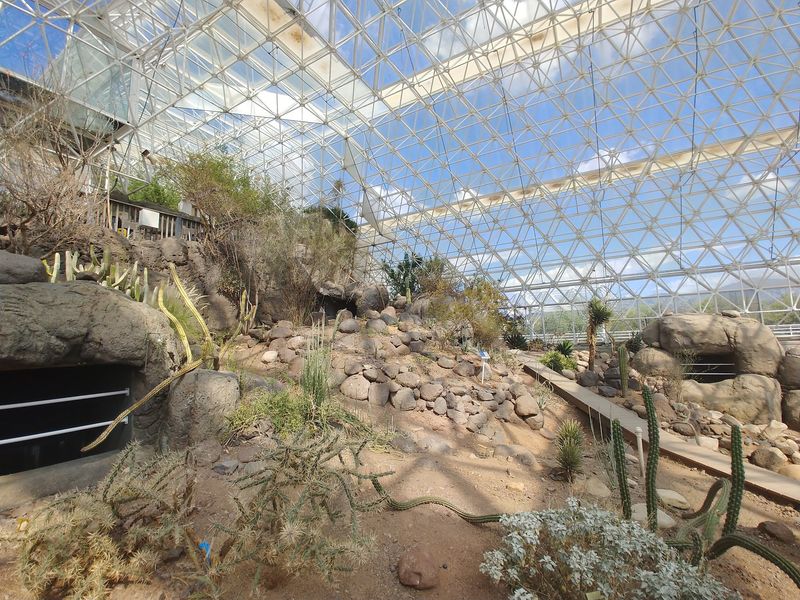
Nearby, the fog desert offers a sharp contrast to all that green. It shows a very different kind of dry ecosystem from the one waiting outside in the Sonoran Desert.
Moving between these zones is what makes the building feel so packed. In one walk, the route covers rainforest, ocean, and desert, each with its own climate.
That variety is the heart of the place. Few buildings anywhere try to squeeze this many environments into a single footprint, and fewer still actually pull it off in the middle of Arizona.
The Lung Tour Worth the Upgrade
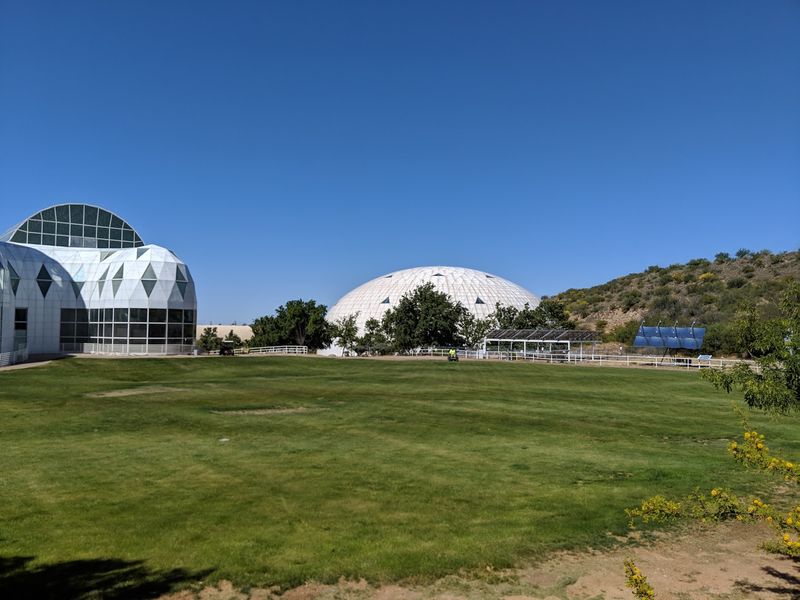
Buildings do not usually breathe. This one sort of does.
The lung is a giant engineering feature that expands and contracts to handle changes in air pressure inside the sealed structure. Without it, the glass world could not cope with temperature swings.
Access comes through an add-on Lung Tour, which costs extra beyond the self-guided route. It is one of the most recommended upgrades on site.
People who take it say it finally makes the whole system click. Standing in front of the lung shows how delicate and connected everything inside really is.
Engineering fans especially enjoy this part. It offers the behind-the-scenes look that the general tour does not fully provide.
Some guests also add a library tour to the day. Between the lung and the standard route, a visit can stretch past two and a half hours.
For anyone torn on whether to pay more, the lung is the safest bet. It turns a garden walk into a lesson in how a closed world stays alive.
An App That Does the Narrating
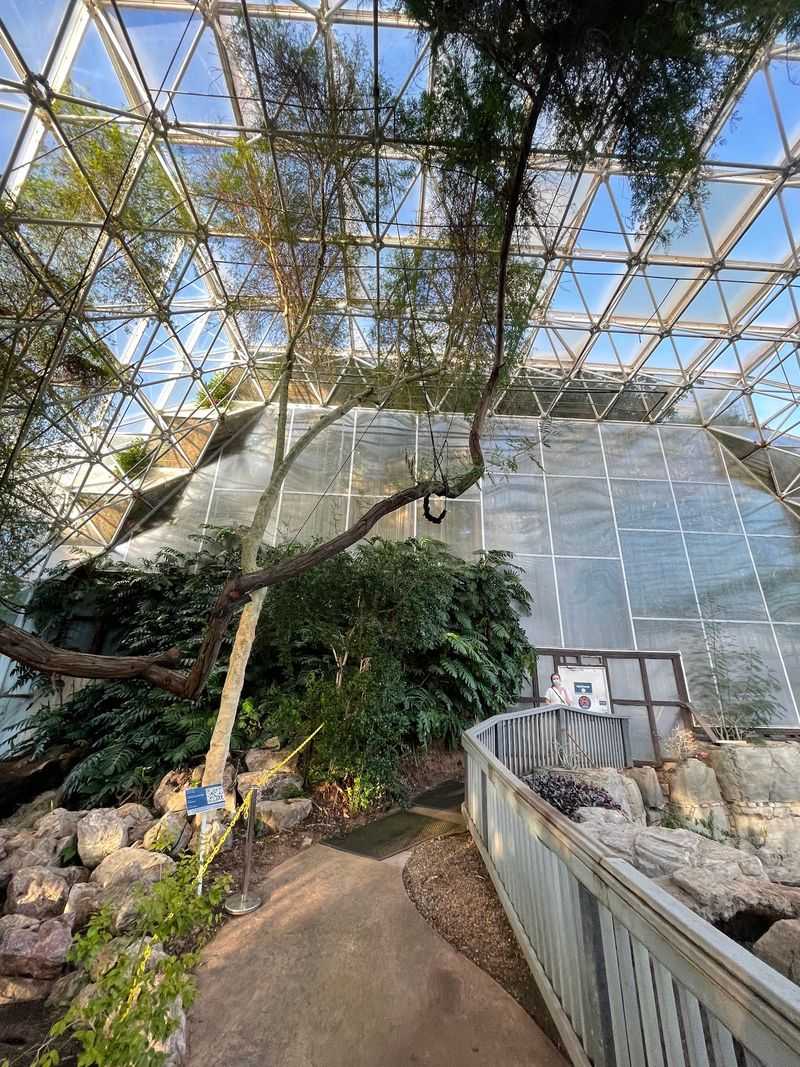
Gone are the days of following a guide with a flag. The main tour now runs through the Biosphere 2 app.
Guests listen to narration and watch short videos at marked stops as they go. Arrows on the ground keep the route easy to follow.
The big tip is to download the app before arrival. It pulls in more than 200 steps of content, and the full download can take around 30 minutes.
WiFi is available on site if needed. Still, letting it update at home saves time at the gate.
Many people love setting their own pace. Some spend about an hour on the general route, while others take two hours to see everything thoroughly.
There are trade-offs. Bright sun can make phone screens hard to see outdoors, and nearby groups watching the same video at different points can be distracting.
A few longtime fans miss live guides who could answer questions. Earbuds and a fully charged phone go a long way here.
Friendly Faces Along the Route
Self-guided does not mean alone. Staff members are stationed throughout the facility to answer questions.
Friendly staff are one of the most frequent themes tied to the site. People describe employees as welcoming, sharp, and good at explaining the exhibits.
The kitchen area often earns special praise. Conversations there tend to fill in the history that screens leave out.
Groups with older members have been helped with shortcuts that avoid stairs as much as possible. Little gestures like that leave a lasting impression.
Experiences are not perfect every time. A few guests have felt ignored at the front desk on busy days.
Overall, though, the human side of the tour stands out. Asking questions is encouraged, and the answers often turn into the best stories of the trip.
Who Gets the Most Out of It
Science lovers are the obvious winners here. The mix of engineering, ecology, and space history gives curious minds plenty to chew on.
Older kids and teens who enjoy science tend to have a great time. Younger children may lose interest, since much of the tour involves videos and displays rather than hands-on activities.
That lack of interactivity is a common wish-list item. Some guests hoped for deeper explanations of how the systems worked and how rainwater was managed.
Fans of documentaries about the original mission usually leave satisfied. Seeing the real thing after years of curiosity carries its own payoff.
Plant lovers get a full botanical garden experience on top of the science. The calm, uncrowded pace suits people who like to linger.
For anyone expecting a theme park, this is not it. Treat it as a living museum, and it shines brightest.
Getting Around With Wheels and Stairs
Accessibility comes up often, and the news is mostly good. Wheelchair users report getting around most of the areas without problems.
One section does require stairs. Even so, guests who skip it say the rest of the visit was well worth the trip.
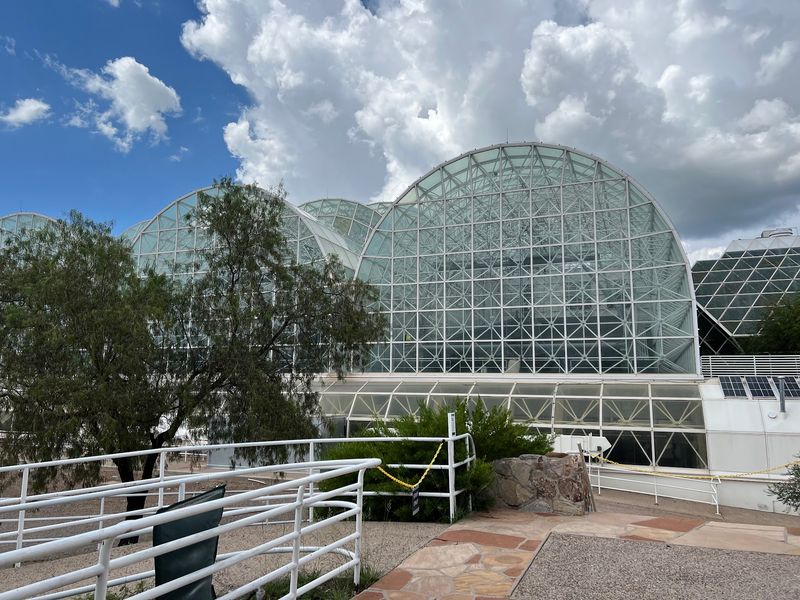
The campus is sprawling, with stairs and varied terrain in places. Sturdy sneakers or hiking shoes make the walk far easier.
Staff have a track record of helping slower walkers find routes that avoid steps. Asking at the start can save energy later.
Plan for some walking outdoors between glass structures. The route moves inside and outside more than people expect.
With a little planning, nearly every group can enjoy the main highlights. It is a big place, but not an unwelcoming one.
Hours, Heat, and a Water Bottle
Timing is simple. Biosphere 2 is open daily from 9 AM to 4 PM, every day of the week.
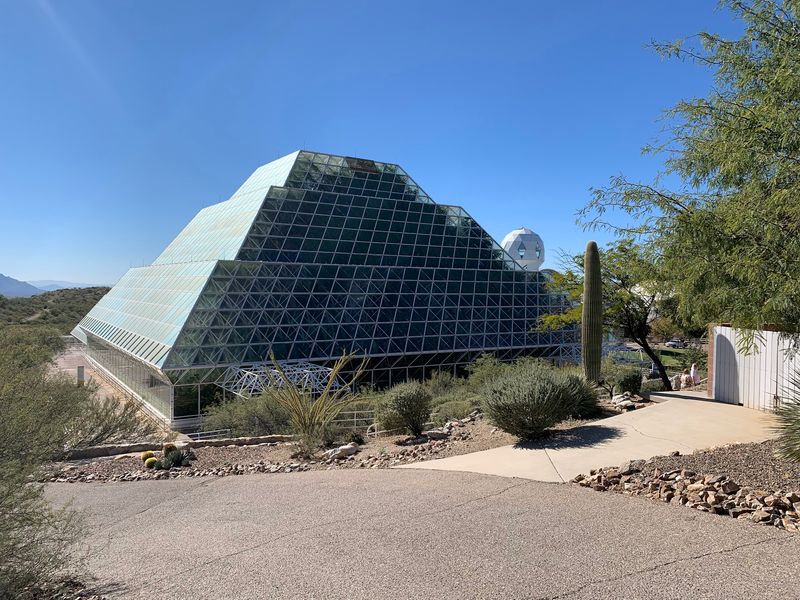
The tour starts outdoors, and Arizona heat can be rough, especially in summer. Even a record-warm March day caught some groups off guard.
Bring a water bottle. Fountains near the start and refill stations along the route make it easy to stay hydrated.
Dressing in layers helps a lot. The day can swing from dry desert heat to steamy rainforest humidity to cooler air in the technical areas.
A hat and sunscreen are smart for the outdoor stretches. Morning arrivals usually beat the worst of the afternoon heat.
Budget at least an hour for the general route, or two to three hours with add-on tours. Ticket prices are best checked on the official website before heading out.
A unique gift shop rounds out the stop before or after the tour.
A Backyard Wonder Worth the Drive
Some places ask for a long flight. This one just needs a drive into the hills near Oracle.
Biosphere 2 blends a bold chapter of space-age history with real climate research and a surprising lineup of biomes. Few attractions in Arizona, or anywhere, try to fit this much into one building.
It is not flawless. The app has quirks, the heat is real, and history fans may want more crew stories.
Yet most people leave impressed, and many say it beat their expectations. Plenty wish they had come sooner.
Download the app, pack water, and consider the Lung Tour. Those three moves set up a smoother day.
For Arizonans hunting a world-class oddity close to home, this glass world delivers. Arizona built a second Earth, and it is waiting just up the road.


