
Affiliate disclosure: As an Amazon Associate I earn from qualifying purchases. Learn more
Most folks racing across northern Arizona keep their eyes locked on the road, never guessing that ancient trees turned to solid stone sit just off the interstate. There is a place where 200-million-year-old logs sparkle with mineral colors, where badlands ripple in blue and purple layers, and where a slice of old Route 66 still runs through the desert.
Longtime residents sometimes forget it is even here, tucked between Holbrook and the New Mexico line. What waits inside surprises nearly everyone who slows down long enough to look.
Colorful cliffs, prehistoric petroglyphs, and stone forests reward the curious more than the rushed. Keep reading to learn where this quietly spectacular spot hides and why it deserves a full day of your attention.
Where Ancient Stone Forests Meet Interstate 40
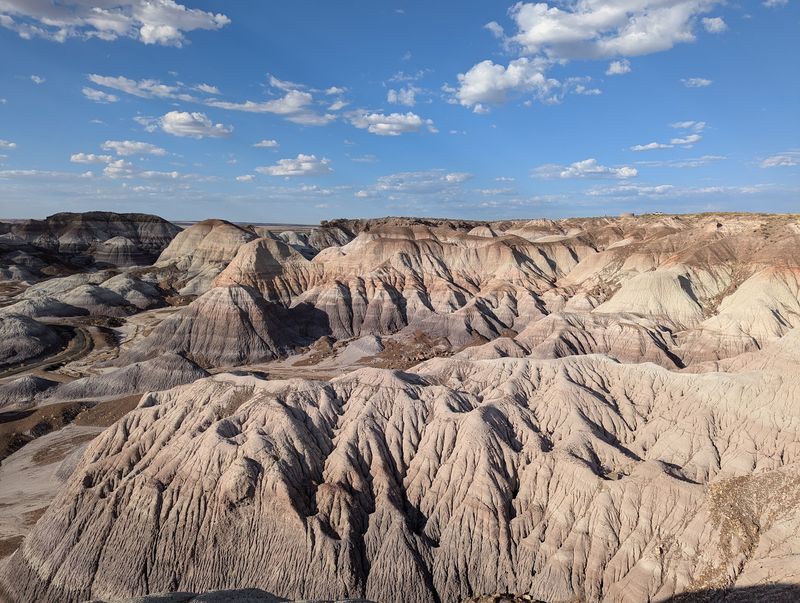
Tucked into northeastern Arizona, Petrified Forest National Park stretches across a broad swath of high desert with entrances that connect neatly to major routes. The northern gate sits along Interstate 40 near Exit 311, while the southern side links to Highway 180 and the town of Holbrook.
The official address is simply Arizona, and the park runs from one end to the other in a long ribbon of scenic road. That layout lets you drive straight through, stopping at overlooks and short trails along the way.
Many people cover the highlights in two to three hours, though the park easily fills an entire day. Holbrook makes an easy home base, and driving in early helps you beat both crowds and afternoon heat.
It holds a 4.8-star standing across more than fourteen thousand ratings, which says plenty about how the visit lands.
Trees That Turned To Solid Rock
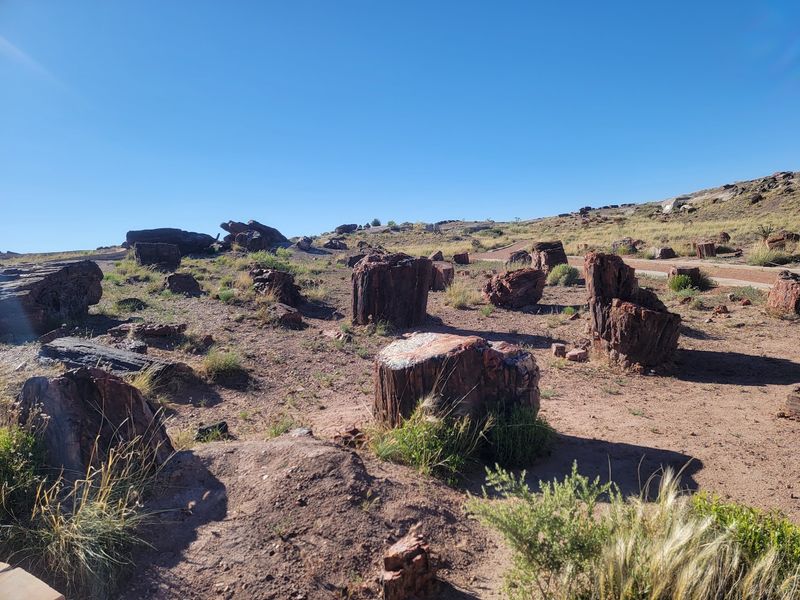
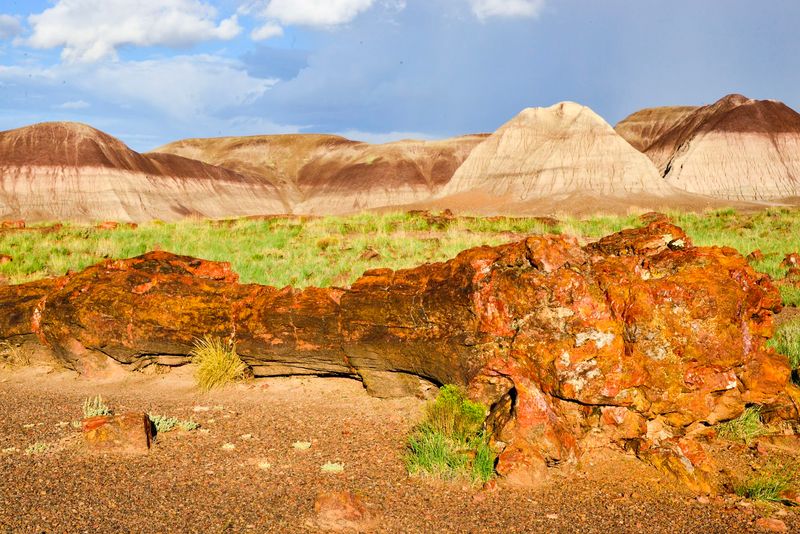
The park earns its name from logs that look ordinary from a distance yet reveal something remarkable up close. Pieces that resemble regular fallen timber suddenly show crystal-like patterns and vibrant mineral colors when you lean in for a better look.
These trees turned to stone over millions of years while somehow keeping their original wood patterns intact. That means you can trace grain and bark textures on something roughly 200 million years old.
Fun fact worth carrying with you: the wood absorbed minerals like quartz over ages, which is why so many pieces sparkle in the morning sun. Whole sections shimmer like a rainbow menagerie when the light hits right.
It is the kind of detail that turns a simple desert walk into a small time-travel lesson. Standing over stone logs that predate the dinosaurs tends to reset how you think about the ground beneath your feet.
The Painted Desert’s Shifting Colors
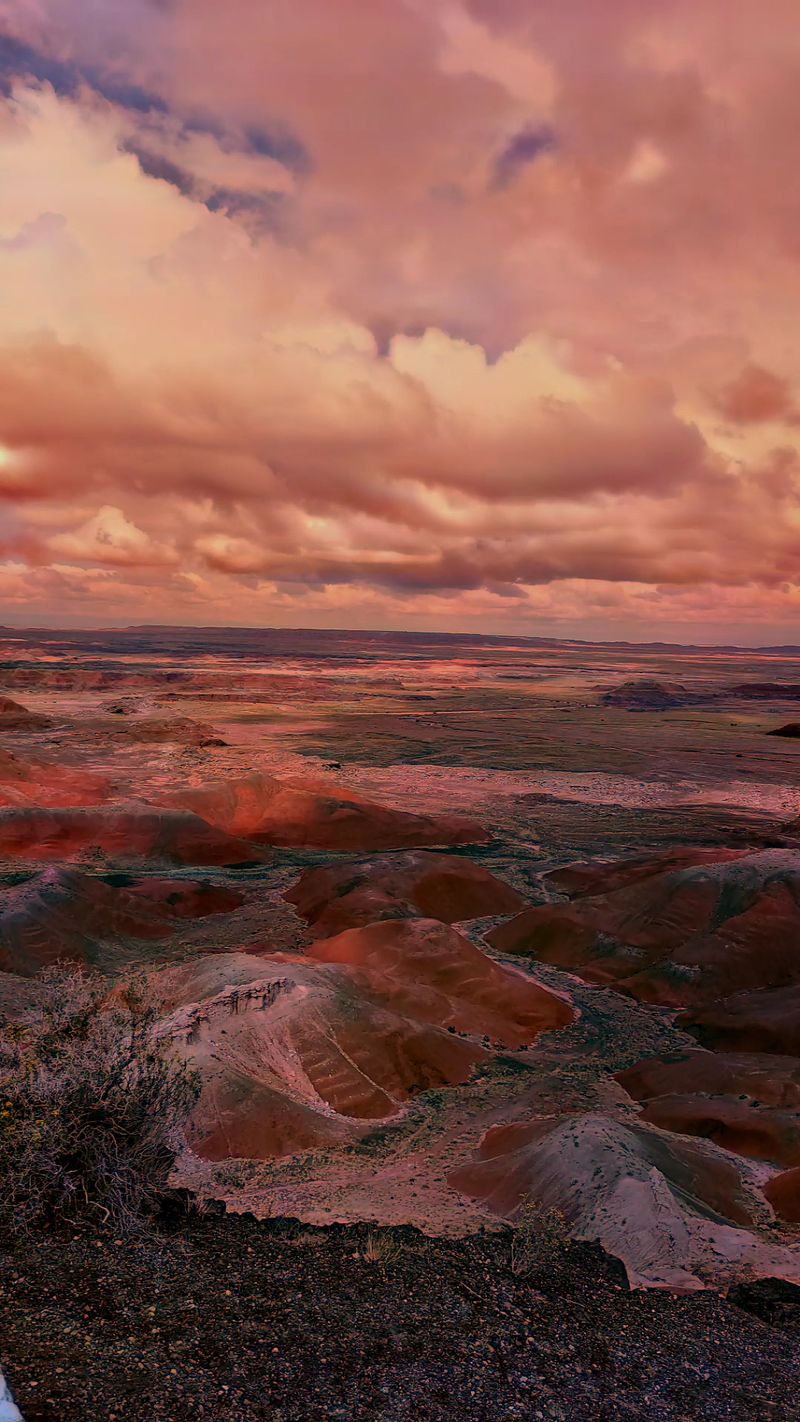
Sweeping across the northern end of the park, the Painted Desert unfurls in soft reds, purples, and golds that stretch clear to the horizon. The scenic drive here opens with a string of overlooks where you can park and take in the layered hills.
What makes this stretch special is how the colors seem to change as light shifts through the day. The same ridge can read warm and glowing in one hour and cool and dreamlike in another.
Overlooks like Tiponi Point give you tantalizing views without demanding a long walk. Several stops include wheelchair-accessible paths, so the scenery stays open to a wide range of guests.
People consistently describe the landscape as otherworldly, and the description fits. It is a slow, sweeping kind of beauty that rewards you for lingering rather than rushing past.
Blue Mesa’s Otherworldly Badlands
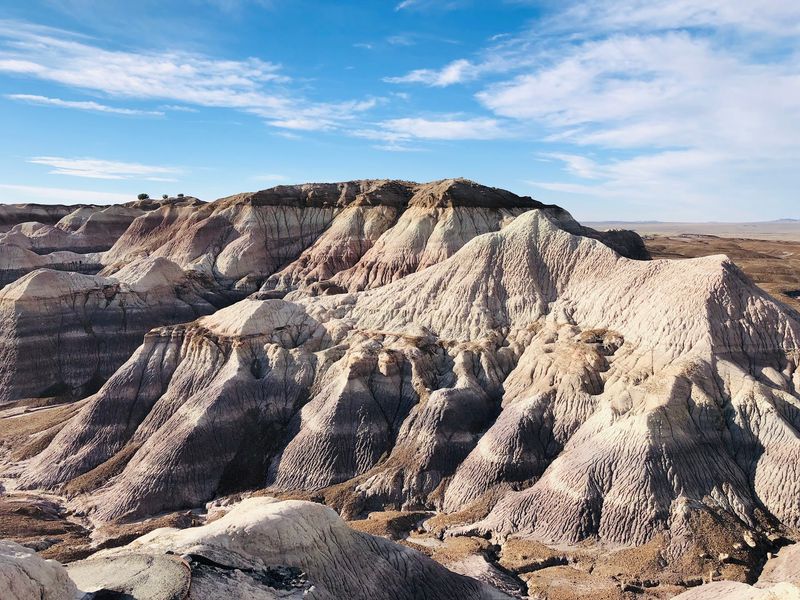
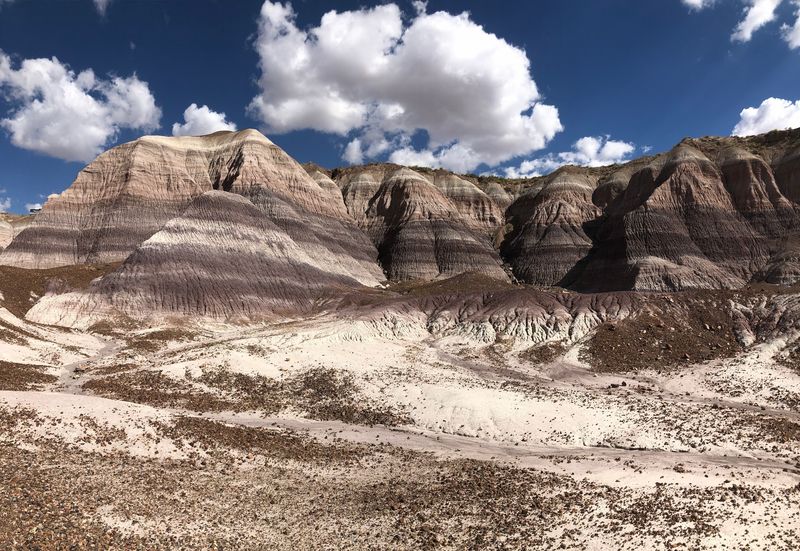
Few corners of the park spark as much awe as Blue Mesa, where layered blue, purple, and gray badlands ripple across the terrain. Many travelers name it their favorite stop, and it is easy to understand why.
A trail loops down among the striped hills, giving you a close view of the surreal color bands. The short descent and climb make for the most notable elevation change in the park, roughly 300 feet, though most people find it manageable.
The Blue Mesa Scenic Road leads you right to the trailhead, so the payoff comes with little effort. The landscape genuinely looks alien in the best possible way.
This is a stretch that rewards curiosity and slowing down. Instead of adrenaline, it offers detail, texture, and the quiet thrill of scenery unlike anywhere else in the state.
Crystal Forest And Its Sparkling Logs
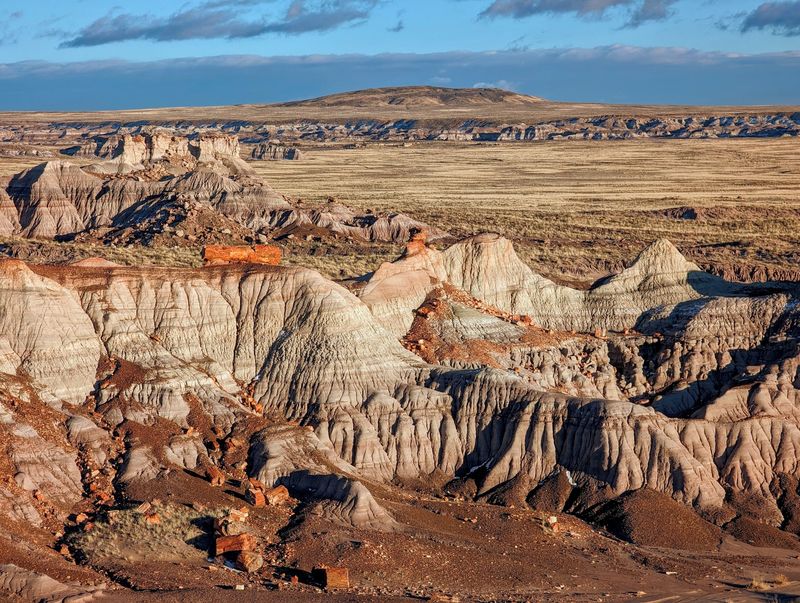
Down in the park’s midsection, Crystal Forest packs an incredible concentration of petrified wood into an easy walking loop. Logs here sparkle with quartz and mineral colors that photos simply cannot fully capture.
Seeing trees that clocked in at more than 200 million years old, glinting up close, tends to stick with people long after the drive home. The trail is short and gentle, so it welcomes almost anyone.
Some longtime guests note that the sheer number of visible logs has thinned compared with decades past, a change that stirs a little wistfulness. Even so, the display remains one of the park’s signature sights.
It stands as proof that you do not need a strenuous hike to encounter something extraordinary. A slow stroll here delivers wonder without ever raising your heart rate.
Ancient Petroglyphs At Newspaper Rock
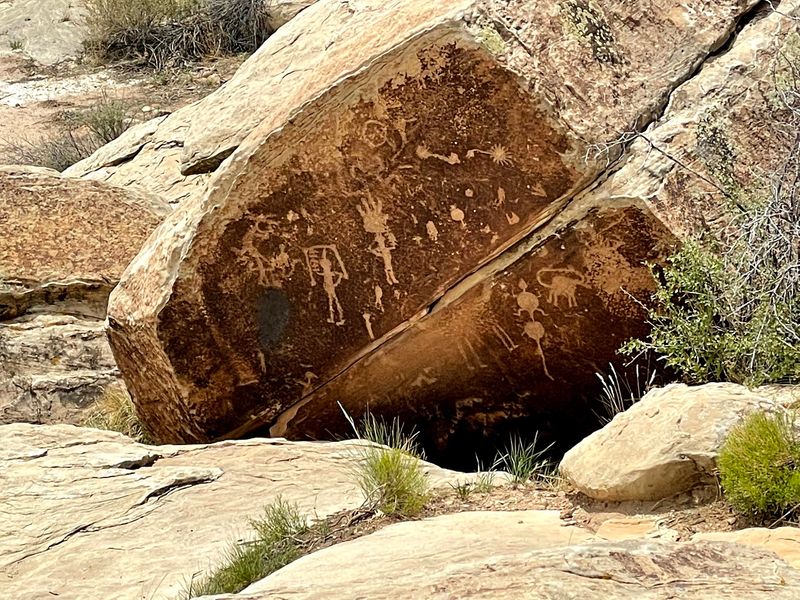
Long before highways crossed this desert, ancestral Indigenous peoples left their marks on the stone, and those carvings still greet travelers today. Petroglyphs rank among the park’s most mentioned features, with Newspaper Rock a favorite spot to see them.
The images reach back to prehistoric times, offering a window into the people who once called this valley home. Nearby you can also spot remnants of ancient dwellings scattered across the landscape.
Pull-offs make it simple to stop, look, and reflect without a demanding hike. The combination of rock art and open desert views turns a quick stop into a meaningful pause.
For anyone drawn to human history as much as geology, these carvings add a whole extra layer to the visit. They remind you the ground here has held stories far longer than the road out front.
A Slice Of Historic Route 66

Here is a claim to fame few parks can match: a segment of historic U.S. Route 66 runs right through Petrified Forest.
It is the only national park known to hold a piece of the famous highway inside its borders.
Near the interstate you can stop and see a vintage Studebaker parked along the old alignment, along with a marker showing where the road once crossed. It makes a fun and one-of-a-kind photo spot.
The touch of mid-century Americana sits in surprising harmony with 200-million-year-old logs a short drive away. That mix of deep time and open-road nostalgia gives the park an unusual double personality.
Road-trippers especially get a kick out of standing on the ghost of the Mother Road. It is a small stop that adds a big dose of character to the day.
The Rainbow Forest Museum And Visitor Centers
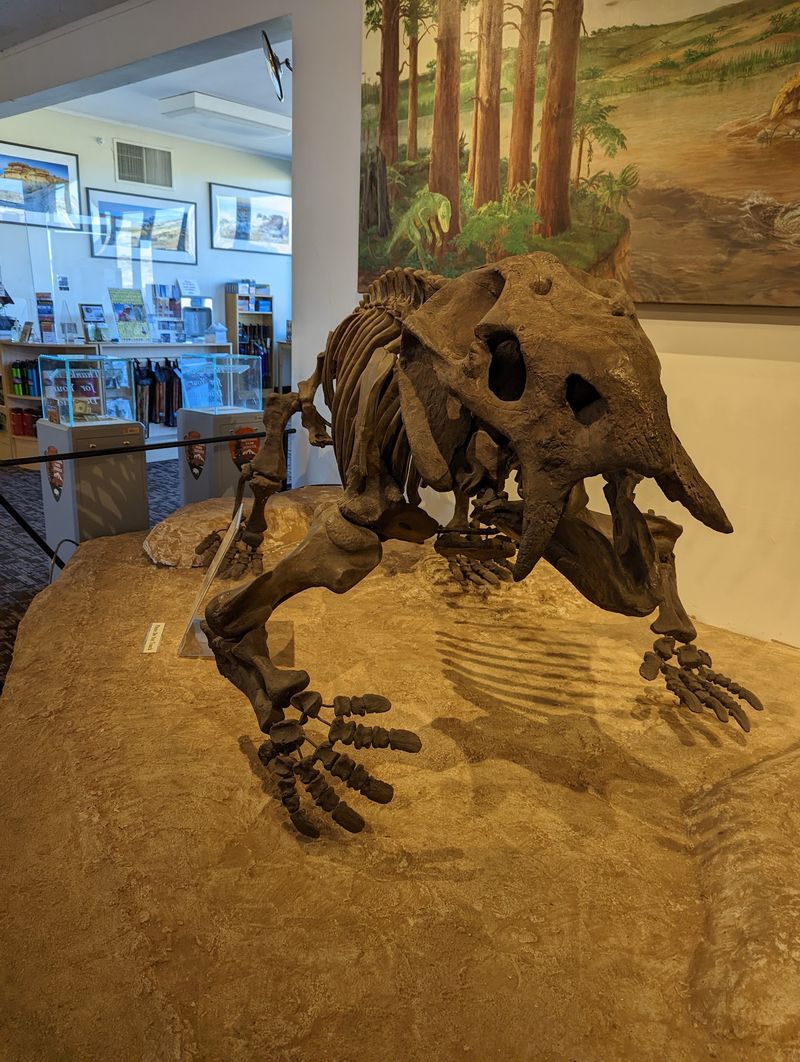
Bookending the park are visitor centers that turn a scenic drive into a genuine learning trip. The Rainbow Forest Museum on the southern end explains the history and evolution of the area, complete with paleontological exhibits and dinosaur fossils.
The visitor center draws frequent praise for how well it lays out the region’s geology and backstory. Rangers here are described as friendly and knowledgeable, happy to hand you a map and a quick orientation.
Families often stop to complete Junior Ranger activities, making the centers a hit with kids. Amenities inside have included a gift shop, shaded seating, and refreshment counters.
One note worth keeping in mind: portions have gone through remodeling, so expect the occasional construction update. Even mid-refresh, these stops anchor the visit with context that makes the outdoor sights click.
Easy Trails Made For Every Pace
Anyone worried about grueling climbs can relax, because this park leans gentle. Most trails run two miles or less, clearly marked and very walkable for those who would rather not push themselves.
The Long Logs Trail lets you see petrified wood up close, while short paths behind the visitor centers pack in plenty without much distance. It all makes the park well suited for kids and easygoing explorers alike.
A few areas have loose rocks that can be a small challenge for anyone with limited mobility, so good walking shoes help. Carrying water is smart, especially since the desert warms up fast.
The relaxed layout means you set the pace, whether that is a full day of trails or a couple of scenic hours. It is a rare park where slowing down feels like the whole point rather than a compromise.
Planning Your Visit The Smart Way
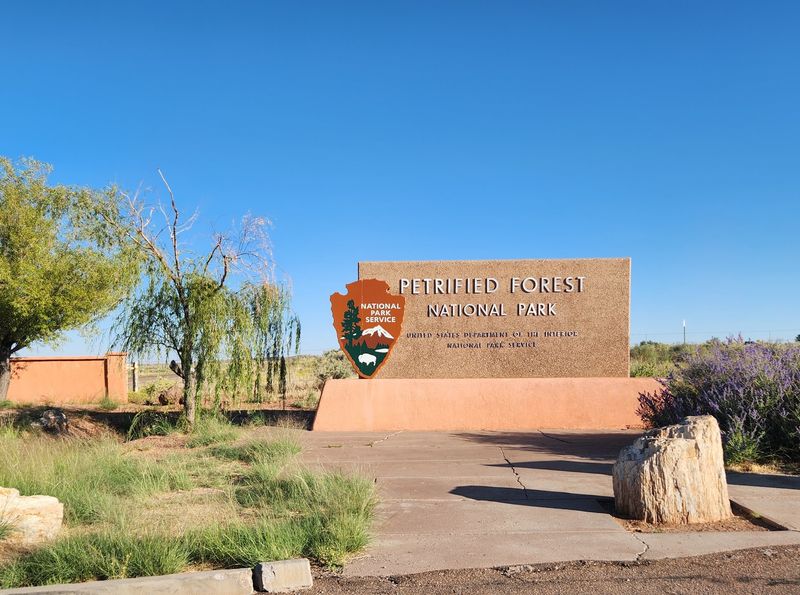
Timing and a few basics go a long way here. The park is open daily from 8 AM to 5 PM, and entry runs $25 per car, valid for a week.
An America the Beautiful pass covers admission too, so bring it if you have one.
Mornings are the sweet spot, since arriving soon after opening means thinner crowds and cooler air before the heat climbs. Water and sun protection are essentials on warm days.
Pay attention to which gate you use, because entering from the wrong end can add extra driving before you reach the section you most want. The southern side puts the dense wood forests close, while the northern gate opens with the Painted Desert.
Holbrook makes a handy overnight base for early starts, and the park sits perfectly along a Phoenix, Santa Fe, or Lake Havasu route. Plan at least two to three hours, or a full day if you want it all.