
Affiliate disclosure: As an Amazon Associate I earn from qualifying purchases. Learn more
Some walks fade from memory before you even reach the car. This one tends to stick around for days.
Just north of San Francisco, a flat, well-kept path winds past some of the tallest trees on the planet, and you do not need hiking boots or a fitness plan to enjoy it. The catch is that a little planning goes a long way, especially when it comes to parking and timing.
Read on to learn where this forest hides, what makes its main loop so easy to love, which side trails reward a bit more effort, and the simple tips that help you skip the stress and keep the calm.
A Redwood Refuge Near the Golden Gate
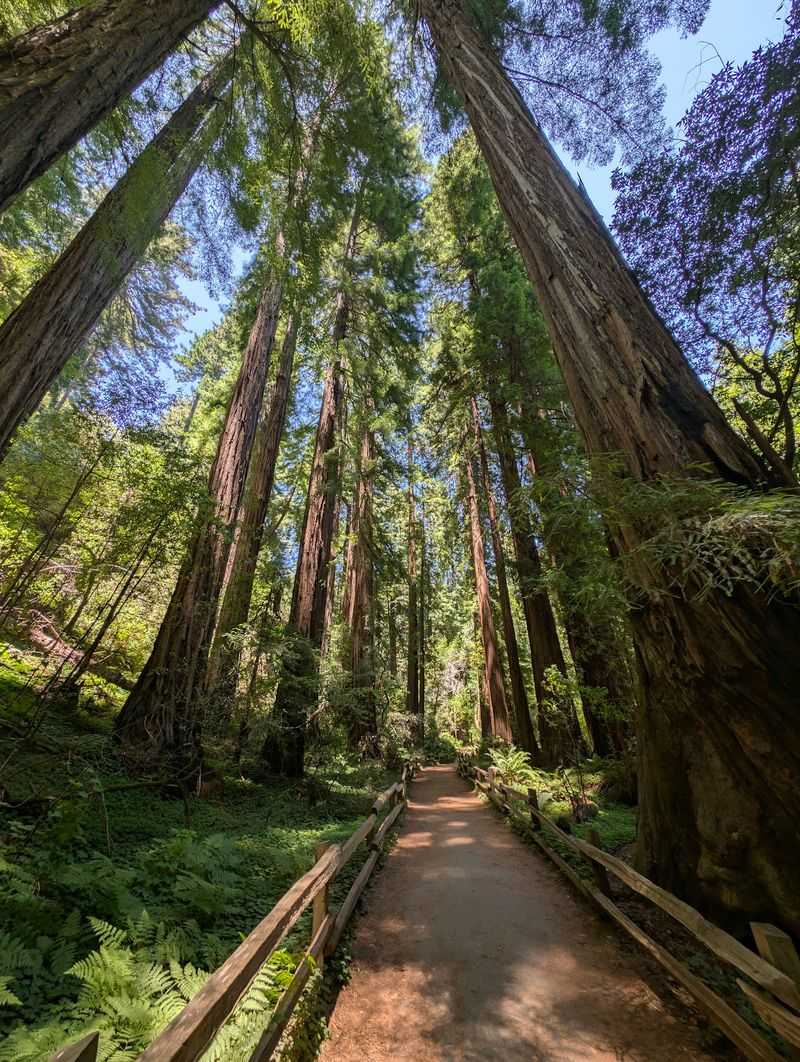
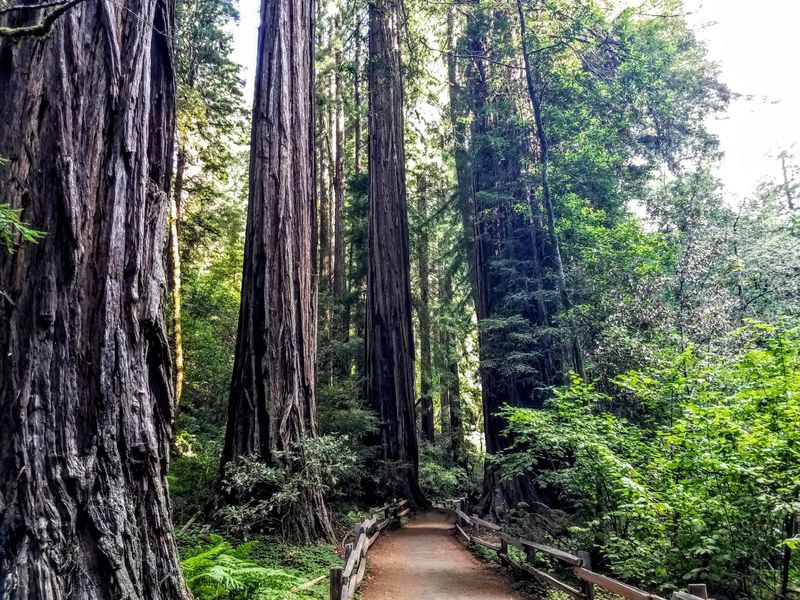
Tall trees and short drives rarely go together, yet this forest pulls off both. Muir Woods National Monument sits in Mill Valley, CA 94941, in Marin County, California, United States.
The park is a protected nature preserve filled with giant coastal redwoods. It is close enough to San Francisco for a half-day trip, but it still feels a world away from city traffic.
The drive in sets the tone. Winding roads climb through forested hills, and the trees seem to grow larger as you get closer to the entrance.
Inside, a visitor center, a cafe, and a gift shop greet you near the start of the trails. From there, paths branch out in several directions.
Some routes are short and flat. Others climb roughly 600 feet for those who want a workout with their scenery.
The star of the show for most people is the main loop. It follows the valley floor, crosses a creek on a series of bridges, and keeps the big trees in view the entire time.
Here is a fun bonus for collectors. National Park passport stamp fans can pick one up during the trip.
So the first question is not whether to go, but how to get there without a hitch.
Old Giants With a Story to Tell
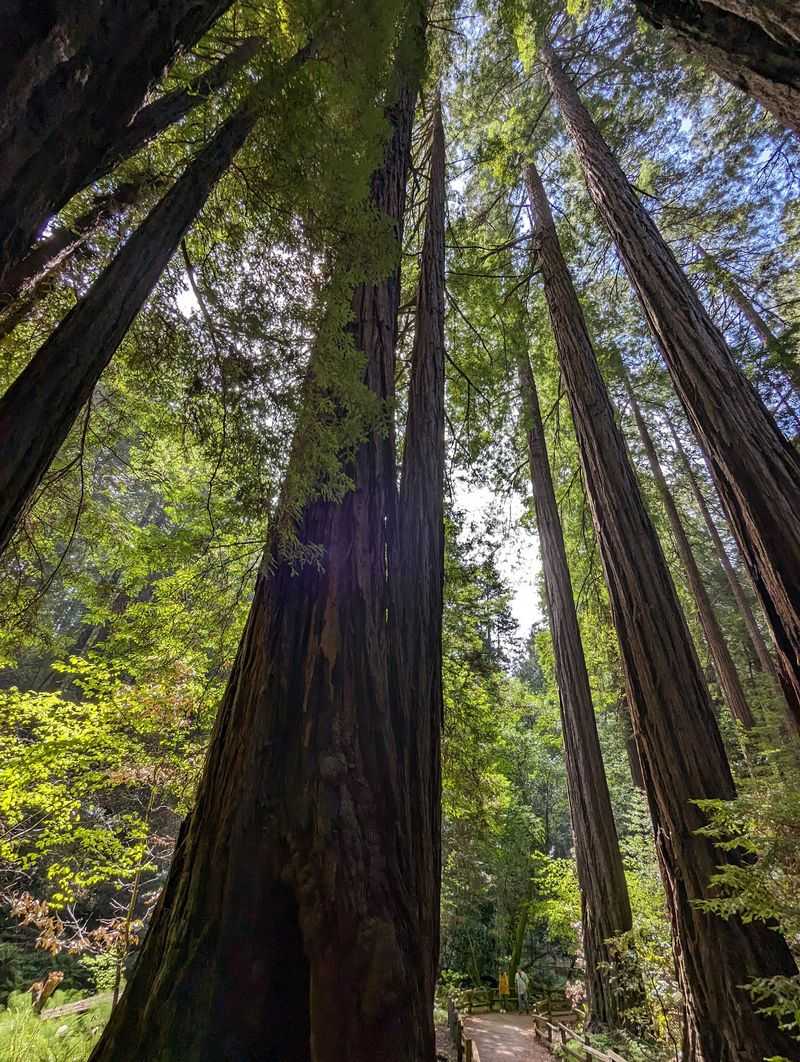
Ancient is the right word for these trees. The valley floor holds old-growth coastal redwoods, the kind that have stood here far longer than any nearby road or town.
Size is the first thing that grabs attention. Even people who have seen photos often find it hard to describe how massive these trunks look in person.
Rangers help fill in the backstory. One is often stationed near the entrance, and another sometimes waits a little way along the path to talk about the trees.
A favorite topic is how redwoods connect and work together to survive. That idea alone makes the walk feel less like sightseeing and more like a science lesson you actually enjoy.
Information boards are dotted along the walkways too. They let you learn at your own pace without needing a guide.
Some people come for the history, while others simply come to stand at the base of a trunk and look up. Both approaches work just fine here.
The protection of this forest is a big part of its value. Treating it gently, staying on paths, and leaving no trace helps keep it special for the next group of curious hikers.
Of course, the trees are only half the story, because the route that leads you past them deserves its own spotlight.
The Boardwalk Loop Everyone Talks About
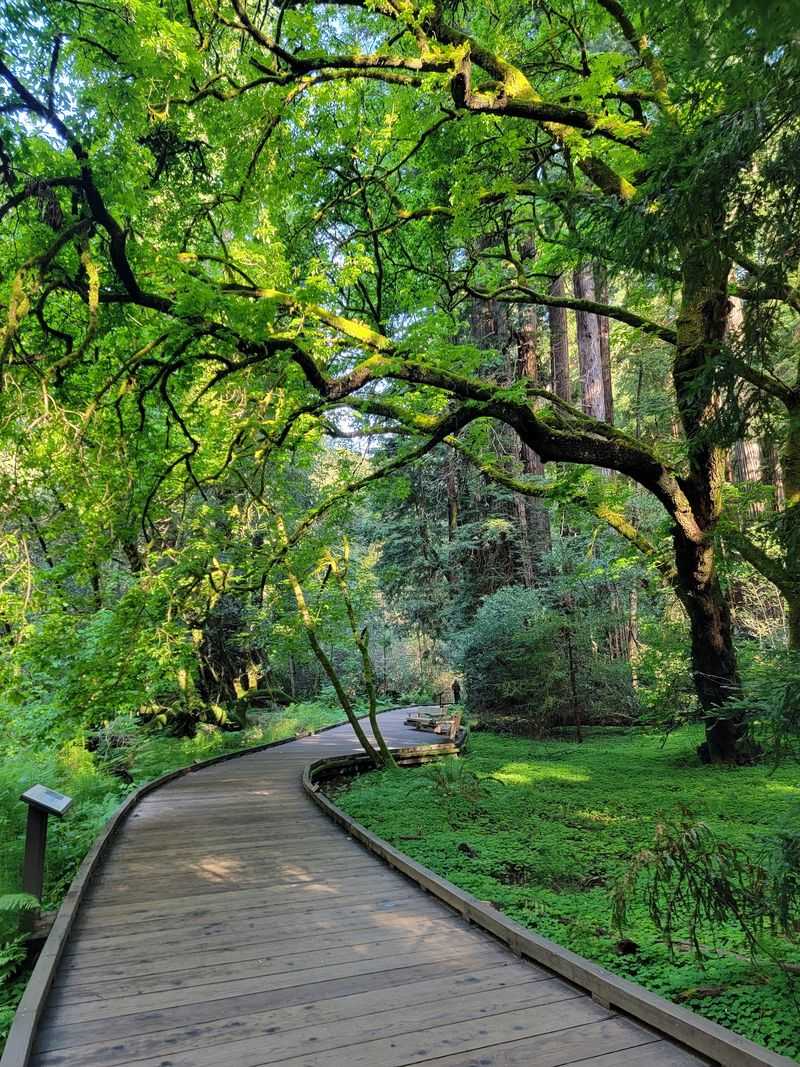
Easy does not mean boring. The main loop is the reason this trail earns its reputation as a low-effort walk with high-reward views.
A well-built wooden boardwalk runs along part of the route, right beside Redwood Creek. The surface is easy underfoot, and the path has very little elevation change.
Numbered bridges carry you back and forth across the water. A drinking fountain sits between Bridge 3 and Bridge 4, which is handy on a longer day.
Many people walk about half the loop in roughly 50 minutes. Others stretch it to around 2 miles and take their time.
Signs are clear and the paths are well maintained. Getting lost here would take real effort.
The main stretch from the visitor center is accessible for many guests, and parts work for strollers. Still, not every section is truly stroller-friendly, so a carrier can be the smarter choice for little ones.
The boardwalk also goes surprisingly deep into the woods. You get plenty of forest without signing up for a strenuous hike.
Ferns and lush foliage line the creek, and the stream runs right through the middle of it all.
For some, this loop is the whole visit. For others, it is simply the warm-up act.
Hillside Trail and Higher Paths
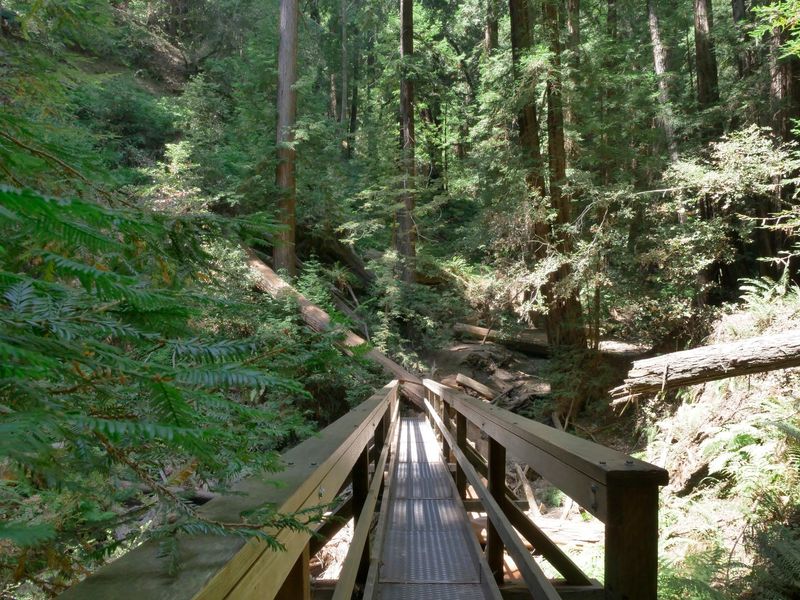
Crowds thin out fast once you leave the valley floor. That is the quiet secret of the side trails.
The main boardwalk gets the most foot traffic, so stepping onto a branching path is a smart move. Numerous side routes climb higher into the trees.
The Hillside Trail is a popular pick. It pairs nicely with the main boardwalk after crossing the bridges over Redwood Creek, creating a loop that feels more secluded.
A loop like that can take around two and a half hours with stops. The paths stay shaded, marked, and well kept.
Want more of a challenge? Some trails gain up to about 600 feet in elevation.
The Bootjack Trail is one option for serious walkers. One outing on it can top 6 miles, with steep inclines that are tough but manageable.
Kids often enjoy these longer routes too, especially the stretches by the creek under the trees.
Good shoes and plenty of water are wise for any of these paths. A packed lunch helps if you plan to spend extra hours.
Choose your own adventure here. A quick stroll and a full-day trek can start from the very same trailhead.
Quiet Pockets and Slimy Locals
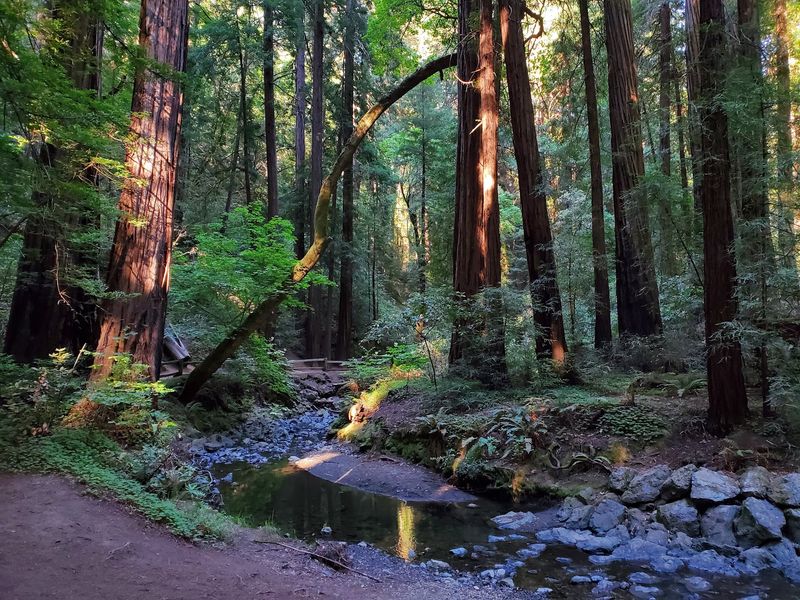
Silence is a rare thing near a big city. Here, it shows up in pockets along the trail, and those moments are often what people remember most.
A peaceful atmosphere is one of the most common themes tied to this park. Many describe it as one of the most relaxing places they have visited.
Busy days can interrupt that calm. Still, even with lots of company, the forest tends to feel enjoyable rather than overwhelming.
The lack of cell service adds to the effect. There is no Wi-Fi in the woods, which makes it easier to put the phone away and slow down.
Then there are the locals. Banana slugs are a frequent and memorable sighting, and they move at a pace that makes the boardwalk feel speedy.
Spotting one becomes a small game for kids and adults alike. Keep eyes on the ground near logs and ferns.
Cathedral Grove is another name worth knowing. It is one of the groves along the route that adds to the hushed mood of the walk.
Photographers have plenty to work with too. The wide paths offer good spots for both scenic shots and group photos.
Calm, it turns out, is the real souvenir.
Who Will Love This Walk Most
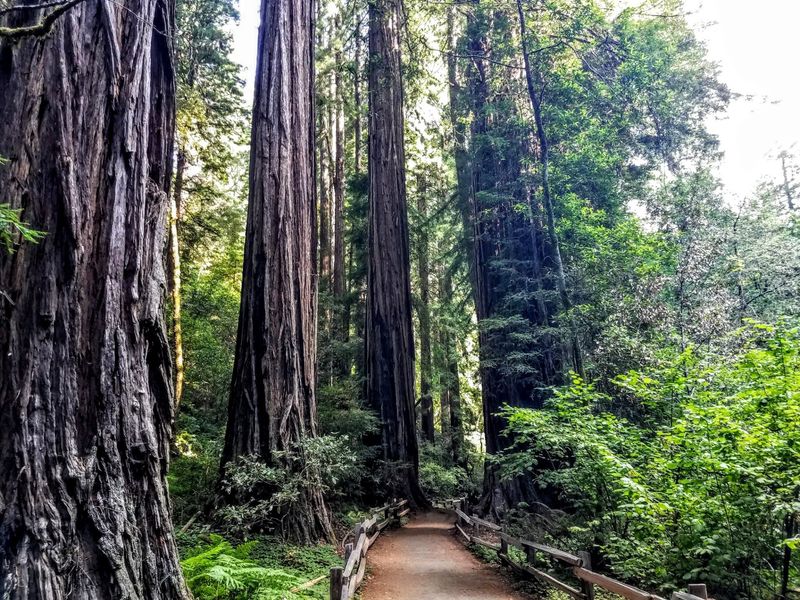
Families top the list. A variety of easy routes lets parents and children wander through redwood groves without anyone getting worn out.
Casual walkers fit right in as well. Many people arrive expecting a hard hike and find gentle paths that suit almost everyone.
Very young children may need help, though. Because of some terrain, the park may be less ideal for kids under five unless they hike regularly or ride in a carrier.
Mobility is worth thinking about. The main boardwalk area is built for accessibility, but some side trails are not wheelchair accessible.
Hikers who crave mileage will not be bored either. Longer trails branch off for those who want a more traditional outing.
Nature lovers, photographers, and anyone checking redwoods off a bucket list tend to leave happy. It is often called a highlight of a Northern California trip.
Time commitment is flexible. A short visit works, but some people stay four hours and still want more.
The visitor center adds value for planners. Rangers there can suggest which trails to prioritize and help shape a highlights visit in under three hours.
In short, the forest meets you wherever your legs are.
Parking, Shuttles, and Smart Timing
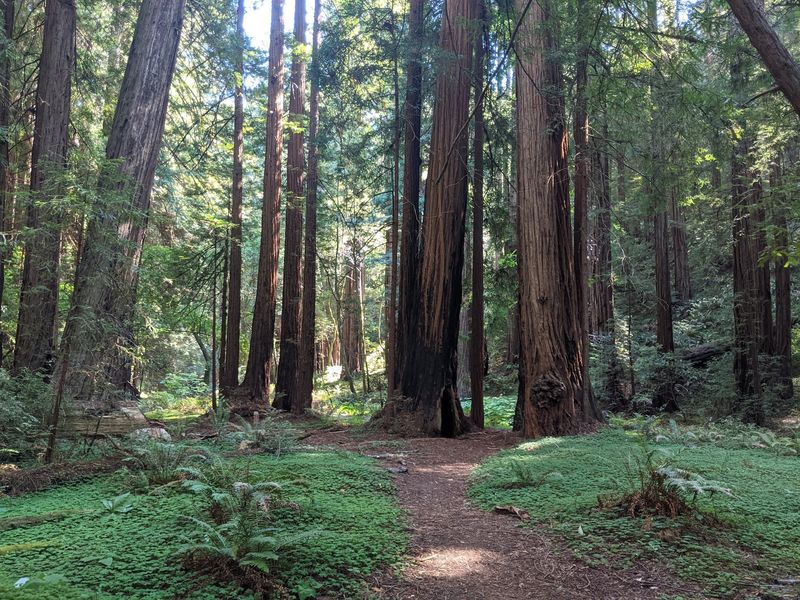
Here is the one rule that matters most: book ahead. A parking or shuttle reservation is required, and it is needed year round.
Showing up without one can mean driving several miles away just to find cell service and pay online. Reservations are available on the National Park Service website, and booking a few weeks early is easy.
Arrive within your time slot. The lot near the entrance is small and fills quickly.
Not driving? The shuttle from the Larkspur ferry area is a popular option, with a ride of about 30 minutes to the park.
Hours are simple to remember. The park is open daily from 8 AM to 6 PM.
Timing makes a big difference in how the visit feels. Early mornings and weekdays are the best bet for peace and quiet.
Midday crowds can build fast, even on weekdays in March. Rainy or gloomy days, on the other hand, can leave the trails nearly empty.
Dress in layers for those cooler days. Temperatures around 60 degrees can feel chilly under the trees, especially once you get wet.
A jacket is rarely a bad idea. Muir Beach Overlook, about ten minutes away, makes a handy side stop if you are waiting on a reservation.
Worth Every Bit of Planning
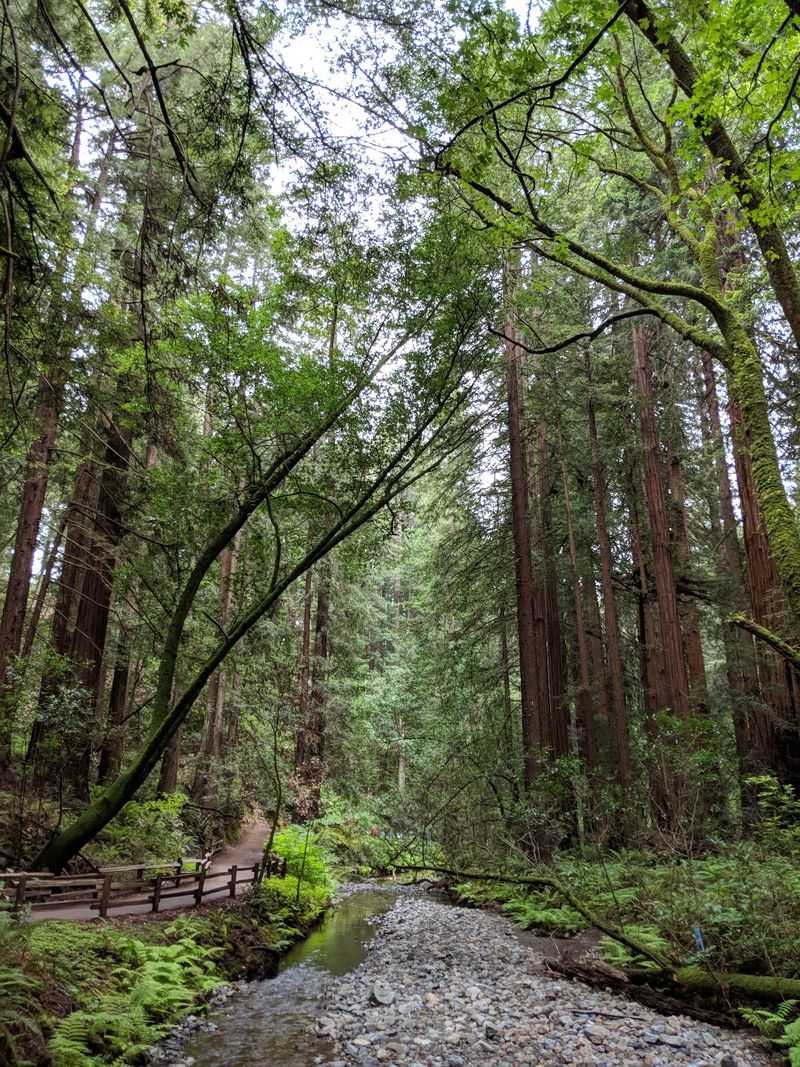
Few places balance ease and awe this well. A flat boardwalk, clear signs, and towering redwoods add up to a walk almost anyone can enjoy.
The amenities help round things out. Restrooms sit near the parking lot and the gift shop, and accessible toilets are available.
A cafe and a coffee shop offer a break before or after the trail. The gift shop stocks plenty of browsing material, though prices can run on the steep side.
Bring water and comfortable shoes. Pack a lunch if you plan to explore beyond the main loop.
The park holds an impressive 4.8-star standing across more than 20,000 opinions. That kind of consistency is hard to argue with.
A few small hurdles exist, mostly the reservation step and limited parking. Once those are handled, the rest tends to be smooth.
Go early, pick a quieter day, and leave room to wander a side trail. That simple plan keeps the crowds at bay and the calm intact.
Just 1.5 miles can feel like a full escape. Long after the drive home, the image of those giant trunks lining the creek has a way of popping back into your head, usually right when you need a little peace.