
Affiliate disclosure: As an Amazon Associate I earn from qualifying purchases. Learn more
Most people picture Florida as flat, so a deep ravine with steep slopes and clear streams tends to catch folks completely off guard. Tucked into a small town along the St. Johns River, there is a park where narrow trails drop into wooded canyons, wooden suspension bridges sway underfoot, and azaleas paint the hillsides bright each spring.
For just a few dollars per car, you can spend hours wandering paths that feel more like mountain country than the Sunshine State. There are historic stone staircases, spring-fed water, and a driving loop for anyone who would rather ride than hike.
Keep reading to learn where this surprising green space sits, what makes it special, and exactly how to plan a visit that fits your pace.
Where This Ravine Hides in Palatka
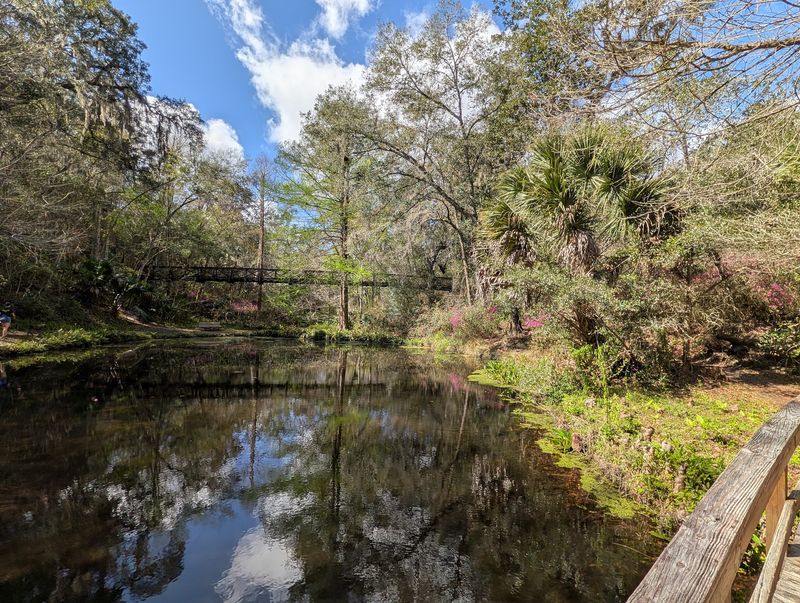
Set at 1600 Twigg St in Palatka, Florida, this park sits right in the middle of a small city, which makes the sudden dip into deep ravines feel almost unbelievable. You expect flat ground and instead find slopes falling away toward a spring-fed stream.
The land follows Whitewater Branch, a stream that flows east into the St. Johns River. The ravines slope down toward that water, with elevations reaching between 70 and 120 feet.
What sets these ravines apart is how they formed. Rather than being carved by surface runoff, they are steephead ravines, created when seeping underground water undercuts the sandy slopes and causes them to slowly collapse.
The result is a landscape that many say feels like the mountains, complete with narrow trails, small bridges, and clear streams running below. Regulars often admit they drove past for years before finally stopping, then wished they had come sooner.
Reaching it is simple, with the entrance and a friendly ranger booth greeting arrivals. Whether you plan a quick loop or a full afternoon, this is the surprising green pocket where the story begins.
A Millionaire’s Gift and the Park’s Roots
Long before hikers laced up their shoes here, this stretch of ravines was shaped into a public garden meant to be enjoyed by everyone. That spirit of open access has carried through the years, and the park still welcomes people at a small, friendly cost.
History threads through the whole property. Tall stone staircases lead down into the ravine interior, and many of them purposely have no railings, a nod to the way the park was originally built.
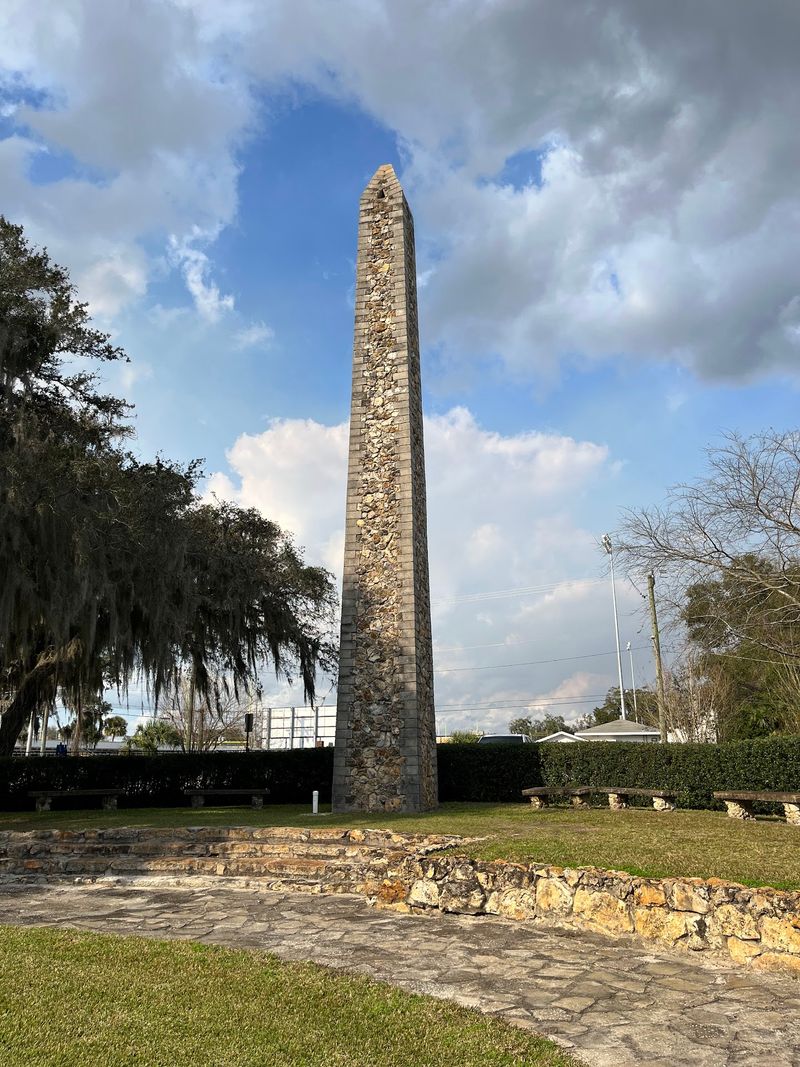
A striking obelisk stands as one of the landmarks people mention again and again, rising near the gardens as a reminder of the site’s early design. It gives the grounds a formal, monument-like touch amid all the wild greenery.
Caution signs dot the rustic stone stairways, gently reminding folks to judge their own footing before heading down. It is a place that respects its own past rather than paving over it.
Because so much of the original layout remains, walking here feels like moving through a living piece of local history. The gardens, the stairways, and the monument all speak to a place built to be shared for generations.
Azaleas That Steal the Spring Show
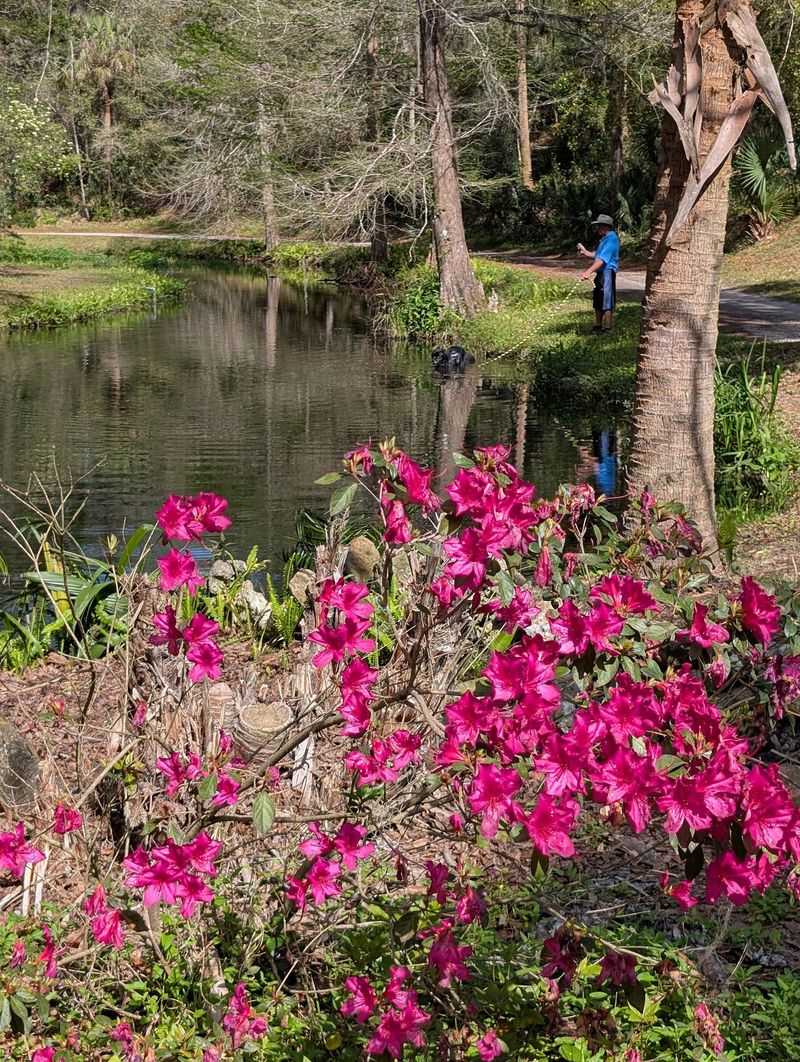
Come mid-March, the hillsides here light up with color as thousands of azaleas burst into bloom. Flowers earn 190 mentions and azaleas another 233, so it is safe to say the spring display is the park’s headline act.
The blooms usually peak around mid-March, and many suggest visiting before roughly March 25, since the color begins to fade after that. Timing your trip within that window is the difference between a full show and a few late blossoms.
The Azalea Trail is the star route, looping around the park while showcasing the ravines below. Along the way you may spot butterflies, birds, and bees drifting between the flowers.
Even those who arrive a few days late still find plenty of blossoms clinging on, though the trail is at its most vibrant when the flowers line the entire path. Regulars often plan a return trip specifically to catch peak bloom.
Beyond the azaleas, gardens and other flowers keep the grounds pretty in other seasons too. Still, if you can only pick one time to visit, that March window is worth circling on the calendar.
The Swinging Suspension Bridges
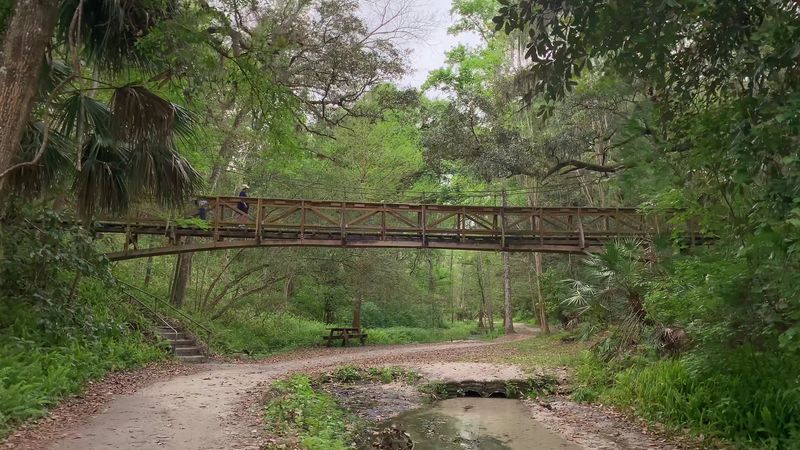
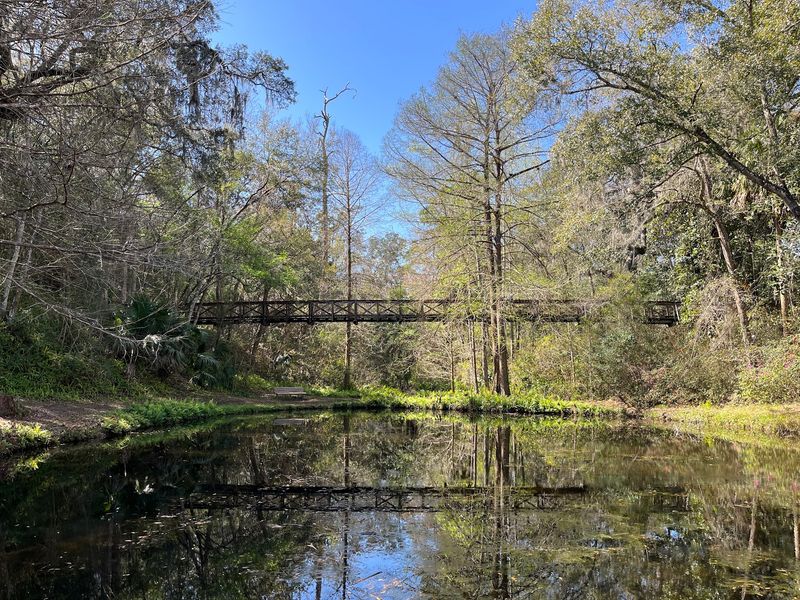
Crossing a wooden bridge that gently sways above a creek is the moment kids talk about long after they leave. The park has two suspension bridges, and they earn 165 mentions from people who clearly love the little thrill.
Below the bridges, small streams and clear water flow through the ravine floor. The combination of height, movement, and the water beneath makes each crossing feel like a small adventure without any real difficulty.
Families point out that children from about age four to fourteen handle the bridges just fine, giggling their way across. Even a few nervous adults confess to a playful “do not look down” moment before making it safely to the other side.
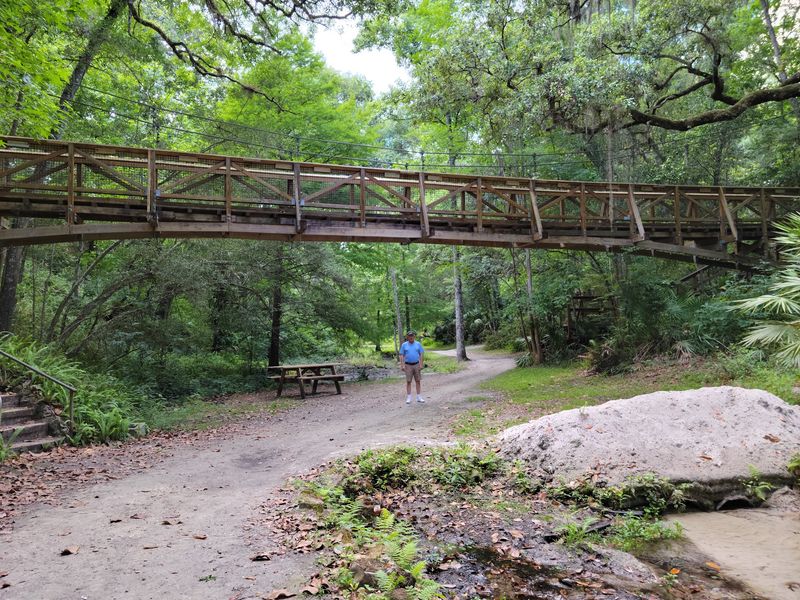
The bridges are wooden and rustic in feel, fitting right into the natural setting rather than standing out as modern additions. They connect trails and help you piece together a full loop through the ravines.
Do note that the suspension bridges are not wheelchair accessible, since reaching them usually involves stairs and slopes. For those able to cross, they remain one of the most memorable and simply fun features the park offers.
Trails for Every Fitness Level
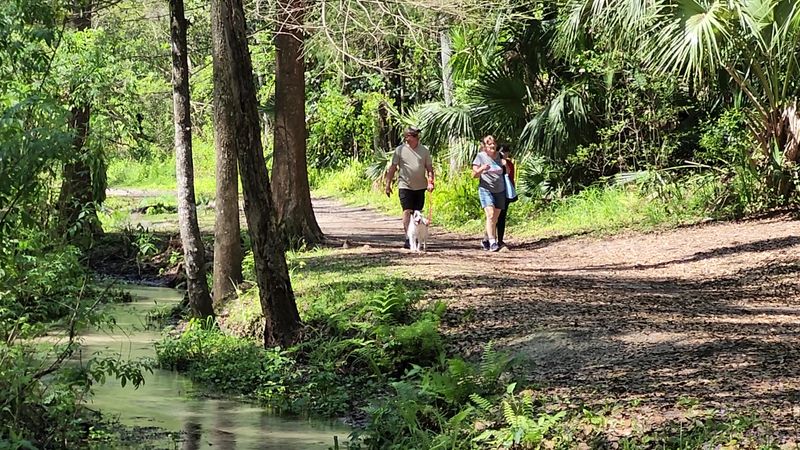
With trails racking up 427 mentions, the walking here is clearly the heart of the experience. There is a mix that suits nearly everyone, from casual strollers to folks hunting a real workout.
The paved trail runs 1.8 miles and offers an easier, smoother option, while the Azalea Trail is a roughly 2.5-mile loop labeled strenuous. Many say that strenuous label is a bit generous, since casual walkers still manage it comfortably.
Down in the ravines you will find narrow paths, roots, historic stairs, and plenty of shade. Some staircases are steep and lack handrails, so a walking stick and steady footing help on the rugged sections.
The lowest trail traverses fairly flat ground beside the streams, giving a gentler route for those who want scenery without the climb. There are elevation changes throughout, so you can dial the effort up or down.
Trails are marked well and the park stays clean and well maintained. Whether you want a light garden walk or a leg-burning loop with stairs, the network here lets you shape the day around your own energy.
Spring-Fed Streams and Fine White Sand
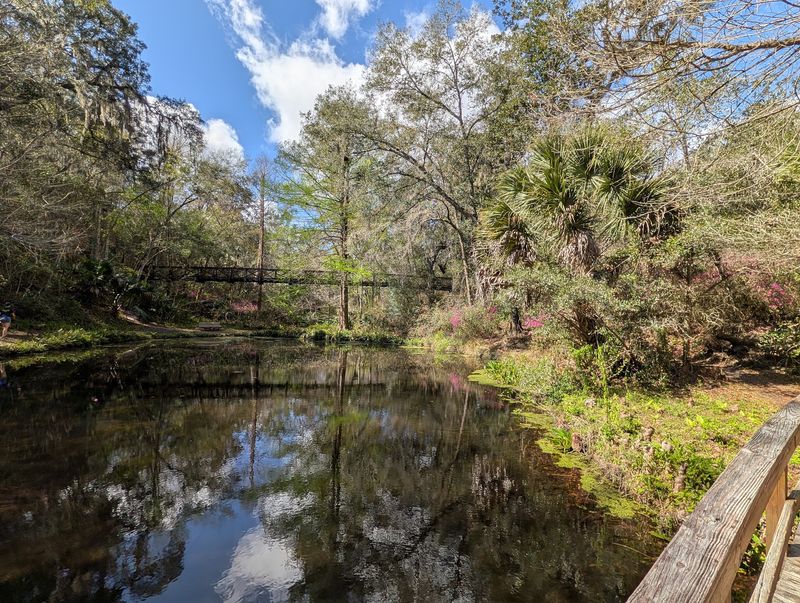
At the bottom of the ravine, clear water gathers into a spring-fed stream and small pond that feel worlds away from the city above. Springs draw 79 mentions and the creek another 64, so this watery layer is a favorite discovery.
The sand along the creek is remarkably fine, and folks compare it to the soft sand found at Clearwater Beach. Seeing that texture tucked inside a wooded ravine is one of the park’s quiet surprises.
You may notice a faint sulfur scent near the water, which is completely natural for spring-fed sources and not a sign of any pollution. The water itself stays clear, revealing the pale sand and gentle flow beneath.
Whitewater Branch is the stream that carved these slopes over time before continuing on toward the St. Johns River. Standing beside it, the connection between the land and the water becomes easy to see.
Benches and flat streamside paths make good spots to pause and take in the flowing water. For anyone who loves nature’s small details, the ravine floor rewards the effort of the walk down.
A Friendly Spot for Families and Dogs
Leashed pups are everywhere here, and the park makes it easy with doggie waste stations placed in several spots. Dog owners rank it high as a relaxing walk, even mentioning that it stays pleasant on warmer days thanks to shade.
Kids get their own reasons to love the place, starting with a playground and continuing across those swaying bridges. The layout keeps young ones entertained while grown-ups enjoy the scenery.
Practical comforts round things out. Restrooms are plentiful throughout the park, parking is spacious, and picnic tables and grills give families a natural spot to settle in for lunch.
The grounds also host events, with weddings, a garden club building, and a civic center all part of the scene. On a busy spring weekend you might catch a wedding being set up or a baby shower underway.
An air-conditioned civic center offers a welcome place to cool off midday when the weather turns warm. Between the play areas, picnic spots, and pet-friendly paths, it is an easygoing outing for the whole household.
Hours, Fees, and Planning Your Visit
Planning is refreshingly simple. The park opens daily from 8 AM and closes at 5:45 PM, so you have a full day to wander whenever you choose to go.
Entry costs around $5 per vehicle for up to eight people, or about $2 per person to walk in. Payment is cashless only, so bring a card rather than dollar bills.
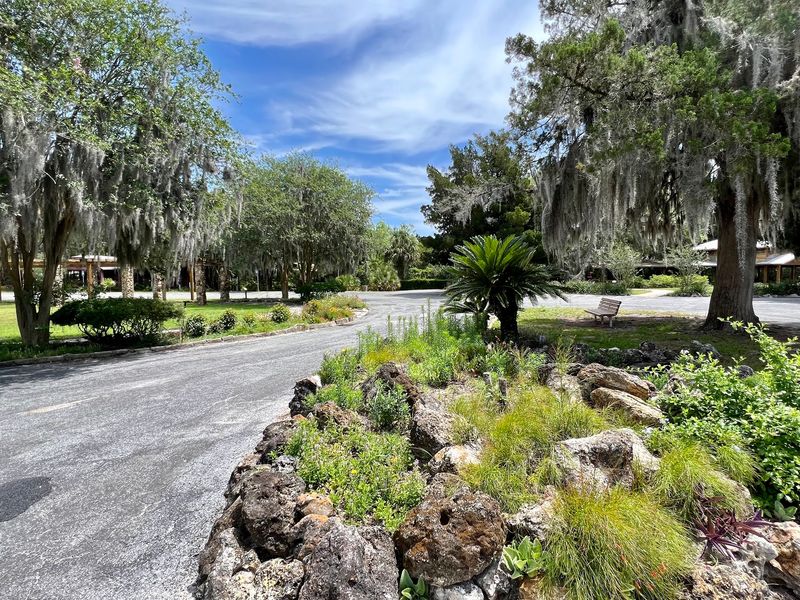
There is a one-way driving loop that circles the ravine with pullouts and overlook platforms, a great option for anyone with mobility needs who would rather ride than climb stairs. Do check ahead, since the loop has been closed at times, and the ranger at the entrance can point out the most accessible areas.
The paved loop is accessible, and parking near the pond opens a flatter dirt-and-rock trail, while most stairs into the ravine have no handrails. Comfortable shoes and a bottle of water are smart, and a hat helps since parts of the trail sit in full sun.
Holding a 4.7-star rating across more than 3,000 reviews, this Palatka park delivers a surprising slice of ravine country at a bargain price. Come for the azaleas, stay for the bridges, and leave already planning your next trip.