
Affiliate disclosure: As an Amazon Associate I earn from qualifying purchases. Learn more
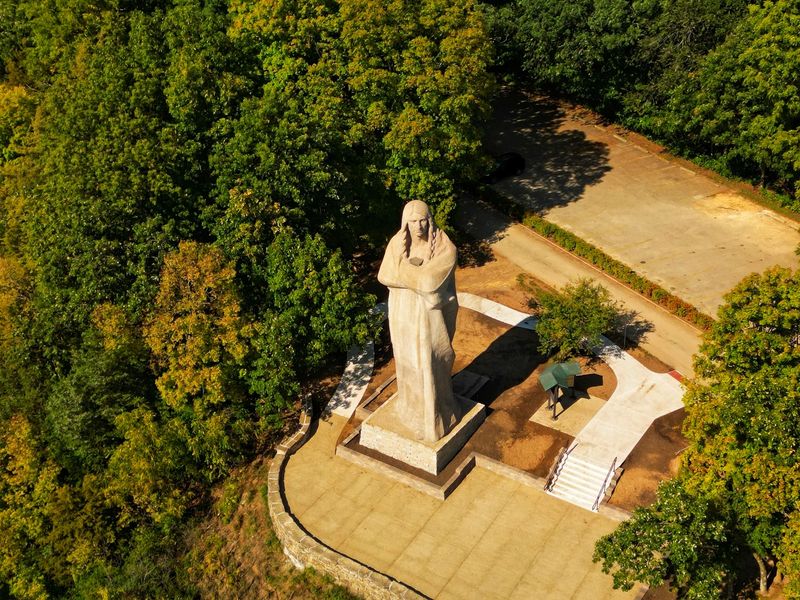
High on a bluff above the Rock River, a giant concrete figure has stood with folded arms for more than a century. It towers over the trees, keeps watch over the water, and asks nothing in return, not even an entry fee.
Families from across northern Illinois have been making the short drive to see it for generations, and many still come back year after year. Kids tend to stop in their tracks when they first see how big it really is, and parents tend to grin because the whole outing costs nothing but gas.
Below the statue, wooden stairs drop toward the riverbank, and trails wind through the woods in several directions. There are picnic tables, open lawns, and a parking lot close enough for almost anyone to reach the overlook.
Keep reading to find out where this landmark stands, who made it, and how to plan a free day trip around it.
A Giant on the Bluff in Oregon
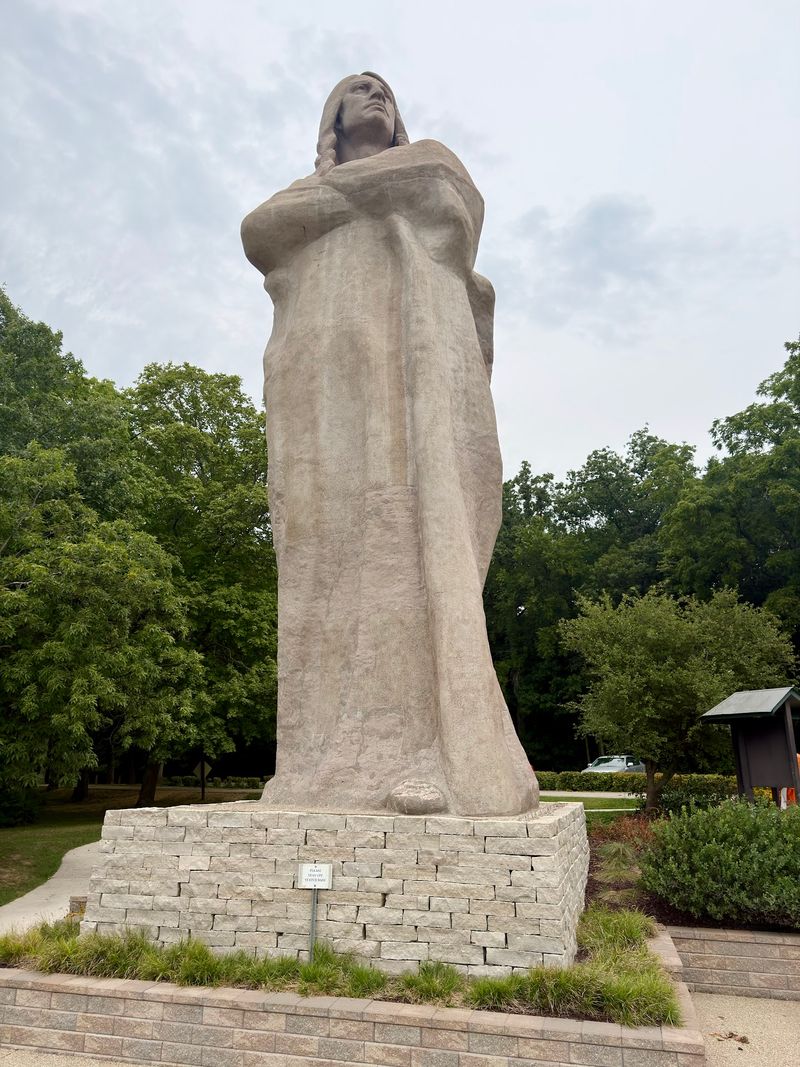
Some landmarks hide in plain sight, but this one refuses to. The Eternal Indian, often called the Black Hawk Statue, stands at 1411 N River Rd, Oregon, IL 61061, in northern Illinois.
It rises from a bluff inside Lowden State Park, looking out across the Rock River. The setting is listed as a cultural landmark, and it is one of the most recognizable sights in Ogle County.
The statue is a concrete figure with arms folded across its chest. It was completed in 1911, so it has been keeping watch for well over a hundred years.
Height is the first thing people talk about. Many first-timers arrive expecting something modest and leave saying it was much bigger than they thought.
Getting there involves a pleasant country drive, and the final stretch leads straight to a spacious parking lot at the base of the statue. From the lot, the overlook is only a short walk away.
Part of the charm is how little effort it takes to reach such a big view. There is no gate to pass and no long hike required just to say hello to the giant.
For an Illinois day-tripper hunting for something unusual close to home, the address alone is a strong start. The story behind the figure makes it even better.
The Sculptor Behind the Folded Arms
Here is a fun fact to share on the drive. The same artist who created this statue also made the famous Fountain of the Great Lakes outside the Art Institute of Chicago.
That artist was Lorado Taft, a major figure in American sculpture in the early 1900s. His connection to this stretch of the Rock River gives the site a link to one of the best-known art museums in the state.
Taft designed the Oregon figure as a tribute to Native Americans who lived on these lands. Many people know it as the Black Hawk Statue, a nickname tied to the Sauk leader Black Hawk.
The history of this region reaches far back, well before the events of 1832 that shaped northern Illinois. Information panels near the statue lay out much of that background for anyone curious to learn more.
Plenty of families who visit the Art Institute fountain never realize the same hands shaped this bluff-top giant. Seeing both makes for a neat bragging point among friends.
The statue was dedicated in 1911, and it has remained a source of local pride ever since. Its story is one reason the overlook feels more meaningful than a simple scenic stop.
Knowing who made it changes how the figure reads. Next comes the question everyone asks: just how big is it?
How Big Is 48 Feet, Really
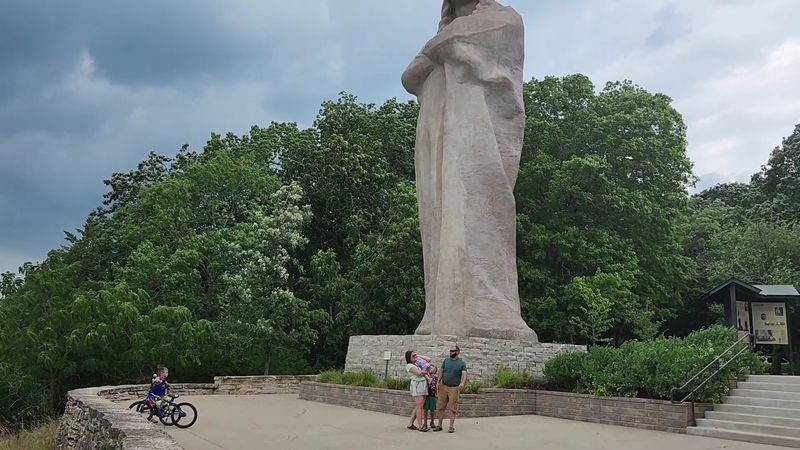
Numbers on a sign rarely prepare anyone for the real thing. At about 48 feet tall, the Eternal Indian stands roughly as high as a four-story building.
Many people describe it as huge, formidable, or gigantic, and those words come up again and again. Some had seen photos beforehand and still found it larger in person.
The figure is made of concrete, which was a bold choice for a sculpture of this size in the early 1900s. It is one of the reasons the statue has become such a talked-about part of Illinois history.
Kids especially tend to react to the scale. Standing at the base and tilting a head back is half the fun for younger travelers.
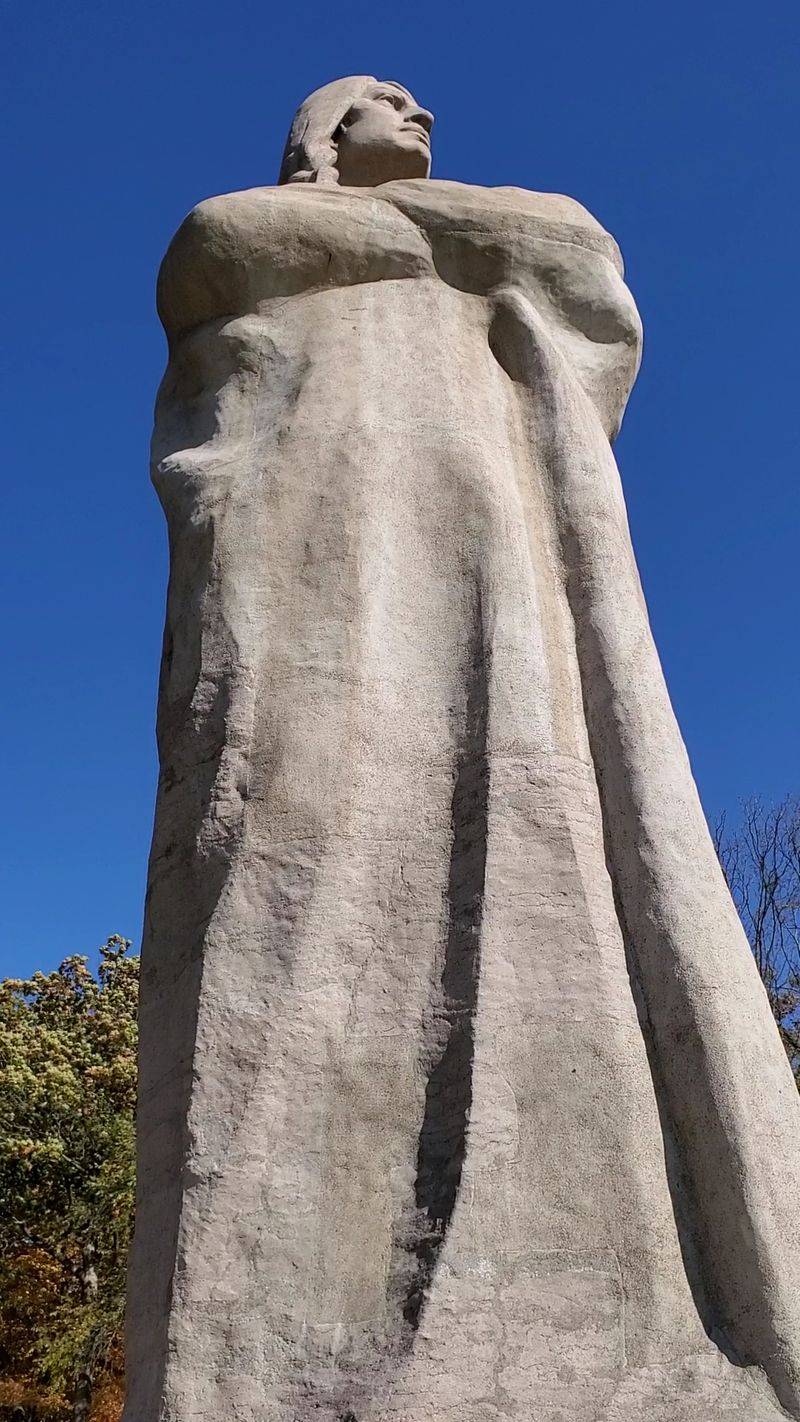
The statue also changes depending on where it is viewed from. Trails and stairs near the overlook let people see it from several different angles, and each one gives it a new look.
From below, it looks even taller against the sky. From the side paths, its folded arms and long robe stand out more clearly.
Photographers often move around the statue to find their favorite spot. Bring a phone with a full battery, because one picture usually turns into twenty.
The Restoration That Kept It Standing
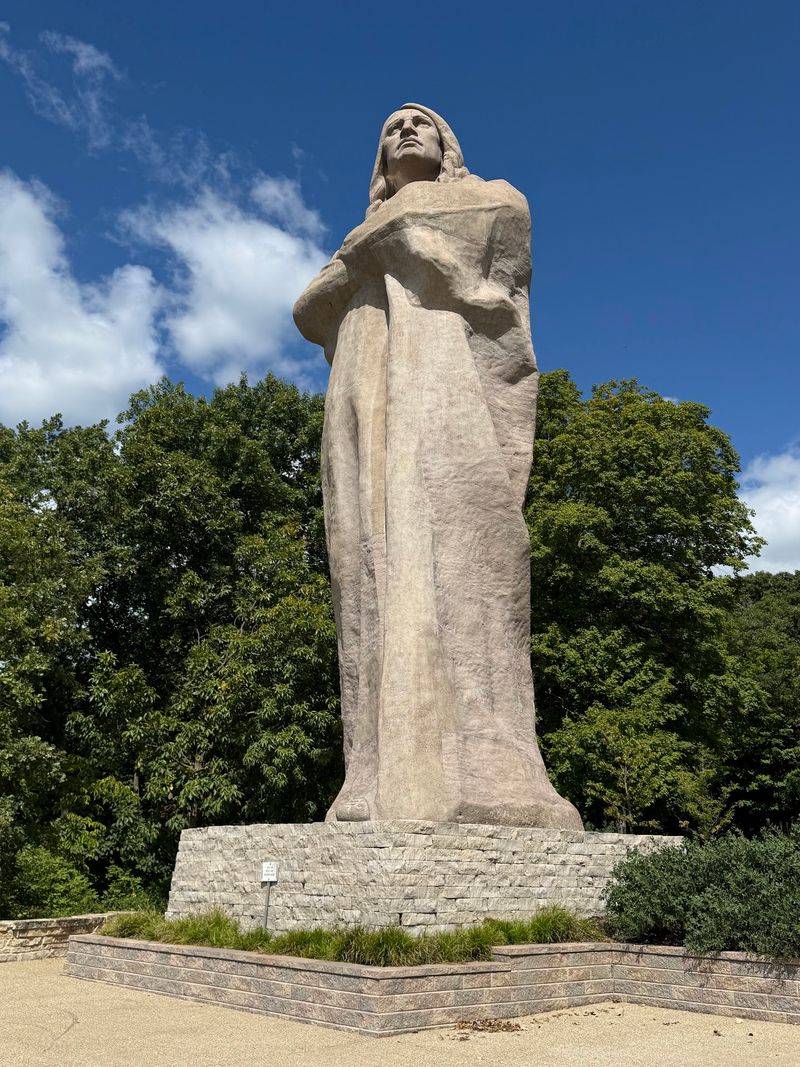
Concrete giants need care too. Over the decades, weather took a toll on the statue, and restoration work has become an important part of its story.
Restoration is one of the topics people mention most when talking about the site. The effort helped preserve the figure so future families can keep visiting it.
Many longtime fans have been coming for twenty years or more. For them, seeing the statue looking cared for brings a real sense of relief and pride.
The work also reflects how much the local community values this landmark. Oregon has long treated the statue as part of its identity.
Parts of the wider state park show their age, and some paths are less polished than others. Still, the area around the statue itself is often described as well maintained and nicely landscaped.
That balance gives the place a lived-in feel. It is not a shiny new attraction, and that is part of its appeal.
A statue that has survived more than a century of Illinois winters has earned some respect. The care it has received shows that respect is shared widely.
Lowden State Park as the Backdrop
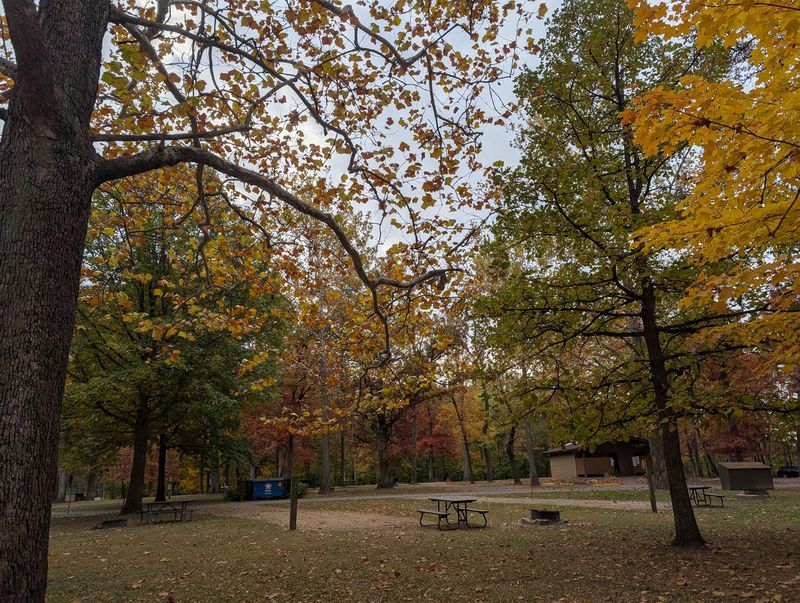
The statue may be the headliner, but the park around it deserves a mention. Lowden State Park surrounds the bluff with wooded trails, open space, and room to spread out.
Wide lawns near the parking area hold picnic tables. Many families pack lunch and make an afternoon of it instead of a quick photo stop.
There are also play areas, which helps when younger kids need to burn off energy. Restrooms are available near the main area, a small detail that matters a lot on a family outing.
Camping is offered in the park as well. That makes it possible to stretch a short trip into a relaxing weekend.
Some regulars have been returning to this park for years. They often point to the mix of trails, scenery, and easy amenities as the reason.
A few corners of the park show their age, as many older state parks do. Overall, it is viewed as a pleasant and practical place to spend time outdoors.
With the setting in place, it is time to look at the biggest reward after the statue itself: the view.
An Overlook With Mountain Energy
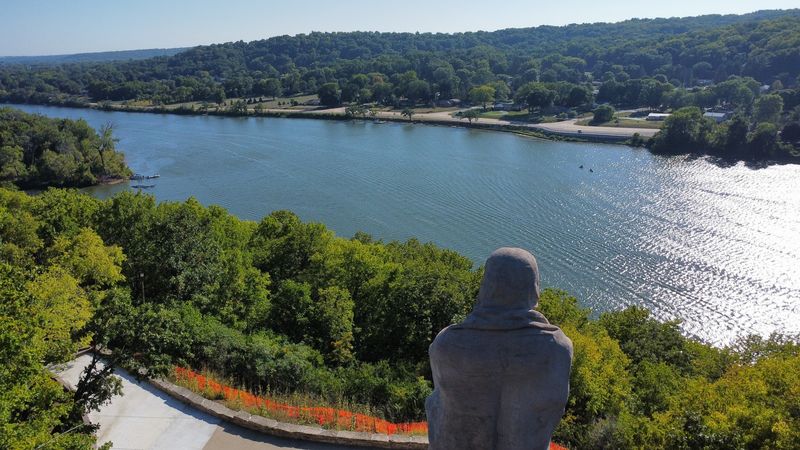
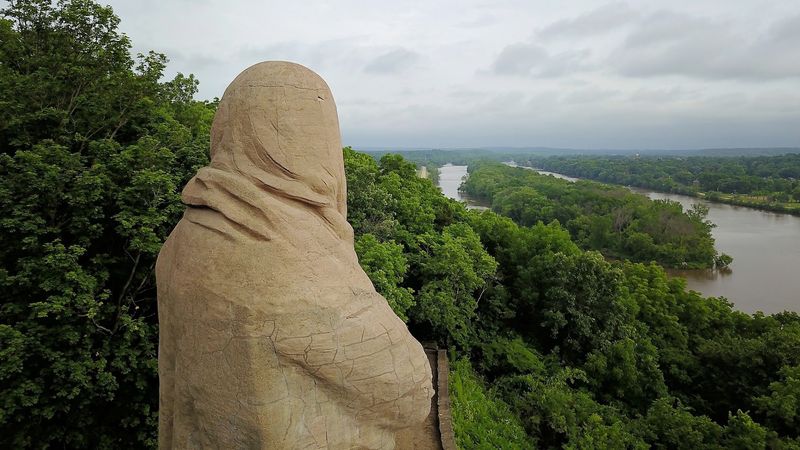
Illinois is not famous for mountains, yet this bluff does a good impression of one. From the statue, the land drops away to the Rock River far below.
Many people say the overlook feels like being high in the mountains. That is a rare claim in a state better known for flat farmland.
The river view is one of the most talked-about features of the site. On clear days, the water stretches out in both directions beneath the bluff.
Seasons change the experience. In summer, leafy trees can block parts of the view, while fall tends to open things up and make the river easier to see.
After heavy rains upstream, the river can run high and full. That makes for a dramatic look from the top of the bluff.
Birds are another bonus. Large birds are often spotted soaring over the river valley, adding something extra to watch.
Sunset views come up too, so timing a visit for late afternoon can pay off. A folding chair or blanket turns the overlook into a front-row seat.
The Long Wooden Staircase
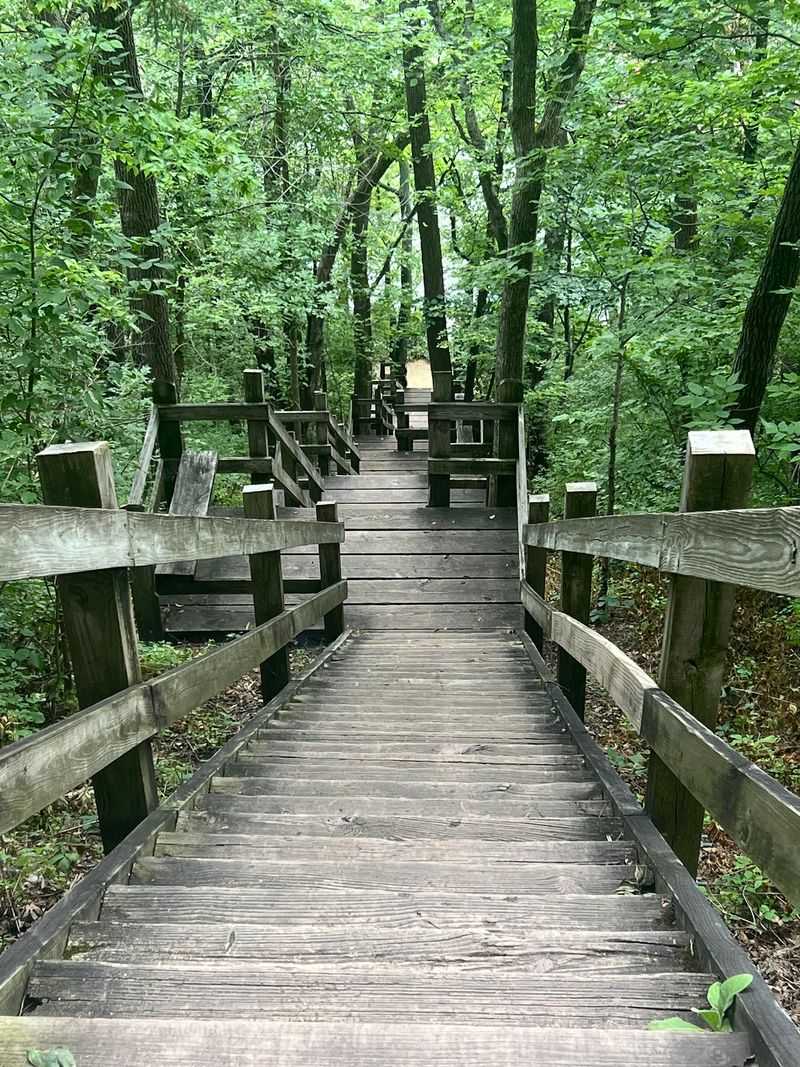
Going down is easy. Coming back up is a different conversation.
A long wooden staircase leads from the statue area toward the Rock River. It is one of the most popular features in the park and a favorite challenge for active families.
The steps are steep, and many people call the climb back up a real workout. Some joke that it nearly wore them out, then add that the trip was worth it anyway.
For anyone traveling with kids, it helps to pace the return. Short breaks on the way up keep everyone in good spirits.
The staircase is often a better choice than the rougher trail paths leading down the bluff. Those can be steep and uneven, while the stairs offer a more direct route.
Plenty of longtime fans have climbed these stairs for decades. For them, the trip up and down is a tradition as much as the statue itself.
Good shoes are a smart idea here. Save some energy, because the riverbank at the bottom has its own surprises.
Life Along the Riverbank
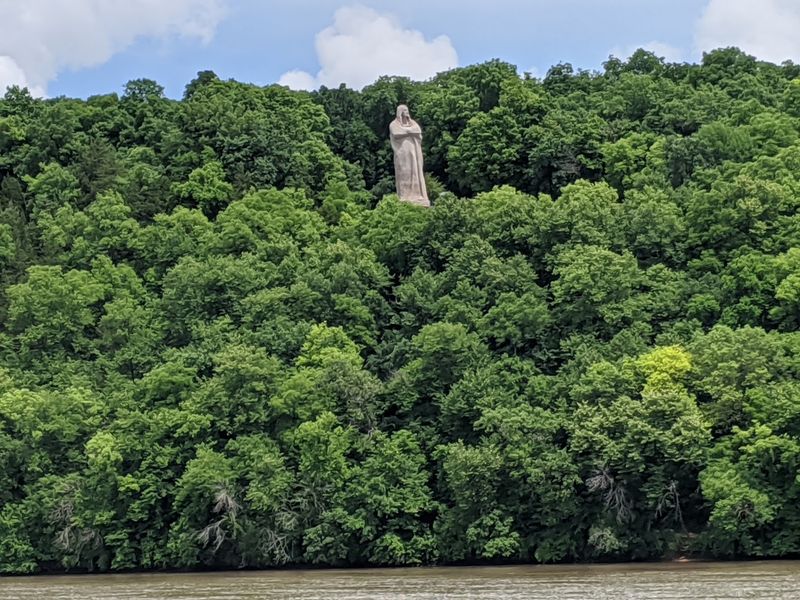
Down at the water, the mood shifts. The trail along the river is mostly flat and easy to walk once the stairs are behind you.
Heading north along the bank, the path eventually reaches private property and ends. Turning south opens up more ground to explore.
A four-way trail intersection appears along the way. Turning toward the river from there leads to a green, lush stretch right beside the water.
The riverbank is also a spot where people fish. Bringing a rod can turn a walk into a longer, slower afternoon.
Conditions can vary. After rain, the ground near the bottom of the steps may turn muddy, which can limit how far people go.
Boats often cruise along the river, especially on busy days. Some people also make a point of picking up litter they find along the bank, a small habit worth copying.
Treating this area kindly helps keep it beautiful for the next family. Leaving it cleaner than you found it is a simple gift to the place.
Woodland Trails Worth Lacing Up For
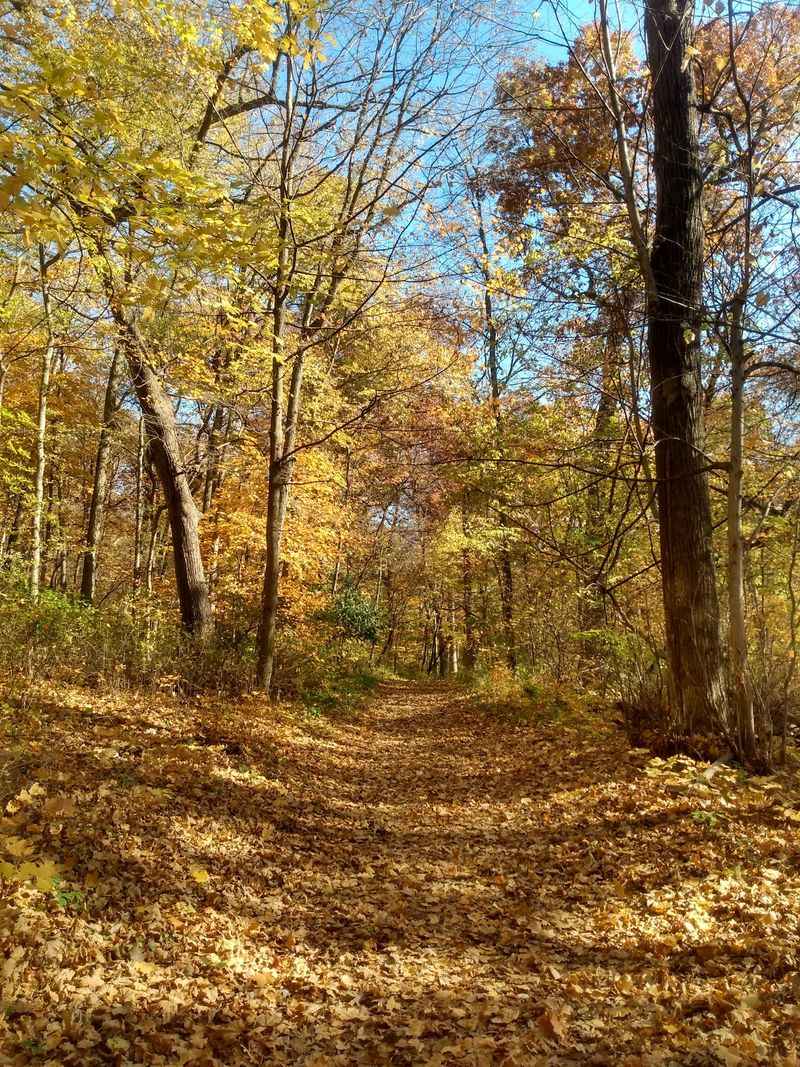
Trails are the most mentioned topic connected to this spot, by a wide margin. That says a lot about how people spend their time here.
Several hiking paths wind through the woods near the statue. Some loop close to the figure, while others head down toward the river.
The forest trail is often described as easy and well kept. It works for casual walkers who want some exercise without a big climb.
Other sections are a different story. The upper trails near the bluff can be steep and rough, so sturdy footwear helps.
Dogs on leashes are a common sight, and the trails can be a great outing for four-legged family members too. Quiet weekdays may leave the paths nearly empty.
A short hike pairs nicely with a picnic. Many families do one loop, eat lunch, then head back to the overlook for another look at the statue.
Trail choice can shape the whole day. Picking the right path for the group keeps the trip fun from start to finish.
A Quiet Place to Sit and Reflect
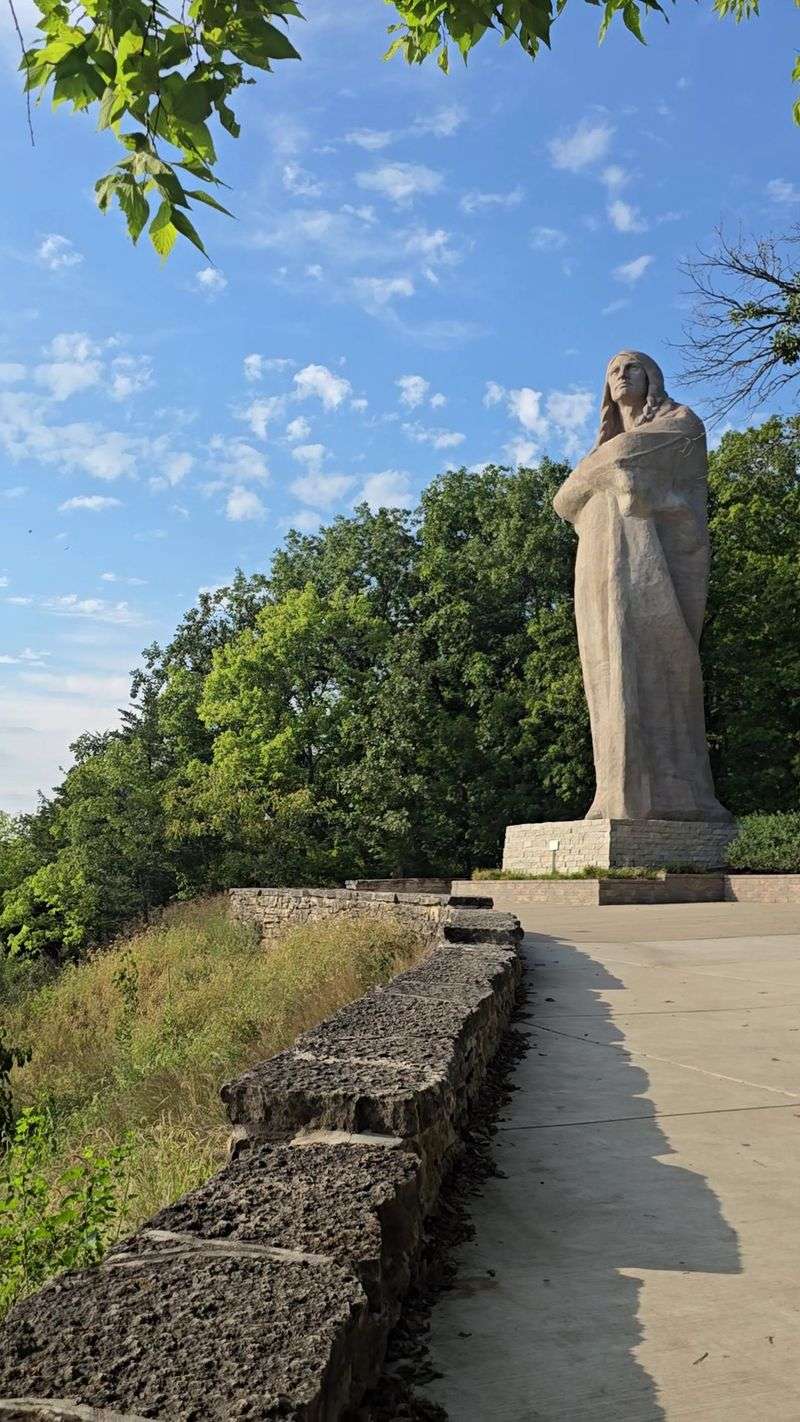
Not every stop needs a plan. Some people come here simply to sit, look around, and slow down.
A peaceful atmosphere is one of the qualities linked most often to the overlook. Many describe the site as serene, a spot where hiking is optional.
The land around the statue holds deep history. For some, that history makes the place feel meaningful and worth a moment of quiet thought.
Crowds tend to stay light. Even on the Fourth of July, the area was not especially packed, and weekday mornings can feel almost private.
That calm makes it a good fit for a wide range of travelers. Couples, solo walkers, families with kids, and dog owners all find room to enjoy it.
Bringing a book or a snack and finding a spot near the lawn is an easy way to spend an hour. No one is rushing anyone along.
In a busy week, an hour of stillness beside a century-old landmark can be the best part of the trip.
History Lessons on the Grounds
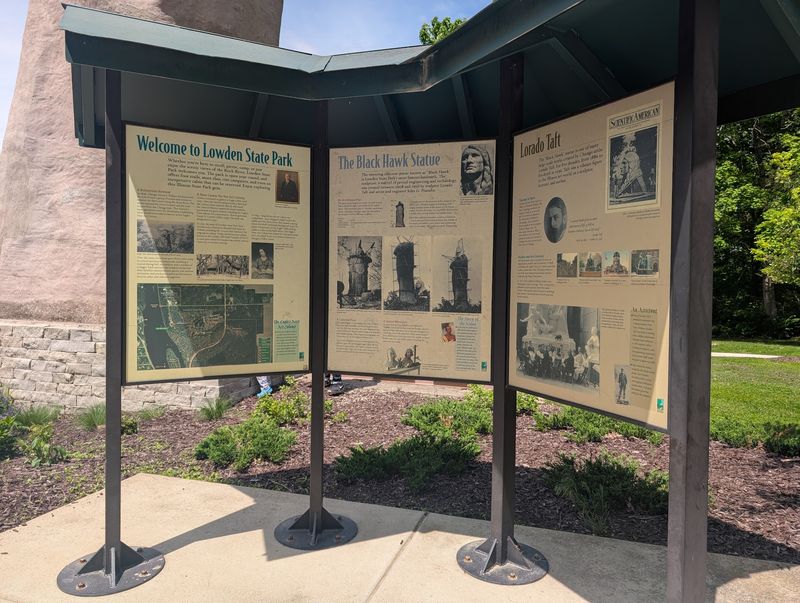
Field trips do not have to cost a thing. The area around the statue includes plenty of historical information about the site and the Native Americans connected to this region.
Signs and displays near the overlook explain the background of the statue and the land. They give kids something to read between photos.
For students learning Illinois history, the setting brings lessons to life. Standing on the bluff makes the past feel close.
Parents can use the visit to spark questions. Who was Black Hawk, why was the statue built, and how did this river shape the area?
The grounds near the statue are nicely landscaped. That makes reading the displays an easy, relaxed stop rather than a chore.
Some travelers first hear about the statue from television documentaries about America seen from above. Seeing it in person adds a deeper layer to that story.
A little reading turns a quick photo stop into a lasting memory. Kids may remember the facts long after the drive home.
Free Entry and Easy Access
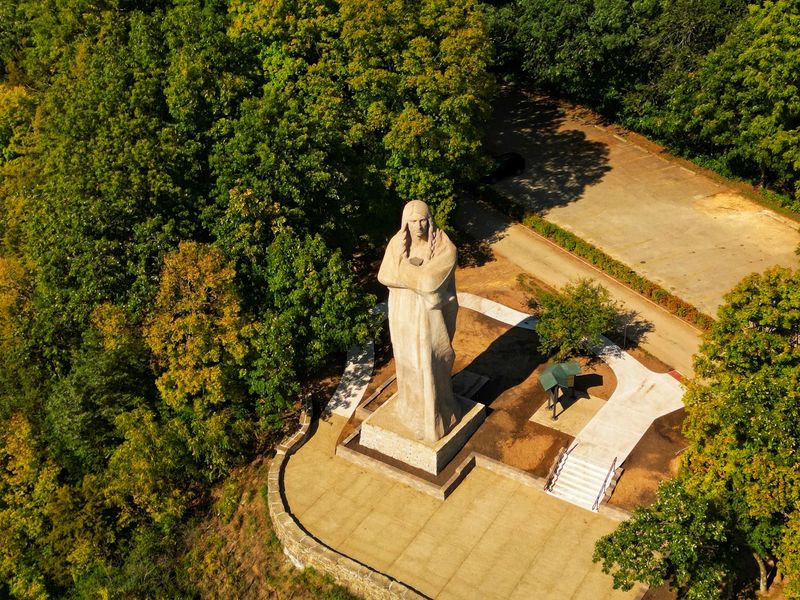
Here is the part budget-minded families love. There is no fee to enter the park, so kids and adults alike can see the statue for free.
That makes it one of the easiest low-cost outings in northern Illinois. Gas and a packed lunch may be the only real expenses.
The parking lot is spacious and sits close to the statue. People with mobility challenges can reach the main park area by the overlook without much trouble.
The stairs and steeper trails are another matter. Those are best for people comfortable with steep climbs.
Roads leading into the park can be rough in places. Driving slowly on the way in is a good idea.
Restrooms are available near the main area. Picnic tables and play areas round out the basic comforts.
Hours can change, so checking the City of Oregon visitor information page before heading out is wise. A quick look online can save a wasted trip.
Why This Side Trip Earns a Spot
Some places become family traditions without anyone planning it. The Eternal Indian has that effect on a lot of people.
It works as a short side trip for anyone driving through northern Illinois. It also works as a full day with hiking, a picnic, and time by the river.
The statue itself delivers the wow moment. The overlook, stairs, and trails add enough to keep everyone busy for hours.
Fall may be the sweetest season to go, since the leaves thin out and the river view opens up. Spring and summer bring green trails and long picnic afternoons.
Kids get a giant to marvel at and stairs to conquer. Adults get history, quiet, and a free outing that feels like a real discovery.
The high marks from people who visit speak to how well the spot delivers on such a simple promise. It is real, close, and costs nothing to enter.
After more than a hundred years on the bluff, the folded-arm giant is still waiting. Grab a friend, pack a lunch, and go say hello.


