
Affiliate disclosure: As an Amazon Associate I earn from qualifying purchases. Learn more
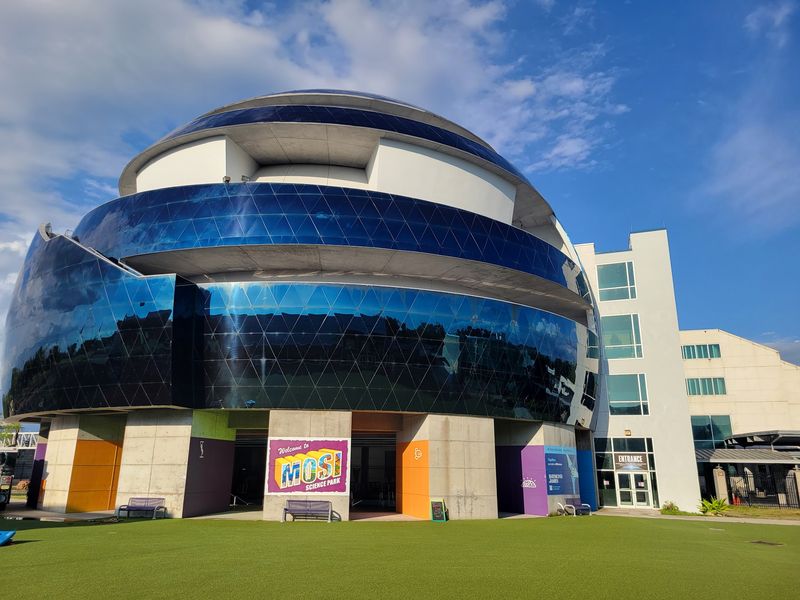
Most people in Tampa have driven past it a hundred times without looking up. Inside sits a dome screen so big that the staff call it the second-largest planetarium screen in North America.
One ticket gets you a full show under it, plus a whole building of buttons to push, drones to fly, and science to poke at. Kids on field trips have been coming here for decades, and many of them now bring their own kids.
There is also a ropes course, a dinosaur dig, a VR ride, and nature trails out back. The best part is that the price stays friendly for a Florida day out.
Keep reading for what to see first, where to sit in the dome, which day the doors stay shut, and how to make one visit feel like a trip to space.
A Science Hub on Fowler Avenue
Tampa has its beaches and its theme parks, but one of its longest-running crowd pleasers is a nonprofit science center. The Museum of Science & Innovation, known to locals as MOSI, sits at 4801 E Fowler Ave, Tampa, FL 33617, in the United States.
The museum focuses on hands-on learning. Exhibits cover biology, earth science, physics, and space, and most of them are meant to be touched rather than just viewed.
Beyond the main floor, the campus includes a planetarium dome, an outdoor ropes course, a nine-hole mini golf course spread through Science Park, a dinosaur excavation area, and the Backwoods Trails near the parking lot.
MOSI also runs educational labs, Makerspaces, camps, homeschool programs, lectures, and special events for both kids and adults. That is a lot of science packed into one address.
Free parking sits right next to the building, and food is available on site. For a family looking for an indoor plan that does not drain the wallet, this spot checks plenty of boxes.
So what makes people keep coming back? The answer starts with a long history in the Tampa Bay community.
Decades of Field Trip Memories
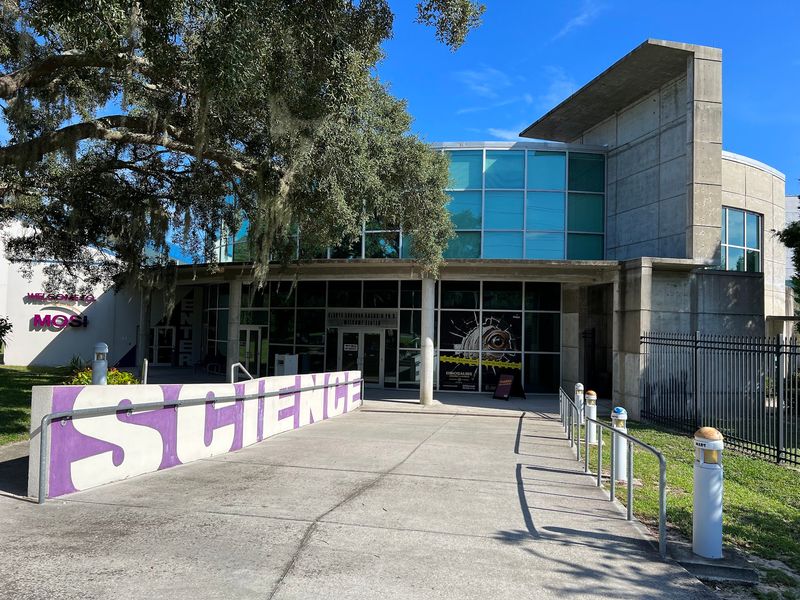
Ask a grown-up who grew up in Tampa about MOSI, and there is a good chance a school bus story follows. The museum has hosted field trips for generations, and weekday classes still arrive regularly.
Some adults who visited as kids around 35 years ago now bring their own children. Others return on their own after many years and find that the sense of wonder is still there.
That long run is part of the charm. MOSI does not try to be a theme park, and it says so openly.
As a nonprofit educational institution, its mission centers on making science accessible to the local community. The museum notes that general admission costs less today than it did nearly 20 years ago, when the facility was at its largest.
Like many nonprofits, it could likely use more funding, and some exhibits show wear from heavy daily use. Buttons get pressed thousands of times, and parts sometimes need repair.
Still, the museum keeps changing. During recent visits, the aerospace area known as Above and Beyond was being improved, and an indoor sports center has been mentioned as a future addition.
History is nice, but the real headliner hangs overhead.
The Giant Dome Overhead
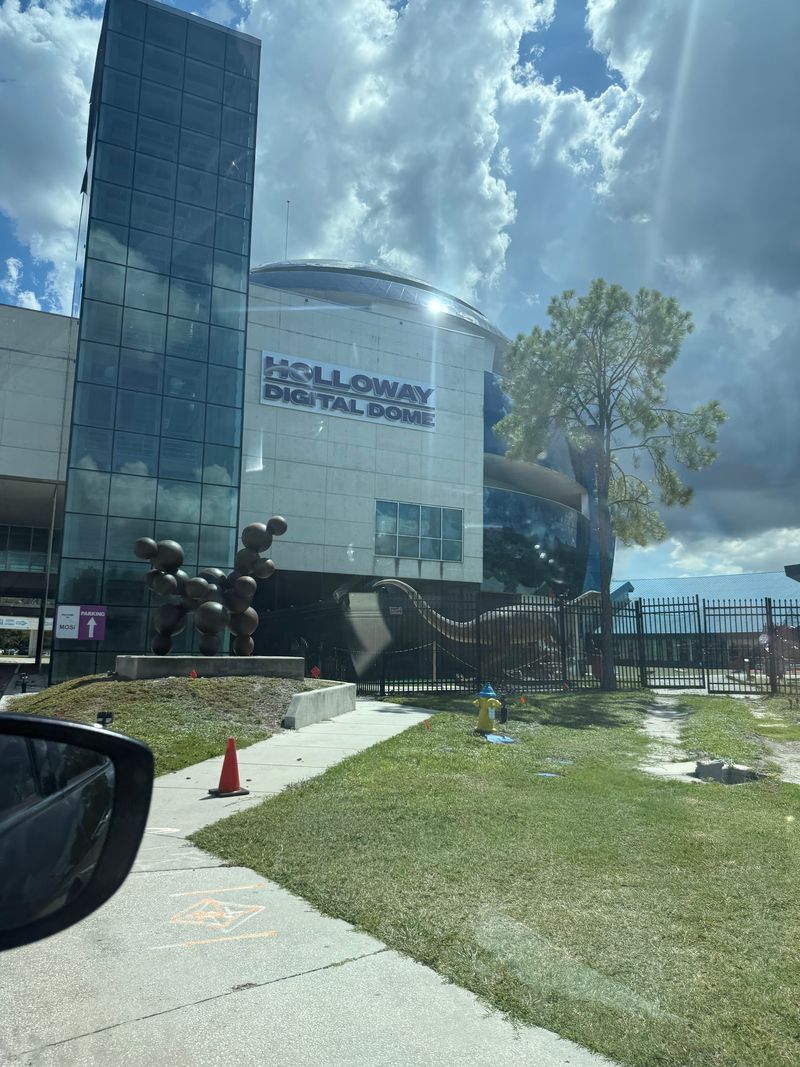
Second place rarely sounds this impressive. The Holloway Digital Dome Theatre, also called the Saunders Planetarium, features what the museum describes as the second-largest planetarium screen in North America.
The dome is the most talked-about feature at MOSI by a wide margin. Families, couples, and grandparents all seem to agree that it is the highlight of the visit.
Shows run throughout the day. The schedule mixes full-length produced fulldome films with live educational astronomy presentations led by staff.
Those live talks are a hit with curious minds. The astronomer narrating has a reputation for being knowledgeable, and the planet shows earn praise as educational for both kids and adults.
One thing to know before you go: the two formats are quite different. If your heart is set on a produced show rather than a lecture, check the schedule at the ticket desk, since program changes have occasionally happened.
Seats recline, and the visuals wrap across the whole dome. Space travel has never required so little packing.
And the dome does not stop working once the sun goes down.
Laser Nights and Music Shows
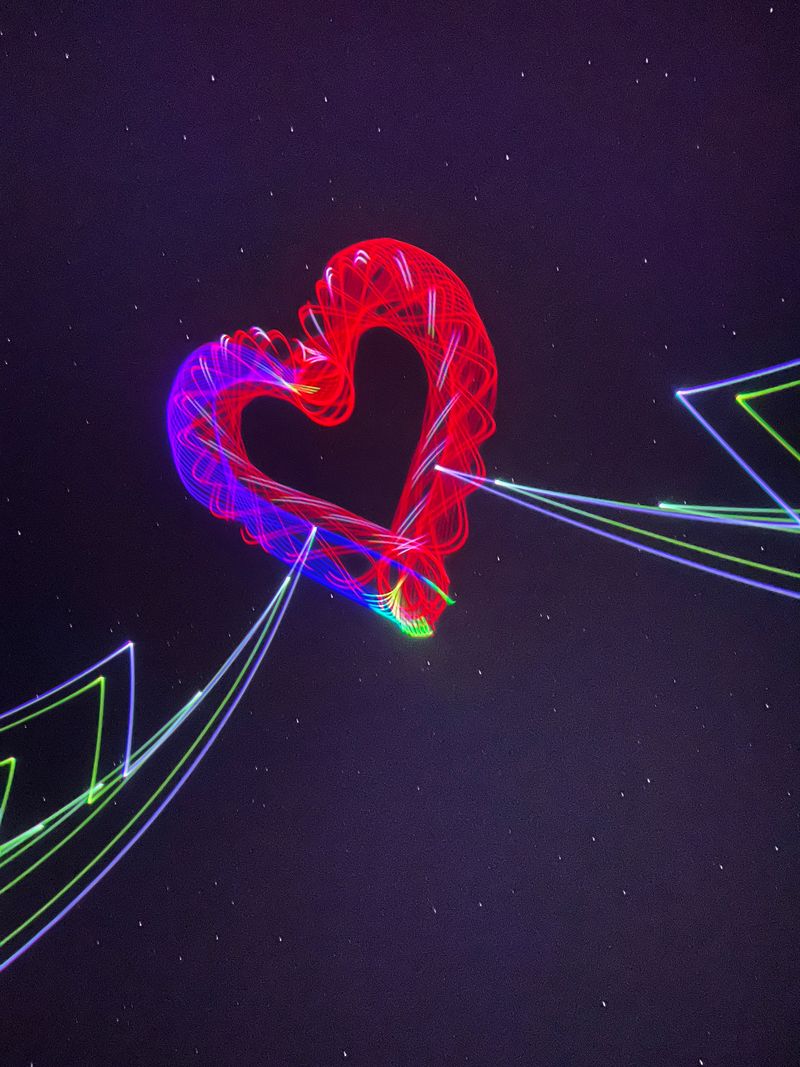
Planetariums are not only for planets. MOSI uses its dome for music-driven shows that draw a very different crowd in the evenings.
Past programs have included a Phil Collins laser show with a space-themed intro and Pink Floyd’s The Dark Side of the Moon 360 experience. Mesmerica, a visual music show with kaleidoscope-style imagery and calming narration, has been especially popular.
Mesmerica is a fairly short show, which helps with planning the rest of your night. VIP+ tickets have offered early entry, choice seating, a program, and a download.
Here is a useful seating tip. Many viewers recommend sitting in the farthest rows up and toward the back, since closer seats mean looking straight up for most of the show.
Arriving 30 minutes or more before showtime helps you grab those better seats.
Leaving is easy too. Parking is nearby, and exiting after an evening show tends to be quick, which is a welcome change from big concert venues.
The lineup rotates, so the show on the schedule today may be gone next season. Worth a peek before planning a date night.
Buttons, Drones, and the Idea Zone
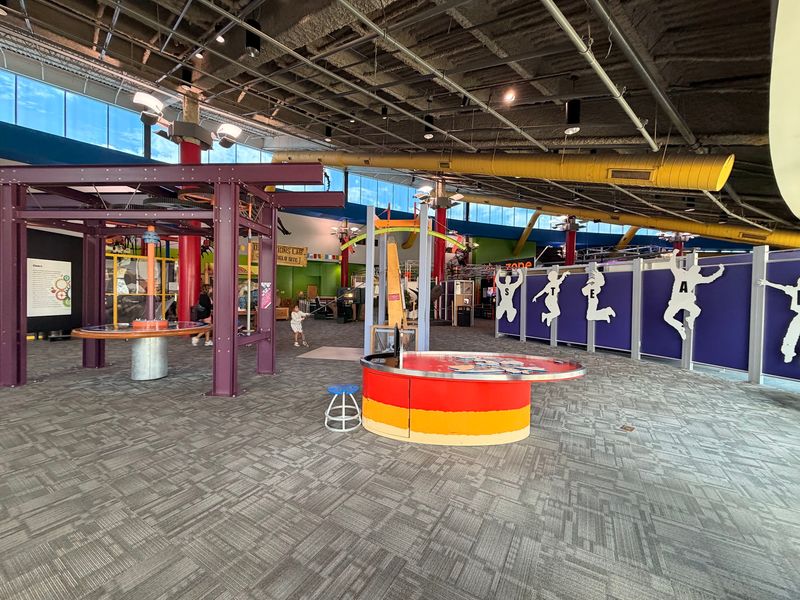
Touching the exhibits is not just allowed here. It is the whole point.
The main floor is packed with interactive displays covering physics, biology, and earth science. The Idea Zone lets guests experiment with physics concepts, while other areas explore the human body.
An AI exhibit has given kids the chance to try flying a drone. A Tesla coil is another crowd favorite that comes up often in conversations about the museum.
Many displays lean toward younger children. An 8-year-old will likely find plenty to keep busy, while older kids and adults may gravitate to the dome and the bigger experiences.
Heavy use means some exhibits show wear, and an occasional piece may be out of order. The staff cleans throughout the day, and the maintenance team works on repairs and refreshes.
For a rainy afternoon or a scorching summer weekend, this floor gives kids a place to burn energy while learning something along the way.
Of course, some energy is better spent outdoors and a few feet off the ground.
High Wires on the Sky Trail
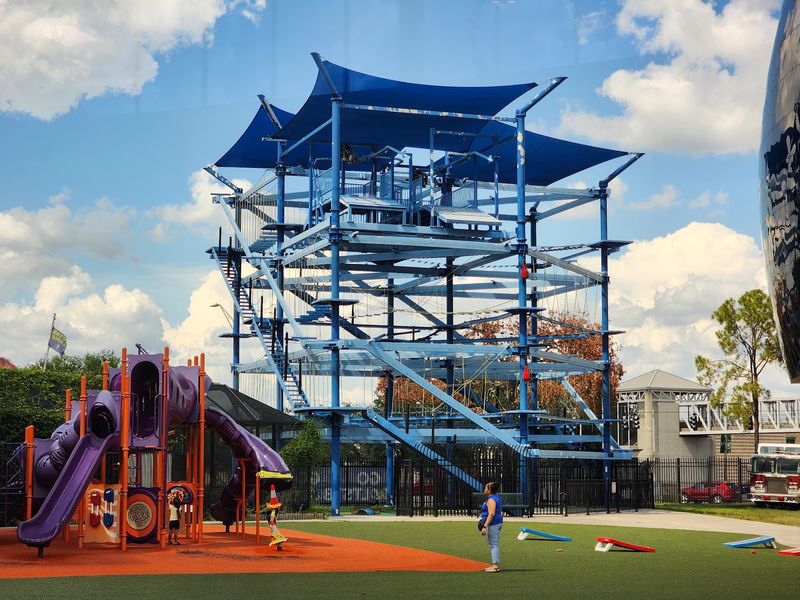
Gravity gets its own lesson outside. MOSI’s Sky Trail ropes course offers an outdoor challenge that mixes adventure with a bit of science.
The course is one of the more popular extras at the museum. Kids around 8 have tackled it and found it challenging yet fun, which sounds like the right balance.
Adults are welcome to give it a go too. It is a nice change of pace after an hour of pressing buttons inside.
Keep in mind that some outdoor experiences cost extra beyond general admission. Checking the current add-on prices before you arrive can help you budget for the day.
Florida weather plays a role here as well. Afternoon storms are common, so an earlier climb might be the smarter plan on summer days.
Comfortable clothes and closed-toe shoes make sense for any ropes course. Leave the flip-flops for the beach.
After testing your balance up high, there is a whole other world waiting down low in the sand.
Dinosaurs in the Sandbox and in VR
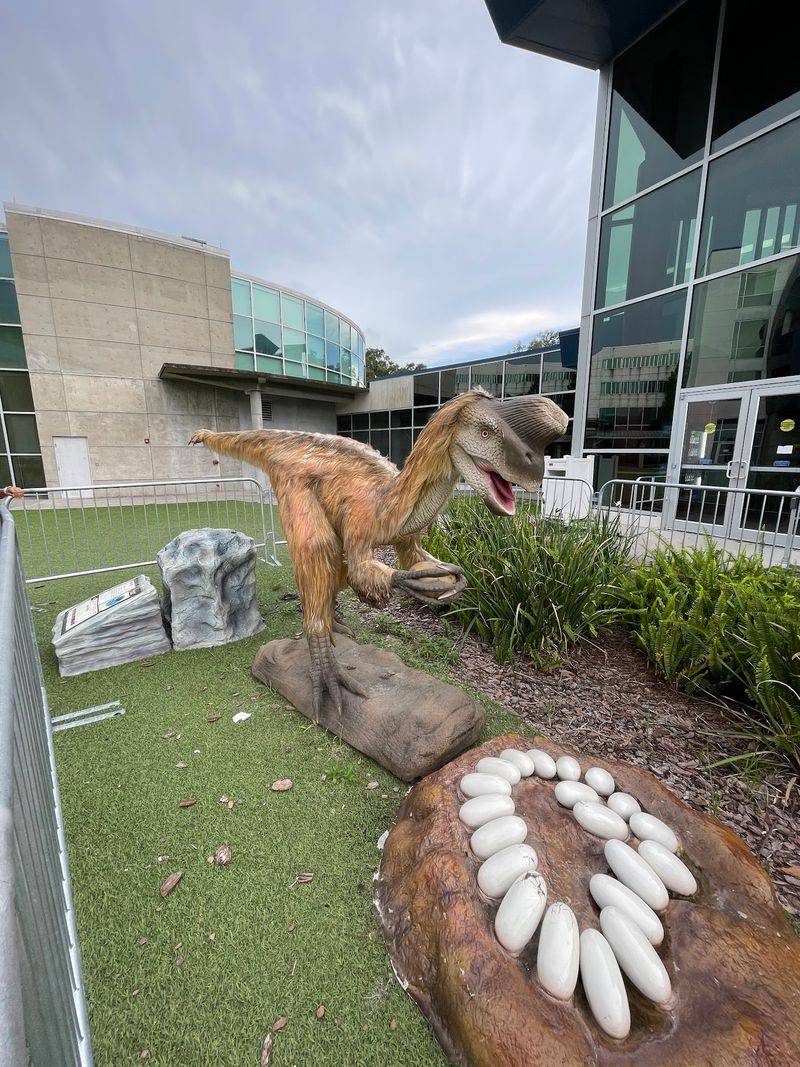
Every young paleontologist needs a first dig. MOSI’s dinosaur excavation area gives little ones a sandbox-style spot to search and discover.
It is designed as a simple, hands-on learning space rather than a fancy themed attraction. Younger kids tend to love it most, while older ones might move on quickly.
For something more high-tech, a dinosaur VR experience lets guests come face to face with prehistoric creatures in virtual form. The VR ride is one of the more talked-about extras.
A dinosaur exhibit rounds out the theme. Between the sand, the headset, and the displays, dino fans have a few ways to get their fix.
Science Park also holds the nine-hole mini golf course. Only four holes are visible from inside the museum, with the rest spread across the park area.
Like the ropes course, some of these experiences may cost extra. A quick question at the front desk saves surprises later.
Then there is the quieter side of campus, which many guests miss completely.
Butterflies and Backwoods Trails
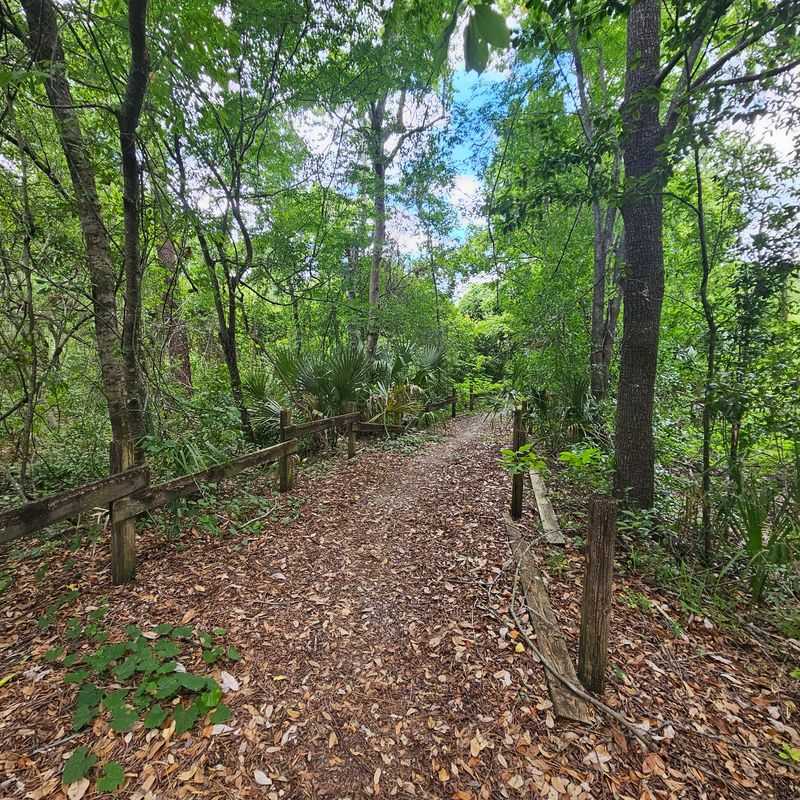
Not every science lesson needs a screen. MOSI’s butterfly garden and the Backwoods Trails offer a calmer break from the busy exhibit floor.
The trails sit just outside the parking lot. They form a small set of paths that make for an easy stroll between activities.
Expectations matter here. These are short, simple trails, and on some days the main attractions may be a few flowers rather than wildlife.
The butterfly garden draws its own fans, and it pairs well with the museum’s life science focus. Kids who loved the biology exhibits can see some of those ideas outside.
These outdoor spots are a good way to reset when little legs or grown-up patience start to fade. A short walk can make the second half of the visit go smoother.
Bring water and sun protection, since this is still Florida. Even a brief walk can feel long in July.
Once the outdoor time wraps up, it helps to know who tends to enjoy this place most.
Who Gets the Most Out of a Visit
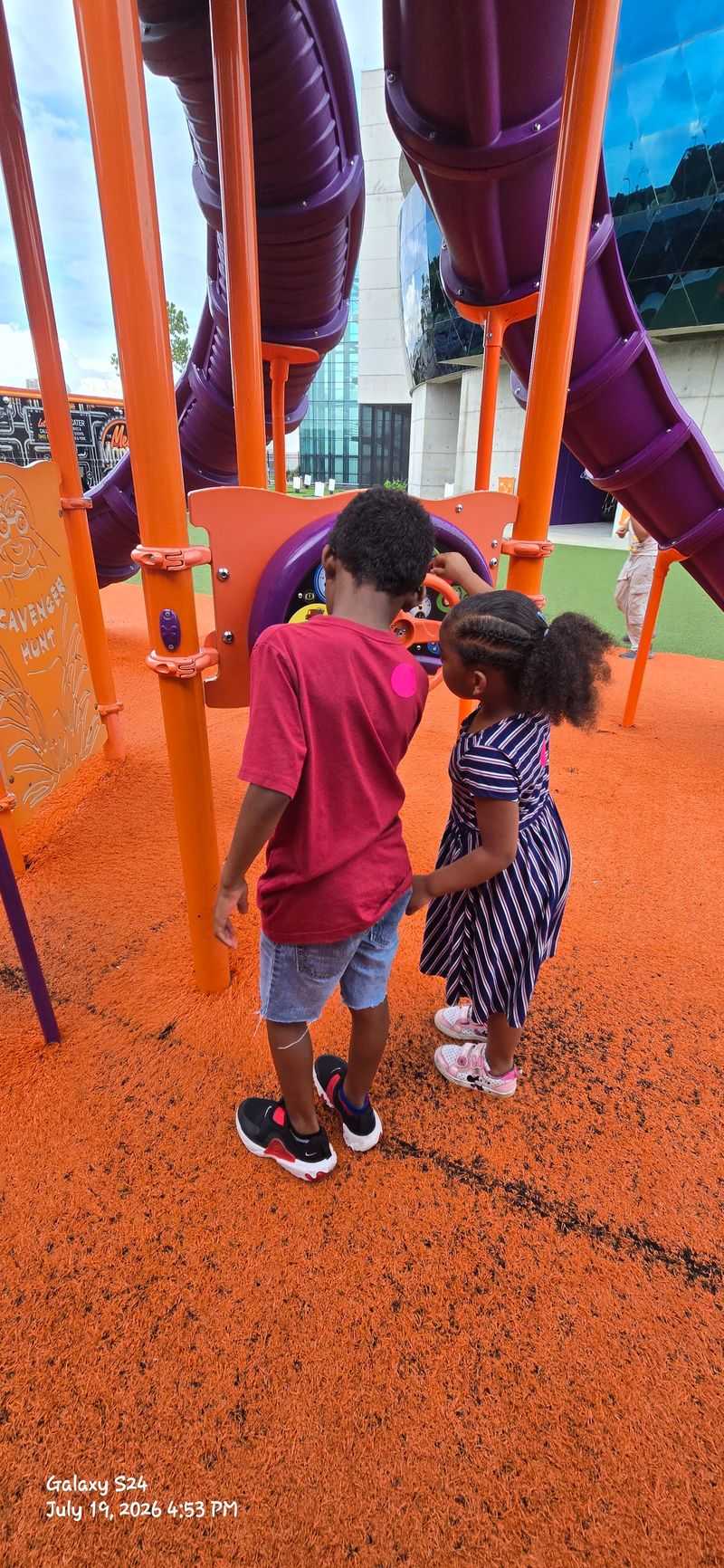
Grandparents and grandkids make a surprisingly great team here. Multiple generations exploring together is one of the most common scenes at MOSI.
Families with younger children tend to find the most to do. Many displays are built for smaller hands, and the open layout lets kids roam.
Teens and adults often find their sweet spot in the dome shows, the ropes course, and the evening programs. Science fans who want deep, detailed exhibits may find parts of the floor lighter than they hoped.
School groups looking to let students move around will feel right at home. Some teachers note that adding a planetarium show or structured program boosts the learning value for older grades.
Adults get their own night too. MOSI: Science After Dark events let grown-ups explore at their own pace, often with food and drinks from local vendors and dome shows included.
Birthday parties take things further with overnight camp-ins. Groups get the museum after hours, a planetarium show, snacks, breakfast, and educator-led activities.
Sleeping in a science museum might just be every kid’s dream.
Hours, Tickets, and One Odd Closed Day
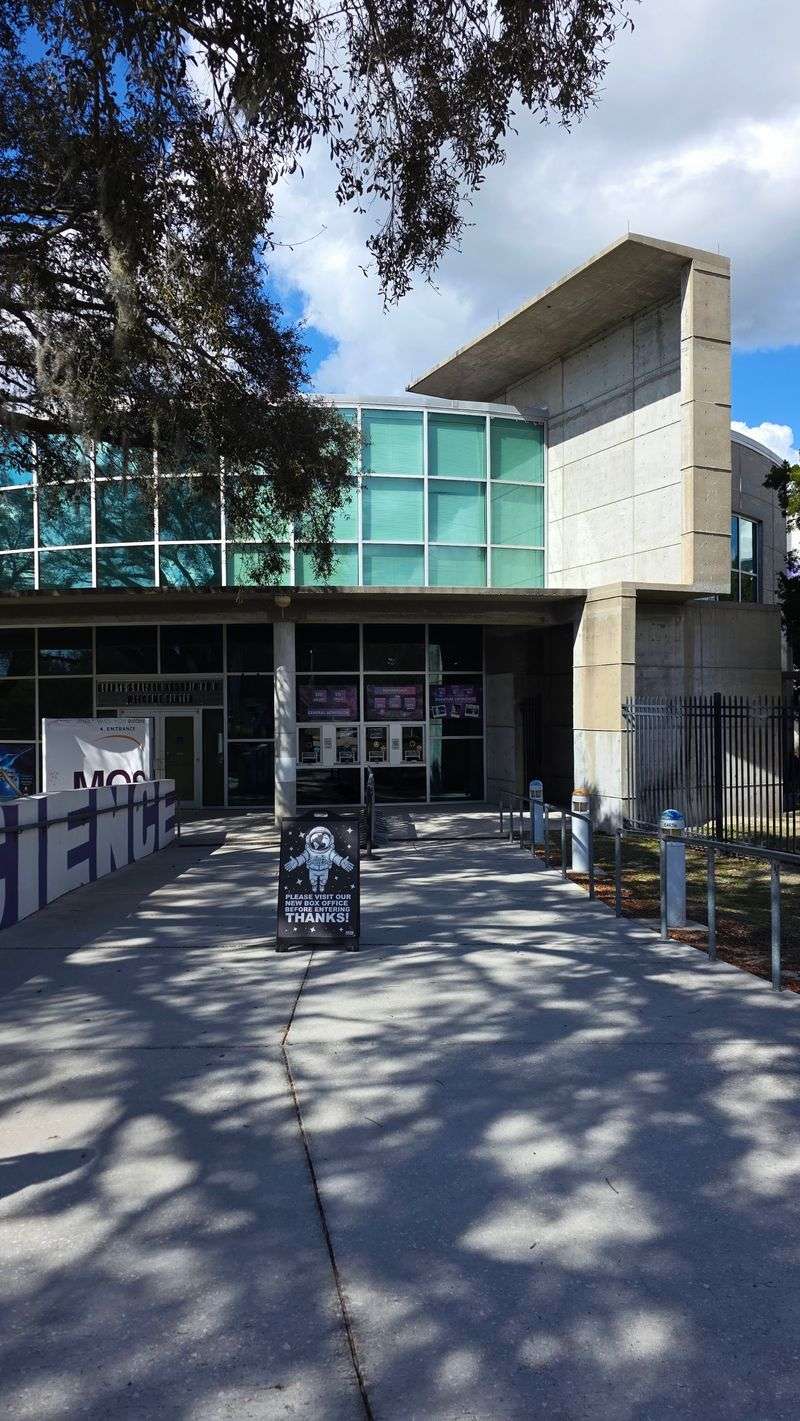
Here is the scheduling twist that trips people up: MOSI is closed on Thursdays.
Every other day of the week, the museum runs from 10 AM to 5 PM. That includes Saturday and Sunday, so weekend plans are easy.
General admission is currently $20 for adults and $15 for children. The best part is that admission includes one full-length planetarium show under the giant dome.
Buying tickets online is a simple way to lock in that dome show. Many families call this bundle a really solid deal for Tampa.
Extras like the ropes course, VR ride, and some outdoor activities may cost more. Special evening shows, such as laser concerts or Mesmerica, are ticketed separately.
Parking is free and close to the entrance, which saves both money and walking time. Food is also available on site.
Plan for a few hours at least. Many guests wish they had stayed longer, so arriving near opening helps you fit in the exhibits and a show without rushing.
A Final Countdown Before Liftoff
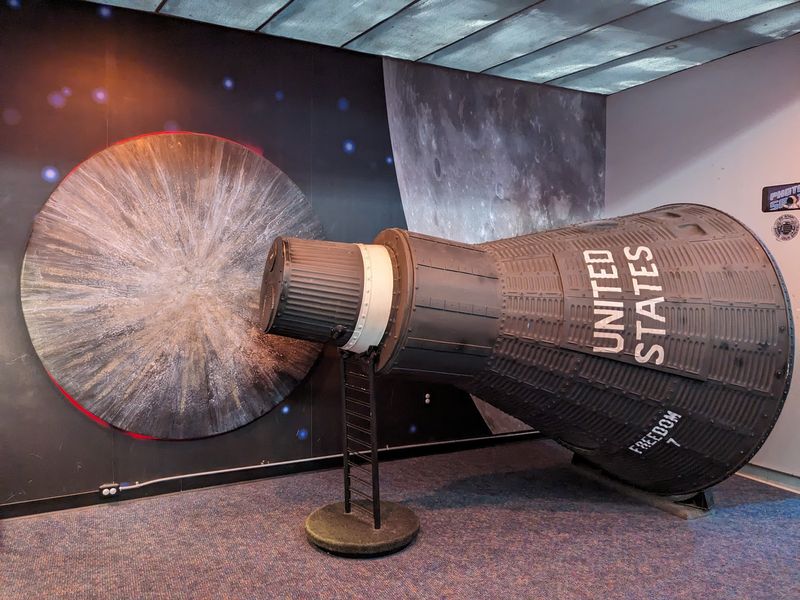
Nobody needs a rocket to reach the stars in Tampa. A $20 ticket and a reclining seat under one of the continent’s biggest dome screens will do the job.
MOSI is not a flashy theme park, and it does not pretend to be. It is a nonprofit science center with some well-loved exhibits, a few worn spots, and a planetarium that wins over almost everyone.
For families, it offers a budget-friendly escape from summer heat and summer storms. For adults, evening shows and Science After Dark nights add a whole different flavor.
The smartest plan is simple. Skip Thursday, arrive early, grab your included dome show, and leave time for the ropes course or the dino dig.
Sit toward the back of the dome if you can. Your neck will thank you.
Generations of Tampa kids have looked up at that screen and wondered what is out there. There is a good chance your crew will walk out wondering too, and already planning the next trip back.