Affiliate disclosure: As an Amazon Associate I earn from qualifying purchases. Learn more
Florida has theme parks, beaches, and traffic, but it also has a place where the night sky still wins. Out past the cattle ranches of central Florida, a huge stretch of open prairie keeps its lights low on purpose.
People drive hours just to see the Milky Way with their own eyes, and many leave planning their next trip. Deer and wild turkeys wander near the campsites in the morning, and a special pad waits for telescopes after dark.
The best part is that it stays quiet, affordable, and far from the crowds. Most Floridians have never been, which is exactly why it feels like a secret.
Keep reading to find out where it is, what to do there, how to plan a stay, and why packing extra supplies is a very smart move before you go.
A Prairie Hiding Near Okeechobee
Not every Florida adventure starts with a ticket booth and a parking garage. Some start on a long country road with nothing but grass on both sides.
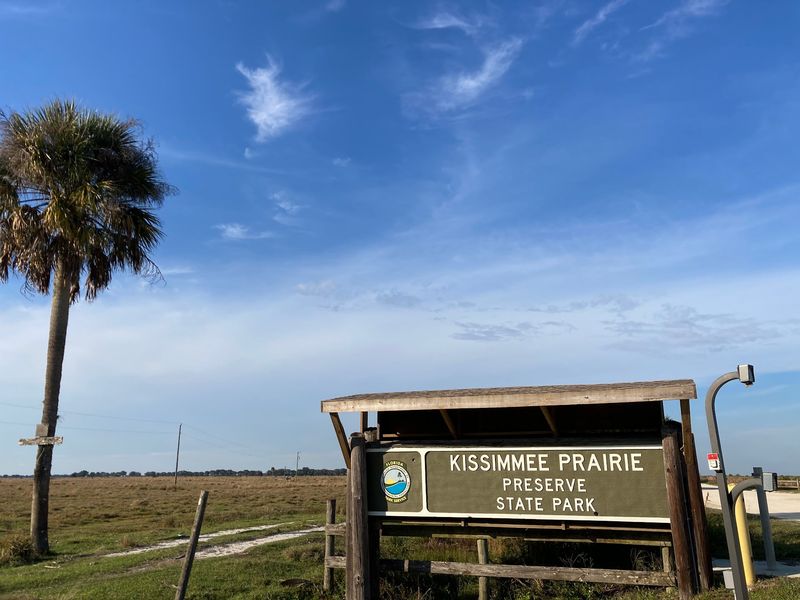
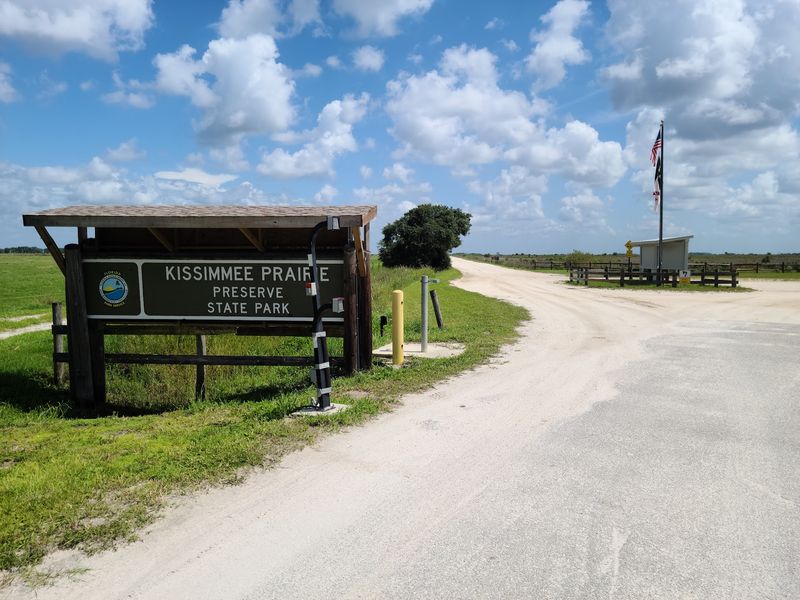
Kissimmee Prairie Preserve State Park sits at 33104 NW 192nd Ave, Okeechobee, FL 34972, in the United States. The park is a large natural area covered with grassland, and it is known for camping, stargazing, and birdwatching.
The setting is the opposite of crowded Florida. Wide-open prairie stretches toward the horizon, and the sky takes up most of the view.
The park is remote, and that is part of the charm. The nearest gas is roughly 30 minutes away, and the nearest market is about 45 minutes out.
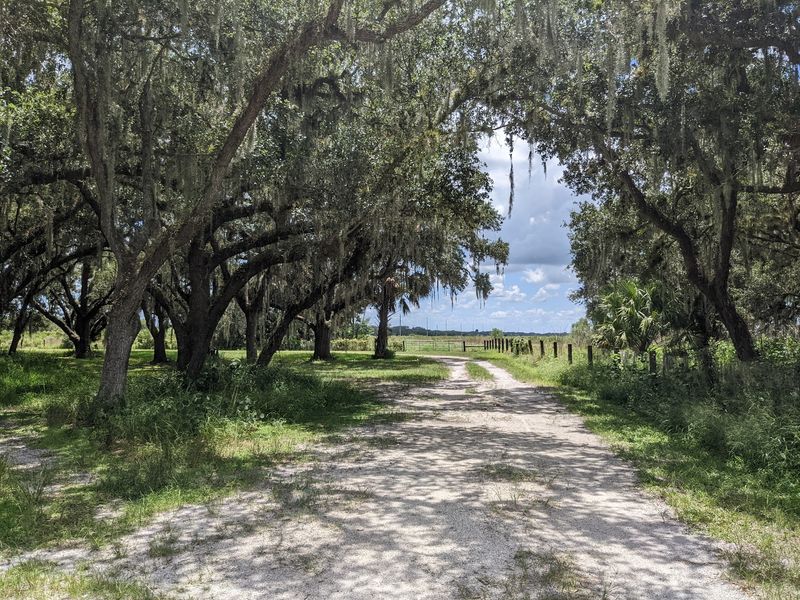
An unpaved road leads through the park, and it is described as smooth and easy to drive. Ordinary cars can handle it without drama.
Day hours run from 8 AM to 4 PM, seven days a week. Campers, of course, get to stay for the main event that starts after sunset.
So the first rule here is simple. Fill the tank, pack the cooler, and get ready for a very different side of the Sunshine State.
Old Florida Left Wild
Much of Florida has been paved, built on, and lit up. This preserve is one of the places where that story did not happen.
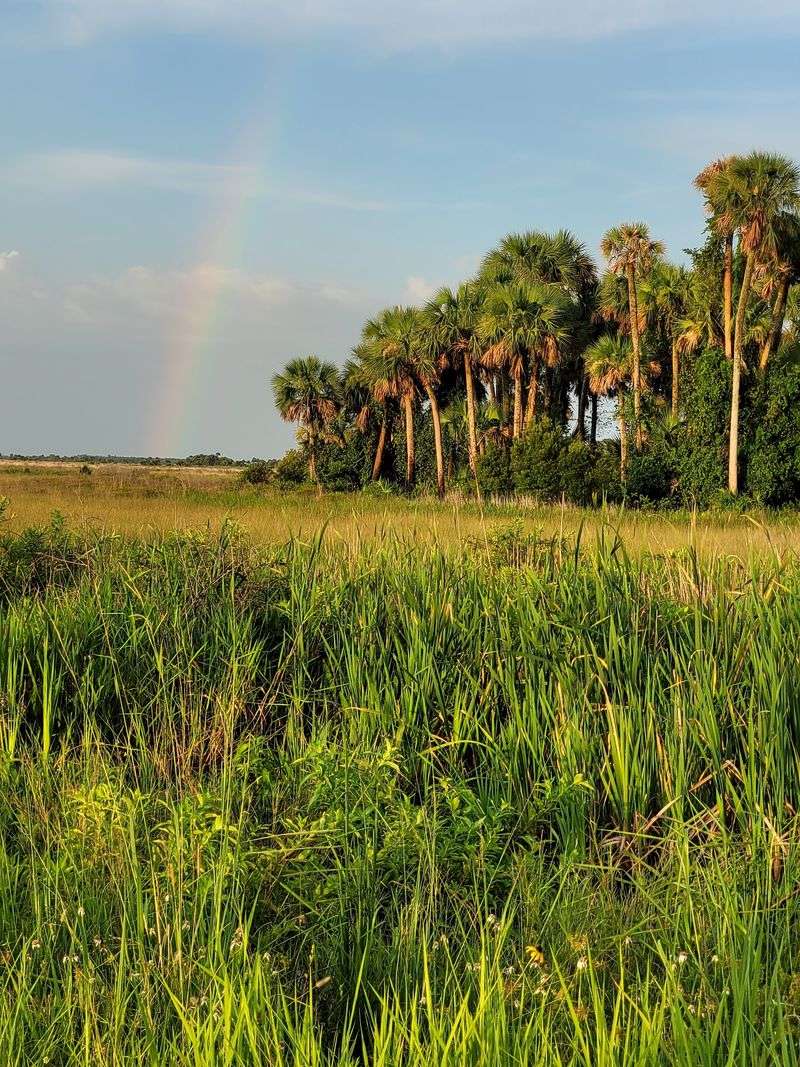
The landscape shows what large parts of the state once looked like. Open prairie mixes with hammocks, which are clusters of trees that rise like islands in the grass.
Rare plants and wildlife live across this land. Wildflowers bloom across the prairie, and they show up even during dry spells.
In the distance at night, cattle from nearby ranches can sometimes be heard. That small detail is a reminder that this corner of the state still runs on a slower clock.
The park’s calm, spacious mood is hard to find elsewhere in Florida. It feels remote and peaceful without needing a packed schedule to enjoy it.
Simple plans fit best here. A sunset, a slow walk, and time sitting outside are often enough to fill a day.
For anyone tired of resort lines, the prairie offers a reset button that costs very little to press.
The Darkest Sky in the Sunshine State
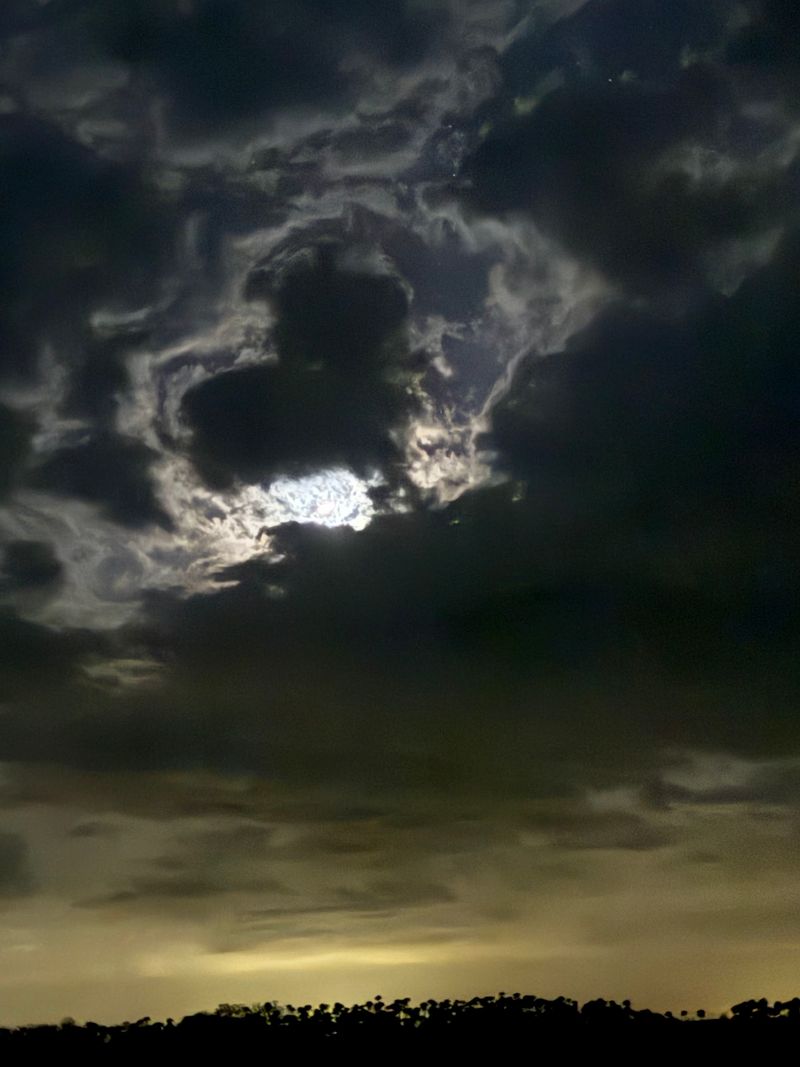
Stargazing is the headline act here, and it earns top billing. The park is a designated dark sky spot in Florida.
On a clear night, the Milky Way can be seen with the naked eye. Shooting stars, the moon, and even Saturn rising in the early morning have all been spotted from the prairie.
After sunset, only red lights are allowed. That rule keeps eyes adjusted to the dark and protects the view for everyone.
Some light pollution still creeps in from surrounding areas. Even so, for Florida, this is about as close to a truly dark sky as it gets.
Timing matters too. The Milky Way has a season, so arriving a few weeks early can mean fewer of its brightest features, though the sky stays impressive.
Clouds can also spoil the show. Checking the forecast before booking is a smart move.
When everything lines up, the stars really do outshine the cities.
Telescopes on the Astronomy Pad
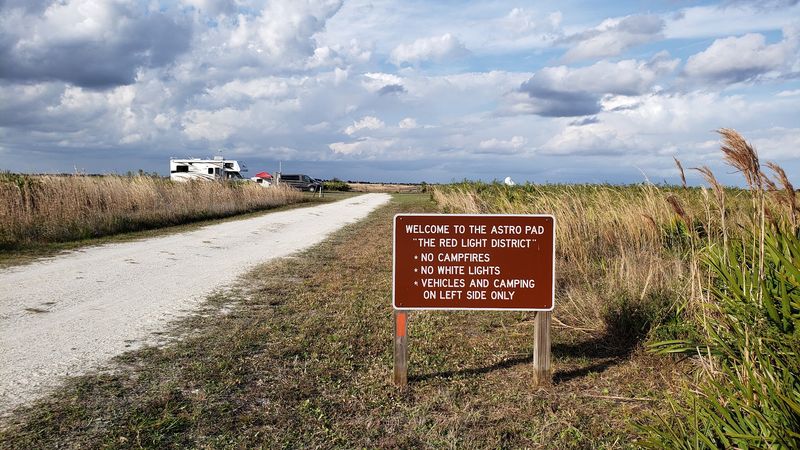
Serious sky watchers get their own space at this park. The astronomy pad is a dedicated area built to keep light to a minimum.
It is set up to hold multiple telescopes at once. There are spots for overnight tents and hammocks, so stargazers can stay close to their gear.
The pad is quiet and very dark, making it popular with astrophotographers chasing the Milky Way. Beginners with no equipment are welcome to look up too.
Not using the pad is fine as well. Great views are still possible right from the regular campgrounds.
There is a bonus for space fans. Rocket launches can sometimes be seen far off in the distance, roughly 100 miles away.
Patience pays off here. Staying up late, letting eyes adjust, and keeping lights red can turn a normal camping night into a small astronomy lesson.
Bring a chair, a blanket, and a little curiosity, and the universe handles the rest.
Turkeys, Deer, and Caracaras
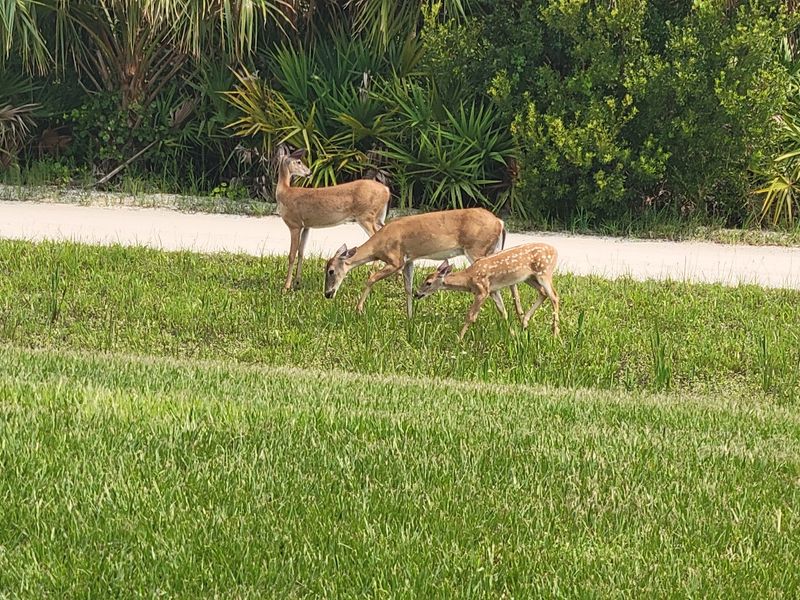
Wildlife here does not keep office hours. Deer, turkeys, and birds often wander close to the campgrounds early in the morning.
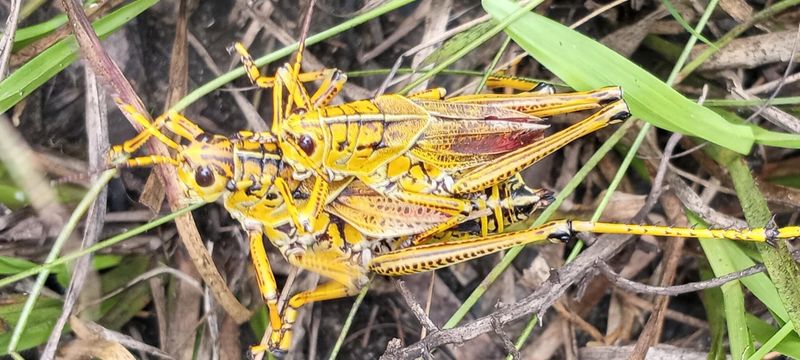
The list of animals is long. Gopher tortoises, raccoons, opossums, rabbits, snakes, and alligators all call the area home.
Bird lovers have plenty to track. Red-shouldered hawks, several kinds of sparrows, and crested caracaras have all been seen across the preserve.
Deer are especially common and can show up at any time of day. Some appear at fairly close range.
Coyotes may also be heard calling near dawn. It makes for an unusual wake-up call, though it often arrives just in time for sunrise.
Animals here clearly run the place, and humans are the guests. Keeping a respectful distance helps everyone.
Binoculars are worth packing. On this prairie, the next sighting is usually just around the bend.
Miles of Flat, Open Trails
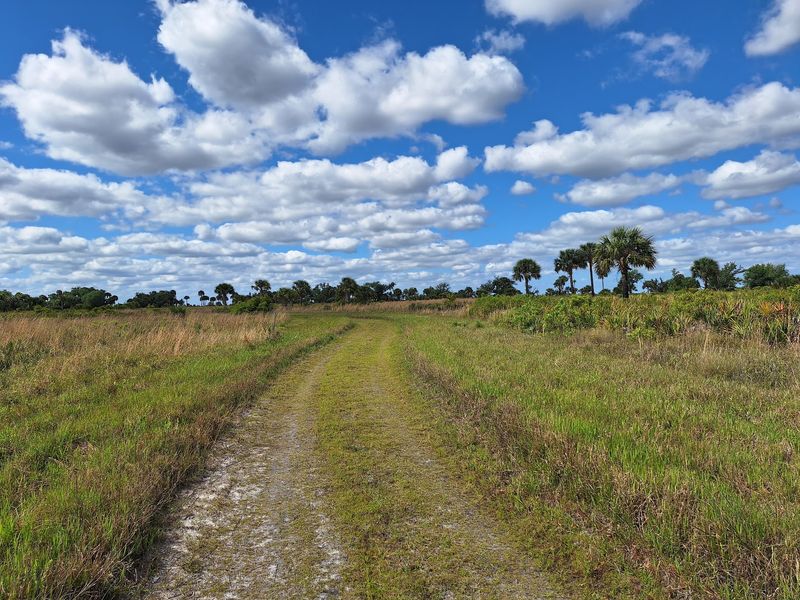
Hikers who dislike hills are in luck. The trails here are flat, sandy, and well blazed.
There are three main trails, and loops of around six miles are easy to put together. Paths are clearly marked, and the park map is simple to follow.
The Prairie hike is a favorite, and the hammock loop gets even more love. The hammock sections offer some shade, while open prairie stretches have very little.
Some people find the scenery a bit repetitive, with long straight sections. Others love that wide, unbroken view.
Low-lying areas can flood during the rainy season. In dry weather, there are no mud or traction problems.
Bikes can be rented, which is handy for covering more ground. Ask at the ranger station to arrange one.
Horse riders have trails too. The park welcomes equestrians, which adds another way to explore the prairie at a different pace.
Campsites, Horse Loops, and Glamping Tents
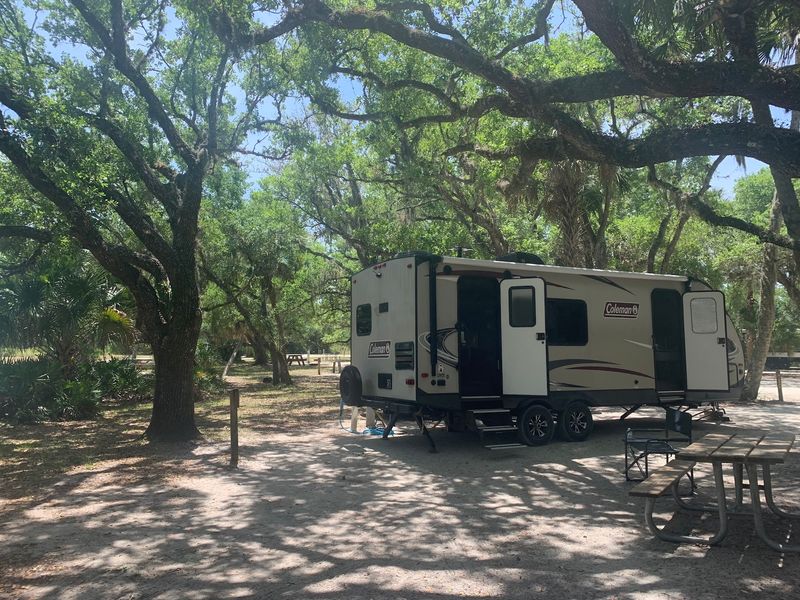
Sleeping arrangements come in several flavors. The family campground sits in a hammock surrounded by open prairie.
Sites in the family loop offer electric and water hookups for RVs, and tent campers are welcome too. Reservations can be made online.
The equestrian campground offers extra-large spaces and horse housing. It is also an option for anyone needing more room.
Glamping tents are available for those who prefer a bed. They have touches like a mini fridge, throw pillows, and area rugs.
Privacy can be limited. Many sites and glamping tents sit close together with little shrub cover, so neighbors are easy to see.
Site choice matters. Site 20 suits RVs better than tents because it lacks shade, and site 15 has flooded during heavy rain.
Quiet hours are generally respected. Picking the right spot can make a good night even better.
Clean Bathhouses and Helpful Rangers
Remote does not mean rough. The bathhouses here are known for staying clean and well stocked.
Showers are hot, private, and roomy, with space for belongings. Some even have a charger in the bathroom.
Laundry rooms sit beside the showers, and there is a clothes dryer. One bathhouse includes a large outdoor sink.
Ice can be purchased at the park office. That small perk matters when the nearest market is so far away.
Staff, camp hosts, and volunteers are praised for being friendly and helpful. Check-in tends to go smoothly.
Calling ahead with questions is a good idea, since the office team is happy to help plan a stay.
Rangers patrol the grounds, though rules like burn bans depend on everyone doing their part.
Bugs, Heat, and Smart Packing
Florida weather writes its own rules, and the prairie follows them. Summer hikes can be very hot, with little shade on most trails.
Early morning is the best time to hike in warm months. Plenty of water and insect repellent should go in every pack.
Ice packs can help keep water cool and offer quick relief on the neck. A passing rain shower can drop temperatures by 10 to 15 degrees in minutes.
Evenings in July can dip to the low 70s. In April, nights may feel chilly while middays stay hot.
Wind blowing across the prairie can make campfires tricky. Damp firewood adds to the challenge.
Gas, propane, and enough supplies should be handled before arrival. The nearest stores are a long drive away.
A little preparation keeps the focus where it belongs, on the sky and the wildlife.
Worth the Long Drive
Some parks shout for attention. This one simply waits for the right people to find it.
Kissimmee Prairie Preserve State Park holds a 4.8-star average from nearly 1,000 people, and the reasons are easy to spot. It is quiet, affordable, well kept, and full of wildlife.
It suits campers, hikers, horse riders, birders, and anyone who loves the night sky. It may not suit those looking for loud parties or off-road joyrides.
Day hours run from 8 AM to 4 PM every day, but staying overnight unlocks the real magic.
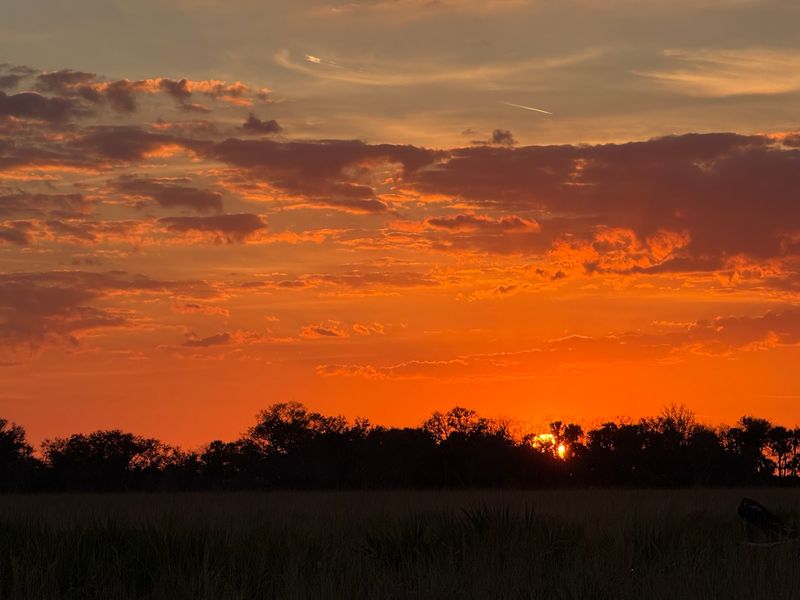
Sunsets here get as much love as the stars. Even Pokémon fans will find gyms and stops scattered around the park.
The trip takes planning, extra supplies, and a full gas tank. In return, it offers something rare in modern Florida.
A sky full of stars, a prairie full of life, and very few crowds make a pretty convincing case for a weekend away.