
Affiliate disclosure: As an Amazon Associate I earn from qualifying purchases. Learn more
Some of the rarest wetlands on Earth sit along the Great Lakes, and Michigan holds a big share of them. Coastal fens are fed by mineral-rich groundwater, and they shelter plants that grow in very few other places.
One northern Michigan preserve wraps those wetlands into a landscape of tall dunes, inland lakes, island views, and miles of open shoreline. Stick around, because the story of this place starts with an old Anishinaabe legend and ends with the practical tips you need for a trip that never requires a plane ticket.
A Lakeshore Hiding Near Maple City
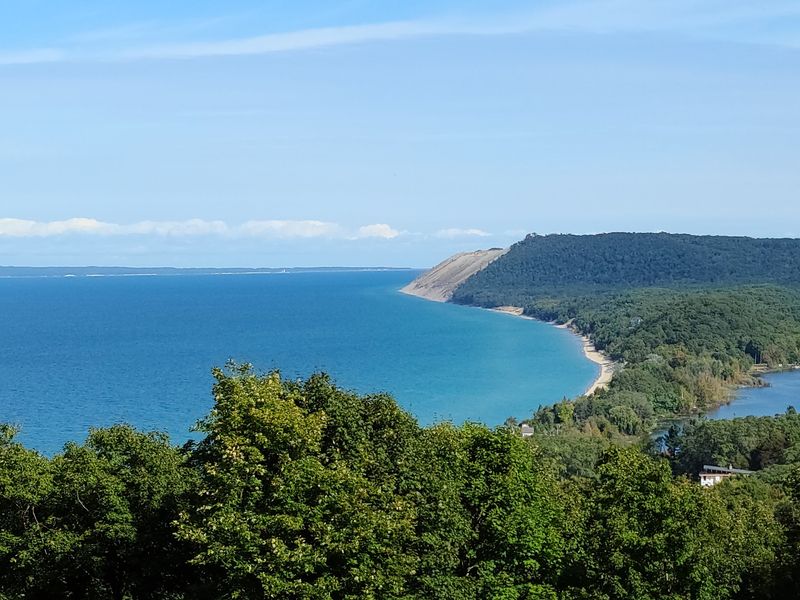
Northern Michigan keeps one of its biggest secrets in plain sight. Sleeping Bear Dunes National Lakeshore, listed at Maple City, MI 49664, stretches along the Lake Michigan coast in the northwest corner of the Lower Peninsula.
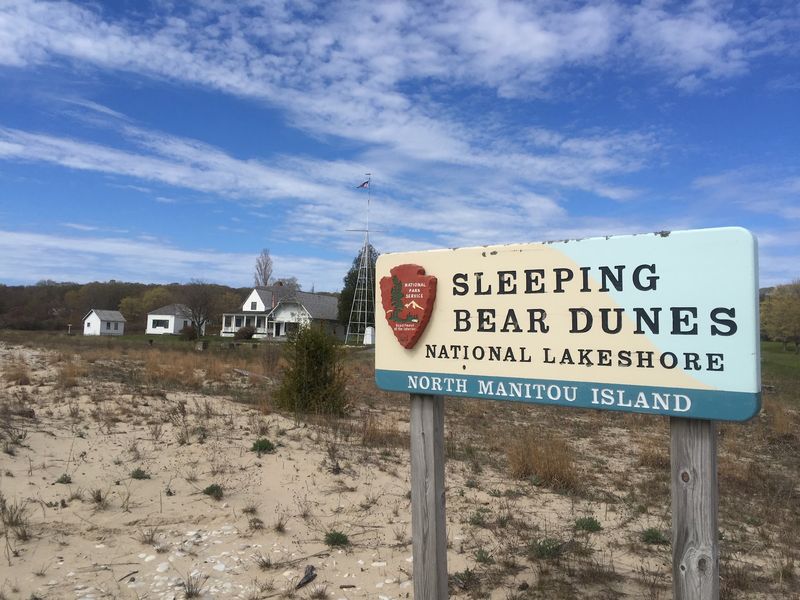
The park is managed by the National Park Service. It covers roughly 35 miles of mainland shoreline plus two offshore islands, North and South Manitou.
Google classifies the area as a marine protected area. That label fits, since the park protects water, beach, dune, and wetland all at once.
The official description calls it a sprawling nature preserve with shores, sand dunes, lakes, trails, and many campsites. Each of those pieces gets its own spotlight in the sections ahead.
Michiganders tend to know the name, yet plenty have only seen it from a car window. The deeper layers, including its rare wetlands, reward anyone willing to slow down.
So where did a name like Sleeping Bear come from in the first place? The answer is older than the state itself.
The Mother Bear Legend
Long before any map printed the name, the Anishinaabe people told a story about this coast. A mother bear and her two cubs swam across Lake Michigan to escape a great fire on the Wisconsin side.
The mother reached the shore and waited on a bluff for her cubs. They never made it to land.
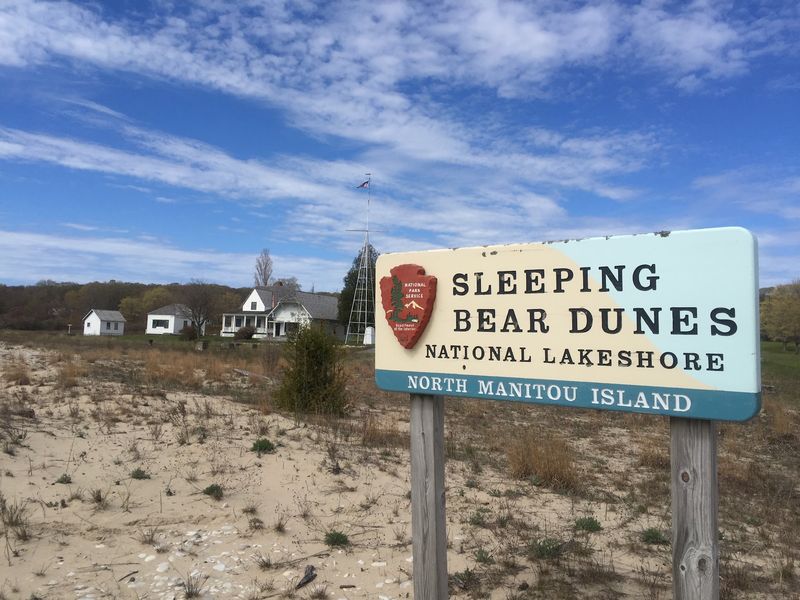
According to the legend, the Great Spirit created North and South Manitou Islands to mark where the cubs rested. The mother bear became the dune that still watches over the water.
The story is part of Michigan’s Native heritage, and it deserves to be shared with respect. It explains why the islands and the dune carry the names they do today.
Erosion has changed the original Sleeping Bear Dune over the years. Still, the legend gives the whole landscape a sense of meaning that few parks can match.
From legend, the timeline jumps to a busier era of lumber, ships, and small harbor towns.
From Timber Docks to Protected Land
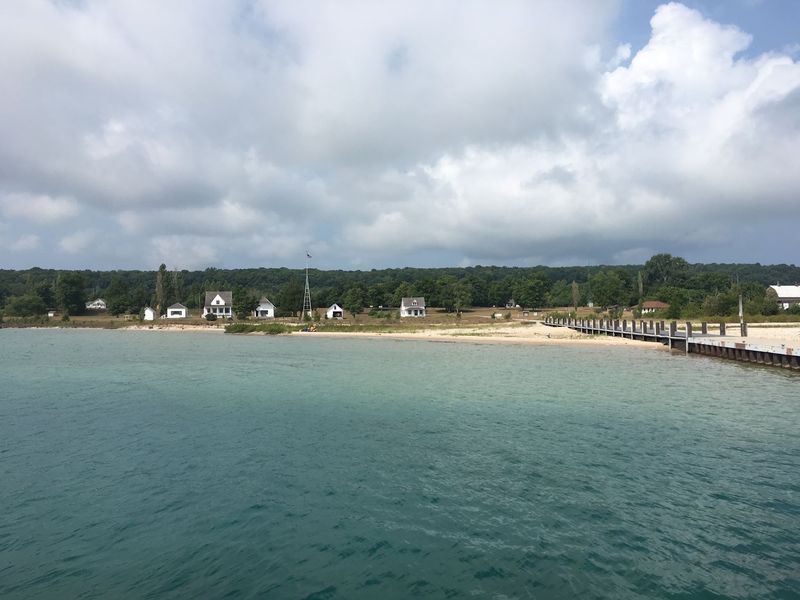
Lumber once ruled this shoreline. In the 1800s, steamships passing through the Manitou Passage needed wood for fuel, and small coastal villages grew up to supply them.
Farms followed the loggers. Some of those old farmsteads still stand inside the park boundaries.
By the twentieth century, people began pushing to protect the dunes from heavy development. Congress established Sleeping Bear Dunes National Lakeshore in 1970.
That decision kept a long stretch of coast open to the public instead of lined with private lots. For Michigan residents, it means this shoreline belongs to everyone.
In 2011, a national television audience voted the park the Most Beautiful Place in America. Locals were not surprised, but the attention brought new crowds.
History explains the human side of the park. The quieter natural story begins at the water’s edge, in wetlands most people walk right past.
What Makes a Coastal Fen So Rare
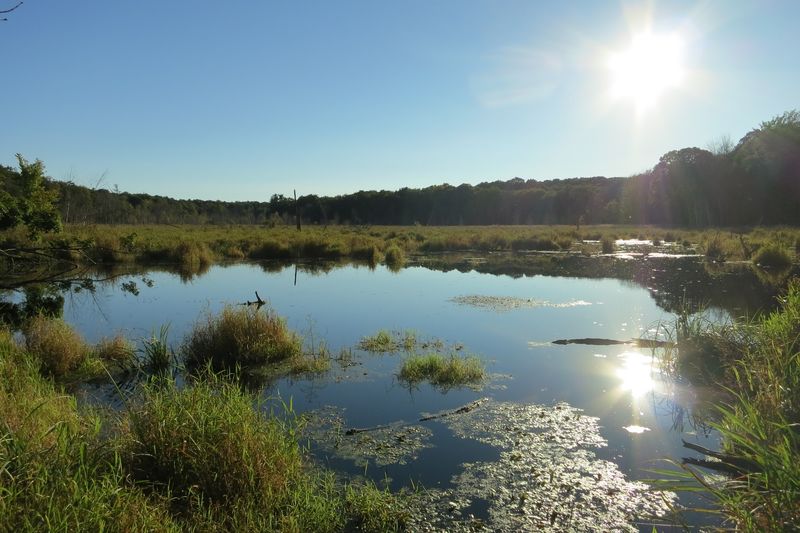
Not every wetland is a swamp. A fen is a peat-forming wetland fed mainly by groundwater that carries minerals like calcium.
Great Lakes coastal fens form near the shoreline where that mineral-rich water seeps to the surface. Ecologists consider them uncommon, and Michigan holds some of the best remaining examples.
They support sedges, rushes, and specialized wildflowers that cannot survive in ordinary soil. Small changes to water flow can harm them, which is why protection matters.
Inside the park, low wetlands sit between dunes and inland lakes. Boardwalks and trails in parts of the lakeshore let people cross soggy ground without trampling fragile plants.
Exact trail conditions and boardwalk routes can change. The park website lists current trails, so checking ahead is smart before planning a wetland walk.
Fens are only one chapter in the park’s living library. The dunes above them hold a few residents found almost nowhere else.
Threatened Neighbors on the Sand
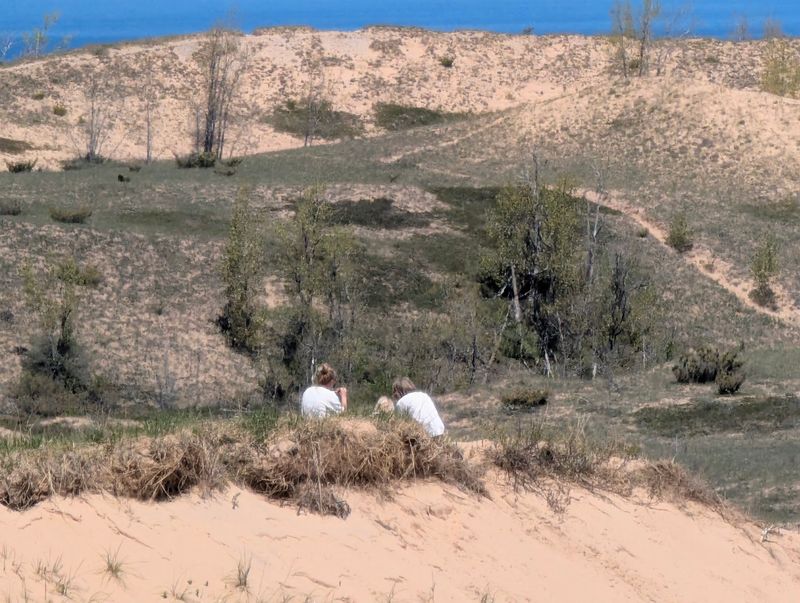
A tiny shorebird gets a surprising amount of attention here. The piping plover, a federally endangered species in the Great Lakes, nests on beaches inside the park.
During nesting season, staff often rope off sections of beach to give the birds space. Those signs are worth obeying, even when the sand on the other side looks inviting.
Pitcher’s thistle also grows on these dunes. The plant is federally threatened and grows only along the Great Lakes shoreline.
Both species depend on open, shifting sand with minimal disturbance. Staying on marked trails helps them more than most people realize.
Michigan is one of the last strongholds for these Great Lakes specialists. That makes the park a quiet conservation success story worth bragging about.
Once the wildlife lesson is done, many families head straight for the park’s most famous workout.
The Dune Climb Challenge
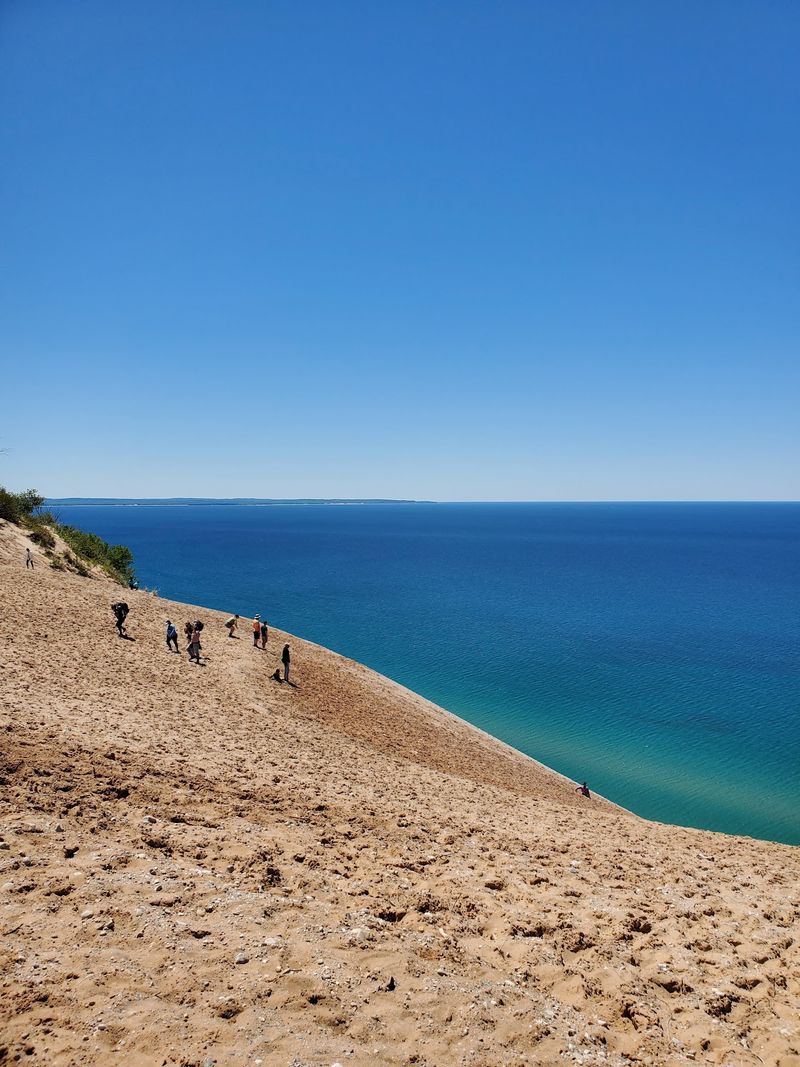
Gravity wins eventually, but not before a good fight. The Dune Climb is a steep wall of sand that people scramble up just for the fun of it.
The first climb looks short from the parking area. The top reveals more dunes rolling westward, which surprises many first-timers.
A longer hike, known as the Dune Hike, continues across the sand all the way to Lake Michigan. That trek is roughly 3.5 miles round trip and much harder than it sounds.
Rangers warn hikers to carry water and allow plenty of time. Going down is quick, while coming back up is a slow grind.
Kids tend to love the run downhill most of all. Adults often prefer resting at the top with a view of Glen Lake behind them.
Not up for climbing at all? A scenic drive delivers big views with far less sand in the shoes.
Overlooks Along Pierce Stocking Scenic Drive
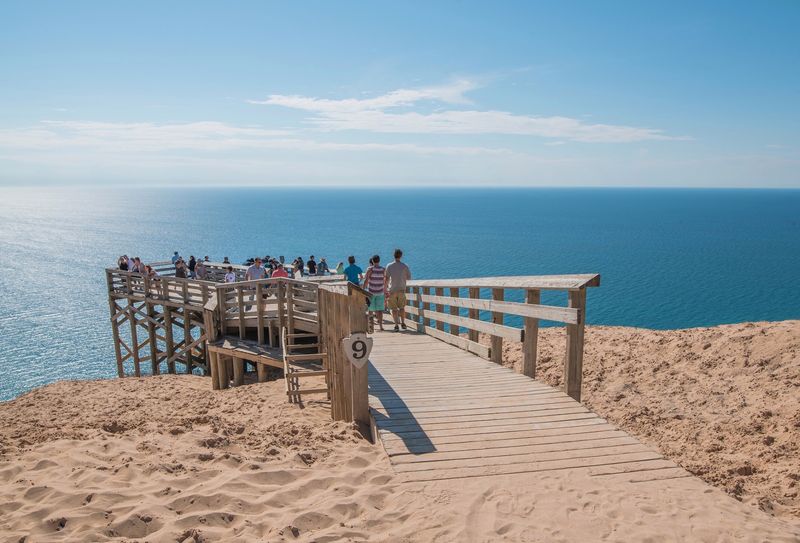
Some of the best views in Michigan come with a parking spot. Pierce Stocking Scenic Drive is a 7.4-mile loop through forest and dunes.
The road is named for a local lumberman who built it and opened it to the public before the park existed. It now operates as part of the lakeshore.
Numbered stops along the loop point out overlooks and short trails. The most famous is the Lake Michigan Overlook, perched about 450 feet above the water.
Signs there warn against climbing down the bluff. The slope is steep, and the climb back up can take an hour or more, sometimes ending in a costly rescue.
The drive usually closes during winter. Check the park website for seasonal dates before heading out.
Drivers get the views, but cyclists and walkers have their own favorite route through the region.
Pedaling the Heritage Trail
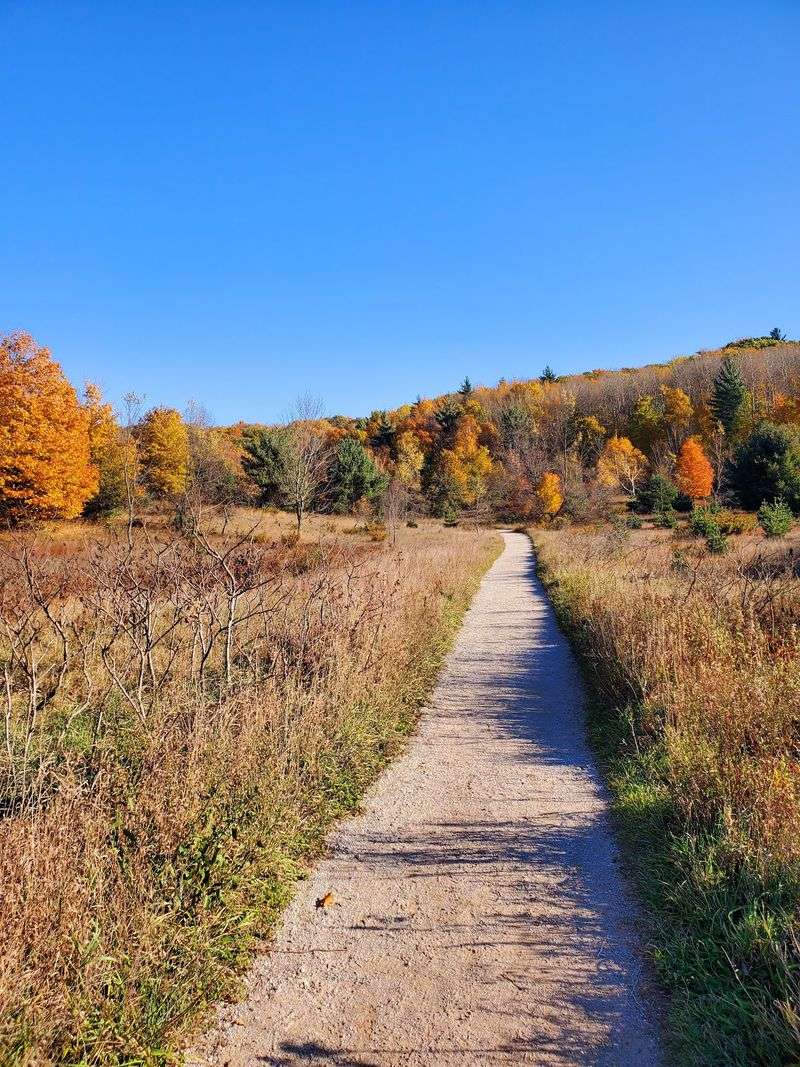
Here is a trail that works for strollers, bikes, and grandparents alike. The Sleeping Bear Heritage Trail is a paved and crushed-stone path running through the park for roughly 22 miles.
It links small communities such as Empire and Glen Arbor. Stops along the way include the Dune Climb and the historic village of Glen Haven.
Sections can be done in short pieces, so nobody has to tackle the whole thing in one day. Many families ride a few miles, take a break, and turn back.
In winter, parts of the trail can be used for cross-country skiing or snowshoeing. That gives the park a reason to visit in every season.
A park entrance pass is required for trail users inside the lakeshore. The section on fees covers what that means for your wallet.
One of the best stops on the route happens to be a village frozen in time.
Glen Haven and the Lifesavers
Lake Michigan earned a rough reputation among sailors. The Manitou Passage was a busy shipping lane, and storms made it dangerous.
Crews of the U.S. Life-Saving Service, and later the Coast Guard, kept watch along this shore.
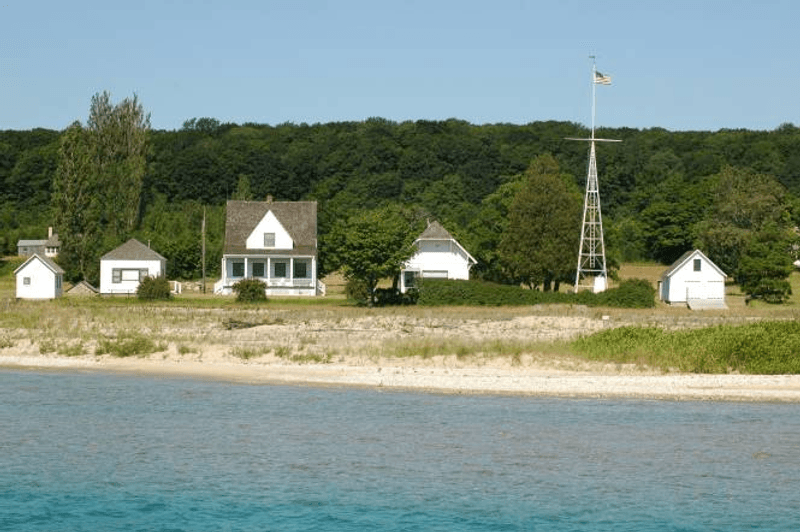
Their old station near Glen Haven now serves as a maritime museum.
Exhibits explain how crews rowed out in storms and used rescue equipment to reach stranded ships. Demonstrations are sometimes offered during summer.
Glen Haven itself was once a company village tied to shipping and lumber. Its general store, blacksmith shop, and cannery building have been preserved.
The cannery houses a collection of historic Great Lakes boats. It is a small stop, yet it packs a lot of local maritime history.
Out on the horizon sit two islands that tell an even more remote story.
Islands Across the Passage
Getting there takes a boat, which keeps the crowds thin. North and South Manitou Islands are part of the national lakeshore.
Seasonal ferry service runs from the village of Leland. Schedules depend on weather and season, so booking ahead is wise.
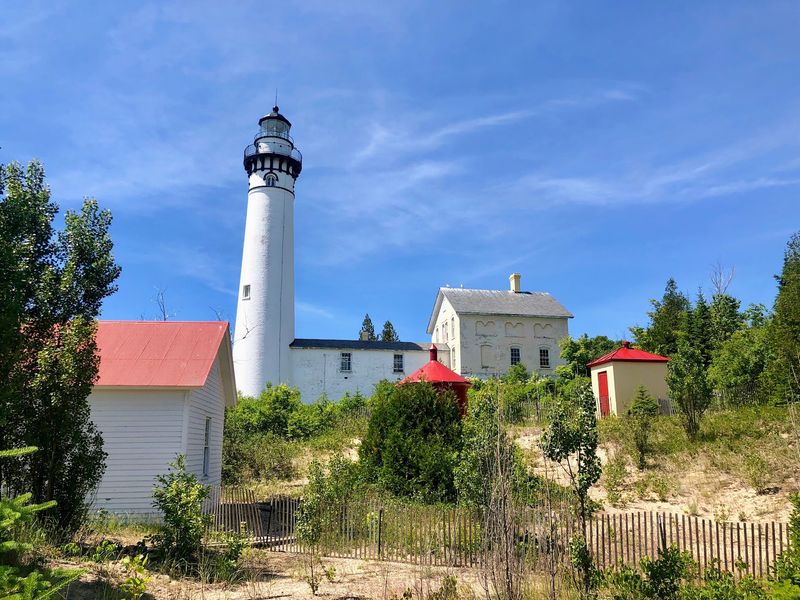
South Manitou is known for its lighthouse and a grove of old-growth white cedar trees. Day trips are possible there when the ferry schedule allows.
North Manitou is wilder and better suited to experienced backpackers. It offers few facilities and a true backcountry feel.
Campers on either island need to pack in everything they need. Rangers expect visitors to leave no trace behind.
For a trip that stays closer to the mainland, the park’s rivers and inland lakes offer a calmer kind of adventure.
Rivers, Lakes, and Lazy Floats
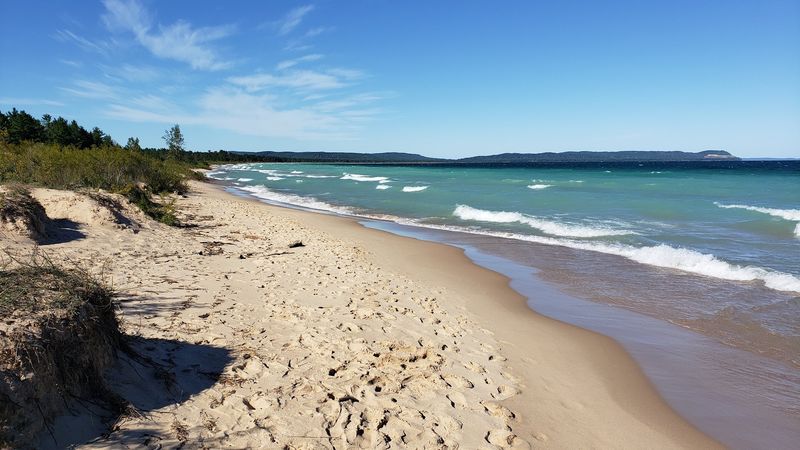
Not every adventure needs a summit. The park’s description promises lakes as well as dunes, and the water options are plentiful.
The Platte River is a favorite for tubing and kayaking. Its lower stretch flows gently toward Lake Michigan, which makes it popular with families.
The Crystal River offers another paddling route near Glen Arbor. Local outfitters along the area rent tubes and boats in season.
Inland lakes such as Glen Lake sit just beyond the dunes. They provide calmer water when Lake Michigan is choppy.
Lake Michigan beaches themselves line much of the park. There are no lifeguards, so swimmers should watch conditions and respect posted warnings.
With so much variety, it helps to know which kind of traveler gets the most out of a visit.
Who Feels Right at Home Here
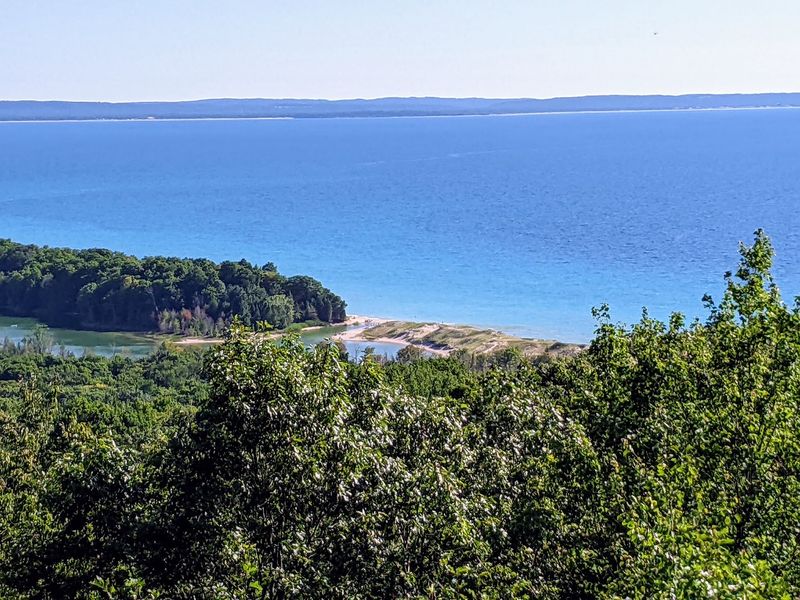
Ask ten Michiganders what they love about this park, and the answers will vary wildly. That range is the point.
Hikers have more than a dozen marked trails to choose from. Birders and plant fans can spend hours in the wetlands and along the shore.
Campers get several choices, matching the park’s promise of many campsites. D.H.
Day Campground and Platte River Campground are two of the main mainland options.
History buffs gravitate to Glen Haven and the old farmsteads of Port Oneida. Families often split time between the Dune Climb and an easy river float.
Photographers tend to chase sunsets over Lake Michigan from the western-facing overlooks. Winter brings a quieter crowd of skiers and snowshoers.
Every group needs the same practical details, though, and that is where planning begins.
Passes, Hours, and Getting There
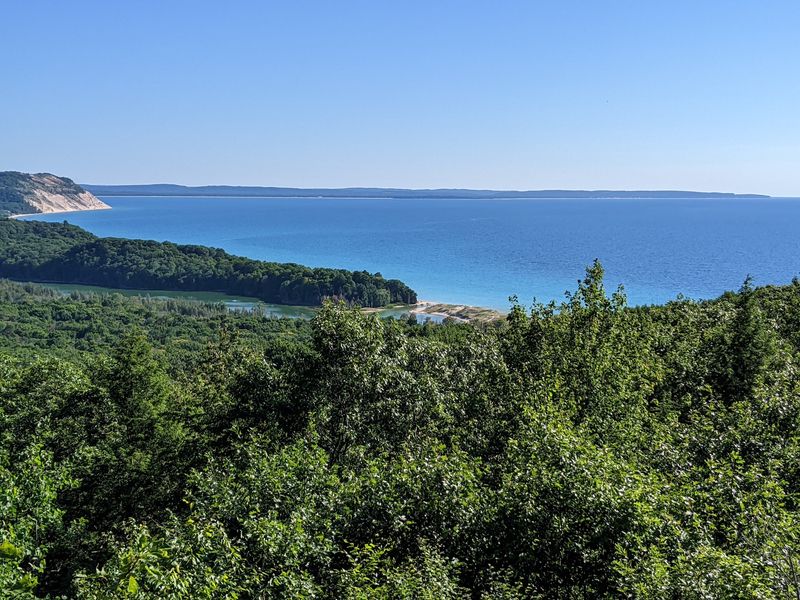
About that word free in the headline. Walking the wetlands and beaches costs nothing extra once inside, but the park does require an entrance pass.
A vehicle pass has typically been $25 and is valid for seven days. An annual park pass is also available, and current prices are posted on the official site at nps.gov/slbe.
National Park Service fee-free days happen several times a year. On those dates, entry costs nothing at all.
The park is generally open year-round. Some roads, like Pierce Stocking Scenic Drive, close seasonally.
The Philip A. Hart Visitor Center in Empire is a good first stop for passes, maps, and trail updates.
From Traverse City, the drive is under an hour.
Summer weekends get busy, so arriving early helps. With logistics handled, all that is left is deciding whether the trip is worth it.
A Shoreline Worth Claiming as Ours
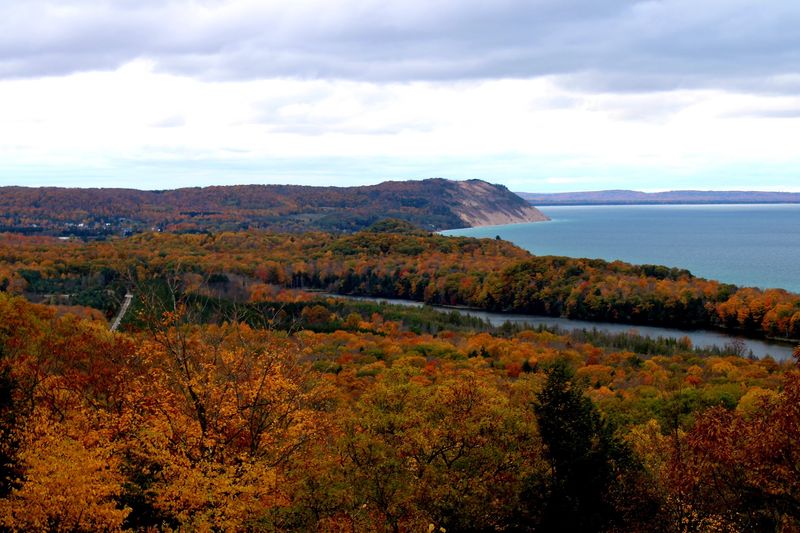
Plenty of people fly across the country for dramatic coastlines. Michigan residents can drive to one.
The park blends Anishinaabe legend, maritime history, rare wildlife, and some of the most uncommon wetlands in North America. Few places pack that much into one stretch of shore.
Coastal fens may not look flashy at first. Knowing how rare they are changes the way a simple boardwalk walk feels.
The dunes deliver the big views, and the rivers provide the easy fun. The islands offer solitude for those who want it.
Costs stay modest, especially with a weeklong pass or a fee-free day. That puts a world-class landscape within reach of almost any family budget.
The mother bear has been watching this coast for generations. She seems content to share the view with anyone who makes the drive north.


