
Affiliate disclosure: As an Amazon Associate I earn from qualifying purchases. Learn more
Seventy miles past the end of the road in Key West, a cluster of tiny islands holds a giant brick fort and some of the most talked-about snorkeling in Florida. There are no bridges and no highways out here, so every trip starts with a boat or a seaplane.
Once you arrive, the water around the fort walls is full of fish, coral, and the odd sea turtle that pays no attention to your schedule. The catch is that tickets often sell out months ahead, the day is shorter than most people expect, and the weather decides a lot.
Keep reading for how the trip works, what lives under the surface, what to pack, and how to get the most out of your few precious hours on the island.
A Park Hiding at the Edge of the Map
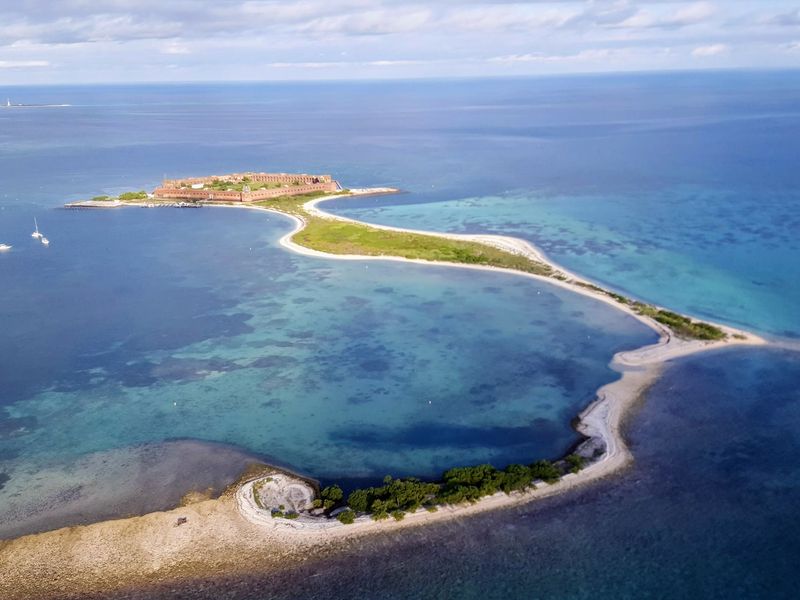
Most national parks have a parking lot. Dry Tortugas National Park has a pier, a seaplane landing zone, and a lot of open ocean.
The park sits in Florida, United States, roughly 70 miles west of Key West. It is made up of seven islands, with abundant marine life and bird life spread across them.
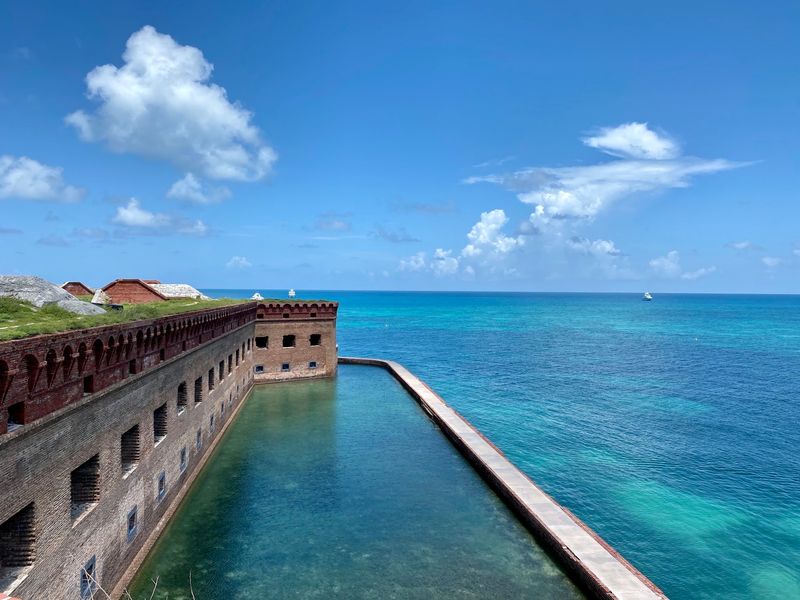
The best-known spot is Garden Key, home to Fort Jefferson, a 19th-century coastal fortress that takes up most of the island. Boats tie up at the Yankee Freedom III pier, and seaplanes pull right up near the beach.
Getting here is part of the deal. You can only reach the park by boat or by plane, which keeps the crowds small.
In fact, the park is known for having some of the lowest daily visitor numbers of any national park in the country. That makes it a rare kind of trip in a state famous for packed attractions.
The mix is what makes it special. You get history, wildlife, and reef snorkeling all within a short walk of each other, on an island small enough to cross in minutes.
So how does a fort end up this far out at sea? The story starts with the walls themselves.
Brick Walls in the Middle of Nowhere
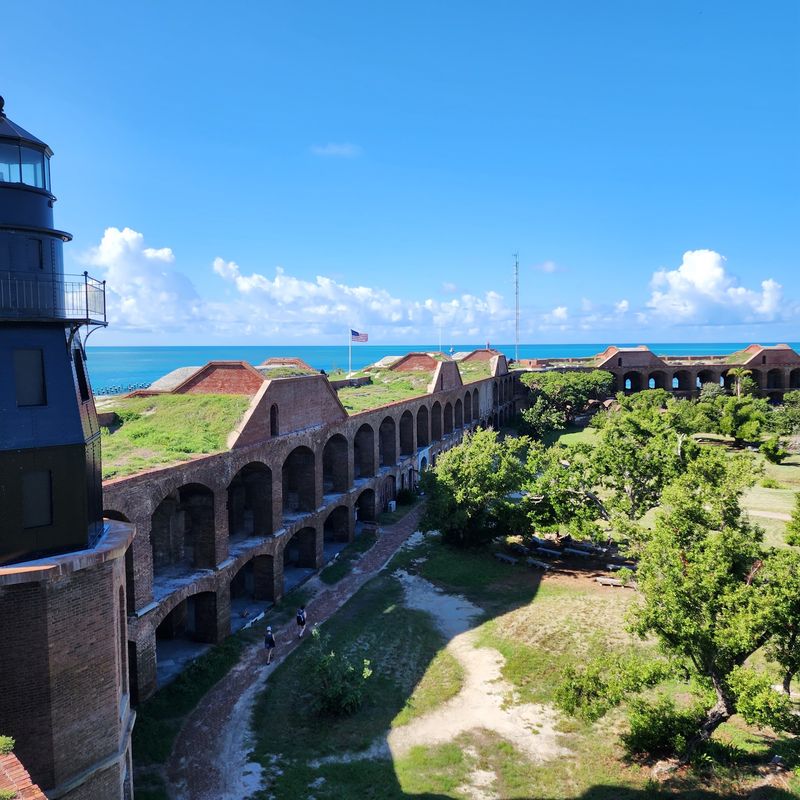
Building a massive brick fort on a speck of sand, far from any mainland town, sounds like a bad idea on paper. Yet that is exactly what happened here in the 1800s.
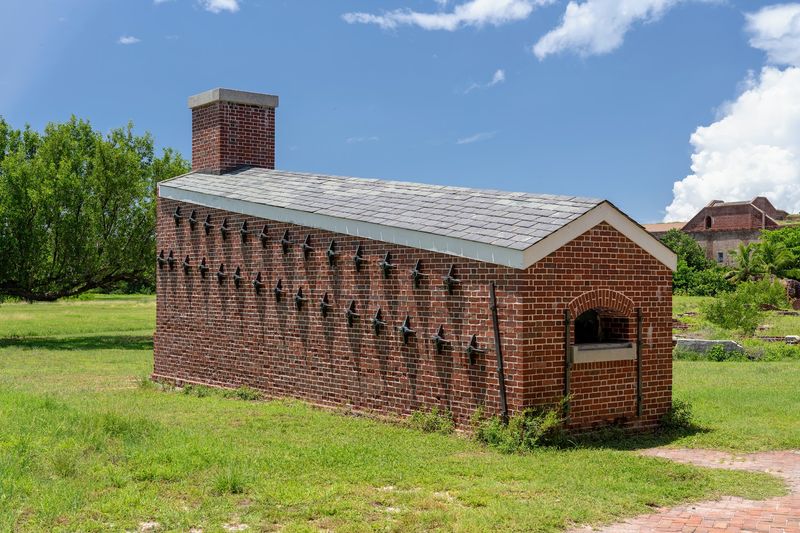
Fort Jefferson is the centerpiece of the park. It is an enormous coastal fortress that dominates its island, and exploring the brick structure is the highlight for many people who make the trip.
The construction alone is worth thinking about. Moving materials and workers to this spot in that era was a major feat, and the guided tours make a point of explaining just how hard it was.
Naval history buffs get plenty to chew on too. The fort offers a look at how the country built up its early infrastructure and defenses along the coast.
You can wander the inside, the outside, and the top levels. There is shade within the walls, which helps on hot days.
A few things to know before you set out with high hopes. Several sections are closed off for preservation, and parts of the structure show their age.
Still, standing on top of those walls with open water on every side is the kind of view that sticks with you long after the trip.
The Long Ride Out on the Yankee Freedom III
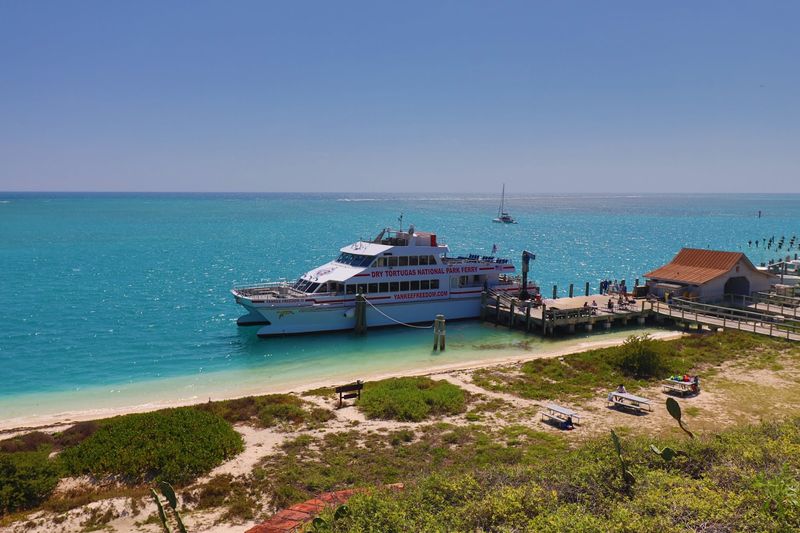
Plenty of people pick the ferry, and the trip starts early in Key West. The Yankee Freedom III makes the run in about two and a half hours each way.
That time on board is not wasted. Breakfast and lunch come with the ticket, and the boat has restrooms and outdoor seating for watching the open water roll by.
An informative video about Fort Jefferson plays during the ride over. By the time the fort shows up on the horizon, you already know a good part of its backstory.
The crew earns steady praise for being friendly and helpful. Snorkeling equipment is provided, which saves you from hauling your own gear.
One full-day fare was listed at around $170, though prices can vary, and some trips cost more. Check current rates when you book.
Now for the honest part. The ocean does not always cooperate, and the ride can get rough on some days, with big swells making the return trip a challenge.
If motion sickness is a problem for you, prepare ahead of time with whatever remedy works for you. Calm days are smooth and pleasant, but rough ones are memorable for the wrong reasons.
Taking the Scenic Shortcut by Seaplane
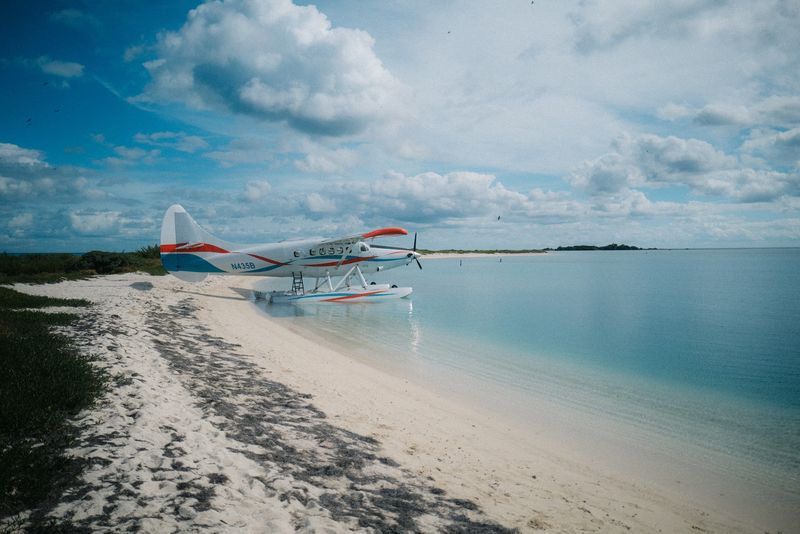
Thirty-five minutes. That is roughly how long the seaplane takes to get from Key West to the park, compared to hours on the water.
The flight is a favorite for anyone short on time or not keen on a long boat ride. It also gives you a view of the islands and reefs from above before you ever touch the sand.
Half-day seaplane trips are a popular choice. You see the park from the air, walk the fort on land, and then slip into the water to snorkel, all in one outing.
That three-part view is a big selling point. Few places let you take in a reef from the sky and then swim over it a short time later.
The views on the flight there and back are a frequent highlight. The plane pulls up close to the beach, so you are not far from the action once you land.
Seaplane seats are limited, and they book up fast, sometimes months in advance. Plan early if this is the way you want to go.
Either route works, so it comes down to your budget, your schedule, and how your stomach handles waves.
Fish, Coral, and a Moat Worth Swimming
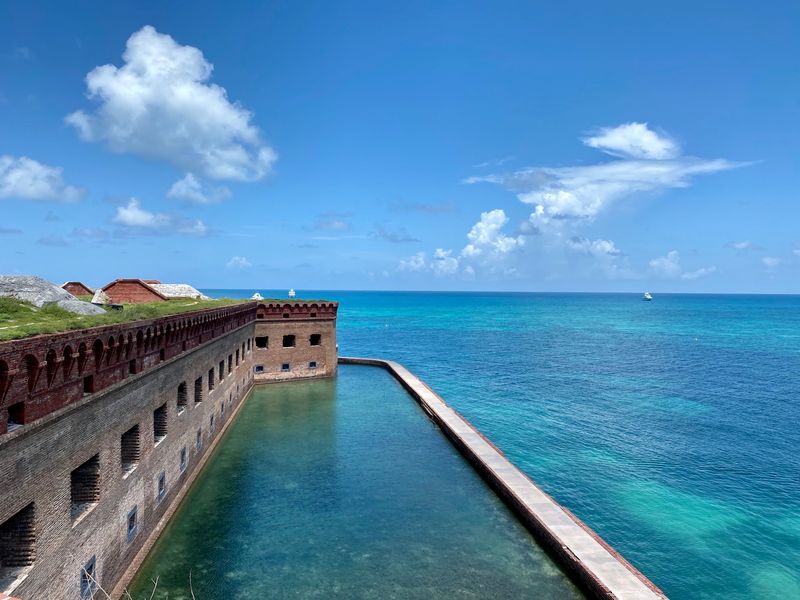
Snorkeling is the most talked-about activity in the park, and for good reason. The waters around Fort Jefferson hold coral, schools of colorful fish, and a surprising number of big residents.
A popular route is to swim along the moat wall that wraps around the fort. Another favorite plan is snorkeling from one swim beach to the other.
The marine life list reads like an aquarium guide. Goliath grouper, starfish, sea turtles, and the possibility of nurse sharks all show up in trip stories from the park.
Even on days when the water is not perfectly clear, people still spot lots of fish. In December, the water was described as cool but not too cold for a swim.
Mid-summer brings warmer water for snorkeling and swimming. Some summer trips report no jellyfish at all, while others mention them, so a thin long-sleeve shirt is a smart backup.
Not every patch of reef is thriving, and some areas show bleached or damaged coral. Conditions change from season to season and even day to day.
When the water is calm and the visibility is good, though, the snorkeling here is the reason many people book the trip in the first place.
Currents, Clouds, and Knowing When to Stay Dry
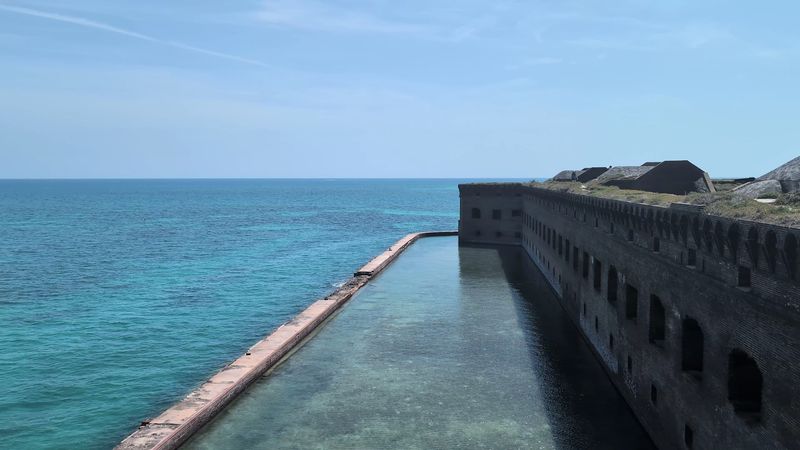
Here is something the brochures tend to skip. The ocean around the Tortugas has a mind of its own.
On some days the current is strong enough to make swimming hard, even for experienced swimmers. Near the fort walls, the water can push swimmers toward the bricks.
Cloudy water also happens. When that is the case, snorkeling may be limited to a small, calmer area, or skipped altogether.
Good days are another story. Many trips report very calm water and dozens of people snorkeling at once without trouble.
The best approach is simple. Check the conditions when you arrive, stay within your comfort level, and stick to the designated swim beach areas.
Seasoned travelers to the park have a short phrase for it: terrific snorkeling when conditions are right. That little qualifier matters.
If the water turns choppy, there is still plenty to do on land, from the fort to the beaches and the birds. A dry day here is far from a wasted one.
Packing a backup plan in your head helps you enjoy the trip no matter what the waves decide.
Seabirds, Shells, and Small Crabs
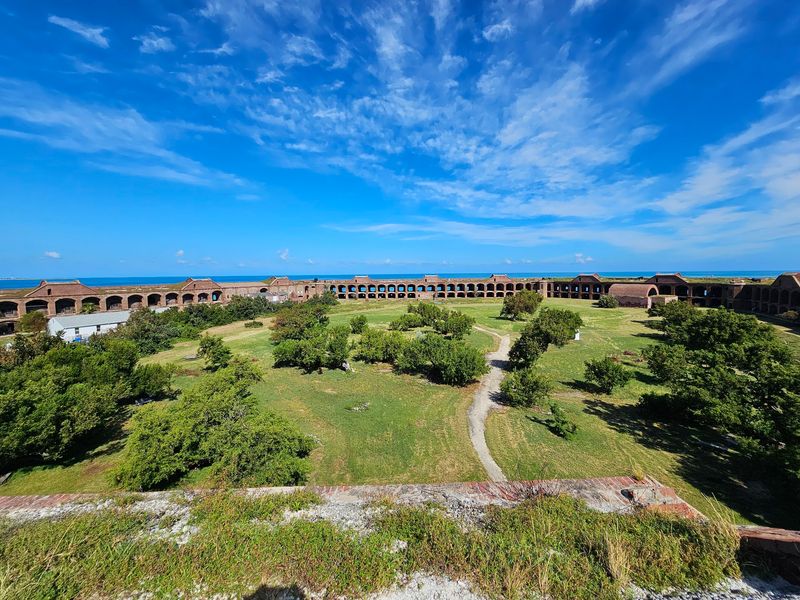
Above the waterline, the park belongs to the birds. Nesting seabirds add a distinctive ecological layer to any visit, and bird life is part of what the park is known for.
A walk around the island turns up big birds overhead and along the shore. Bird watchers often find this part of the day just as rewarding as the snorkeling.
Down on the beach, look closer. Hermit crabs are a common find, scuttling around in borrowed shells.
Speaking of shells, there are a lot of them. The beaches here are covered in countless shells and shell pieces rather than soft, fine sand.
That is great for beachcombers. It is less great for bare feet, which brings up a gear tip covered later.
The islands are part of a protected national park, so leave wildlife and natural objects where you find them. Watching is the whole point.
Between the reef below and the birds above, the Tortugas pack a lot of life into a very small space. Even a quick stroll can turn into a nature lesson.
Rangers, Guided Tours, and Phone Audio

A great guide can turn a pile of old bricks into a time machine. Park rangers at Fort Jefferson have a reputation for doing just that.
Guided tours walk you through the fort and its story. Rangers explain how and why it was built, and some add thoughtful reminders about how different life was for the people who lived here.
Not into group tours? You can explore the fort on your own, which many people enjoy just as much.
An audio tour on your phone is a handy middle option. It fills in details at your own pace while you wander the walls and corridors.
The National Park Service staff stationed here are known for being friendly and knowledgeable. Working at such a remote park takes a special kind of person, since supplies and belongings arrive by ferry.
Private charters also run trips with their own guides, for groups who want a more personal experience before snorkeling.
There is a small info and gift shop on site too. It is worth a stop, and the staff there have been known to help out in a pinch.
History lovers, in short, will not run out of things to learn.
What to Pack and When to Book
Rule number one: book early. Ferry and seaplane trips often sell out, and planning three to six months ahead is a common recommendation.
Rule number two: pack like the island has almost nothing, because it nearly doesn’t. Facilities on the island are limited, so bring what you need.
Here is a smart checklist based on what works:
Water shoes or sturdy footwear. The shell-covered beaches and fort floors are tough on bare feet and flimsy flip-flops.
Sun protection. Sunscreen, a brimmed hat, and sunglasses are must-haves, plus a light long-sleeve shirt.
A change of clothes. Changing rooms are available, but there is no place to rinse off after swimming.
Water, snacks, and a camera. A light backpack makes it easy to carry everything around the fort.
Time is the other thing to plan for. Day trips usually give you around four to four and a half hours on the island, which many people find goes by fast.
Map out your priorities before you land. Fort first, then snorkel, or the other way around, just do not leave it to chance.
Worth the Journey, Especially Overnight
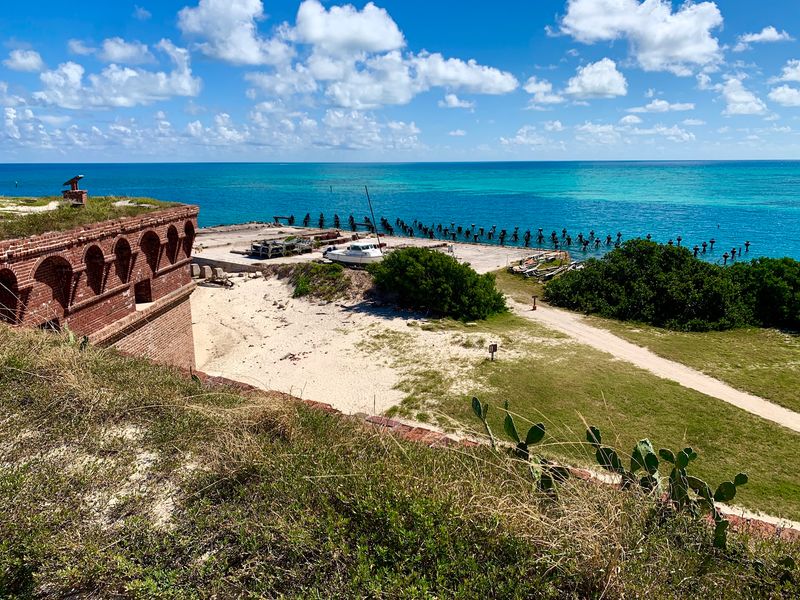
The most common wish after a day here is surprisingly simple: more time. A few hours on the island rarely feels like enough.
That is why camping gets so much attention. Overnight stays are possible, but you must bring your own equipment, food, and water.
For those who stay, the payoff is the chance to experience the island after the day crowds leave, including the night sky at one of the most remote parks in the country.
The park holds a 4.8-star standing on Google Maps across more than 1,800 opinions. That is a strong showing for a place that takes real effort to reach.
It is not perfect. Rough seas, strong currents, and worn sections of the fort can affect the day.
Still, for many people the trip becomes the highlight of their Florida Keys vacation. The combination of a historic fort, reef snorkeling, and wild islands is hard to find anywhere else.
So book early, pack smart, and keep an eye on the weather. The Tortugas reward those who plan ahead, and they tend to leave people already sketching out a return trip on the ride home.


