
Affiliate disclosure: As an Amazon Associate I earn from qualifying purchases. Learn more
Some Detroit weekends are built for staying home. Others pull the whole city down to the river, where families spread out on the grass, kids race between giant slides, and the Ambassador Bridge stands in the background like it is keeping score.
There is one riverfront spot that turns into a gathering place every time the calendar fills up with community events. It covers 22 acres, opens at 6 AM, stays open until 10 PM, and does not charge a dime to walk in.
Parking along the street is free, too, which feels almost unheard of downtown. Keep reading to find out where it is, what makes it stand out, how to plan a visit around its busiest moments, and why so many Michiganders call it one of the best parks they have ever seen.
A Riverfront Park With a Big Name
Detroit has plenty of parks, but only one carries a name tied to a century-long legacy and sits right on the water downtown.
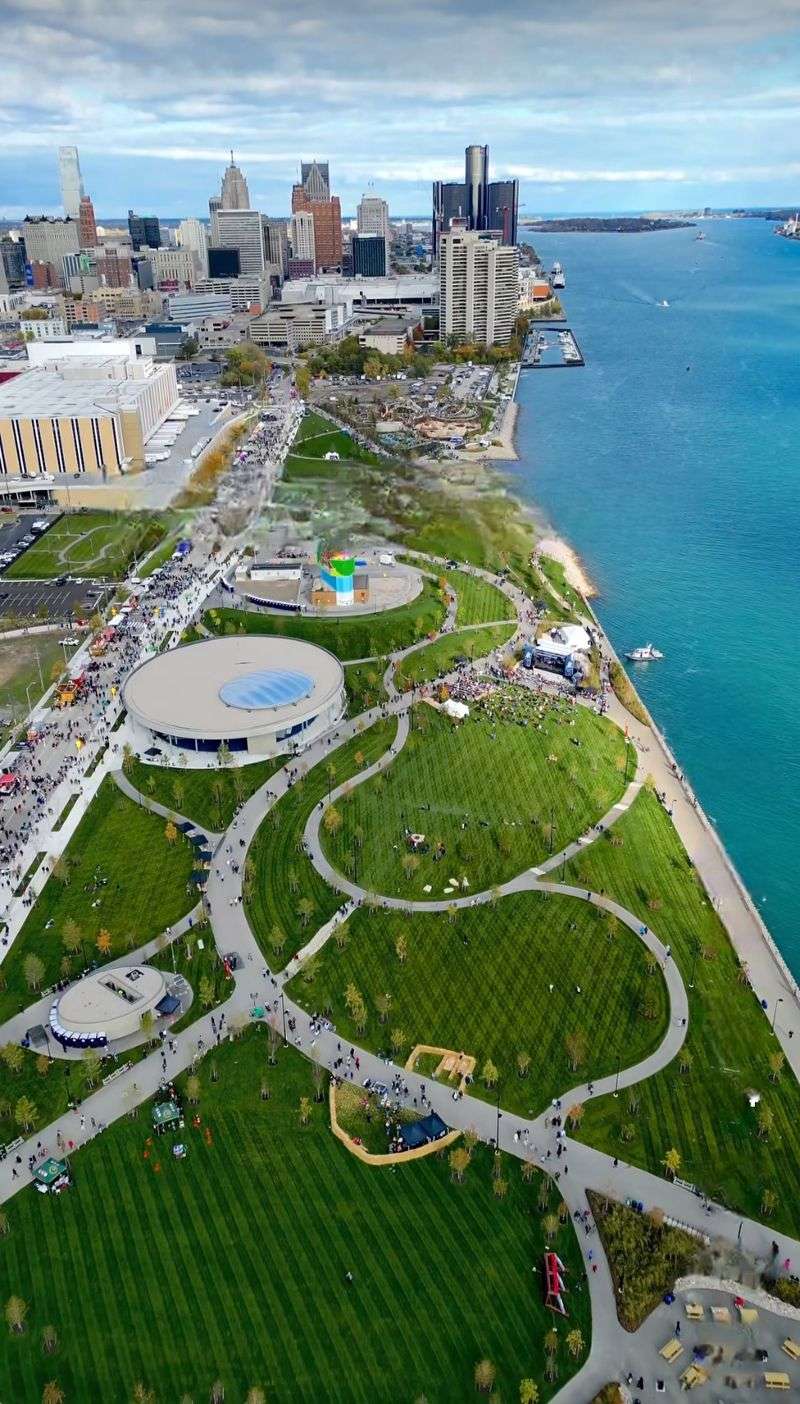
Ralph C. Wilson Centennial Park is located in Detroit, MI 48226, along the Detroit Riverfront in Michigan, United States.
It is part of the riverfront network managed by the Detroit Riverfront Conservancy, and the park page on the conservancy website is the best place to check for updates.
The park stretches across 22 acres. That is a lot of room for a city park, and the space is divided into four signature areas, each with its own purpose.
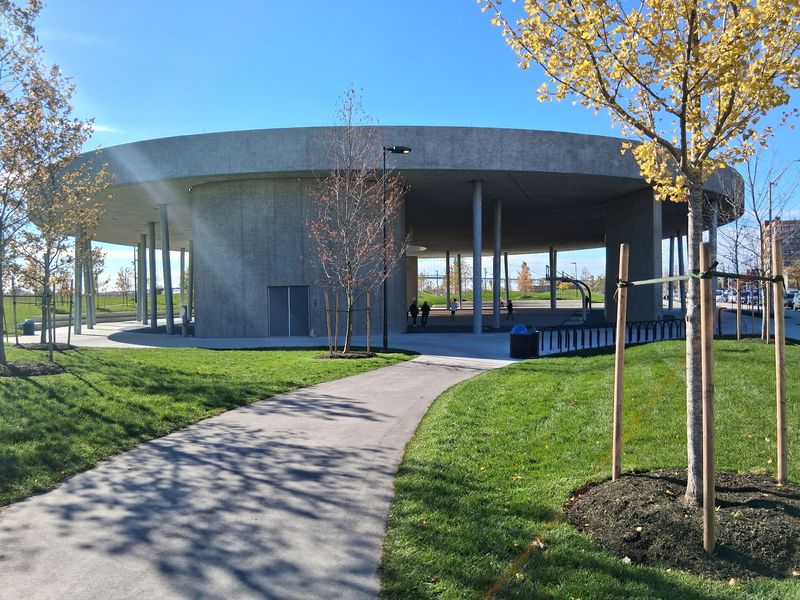
There is the Play Garden for kids, the Water Garden for slower moments, the Summit for wide views, and the Sport House for basketball and fitness. Each area feels like its own chapter, yet all of them connect through wide walkways.
Locals tend to describe the place as family friendly, exercise friendly, and even date friendly. Some people come to fish along the river, while others simply grab a bench and watch the city go about its day.
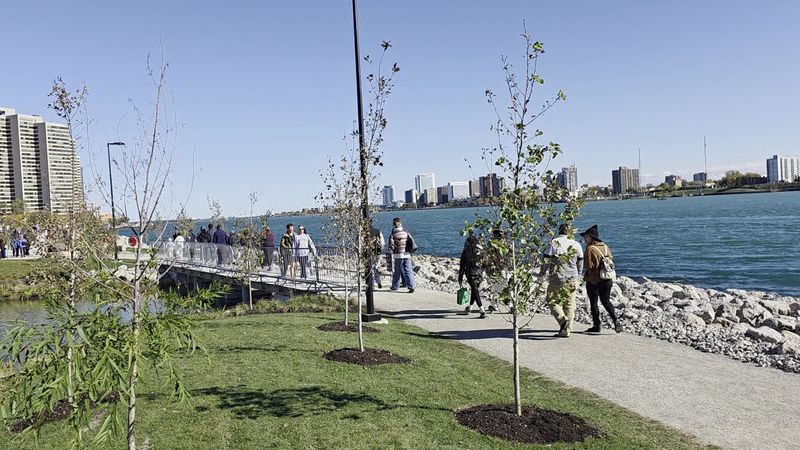
The park also connects to the larger Riverwalk. From here, it is possible to walk about five miles all the way to Belle Isle for anyone with energy to spare.
So the big question is how a riverfront lot became one of the most talked-about public spaces in Detroit.
From Grand Opening to City Favorite
Grand openings do not always live up to the hype. This one apparently did.
Families who came out on opening day remember the music, the crowds, and the long stretch of path leading to the Detroit Riverfront. Many of them left planning their next trip back.
The park is still fairly new, and it shows in the best way. Play structures are well kept, bathrooms are clean and stocked, and the open spaces look cared for.
People in Detroit often point to the park as proof that the city is moving up. Some even mention how good it feels to see tax dollars put to work in a place everyone can use.
That sense of pride is a big part of the story. The park is not a tourist stop built for out-of-towners, but a shared backyard for the people who live here.
One landmark people bring up again and again is a large footwear statue. It has become an easy meeting point and a favorite spot for group photos.
The 4.8-star standing on Google Maps across more than 300 comments says plenty on its own. Still, numbers only tell part of the tale, and the real fun starts in the playground.
Slides Shaped Like Michigan Animals
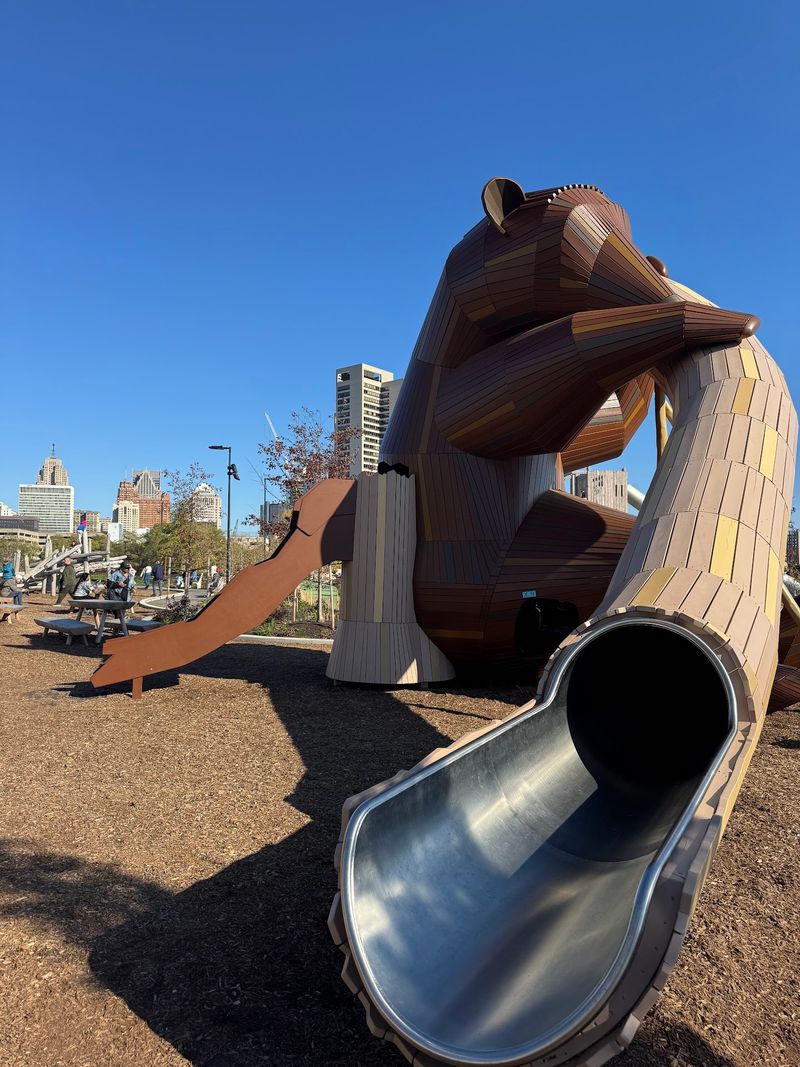
Most playgrounds settle for a plastic slide and a swing set. The Play Garden here went a different direction and built climbing structures shaped like animals from Michigan.
The big play area holds about seven different slides. Kids climb up through the animal forms and come zooming down the other side.
There is also a climbing zone with a group swing. Older kids tend to treat it like a home base between slide runs.
A few practical notes help here. The slides are metal, so on hot days it is smart to dress kids in pants before they ride.
Some of the slides connect to structures that require real climbing. Toddlers who are not confident climbers may need a little help or may prefer another area.
Mats for sliding are sometimes provided in a storage box near the slides. On some days the box has been empty, so bringing your own expectations down a notch is wise.
Parents also mention that the layout makes it hard to watch kids from one spot. Plan to stay up and moving, because these structures invite exploring in every direction.
For the littlest ones, though, there is a separate space designed just for them.
A Toddler Zone With a Gate
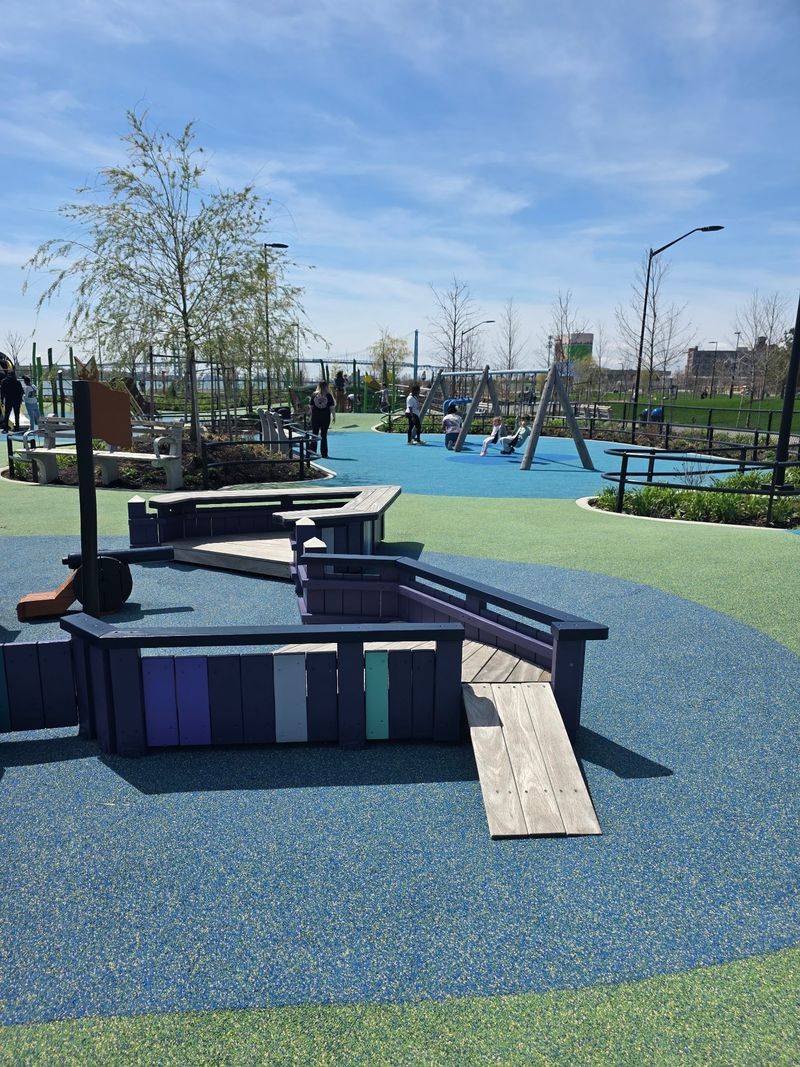
Toddlers have one main goal at any park, and it is escape. The designers clearly knew that.
A dedicated area for kids ages 6 and under sits apart from the bigger structures. It has a safety gate, so tiny runners cannot slip away while a parent ties a shoe.
Inside, the variety is actually wider than in the big kids zone. Small climbing pieces, open play features, and activity-based elements keep young ones busy.
The park as a whole is often described as a great fit for kids from age 1 to 12. That range is rare, and the separate zones are the reason it works.
Nearby, there is also a sand pit. It mixes natural materials with the built structures, which gives the area a balance of open play and guided play.
Benches are close by for parents who want a short break. Picnic seating is spread around the grounds as well.
The walkways are wide, which makes strollers easy to push from one area to the next. That small detail matters a lot when a nap is coming fast.
And once the weather warms up, the toddler crowd has another favorite stop waiting.
Splash Pad Season and the Water Garden
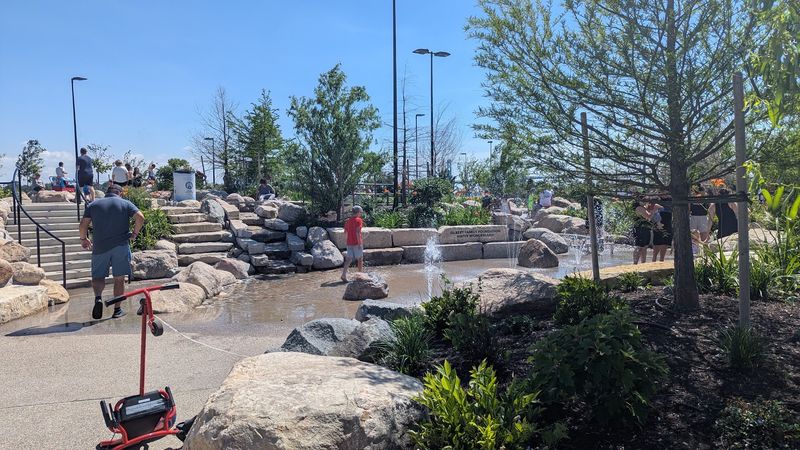
Pack a swimsuit. That is the simplest advice for summer trips here.
The park has a small water play area and splash pad designed mostly for smaller kids. It tends to open later in the morning, around 11 AM, so early arrivals may need to wait a bit.
Beyond the splash zone, the Water Garden offers a calmer kind of water feature. It includes ponds and plantings meant for relaxing and reflecting, not swimming.
Families often call the pond one of the prettiest corners of the park. It works well for a slow walk after the kids burn off energy.
A word of caution is worth repeating. The pond is not inside the play structure area, but young children should be watched closely near it.
At times, a shallow water area has been closed for water quality concerns. Signs are posted, and security staff may step in, so it pays to look for notices before letting kids wade.
Those closures seem to be the exception rather than the rule. On most summer days, the water features are a main reason families make the drive.
When the splashing is done, many people head straight for the covered courts.
Courts That Shrug Off the Rain
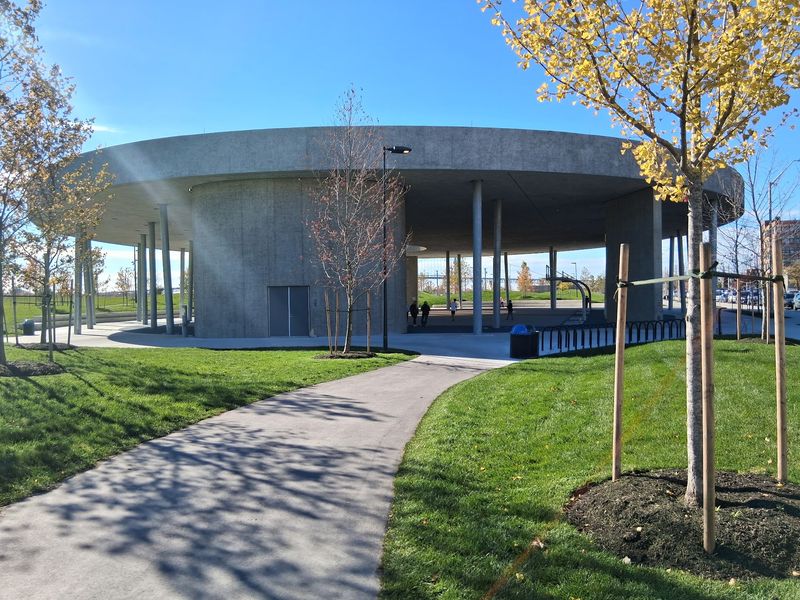
Basketball might be the single most talked-about feature in the whole park. People rave about the courts more than almost anything else.
The Sport House is a year-round recreation pavilion. It holds basketball courts, fitness areas, and space for community programs.
Here is the clever part. The courts are technically outdoors, but they sit under a roof, so games can keep going on rainy days.
That roof changes everything for Michigan hoopers. A drizzly afternoon no longer means calling off the game.
First-timers often show up curious and leave planning a return trip. The courts tend to leave a strong impression on anyone who loves the sport.
Families like the setup, too. Older kids can shoot around while younger siblings stay busy at the playground nearby.
The fitness areas give adults a reason to stay active as well. Between the courts and the Riverwalk, the park easily doubles as a free workout spot.
Exercise is only one way to spend an afternoon here, though. The views from higher ground might steal the show.
Views of Canada From the Summit
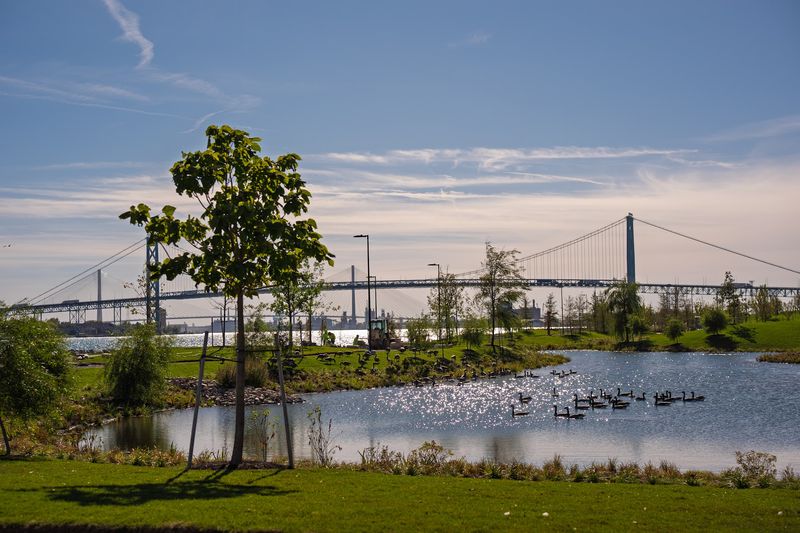
Not every city park offers a view of another country. This one does.
The Summit area provides elevated spaces with wide views of the Detroit River and the downtown skyline. Across the water sits Canada, and the Ambassador Bridge stretches into the scene.
Plenty of seating is scattered along the river. It is easy to find a spot to settle in and watch the boats and the city.
Many people say the river views are reason enough to visit. Even on short trips during chilly weather, the scenery tends to win people over.
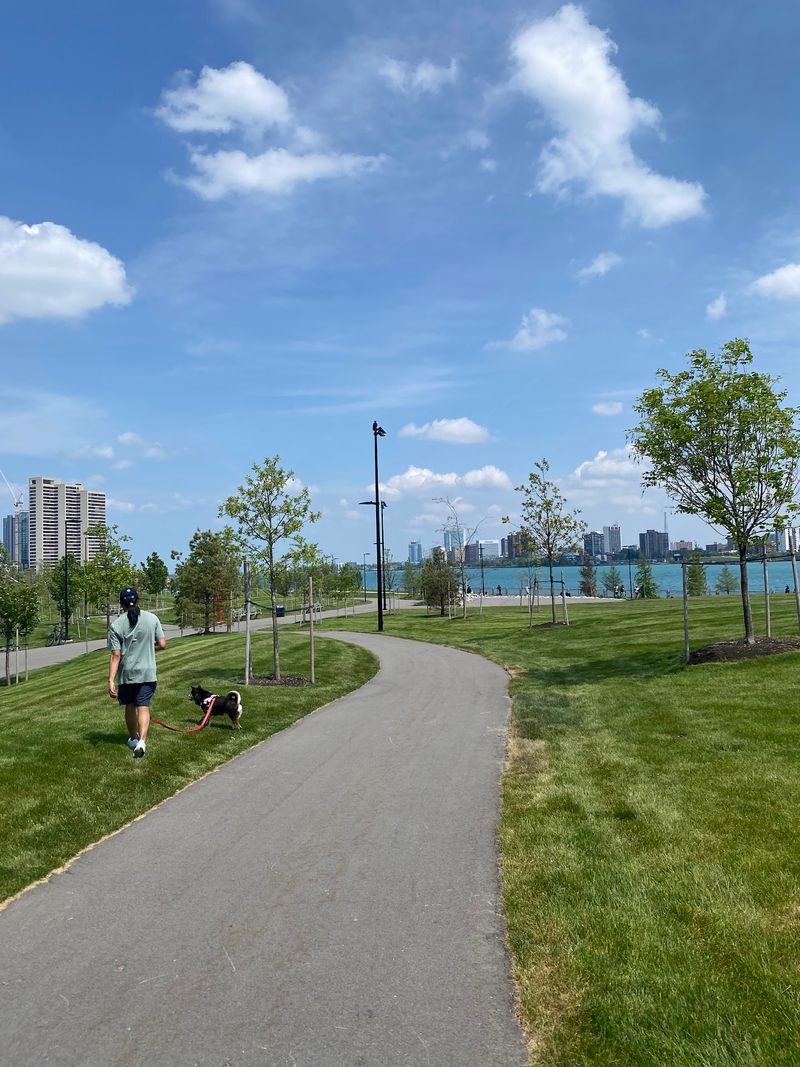
The Riverwalk trail runs right along the edge of the park. Railings line the path for safety, though parents of adventurous kids should still keep watch.
That trail opens up more possibilities. A walk toward Belle Isle turns a park outing into a longer riverfront adventure.
Romantic strolls, morning jogs, and quiet fishing sessions all fit here. The setting is flexible enough to suit almost any mood.
When the park fills up with people for special events, the views become the backdrop for something bigger.
Event Weekends on the Riverfront

A regular Tuesday here is good. An event weekend is something else.
The park regularly hosts community gatherings that draw big crowds to the riverfront. Spring Into Wilson, for example, featured teen poets, arts and crafts, souvenirs, giveaways, and an appearance by Cruise, the Detroit Pistons mascot.
Some lucky families even walked away with Detroit Tigers tickets. Rain showed up that day, and people stayed anyway.
The park has also hosted the Love Myself Walk for Mental Health Awareness Month. Events like that bring in folks who had never seen the renovated grounds before.
Fall weekends on the Detroit Riverfront are known for food truck lineups that stretch along the water. Exact dates and vendor counts change, so the Detroit Riverfront Conservancy website is the place to confirm what is coming up.
Big events mean bigger crowds and tighter parking. Arriving early is the simplest way to grab a good spot.
The mood at these gatherings tends to be positive and welcoming. Families, couples, and friend groups all seem to find their corner.
Before heading out, though, it helps to know a few things about safety and comfort.
Security, Shade, and Smart Planning
Feeling safe at a big city park matters. Parents here often say they do.
Security staff are stationed near the restrooms and roam the grounds. Emergency poles with call buttons are placed around the park as well.
The restrooms tend to be clean and stocked. That is a welcome surprise for anyone used to rougher public facilities.
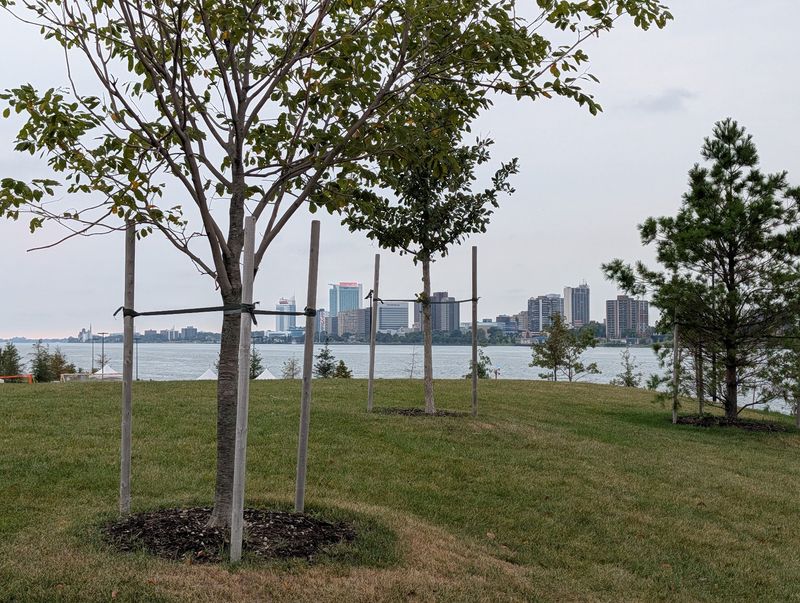
Shade is the one thing the park is short on. There are almost no covered areas outside the basketball pavilion, and only a few small trees dot the grass.
On hot days, sunscreen, hats, and water bottles are must-haves. A pop-up canopy or a blanket under one of the small trees can help during picnics.
Construction in the surrounding area has made parking a work in progress. Some days are easy, and some days call for patience.
The best tip is timing. Weekday mornings, such as a 9:30 AM arrival or a Monday visit, usually mean free street parking right along the park.
With those details sorted, the last step is simply picking a day.
Hours, Parking, and a Gentle Verdict
Planning a trip here takes about two minutes. The park is open every day of the week from 6 AM to 10 PM.
Admission is free. Street parking along the park is also free, which feels like a small miracle in downtown Detroit.
Spaces fill up quickly on weekends and event days. Early arrivals have the easiest time.
Families with kids from toddler age to around 12 will find the most to do. Hoopers, joggers, anglers, and couples looking for a riverfront stroll all have reasons to come, too.
Some families come back every other week, even if they do not live close. That kind of loyalty says a lot about a park.
It is not perfect. Shade is scarce, the slides can get hot, and parking can be a puzzle during construction.
Still, for a free spot with river views, creative play structures, covered courts, and community events, it is hard to beat. Detroit built something here that belongs to everyone in Michigan.
Bring the kids, bring a ball, and check the riverfront calendar before fall arrives.


