
Affiliate disclosure: As an Amazon Associate I earn from qualifying purchases. Learn more
Just south of Gainesville, a herd of wild horses can wander right across a hiking trail while bison graze in the open grass beyond. That is not a scene from an old Western movie.
It happens in Florida, and it happens a short drive from I-75. This spot is a wide prairie where alligators crowd near a boardwalk, bald eagles nest close to the road, and armadillos poke around the campground after dark.
Entry costs about the same as a fast snack, and the trails are mostly flat and friendly for walkers and bikers alike. Some people spot a dozen horses in one trip.
Others leave still hoping for a glimpse of the bison. Keep reading to learn where the animals tend to show up, which trail leads right into their home, and what to pack before you go.
A Prairie Hiding Near Micanopy
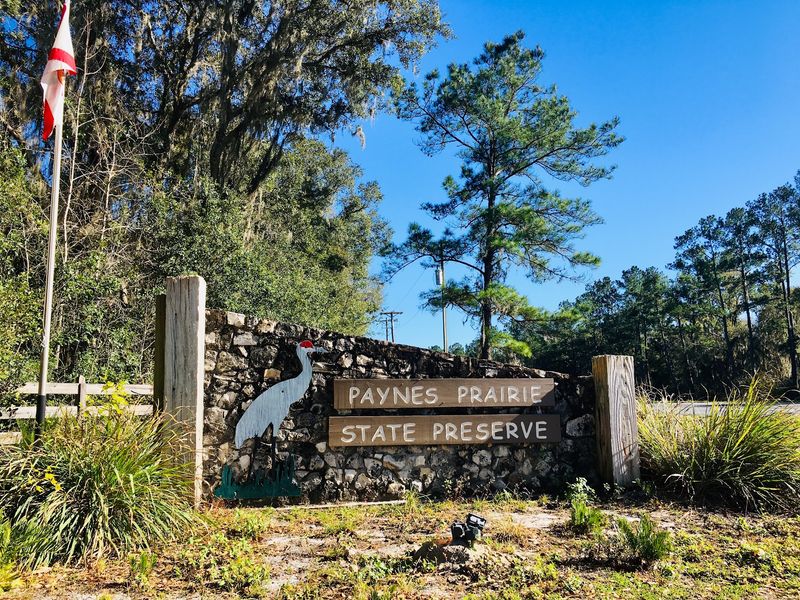
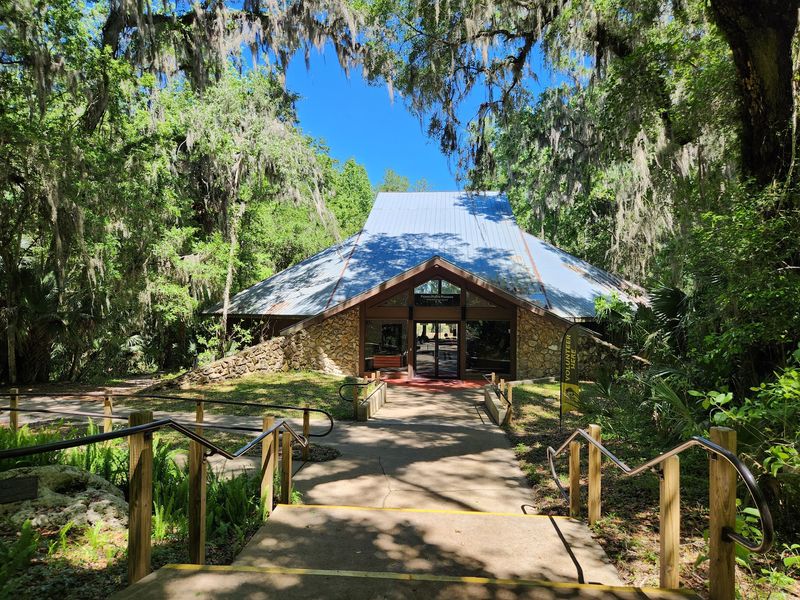
Florida is famous for beaches and theme parks, so a sweeping grassland full of roaming herds tends to surprise people. The place behind all the buzz is Paynes Prairie Preserve State Park, found at 100 Savannah Blvd, Micanopy, FL 32667.
The preserve sits just south of Gainesville in north central Florida. It is a state park and also a national landmark, which gives it some serious bragging rights.
Inside, the land shifts between different wildlife habitats. Trails run through it for hiking, horseback riding, and bicycling.
The park feels remote and tucked away, yet it is never far from town. That mix is part of its charm.
Travelers heading north toward Georgia or south toward Southwest Florida often use it as a break from the interstate. Some return four or five times, and they keep finding something new.
The preserve covers a lot of ground. It is big enough that each section is best explored on its own, with its own entrance and its own view.
So the first lesson is simple. Plan to come back, because one trip rarely covers it all.
A Landscape Out of Another Era
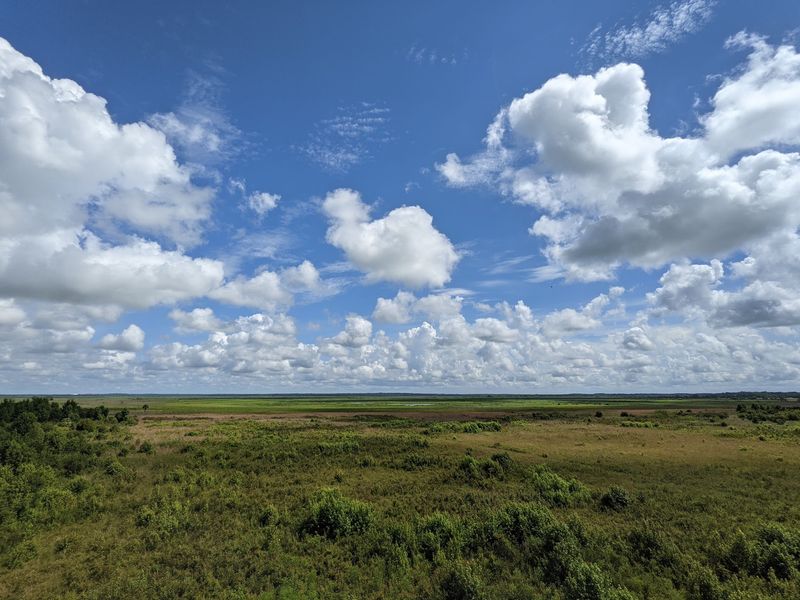
Calling it a time machine might be a stretch, but the comparison comes up often. Many describe the preserve as stepping back into an older Florida, right in the heart of the state.
The prairie stretches wide and open. It reads as untouched, a rare thing in a state known for fast growth.
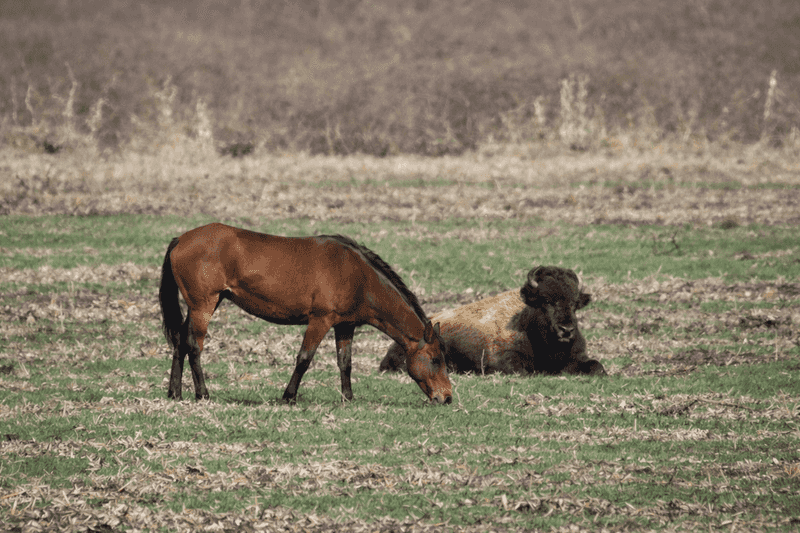
That open space matters for the animals. Herds of horses and bison have room to roam freely across a large area.
Not every view is perfectly pristine, though. From some platforms, the interstate and a few buildings show up in the distance.
Still, the scale of the land makes those intrusions feel small. Most people focus on the wide basin and the life moving across it.
The prairie also changes with the seasons. In the dry months it shrinks back, and in the rainy season it fills in and draws more wildlife.
No matter the time of year, something shifts here. That steady change is why so many locals treat it as a place to check in on again and again.
Spanish Horses on the Loose
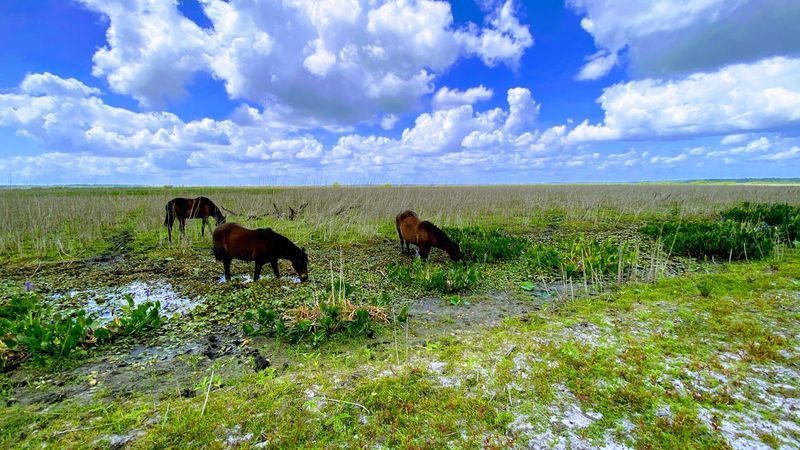
Wild horses get mentioned more than almost anything else tied to this park. They are a big reason people make the trip.
These are Spanish horses, and they live in their natural habitat on the prairie. Seeing a herd spread out across the grass is a highlight for many families.
Some lucky hikers have even spotted a young colt traveling with the group. That kind of moment tends to stick.
Counts vary from trip to trip. One three-day stay turned up about a dozen horses, while other days bring none at all.
The horses can appear early in a visit. Some groups spot them right away from the observation tower and from the lookout area on Highway 441.
Afterward, walking out onto the same open prairie where the herd just roamed feels like a bonus round.
Patience pays off here. The horses keep their own schedule, and nobody has managed to hand them a calendar yet.
Bison, the Prairie’s Heavyweights
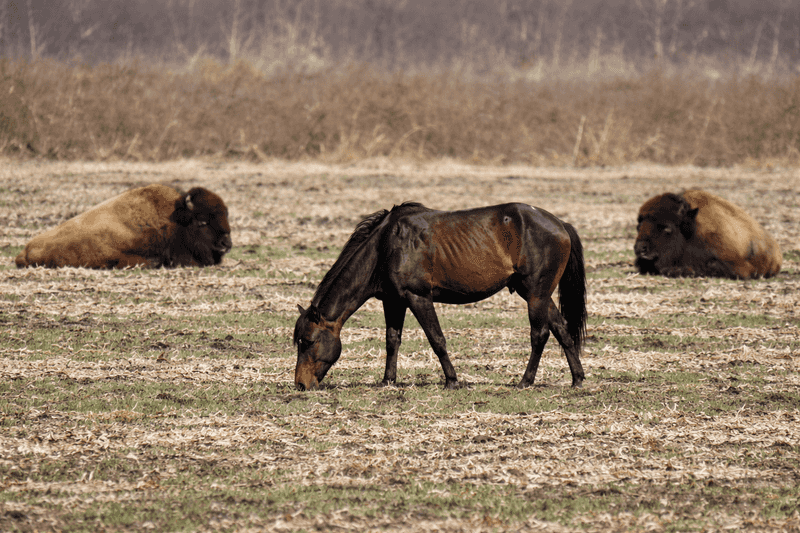
Bison in Florida sounds like a trivia question with a trick answer. Yet bison top the list of things people talk about after a trip here.
A herd of these big animals roams the preserve. Some people call them buffalo, and nobody at the park seems to mind.
Spotting them is not guaranteed. Repeat guests sometimes leave still saying maybe next time.
Others get lucky on the way out, catching the herd just as they head to the car. Timing really can be everything.
Distance is another factor. From some platforms, the bison show up only through a phone camera zoom.
That is why a decent pair of binoculars is one of the smartest things to pack. Cheap ones can leave you squinting at brown dots.
When the herd does show itself, it makes the whole drive worthwhile. It is a sight most people never expect to find in the Sunshine State.
Bolen Trail and Its Horse Traffic
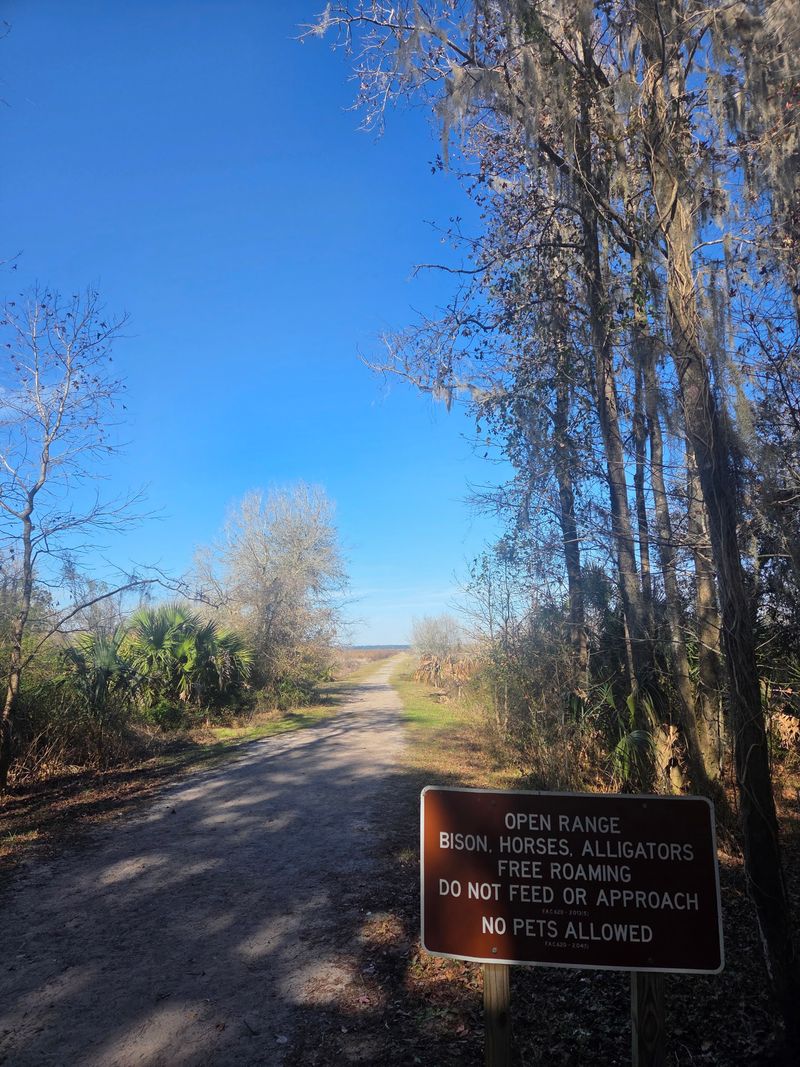
Some trails promise wildlife. The Bolen Trail has a habit of actually delivering it.
Hikers here have come across whole herds of wild horses spread out near the path. A few have even walked right through a herd.
The trail is easy to reach from the campground. Campers can step outside and start hiking without moving the car.
That convenience makes it a favorite for early starts. Morning hours, before the heat builds, often bring more animal activity.
Of course, a trail is not a zoo. Some walks turn up deer, armadillos, and birds instead of horses.
Keep a respectful distance from any animal you meet. These are wild creatures, and they deserve their space.
For the best shot at a horse encounter, though, this is the path most people point to first.
Gator Central on La Chua
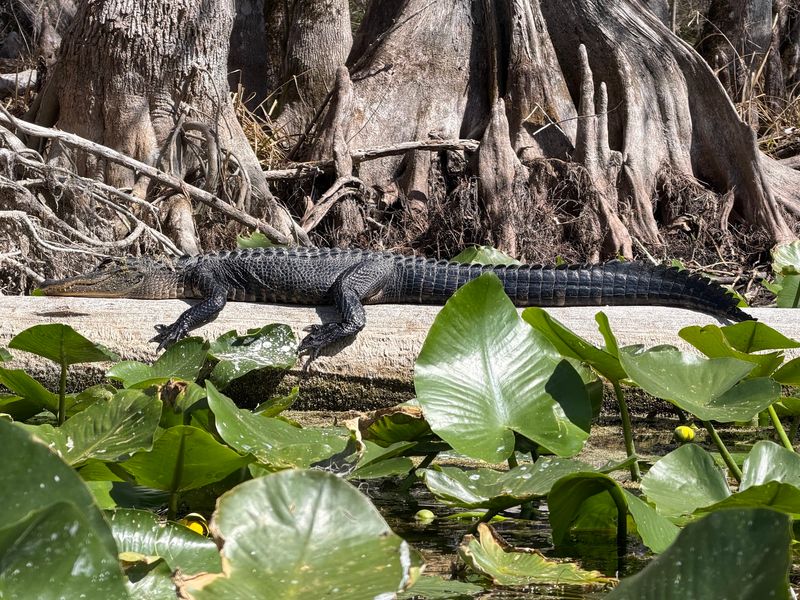
More than 50 alligators in one day is not an unusual count here. Gator gazing is a serious pastime on this side of the preserve.
The La Chua Trail area features an elevated boardwalk built for viewing. It keeps people above the action while the gators lounge below.
Low water can actually help. When levels drop, the alligators gather in tighter spots near the viewing platform.
Some guests have even watched gators squabble with each other. It is the kind of show no ticket can buy.
Past the end of the boardwalk, a short walk continues. That stretch is known for good bird photos and some interesting trees.
Given the gator numbers, it is easy to see why the nearby University of Florida chose its mascot. The joke practically writes itself.
Stay on the boardwalk and follow posted rules. The gators handle the drama just fine on their own.
The Observation Tower Payoff
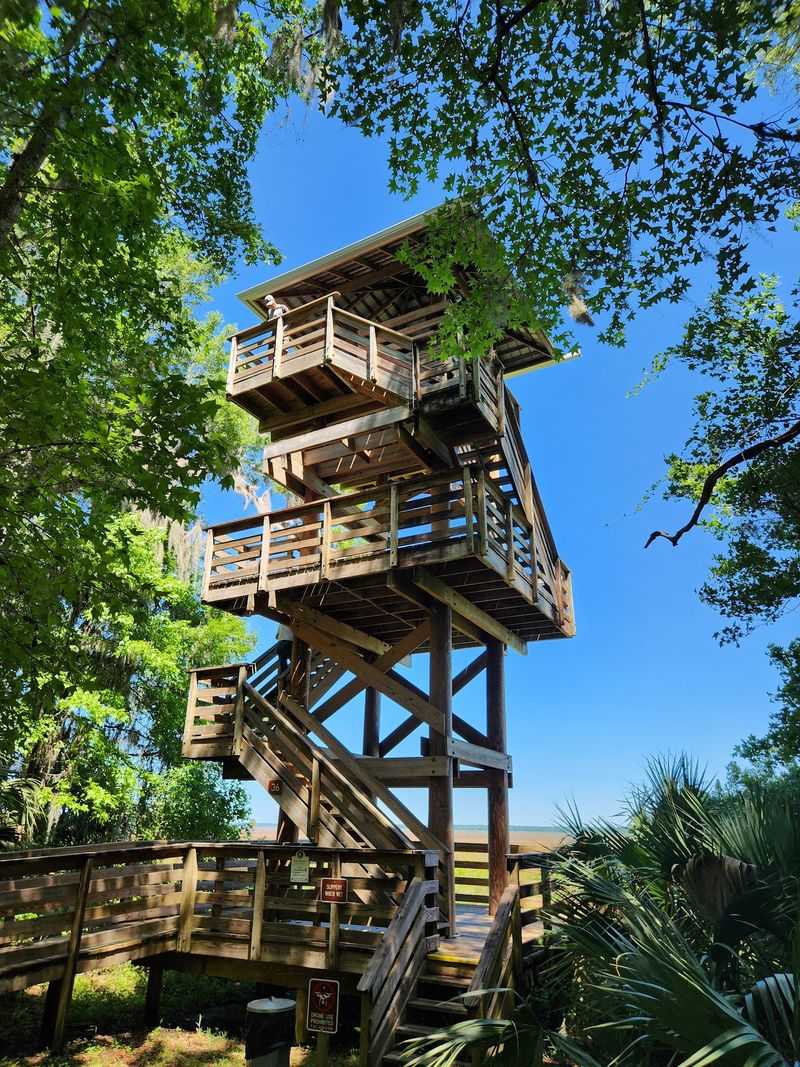
Height changes everything on flat land. The observation tower gives a sweeping look across the prairie that ground level simply cannot match.
It is one of the most talked-about features in the park. Photographers favor it for early morning and late afternoon light.
Wild horses have been spotted from the tower right away. That makes it a smart early stop.
Information about the tower has been mixed at times. One group was told it was damaged and closed, then found it open the next day.
Checking current status with the park before planning around it is a wise move. Conditions can change.
The visitor center also has its own observation deck. Several other platforms are spread around the preserve too.
Between them, there are plenty of high spots. Bring binoculars and give each view some patient time.
Eagles, Cranes and Other Cameos
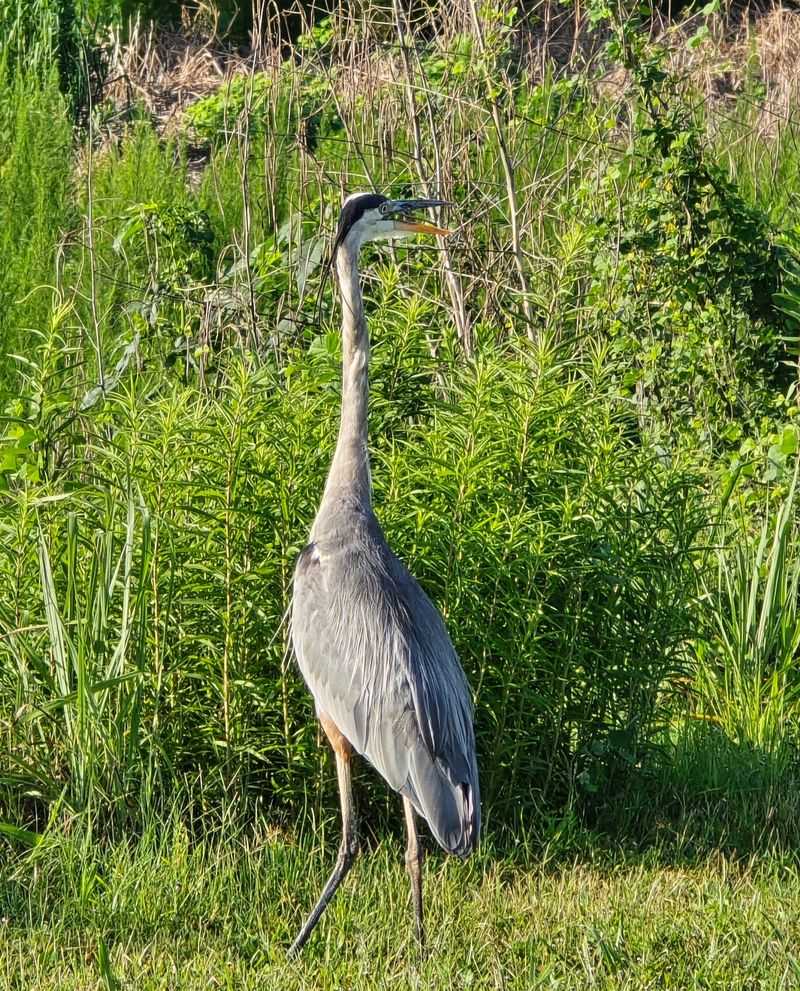
Horses and bison grab headlines, but the supporting cast is huge. Birds, deer, and small critters fill in every gap.
A large bald eagle nest sits along the road to the visitor center. It is easy to miss if you are not watching.
Sandhill cranes also turn up on the prairie. Bird lovers keep an eye out for them.
Deer appear often, sometimes more than people can count. Wild turkeys, snakes, and wild pigs also make appearances.
Armadillos are regulars, especially around the campground at night. Heavy rustling in the dark is often just one of them.
Wild hogs do cause some damage. Torn-up ground beside certain paths shows the problem clearly.
A full list from one trip can read like a field guide. That variety keeps the preserve interesting even when the big herds stay hidden.
Many Entrances, Many Views
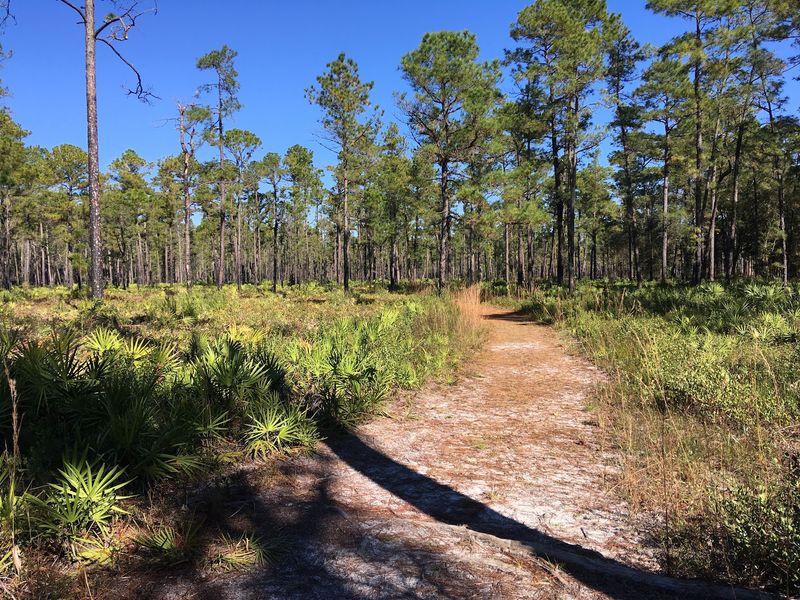
One entrance is not enough to see this preserve. The park is large, and different access points open up different views.
A good plan starts at the main entrance by the ranger station. Pay the fee there and grab the park map.
From there, the map points to other entry locations. Paying at the main gate generally covers those stops too.
Some routes take more effort. One trail to a viewing platform runs about 40 minutes each way from the parking lot.
The first half winds through woods on a clear path. Watch for tree roots and animal droppings.
The second half opens into a clearing with the prairie on view. The platform comes into sight ahead.
The Cone Trail is another option, where one group met a massive alligator and three babies. Each entrance tells its own story.
Camping Under the Armadillo Patrol
Snagging a campsite can take some luck. Some campers grab cancellations after waiting a long time.
The campground is pet friendly, clean, and well run. Sites are fairly large, level, and gravel, with many offering some privacy.
Many sites include electricity and water. Others share water spouts, and every site comes with a fire pit and grate.
Firewood is sold for $10 a bundle near the ranger station. Ice is not sold, so pack accordingly.
The bath house has hot showers and is cleaned daily. There are dumpsters and a dump station, but no laundry machines.
Roads through the park are paved. The visitor center is a long ride away by bike, so plan for the distance.
Nights stay quiet, apart from the armadillos doing their rounds.
Room for Families and Lake Days
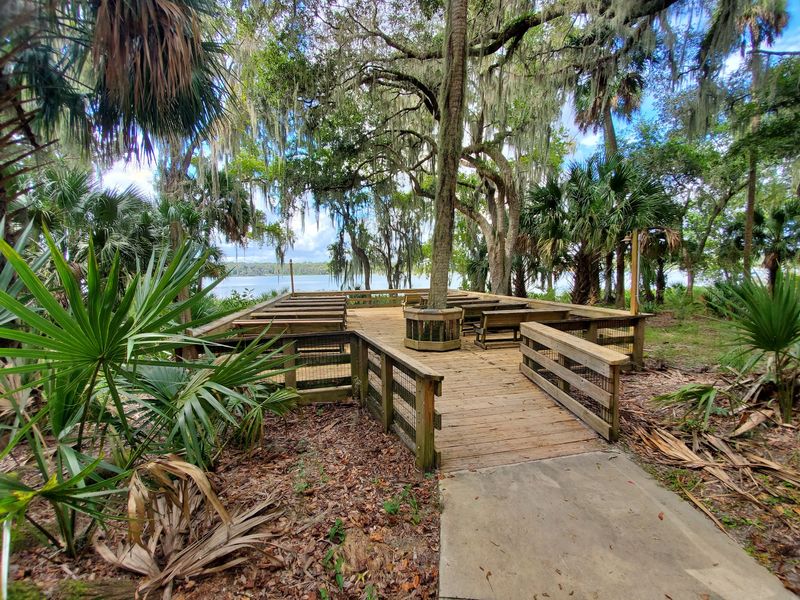
Not every visit needs to be a wildlife hunt. Plenty of families come simply to relax and spend time outdoors.
Group outings and cookouts work well in the open space. The park suits slower days as much as active ones.
Amenities make it easier. There is a playground, an amphitheater, ample parking, and clean restrooms.
The visitor center offers nature displays and that observation deck. Staff are known for being welcoming and knowledgeable.
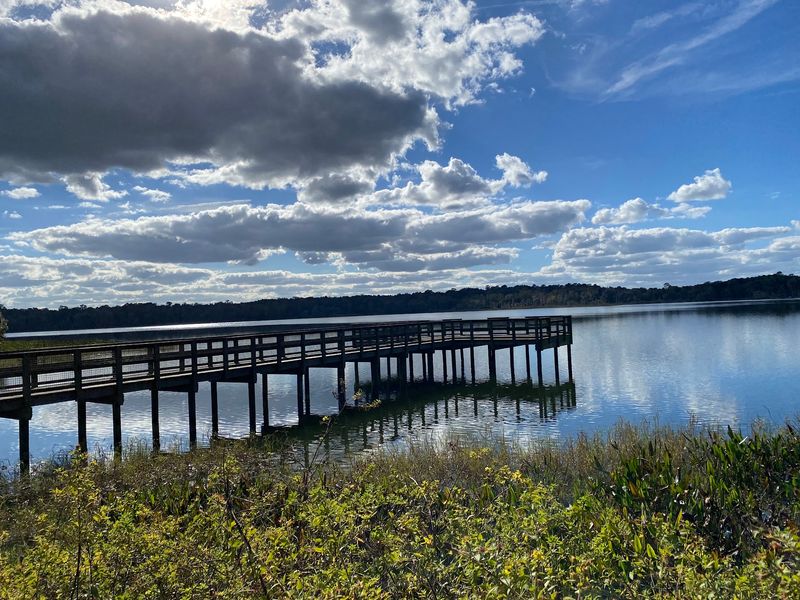
A lake adds to the scenery. Several repeat guests point to it as a favorite part of the park.
Trails are wide, well maintained, and mostly flat. Nothing is difficult, which helps younger hikers and casual bikers.
It is a peaceful setting, and people of all ages seem to find their own pace here.
Hours, Fees and Smart Packing
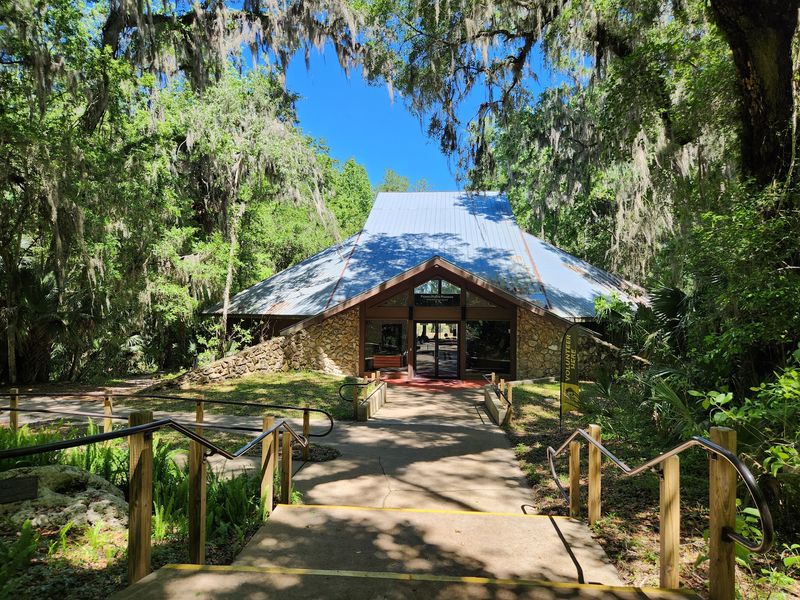
Good news for budget travelers. Entry runs about $6 per carload.
Posted signs have sometimes listed $4, so expect the higher amount. There is no Florida resident or senior discount.
The park is open every day from 8 AM to 6 PM. That schedule holds all week.
Binoculars top the packing list. A decent pair makes a real difference for spotting distant herds.
Bring water and dress for the season. Sunscreen is a must in summer.
Season matters for sightings too. Winter is much drier, which opens up more areas for both people and animals.
Some dry season trips bring fewer sightings, while the rainy season can liven up the prairie. Mornings before the heat often bring the most activity.
A Wild Detour Worth Taking
Few places in Florida deliver this much wildness for the price of a cheap lunch. The preserve keeps earning return trips for good reason.
The prairie gives horses and bison room to roam. The boardwalk serves up alligators by the dozen.
Towers and platforms hand out wide views. The trails stay easy enough for nearly anyone.
Sightings are never promised, and that is part of the appeal. Every visit is a fresh roll of the dice.
After the park, the small town of Micanopy is close by. It has a museum and plenty of antique shops to browse.
For travelers on I-75, it makes an easy stop to stretch the legs. For locals, it is a backyard adventure.
Pack the binoculars, start early, and let the prairie decide what to show you.


