
Affiliate disclosure: As an Amazon Associate I earn from qualifying purchases. Learn more
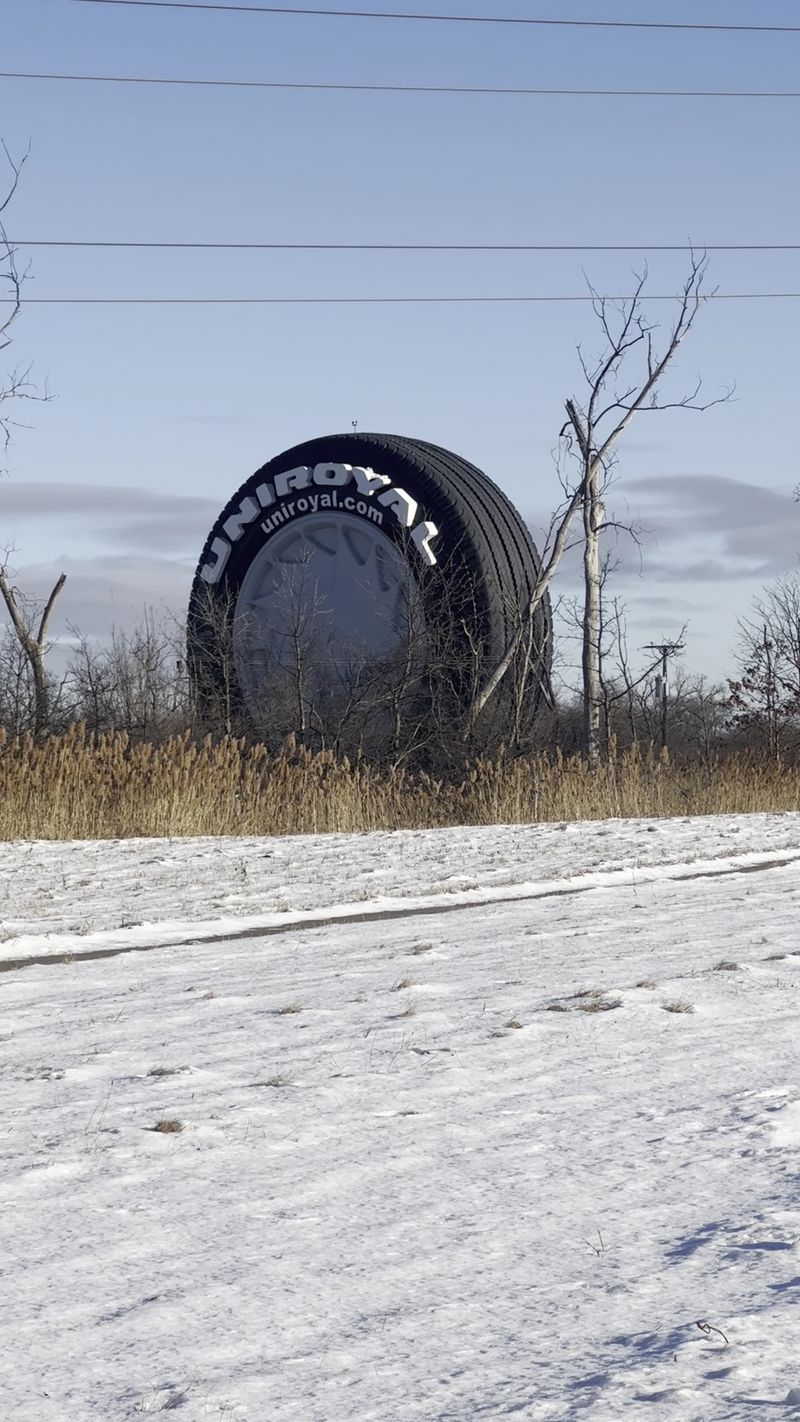
Some Michigan landmarks hide in museums. This one sits beside one of the busiest stretches of Interstate 94 near Detroit, and it is roughly eight stories of tire.
Before it ever greeted a single commuter, it carried passengers in New York as a Ferris wheel at the 1964 World’s Fair. Then the gondolas came off, the shell headed west, and Metro Detroit gained a roadside giant that has outlasted sales offices, corporate mergers, and decades of traffic.
Generations of Michigan families have pointed at it from the back seat, and many still do. The story behind it is part carnival, part marketing, and part Motor City pride.
Read on to learn where it stands, how it got here, why you cannot walk right up to it, and the smartest way to see it without a plane ticket or an admission fee.
A Giant Beside I-94
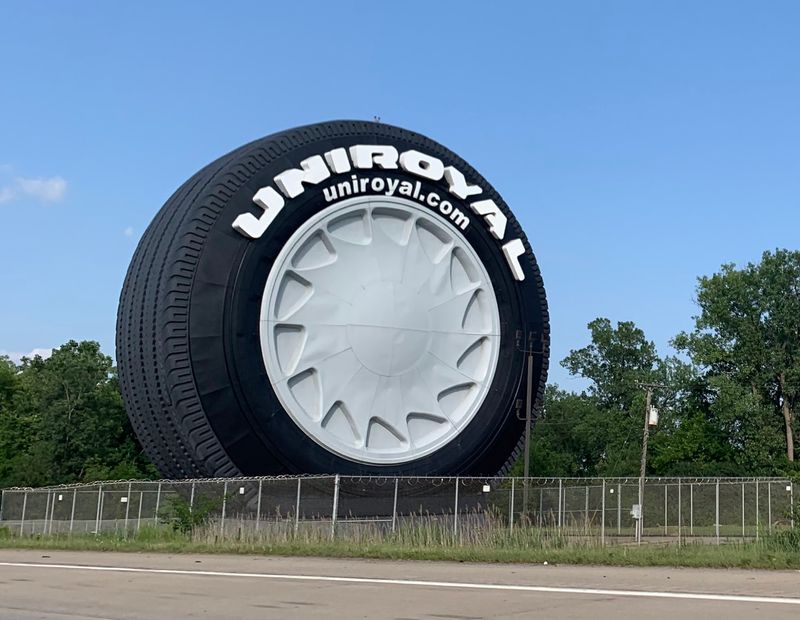
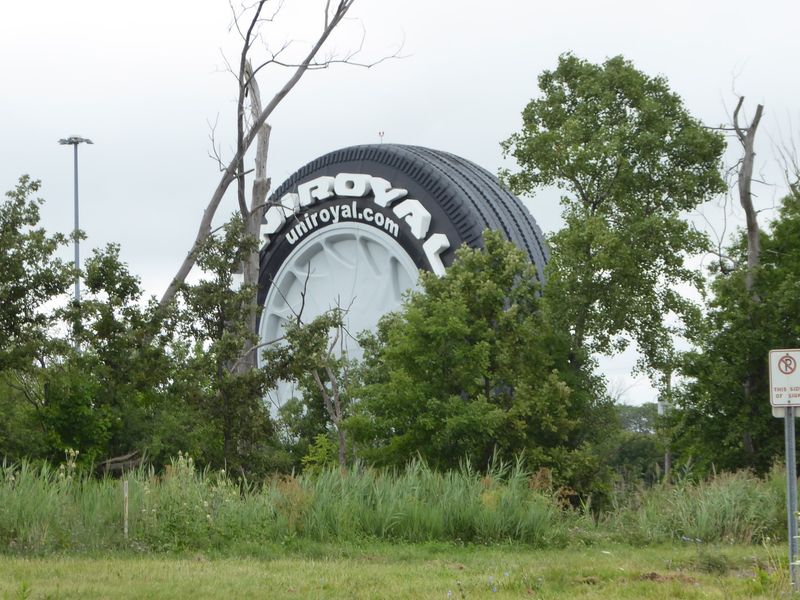
Drivers heading toward downtown Detroit get a strange surprise near the airport corridor. A tire roughly 80 feet tall stands just off the freeway, as if a car the size of a skyscraper parked nearby.
The landmark is The Uniroyal Tire, found along Detroit Industrial Expy, Allen Park, MI 48101, in the United States. Allen Park sits in Wayne County, just southwest of Detroit.
Officially, it goes by the Uniroyal Giant Tire. Locals usually just call it the big tire off 94, and nobody needs further directions.
It is listed as a historical landmark, and it is classic roadside Americana. There is no gift shop, ticket booth, or visitor center.
What it offers instead is scale and story. The tire has stood in Allen Park for decades and has become a fixture of Metro Detroit identity.
Its spot beside Interstate 94 is no accident. The structure was always meant to be seen by people on the move, and it does that job better than almost anything else on the Michigan roadside.
So how did a giant tire end up here in the first place? The answer starts more than 600 miles away.
Ferris Wheel Beginnings in New York
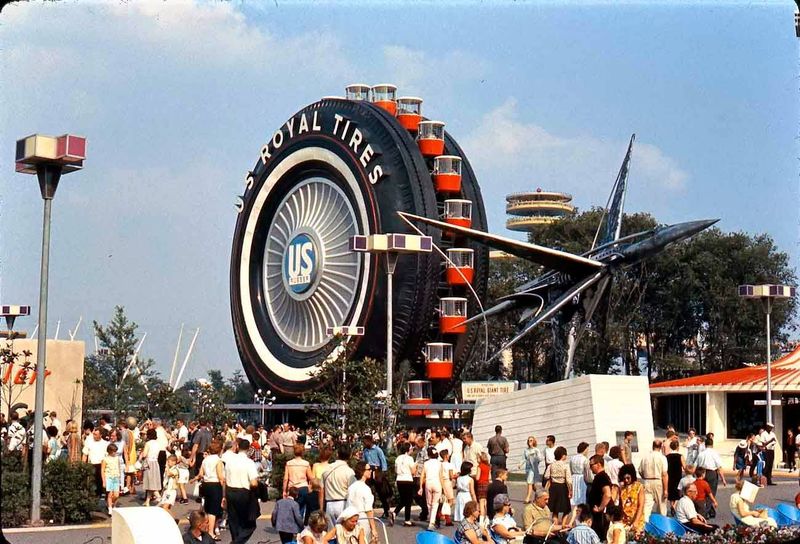
Long before it was a Michigan icon, the tire spun. It was built as a Ferris wheel for the 1964 New York World’s Fair, which ran through 1965.
Fairgoers climbed into gondolas mounted inside the giant tread and rode around a wheel shaped like a car tire. It was a ride and an advertisement at the same time.
The sponsor was the United States Rubber Company, the business later known as Uniroyal. Few companies could claim their billboard carried passengers.
Old photographs still show the tire with its gondolas attached. They are worth hunting down because they reveal a version of the landmark most Michiganders have never seen in person.
The World’s Fair was a showcase of optimism, technology, and big ideas. A rideable tire fit right in with that spirit of bold display.
When the fair wrapped up, the wheel’s carnival days ended too. Its next chapter would trade riders for drivers.
The Move That Made It Michigan’s
Here is the twist many people miss. The tire that stands in Allen Park did not arrive as a working ride.
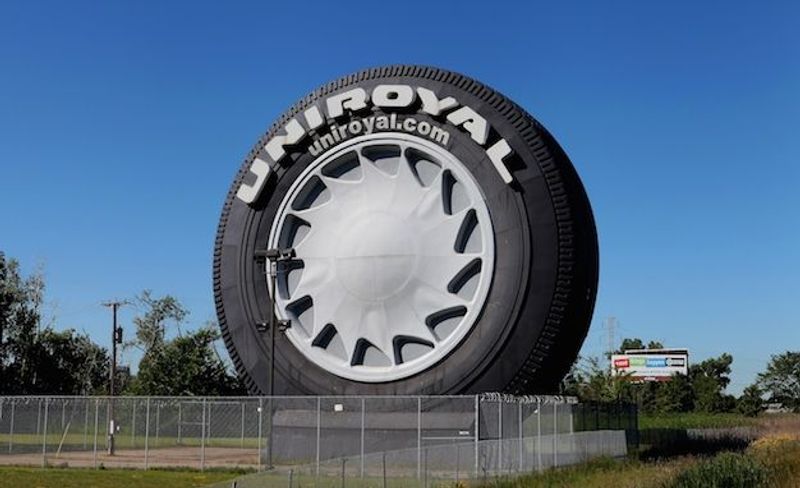
After the fair, the outer shell was shipped to the Detroit area and reassembled on a new frame. In 1966, it went up without its passenger gondolas as a static display at a Uniroyal sales office.
No moving parts made the trip in a working form. What Michigan received was the look of the wheel, rebuilt to stand still and draw attention.
Later, the sales office moved on. The landmark stayed put, which is a big reason it remains part of the region today.
Some families have a personal link to that arrival. There are Metro Detroiters whose grandparents worked on the crew that raised the tire, and those stories get passed down like heirlooms.
That detail says a lot. The tire is more than steel and rubber to the people who live near it.
It became Michigan’s because Michiganders built it up, kept it, and refused to let it roll away.
Measuring a Monster
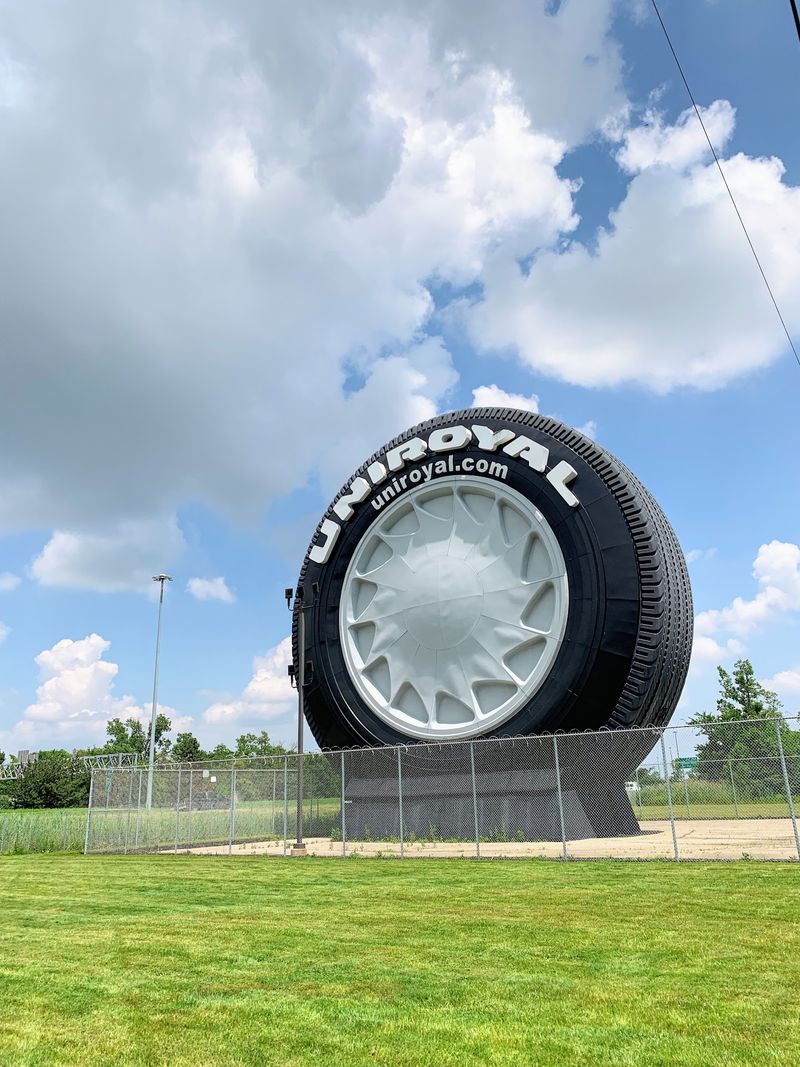
Numbers help, but only a little. The tire is commonly described as about 80 feet tall, and some historical accounts list it as high as 86 feet.
Its weight is often given as around 12 tons. That is a lot of tire for anyone who has ever struggled to change a spare.
Size is the thing people mention most once they finally see it. Out-of-state relatives brought along for the drive often find it larger than they were told.
Online videos also tend to undersell it. Seen in person, the tire comes across as noticeably bigger than it does on a phone screen.
Its height matters for practical reasons too. The tire rises above the trees nearby, which makes it easy to spot from the expressway long before you pass it.
Fans like to call it the biggest tire in the world. As a roadside sculpture, it certainly has a strong claim to the title.
Whatever measurement you trust, the effect stays the same. It is a tire built for giants, parked in a suburb of regular-sized cars.
The Brand Behind the Rubber
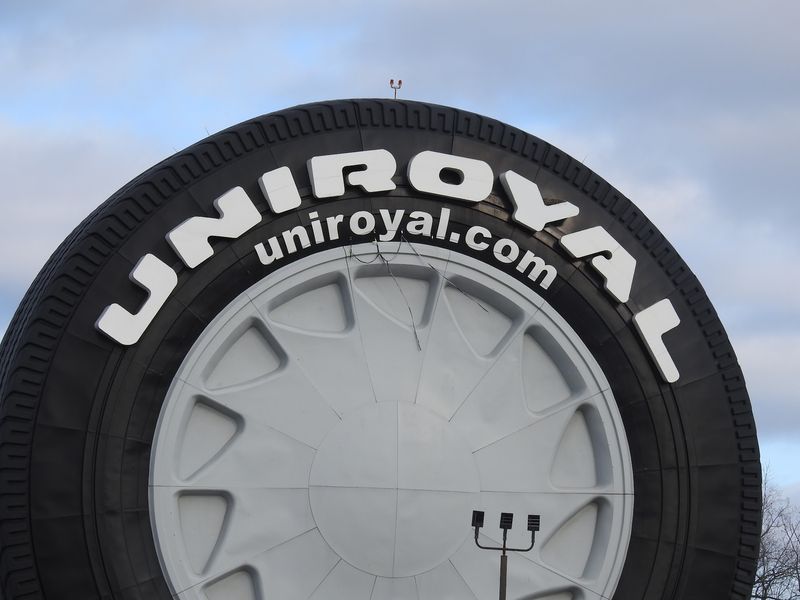
Quick test. Name five tire brands without looking anything up, and see if Uniroyal makes your list.
For many younger drivers, it does not. Yet the company has deep roots.
Uniroyal began in 1892 as the United States Rubber Company in Connecticut, formed from a merger of nine separate companies. It was one of the biggest corporate consolidations of its time.
The company became a major supplier to General Motors as an original equipment manufacturer. That Motor City connection helps explain why a Uniroyal display felt right at home near Detroit.
In 1985, Uniroyal combined its tire business with B.F. Goodrich to form the Uniroyal Goodrich Tire Company.
Michelin acquired that company in 1990, ending its run as an independent firm.
The corporate story moved on, but the tire stayed. Today it works as a living reminder of a brand that once stood shoulder to shoulder with the auto industry.
Some call it a piece of marketing genius. Decades later, the advertising is still working.
Makeovers Over the Decades
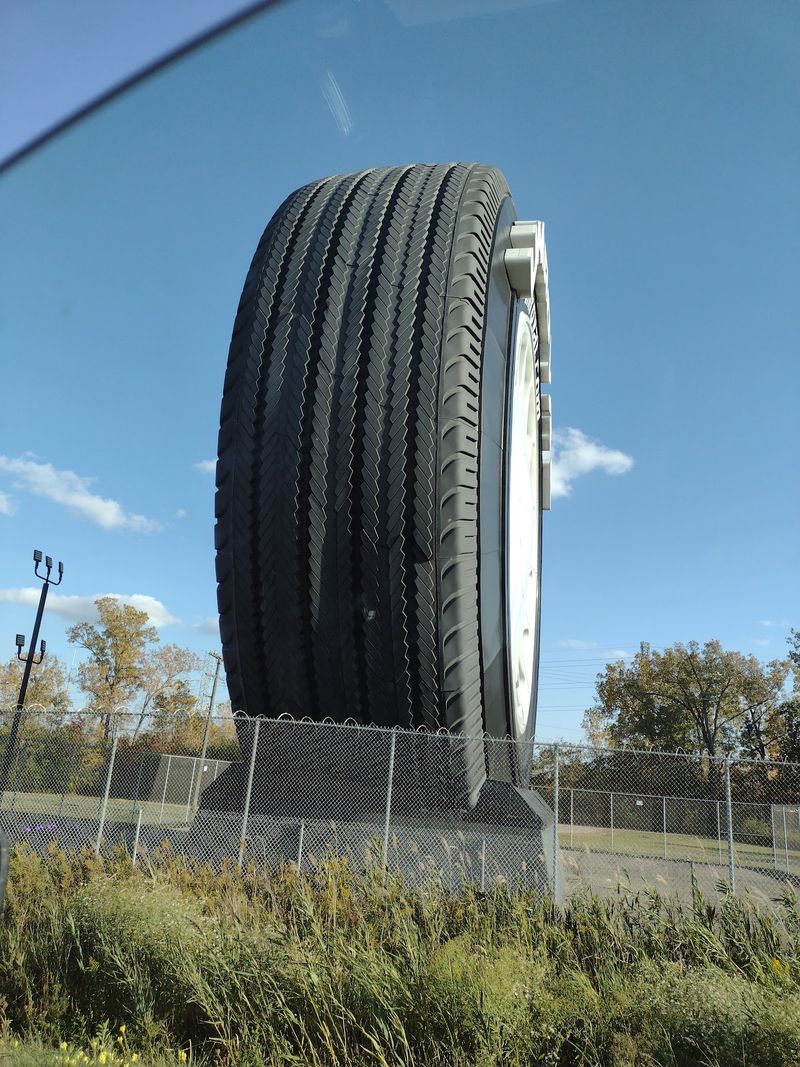
Even giants need upkeep. The Uniroyal Giant Tire has received a couple of makeovers over the years.
That should not surprise anyone who has watched Michigan weather work on a car. A structure standing outside year round beside a busy interstate will need attention now and then.
The refreshes have helped it keep its iconic look for each new generation of drivers. Kids who first spotted it from the back seat can now point it out to their own children.
That continuity is a big part of its appeal. It has been around longer than many of the people who love it.
Opinions are not completely unanimous. A few Michiganders have teased it as an eyesore over the years.
Most, though, see a proud piece of repurposed history. The state took a fair attraction and gave it a long second career.
Fans who want updates can find a Facebook group called Fans of the Giant Tire. It is a handy place to follow news about the landmark and its upkeep.
Why the Fence Stays Up
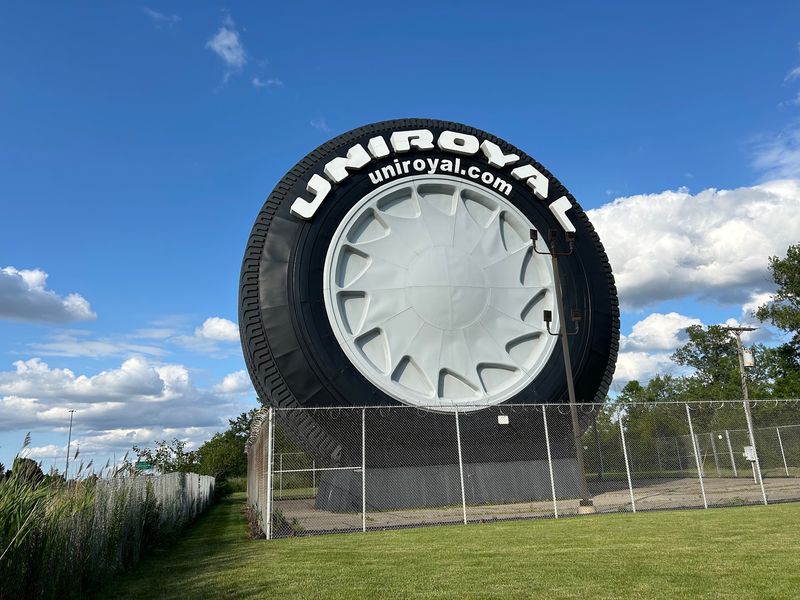
Here comes the catch. You cannot stroll up and pat the tread.
The tire sits on private property near a railroad, and it is surrounded by fencing and barbed wire. Signs on nearby routes make it clear that people should stay out.
Getting close would mean trespassing. That is not the way to honor a landmark, and it is not worth the trouble.
Some fans wish there were a safer public viewing area or a pull-out. That wish comes up again and again among people who make a special trip.
It helps to think of the tire for what it was designed to be. At heart, it is a very large, three-dimensional billboard meant to catch eyes from the expressway.
Seen that way, the distance makes sense. The tire was never planned as a walk-up attraction.
Respecting the fence keeps the experience easy and drama free. The view is still the reward.
The GPS Detour Trap
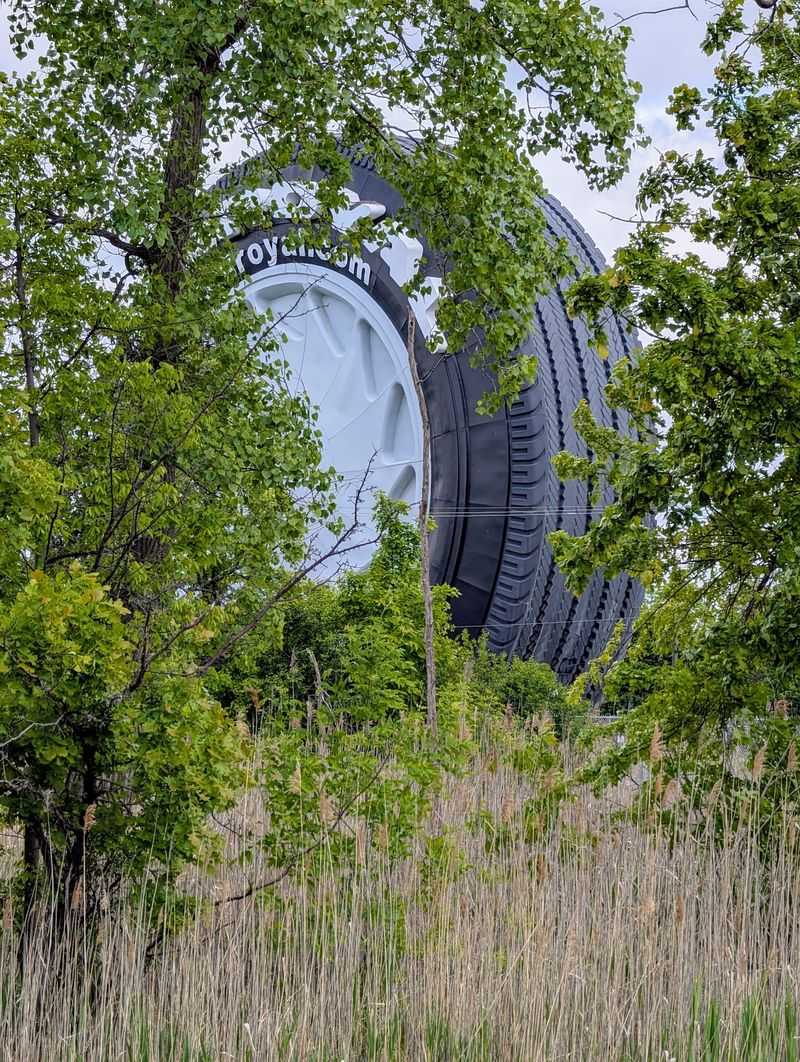
Typing the tire into a map app feels like the obvious move. It often leads somewhere less obvious.
Navigation tends to send people down a side road to the back of an industrial park. The trip usually ends near gated railroad tracks posted as private property.
From there, the tire may be partly hidden. Trees, power lines, and fences tend to get in the way of a clean photo.
Still, that spot has one quirky upside. A shot with trees in the foreground can show just how far the tire rises above them.
For a full view, though, the freeway wins. Many people who tried the back roads ended up deciding the highway was the better choice.
So treat the map pin as a clue, not a promise. It will get you near the tire, but not necessarily face to face with it.
A little planning saves a wasted detour through an industrial park.
Snapping the Perfect Drive-By Photo
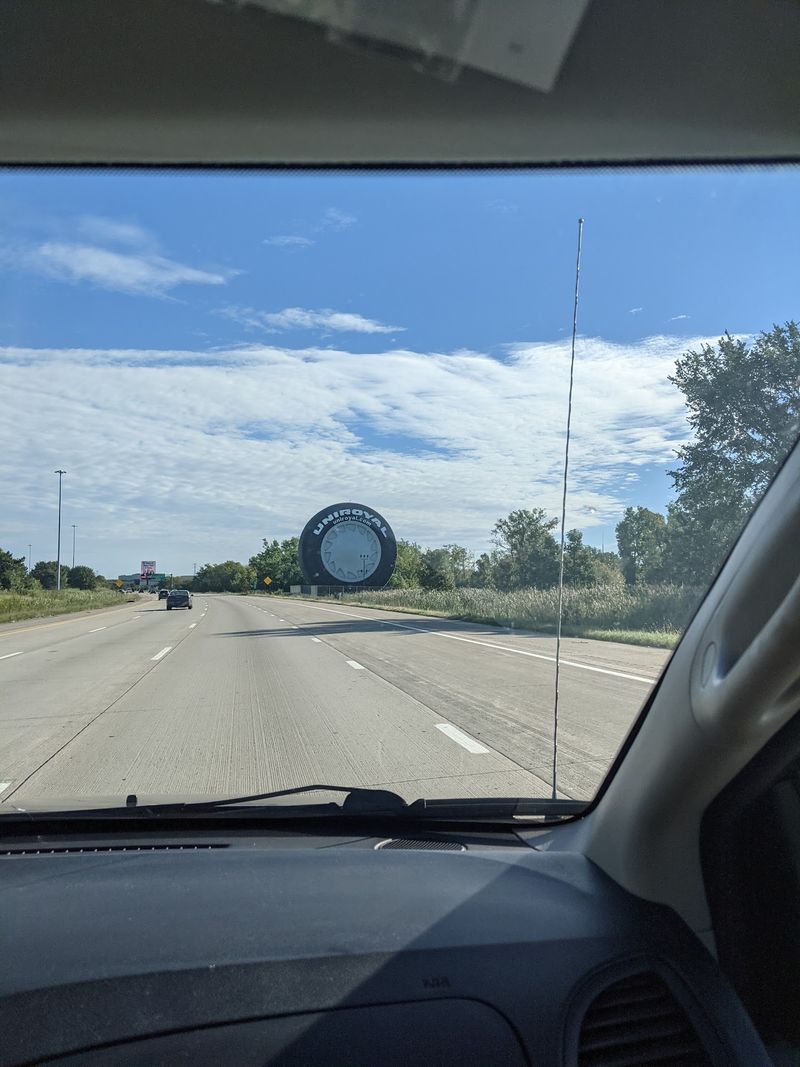
Timing is everything with this shot. At highway speed, the tire comes and goes faster than most people expect.
The best plan is simple. Let a passenger handle the camera while the driver keeps eyes on the road.
A passenger can often grab three or four good frames at about 60 miles per hour. Having the phone ready ahead of time makes a real difference.
Checking the exact location on a map before the drive helps too. That way, nobody gets caught fumbling when the tire appears.
Many travelers come from the east side heading west. Others recommend the eastbound lanes of I-94 for a clear view, so it pays to try both directions over time.
Do not pull onto the shoulder for a photo. The highway is extremely busy, and police do not welcome drivers who stop just to look, since it creates a safety hazard.
A slightly blurry picture taken safely beats a perfect one taken on the shoulder. That blur is part of the classic drive-by look anyway.
A Spot on the Roadside Oddity Map
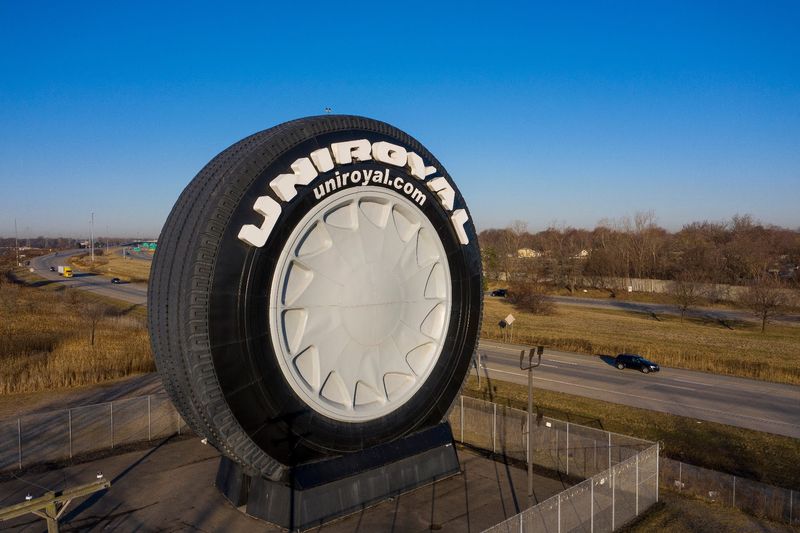
Some states have giant frying pans. Others have an enormous baseball bat or a towering ball of yarn.
Metro Detroit has a giant tire, and honestly, what could fit the Motor City better? It is a landmark that shouts car country without saying a word.
The tire holds a place among classic American roadside icons. It is a local oddity with a surprising amount of international fame.
That fame has reached into pop culture in small ways. At one point, players of a popular mobile game hunted for a character listed right at the base of the tire.
For Michiganders, the appeal is simpler. This is ours, and nobody else has one quite like it.
Out-of-state relatives often get a guided drive past it as part of a Detroit visit. Some travelers headed far south even make it a priority stop on their way out of the state.
Not every famous landmark requires a plane ticket. Sometimes it just requires the right lane on I-94.
Hours, Cost, and Who Will Enjoy It
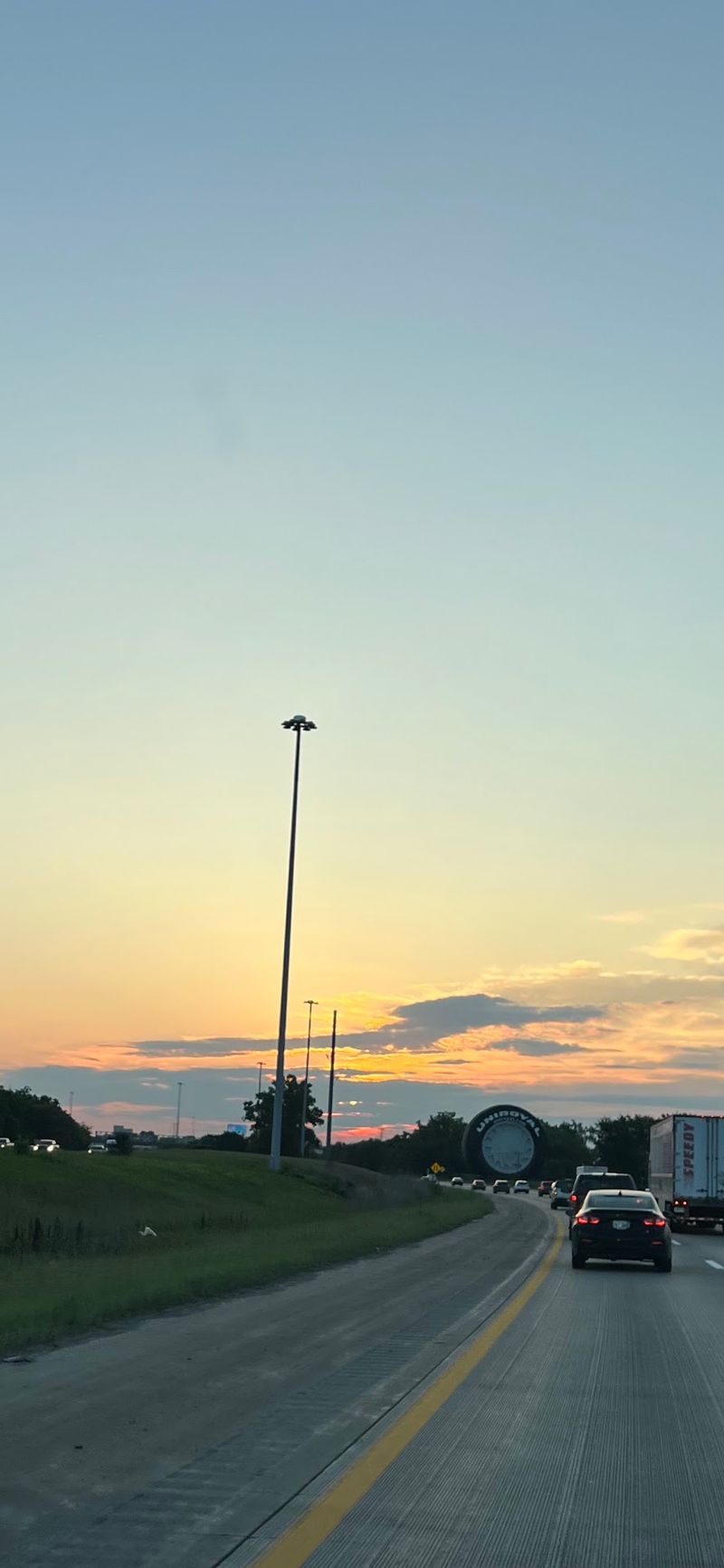
The best part of the budget is that there is no budget. Seeing the tire costs nothing beyond the gas to drive past it.
The landmark is listed as open 24 hours, every day of the week. Since the view comes from the road, there is no closing time to beat.
Daylight gives the clearest look for photos. Locals in nearby neighborhoods can even catch sight of it from home during winter, once the trees lose their leaves.
It suits road trippers, families with curious kids, and anyone who loves Michigan auto history. A tire this big tends to earn at least a little laugh from the back seat.
History fans get the World’s Fair backstory. Car lovers get a tribute to a brand tied to General Motors.
It is not a place for lingering picnics or close-up exploring. Expect a quick, memorable sighting instead of a long stop.
Bundle it with a trip toward downtown Detroit, and it becomes an easy free bonus.
Still Rolling in Michigan Memory
Plenty of roadside attractions fade. The big tire in Allen Park has done the opposite.
It started as a ride in New York, crossed into Michigan as a stripped-down shell, and became a landmark that drivers greet like an old friend. That is quite a career for something that no longer turns.
Part of its charm comes from how little it asks. There are no tickets, no lines, and no schedule to follow.
All it requires is a trip along I-94 and a passenger ready with a phone. The rest is decades of history passing by the window.
For Michiganders, it is a childhood memory that keeps working. Parents point it out to kids, and those kids will likely do the same someday.
The barriers keep everyone at a distance, yet the tire still feels close to home. It belongs to the region in a way few billboards ever could.
Next time traffic slows near Allen Park, glance toward the roadside. A world’s fair legend is waiting there, right where it has always been.


