
Affiliate disclosure: As an Amazon Associate I earn from qualifying purchases. Learn more
Most churches close their doors at sunset and call it a day. One in downtown San Antonio does the opposite, turning its centuries-old stone front into a giant movie screen after dark.
The best part is that the evening show costs nothing, so a family of five can enjoy it for the same price as one person. By day, the building holds stories tied to the Alamo, a famous Mexican general, and a papal visit that drew the eyes of the world.
It also ranks among the oldest cathedrals in the country, with roots reaching back to the 1730s. Texans who make the drive often plan a whole evening around it, pairing the show with a stroll along the River Walk.
Keep reading to learn what happens inside, when to arrive for a good seat, where to park for free, and why this landmark belongs on every Texas road trip list.
A Landmark on Main Plaza
Right in the middle of downtown San Antonio sits a building that has watched the city grow up around it.
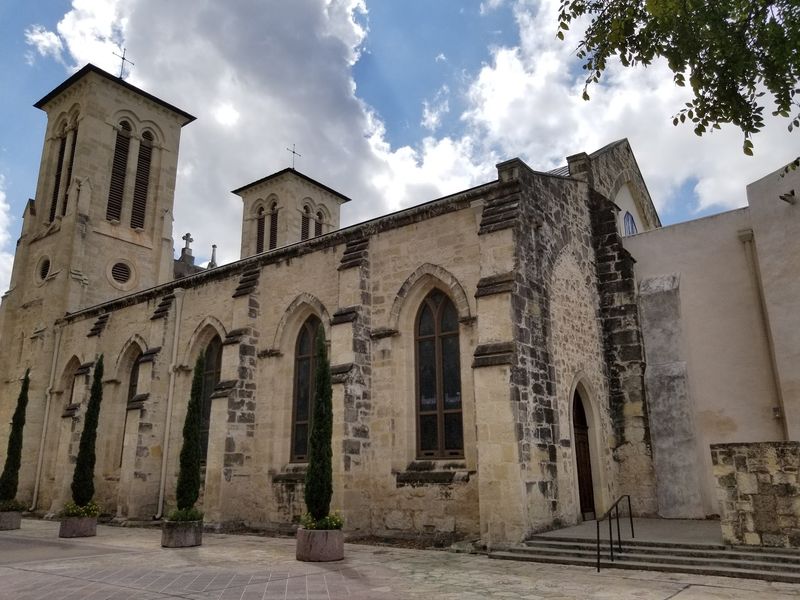
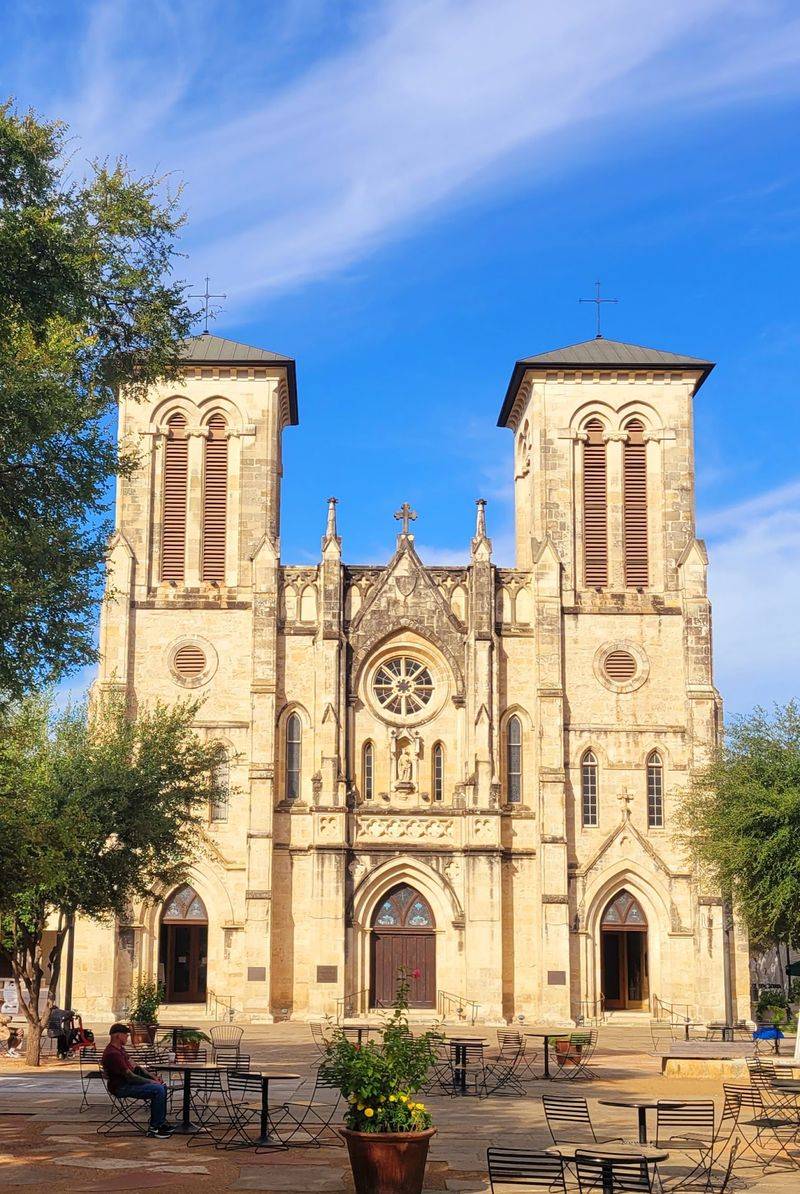
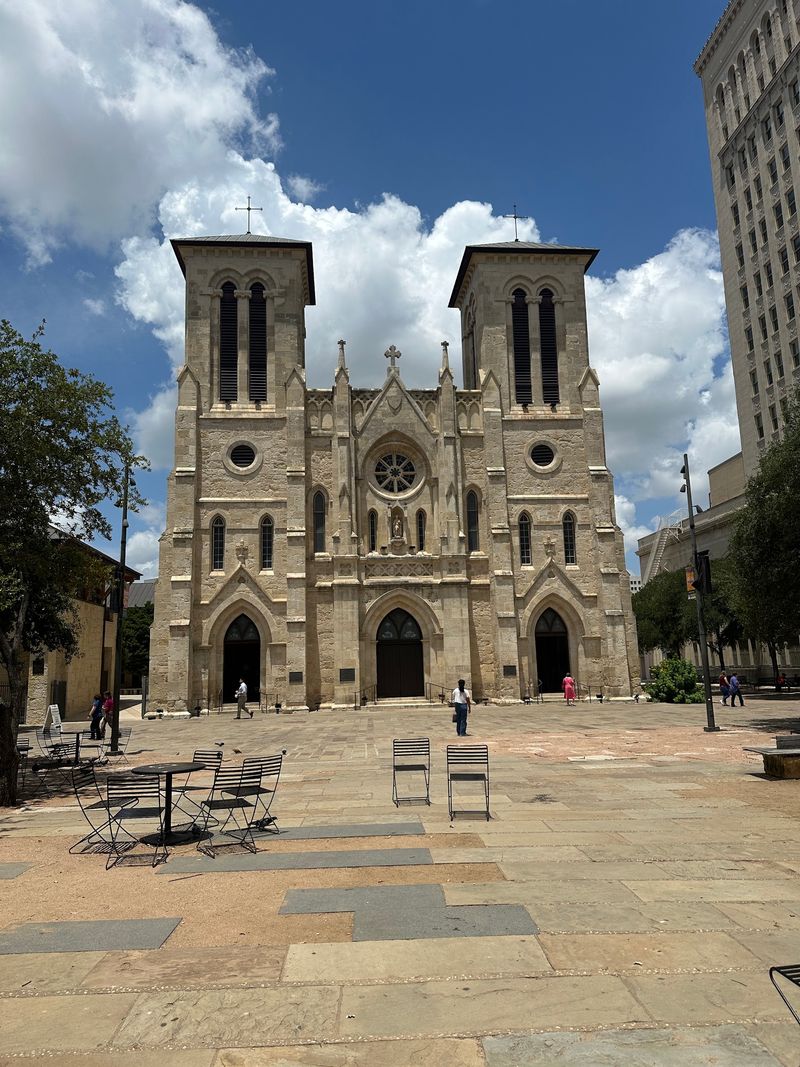
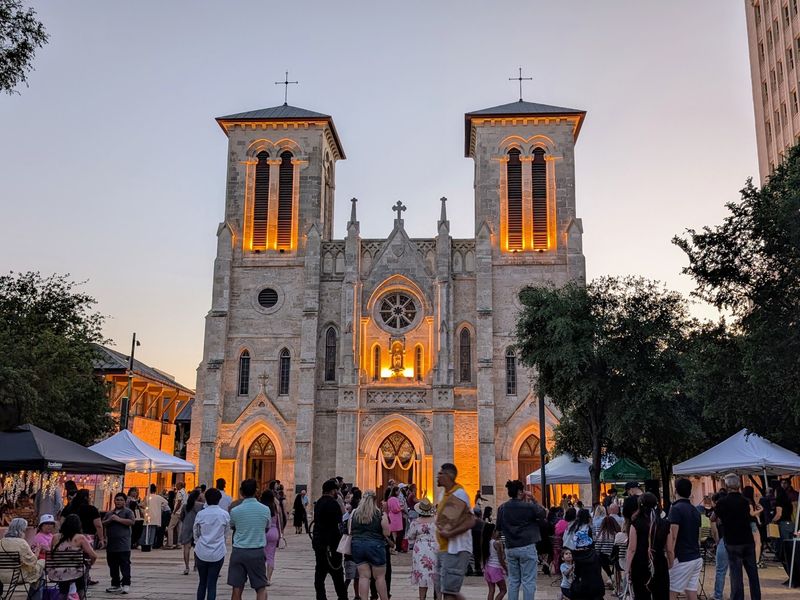
San Fernando Cathedral stands at 115 Main Plaza, San Antonio, TX 78205, in the United States. It is a working Catholic cathedral with roots in the 1730s, and its church dates to 1738.
That makes it one of the oldest cathedrals in the country. Some even call it the longest continually active cathedral in the United States, a title that adds a little extra weight to every visit.
The location is a big part of the appeal. Main Plaza spreads out in front of the building, with a small seating area where people can rest between stops.
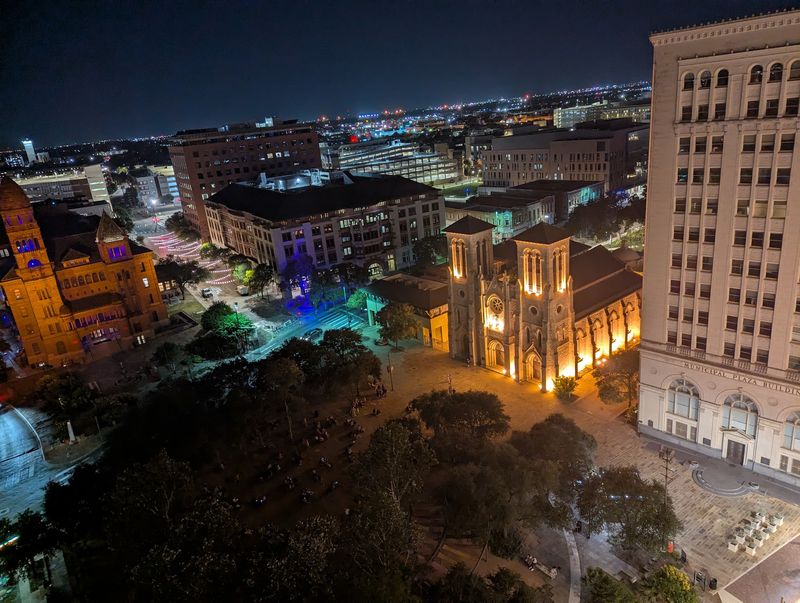
The River Walk is only a short walk away, so the cathedral fits easily into a downtown day. Many people stop in on a whim and end up staying far longer than planned.
For road-trippers, San Antonio is roughly an hour and a half from Austin and around three hours from Houston. Dallas-Fort Worth folks are typically looking at a four to five hour drive.
That is a long haul for a church visit, but this is not an ordinary church. The real twist arrives once the sun goes down.
Roots Reaching Back to 1738
Long before Texas was a state, or even part of the United States, this site was already a place of worship.
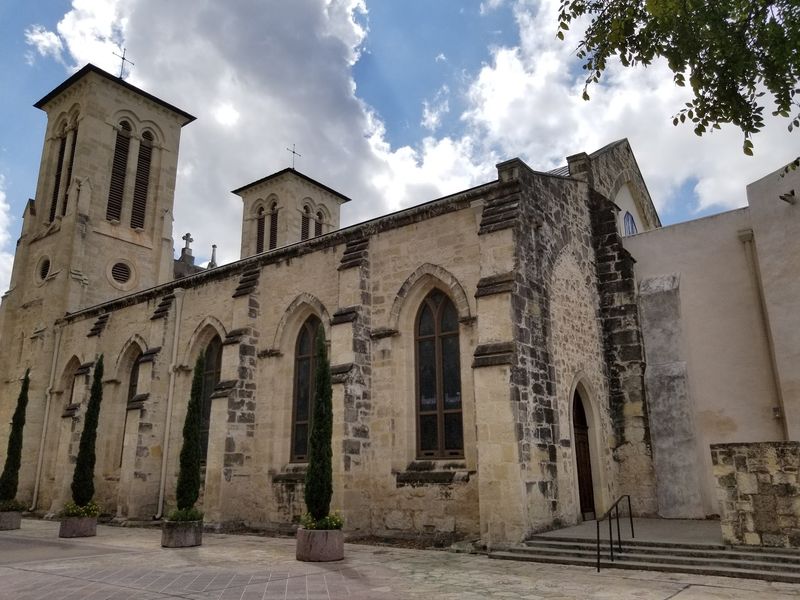
The church dates to 1738, during the Spanish colonial era. Its style still reflects that Spanish colonial heritage, which sets it apart from many newer churches across the state.
Over nearly three centuries, the building has served generation after generation of San Antonio families. Weddings, baptisms, and family gatherings have filled its pews through wars, flags changing, and a growing city.
Families still return here for services and events year after year. That steady thread of community life is part of what keeps the cathedral feeling lived in rather than frozen in time.
It holds meaning for Catholics, of course. Yet it also holds meaning for Texas as a whole, because its story weaves directly into the state’s most famous chapter.
The building has been carefully maintained across the centuries. That care shows in how well the grounds and structure are kept today.
History buffs can easily spend an hour connecting dots here. And the most dramatic chapter of all involves a general, a siege, and a mission just a few blocks away.
Santa Anna and the Siege of the Alamo
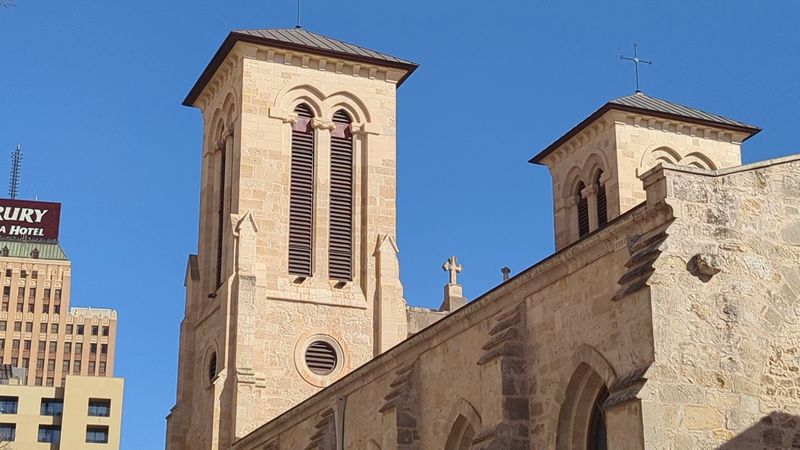
Here is a fun fact that surprises plenty of first-timers. During the siege of the Alamo in 1836, General Santa Anna occupied this very church.
Its tower gave a clear view over the town, which made it valuable during the conflict. The Alamo itself is only a short distance away in downtown San Antonio.
For Texans raised on stories of the Alamo, that connection changes the whole visit. The cathedral is not just near the history, it was part of it.
Standing on Main Plaza, it becomes easier to understand how close together these events unfolded. The streets between the two landmarks can be covered on foot in minutes.
Many people pair both sites on the same day. Starting at the Alamo and finishing here creates a natural storyline, almost like reading two chapters of the same book back to back.
The cathedral does not hide from this past. Instead, it holds one of the most moving reminders of the battle inside its own walls.
That reminder sits near the entrance, and it may be the reason many Alamo fans make the trip in the first place.
A Marble Tomb for Alamo Defenders
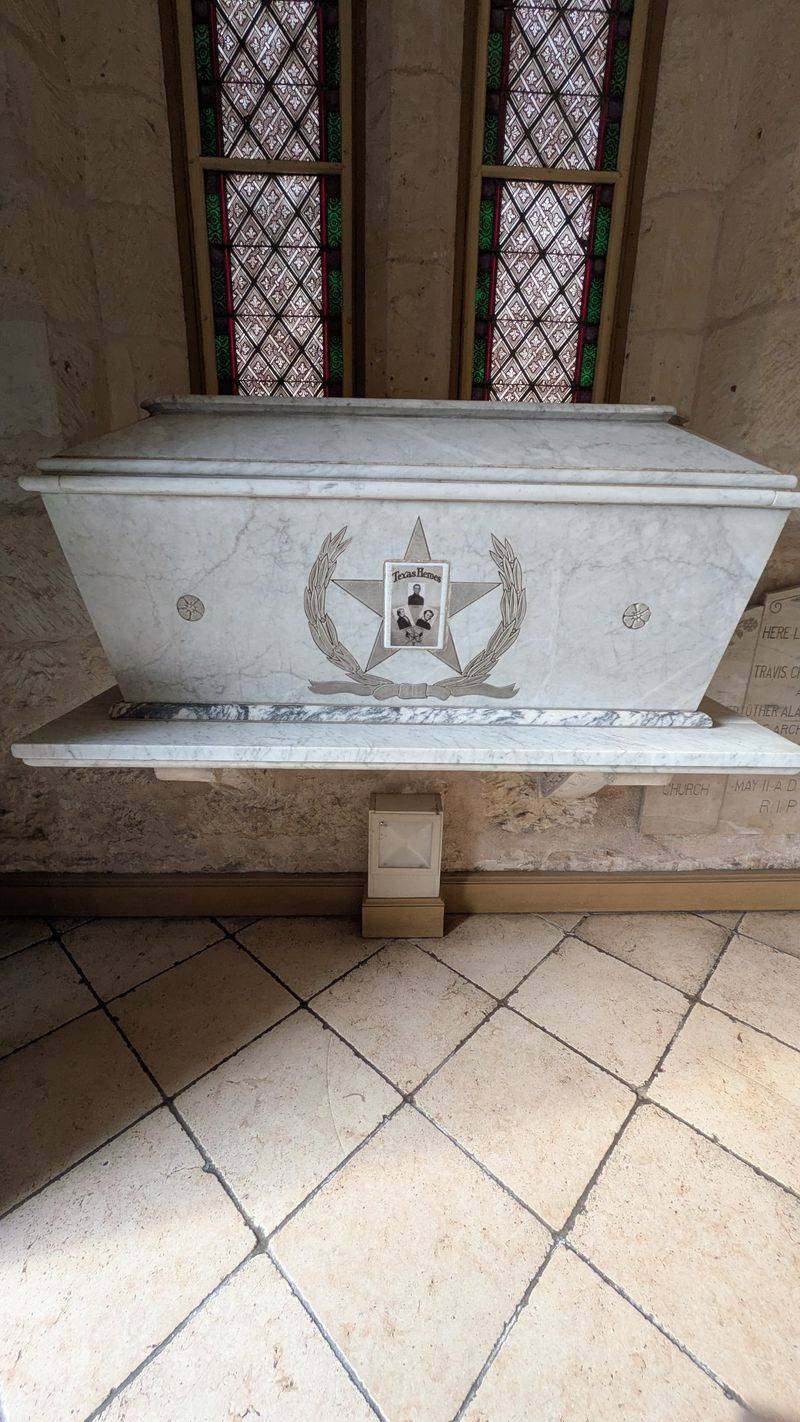
Few people expect to find a piece of Alamo history tucked just inside a church doorway.
Near the entrance stands a marble tomb that holds remains believed to be those of Alamo defenders. The names Travis, Bowie, and Crockett are linked to this memorial.
For fans of Texas history, this is often the emotional high point of the visit. Many describe feeling genuinely moved while standing in front of it.
The tomb is compact, so it does not take long to see. Still, it is worth pausing here and letting the weight of the story settle in.
Kids who have studied Texas history in school may find this especially meaningful. Seeing a real memorial connected to names from their textbooks tends to make the past feel closer.
Entry to the cathedral is free, so this stop costs nothing at all. That is a rare deal for a site carrying this much historical weight.
Quiet respect is the expected approach here, especially if a service is going on. Once paid, the tribute leads naturally into the sanctuary itself, where another famous name left a lasting mark.
When a Pope Came to Town
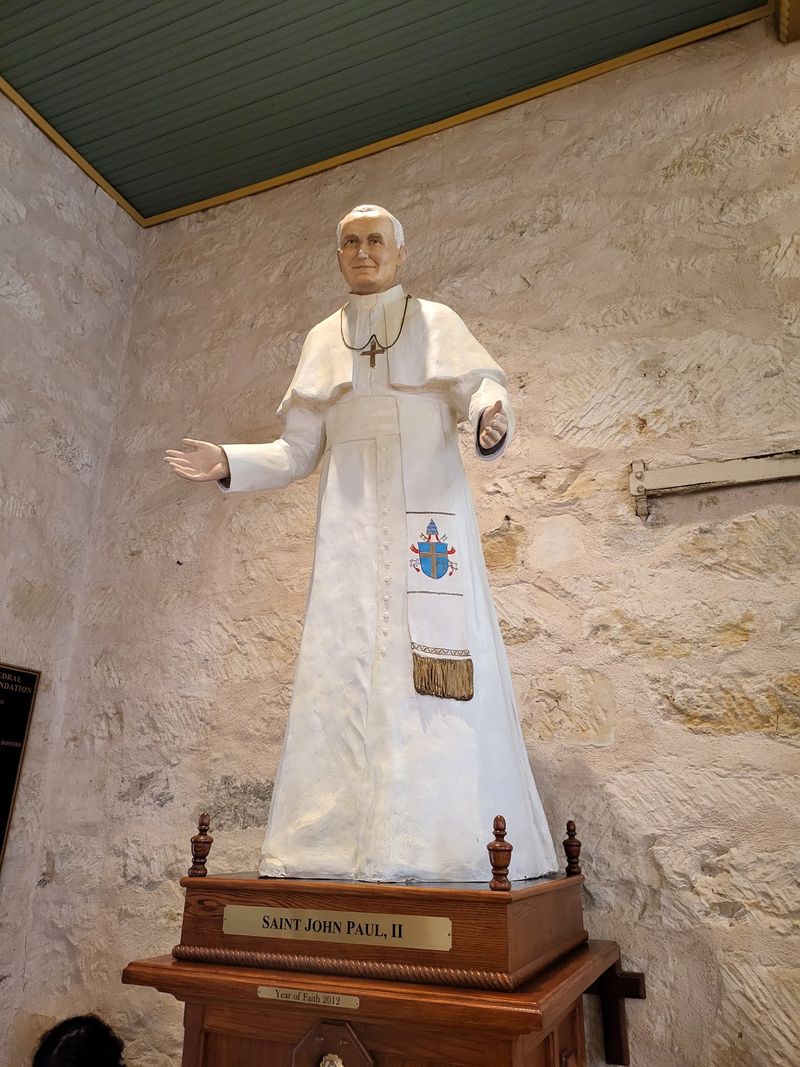
In 1987, San Antonio welcomed a guest who drew attention from around the globe.
Pope John Paul II visited the cathedral during his trip to the city. That visit remains one of the proudest moments in the building’s long story.
Today, a relic of Saint John Paul II is kept here. For devoted Catholics, this adds a deeply personal reason to stop by.
Those who pray to him often treat this as a small pilgrimage. Many find the moment far more stirring than they expected.
The papal connection also shows up in the gift shop. Artifacts from events like papal visits are on display there, giving the history a tangible side.
It is a neat touch for families with curious kids. They can see real items tied to an event that happened right where they are standing.
Even non-Catholics tend to appreciate the scale of the moment. A pope choosing this particular Texas church says a lot about its standing, and the sanctuary helps explain why.
Inside the Sanctuary
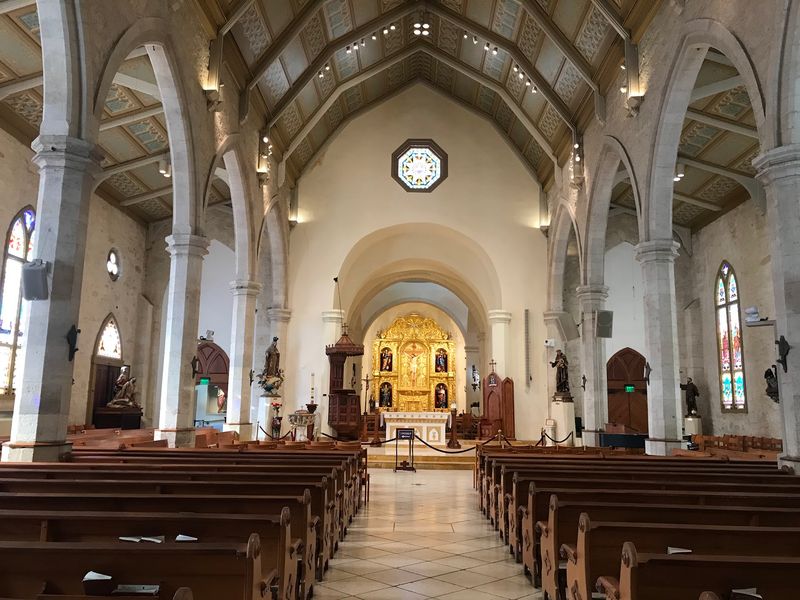
Behind those historic walls waits a sanctuary that earns its reputation.
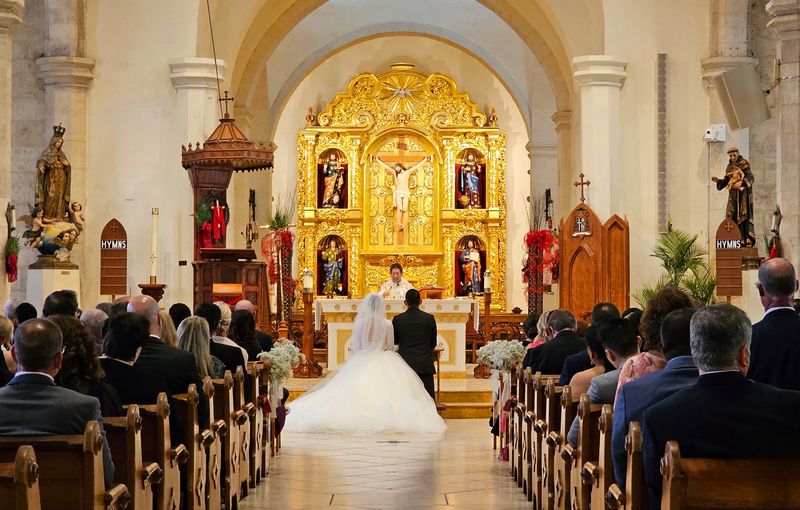
The statuary is a major highlight. Behind the altar stands a large area with a statue of Jesus surrounded by Saints Matthew, Mark, Luke, and John.
That space also holds the tabernacle, where the host is kept. Its scale tends to stop people in their tracks.
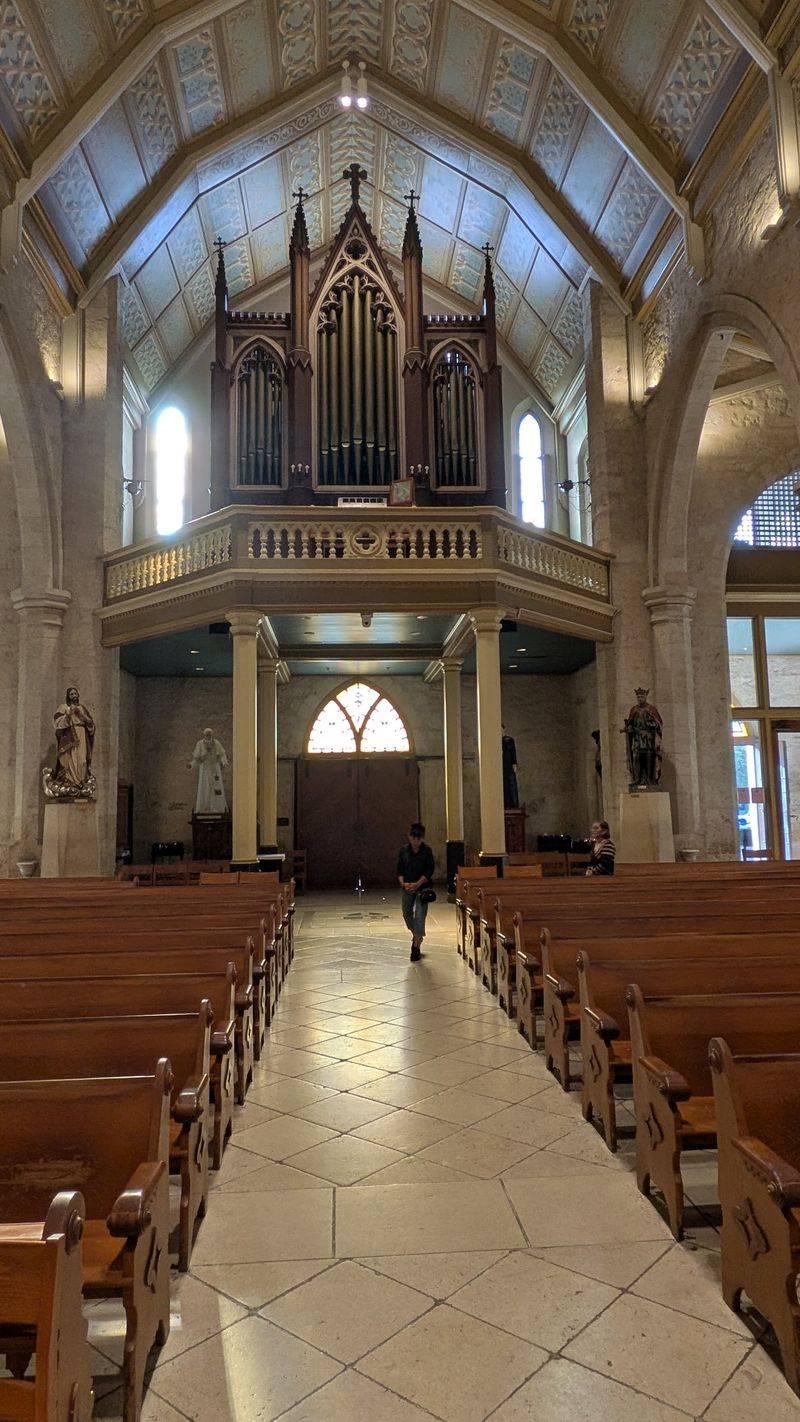
The interior is actually smaller than many expect from a cathedral. That size gives it a close, personal feel instead of a cavernous one.
Daytime is the time to explore indoors. Guided tours are offered, and many consider them well worth the time for the stories they add.
The building is often described as quiet, which makes it a welcome break from the busy downtown streets. People step in simply to rest and reflect for a while.
One heads-up: renovation work has closed the interior at times. Checking the official website before a long drive can save some disappointment.
Inside, the history speaks loudly. Outside, after sunset, the building starts telling its story in an entirely different way.
The Saga After Dark
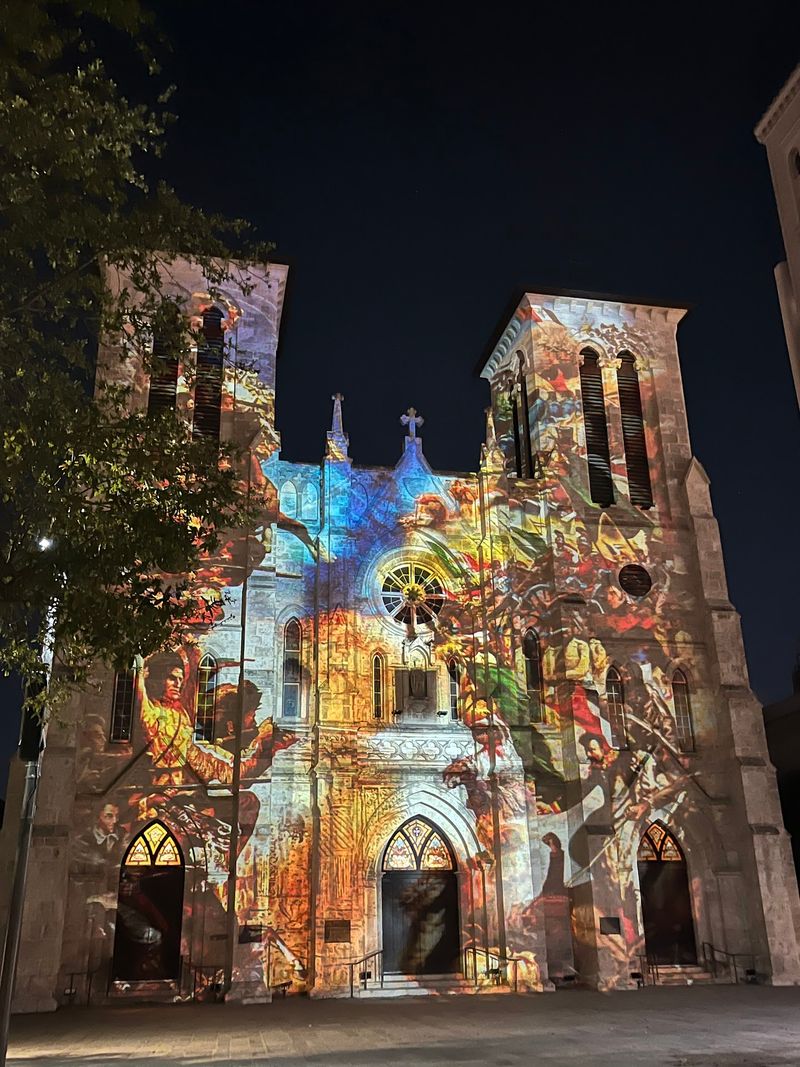
Once darkness settles over Main Plaza, the cathedral’s front becomes a canvas.
The show is called The Saga, a light display with music projected onto the face of the building. It typically runs in the evening, with showtime around 9 PM.
Each performance lasts roughly 20 to 25 minutes. That is short enough to hold the attention of younger kids and long enough to feel like a real event.
Here is the headline for value hunters. The Saga is free.
No tickets and no fees mean a whole family can watch without spending a dime. That alone makes it one of the best bargains in downtown San Antonio.
The projections cover the building so completely that some people in photos assume the cathedral is painted. Seeing it in person clears up that mystery quickly.
Many travelers plan their entire evening around this show. Others stumble onto it while wandering and end up glad they lingered.
Getting a good spot, though, takes a little planning, and that strategy is worth knowing before arriving.
Claiming a Seat on the Plaza
Free shows have one small catch. Everyone else knows they are free too.
Seating on the plaza is limited, and there are often not enough chairs for the whole crowd. Many people end up sitting on the ground or standing along the sides.
Arriving early is the simple fix. On a weekday, showing up about 15 minutes ahead may still leave chairs available.
Weekends and busy seasons can call for more lead time. Those who want a table or chair should plan to get there well before 9 PM.
A blanket is a smart thing to pack. Some families spread one out on the ground and settle in comfortably for the full show.
Vendors sometimes sell snacks and drinks nearby. That makes it easy to keep kids happy while waiting for the first projections to appear.
Standing is perfectly fine too, especially for those who want to slip away toward dinner or the river afterward. A short show leaves plenty of flexibility.
With seating sorted, the next question is how to fit the cathedral into the rest of a downtown evening.
Pairing It with the River Walk
Planning a perfect San Antonio night does not require much effort here.
The cathedral sits within easy walking distance of the River Walk. That closeness makes it simple to combine both in a single evening.
A popular plan is dinner along the river, then a stroll over to Main Plaza for the 9 PM show. The free performance works as a relaxed way to stretch the legs after a meal.
Hotels along the River Walk often put guests close enough to walk to both. No car shuffling is needed once settled downtown.
Daytime visitors can follow a similar pattern. A morning at the Alamo, an afternoon inside the cathedral, and an evening on the river can fill a full day without long drives.
Families tend to appreciate the compact layout. Small legs do not have to cover huge distances between highlights.
For Texans driving in from Austin, Houston, or Dallas-Fort Worth, this combo helps justify the trip. Several major sights packed into a few walkable blocks is hard to beat, and the cathedral sits right in the center of it all.
Mass, Music, and a Gift Shop
Beyond the tourism buzz, this remains a living parish with a busy schedule.
Multiple Masses are offered, including daily bilingual Mass that draws a steady crowd. On weekends, there are typically about four Masses.
The 8 AM weekend Mass is in Spanish, and the 10 AM Mass is in English. Even those who speak little Spanish often find the service easy to follow.
Guests are welcome to stand in the back and observe. Arriving at least 15 minutes early is wise, since the small interior can fill up quickly.
During services, a speaker outside lets passersby on the plaza hear the singing. It is a thoughtful touch for those who prefer to stay outdoors.
The gift shop deserves a stop too. Books, medals, and prayer cards line the shelves, and the staff is known for being especially helpful.
Hikers also have a reason to celebrate here. The cathedral serves as a finishing point for the Camino de San Antonio, a walking pilgrimage route.
Exact Mass times are listed on the cathedral’s website, which is the best place to check before planning around a service.
Hours, Parking, and Smart Timing
A little planning goes a long way, especially after a multi-hour drive.
The cathedral opens Monday through Friday from 9 AM to 5 PM. Saturday hours run from 9 AM to 6 PM, and Sunday from 8 AM to 6 PM.
Entry is free. Donations are welcome, but there is no admission charge to walk in and explore.
Parking is easier than many downtown spots. A parking garage sits directly behind the cathedral.
That garage may be free on Sundays from 7 AM to 7 PM. Rates and policies can change, so confirming ahead is a good idea.
Timing matters for the full experience. Interior tours happen during the day, while The Saga runs at night, so seeing both means planning for two visits or a long day.
Crowds tend to build around Masses. Those hoping for a calm look inside may prefer weekday hours outside service times.
The official website at sfcathedral.org lists schedules and updates. A quick check can confirm everything before hitting the highway.
Why the Drive Pays Off
Few places in Texas manage to be sacred, historic, and entertaining all at once.
This cathedral checks every box. It carries Alamo history, a papal visit, Spanish colonial roots, and a nightly show that costs nothing.
Families get an outing that works for grandparents and grade schoolers alike. History lovers get a direct line to the state’s most famous battle.
Budget-minded travelers get free admission by day and a free show by night. That value is hard to find anywhere, let alone in the heart of a major city.
It also carries a strong sense of Texas pride. Many people travel across the country to see old cathedrals, yet one of the oldest active ones in the nation sits right here in San Antonio.
The best approach is simple. Come during the day to explore, then return after dinner to watch the walls light up.
Bring a blanket, arrive early, and leave room in the schedule for a River Walk stroll. Few evenings in Texas offer this much story for zero dollars, and that makes it a find worth passing along.


