
Affiliate disclosure: As an Amazon Associate I earn from qualifying purchases. Learn more
Some Tucson grocery lists never make it to a supermarket. They end up at a sprawling outdoor market in the city’s north central area, where farmers, bakers and artisans set up rows of booths week after week.
Shoppers arrive with canvas bags and coolers, and many leave with a weekend breakfast, a crate of produce and a new favorite vendor. The market has become a ritual for families, longtime residents and newcomers who want to buy straight from the people who grow and make the goods.
There is live music, shaded walkways, free parking and a reputation as one of the best markets in Arizona. Before you plan a trip, though, there is one detail about the schedule that surprises plenty of people.
Keep reading for the full story, including when to go, what to bring and the house rules that catch first-timers off guard.
A Market Beside the Rillito
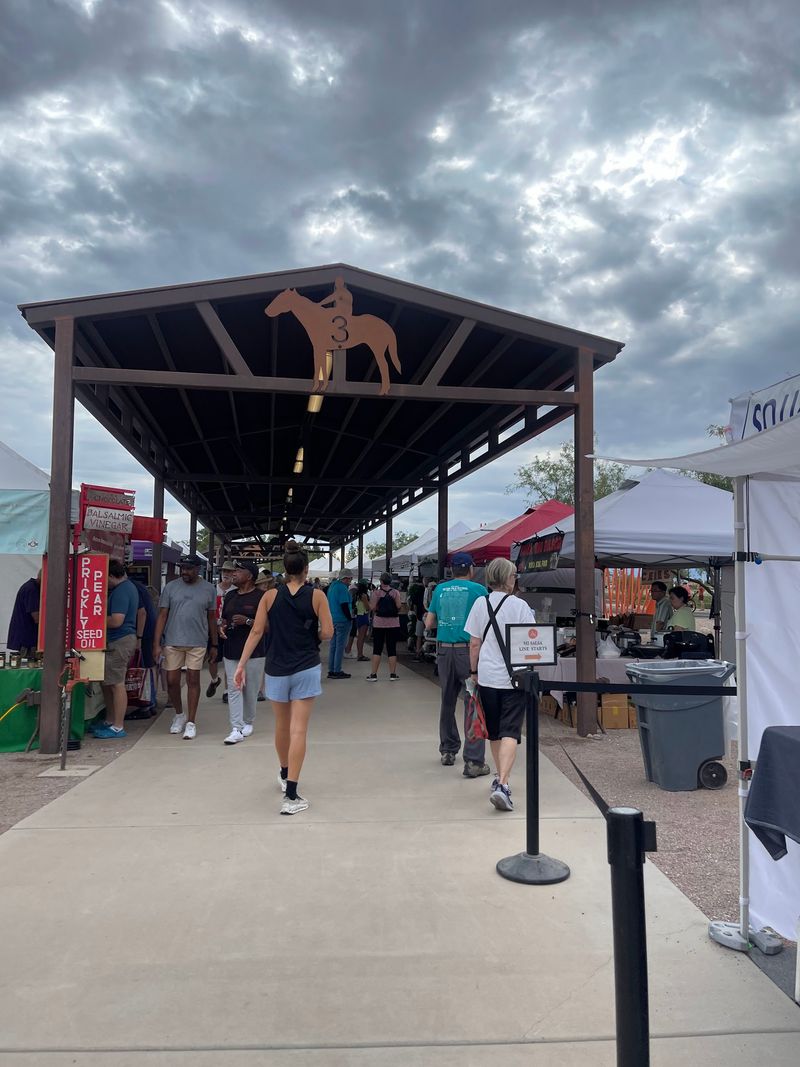
Heirloom Farmers Markets | Rillito Park sits at 4502 N 1st Ave, Tucson, AZ 85718, in the United States. The grounds are part of Rillito Park, close to the river path that many Tucsonans know well.
Heirloom runs farmers markets at several locations around Tucson. The Rillito Park market is the largest of the group, and that size is a big reason it draws such loyal crowds.
The setting is simple and practical. Rows of vendor booths line covered walkways, with a central gathering area for tables and performers.
Locals treat it less like an errand and more like a weekly appointment. Families come for groceries, couples come for breakfast, and some shoppers come for both.
The organization is a notable strength. Vendors are usually in the same spot every week, so regulars can head straight to their favorite booths without a scavenger hunt.
That reliability matters in a city where weekend plans compete with heat, traffic and errands. A market that stays predictable becomes easy to build into a routine.
So what keeps people coming back every single week? The answer starts with the people behind the tables.
The Sunday Twist in the Schedule
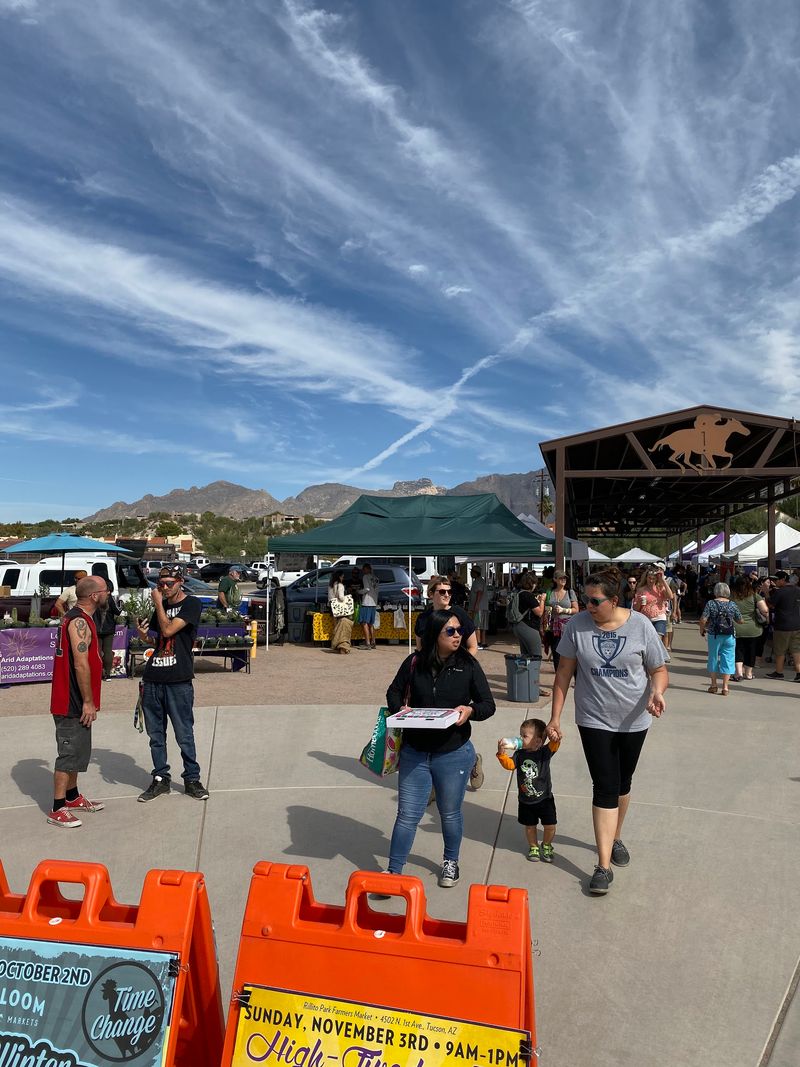
Here is the surprise promised earlier. The current listed hours show the Rillito Park market open on Sunday from 9 AM to 1 PM, and closed the rest of the week.
That means a Saturday shopping trip here could end with an empty parking lot. Checking the official Heirloom website before heading out is the smartest first step.
The four-hour window is short, so timing counts. Many shoppers aim to arrive near opening, when booths are fully stocked and the morning is cooler.
Popular vendors can sell out of certain items well before closing. Early birds tend to get the widest selection.
The Sunday slot also shapes the whole mood of the market. It fits neatly into a slow weekend morning, between coffee at home and an afternoon at the park.
For many Tucson households, Sunday at Rillito has replaced the weekly supermarket run entirely. Produce, bread and pantry goods all come home in one trip.
Families who have shopped here for years often describe it as their favorite way to start the week. Some grown regulars first came as kids with a parent, and now bring their own crew.
Mark the calendar correctly, and the rest of the visit tends to fall into place.
Growers Who Actually Grow It
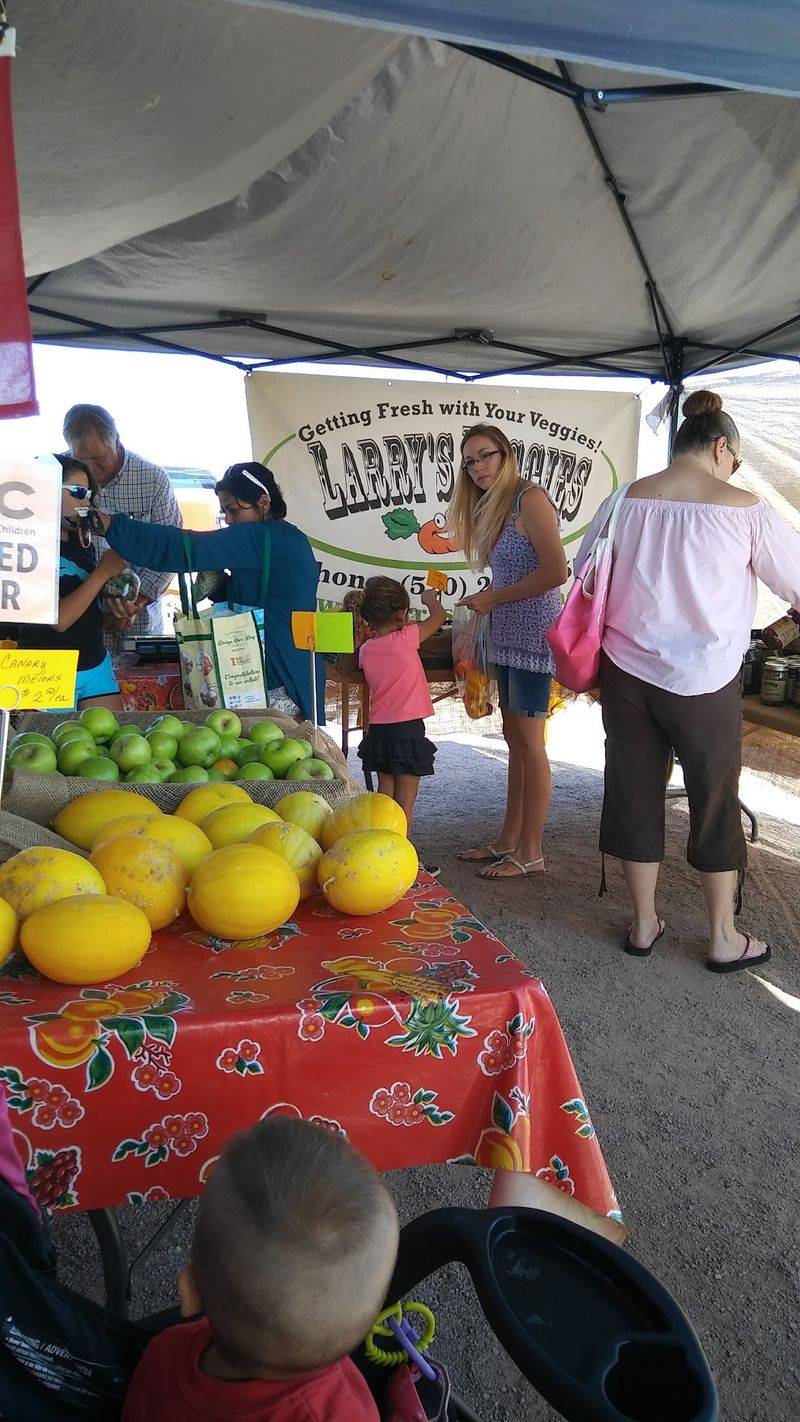
Plenty of markets borrow the word farmers. At Rillito Park, the emphasis falls on producers selling what they grow or make themselves.
Shoppers often point out that the people behind the booths appear to be the true producers of the goods. That direct connection is the heart of the market’s appeal.
Buying from the grower means questions get real answers. How a crop was raised, when it was picked and what to do with it at home are all fair game.
The farmers and artisans have a reputation for being friendly and approachable. Conversations at the booths are a big part of the weekly routine.
Local shopping also keeps money circulating in southern Arizona. Each purchase supports small farms, family bakeries and home-based businesses.
That sense of community is hard to replicate at a big chain store. Regulars get to know vendors by name, and vendors often remember their regulars too.
It also explains why so many Tucsonans call this their local market with real pride. It feels like something the city built for itself.
Of course, all that goodwill would mean little without something worth buying. Fortunately, the produce tables deliver.
Produce Tables Worth the Early Alarm
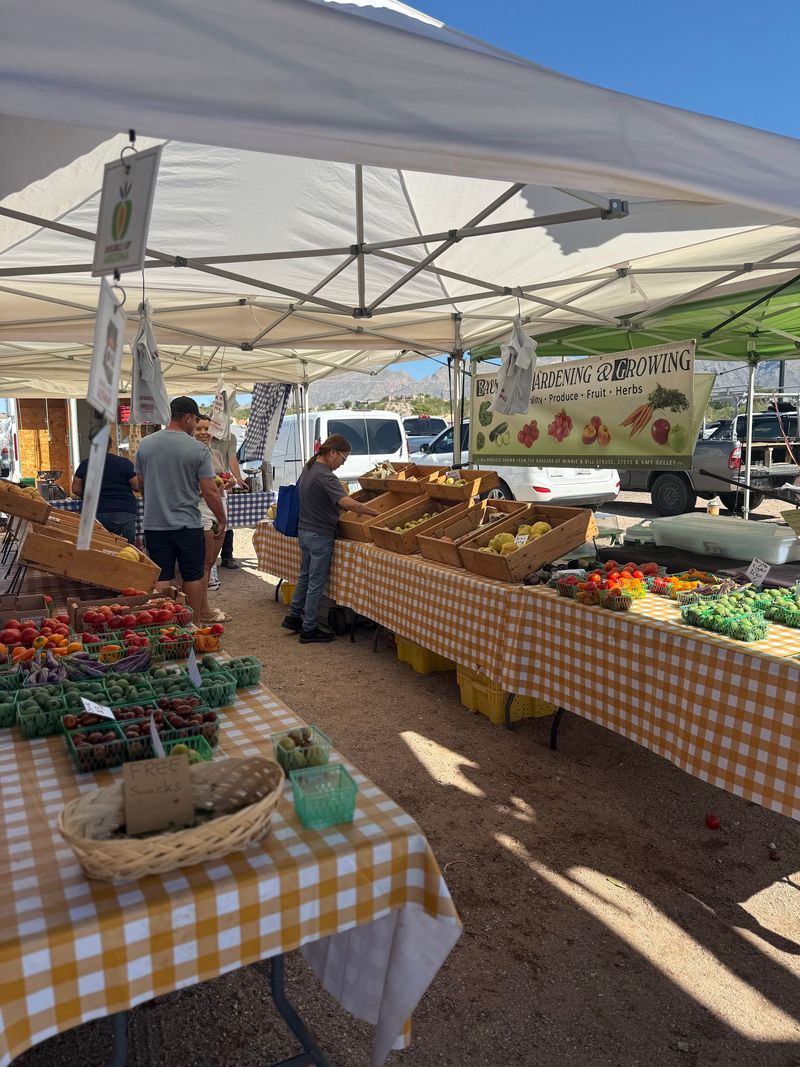
Fresh produce is the topic shoppers bring up most often, and for good reason. Vegetables, fruit, herbs and mushrooms fill a large share of the booths.
Organic options show up across many stands. A common observation is that most of the organic produce is fairly priced, which is welcome news for budget-minded households.
Garlic and tomatoes earn steady praise from regular buyers. Greens and seasonal vegetables rotate with what local farms have ready.
Availability does change by season and by vendor. At least one shopper left wishing for more fruit and vegetables on a particular visit, so variety can swing week to week.
That swing is part of buying local. A desert growing calendar does not match the endless shelves of a supermarket.
The best strategy is to walk the full loop before committing. A quick lap shows who has what, and prevents the classic regret of spotting a better batch three booths later.
Bring sturdy bags, and on warm mornings, a cooler in the car. Produce holds up much better on the ride home that way.
Pecans and tamales may top the wish list in the headline, yet vegetables are what fill most canvas bags on the way out.
Roasted Chiles and the Arizona Factor
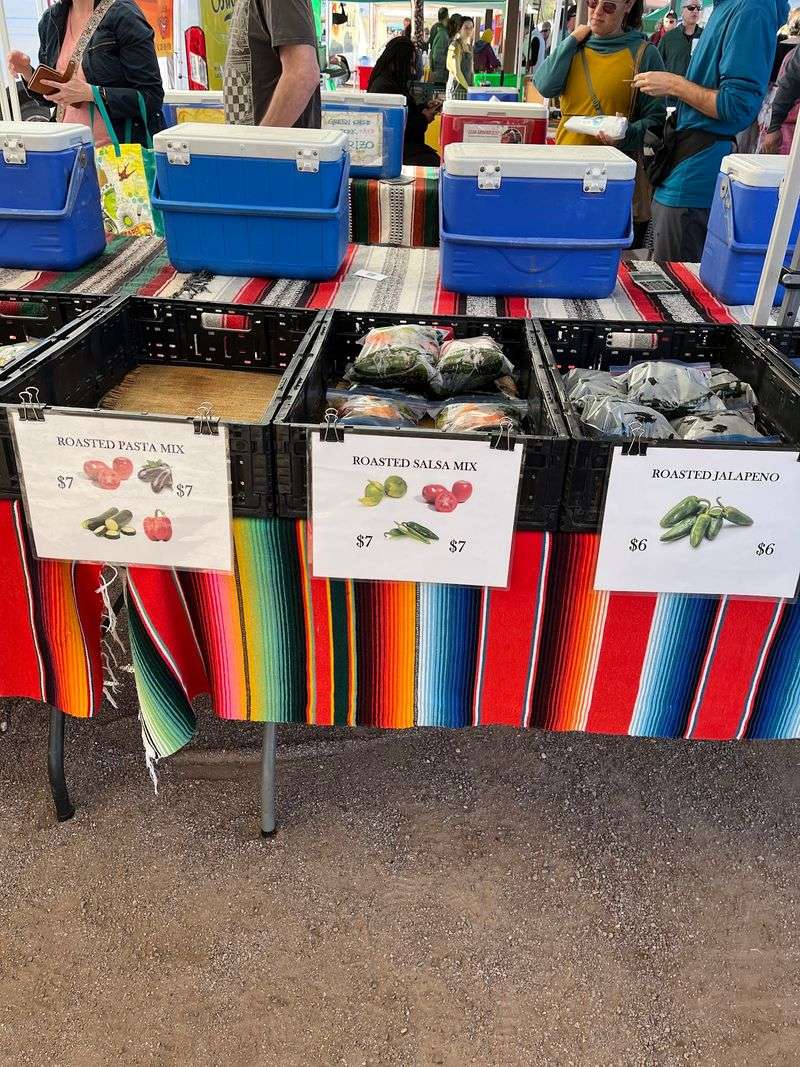
Few things say southern Arizona market day quite like fresh roasted green chiles. They are one of the standout items at Rillito Park.
Shoppers have praised the roasted chiles for years. They are a favorite buy for home cooks planning soups, stews and weeknight dishes.
The chiles connect the market to the region it serves. This is not a generic market that could exist anywhere; it reflects Tucson tastes and traditions.
Tucson has long celebrated its food heritage, and the chiles fit right into that story. They give the market a distinctly local identity.
Roasting is also a bit of a show. Watching the process is part of the fun for first-timers and kids.
Many buyers stock up and freeze portions at home. That way, a single Sunday trip can carry a kitchen through several weeks.
Supply depends on the season, so it is wise not to count on them every week. When they are available, they tend to go quickly.
Chiles are a fine reason to show up, but they are only one corner of a market with a lot more to explore.
Breakfast Without a Kitchen
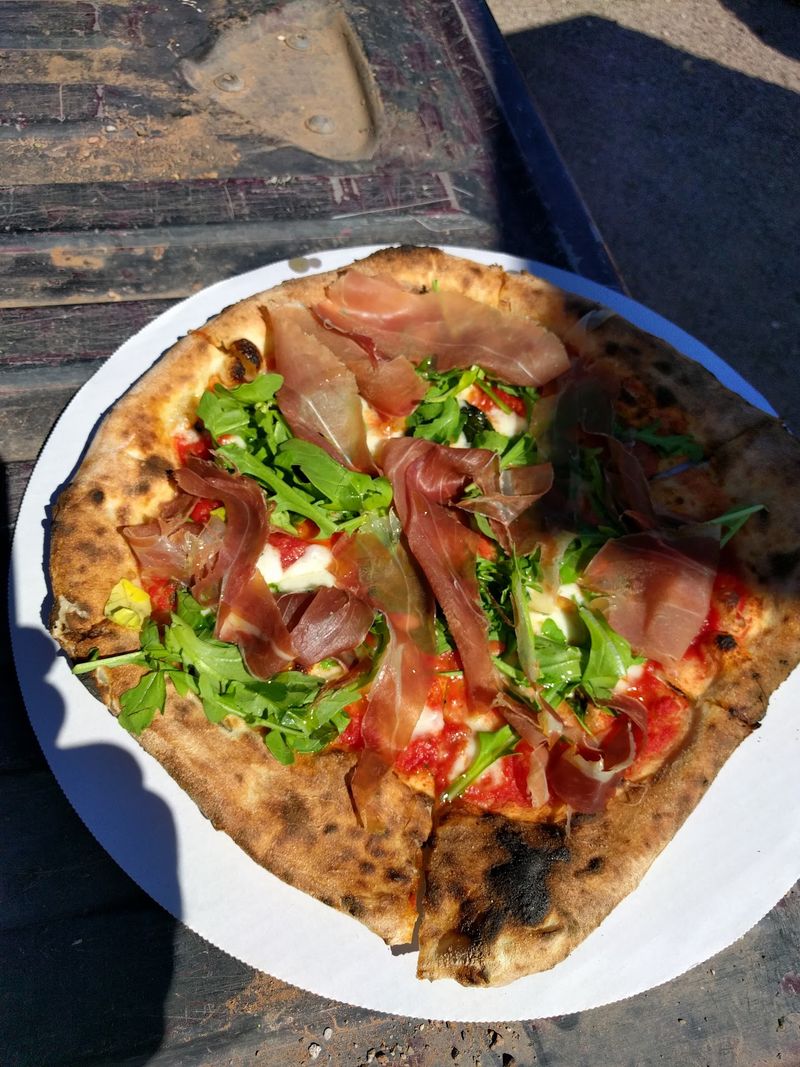
Come hungry. That advice appears again and again from people who know this market well.
Prepared food is a major draw, and many locals call it their favorite Sunday breakfast spot in Tucson. Some never cook on Sunday mornings at all.
The range of cuisines is wide. Stands represent Ukrainian, Mexican, Salvadoran and Indian cooking, along with bakers and other specialty vendors.
Rotating food trucks add even more choice. The lineup can shift, so there is often something new to try.
Tamales may be the craving that brings some shoppers in, but the bigger story is variety. A family with very different appetites can usually find a match for everyone.
Gluten-free shoppers have options too. Several vendors offer gluten-free versions of popular treats, which earns appreciation from those with dietary needs.
Tables in the center of the market make it easy to sit and eat. Many people combine breakfast with their shopping run.
One popular approach is to eat first, then shop. A full stomach tends to make for more sensible produce decisions, and fewer impulse pastries.
Bakers, Pantry Goods and Small-Batch Finds
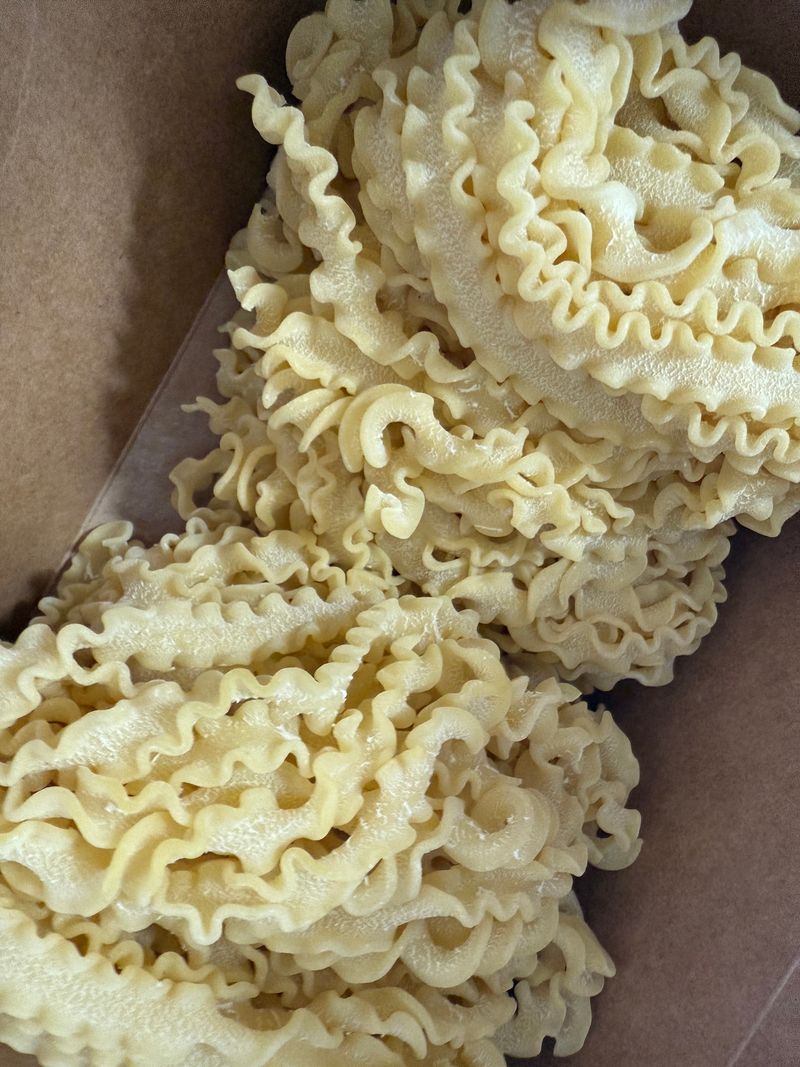
Groceries here go well beyond vegetables. Bakers are a big part of the lineup, with bread and pastries among the most popular items.
Pantry staples round out the haul. Shoppers find honey, olive oil, fresh pasta, coffee, granola and meats from local vendors.
Some booths focus on specialty items made in small batches. Juices, cookies and cakes also appear among the stalls.
Certain bakery items are known to sell out fast. Regulars recommend arriving early to grab favorites before they disappear.
Wellness products have their own following. Tinctures, natural ointments, goat milk lotion and even organic dog shampoo show up on vendor tables.
This mix is why so many households treat the market as a real grocery stop. Bread, pantry items and produce can all come home from one place.
Prices vary from booth to booth. Some items feel like a bargain, while others run higher than store prices, so comparing a few vendors is smart.
A little browsing time pays off. The best finds often sit at booths that are easy to walk past on the first lap.
Pottery, Wood Slabs and Handmade Goods
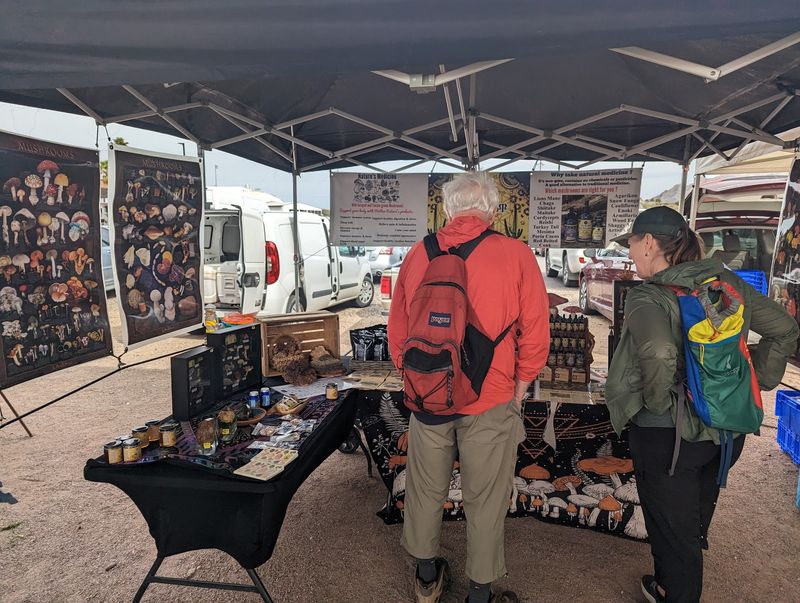
Not every bag leaves full of groceries. A strong group of artisans brings handmade goods that make the market feel like a small craft fair.
Pottery is a highlight, and many shoppers single it out as beautiful. Clothing booths add another reason to linger.
Woodworkers sell slabs and bowls, a nice surprise for people who came for carrots. Arts and crafts in general earn steady compliments.
These booths are a good stop for gift shopping. A handmade bowl or piece of pottery from a Tucson maker beats a generic store purchase.
Some shoppers admit they love the handmade products as much as the food. For them, the craft booths are the main event.
Artisan goods also help the market feel abundant. With so many vendors, the browsing can easily fill the full four-hour window.
Bringing out-of-town guests is a common move. The craft tables give visitors a taste of local creativity they will not find in a mall.
Budget a little extra just in case. That pottery booth has a way of changing shopping plans.
Desert Treats With a Local Accent
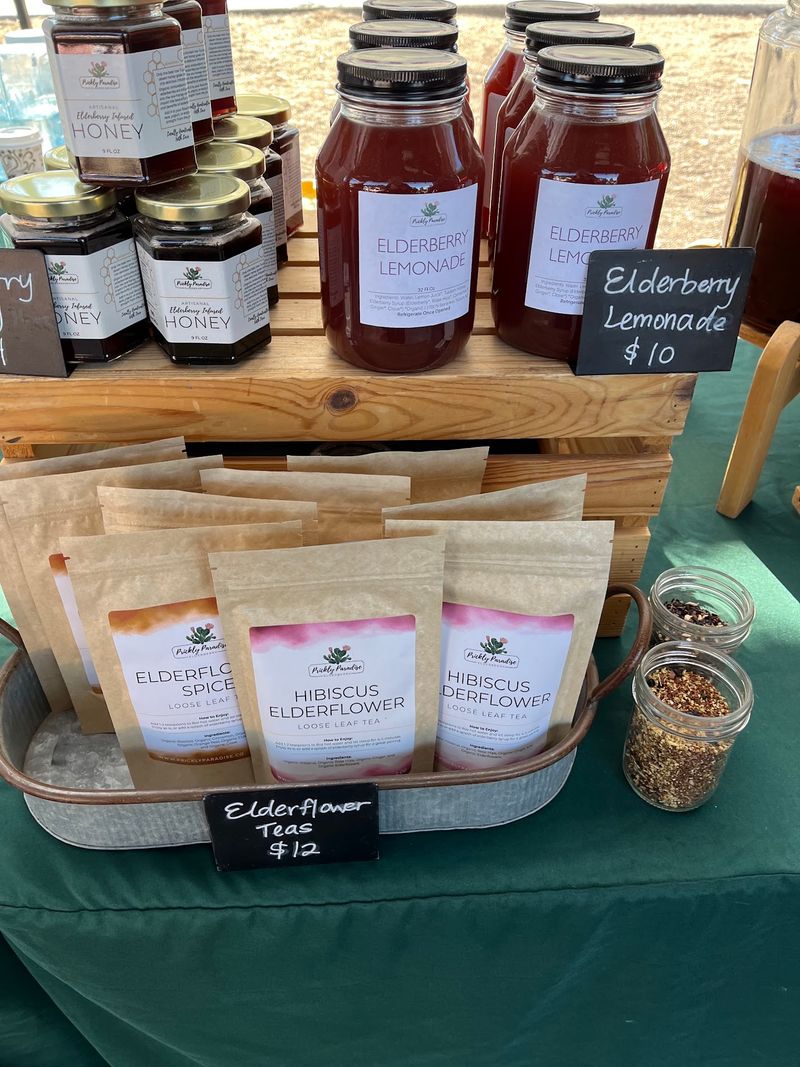
Some vendors lean into flavors that come straight from the Sonoran Desert. These booths give the market a strong sense of place.
Prickly pear shows up in frozen treats, and elderberry appears in specialty items too. They are a fun way to sample desert specialties.
Out-of-state guests often find these booths especially interesting. Tucsonans enjoy showing off ingredients that are hard to find elsewhere.
Local mesquite honey is part of that regional character as well. It fits the market’s theme of buying what this region produces.
The desert offerings help explain why locals call the market a Tucson favorite rather than just another stop. It reflects the city’s personality.
Kids tend to gravitate toward the frozen options on warmer mornings. That alone can make the visit a hit with younger family members.
Availability changes, of course. Specialty items rotate with vendor schedules and seasons.
Treat these stands as a bonus round. Even a quick stop adds a distinctly Arizona chapter to the morning.
Music in the Middle
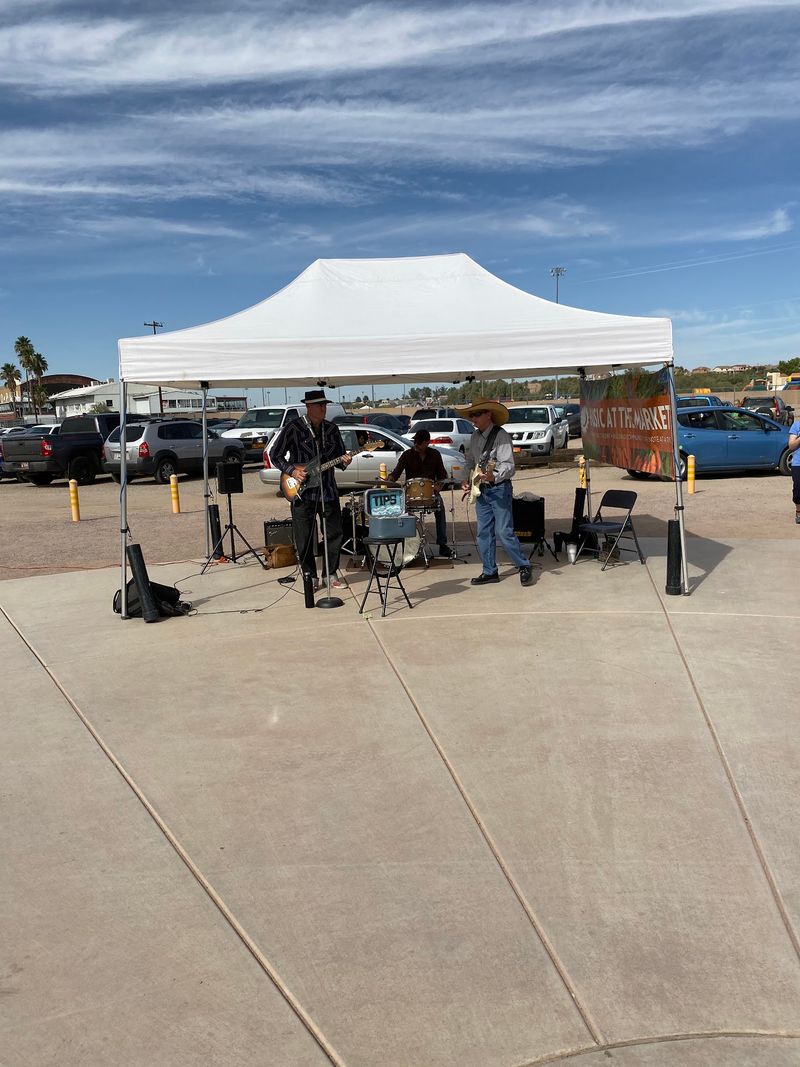
Shopping comes with a soundtrack here. Local musicians perform in the center of the market on many weekends.
The music is a frequent highlight. Some shoppers have noted live performances several weekends in a row.
The performance area sits near the tables where people eat. That setup turns breakfast into a small concert.
Families often settle in for a while instead of rushing through. It slows the pace in a good way.
Live music also adds to the community feel. It gives neighbors a reason to pause, chat and stay longer.
For many, this is what separates the market from a grocery run. A supermarket has carts and checkout lanes, while Rillito has local performers.
Musicians change from week to week, so the experience shifts too. Repeat visits rarely feel identical.
Leaving a little time to sit is a smart plan. The center of the market is where the morning tends to come together.
Shade, Parking and Easy Logistics
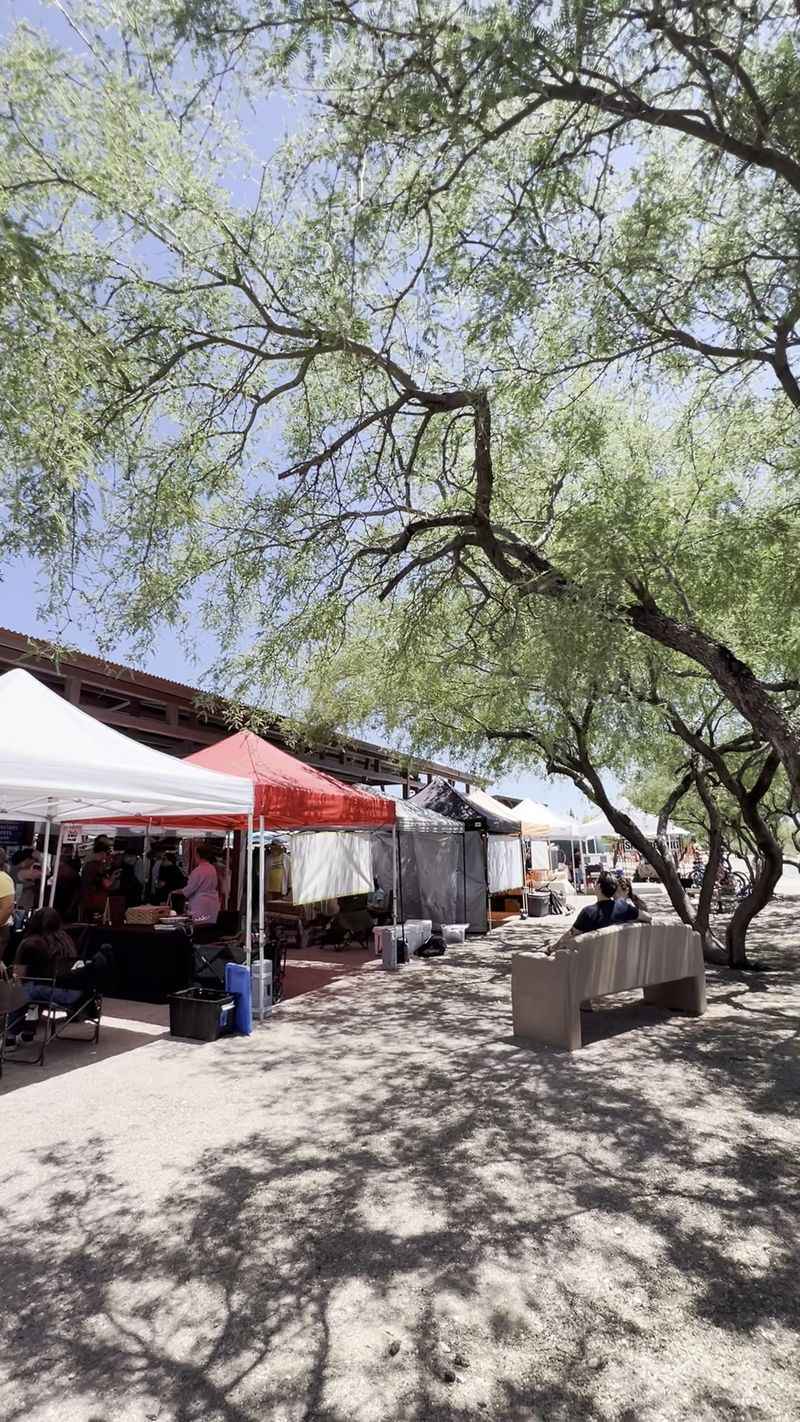
Arizona sun is no small factor for an outdoor market. The good news is that most of the booths and walkways here are shaded.
That shade makes a real difference, especially as the morning warms up. It is one reason locals keep coming even in hotter months.
Free parking removes another headache. Free water is available too, which is a thoughtful touch in the desert.
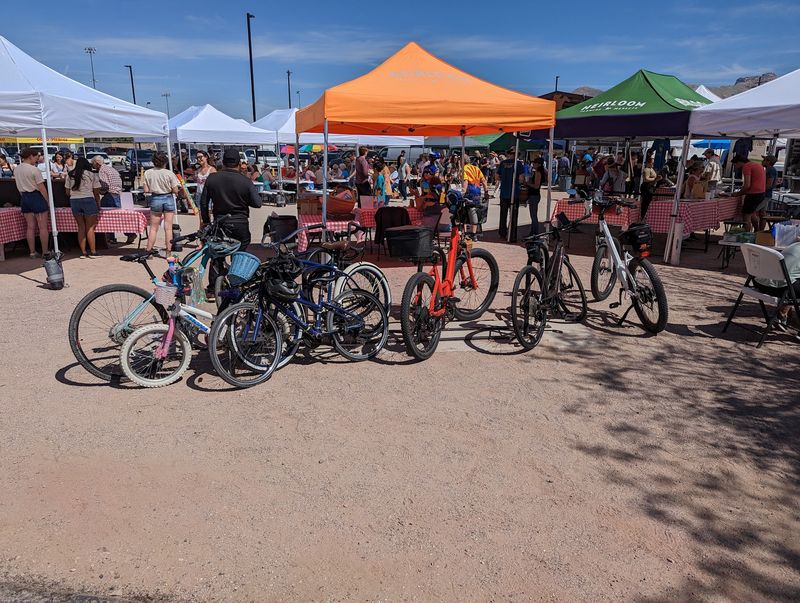
Cyclists have an easy route as well. The market has bike access via The Loop, Tucson’s popular shared-use path.
Arriving by bike means skipping the parking lot entirely. It also pairs nicely with a morning ride.
A cooler in the car is a recommended move on hot days. It protects produce and other perishables on the drive home.
Comfortable shoes and reusable bags round out the checklist. Hats and sunscreen still help, even with the shade.
Small preparations like these turn a good morning into an easy one. That ease is a big part of why locals return weekly.
The Rules on Four-Legged Shoppers
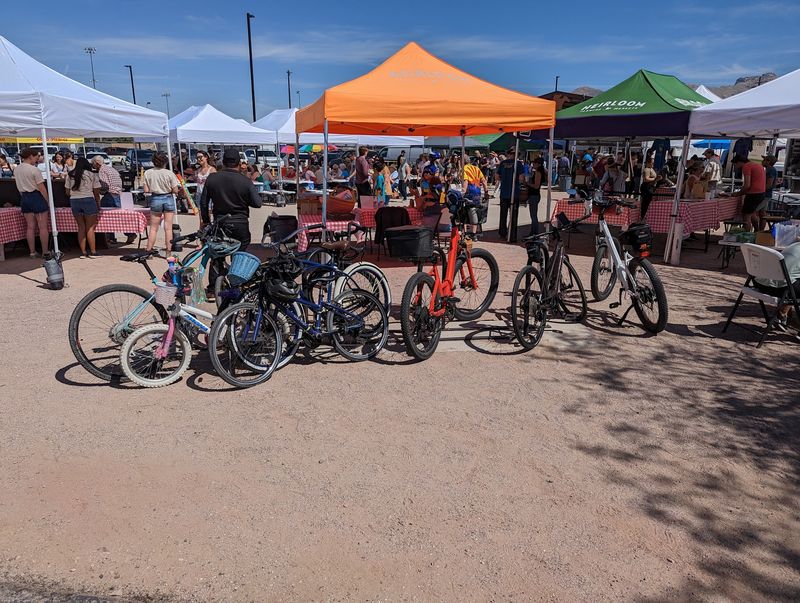
Dogs come up a lot in conversations about this market. The policy has caused some confusion over the years.
Older accounts mention bringing pets along. More recent notes are clear, though: dogs are not allowed at the market.
At least one shopper with a small dog was asked to take the pet out. Many other markets allow leashed dogs, so the rule surprises some newcomers.
The safest plan is to leave dogs at home. Checking the Heirloom website for the current policy before visiting is always wise.
The no-dog rule does keep crowded walkways a bit simpler. Shoppers carrying bags and food can move more freely.
Leaving a pet at home on a hot morning is often kinder anyway. Arizona pavement and parking lots warm up fast.
The topic is common enough that it is worth sharing with friends who plan to come along. A quick heads-up saves an awkward turnaround.
Pups may miss out, but they can still get a souvenir from the pet-care booths.
Who Fits Right In
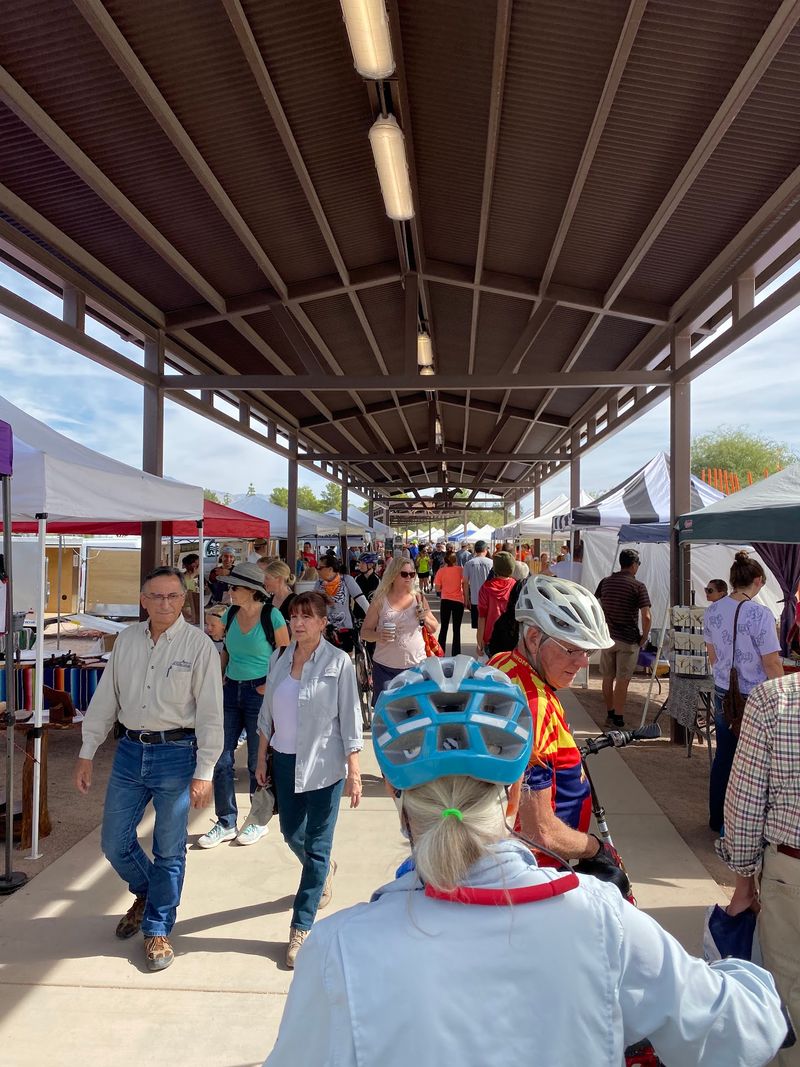
Just about everyone, as it turns out. The market draws families, couples, solo shoppers and groups of friends.
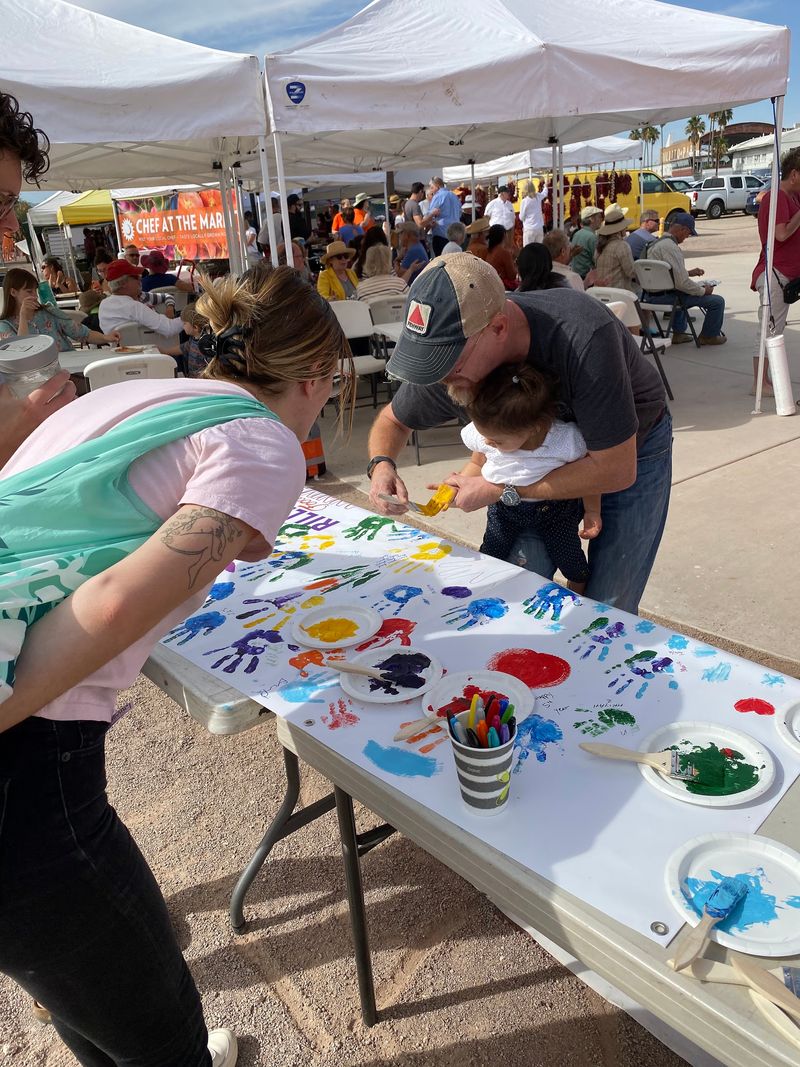
It is known as a family-friendly outing. Kids have found hands-on crafts on some visits, along with plenty of treats.
Home cooks will appreciate the produce and pantry staples. Food lovers will appreciate the breakfast options and rotating trucks.
Gift hunters have pottery, wood goods and clothing to browse. Health-focused shoppers have organic options and natural products.
Locals on a budget can do well by comparing booths. Fairly priced organic produce helps balance the occasional splurge.
It also works for hosting guests. Bringing out-of-town visitors here gives them a real slice of Tucson life.
Newcomers to the city often use the market to feel more at home. Regular visits build connections quickly.
A tip from regulars: stop by the booth sign-in. Some shoppers have received food coupons there, though offers can change.
Worth Rearranging the Weekend
Plenty of Tucsonans call this the best farmers market in the city. Some go further and call it the best in Arizona.
The numbers back up the affection. The market holds a 4.6-star standing from more than 570 people on Google Maps.
Its strengths are clear. A large vendor lineup, fresh and organic produce, varied prepared food, handmade goods and live music all share one shaded space.
There are trade-offs to know. Hours are limited to Sunday mornings, prices vary, produce supply shifts with the season and dogs are not allowed.
None of that seems to slow the regulars. Many have built their whole weekend around it for years.
The appeal goes beyond shopping. It is a weekly gathering where Tucson shows off its farmers, cooks and makers.
Arrive early, bring bags and a cooler, and plan for breakfast on site. Check the official website first to confirm the schedule.
The supermarket will still be there on Monday. Sunday at Rillito Park offers something a checkout lane never will.


