
Affiliate disclosure: As an Amazon Associate I earn from qualifying purchases. Learn more
Somewhere on a college campus in New Brunswick, an ancient Egyptian mummy shares a room with a mastodon skeleton, a saber-toothed cat skull, and rocks that fell from space. Nobody charges a dime to see any of it.
The building dates to 1872, and the collection inside has been growing for a very long time. It is small enough to explore in an hour, yet it packs in dinosaur fossils, glowing minerals, Native American tools, and a scavenger hunt that rewards kids with a real shark tooth.
Keep reading to learn where this quirky treasure chest sits, what to look for on each floor, and the practical tips that make a visit go smoothly.
A Landmark Hall on Somerset Street
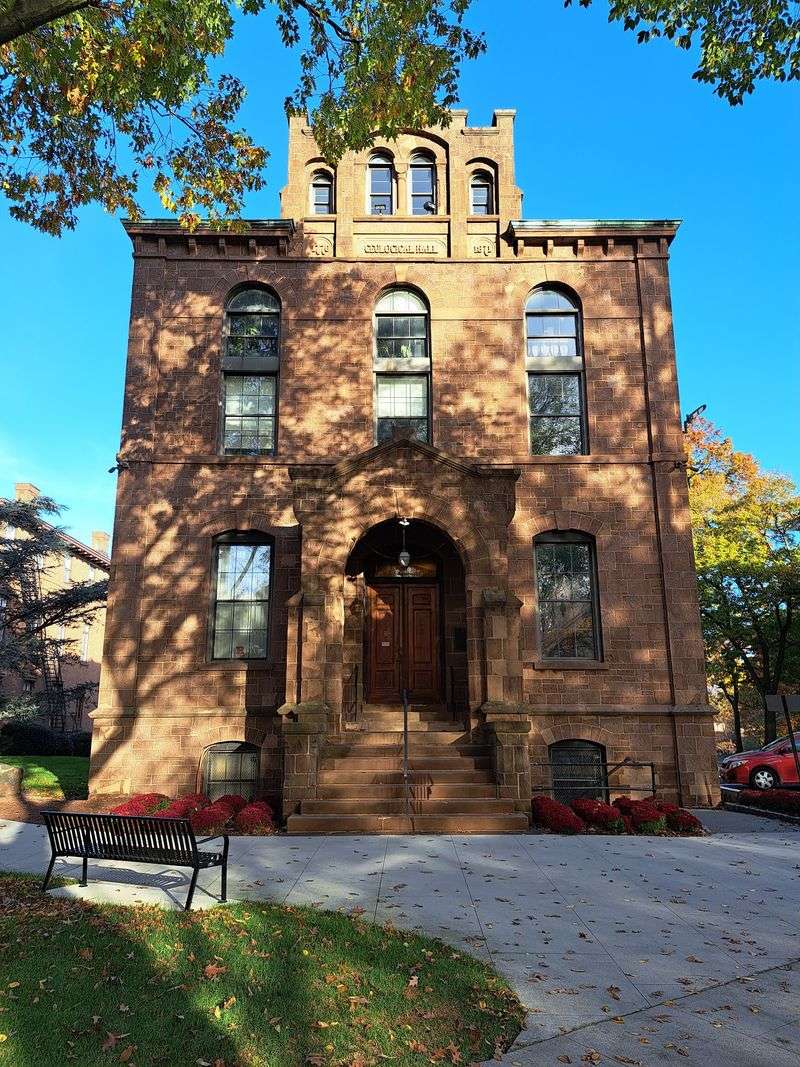
The museum in question is the Rutgers Geology Museum, found at 85 Somerset St, New Brunswick, NJ 08901. It sits right on the campus of Rutgers University in central New Jersey.
The building itself is part of the attraction. It was built in 1872 and is recognized as a landmark, with architecture that earns compliments on its own.
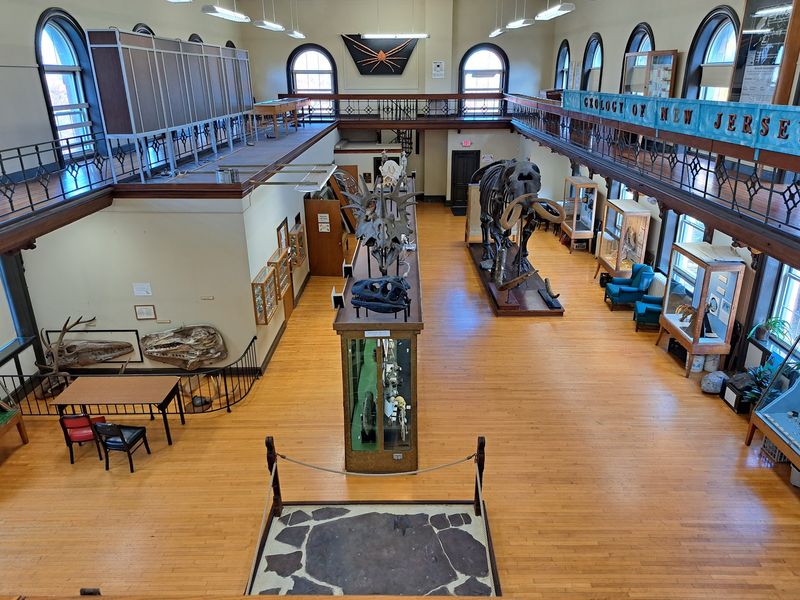
Inside, the layout is simple. There is one large, open room on the main level and a second-floor mezzanine wrapping above it.
That modest footprint holds a surprising mix of objects. Minerals, fossils, geologic specimens, meteorites, and a mummy all live under the same roof.
Admission is free, and guests simply sign in at the door. Donations are welcomed and recommended, which helps keep the cases open for the next curious crowd.
The museum is affiliated with the university, so students often wander through between classes. Families, school groups, and rock fans round out the usual mix.
Think of it as a campus attic that got organized, labeled, and opened to the public. The next stop is figuring out why this particular attic has so much history in it.
Old Walls, Old Charm
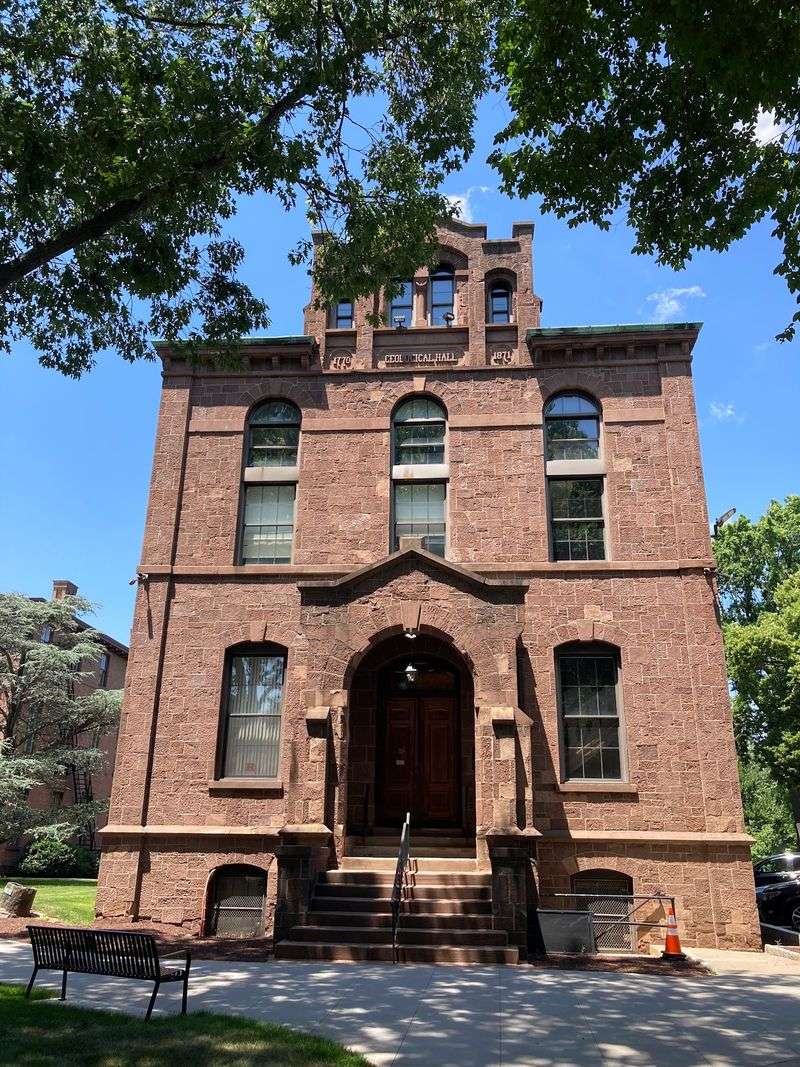
Some museums chase the newest touchscreen. This one leans proudly into its age.
The 1872 building gives the place a classic natural history feel. Wooden cases, a balcony level, and a single grand room make it feel like a museum from another century, because it partly is.
That timeless quality cuts both ways. Longtime fans note that the displays have not changed much over the decades, and some feel the collection could use a funding boost.
Still, the charm wins out for most people. The building is often praised as attractive, and the displays are called interesting and well arranged.
There is a practical side to the old architecture, too. Getting in involves a good number of stairs, so plan accordingly with strollers or anyone who has trouble climbing.
Summer is another consideration. Air conditioning has been missed on hot days, so a cooler month may make for a comfier visit.
None of this has stopped generations of New Jersey families from returning. Old bones, it turns out, look right at home in an old hall.
The Mummy Downstairs
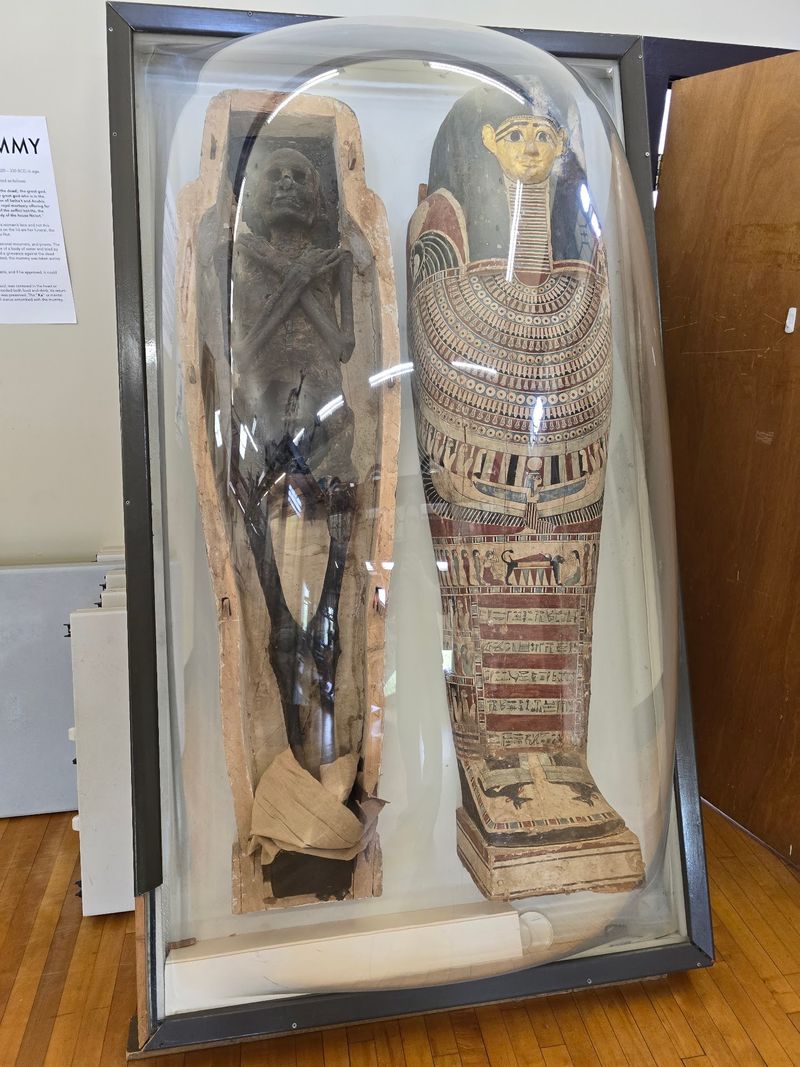
Nobody expects a geology museum to have a mummy. That surprise is exactly what makes it a favorite.
The Egyptian mummy is one of the most talked-about pieces in the building. It regularly lands on the short list of highlights, right alongside the mastodon.
Nearby, Ancient Egyptian artifacts add context to the display. Together they create a small but memorable corner devoted to a civilization thousands of miles from New Jersey.
Why would a rock museum keep such a thing? The museum covers natural history and human artifacts too, not just stones, so the mummy fits into a broader story about the past.
Kids tend to gravitate here first. Adults often linger longer than planned, reading the cards and studying the details.
Some purists point out that not everything in the room is strictly geology. Most people see that as a bonus, since few places let you go from ancient Egypt to ancient seas in a dozen steps.
After the mummy, the next big headliner is much hairier, at least in its original form.
Mastodons, Dinosaurs, and a Saber-Tooth Skull
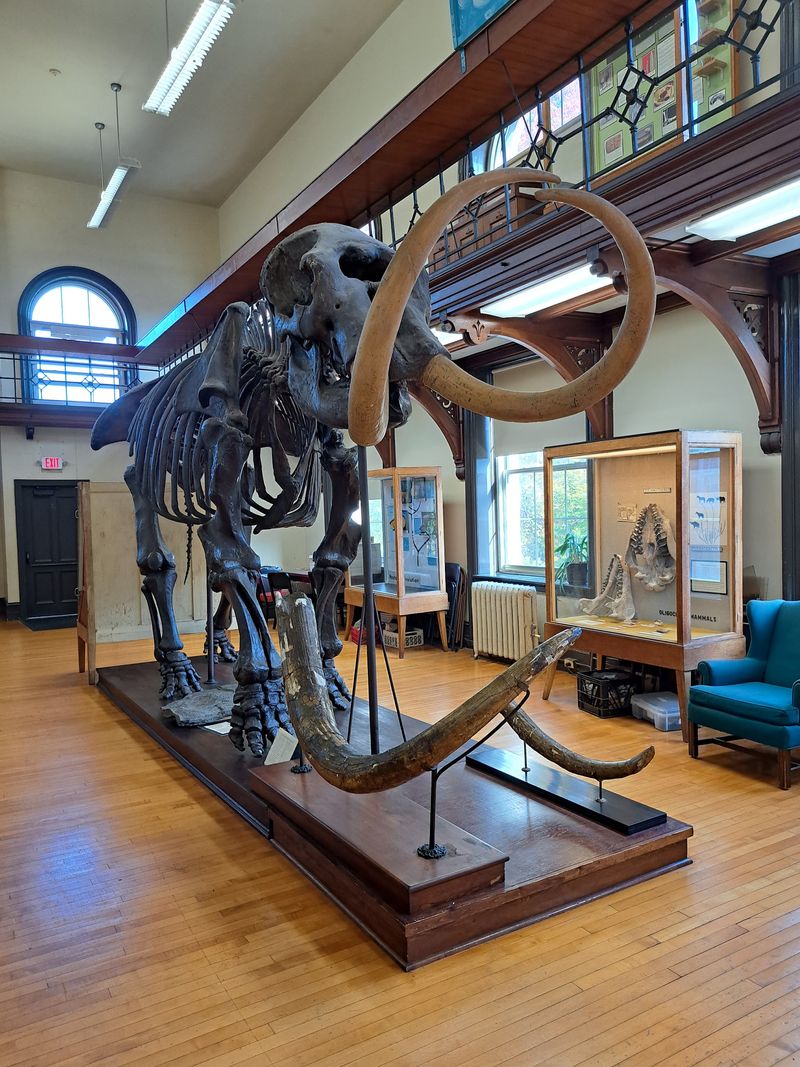
Long before Route 1 traffic, mastodons roamed this part of the world. One of them now stands in the main hall.
The mastodon skeleton is a true crowd favorite. It is described as small, but it still commands attention in the open room.
A saber-toothed cat skull adds some prehistoric drama nearby. A handful of other skulls fill out the lineup.
Dinosaur fossils also make an appearance. Skeletal reconstructions and casts help show what these creatures looked like.
The fossil collection goes well beyond the big names. Ancient plants, marine creatures, and prehistoric mammals are all represented, offering a timeline of life on Earth.
A special point of pride is the material from New Jersey itself. Local fossils and minerals give the collection a hometown angle that larger city museums rarely match.
Fast visitors can blow through in ten minutes, but that misses the point. Reading the exhibit cards turns these bones into stories, and the stories are the real reward here.
Up the stairs, the collection shifts from creatures to crystals.
Meteorites and a Mezzanine of Minerals
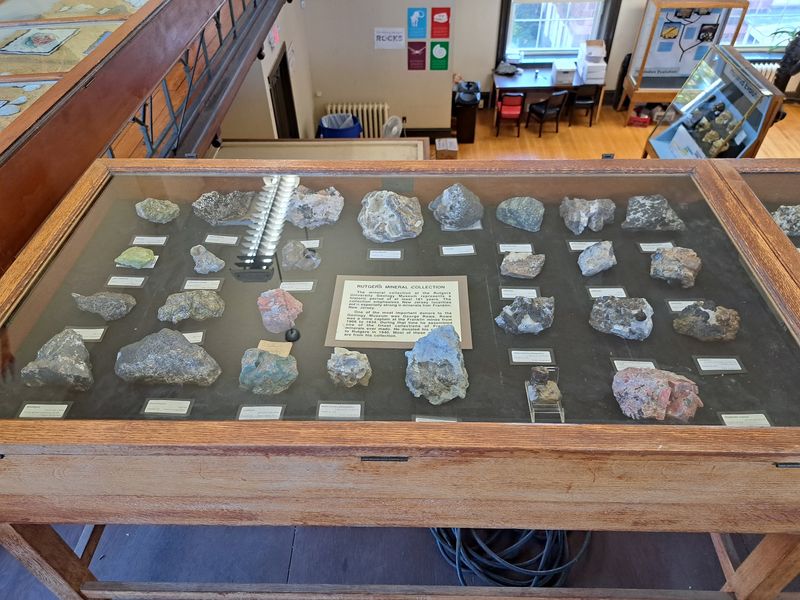
Rocks from outer space are on display here, and they did not need a rocket to arrive.
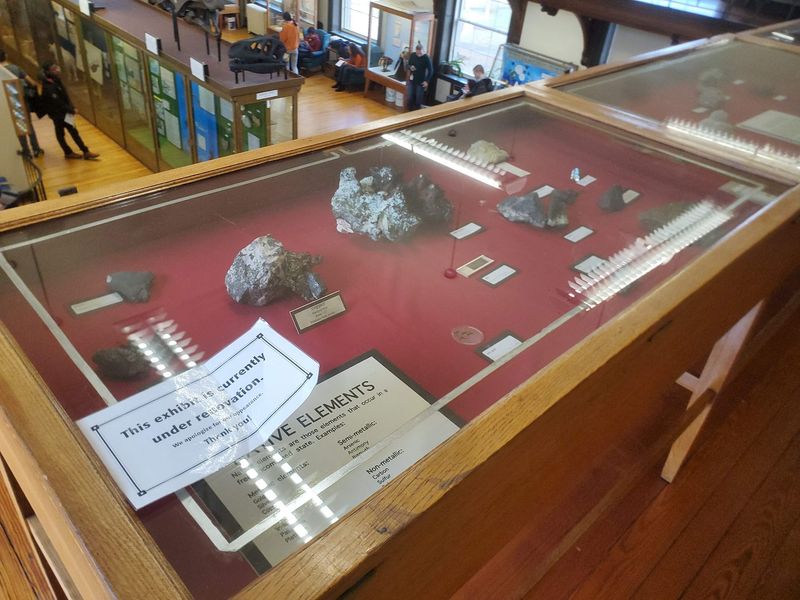
The meteorite collection features specimens that reached Earth’s surface from beyond our planet. Labels explain where they came from and what they are made of.
The second-floor mezzanine holds the bulk of the minerals. The individual samples tend to be small, but there are a great many of them.
Gemstones from around the world share the space. The variety of shapes and structures shows just how inventive geology can be.
One standout display explains how everyday minerals are used. It even includes a bag of cat litter, which young guests find delightfully strange.
Downstairs, a big ferromagnetic rock is a hit with toddlers. It offers a simple, hands-on way to meet magnetism.
Interactive displays scattered around cover topics such as plate tectonics, rock formations, and fossil identification.
A decent collection of Native American tools and other human artifacts rounds out the upper level. Just when it seems the tour is wrapping up, a small back room steals the show.
The Glow-in-the-Dark Back Room
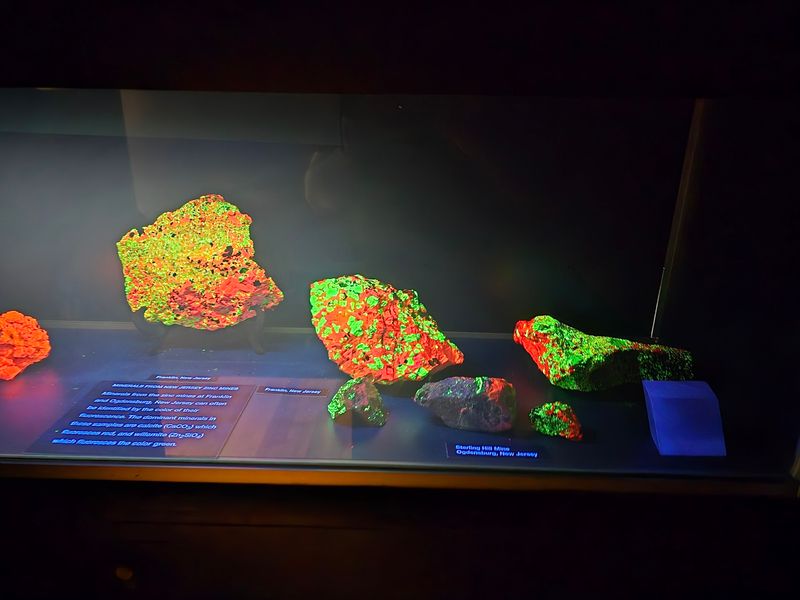
Tucked in the back is a small room where rocks get a second personality.
The fluorescent mineral exhibit features franklinite and other minerals that react to ultraviolet light. Under the right lamps, ordinary-looking stones reveal bright colors.
This display has a strong New Jersey connection. Franklinite is closely tied to the state’s mining history, making this room a fitting tribute to local geology.
Many families name it their favorite part of the whole museum. It is quick to see but tends to spark lots of questions.
Rock lovers appreciate it as a scientific showcase. Kids appreciate it because it looks a little like magic.
The staff are known for being friendly and happy to chat about rocks. Asking about the fluorescent pieces is an easy way to start a good conversation.
Fun fact: whether a mineral glows depends on its chemistry, not its looks. Two stones that seem identical in normal light can behave completely differently here.
After this bright finale, the museum has one more trick up its sleeve for younger explorers.
Scavenger Hunts and Shark Teeth
Hand a kid a checklist and a prize, and suddenly every display case becomes a mission.
The museum offers a scavenger hunt handout for children. Find everything on the list, and the reward is a real shark tooth.
Quizzes and activities keep young minds busy throughout the visit. The approach turns browsing into a game.
The compact size is a plus for families. It feels manageable for little ones and easy for parents to keep an eye on everyone.
Groups get a good experience, too. Staff are noted for running organized group trips smoothly.
During the school year, the museum holds monthly events. Special lectures and workshops on earth science also pop up from time to time.
There is also an annual all-day rock sale paired with educational programming. It is a favorite date on the calendar for local collectors.
Adults are not left out of the fun. The exhibits work as a solid refresher course for grown-ups who last thought about sedimentary rock in middle school.
Before heading out, most families make one final stop.
Hours, Parking, and Other Practical Notes
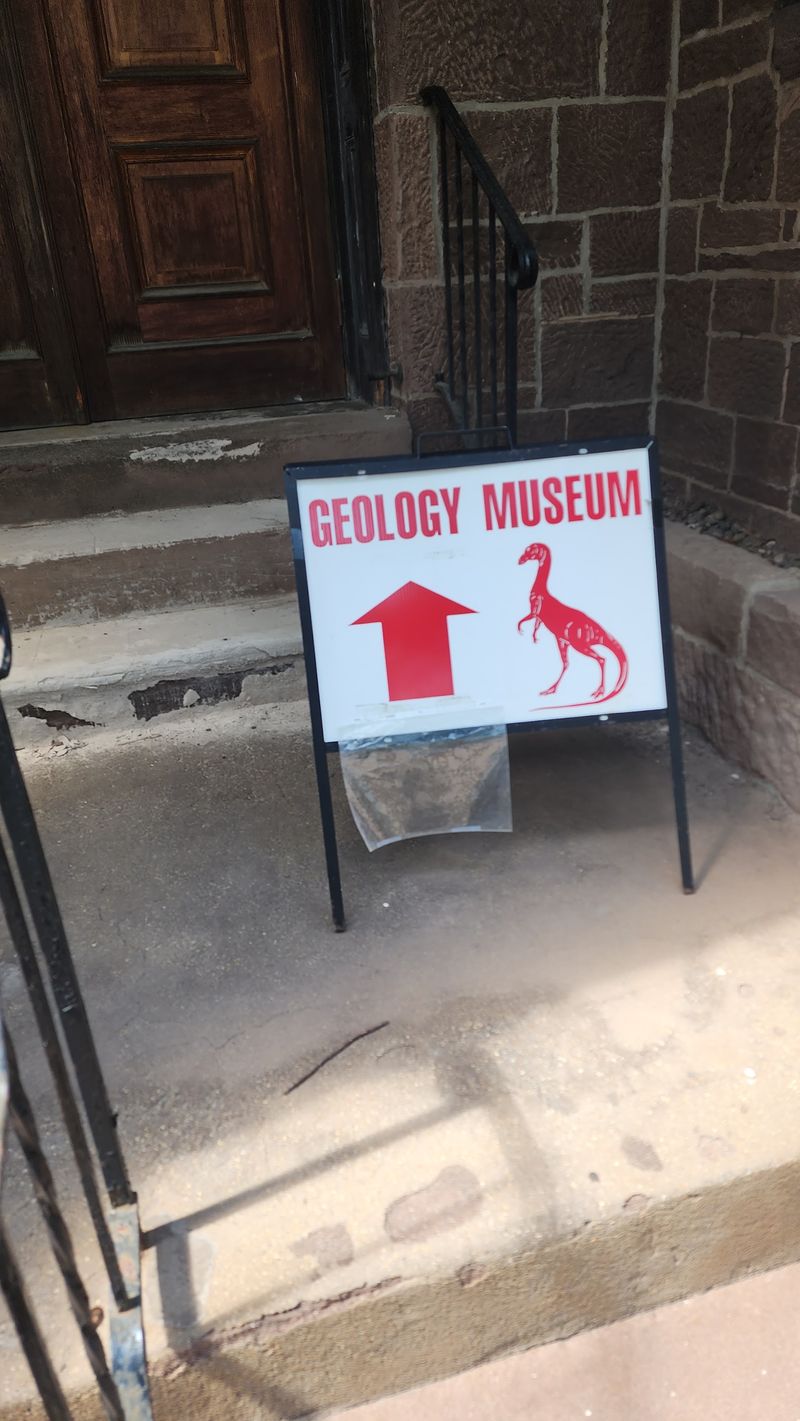
Timing matters here, because the doors are not open every day.
The museum is open Tuesday through Friday from 10 AM to 4 PM. It is closed Saturday, Sunday, and Monday.
Admission is free. Guests sign in, and donations are encouraged.
Plan on 30 to 60 minutes with young kids, or an hour or two for those who read every label.
Finding the building can be tricky on a busy campus. Parking is also a known challenge, so look up the exterior and nearby parking options before leaving home.
Remember those front stairs. They are a real factor for anyone with limited mobility.
The small gift shop is worth a look. It stocks plenty of minerals in both raw and polished forms, a fitting souvenir for a rock museum.
Nearby, the campus quad offers room for kids to run around afterward. The College Avenue complex next door has outdoor tables and a lawn area that is easy to keep an eye on.
With logistics sorted, the only question left is whether the trip is worth it.
Small Building, Big Payoff
Every town deserves a place where a mummy and a meteorite can share a zip code.
The Rutgers Geology Museum is not a sprawling big-city institution. It is one room, one mezzanine, and a whole lot of curiosity packed into both.
Its strengths are easy to list. Free admission, a historic building, friendly staff, and a collection that jumps from dinosaurs to Egyptian artifacts to glowing franklinite.
Its quirks are honest, too. Some exhibits show their age, parking takes planning, and the stairs and summer heat deserve a heads-up.
For families with young children, it is close to ideal. The scale keeps things stress-free, and the shark tooth prize keeps motivation high.
Students and adults get plenty from it as well. Slowing down to read the cards turns a short stop into a genuine lesson in earth history.
A weekday afternoon in New Brunswick rarely delivers this much variety for nothing. Pack some patience for parking, bring a curious mind, and let the rocks do the talking.


