
Affiliate disclosure: As an Amazon Associate I earn from qualifying purchases. Learn more
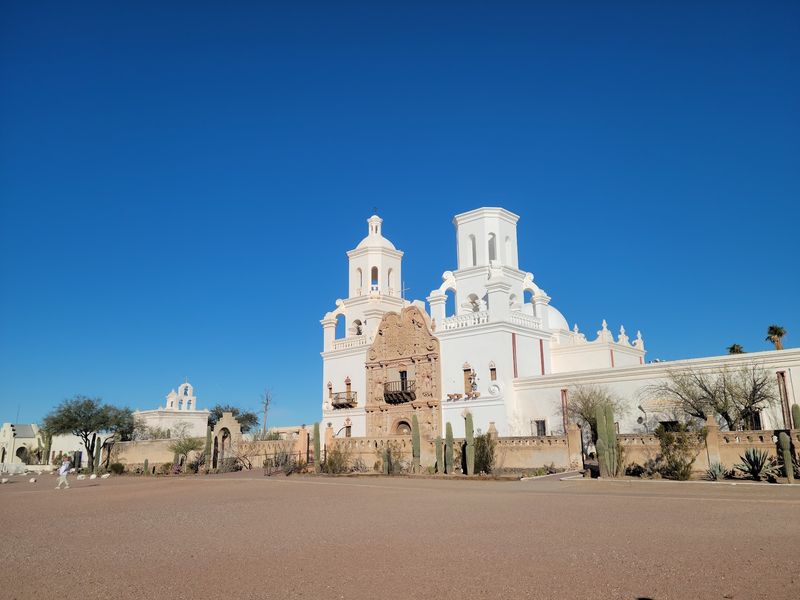
South of downtown Tucson, a bright white church rises out of the desert like it was shipped over from old Spain. It was finished in 1797, before Arizona was even a state, and people still gather inside to pray today.
The inside is packed with hand-carved statues and painted walls that photos never quite capture. Here is the story behind it, what to look for, and how to plan a visit that costs nothing to walk in.
A White Landmark on Tucson’s South Side
Arizona has plenty of old buildings, but few carry this much weight.
San Xavier del Bac Mission sits at 1950 W San Xavier Rd, Tucson, AZ 85746, just a short drive from town. It is an active Catholic church and one of the most recognized landmarks in the whole state.
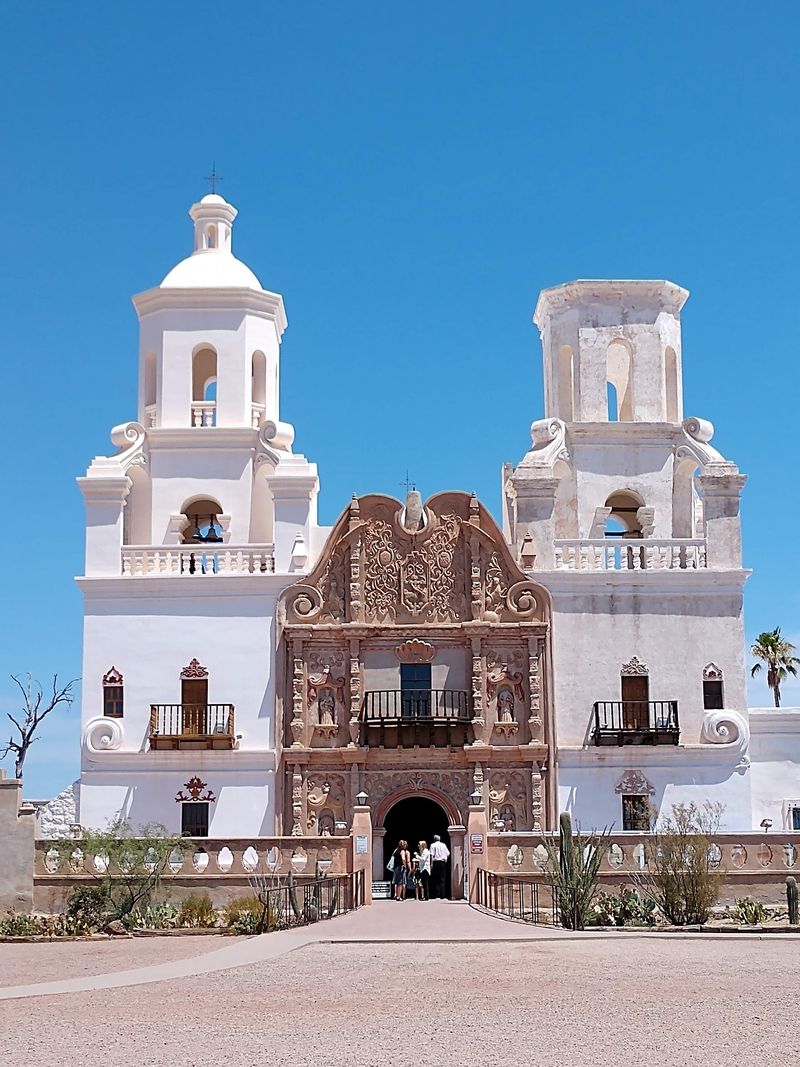
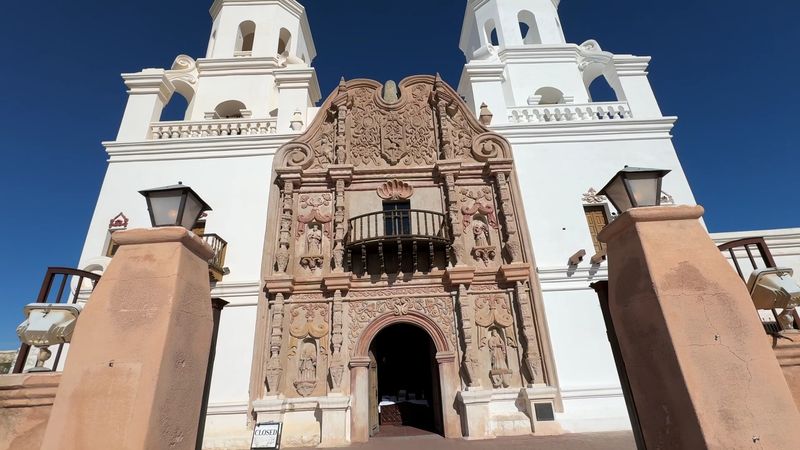
The mission is often called the White Dove of the Desert. The nickname fits a building that stands out bright white against the open land around it.
Completed in 1797, the church is known for its baroque architecture and painted artwork. Inside, hand-carved statues and frescoes fill nearly every surface.
Locals tend to rank it near the top of things worth seeing around Tucson, and the place holds a 4.8-star standing from more than 9,000 people. Many who come for a quick look end up staying for hours.
Admission is free, and donations are welcome. That makes it one of the easiest world-class stops in southern Arizona to fit into a day.
Some Arizonans drive past it for years without stopping. The next sections explain why that would be a mistake.
Roots Older Than the Building Itself
The story starts nearly a century before the current church was finished.
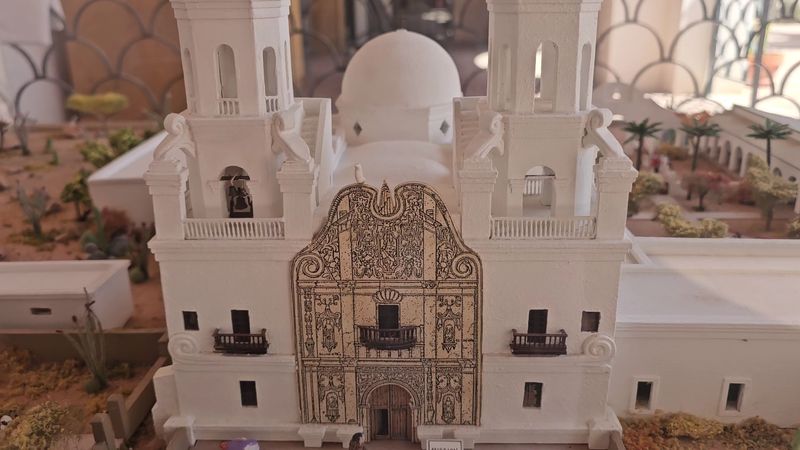
The mission was first established in 1692 by Father Eusebio Kino in an existing O’odham village. The structure standing today was built in the late 1700s with O’odham labor.
That history is part of what makes a visit meaningful. Missions like this one were tied to Spanish colonization, and the past here is complicated, with painful chapters for Indigenous communities.
Many people find that learning this background adds depth to the experience. The beauty of the church and the full story behind it can both be held at once.
A museum on site helps fill in the picture. It holds artifacts and photos from the 1800s, along with historical displays about both the Native and Spanish sides of the story.
The museum is well curated and informative, so even short stops tend to include a look inside. History fans will want to budget extra time here.
The mission also sits on land of the Tohono O’odham people, a detail that shapes the community life around it today.
Statues and Murals Carved by Hand
Step through the doors and the real show begins.
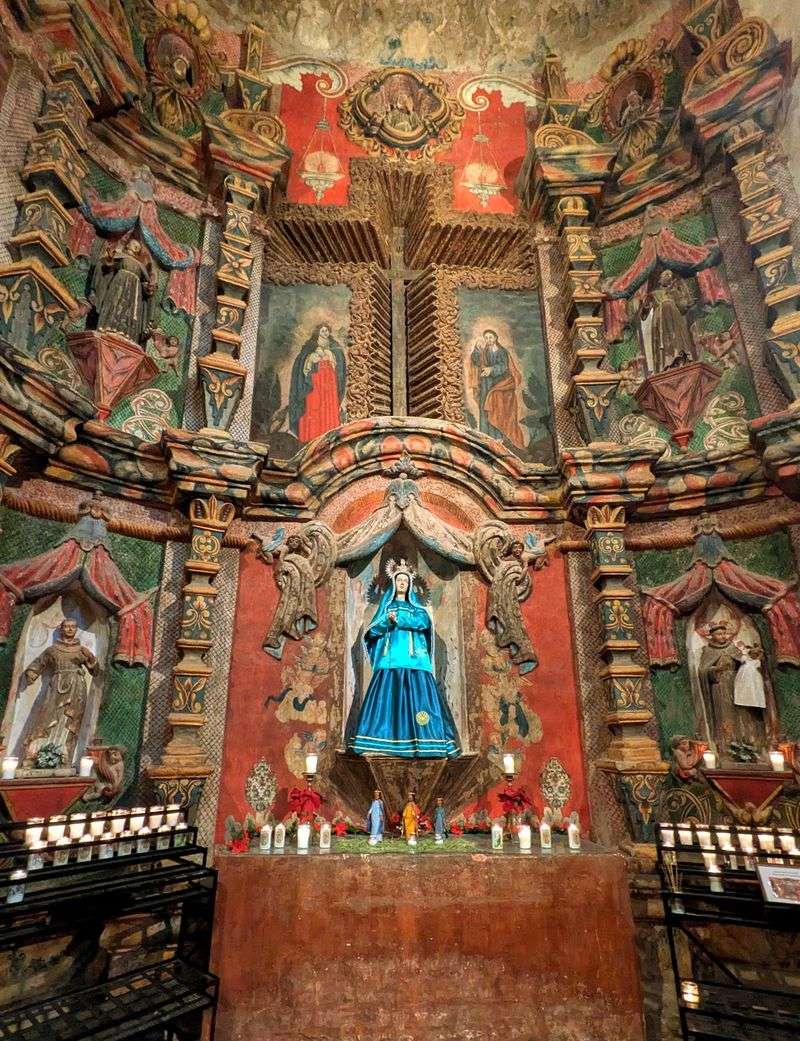
The interior is where this mission earns its reputation. Hand-carved statues and fresco paintings cover the walls, the altar and the ceiling.
There is so much detail that it is hard to know where to look first. Many people say the figurines and wall murals are unmatched by any other mission they have seen.
Photos and videos rarely do the space justice. The best plan is simply to sit for a few minutes and let your eyes travel slowly from one carving to the next.
The church has been well maintained for its age, which is impressive for a building that has stood for more than two centuries.
Here is the catch worth remembering. This is a working church, so parishioners may be praying while you look around.
Quiet voices and respectful behavior go a long way.
On Sundays, waiting until Mass ends before going in is a polite move. The art will still be there when the service is over.
Scaffolding, Restoration and a Facade in Progress
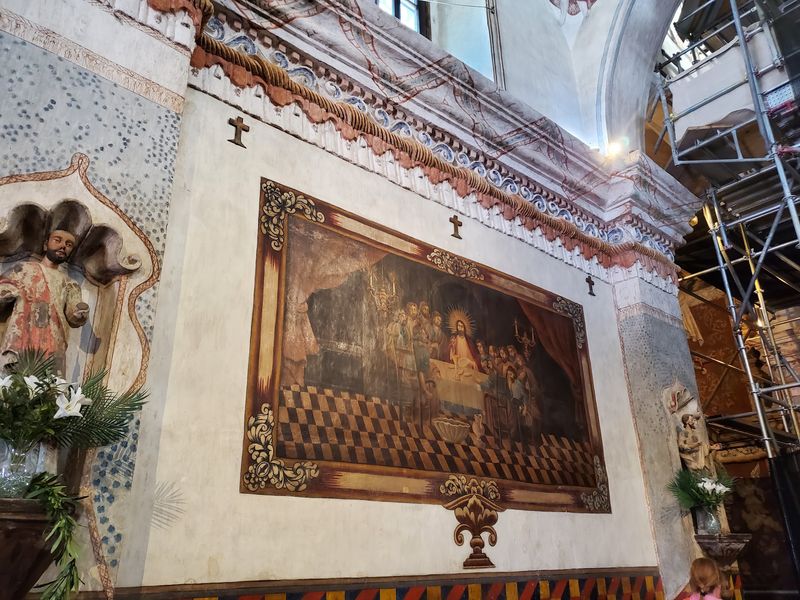
Expect a little construction, and do not let it scare you off.
The front of the church has been under restoration, with scaffolding covering part of the facade. Work is planned in phases, with the project expected to run until spring 2027.
The covering appears during the cooler months, from around Halloween to Easter. Some of the work addresses moisture-trapping concrete that was added to the building back in the 1950s.
Yes, a few people arrive hoping for that perfect facade photo and leave a bit disappointed. Most still say the trip was well worth it.
The church and museum stay open during the work in most cases. There is even something interesting about seeing a centuries-old landmark being cared for in real time.
Restoration is also a reminder of how much effort goes into keeping this place standing. Donations help support that kind of care.
If the full facade is your top goal, a warm-season visit is the safer bet.
The Grotto Hill Viewpoint
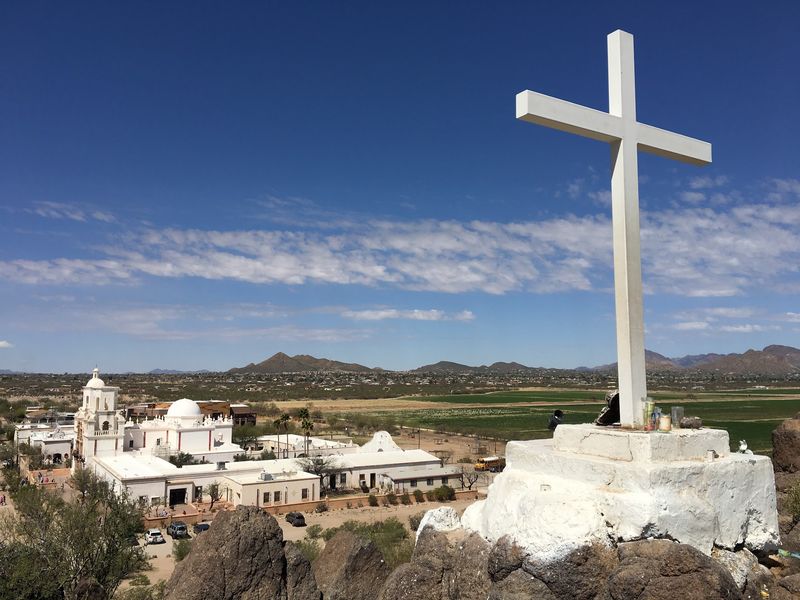
Some of the best views of the mission are not from the parking lot at all.
A short walk from the church leads up a small hill with a grotto and memorial. It is easy to miss, so keep an eye out for it.
From the top, the panoramic view takes in the mission and the surrounding region. Mountains stretch out in nearly every direction.
The scenic loop gives a full 360 degrees of open landscape. Many people use the stop as a quiet moment to reflect.
Families often head up with kids in tow, and the climb is short enough for most ages. Bring water on warmer days, since this is still the Arizona desert.
The hill also offers a useful perspective on how the mission fits into its setting. Down below, the grounds, landscaping and courtyard spread out in a tidy layout.
Save this walk for after the church tour. It works nicely as the final chapter of a visit.
Vendors, Jewelry and Local Shops
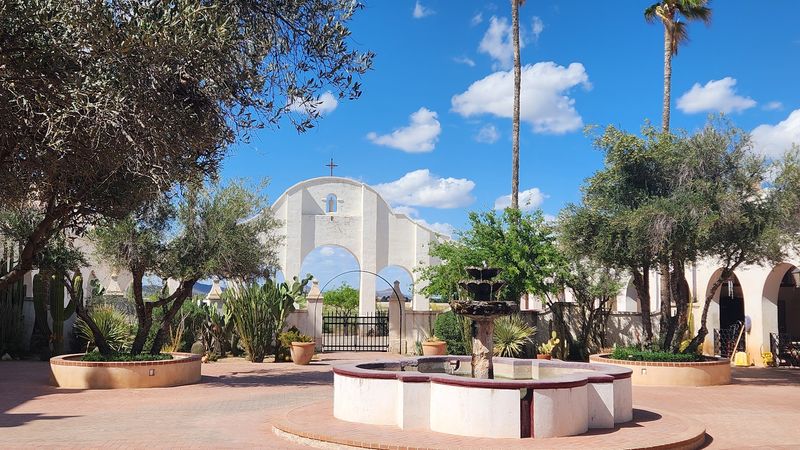
The experience does not end at the church doors.
A gift shop on the mission grounds carries plenty of local art. Across the parking lot, a cluster of small shops offers even more to browse.
Authentic Native American jewelry is a big draw, especially handmade turquoise pieces. Prices can run on the higher side, but the sellers tend to know their craft well.
Local vendors also set up stands right out front. Fresh fry bread made by Native American vendors is a popular stop, and buying from them supports the community whose land the mission sits on.
Homemade foods show up at some stands, too, depending on the day.
The mission also hosts events, swap meets and markets. When those happen, the grounds fill up as the community turns out to support local sellers.
Leave a little room in the budget. Few people walk away empty-handed.
Hours, Tours and Free Admission
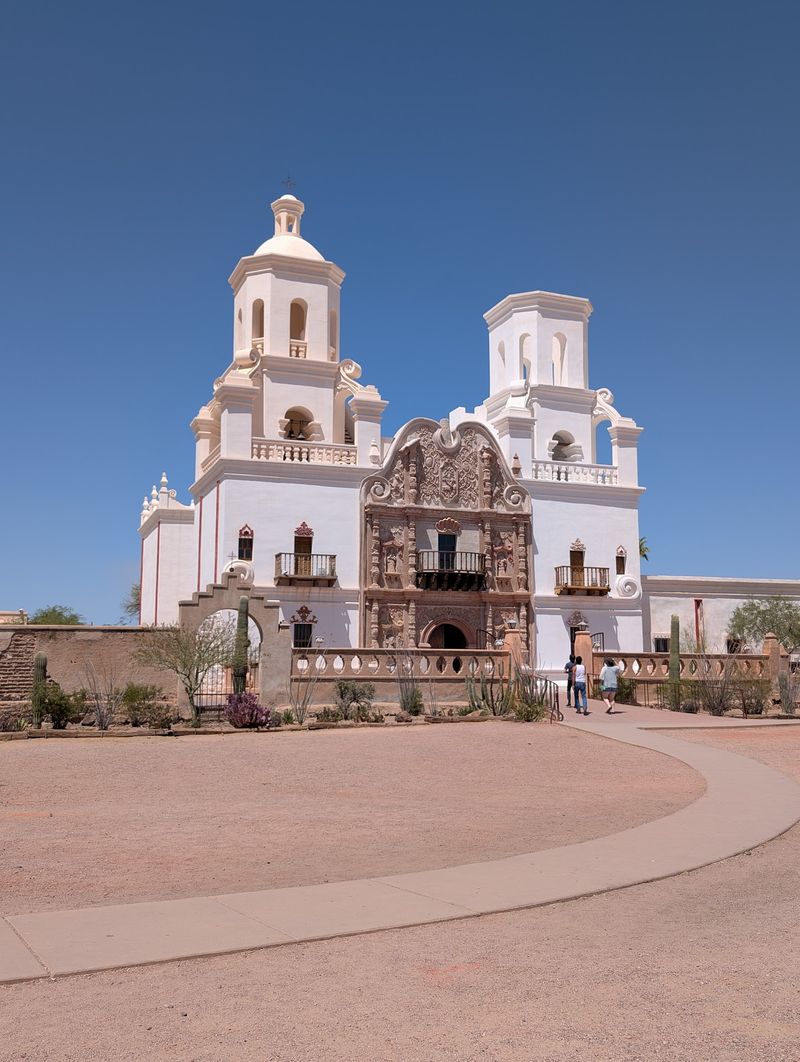
Good news for budget-minded Arizonans: getting in is free.
The mission is open daily from 9 AM to 4 PM, every day of the week. Donations are gladly accepted and help with upkeep.
Visits are self-guided, with staff members around to answer questions. Docent-led tours have run at 9:15 AM and 10:15 AM, though times may differ on Sundays.
The tour does not go inside the church itself, since it is an active place of worship. Walking the church on your own afterward fills that gap.
Parking is large and free, which makes the stop easy even on busier days. A Friday afternoon tends to be moderately busy without feeling crowded.
Sundays bring Mass, so plan around services if you want to see the interior.
Check the official website, sanxaviermission.org, before heading out. Schedules can shift, especially during restoration work.
Arizona’s Own Slice of Old Spain
Plenty of travelers cross oceans to see churches like this. Arizonans only need a short drive south of downtown Tucson.
The mission blends history, faith, art and community in one place. Carved statues, painted walls, a museum, a hilltop view and local vendors all share the same grounds.
It suits history lovers, architecture fans and anyone looking for a calm, meaningful outing. Families, retirees and day-trippers all find something to enjoy.
Respect goes a long way here. Keep voices low inside, and remember that people come to pray, not just to look.
Learning the full story, including the role of the O’odham people, makes the visit richer. The beauty and the history belong together.
For a free stop, it delivers a lot. Many locals return again and again, and each trip seems to reveal a detail they missed before.
The White Dove of the Desert has waited more than two centuries. It can certainly wait for your next free Saturday.


