
Affiliate disclosure: As an Amazon Associate I earn from qualifying purchases. Learn more
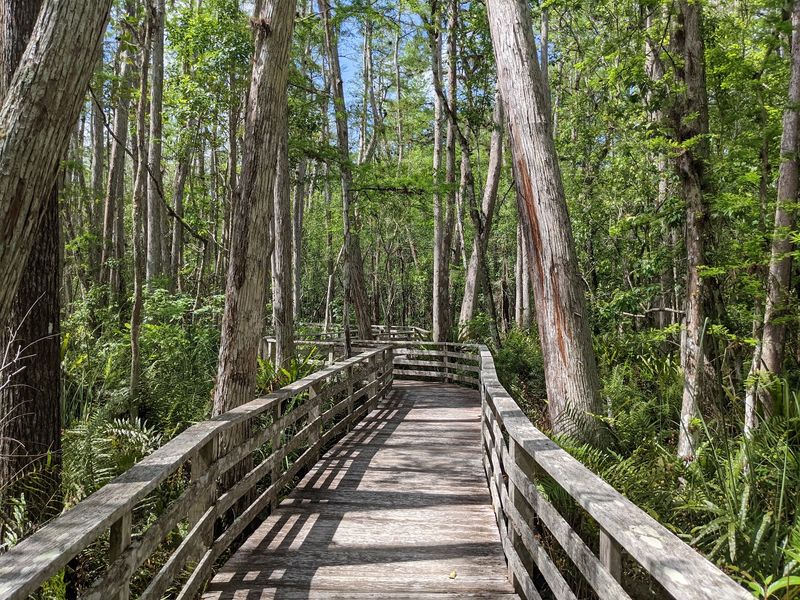
Some of the trees east of Naples were already old when Columbus first sailed west. They still stand today, and you can walk right under them on a wooden path built above the swamp.
The forest is one of the few old growth places left in Florida, and it is home to gators, herons, raccoons, and a famous rare orchid. Keep reading to learn where it is, what you might spot, when to go, and the one clothing tip that could save your arms and legs.
A Private Wilderness East of Naples
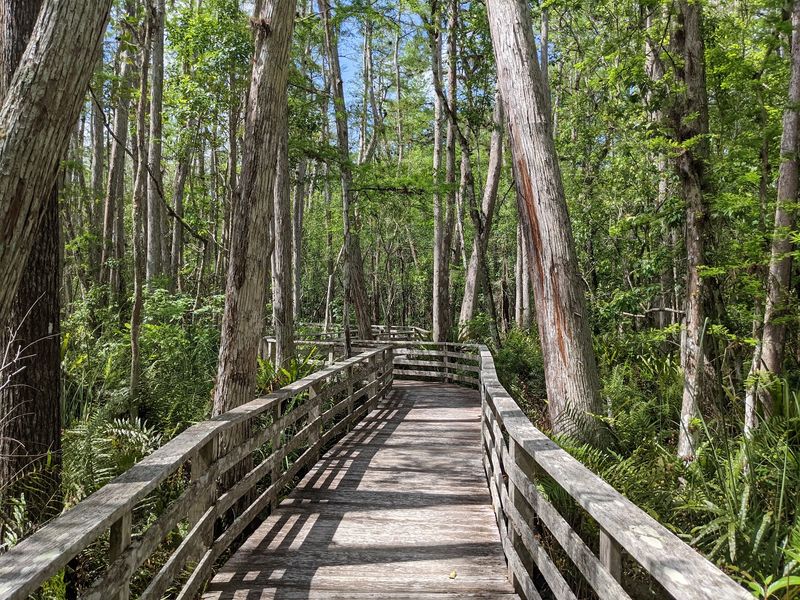
Tucked away from the beach traffic, Audubon Corkscrew Swamp Sanctuary sits at 375 Sanctuary Rd W, Naples, FL 34120, in Southwest Florida.
It is a protected wetland with a boardwalk trail, an observation tower, and plenty of native wildlife. Many people assume it is a state park, but it is not.
The 13,000-acre sanctuary is owned and managed by the National Audubon Society. That makes it one of the largest tracts of privately owned conservation land in Florida.
The place has a strong local following, and folks from far away often call it a trip highlight. Families from the Northeast, birders, and photographers all find their way down the quiet road.
A visit starts at the visitor center, where staff explain the layout of the path before you head out. From there, the swamp takes over, and the city feels very far behind you.
So what makes a patch of wet forest worth the drive? The answer starts with its long history.
Seven Decades of Protection
Back in 1954, the sanctuary was officially established. That date matters, because a lot of Florida’s old cypress forests did not survive the decades that followed.
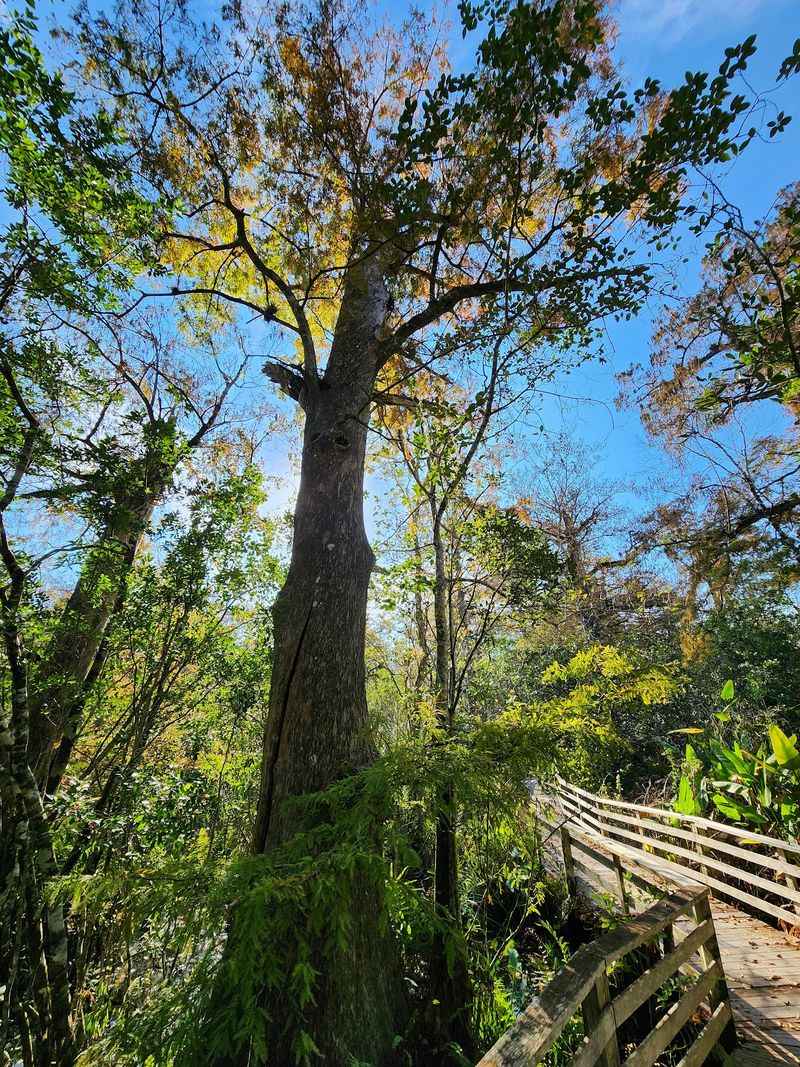
Thanks to that early protection, Corkscrew holds one of the state’s few remaining old growth forests. The trees here are hundreds of years old.
Audubon still runs the land with a focus on education. Local events and learning programs are a big part of the mission, and the staff take that role seriously.
There is a polite request that comes with the visit too. Keep your voice low and treat the place with respect, since quiet helps both the animals and everyone else on the trail.
Supporting the sanctuary through admission or an annual membership helps keep this land protected. Regulars often say the membership pays off if you live nearby and plan to return.
History explains why the forest exists, but the real star is the giant trees themselves.
Giants of the Bald Cypress Forest
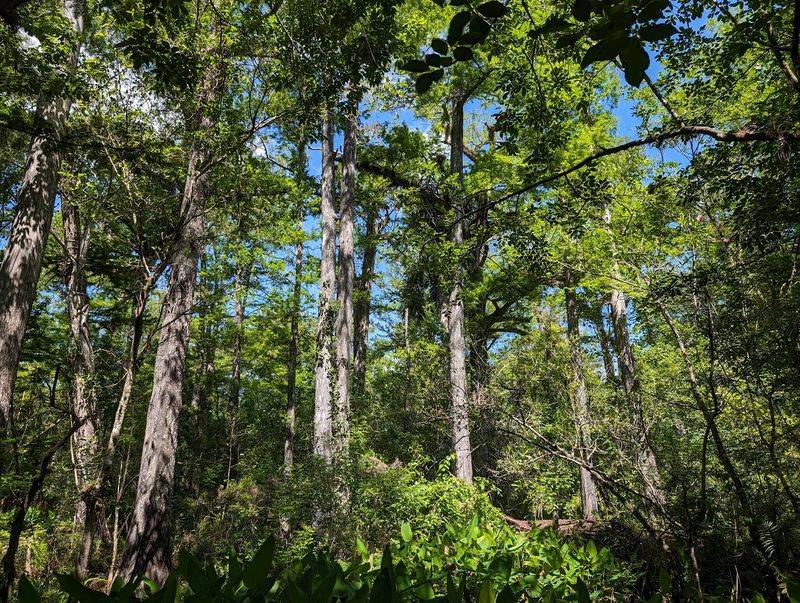
Columbus never saw these trees, but they were already growing when he set sail. The bald cypress at Corkscrew are true old timers, standing tall over the swamp for centuries.
They are the reason many people make the trip. Even folks who think the $17 ticket is a bit steep tend to agree the old growth trees make it worthwhile.
The boardwalk lets you move right through the forest without getting your feet wet. You can stop, look up, and take in how tall these trees really are.
Old growth forests like this one are rare in Florida today. Much of the state’s natural land has been changed by roads and building, so this stand offers a nice break from the more manicured scenery of Southwest Florida.
Bring a camera with a wide lens if you want to fit a whole trunk in one shot. Then keep walking, because the path itself has a story worth telling.
Two and a Quarter Miles of Planks
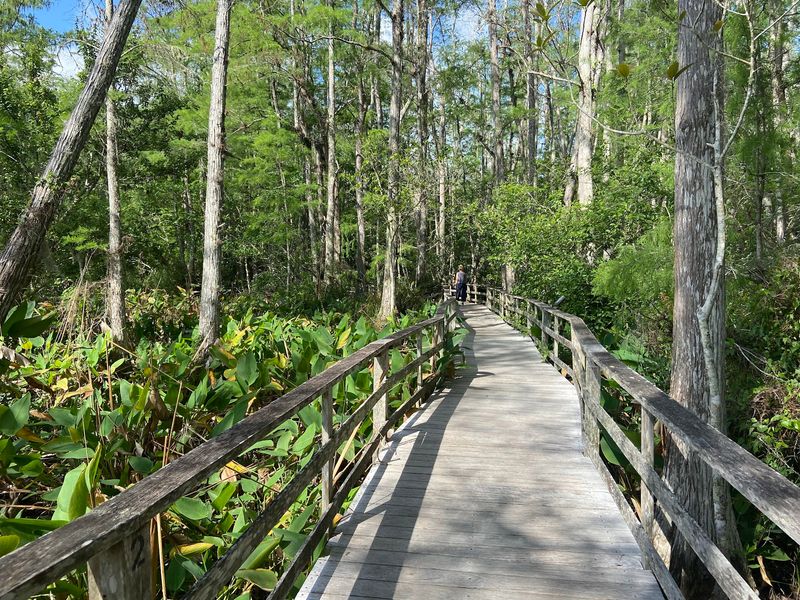
Count on about 2.25 miles of wooden planks, with only a very short paved section. That is the full loop, and it is well kept from start to finish.
Most people take 90 minutes to two hours to finish it. Time tends to slip by quickly, and the miles often feel shorter than they are.
A shorter route is also available if you want a quick taste. Some regulars suggest the shorter walk to the swampy area, since that stretch is often the best for birds.
Signs along the way are clear, so getting turned around is unlikely. Lookout points are marked, and seating areas are placed for watching the wildlife.
Several covered shelters with benches dot the route too. If a rain shower rolls in, you can wait it out under a roof.
There is also an observation tower along the trail for a different view of the wetland. Now, about who might be watching you from the water.
Gators, Raccoons, and Other Locals
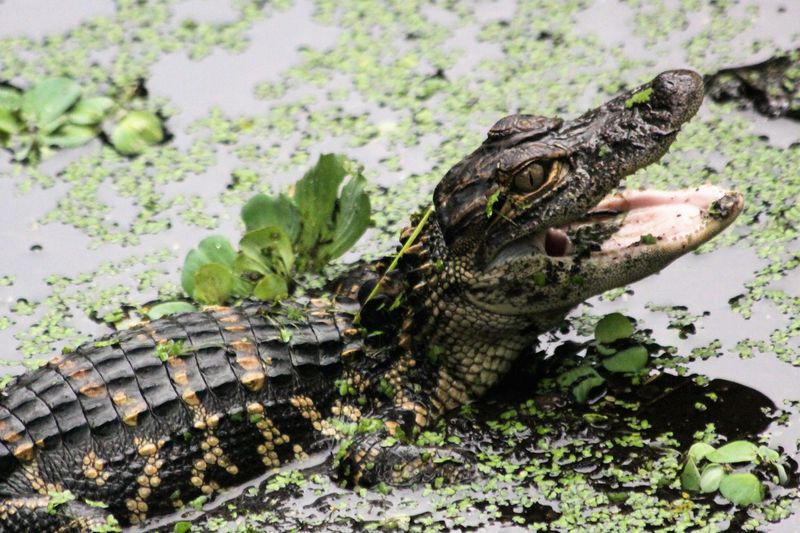
Alligators get top billing here, and they usually earn it. Plenty of people spot at least one, and some lucky folks have watched a gator hunting and eating.
Raccoons are another common sight along the boardwalk. They seem quite at home in the swamp and often show up when you least expect them.
Turtles, snakes, and woodpeckers also make appearances. The mix changes from day to day, so no two walks are quite the same.
Patience pays off. Some groups see nothing in the first hour, then run into a busy stretch of wildlife near the end.
Others start spotting animals within the first hundred yards. The best advice is simple: slow down, stay quiet, and keep your eyes moving.
Gators are not guaranteed every day, though. On a quiet day, the birds often steal the show instead.
Feathered Stars and a Ghostly Bloom
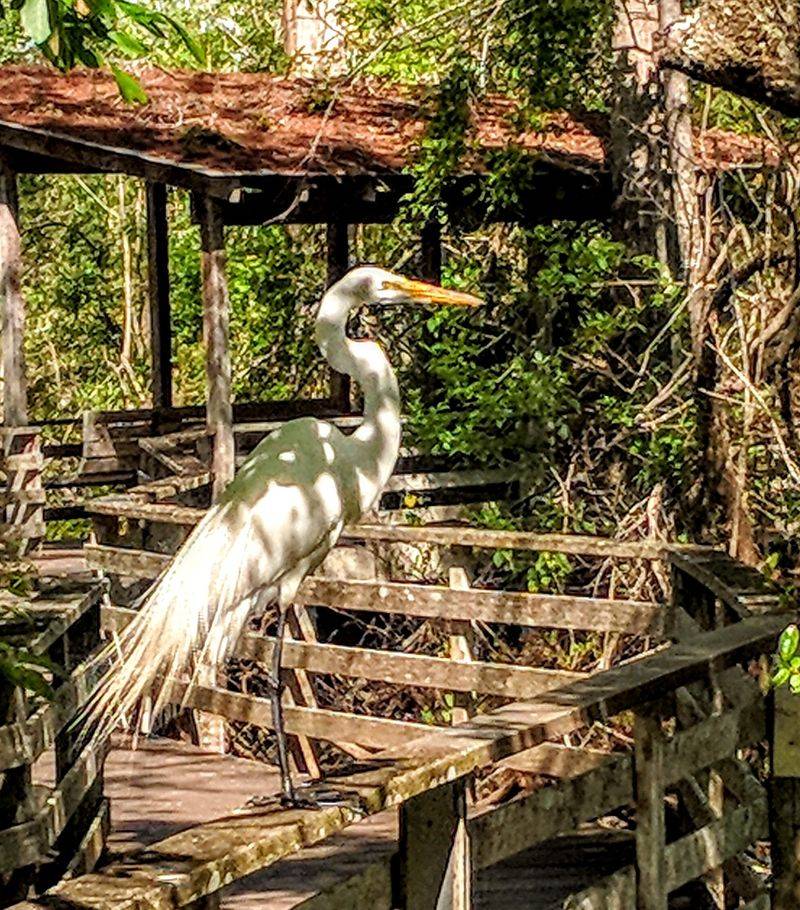
Birders, pack the binoculars. The sanctuary is a favorite for bird watching, and the list of possible sightings is long.
Red-shouldered hawks, little blue herons, limpkins, egrets, ibises, and anhingas all turn up here. The colorful painted bunting is a special treat that many hope to see.
Near the start of the trail, a chalkboard often lists what others have spotted earlier that day. It is a fun way to know what to watch for.
Plants get attention too. The rare ghost orchid lives high up in the trees, and it is known to appear in the summer months.
Spotting it takes a sharp eye, since it sits far above the boardwalk. That is one more reason binoculars are worth carrying.
Photographers love the variety, with birds, plants, and flowers all in one place. Kids, as it turns out, have their own way of keeping track.
Easy Going for Kids, Strollers, and Wheelchairs
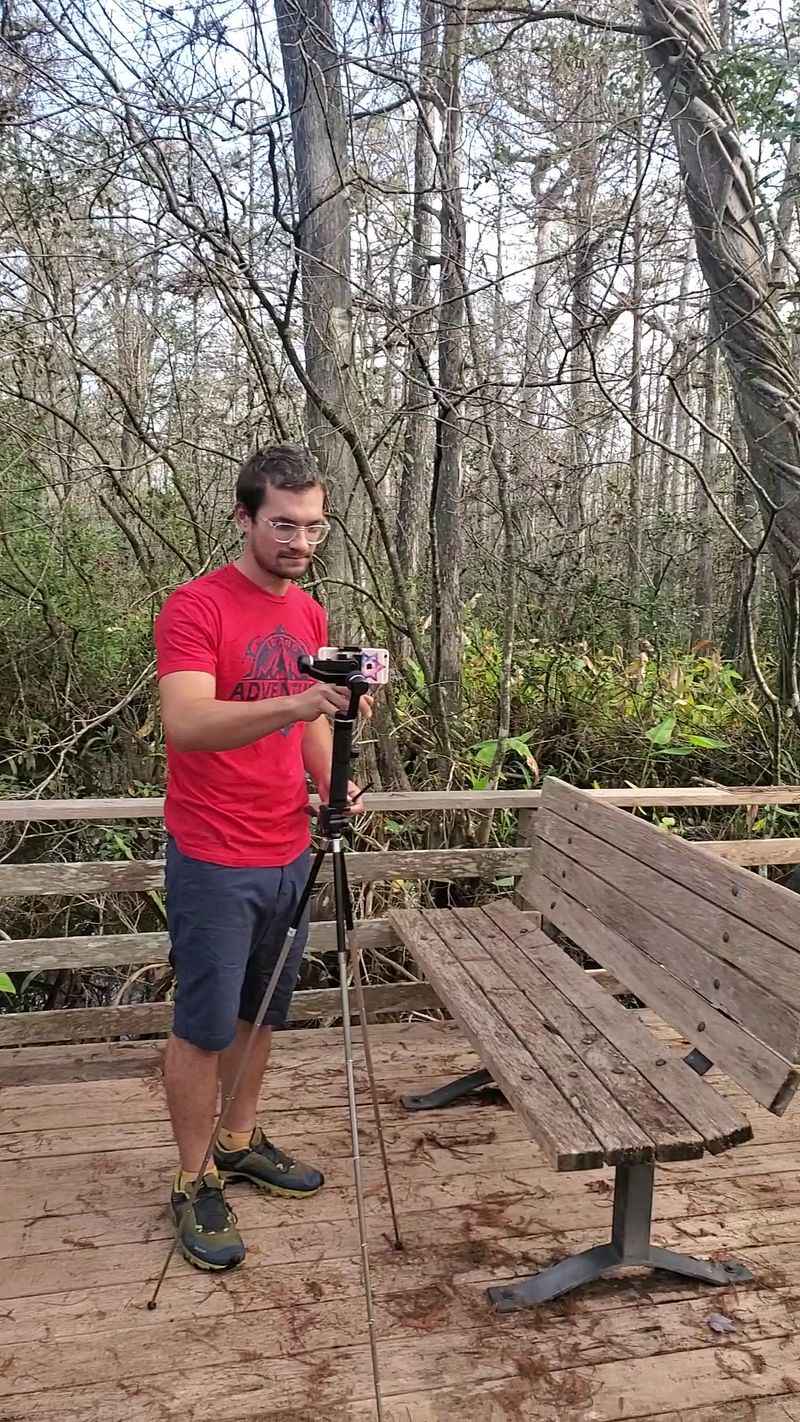
Young explorers get a mission at the front desk. Kids can receive a map and a pen to mark off the things they find, turning the walk into a scavenger hunt.
The trail works well even for small children. Families call it a safe outing, with lots of shade and shelter if the weather turns.
The boardwalk is friendly for strollers and wheelchairs. Groups have pushed wheelchairs along the full loop of more than two miles.
Because the path is flat and well maintained, it suits a wide range of ages and abilities. Benches along the way give everyone a chance to rest.
Staff also get plenty of praise for being welcoming and helpful. Front desk and gift shop workers are known for their friendly attitude.
All of this makes the sanctuary a solid pick for a mixed group. Still, there is one small pest every family should plan for.
The Yellow Fly Warning
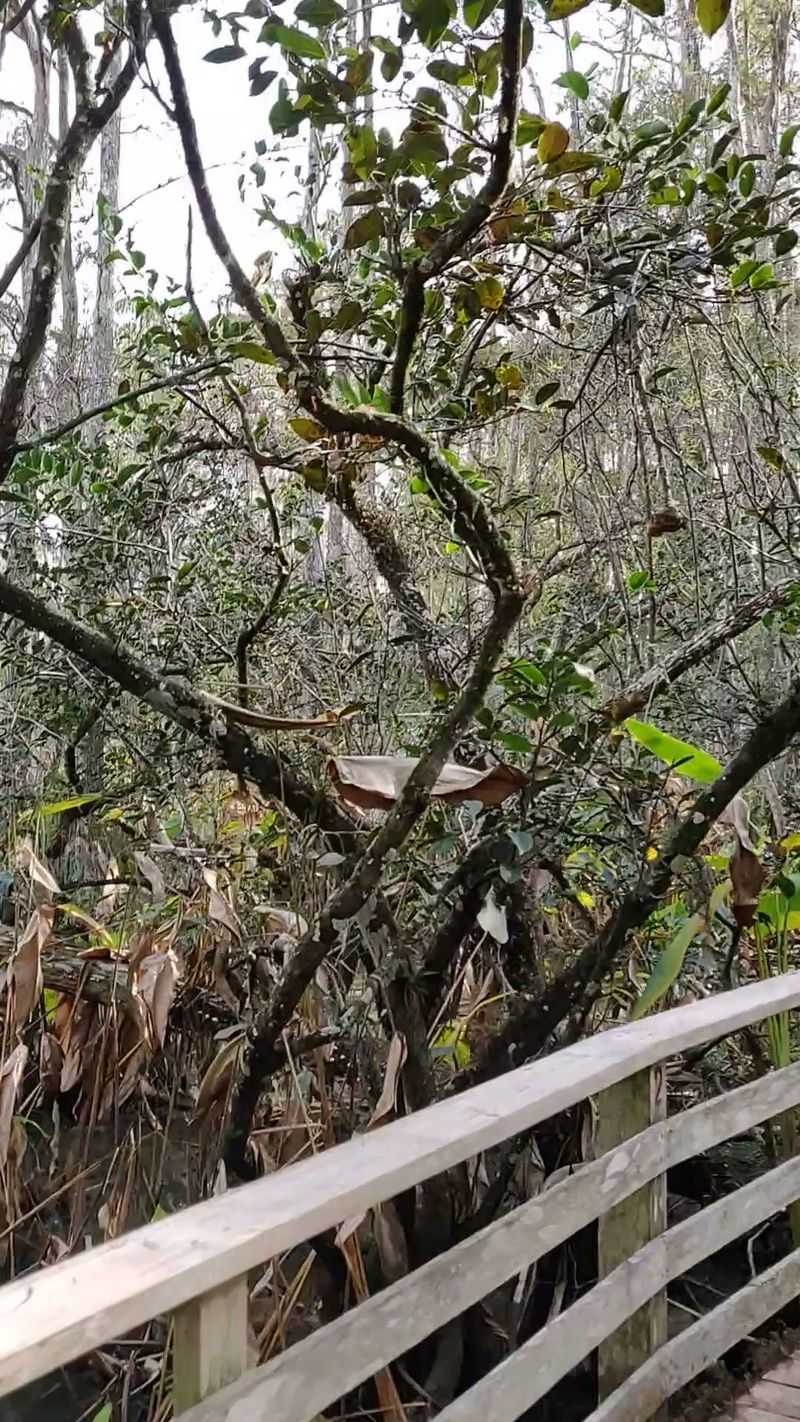
Shorts may feel right for Florida, but they are a risky choice here in spring. From April through June, biting yellow flies, also called deer flies, can be out in force.
DEET-based spray often does not stop them. Some people have come out covered in bites despite using repellent.
The sanctuary’s own advice is clear: wear long sleeves and long pants. Keeping a steady pace on the boardwalk also helps.
The good news is that the flies are seasonal. Once the season ends, the problem fades.
Bugs in general can be more of an issue in the warmer months. Dressing smart lets you focus on the trees and wildlife instead of swatting.
Even those who got bitten often say the visit was still worth it. Timing your trip can help with more than bugs, though.
Hours, Tickets, and Timing
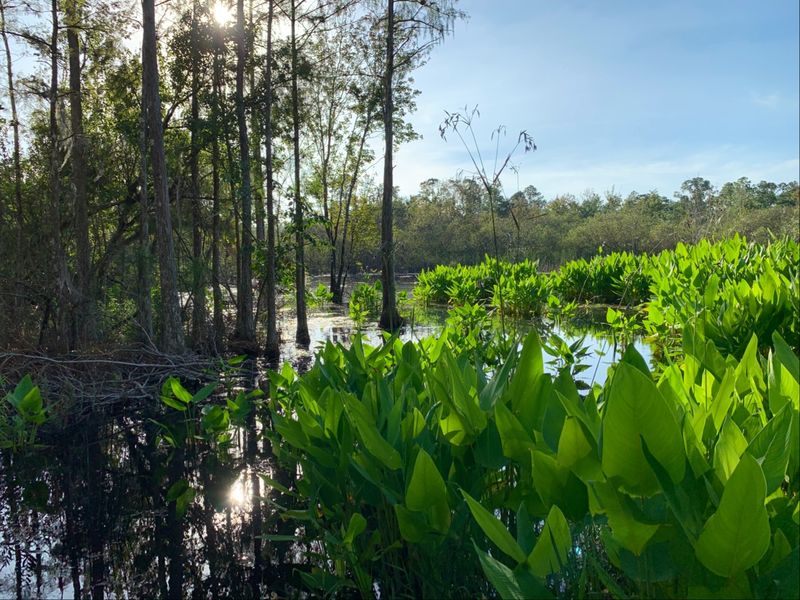
Early birds win at this sanctuary, literally. Hours run from 8 am to 1 pm every day of the week.
Adult admission was about $17 as of April 2026. Some find that a bit high, while others call the price fair for what you get.
Arriving early can mean fewer people, though weekday mornings can still get busy. Outside the winter months, an early start also helps you avoid the heat.
Visiting after a rain can make the swamp look especially lush. Dry season and wet season each offer a different view of the wetland.
Parking is plentiful on site. The visitor center has clean restrooms, a small cafe, a discovery center, and a well-loved gift shop.
Use the restrooms before you start, since there are none once you leave the visitor center. You can also grab water and snacks for the walk.
With the basics covered, one question remains.
Worth the Trip Beneath the Old Trees
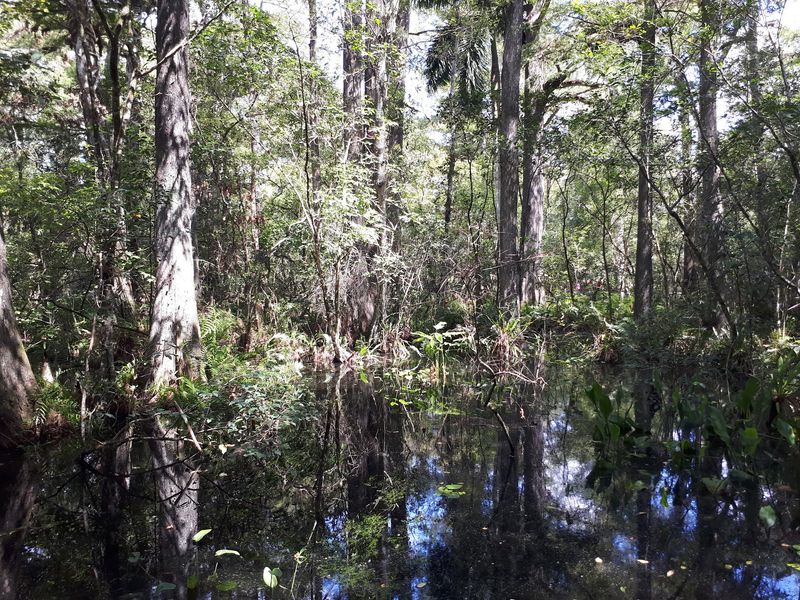
Few places in Florida let you walk among trees that predate Columbus. That alone gives this sanctuary a special spot on any Southwest Florida list.
Add gators, raccoons, herons, and the chance of a ghost orchid, and the outing becomes more than a simple stroll. It is a real taste of wild Florida.
The boardwalk keeps things easy for families, older travelers, and wheelchair users. Clear signs and shaded shelters make it low stress.
Plan around the morning hours, dress for the bugs in spring, and bring binoculars. A little prep goes a long way here.
The sanctuary is a strong pick for nature lovers, birders, and photographers. It also suits anyone who wants a calm break from beach crowds.
Go slow, stay quiet, and look up often. The old cypress have been waiting a few hundred years, so they can wait for you too.


