
Affiliate disclosure: As an Amazon Associate I earn from qualifying purchases. Learn more
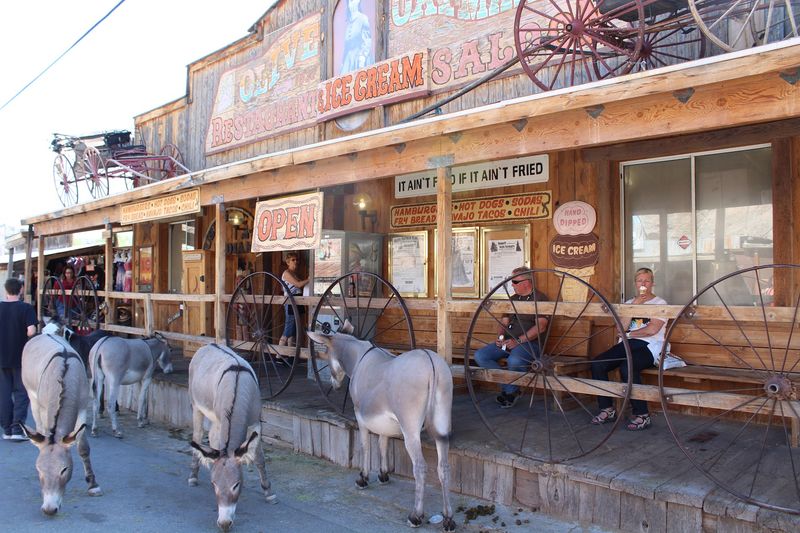
Traffic jams in one corner of Mohave County are caused by long ears, not long lines of cars. In a tiny mountain town on old Route 66, wild burros stroll down the middle of the main street like they pay the property taxes.
They are descendants of animals that once hauled ore for gold miners, and their families never left when the miners did. Today they greet cars, block sidewalks, and steal the show from every storefront on the block.
Arizona has plenty of ghost towns, but very few of them come with a four-legged welcome committee. Keep reading to learn where this place sits, how a gold strike built it, why the burros stayed, and what to know before making the drive yourself.
A Mining Camp in the Black Mountains
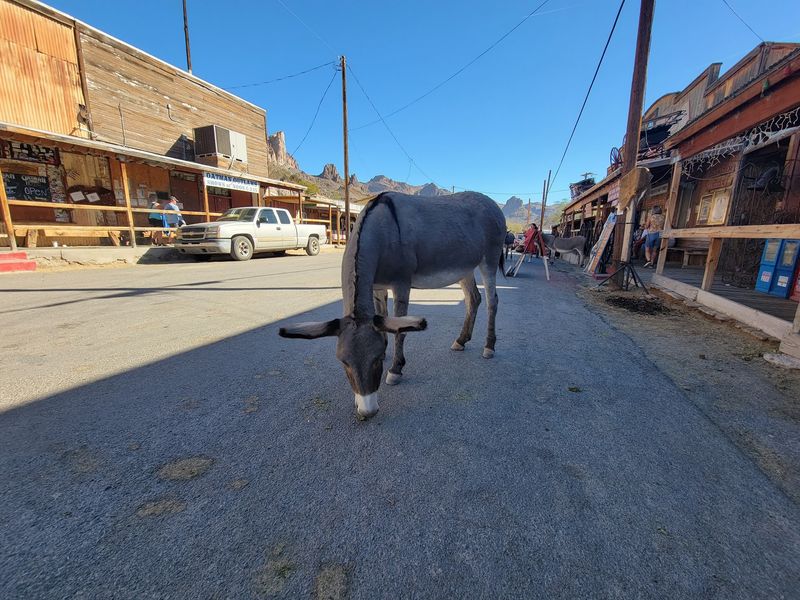
Tucked into the Black Mountains of Mohave County, Oatman, Arizona, USA, sits at an elevation of 2,710 feet. Officially, it is a census-designated place rather than an incorporated city.
That label sounds dry, but the town itself is anything but. It lies along a twisting stretch of historic Route 66 in the western part of the state, not far from the Colorado River country.
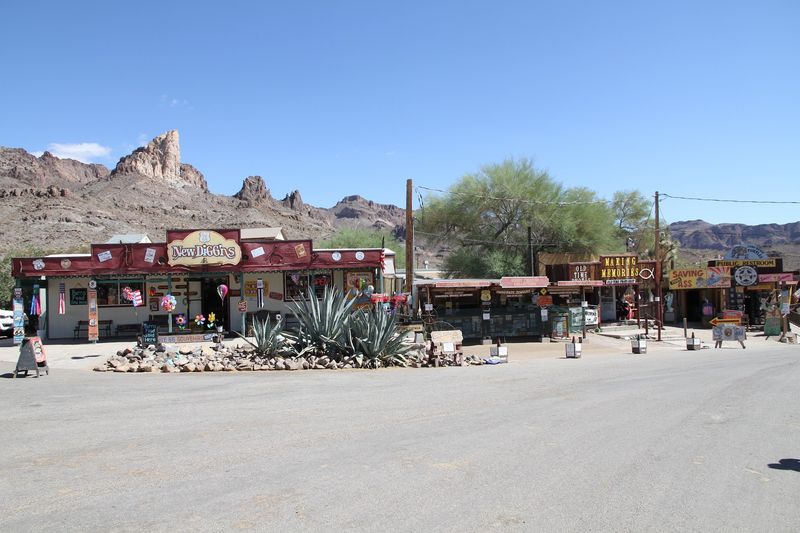
The setting is rugged and remote. Steep hills and rocky ridges wrap around the narrow main street, which makes the town feel like it was dropped into the mountains on purpose.
For Arizona locals, Oatman is a classic example of a place hiding in plain sight. Many residents have driven past the Kingman or Bullhead City exits for years without ever making the detour up the mountain road.
What waits at the end of that drive is a small town with a big story. Gold, grit, and a herd of famously bold burros all play a part.
Before meeting the animals, though, it helps to know how the whole place got started. The answer begins with two prospectors and a very lucky day.
The Ten Million Dollar Strike of 1915
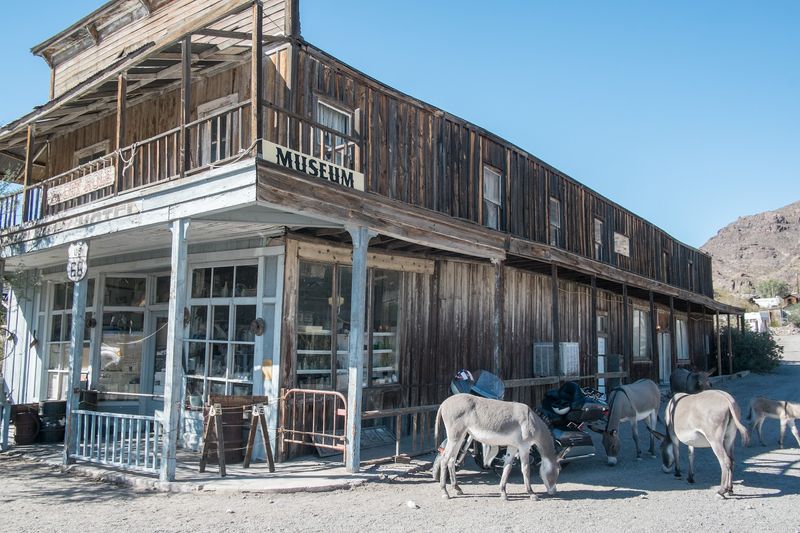
In 1915, two prospectors hit gold worth about 10 million dollars. That discovery turned a modest settlement into a busy mining camp almost overnight.
The area was not empty before the strike. People had already been living in the vicinity for several years, chasing the same dream of striking it rich.
Still, 1915 is the year that put Oatman on the map. A find of that size drew workers, families, and businesses into the mountains.
Mining towns in Arizona tended to rise fast and fade just as quickly. Oatman followed a familiar arc, booming with the gold and slowing as the mining work wound down.
What makes this town different is what it kept. The buildings stayed, the road stayed, and so did some of the hardest workers of the era.
Those workers did not carry lunch pails. They had hooves, long ears, and a stubborn streak that would eventually make them local celebrities.
Where the Burros Came From
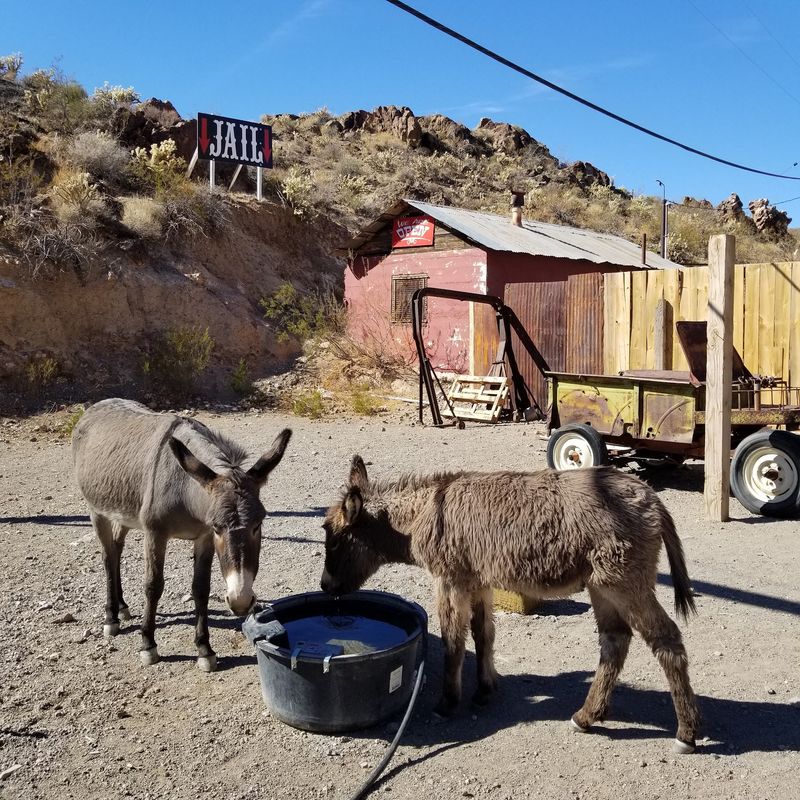
Behind every famous burro in town is a family tree rooted in hard labor. Miners relied on burros to haul supplies, water, and ore across steep, rocky ground.
Burros were a practical choice. They are sturdy, sure-footed, and well suited to dry desert country like the Black Mountains.
When mining activity declined, many of these animals were released into the surrounding hills. Left to fend for themselves, they did surprisingly well.
Generations later, their descendants still roam the area. The burros seen in the street today are wild animals, not pets or a staged attraction.
That history gives the scene some real weight. Each burro nudging a car window is a living link to the gold rush days that built the town.
It is a rare case of history refusing to stay in a museum. Here, it simply wanders down Main Street and waits for traffic to stop.
Main Street Belongs to Long Ears
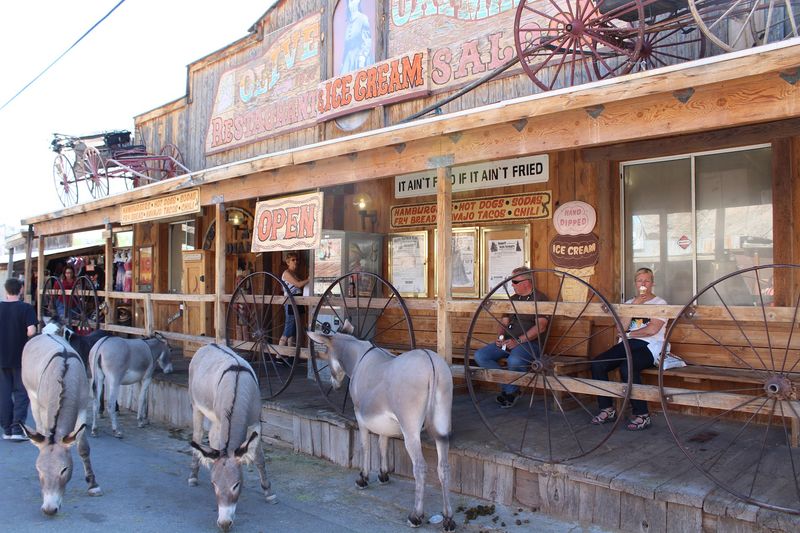
Right of way works a little differently here. On Oatman’s main street, the burros tend to win every standoff with a car.
The animals wander down from the hills and settle into town with total confidence. They stand in the road, linger near shop doors, and walk the sidewalk as if it was built for them.
Drivers learn quickly to slow down and keep an eye out. A burro may step into the lane with no warning and no apology.
That relaxed attitude is a big part of the charm. Few places in Arizona offer a street scene where wildlife and Route 66 nostalgia share the same block.
Photographers love it, and kids usually do too. The burros make for easy pictures since they often stand still long enough for a good shot.
Patience is the main skill required. Rushing through town misses the point, since the burros clearly have nowhere urgent to be.
Burro Etiquette Worth Knowing
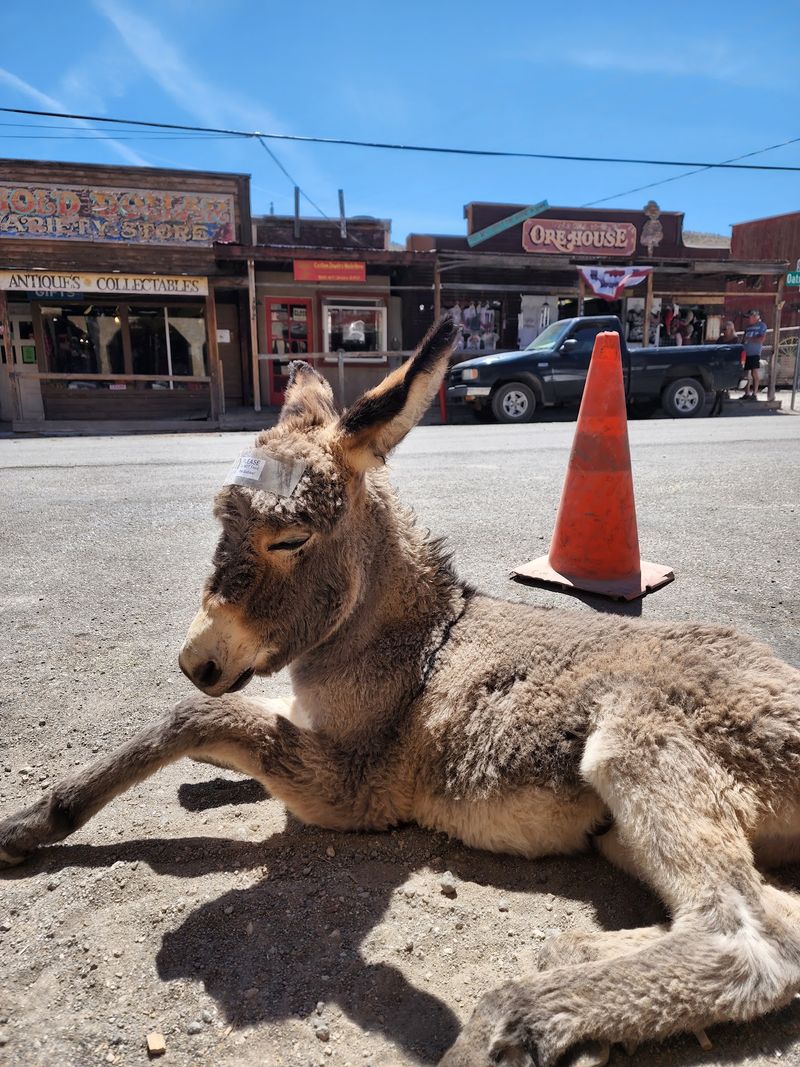
Cute does not mean tame. The burros are wild animals, and treating them with respect keeps everyone safe.
Giving them space is the simplest rule. Approaching slowly and avoiding sudden moves helps keep encounters calm.
Baby burros, called foals, can be especially tempting to get close to. Mothers may be protective, so admiring from a distance is the smart move.
Watching where you stand matters too. Burros can kick if startled, so standing directly behind one is never a good idea.
Local shops have traditionally sold approved burro pellets as a treat. Feeding them other snacks is discouraged, since human food can be bad for their health.
Following these simple habits protects the animals that make the town famous. A little courtesy goes a long way in keeping this unusual tradition going for future generations of Arizona road trippers.
A Living Slice of Route 66
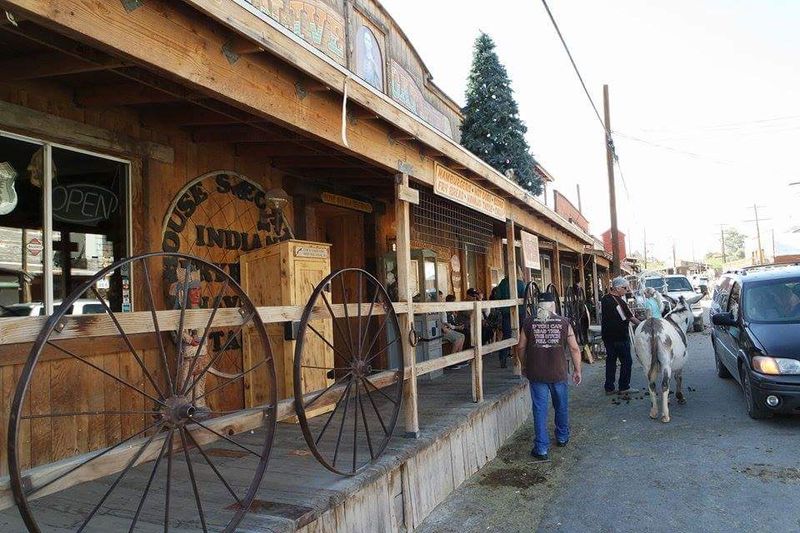
Nostalgia runs deep along this part of the Mother Road. Oatman sits on a stretch of historic Route 66 that winds through the Black Mountains.
The highway made the town a stop for travelers heading west during the road’s heyday. Many of those travelers came through on their way toward California.
Today, the route draws people who want to experience the old road the slow way. Classic car fans, motorcyclists, and curious families all make the trip.
The town fits neatly into that story. Its weathered wooden buildings and old western look match what many people expect from a classic Route 66 stop.
For Arizona locals, it is a chance to reclaim a piece of the state’s own highway history. Route 66 is famous worldwide, yet some of its most memorable miles sit right here in Mohave County.
Driving it feels like flipping through a family photo album. The main difference is that some of the family members have long ears.
The Climb Over the Mountains
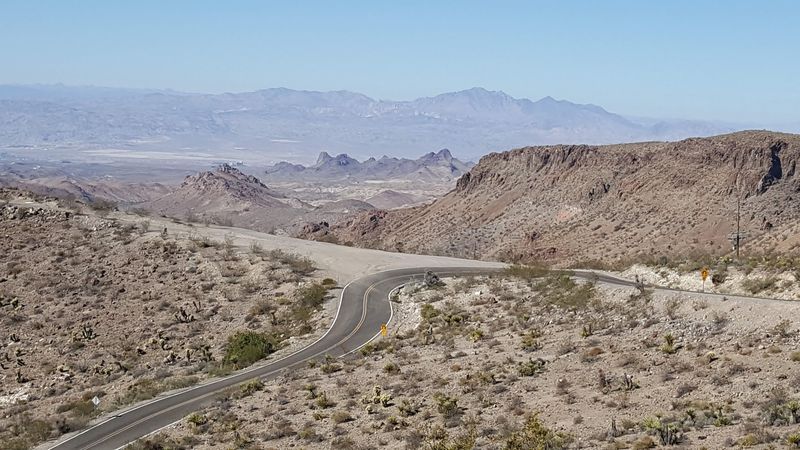
Getting there is half the adventure. The road into town climbs through the Black Mountains with tight curves and steep grades.
That stretch of Route 66 is known for its twisty layout. Careful driving is a must, especially for anyone not used to mountain roads.
Taking it slow has a bonus. The rugged terrain along the way shows off a side of Arizona that many people never see from the interstate.
Larger vehicles and trailers may find the route challenging. Checking road conditions and planning ahead helps avoid surprises.
Approaching from either side gives a different perspective on the mountains. Some travelers like to come in one way and leave the other, turning the visit into a loop.
By the time the first burro appears near town, the winding drive has already done its job. It sets the mood for a place that feels removed from modern rush and hurry.
Old West Storefronts and Shops
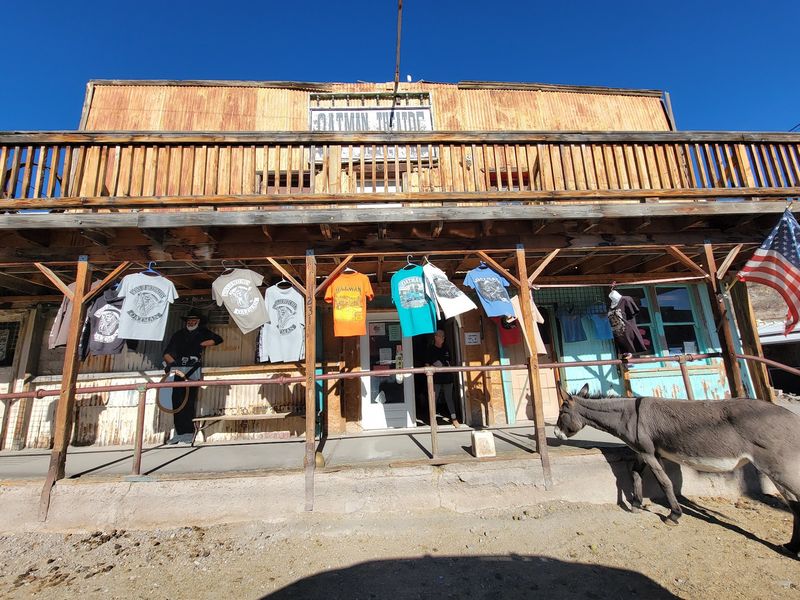
Wooden boardwalks and rustic facades line the main drag. The look leans heavily into the town’s old western roots.
Small shops fill many of these buildings. Souvenirs, western-themed goods, and Route 66 memorabilia are common finds.
Browsing is part of the fun. Strolling from storefront to storefront while burros wander nearby makes for a relaxed afternoon.
Many of the shops have long been a source of burro pellets, which ties shopping directly to the main attraction. It is a handy setup for anyone hoping to meet the herd up close.
The town is small, so covering the main street does not take long. That compact size makes it easy to see a lot without much planning.
Shop hours can vary, especially in a small community like this one. Arriving earlier in the day usually gives the best chance of finding doors open and the street lively.
Gunfights, Characters, and Small-Town Personality
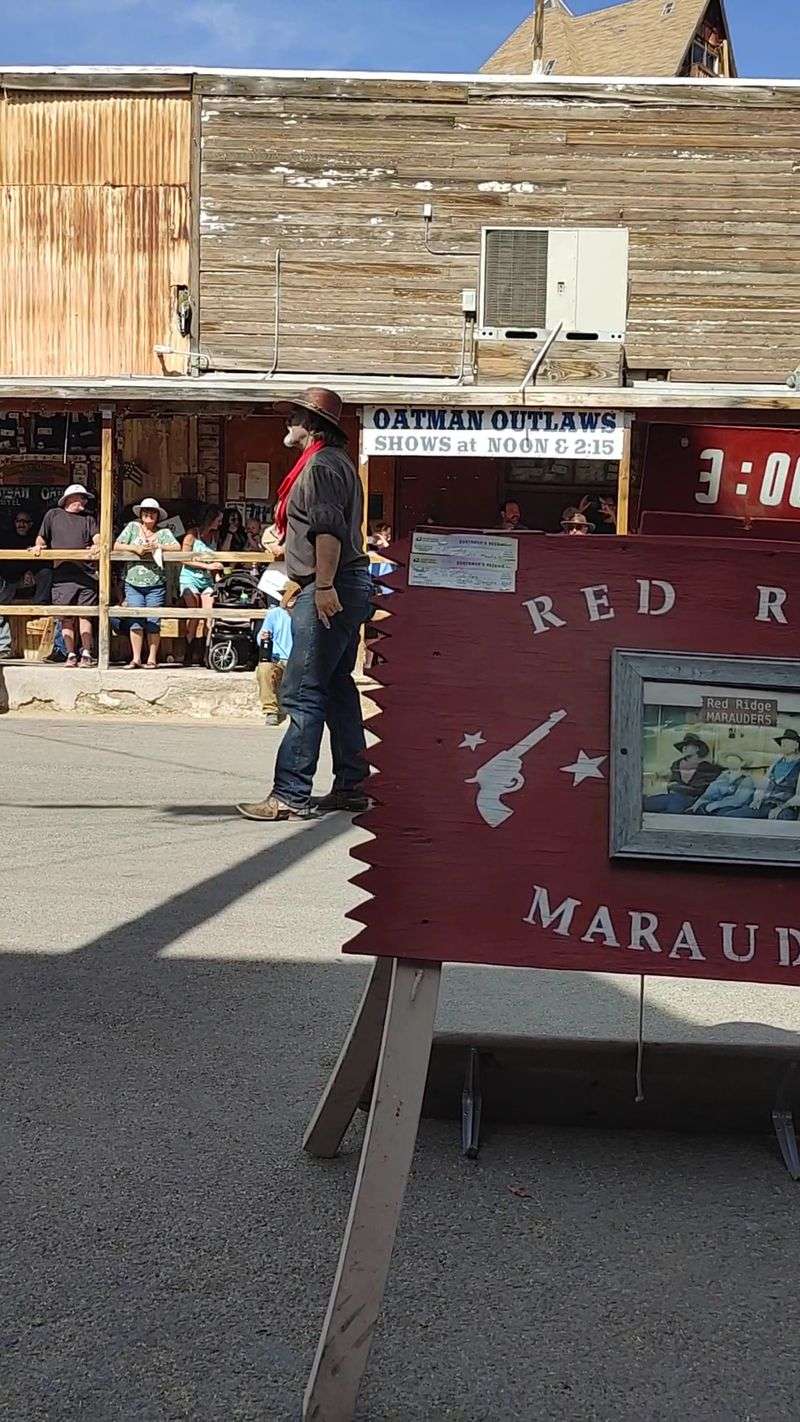
Personality is something this town never runs short on. Oatman embraces its Wild West image with a playful, theatrical streak.
Staged Old West street shows have long been part of the town’s appeal on many days. These performances lean into the mining-era atmosphere with a good dose of humor.
The overall mood is casual and lighthearted. Nobody takes things too seriously, and that easygoing style suits families and road trippers alike.
Schedules for shows and events can change. Checking ahead before a visit is the best way to avoid missing anything.
The town also hosts occasional community events tied to its history and character. These gatherings add extra energy on certain weekends.
Even on a quiet day, the place has plenty of charm. Between the burros, the buildings, and the people who keep the town running, there is always a story unfolding somewhere on the street.
Who Will Love This Detour
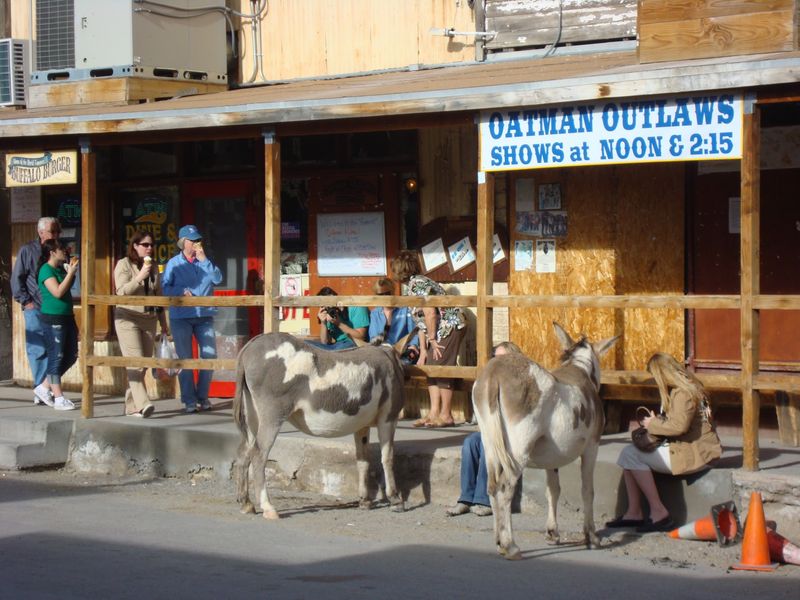
Some places suit only one kind of traveler. Oatman manages to win over a surprisingly wide crowd.
Families tend to enjoy it because kids rarely forget meeting a burro on a public street. The town is easy to explore on foot and does not require a full day.
History buffs get a real mining town with a documented gold rush story. Route 66 fans get one of the more memorable stretches of the old highway.
Photographers find endless material in the combination of animals, weathered buildings, and mountain scenery. Motorcyclists and classic car owners often make the winding road a destination in itself.
Anyone looking for upscale amenities may find the town very simple. It is small, rustic, and proud of it.
Arizona locals who think they have seen it all might be the biggest winners. There is something satisfying about discovering such an unusual place just a few hours away, sitting quietly in your own backyard.
Timing Your Trip Right
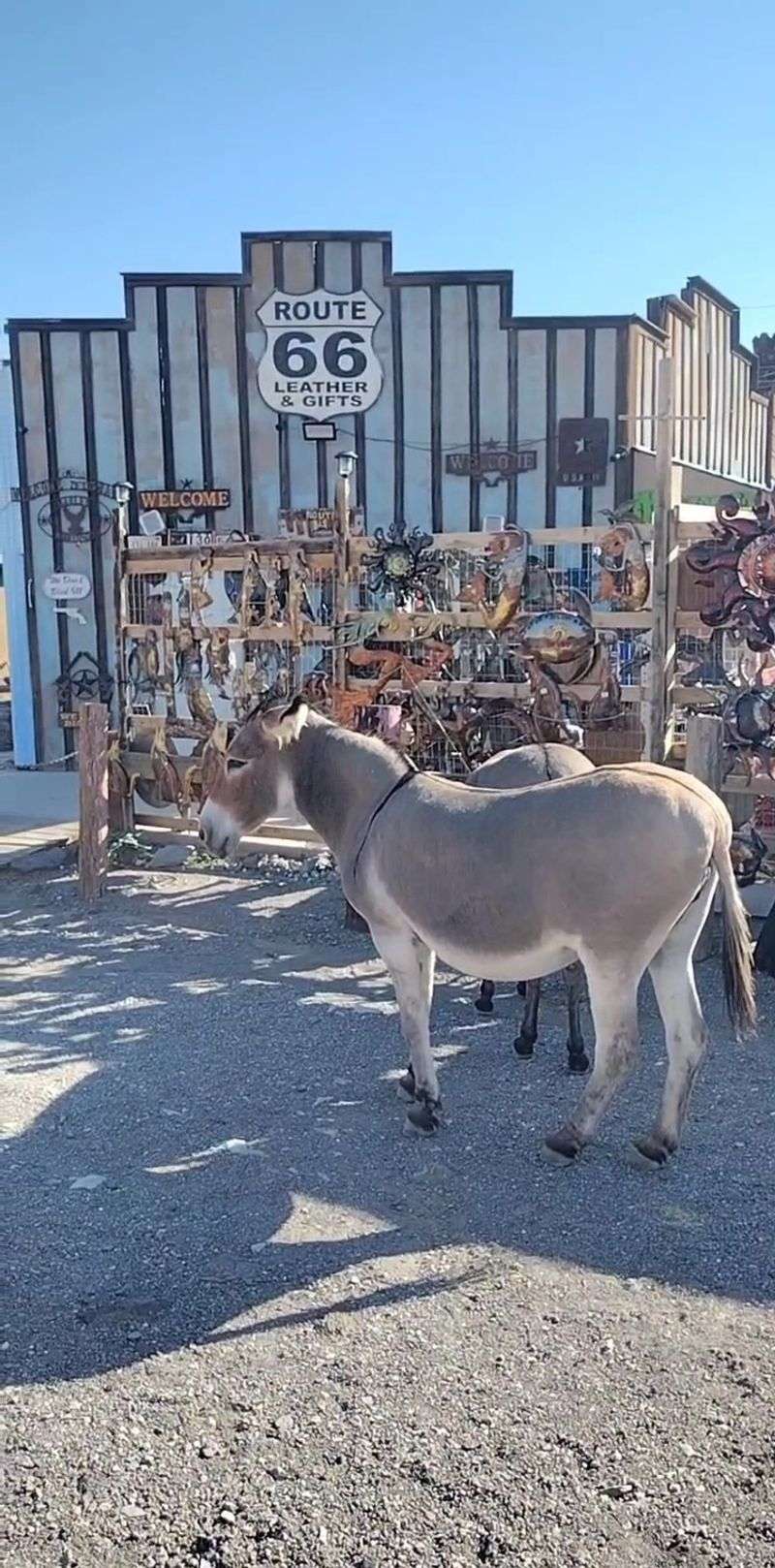
Western Arizona summers are no joke. Temperatures in this part of Mohave County can climb high, so timing matters.
Cooler months generally make for a more comfortable visit. Walking around town and lingering with the burros is easier when the heat backs off.
Arriving earlier in the day is often a good call. Burros tend to come into town during the day, and the street is usually most active while shops are open.
Weekends can bring more traffic and bigger crowds. Weekdays may offer a quieter experience for those who prefer more breathing room.
Bringing water is wise in any season. The town is remote, and the drive through the mountains does not offer many stops.
Specific hours for shops and attractions are not fixed across the board. A quick check before leaving home helps match the trip to what is open, so the burros are not the only ones showing up for the day.
A Town Worth the Winding Road
Gold built Oatman, but the burros keep it famous. More than a century after that 1915 strike, the town still carries the marks of its mining past.
Few places manage to blend history, scenery, and pure quirkiness so naturally. Here, a Route 66 relic sits in the Black Mountains with wild animals as its most beloved residents.
The visit does not demand much. A careful drive, a little patience, and respect for the burros are about all it takes.
In return, the town offers a day that feels different from almost anywhere else in Arizona. It is a reminder that the state still holds surprises tucked away on old roads.
Locals looking for a story to tell at the next family gathering will find one here. Being stuck behind a burro is a traffic delay worth bragging about.
So when the urge for a road trip hits, point the car toward Mohave County. The long-eared welcome committee will likely already be waiting in the middle of the street.


