
Affiliate disclosure: As an Amazon Associate I earn from qualifying purchases. Learn more
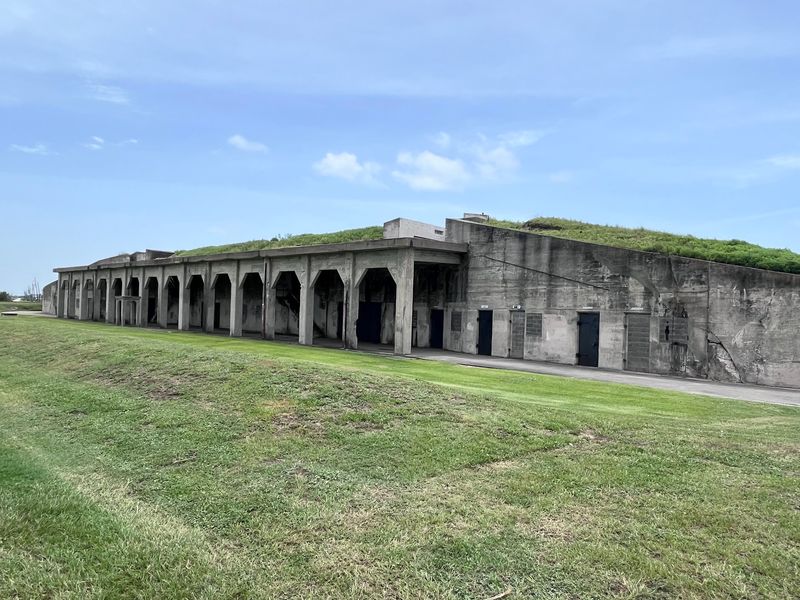
A short, free ferry ride from Galveston drops you onto the Bolivar Peninsula, and a few minutes later the road leads to something unexpected. Massive concrete bunkers sit in the grass like leftovers from another century, because that is exactly what they are.
Soldiers once guarded this stretch of the Texas coast, and the walls they built are still standing, scuffed and stubborn. Today, kids run past old gun batteries while cargo ships line up offshore, waiting to reach port.
It is free to enter, rarely crowded, and full of stories that most travelers zoom right past. Keep reading to learn where this coastal fort hides, what you can and cannot explore, when to go, and why a quick stop here might turn into a whole afternoon.
A Fort Hiding at the Tip of Bolivar
Not every history lesson comes with a free boat ride, but this one does.
Fort Travis Park sits at 900 TX-87, Port Bolivar, TX 77650, on the Bolivar Peninsula in Texas, United States. It is a Galveston County park built on the grounds of an old military fortification.
The setting is right on the water, near the spot where the Galveston-Port Bolivar ferry lands. That makes it one of the easiest first stops once you roll off the boat and onto the peninsula.
The park is tucked away a bit, so a GPS is your best friend on the way in. Blink at the wrong moment and you may cruise right past the turn.
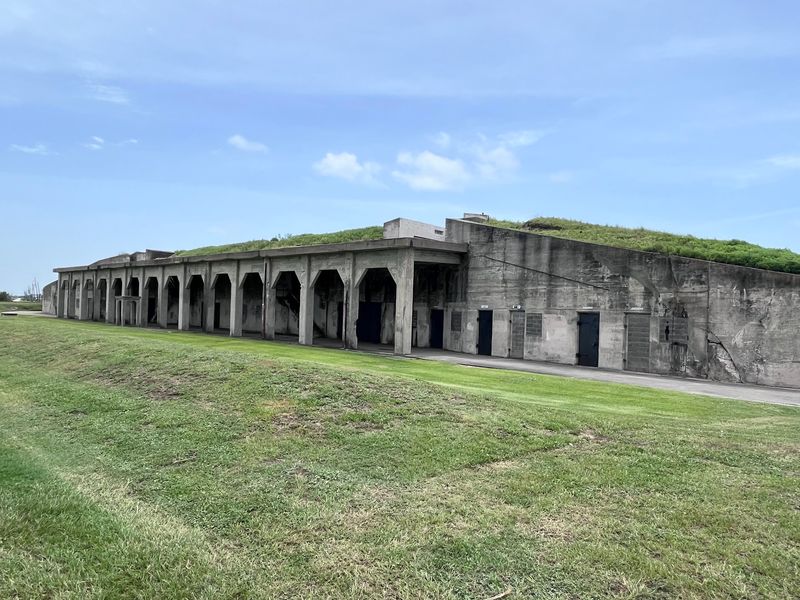
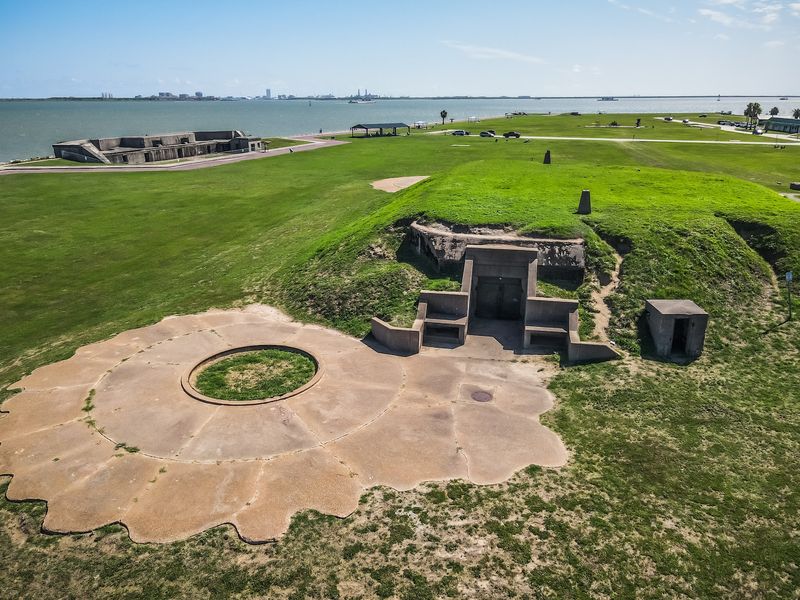
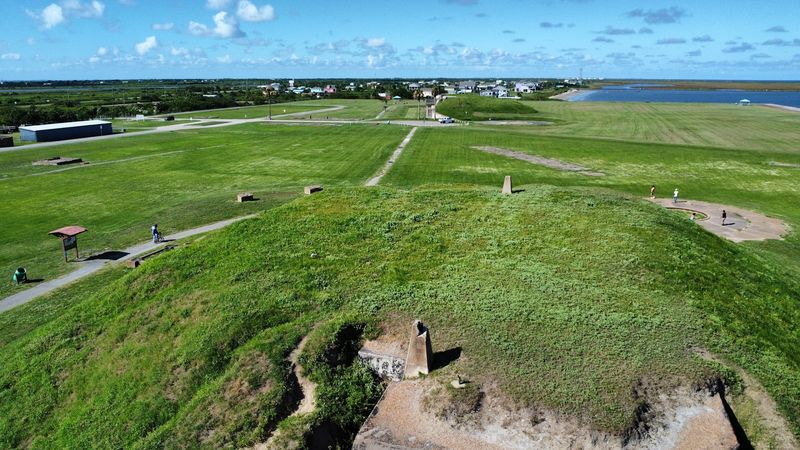
Inside, the grounds mix two very different worlds. Weathered bunkers and battery remains share space with a playground, covered pavilions, restrooms, and wide lawns.
Admission costs nothing, which feels almost suspicious for a place with this much backstory. The park holds a strong 4.6-star standing across nearly 2,000 opinions, and the reasons become clear fast.
Plan for a casual visit rather than a museum tour. The real fun is wandering the grounds and piecing together what happened here, one concrete wall at a time.
Over a Century of Coastal Guard Duty
Some places collect dust. Fort Travis collected wars.
A historical marker on site explains that a fort stood here as early as 1836. That date puts its roots in the era of the Republic of Texas, long before the concrete giants you see today.
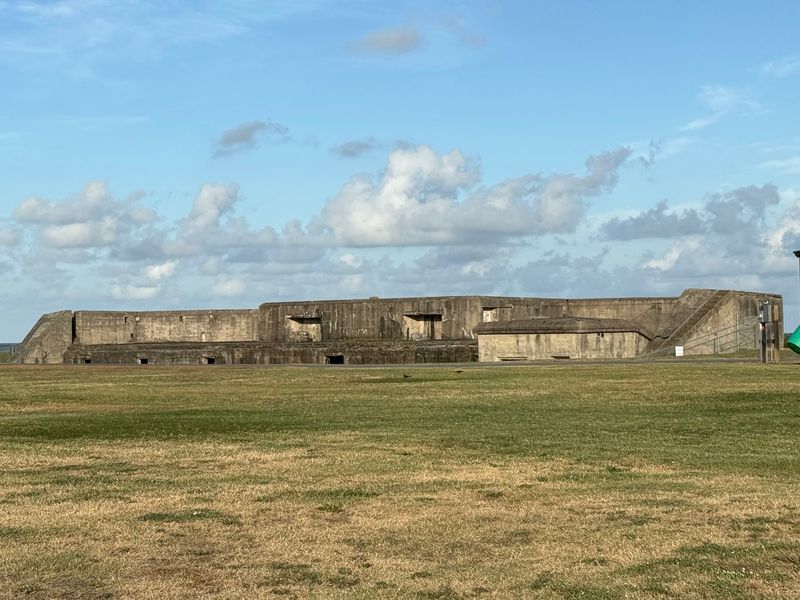
The military fortification that shaped the current grounds operated from 1898 to 1949. Over that span, it was built up and repurposed for multiple wars across roughly a hundred years.
The site once boasted two gun emplacements along with support barracks and logistics buildings. Its job was simple and serious: protect the entrance to Galveston Bay and the busy ports beyond.
Much of that working fort is gone now. Concrete foundations of many buildings still outline where they once stood, and one old building survives as a maintenance shop and office.
Reading the marker first is a smart move. It turns a field of gray walls into a timeline, and suddenly every crack seems to have something to say.
The Batteries That Steal the Show
Bunkers get mentioned more than almost anything else here, and for good reason.
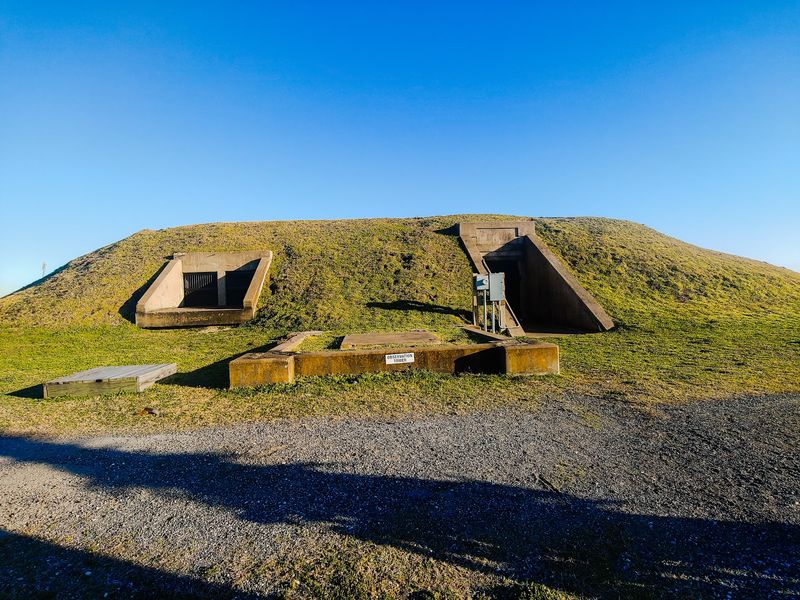
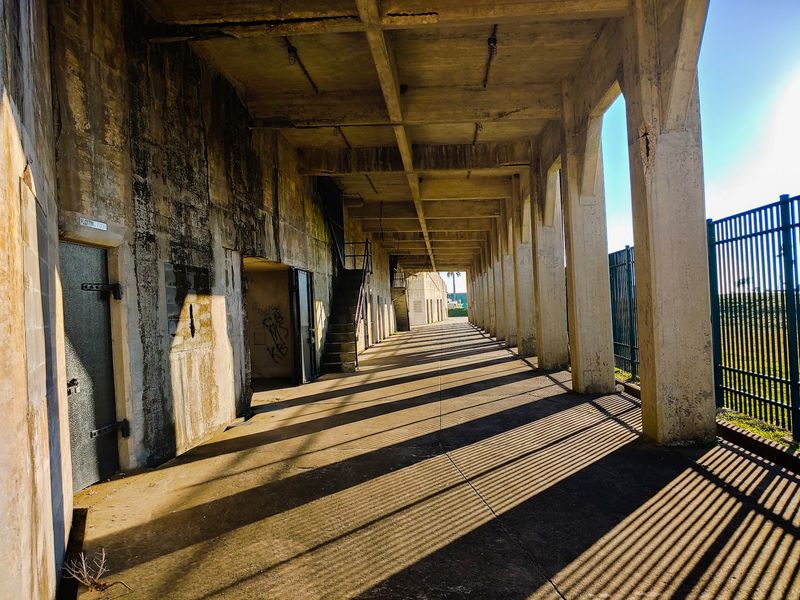
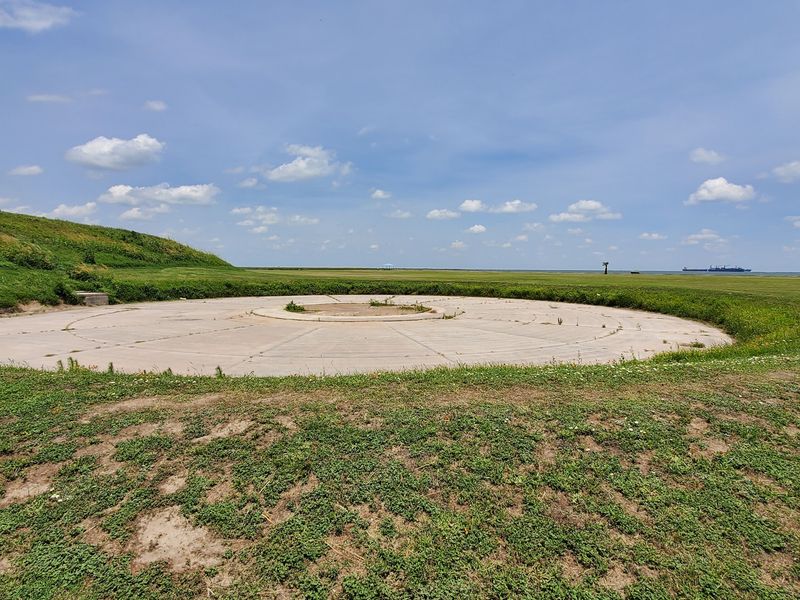
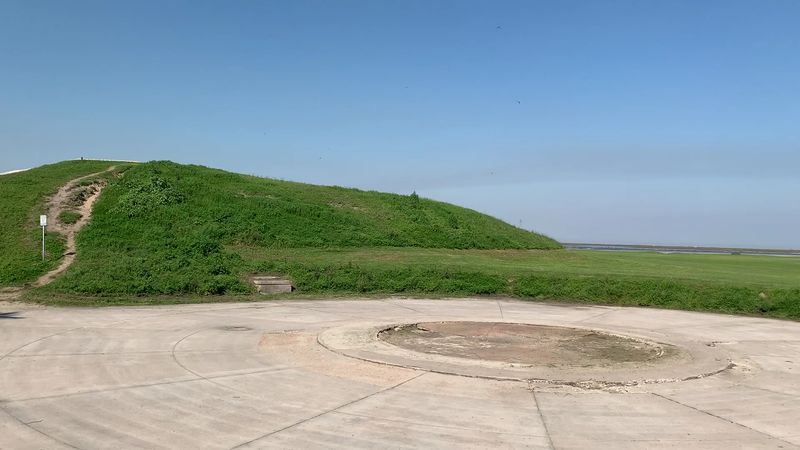
The old batteries remain in place, hulking and solid, built to take a hit and still be standing decades later. They clearly did their homework.
Their shapes are blocky and angular, with thick walls, deep doorways, and grass-covered tops. Some people compare the look to sci-fi movie sets or ancient pyramids, which says a lot about how unusual they appear in a beach town.
Walking the perimeter of each structure is the main event. You can peer through openings and fenced gaps to catch glimpses of the dark rooms inside.
A strong flashlight is a clever item to pack. It helps you see deeper through the gated areas without needing to step past any barriers.
Graffiti marks many of the surfaces, a frustrating layer on such an important piece of history. Even so, the scale of these batteries makes it easy to understand how significant this post once was.
Locked Doors and Honest Expectations
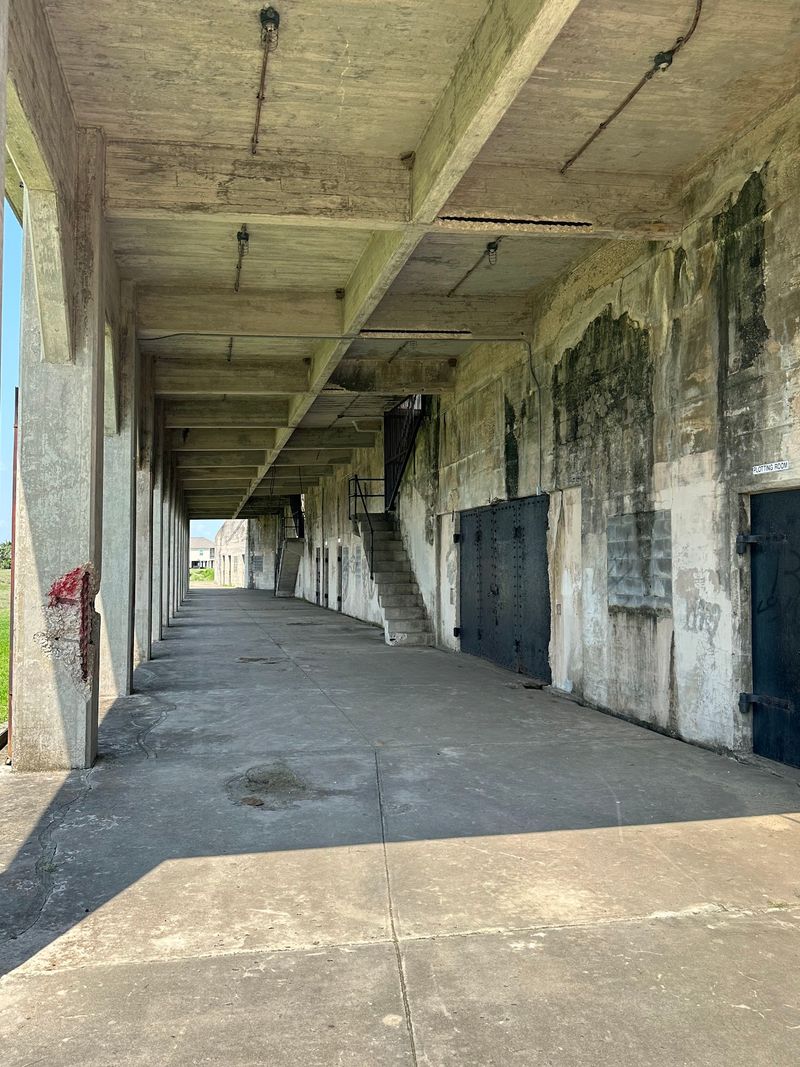
Here is the plot twist every first-timer should know before arriving.
You cannot go inside the bunkers. Doors on much of the site are welded shut, and some areas sit behind fences.
One building is surrounded entirely by fencing. Access to the top of certain structures can also be locked, and posted signs ask people not to climb on the bunkers.
The closures are likely about safety, since old military concrete is not exactly designed for casual tourism. Still, many history fans wish the interiors were open, and some say they would happily pay a few dollars for the chance.
Informational signs exist, but they are fewer than curious minds might like. Some strategically placed panels explain individual structures, while other spots leave you guessing.
So think of this as an outdoor exhibit you admire from the edges. Go in with that mindset, and the fort tends to deliver far more than it disappoints.
Front-Row Seats to Passing Ships
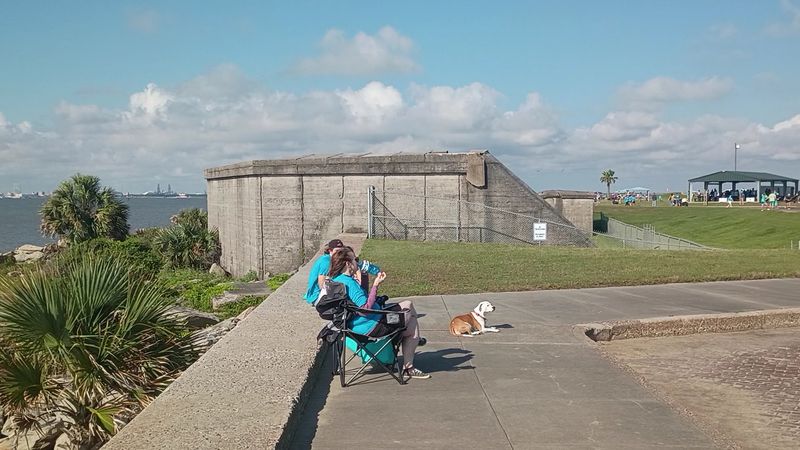
Old soldiers watched these waters for threats. Today, the same view is pure entertainment.
Ship watching ranks as one of the most loved activities here. Big vessels line up offshore, waiting their turn to enter port, and the park offers a wide-open view of the whole parade.
Because the fort was built to guard the channel, its position is ideal for this hobby. The geography that once mattered for defense now works perfectly for spotting tankers and cargo ships.
The ferry crossing is also close by. Watching the boats shuttle back and forth adds steady activity to the horizon.
Ocean views stretch across much of the grounds. Bring a pair of binoculars if you like to identify ships or read the names on their hulls.
Some families plant themselves on a bench and simply count vessels. It is a low-key pastime, and it pairs nicely with the history all around you.
A Seawall Path Made for Moving
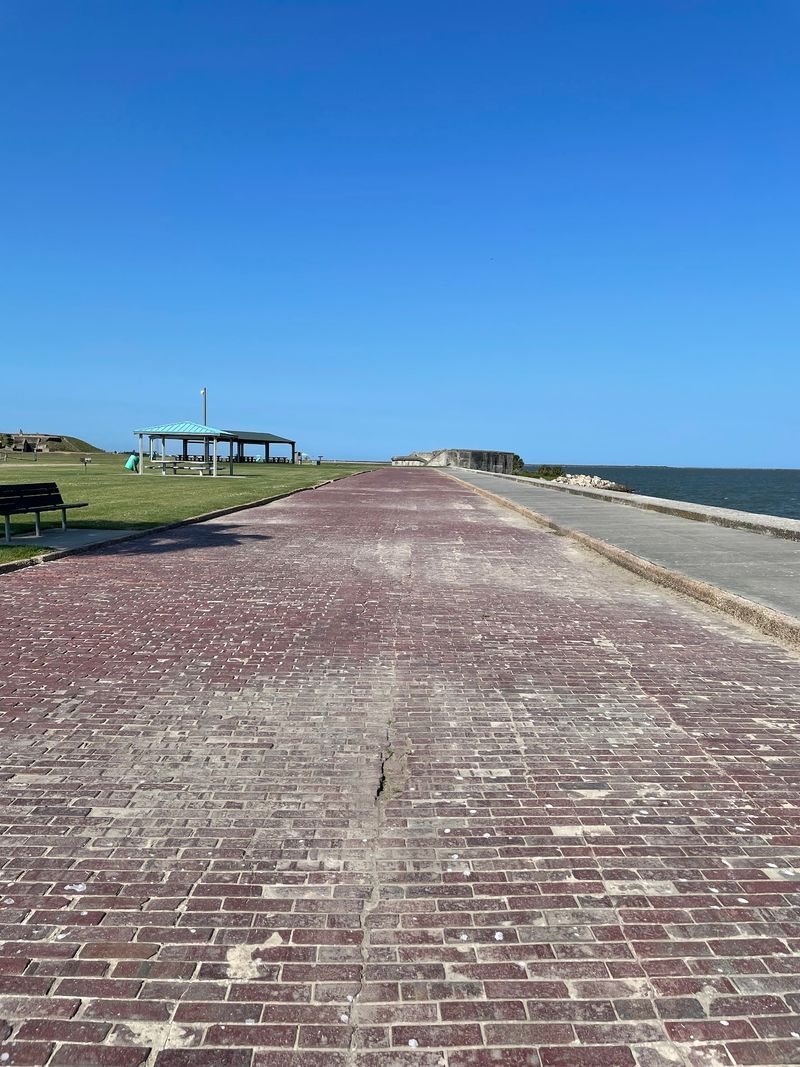
Leg day, but make it historic.
Long paved walkways wind around the park, including a pretty brick path near the ocean and a section along the seawall. The surfaces work well for strolling, jogging, biking, or skating.
A loop around the whole property takes about 30 minutes at a steady pace. Families who wander through the structures and stop often might spend closer to an hour and a half covering roughly two miles.
Dog walkers appreciate the setup too. Open views and paved routes make it simple to keep a pup moving while you take in the coastline.
The trail also gives your visit a natural structure. Follow it, and you pass the batteries, lawns, and water views without missing much.
Plenty of people call the exercise a bonus. It is hard to complain about a workout when the scenery includes century-old fortifications and ships on the horizon.
Playground, Pavilions, and Picnic Plans
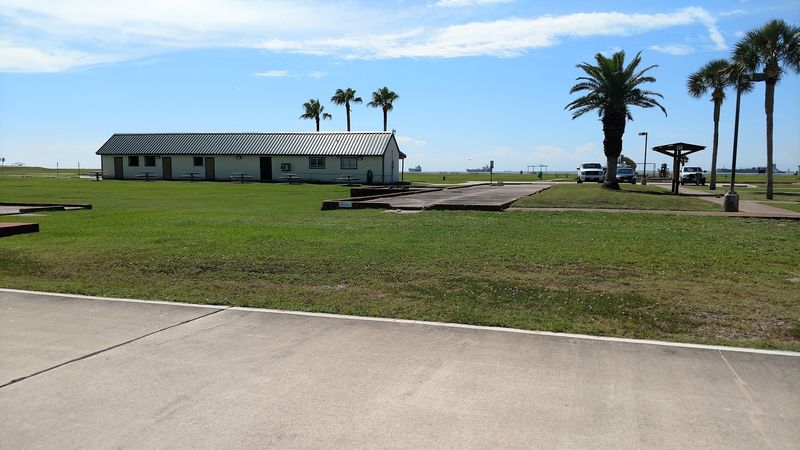
History buffs may come for the bunkers, but kids often vote for the swings.
The park includes a small playground near the restrooms, with a swing set and equipment suited to younger children. It is a handy place for little ones to burn off energy.
Covered pavilions and shaded picnic tables dot the grounds. Several come equipped with barbecue grills, so packing a picnic lunch is an easy win.
Wide stretches of green grass invite games of soccer, tag, or simple running in circles. Parents often mention how much space there is for kids to roam.
Restrooms are available and generally kept clean. The park also offers cold-water showers, useful after a beach day nearby.
Some people stop by on a whim while driving past and promise to return with a full lunch. That kind of second-visit plan says plenty about how comfortable the setup feels.
Quiet Days and Fog-Wrapped Afternoons
Crowds are not really the fort’s thing, and that is part of the appeal.
The park tends to stay calm, with far fewer people than busier spots like Crystal Beach. On some days, especially holidays, you might have the entire place nearly to yourself.
Foggy weather adds a rare, cinematic mood. Gray mist around gray concrete makes the whole site feel like a scene from a history film.
That calm also makes it a good backup plan. When rain cancels a beach day, the fort offers a different kind of outing that does not depend on sunbathing.
The overall vibe sits somewhere between relaxed park and open-air archive. You can explore, rest, or simply sit and watch the water.
Peaceful, scenic, and tidy are words that come up again and again. For a place built for battle, it has settled into retirement rather gracefully.
Fishing Lines and Lazy Breaks
Not every visit needs a mission statement.
Some people come simply to fish along the water and then retreat to a gazebo for lunch. The combination makes for a slow, easy day on the peninsula.
Because the park sits right on the shoreline, casting a line fits naturally into a visit. Bring your own gear and check local fishing rules before you go.
The open lawns also suit unhurried breaks. Spread out a blanket, let the kids play, and keep one eye on the ships drifting past.
This flexibility is a quiet strength of the park. It works as a quick history stop, a picnic site, or a place to unwind for hours.
Treat it as your personal base camp on Bolivar. You may arrive planning a short look and leave several hours later wondering where the time went.
Small Surprises Worth Knowing
A few practical details can save you from minor surprises.
In early summer, small birds nest in the corners of bunker ceilings. They are not aggressive, but they swoop low enough to startle kids and adults alike.
Tiny biting insects called no-see-ums can also show up. Insect repellent is a wise addition to your bag, especially in warmer months.
After rain, expect wet spots in and around the structures. Shoes that can handle puddles will make exploring more comfortable.
Parking is described as plentiful by some and limited by others. Arriving earlier in the day can help if you are visiting during a busy weekend.
None of these quirks are deal-breakers. They are simply part of exploring an open-air fort on the Gulf Coast, where nature has clearly moved in alongside the history.
Hours, Cost, and the Ferry Factor
Good news for planners: the schedule is refreshingly simple.
Fort Travis Park is open daily from 8 AM to 8 PM, seven days a week. That wide window makes morning walks or early evening visits easy to fit in.
There is no admission fee. You can explore the grounds, use the pavilions, and enjoy the views without spending a dime at the gate.
Many travelers arrive by the free Galveston-Port Bolivar ferry. The park sits close to the landing, making it a natural place to stretch your legs after the crossing.
Some say the fort alone is worth the ferry trip. Others treat it as the opening act before heading farther up the peninsula.
For current details, the Galveston County facility directory website lists park information. Checking ahead is a smart habit, especially around holidays or after storms.
Why This Stop Earns Its Spot
Beautiful and a little underwhelming, all at once, is an honest summary from many who visit.
The interiors stay closed, graffiti mars some walls, and signs could tell more of the story. Those are real drawbacks for anyone hoping for a full museum experience.
Yet the positives keep piling up. Free entry, clean grounds, wide water views, passing ships, and more than a century of military history all share one shoreline.
Families find room to run. History lovers find concrete proof of how Texas guarded its coast through several wars.
It works best for curious travelers, ferry riders, picnickers, and anyone who enjoys quiet places with a past. Thrill seekers wanting indoor tunnels may leave wishing for more.
Bring a flashlight, a picnic, and realistic expectations. The fort may not open every door, but it opens a surprising window into the Gulf Coast’s story.