
Affiliate disclosure: As an Amazon Associate I earn from qualifying purchases. Learn more
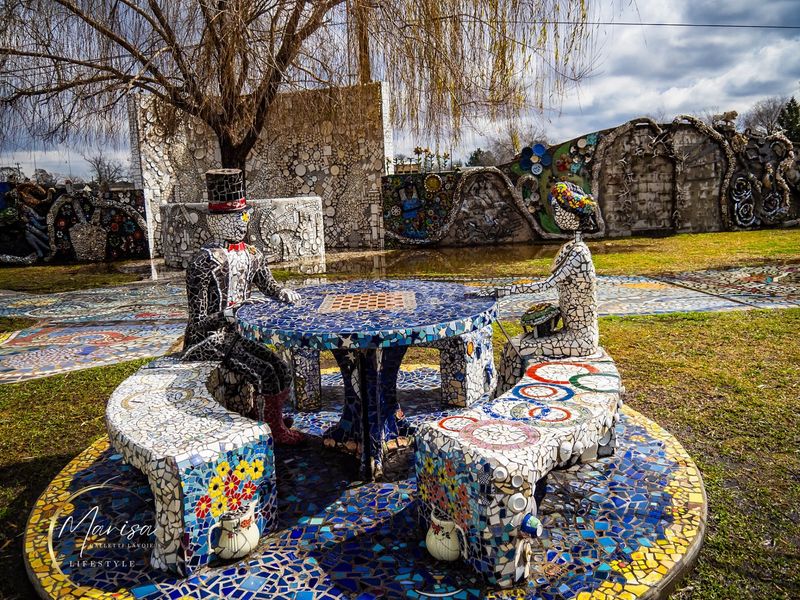
Somewhere on Houston’s East End, a quiet residential street hides a park built from things most people throw away. Broken tile, chipped pottery, busted glass, and seashells have been pressed into walls, benches, and sculptures until almost nothing is left plain.
The result is a narrow strip of land where every angle seems to hold a small surprise. There is no ticket booth and no admission fee, which makes it one of the easiest art trips in Texas to say yes to.
It is small, so do not expect a sprawling afternoon. What you get instead is detail, and plenty of it.
Keep reading to learn where it is, what to look for, when to go, and a few practical tips that make the trip smoother.
A Mosaic Park on Munger Street
The mystery spot is Smither Park, found at 2441 Munger St, Houston, TX 77023, in the United States. It sits on Houston’s East End, tucked into the middle of an urban neighborhood with little traffic.
On paper, it is simply a park. In practice, it is a quirky collection of large mosaic sculptures created by local artists, packed into a compact strip of green space.
The park is described as a linear or strip park, which means it stretches out more than it spreads wide. That shape works in its favor, since the art unfolds as you move along it.
Expect walls covered edge to edge, sculptures that rise above head height, and seating that doubles as artwork. Very little here was left undecorated.
The space is managed in connection with the Orange Show, whose website at orangeshow.org is the best place to check for updates. The two sites share a creative spirit and sit close to each other.
The park also earns a strong 4.7-star standing from nearly two thousand people who have shared their thoughts, which says a lot for such a modest patch of ground. Small footprint, big personality.
The Story Behind the Pieces
Every great junk drawer dreams of becoming art, and here that dream came true. The park is a dedication to a prolific artist and his family, and the project clearly took enormous effort to assemble.
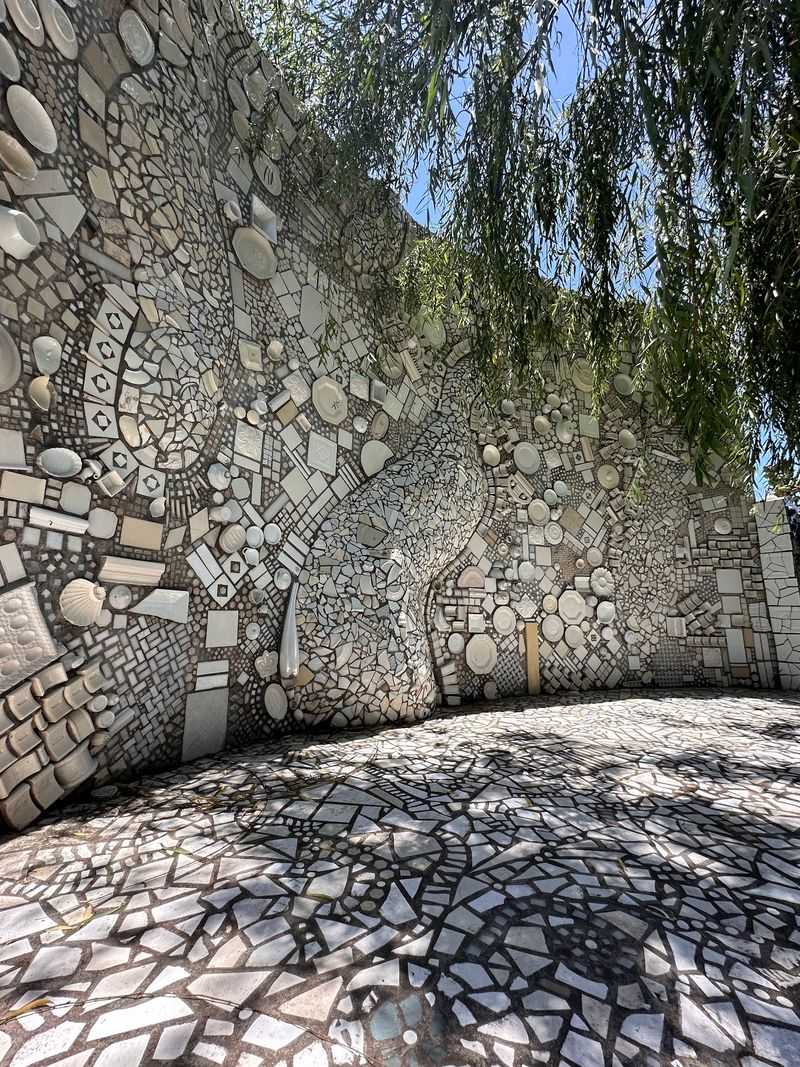
The building blocks are humble. Broken tile, glass, ceramic, pottery, and shells form nearly every surface.
Pieces that would normally end up in the trash have been fitted together into patterns, figures, and scenes. That idea of turning broken parts into something whole is part of what makes the place feel meaningful to so many people.
The work is not frozen in time either. Artists have been spotted creating new works on site, so the park keeps growing in small ways.
There are also days when people help add mosaics to the walls. That community angle turns the park into a shared project rather than a finished exhibit behind glass.
Because of this, the park can look slightly different from one trip to the next. A wall that was half done on one visit might be complete on the next, which gives regulars a reason to keep checking back.
Neighbors With the Orange Show
Two odd and wonderful art spaces on the same block is a pretty good deal. Smither Park sits right near the Orange Show, a well-known folk art site in Houston.
They are separate places, but the park flows right along with the Orange Show in style and spirit. Many people plan one stop and end up enjoying both.
There is a practical upside here too. The Orange Show can be closed on certain days, including holidays like Black Friday, with its gates locked.
When that happens, the park next door is a handy backup. Its daily hours make it much easier to catch.
Pairing the two creates a fuller afternoon on the East End without needing to drive across the city. Check the Orange Show website before heading out if seeing both is the goal.
Even on its own, though, the park holds its weight. Plenty of folks arrive as an afterthought and leave calling it the highlight of the outing.
Walls That Never Stop Talking
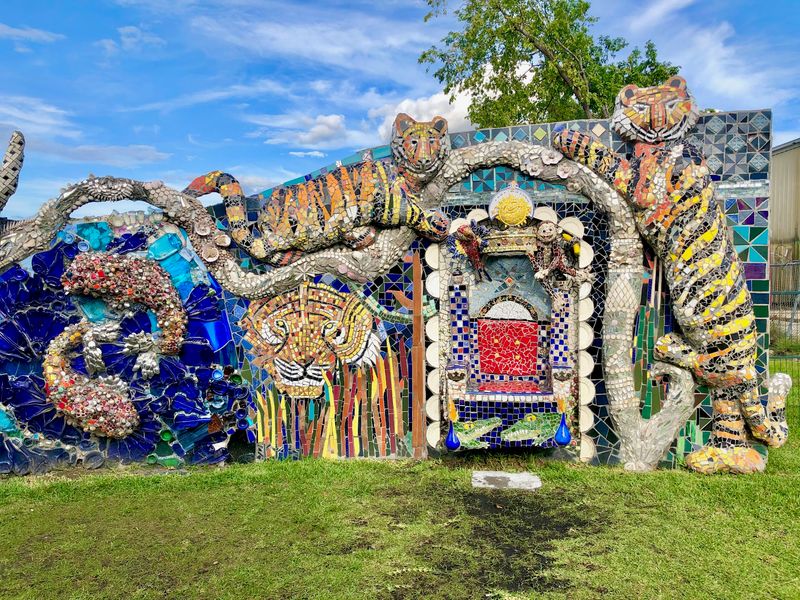
Blank walls are clearly against the rules here. The long mosaic walls are the backbone of the park, and they are dense with color and pattern.
Each section seems to hold its own theme or style, since many different artists contributed. The variety keeps the walk interesting from one end to the other.
Look closely and small surprises appear throughout the designs. A tiny figure, an unexpected object, or a clever pattern can hide in plain sight.
That level of detail is the reason people say they notice something new on every trip. A quick glance simply cannot catch it all.
Some areas show wear and damage, which is natural for outdoor art made of glass and ceramic. Repairs seem to be part of the ongoing process.
Slow down and give the walls time. The longer the look, the more they reveal.
Sculptures With a Sense of Humor
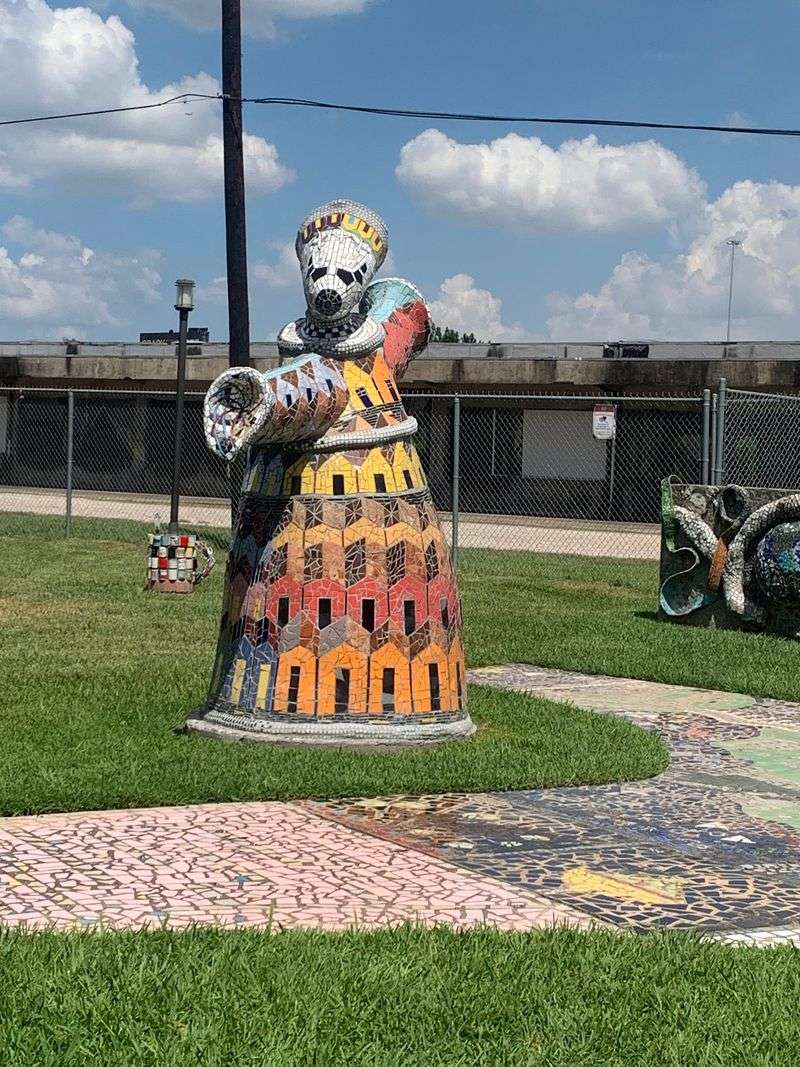
Some parks have statues of generals. This one has a giant robot.
The large mosaic sculptures are among the most memorable pieces in the park. They are whimsical, eclectic, and often a little strange in the best way.
The big robot near the middle draws plenty of attention, especially from kids. It appears to have had an interactive mechanism at one point, though that part has been reported as detached and in need of repair.
Other sculptures mix glass, ceramic, and shells into forms that reward a walk all the way around. Their backs and sides are often as detailed as their fronts.
Some people describe an eerie, mysterious quality to the collection. That slightly offbeat mood adds charm rather than taking it away.
It is the kind of art that makes people grin and point, which is exactly what a sculpture garden built from scraps should do.
Swings, Benches, and a Stage
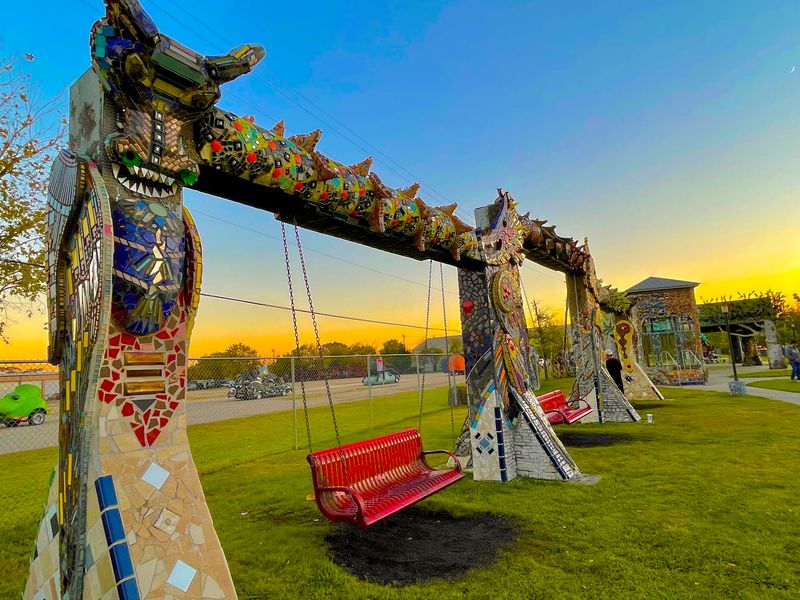
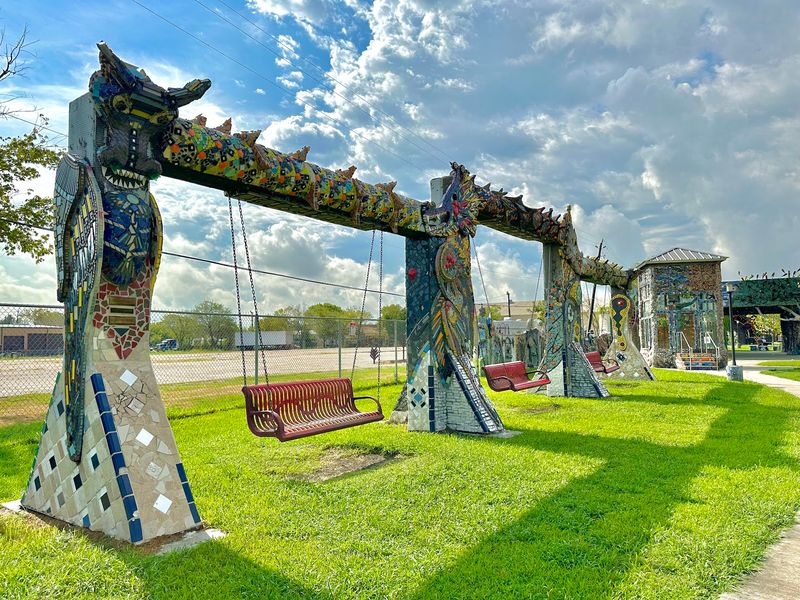
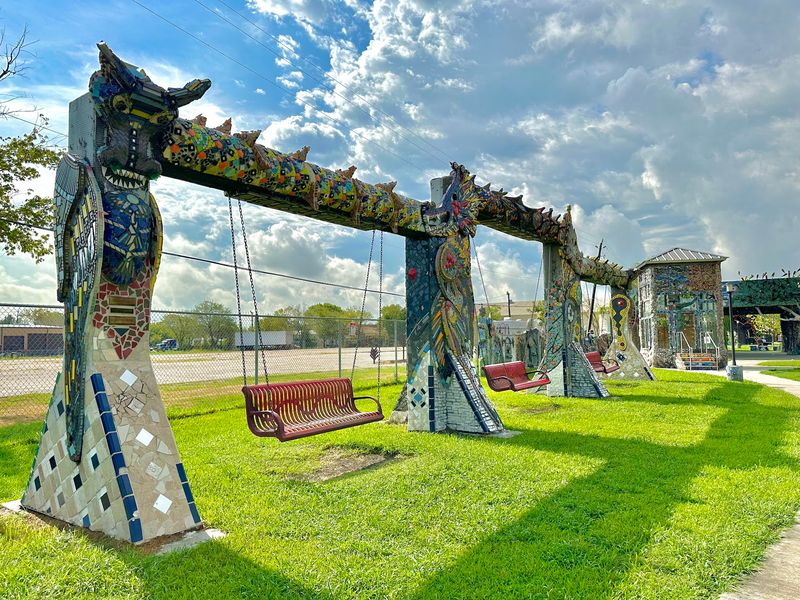
Art you can actually sit on is a rare treat. The park offers a few tables, a couple of bench swings, and other seating spread through the space.
The swings are a favorite for both kids and grown-ups. They give everyone a reason to pause between pieces.
Picnic tables make the park a solid choice for a casual meal outdoors. Many people bring lunch and linger.
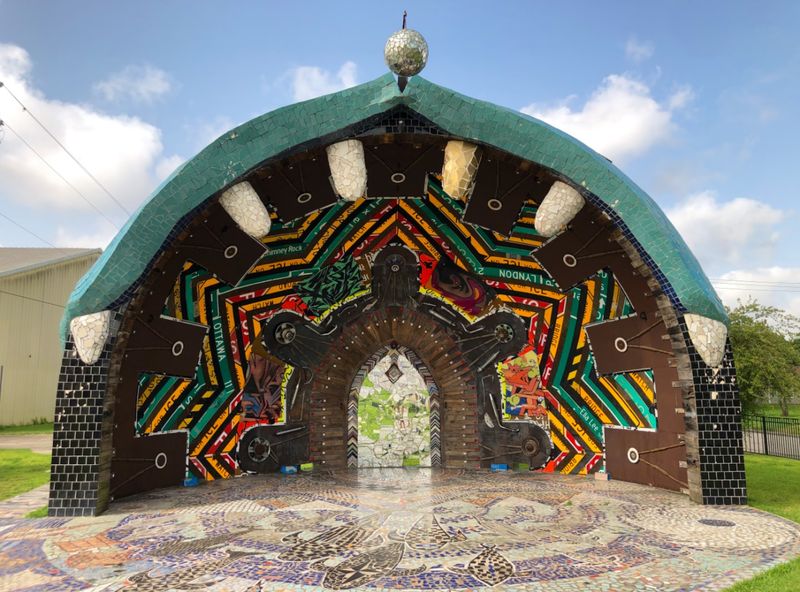
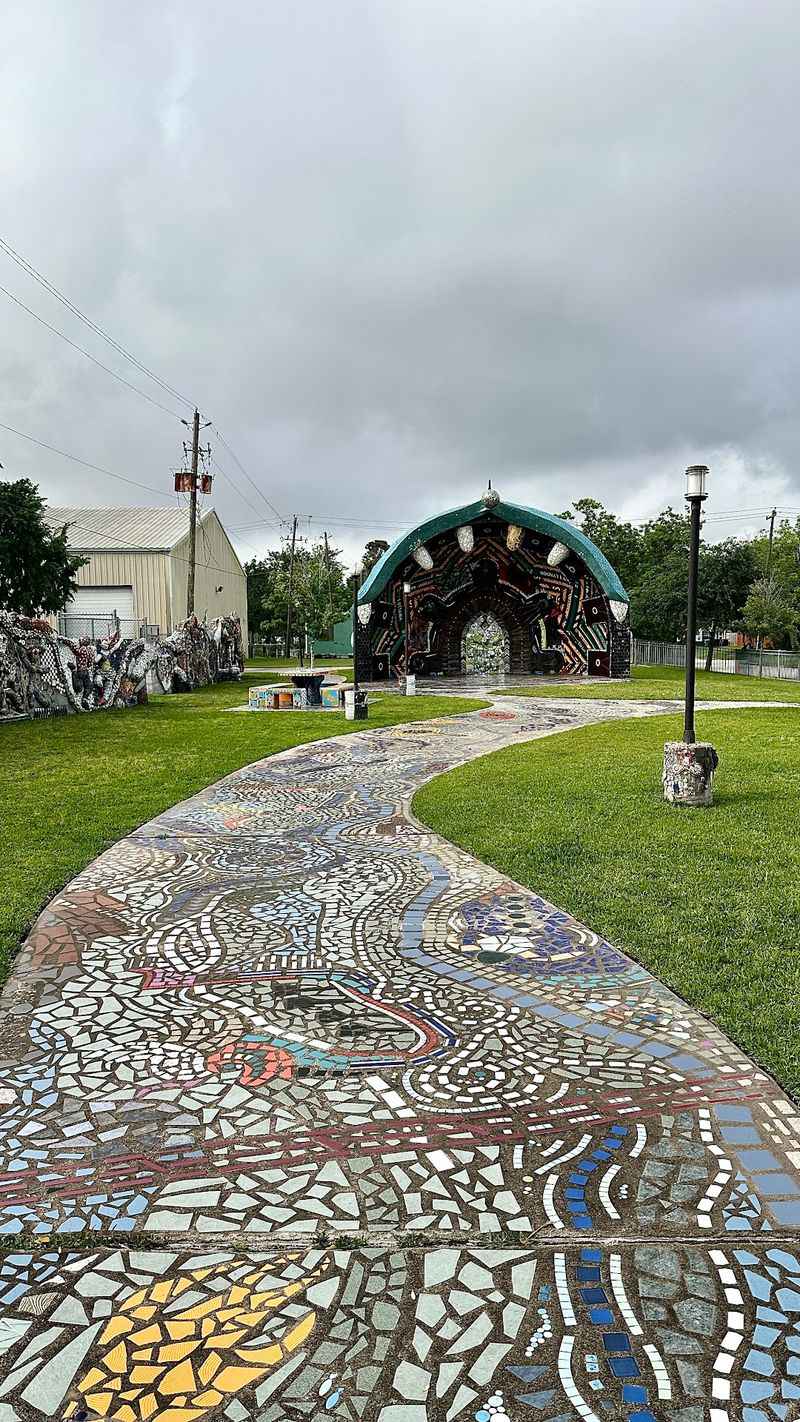
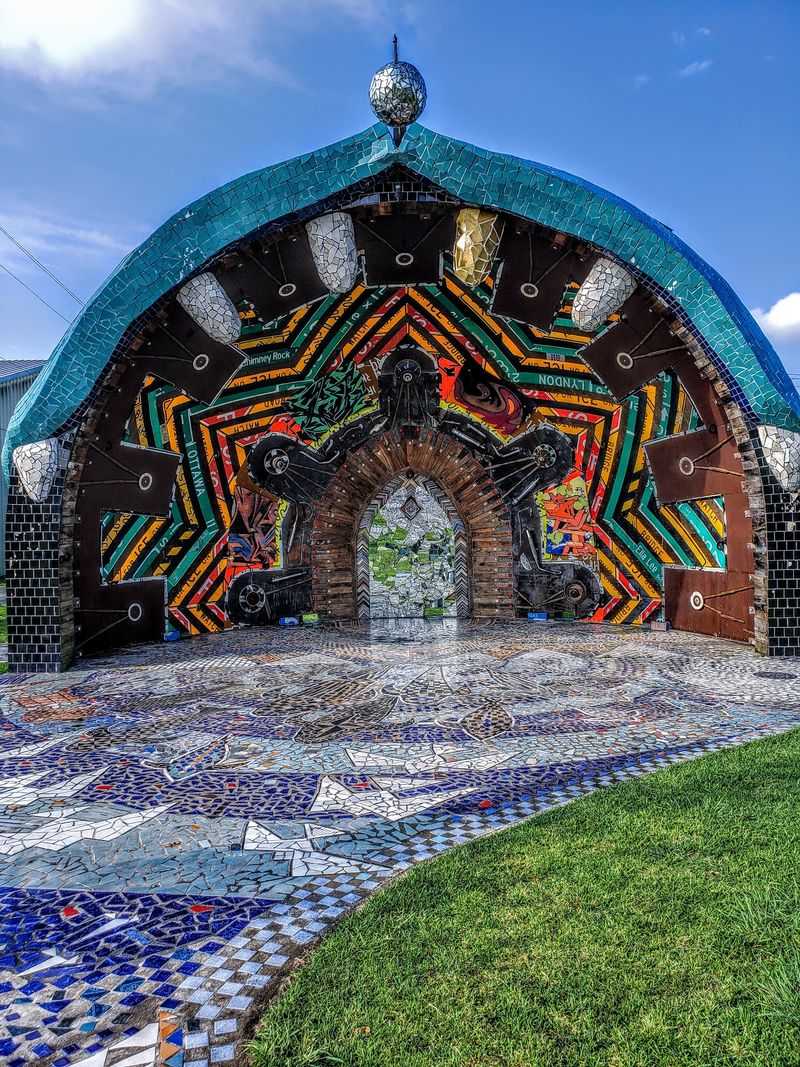
There is also an amphitheater and performance area. It is used for events, and vendors sometimes set up during those gatherings.
That stage gives the park a second life beyond quiet strolls. On event days, it becomes a small community hub.
Check the Orange Show website for any upcoming programming. A visit timed with an event offers a different side of the place.
A Little Free Library Among the Tiles
Tucked among the mosaics is a pleasant bonus for readers. The park has a Little Free Library, a small book box for sharing.
The idea is simple. Drop off a book for someone else, or take one that catches your interest.
It fits the spirit of the park nicely. A space built from donated and reused materials now also passes along stories.
Bring a paperback you have already finished if you want to join in. It is a small gesture that keeps the box stocked.
Kids especially enjoy browsing for something new. It can turn a short art stop into a mini treasure find.
Pair a book with a bench swing and the visit stretches a bit longer, in the nicest way.
Scavenger Hunts and Hidden Details
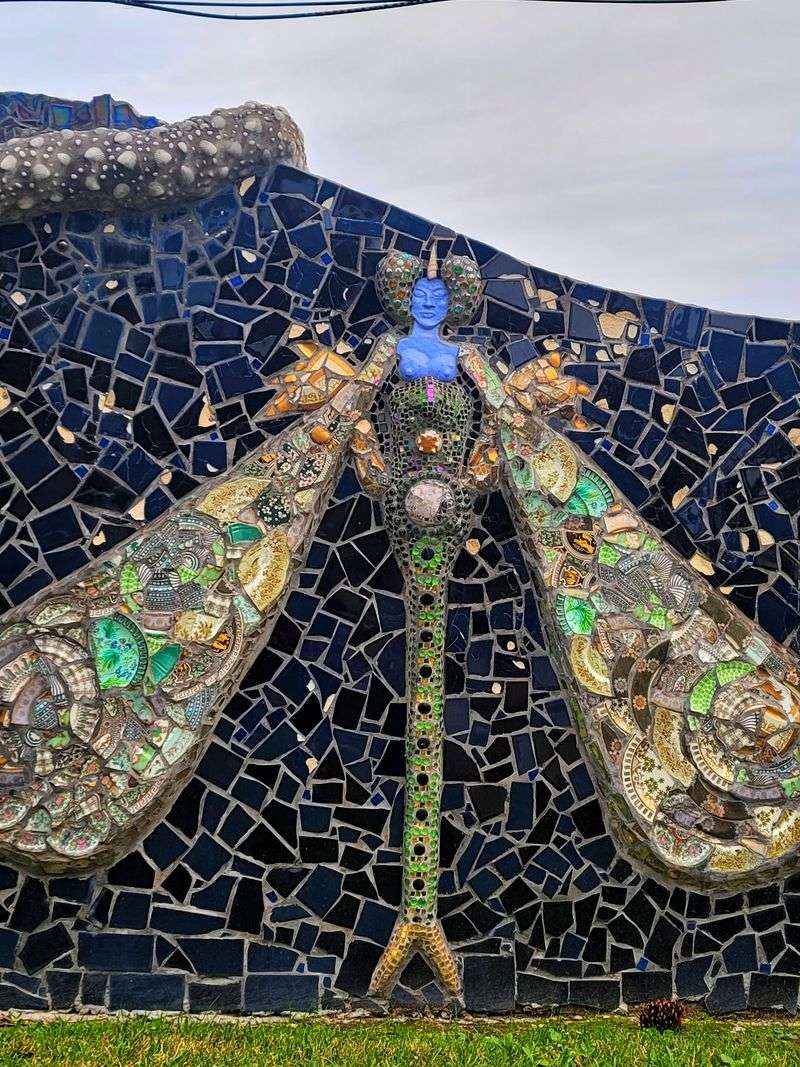
Hidden objects plus curious eyes equals instant entertainment. Scavenger hunts come up often when people talk about this park.
The mosaics are packed with tiny embedded items and clever surprises. That makes the space perfect for a game of spot-the-detail.
Families can make a list before arriving or invent one on the spot. Look for shells, faces, animals, or bits of familiar objects worked into the walls.
The small size actually helps here. Nobody gets lost, and the hunt stays manageable for younger kids.
Adults tend to get just as into it. Spotting a sneaky detail feels like winning a tiny prize.
It is an easy way to turn looking into playing, and it encourages everyone to slow down and notice more.
Every Angle a Photo Spot
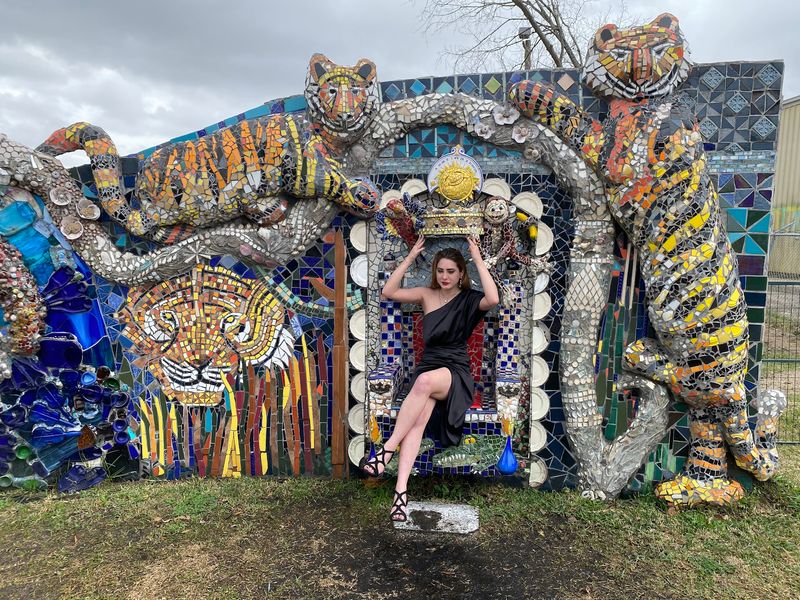
Cameras tend to work overtime here. The park is famously photogenic, with nearly every corner offering a shot worth keeping.
Bright mosaics make for strong backgrounds, whether for portraits, family photos, or close-ups of detail work.
Many people note that photos do not fully capture the place. The scale and density of the work are hard to fit in a frame.
Try mixing wide shots of the walls with tight shots of tiny details. That combination tells a better story of the space.
The park also works well as a sunset stop. The evening hours before the 7 PM close are a popular time.
Be considerate of others sharing the narrow paths. A little patience usually leads to a clear shot.
A Calm Corner of the City
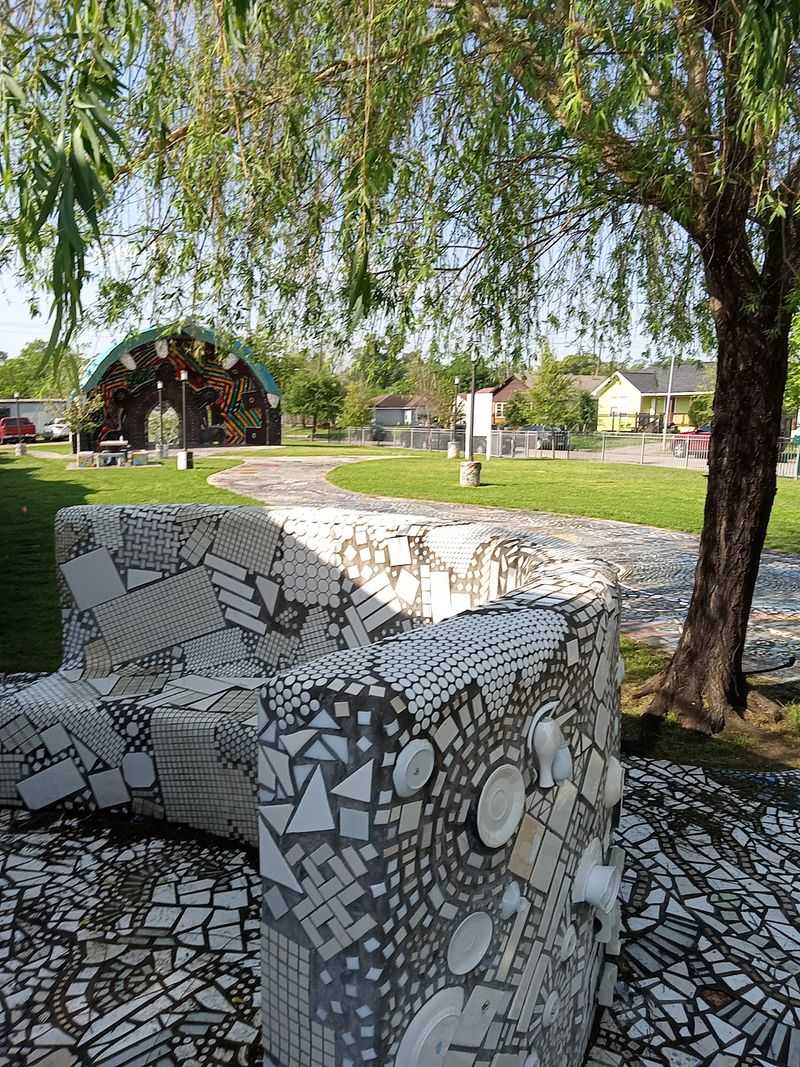
Not every attraction needs crowds and noise. The atmosphere here leans peaceful and relaxed, which many people find restorative.
Some describe the experience as healing. The quiet neighborhood setting and slow pace help with that.
Locals enjoy short afternoon walks through the park as a mood lift. It works as a small daily escape.
Dogs are sometimes spotted with their owners, adding to the neighborly feel.
The park is described as clean and well cared for. That keeps the space pleasant for lingering.
It suits friends, families, and even a casual date. The vibe stays easygoing no matter who shows up.
Hours and the Price of Admission
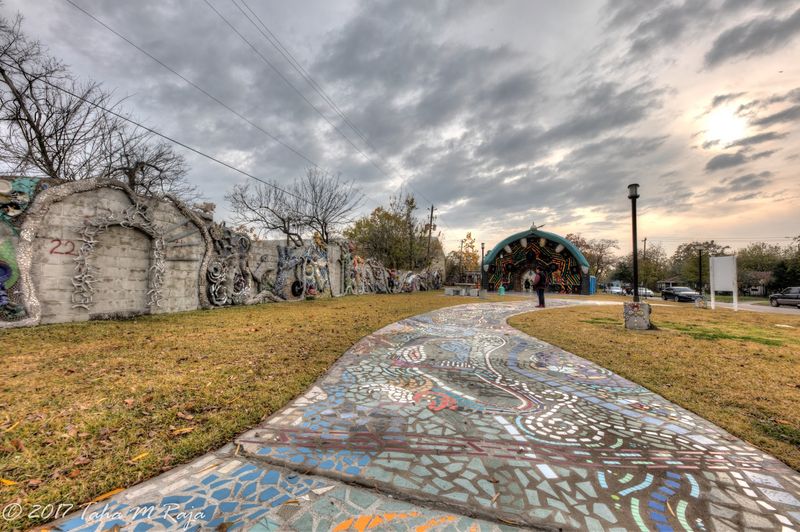
Good news for budgets everywhere. Entry to the park is free.
The park is open daily from 7 AM to 7 PM, every day of the week. That consistent schedule makes planning easy.
Morning visits tend to be quieter. Late afternoon offers a chance to catch the sunset before closing.
Since the park is small, plan on a relaxed visit rather than a full day. Many people find it smaller than expected from photos online.
Some people mention uncertainty about the area after dark. Sticking to the posted daytime hours is the simple approach.
For event schedules or updates, check orangeshow.org before heading out. A quick look can save a wasted trip.
Parking and Practical Tips
Planning a few small details makes the visit smoother. Parking is street parking only, and it is free.
Availability varies. Some days it is plentiful, while other times it is described as limited.
The park sits in a residential neighborhood, so be mindful of driveways and neighbors when parking.
There is no restroom on site. A gas station on I-45 less than a mile away is a handy option.
Bring water and snacks if planning a picnic, since the tables make lunch easy.
A few planning steps go a long way here, and they leave more time for enjoying the art.
Worth the Detour
Small parks rarely leave big impressions, but this one manages it. Smither Park proves that broken pieces can become something worth seeking out.
The mosaics are detailed, the mood is calm, and the price is zero. That combination is hard to beat in Texas.
It suits art fans, families with curious kids, photographers, and anyone needing a quiet hour. Pairing it with the Orange Show makes for an even fuller outing.
Keep expectations sized to the space. It is compact, not sprawling.
Still, the depth of detail rewards a slow look and a return trip. Something new tends to appear every time.
Bottle caps, tiles, glass, and shells built this place piece by piece, and the result is well worth a spot on any Houston list.