Affiliate disclosure: As an Amazon Associate I earn from qualifying purchases. Learn more
A passport, a long flight, and a pile of yen are not required for a proper Japanese stroll garden. Arizona already has one, tucked into downtown Phoenix between busy streets and tall buildings.
It holds a waterfall, stone bridges, traditional lanterns, and a pond filled with hundreds of koi. Locals who drive past it every week often have no idea it exists.
The space is small, calm, and carefully designed, and it rewards anyone willing to slow down for an hour. Keep reading to learn where it is, what makes it feel authentically Japanese, when to go so the desert heat does not win, and what tickets and hours look like before you head out.
Your next mini trip abroad might be a short drive away.
A Quiet Corner Off 3rd Avenue
Downtown Phoenix hides a surprise behind its high-rises. The Japanese Friendship Garden of Phoenix sits at 1125 N 3rd Ave, Phoenix, AZ 85003, in the United States.
Officially listed as a botanical garden, it covers 3.5 acres. That makes it compact by garden standards, but every corner is planned with care.
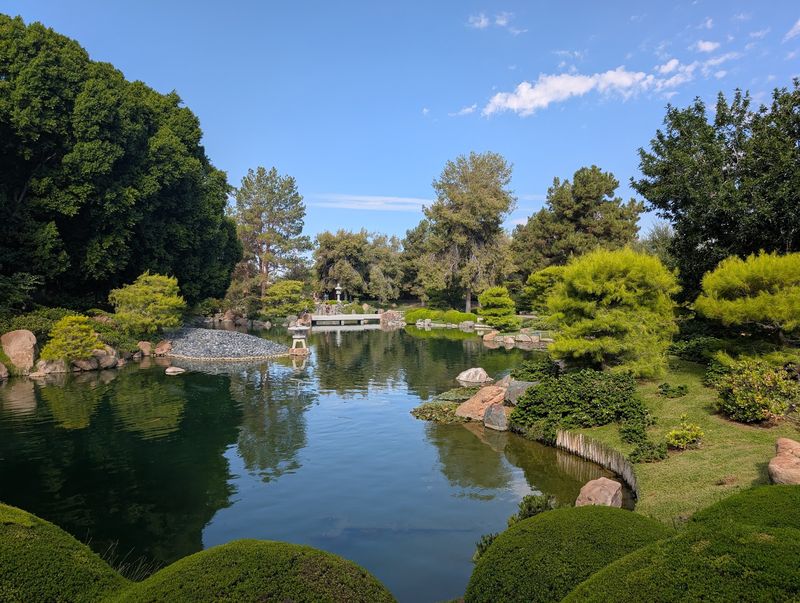
The space is designed as a traditional Japanese stroll garden. A loop path circles a central pond, with a bridge crossing the water.
Inside, the garden holds a tea garden, a teahouse, a large waterfall, and a koi pond. Stone footbridges and traditional lanterns appear along the walk.
Part of the appeal is the contrast. Outside the gate, city traffic rolls on as usual.
Inside, the pace drops and the focus shifts to water, rock, and plants. Many who wander in describe it as a peaceful escape tucked into the middle of urban Phoenix.
The garden is also run as a nonprofit organization. That gives a visit a little extra purpose for those who like supporting local cultural spaces.
For Arizona residents who assume they need a plane ticket to see a garden like this, the address above is the first clue that the trip is much shorter.
The Name Behind Rohoen
Friendship is built right into the name. The garden is also known as Rohoen, a title tied to its role as a symbol of goodwill.
The idea is simple and sweet. Two places, far apart, share a space that reflects Japanese garden tradition in the Arizona desert.
One detail that stands out is how thoroughly Japanese the design feels. The details here lean fully on Japanese style rather than a mix of broader Asian influences.
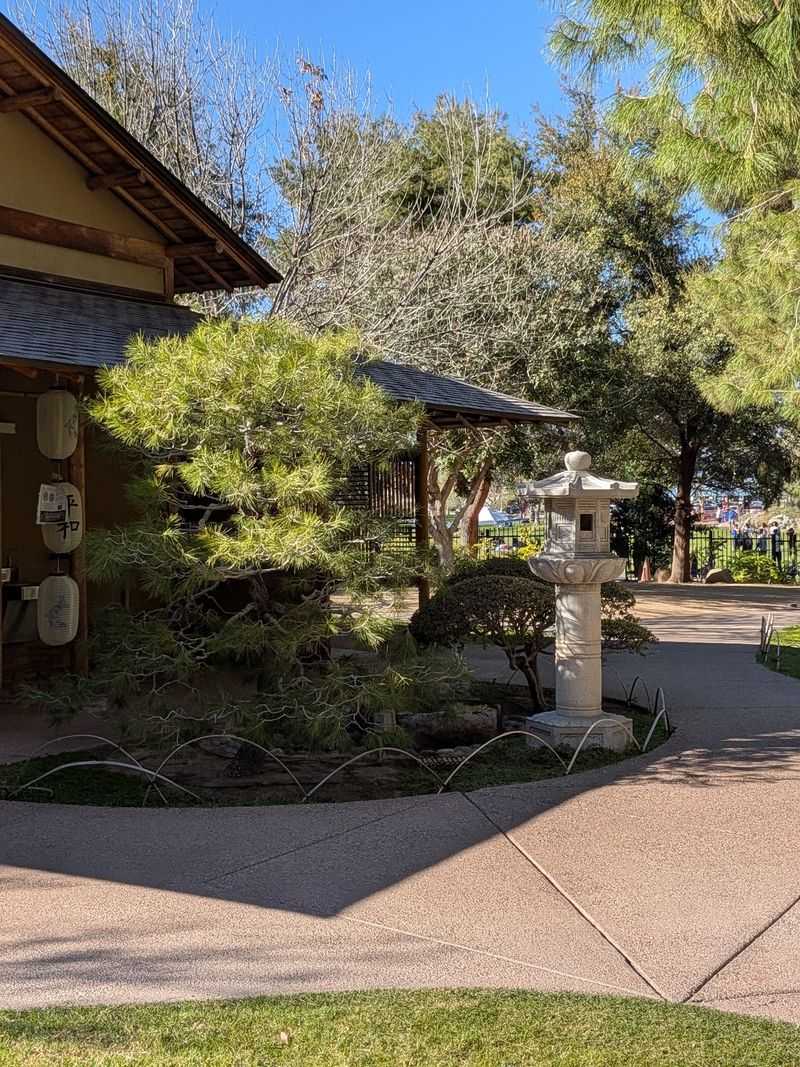
That focus shows up in the lanterns, the bridges, the rock placement, and the architecture of the teahouse. Nothing feels random or added just for decoration.
Small statues and fixtures peek out from the greenery along the path. Spotting them becomes a quiet little game during the walk.
There are only a few plaques on site. For deeper background on sculptures and features, QR codes connect to more information online.
Some prefer reading on paper, so it helps to arrive with a charged phone. A bit of reading adds context to what might otherwise look like just a pretty path.
Knowing the story turns a stroll into something closer to a cultural lesson. Friendship, it turns out, is a pretty good foundation for a garden.
Over 1,500 Tons of Hand-Picked Rock
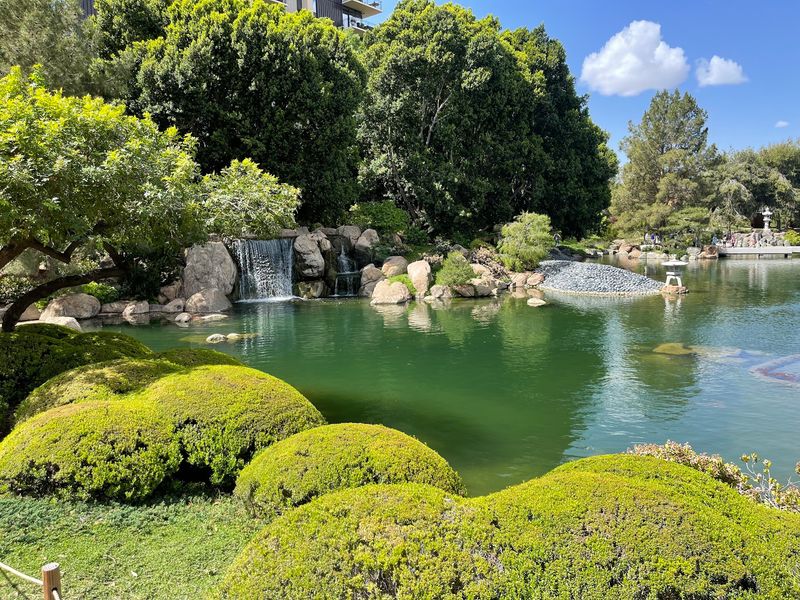
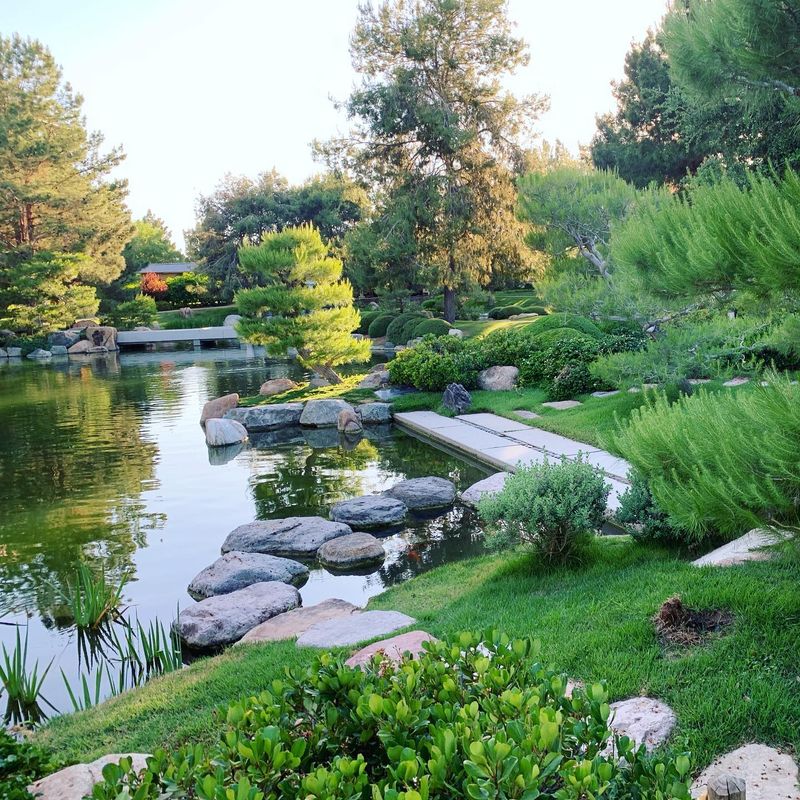
Rocks rarely get top billing, but here they earn it. The garden features more than 1,500 tons of hand-picked rock.
That stone does a lot of heavy lifting, literally. It shapes the streams, frames the pond, and anchors the waterfall.
Elegant stone footbridges carry the path over the water. They give the loop its rhythm, guiding people from one view to the next.
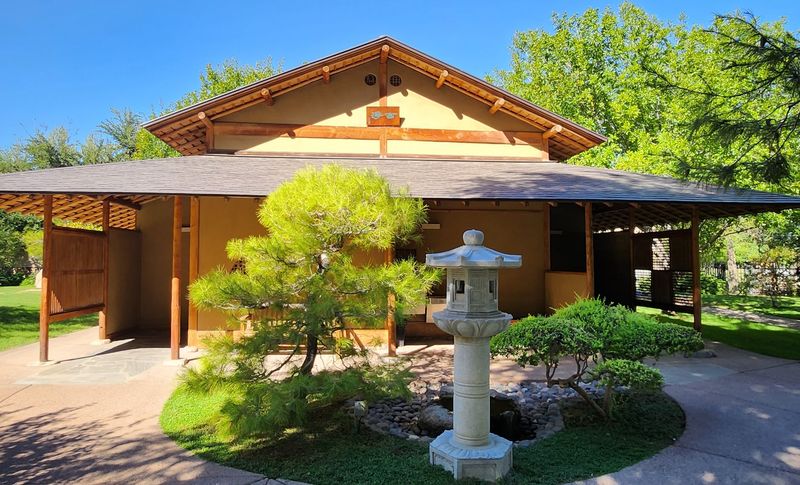
Traditional lanterns are placed between the stones and plants. Each one adds structure to the scene without crowding it.
Japanese garden design often uses rock to suggest mountains, shorelines, and islands. The careful placement here follows that same thinking.
The result is a landscape that feels settled and permanent. It looks like it has always been there, even though it was built by hand in the middle of a city.
Photographers tend to love these details. Bridges and lanterns make natural frames for pictures, especially with the pond in the background.
So when the koi steal the spotlight later, remember that the rocks set the stage first. In this garden, stone is anything but boring.
Hundreds of Koi and a Few Feathered Friends
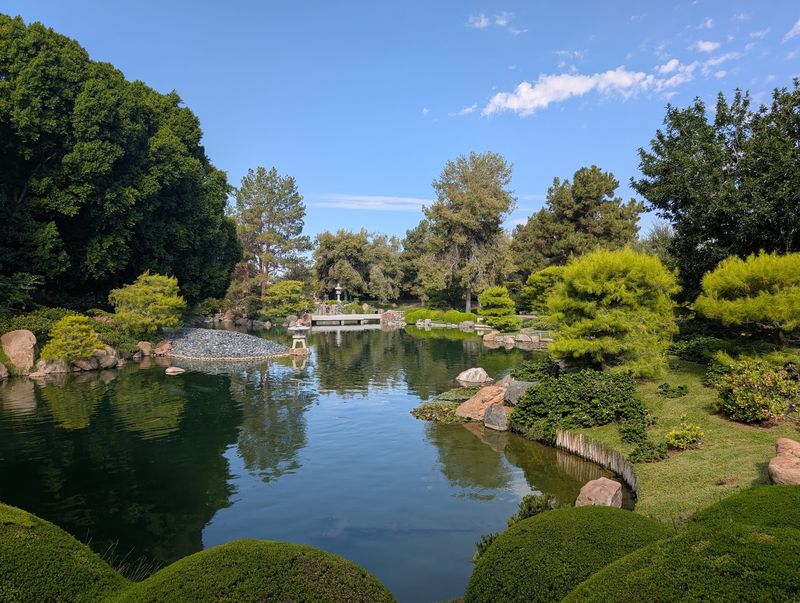
Koi are the unofficial celebrities of the garden. The pond holds more than 300 of them in a range of colors.
Watching them glide through the water ranks as a favorite activity for many guests. It is easy to lose track of time doing nothing more than following the fish.
Ducks share the pond too. They tend to win over kids and adults alike, and they show up in plenty of vacation photos.
Between the fish and the ducks, the pond stays lively without becoming loud. It is calm entertainment, the kind that suits a slow morning.
The pond sits at the center of the loop path. That means it stays in view for most of the walk, changing angles as the trail curves.
Benches near the water invite people to sit for a while. It is a good spot to rest tired legs and let the scene play out.
Families with young children will find this section a natural highlight. Kids who rush through most gardens often slow down for fish.
Consider it proof that a pond full of koi is basically nature’s version of a screen saver, and much better for the brain.
Where the Waterfall Steals the Show
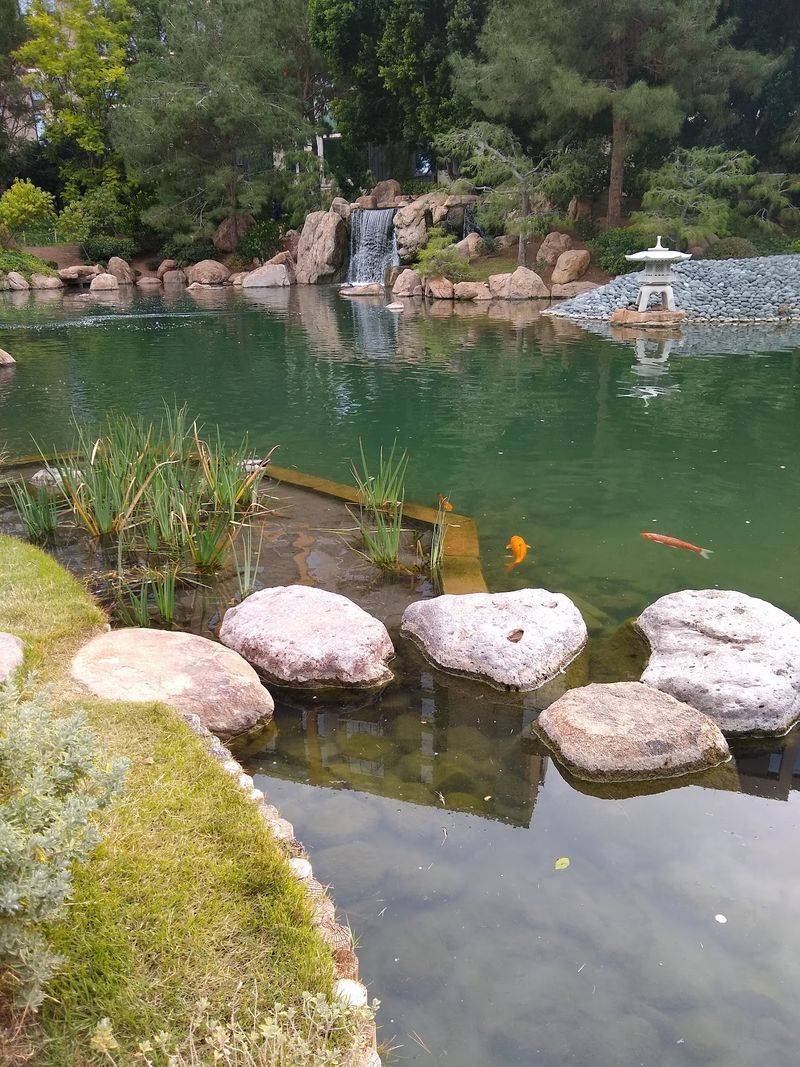
Every garden needs a centerpiece, and this one picked water. The waterfall stands about 12 to 14 feet tall, depending on the source.
It feeds into the ponds and flowing streams that wind through the property. The water movement ties the whole design together.
For many couples and friends, the waterfall becomes the high point of the visit. It is the spot where people stop, take photos, and linger.
Water features in a desert city carry a special appeal. Phoenix residents know how rare running water feels in the middle of summer.
Here, the falls give the garden a sense of energy. They balance the stillness of the pond and the quiet of the paths.
The best views come from the bridge and the benches along the loop. Each angle offers a slightly different composition for photos.
Those planning a date or a casual outing with a friend often build their stroll around this feature. It works as a natural meeting point too.
A 12-foot waterfall might not rival anything in Yosemite. Still, in downtown Phoenix, it makes quite a splash.
Teahouse Rules Worth Knowing
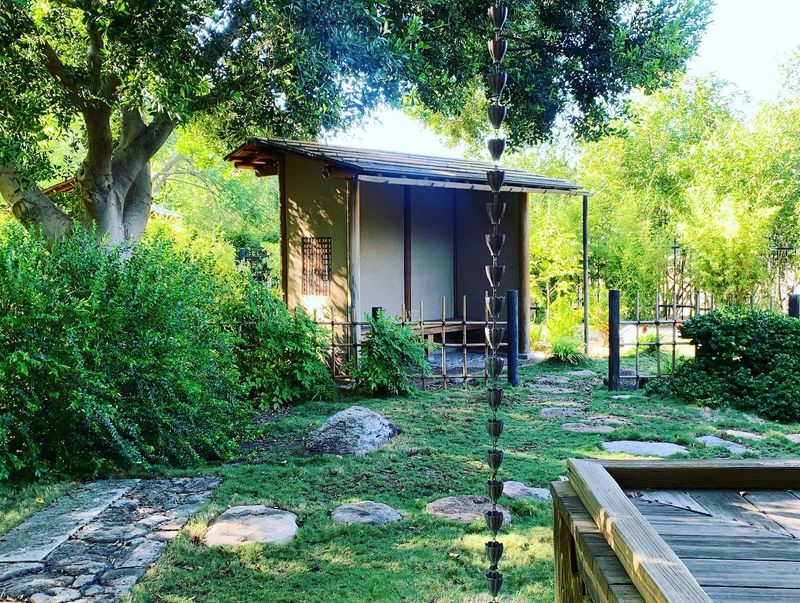
Tucked inside the property is a tea garden with a traditional teahouse. Its architecture ranks among the most admired details on site.
Tea ceremonies are part of the garden’s offerings. They give guests a chance to experience Japanese culture beyond a simple walk.
Here is the catch that surprises some people. The teahouse is generally open only to those who book a tour, rather than to everyone strolling through.
That means it helps to plan ahead. Checking the official website before visiting can clear up what is available on a given day.
The website lists different activities and events. The garden seems to host something on many weekends, which keeps the calendar busy.
For locals, these programs are a strong reason to return more than once. A tour or ceremony offers a different experience from a self-guided stroll.
Even without a tour, the tea garden area adds to the view. The building itself is worth a look from the path.
So read the fine print, book if the ceremony matters, and save the spontaneous stroll for another day.
Small Size, Big Calm
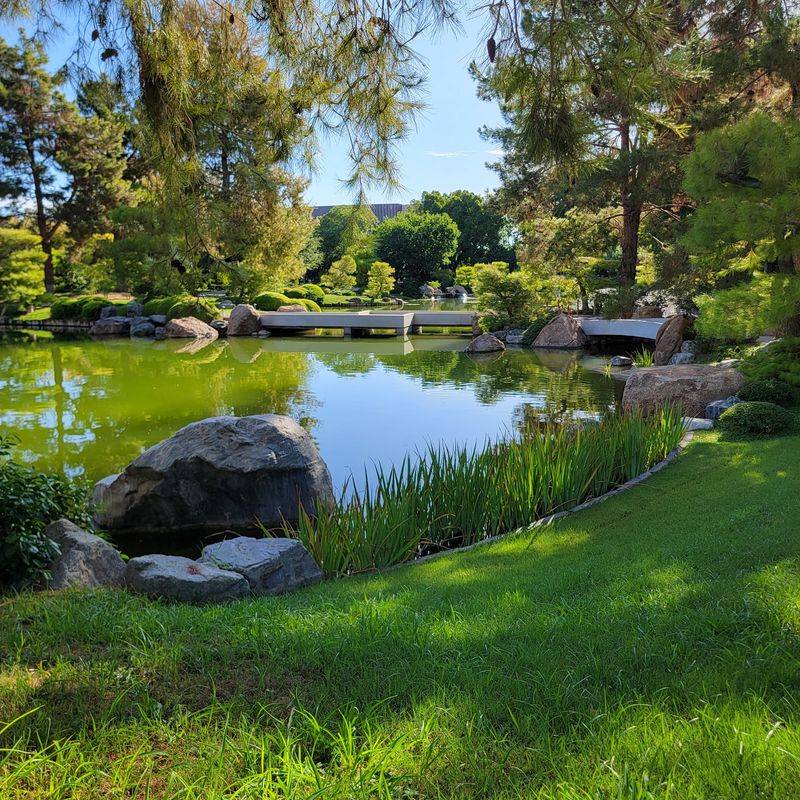
Size comes up in almost every conversation about this place. The garden is smaller than many expect.
A quick walk-through can take under 20 minutes. At a leisurely pace with stops for photos and benches, an hour fits comfortably.
Some people wish there were more ground to cover. Comparisons to larger gardens, like the Desert Botanical Garden or the Portland Japanese Garden, pop up often.
Fans argue that size misses the point. The draw here is atmosphere and design, not mileage.
A peaceful atmosphere stands out as the most common theme. The space feels quiet, green, and carefully maintained.
Over 85 varieties of plants fill the property. That variety keeps the short loop interesting from start to finish.
Shade and benches appear throughout. They make it easy to pause and enjoy the views without hurrying.
Crowds can affect the mood. On busy days, the narrow paths fill up quickly, so quieter times tend to deliver a better experience.
Think of it as a short story rather than a novel. Fewer pages, but every line counts.
A Tiny Shop With Big Charm
The loop ends at a small gift shop, and few people leave empty-handed. It is climate controlled, which matters a lot in Phoenix.
Shelves hold Japanese items, merchandise, and souvenirs. Tea cups, magnets, and koi plushies are among the keepsakes people take home.
Pre-packaged Japanese snacks and cold beverages are also sold. On hot days, those cold drinks become a very welcome sight.
Expectations matter here. There is no full restaurant on site, so plan a meal elsewhere downtown.
The shop is quite small. A few minutes is usually enough to browse everything.
Free restrooms are available for guests. That small detail is handy for families with kids.
The friendly staff gets frequent praise as well. Employees tend to be welcoming and helpful.
A koi plushie might seem like a silly souvenir. Yet it turns out to be the kind of keepsake people hold onto for years.
Beating the Arizona Heat
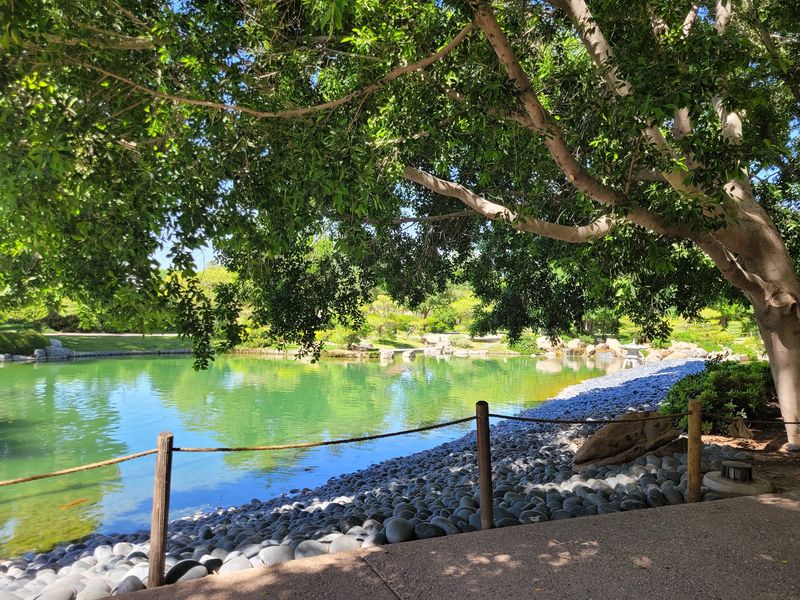
Every Arizonan knows the rule. Summer afternoons and outdoor gardens do not mix well.
Temperatures above 110 degrees can turn a calm stroll into a quick sprint between shady spots. Even phones have been known to overheat.
Cooler months make the biggest difference. February, for example, offers pleasant weather that suits a slow walk.
Hours run from 9 am to 6 pm, Tuesday through Sunday. The garden is closed on Mondays.
Arriving right at opening is a smart move during warmer months. Early birds avoid the worst of the sun and often the biggest crowds.
In summer, early visitors have even received a bonus ticket valid for a return trip before the end of August. Offers may change, so it is wise to check before going.
Shaded areas and benches help on warm days. Bring water and a hat anyway.
Quieter times also improve the experience. Weekdays tend to feel calmer than weekend afternoons.
Timing really is everything here. Choose wisely and the desert plays nice.
Tickets, Parking, and a Fair Verdict
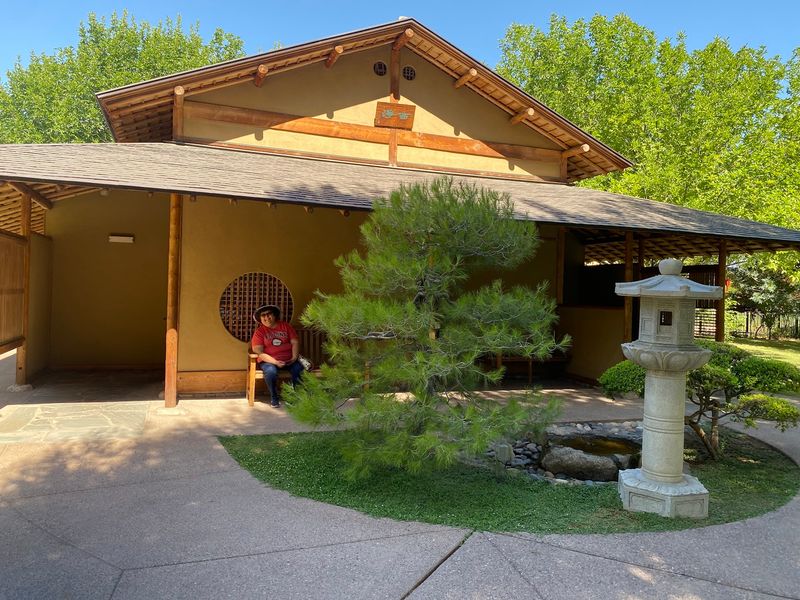
Admission costs around $14 per person. Some find that reasonable, while others feel it is steep for a small garden.
Families should do the math ahead of time. Costs add up quickly for larger groups.
Parking is plentiful, which is a nice bonus downtown. Others arrive by rideshare, including driverless cars.
The location is convenient for pairing with other stops. The Great Arizona Puppet Theater sits right across the street.
So is it worth it? For those seeking calm, koi, and authentic Japanese design without leaving Arizona, the answer leans yes.
Those wanting hours of exploration may prefer a larger garden. Expectations shape the experience more than anything.
A 4.4-star standing across thousands of opinions suggests most people leave happy. The peaceful mood is the common thread.
Japan will always be there for a future trip. In the meantime, a slice of it waits on 3rd Avenue, ready whenever you need a quiet hour.