
Affiliate disclosure: As an Amazon Associate I earn from qualifying purchases. Learn more
Austin has a reputation for live music, busy food trucks, and traffic that tests everyone’s patience. Tucked between major roads close to downtown, though, sits a place where the loudest guests are often hummingbirds and the biggest crowds are koi circling a pond.
It holds waterfalls, a Japanese garden that took one designer about 18 months to build, and a section where dinosaur fossils were actually found. Admission costs less than a movie ticket, and seniors get an even friendlier deal.
The paths are shaded, benches are everywhere, and a free map helps with the route. Keep reading to find out where this garden hides, which corners deserve the most time, when to beat the Texas heat, and the parking trick that can save a very long walk before the stroll even begins.
A Garden Hiding in Plain Sight
Plenty of people drive past it without a second glance. Zilker Botanical Garden sits at 2220 Barton Springs Rd, Austin, TX 78746, United States, inside the much larger Zilker Park.
The location is a big part of its appeal. Downtown Austin is only minutes away, yet the garden manages to feel tucked into its own pocket of green.
Covering 31 acres, the garden mixes native Texas plants with exotic flowers from farther afield. Ponds, trails, and themed sections link together, so every turn leads somewhere different.
It is not the largest botanical garden in the country, and it does not try to be. The scale works in its favor, since most people can see the highlights in one to two hours without feeling rushed.
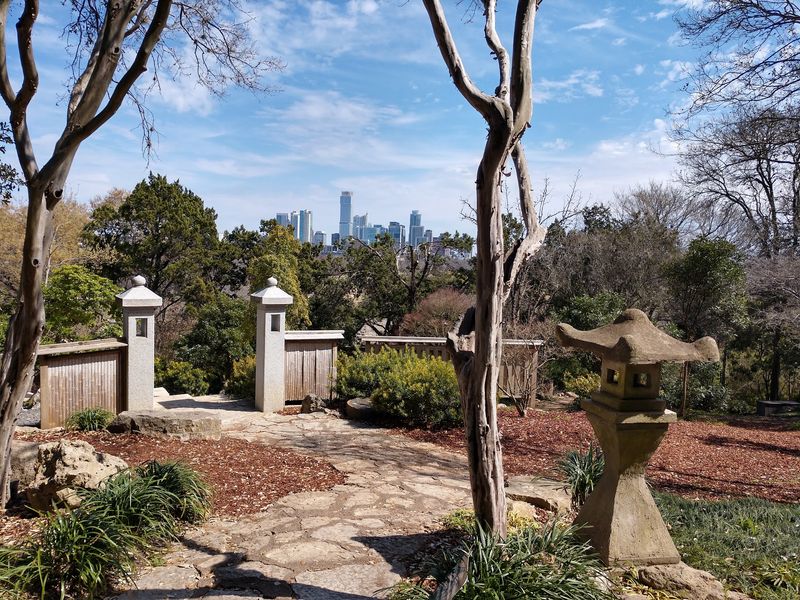
Near the visitor center, the downtown skyline appears over the treetops. That view is a helpful reminder of how close the city really is, and how far away it can seem once the paths begin.
The garden also runs educational programs for kids, which keeps it busy with school-age explorers alongside retirees and couples. Everyone seems to find a favorite section.
So the address is easy, the parking less so, but more on that later.
Thirty-One Acres With a Backstory
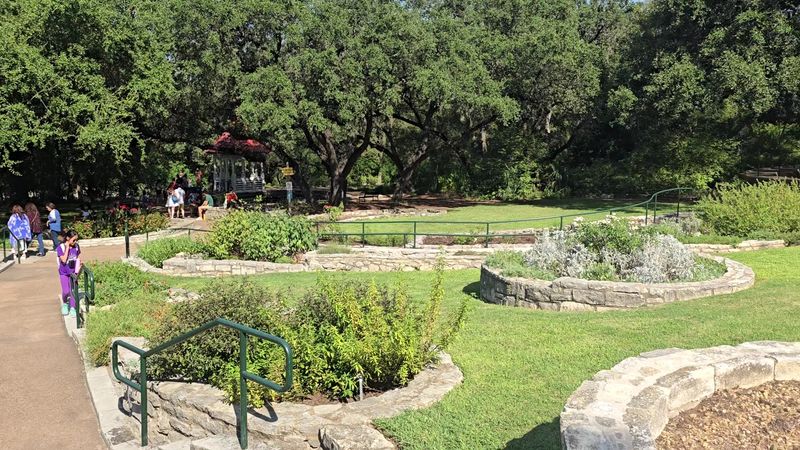
Good gardens are built slowly, and this one is proof. Its themed sections grew over time, each with its own character and purpose.
The staff are part of the story too. Ask any of them for a favorite corner, and the answers tend to change from person to person, along with the little facts that come with them.
Some of those facts are surprising. Fossils have been found on the grounds, a lotus from Japan grows on site, and the Japanese Garden was shaped over roughly 18 months by a designer named Taniguchi.
Those details turn a simple walk into something closer to a treasure hunt. A plant bed stops being just a plant bed once there is a story attached.
The garden’s layout rewards curiosity. Paths split and rejoin, so a person can follow the printed map in sequence or wander freely and still stumble onto something new.
Care shows in the upkeep as well. Beds are neatly manicured, walkways stay tidy, and the team clearly puts serious work into maintaining the grounds.
Community is woven in, with garden club meetings and seasonal events giving locals reasons to return. That steady local support is a big part of why the place feels welcoming rather than stiff.
History, it turns out, grows here as well as roses.
The Japanese Garden Steals the Show
Ask Austin locals to name the must-see corner, and the answer is almost always the same. The Japanese Garden is the star of the property, and it earns the title.
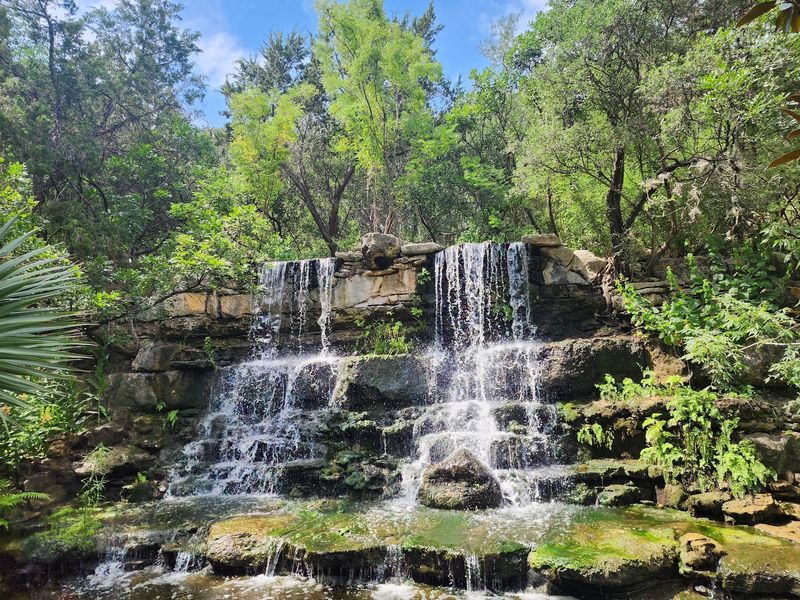
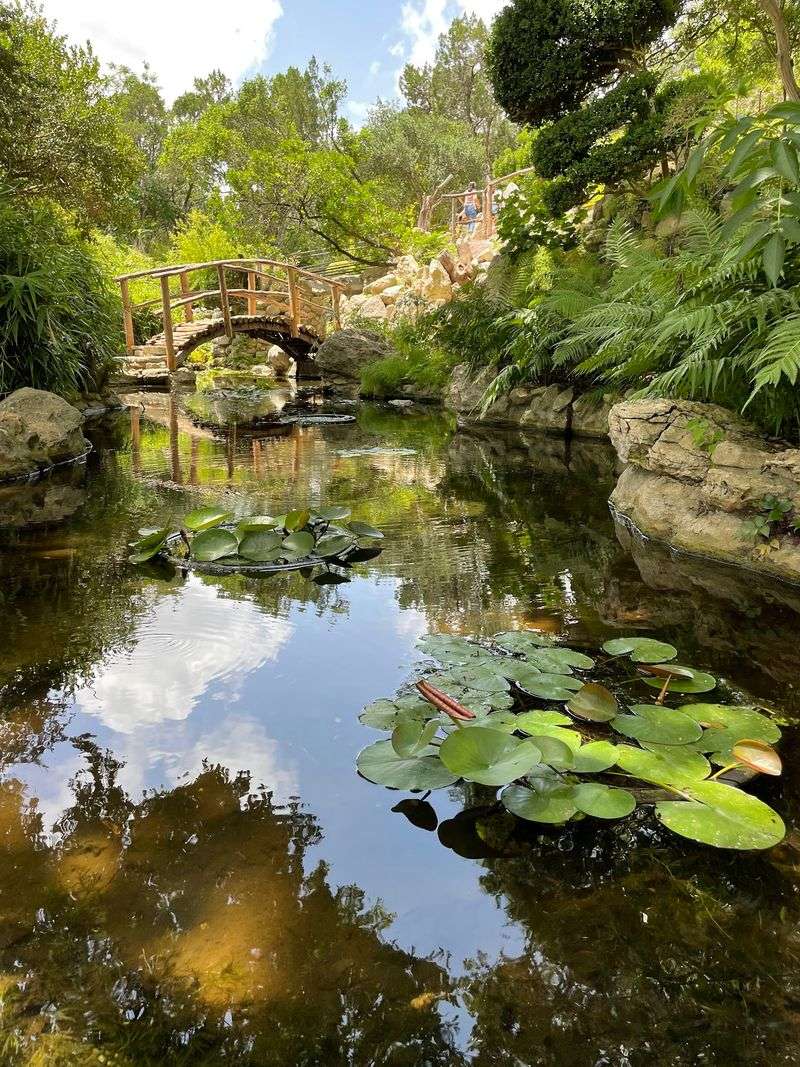
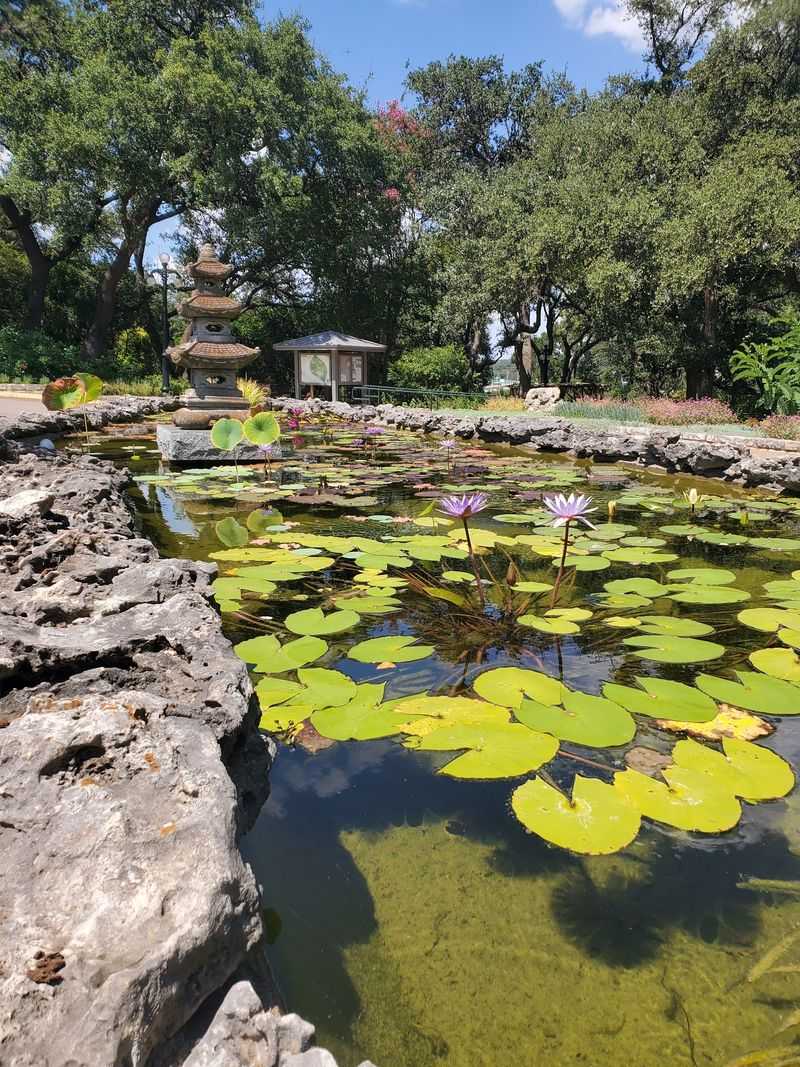
Designed by Taniguchi, who spent about 18 months on the project, it features waterfalls, streams, and ponds arranged along winding paths. Water lilies float on the surface, and koi move through the pools below.
Small streams cross the route, so walking through the section means stepping past little channels filled with fish. Kids tend to slow down here, and adults do too.
Bonsai trees add another layer of detail. These carefully shaped miniature trees are worth a closer look, since each one reflects years of patient trimming.
There is also a lotus from Japan growing on site. It is one of those quiet details that is easy to miss without a staff tip.
From certain spots in the section, downtown Austin pops into view. Some people bring a morning snack and sit with that view for a while before continuing.
Benches appear at helpful intervals, which matters for anyone who prefers a slower pace. There is no need to hurry through the most photographed part of the garden.
Saving it for the middle of the visit is a smart move, because everything else then has a hard act to follow.
Koi, Turtles, and Other Pond Celebrities
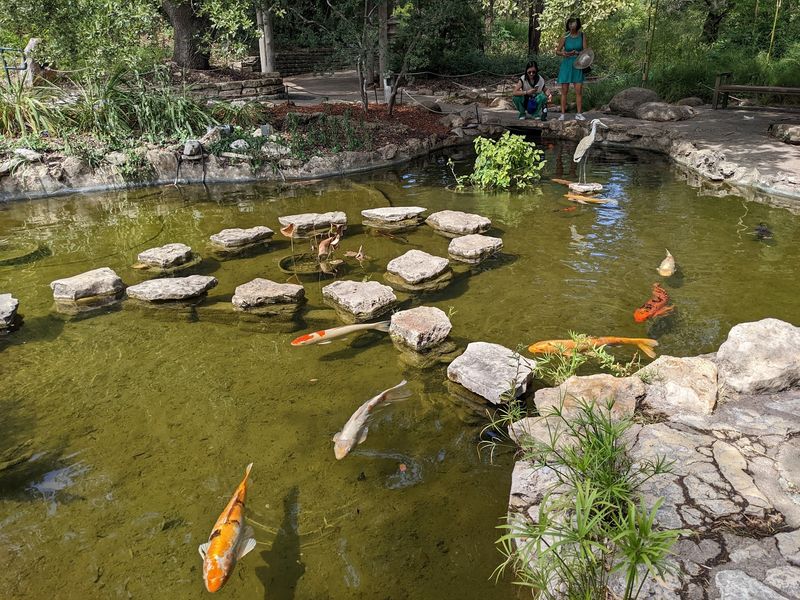
Fish rarely get top billing at a flower garden. At Zilker, the koi are practically local celebrities.
The koi ponds are among the most talked-about features on the grounds. Families gather at the edges, and watching the fish move through the water is a favorite pastime for all ages.
A large turtle shares the scene, and reptiles such as lizards show up around the ponds and paths. Keeping an eye on the rocks often pays off with a surprise sighting.
The ponds connect to the waterfall features in the Japanese Garden. That layout means the fish appear in several spots rather than just one pool.
Not every opinion is glowing, and that is worth knowing ahead of time. Some people have raised concerns about the pond water looking murky in places, and they would like to see stronger filtration and care for the fish.
Most still count the ponds as a highlight. The mix of koi, water lilies, and moving water gives the area a calm, steady rhythm.
For grandparents bringing grandchildren, this is an easy stop. Kids get a clear target to spot, and adults get a bench nearby.
Consider it the one part of the garden where the residents come to greet the guests.
Where Dinosaurs Left Their Mark
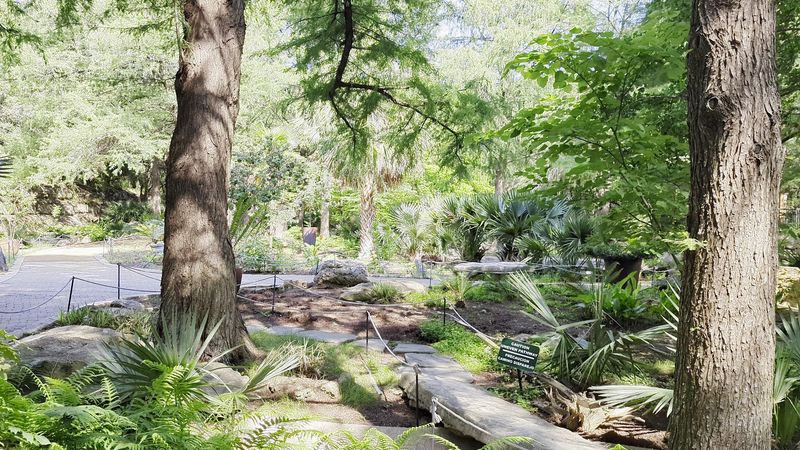
Few botanical gardens can claim real prehistoric credentials. Zilker can, because fossils have actually been found on the property.
That discovery shaped one of the most memorable sections, often called the prehistoric or dinosaur area. It ranks among the most mentioned parts of the garden, right behind the Japanese Garden and the koi.
The section focuses on plants that feel suited to an ancient landscape. Pathways loop through greenery and water features that set the scene for a lesson in deep time.
For kids, this area is often the favorite. Dinosaurs have a way of winning over young audiences, and a real fossil connection makes the stop feel more than make-believe.
Adults tend to enjoy it too. It offers a different mood from the tidy formality of the rose beds or the careful design of the Japanese Garden.
The garden leans into the theme with special events such as Dino Days. Checking the official website before a visit is a good way to catch one of these themed dates.
Staff members are a great resource here. They can share details about what was found and why this section looks the way it does.
Grandkids asking about T. rex may leave with a new question about plants, which is a fine trade.
Butterflies, Roses, and Wings on the Move
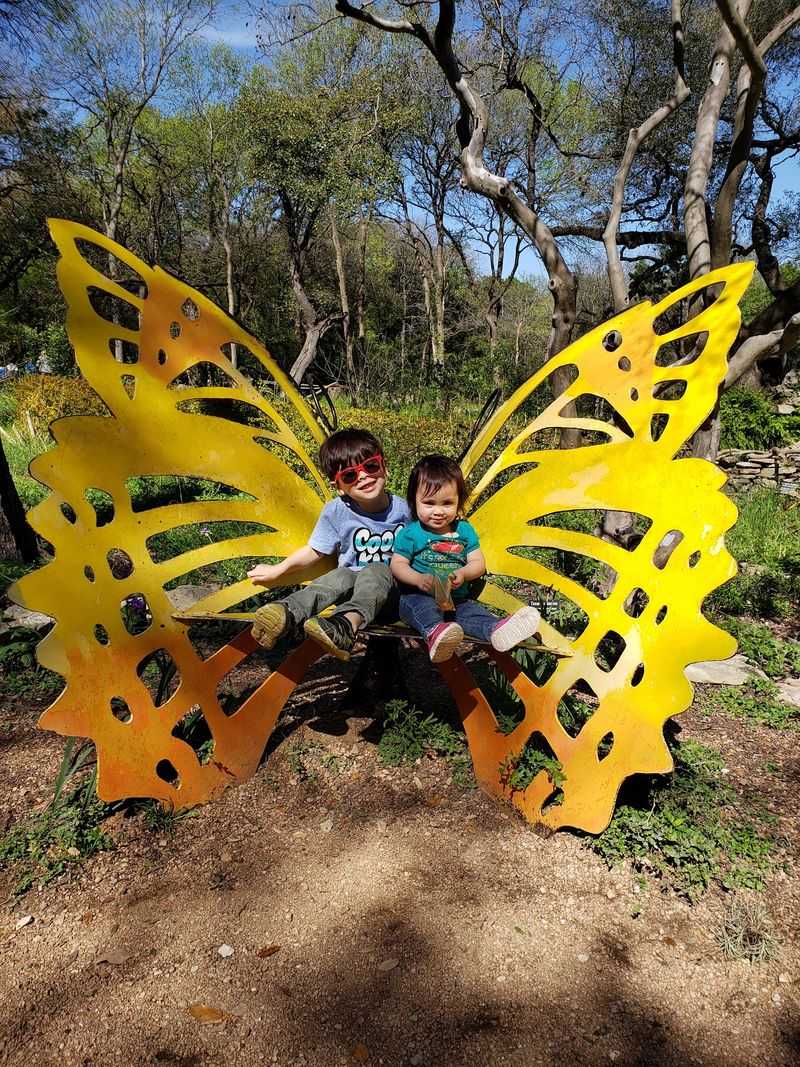
Wildlife keeps its own schedule here. On a good day, butterflies, hummingbirds, and mockingbirds all make appearances within the same short stroll.
The butterfly garden is designed with these winged guests in mind. A colorful variety of butterflies tends to gather there, which makes it a favorite for slow walkers and patient photographers alike.
Wild hummingbirds are a real treat. Spotting one takes a bit of luck and a willingness to sit still for a few minutes.
The rose garden offers a more classic kind of charm. It is a tidy, formal section that contrasts nicely with the wilder feel of other areas.
A small succulent garden also earns attention. Its compact collection of hardy plants suits the Texas climate and shows how much variety fits into a small space.
Timing matters for blooms. Late spring, around Memorial Day weekend, has been a time when almost everything was in flower.
Squirrels are part of the cast as well. Some of them are notably well fed, and they seem entirely comfortable around people.
Bees are present in the flower beds, though they tend to mind their own business when left alone. Bringing binoculars or a phone with a good zoom is a simple way to get more out of this part of the garden.
Here, the flowers are only half the program.
Fairy Homes and Scavenger Hunts
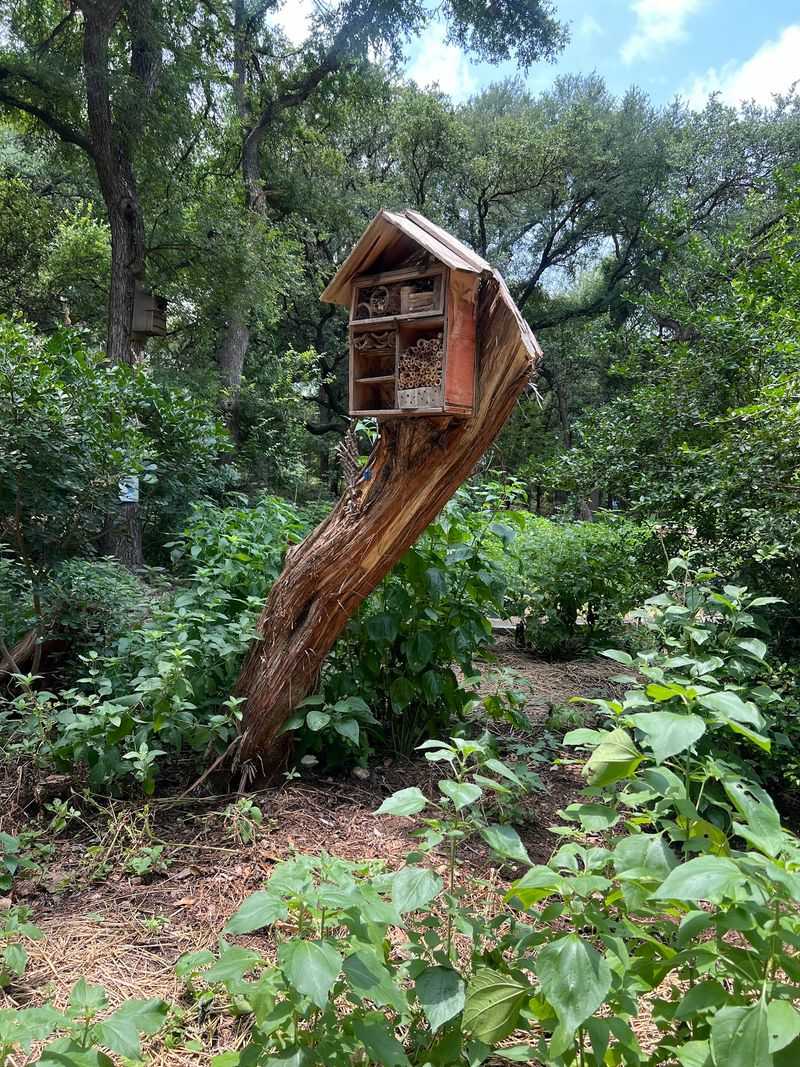
Tiny doors and miniature houses are not what most people expect at a botanical garden. The Woodland Faerie Trail changes that expectation fast.
When the trail is up, it fills with small fairy homes built with plenty of creativity. It is a big hit with children, and it charms grown-ups who appreciate the handmade details.
The trail is a seasonal feature, so it is not always on display. Checking ahead on the garden’s website helps avoid disappointment.
A scavenger hunt adds another layer of fun. Paired with the printed map, it gives families a clear mission and helps them work through each section in order.
The events calendar goes beyond kids’ activities. Yoga sessions and garden club meetings bring in adults looking for a calm routine in a green setting.
Themed days keep things fresh. Dino Days and dog days are two examples, and leashed dogs are welcome on the grounds.
Grandparents looking for a low-cost outing with little ones will find plenty here. The trail, the hunt, and the ponds can easily fill a morning.
Anyone who thinks gardens are only for quiet contemplation might leave with a fairy house photo on their phone.
Calm Paths and the Crowd Question
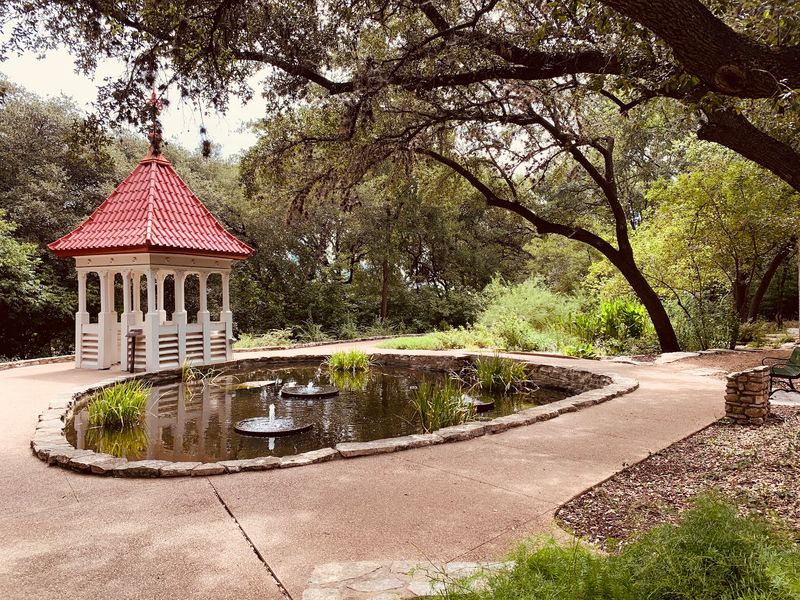
Peaceful is the word that comes up again and again. Shaded walkways, frequent benches, and water features all help the garden feel restful, even on many weekends.
Regulars treat it as a day-off retreat. Some bring a book and stay for hours, while others finish a relaxed loop in about 90 minutes.
The atmosphere suits a wide range of people. Seniors, young families, couples, and solo walkers all find a comfortable pace here.
Crowds can be a factor, though. Busy days may bring blocked paths from strollers or photo shoots, along with the occasional noisy group.
Photography rules are worth knowing. Casual phone photos are fine, but professional photo sessions appear to require a separate photo pass.
Accessibility is part of the picture as well. An ADA trail serves strollers and wheelchairs, although some people feel the accessible routes could be expanded to reach more areas.
The staff get consistent praise for being friendly, helpful, and knowledgeable. That kindness goes a long way toward making the garden feel like a community space.
For the calmest experience, arriving right at opening or choosing a weekday tends to help. A quiet bench in the Japanese Garden is much easier to claim before the late-morning rush.
Tickets, Hours, and the Parking Puzzle
Budget-friendly outings are rare in a growing city, so this part is good news. General admission has been $8, with locals paying $6, according to posted rates.
Discounts go further for certain groups. Veterans receive a discount, and the Museums for All program offers reduced entry with SNAP or EBT cards.
Seniors should check the official website at zilkergarden.org for the current discounted rate. Tickets can be bought online or at the gate.
The garden also takes part in a reciprocal membership network through the American Horticultural Society. Members of other participating gardens may find added value there.
Hours are simple to remember. The garden is open daily from 9 am to 5 pm, seven days a week.
Parking is the tricky part. The main lot fills quickly, sometimes within an hour of opening, but an overflow lot sits on the opposite side of the garden, and more parking is spread around Zilker Park.
Texas summers call for planning. Early morning is the best window, and bringing water and mosquito repellent is a wise habit, since midday heat can wear anyone down.
On-site restrooms and a gift shop with shirts and small souvenirs round out the basics. A little planning keeps the only uphill battle on the trails themselves.
Worth Every Dollar of a Slow Afternoon
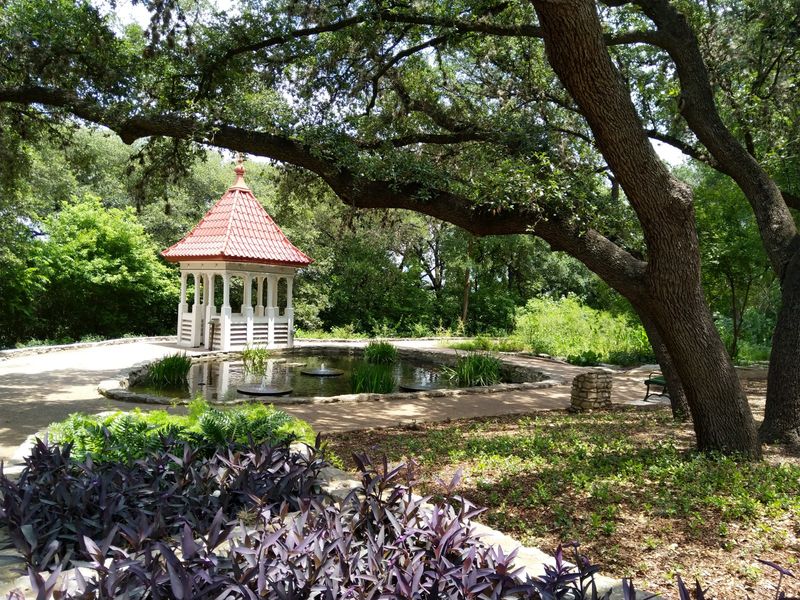
Some places impress with size. Zilker Botanical Garden wins with character.
Its 31 acres pack in a celebrated Japanese Garden, koi ponds, a prehistoric section with real fossil roots, a butterfly garden, roses, and succulents. Add the fairy trail, scavenger hunts, and themed event days, and there is plenty to fill a morning.
The value is hard to argue with. Admission stays modest, discounts are available for several groups, and seniors can check for an even lower rate before heading out.
There are trade-offs to plan around. Parking fills fast, summer heat is serious, and busy weekends can bring crowds to the most popular corners.
None of those are dealbreakers with a bit of strategy. Arrive early, grab the map, and save time for a bench or two along the way.
The downtown view near the visitor center makes a fitting final stop. It frames the garden as a small green retreat inside one of the busiest cities in Texas.
Friendly staff, tidy grounds, and a steady rotation of events give it a reason to return. Each season brings different blooms and different stories from the people who care for it.
For an easy, affordable outing, this garden grows on people, one path at a time.