
Affiliate disclosure: As an Amazon Associate I earn from qualifying purchases. Learn more
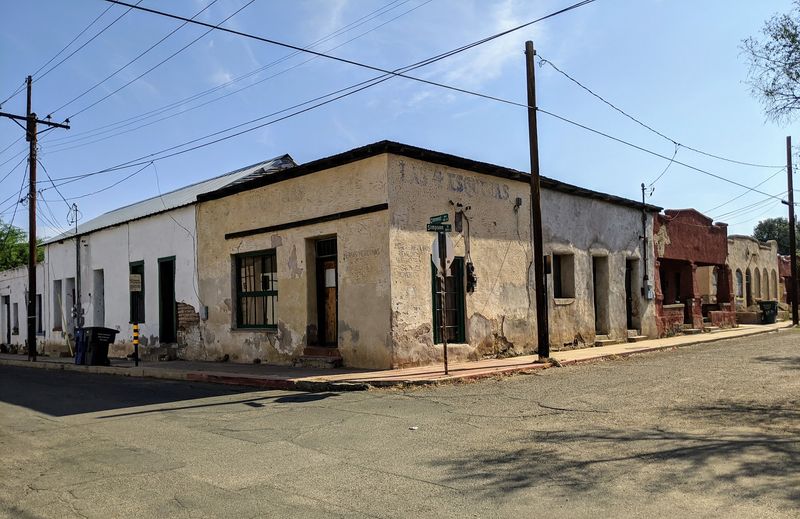
Some Tucson streets have been standing longer than Arizona has been a state, and most of us drive right past them. Just beyond the downtown high-rises, there is a pocket of the city where adobe walls wear bold coats of paint, and front doors open straight onto the sidewalk.
People still live here, still light candles here, and still treat the past like a neighbor rather than a museum piece. Longtime Tucsonans bring out-of-town cousins here when they want to prove the Old Pueblo is more than cactus postcards.
Newcomers find it by accident and then keep coming back. The pages ahead cover where this neighborhood sits, how it survived, the wishing shrine tucked into its crumbling walls, the historic synagogue and firehouse turned cultural stops nearby, and the practical tips that make a visit easy.
Grab some water and comfortable shoes, because this walk is worth taking slowly.
An Old Neighborhood South of Downtown
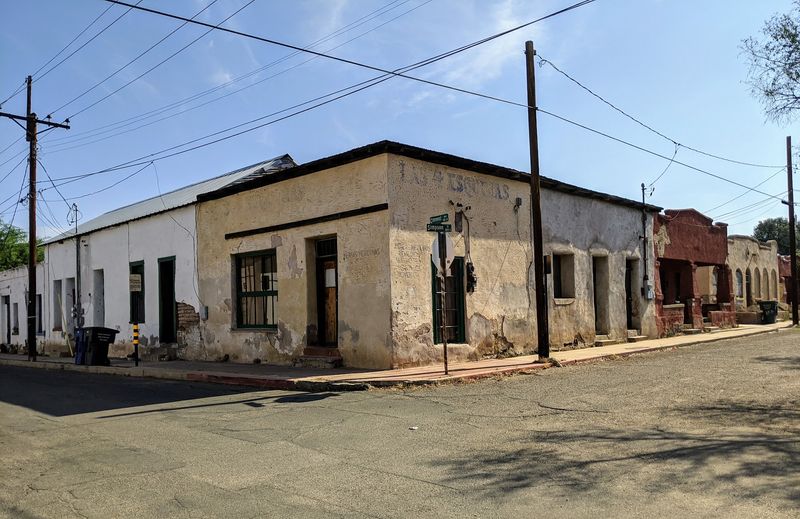
Some Tucson neighborhoods announce themselves with big signs and bigger parking lots. Barrio Viejo prefers to let its walls do the talking.
The neighborhood sits in Tucson, AZ, in the United States, just south of the downtown core. Its Spanish name translates to ‘old neighborhood,’ and it earns that title honestly.
Blocks of adobe houses line the streets, many painted in bold shades that turn an ordinary stroll into something closer to an open-air gallery. People still live in these homes, so the area is a working neighborhood first and an attraction second.
That balance is exactly why locals keep returning. There is no ticket booth, no entrance gate, and no velvet rope separating the past from the present.
Around its edges, the barrio connects to some of Tucson’s most interesting cultural stops. A candlelit wishing shrine, a museum inside Arizona’s first synagogue, and a contemporary art museum in a converted firehouse all fall within reach of a single afternoon outing.
For Arizonans who have zipped past the downtown exits a hundred times on the way somewhere else, this corner of the city is a quiet reminder. One of the state’s richest historic districts has been hiding in plain sight, and it rewards anyone willing to park the car and look around.
The best place to begin is with the story of how these streets came to be.
Roots Older Than Arizona Statehood
Arizona became a state in 1912, but many of the homes in Barrio Viejo are generally said to date back to the 1800s. That makes a casual walk here a trip through Tucson’s early chapters.
The neighborhood grew as a largely Mexican American community, with families building homes from adobe, the sun-dried earthen brick that shaped so much of early Southwestern life. Longtime Tucsonans sometimes still call the broader area Barrio Libre, an older name tied to the district’s history.
Not every block made it to the present day. In the late 1960s and early 1970s, a large section of the historic barrio was cleared as part of urban renewal, and much of that land became home to the Tucson Convention Center.
What remains carries extra weight because of that loss of so many neighboring streets. Residents, preservationists, and new homeowners have worked over the years to keep the surviving adobes standing and in use.
Today the neighborhood is recognized as a historic district, and its survival feels a little like a comeback story. The houses were not frozen in time as exhibits.
Instead, they were repaired, repainted, and lived in, one generation after another. That living history is the real draw, and it sets the stage for the feature everyone notices first: those painted walls.
Facades Painted in Bold Shades
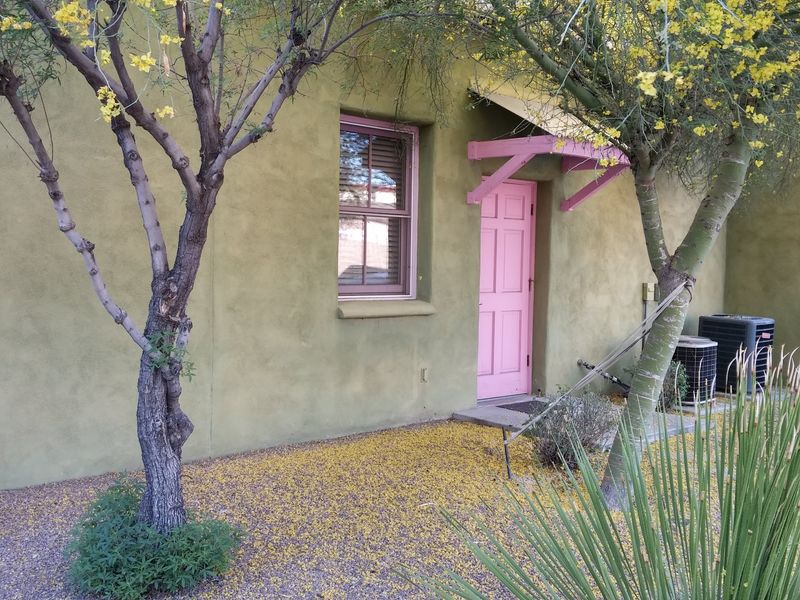
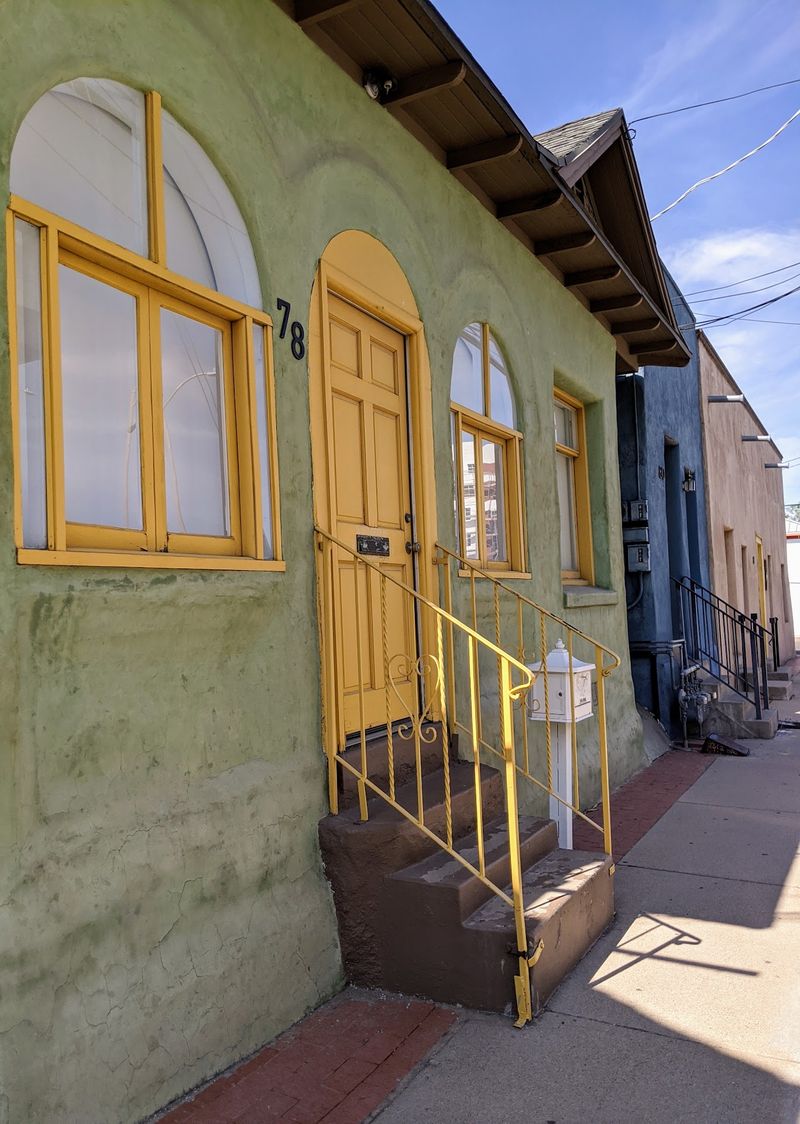
Paint is the headline act here, and nobody seems shy about it. House after house wears a different bold shade, with doors and window trim often painted to stand out even further.
The effect is a streetscape where no two homes look quite alike. One block can feel like a paint sample card that got a little ambitious, in the best possible way.
Locals love this part of Tucson for exactly that reason. Plenty of Arizona cities have tidy, matching subdivisions, but very few have entire blocks where individuality is written right across the front wall.
The colors also make the architecture easier to appreciate. Details like deep-set doorways, simple window frames, and the long flat lines of the rooftops pop against the painted surfaces.
Photographers tend to slow down on these streets, and it is easy to see why. A single doorway can fill an entire frame with character.
Keep in mind that each facade belongs to someone’s home. Snapping a photo from the public sidewalk is fair game, while leaning on doors, climbing steps, or treating a porch like a photo studio is not.
The painted walls are only half the design story, though. How those walls meet the street says just as much about old Tucson.
Walls That Meet the Sidewalk
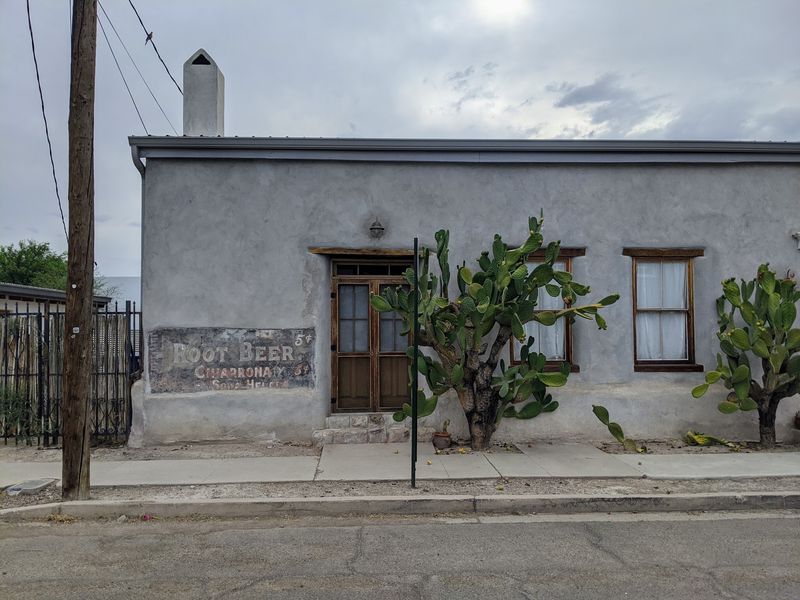
Front yards are rare in this part of town. Many Barrio Viejo homes are built right up to the edge of the sidewalk, forming long connected rows that feel very different from modern Arizona suburbs.
The layout follows a style often described as Sonoran row house architecture. Homes share walls with their neighbors, present flat fronts to the street, and keep their private outdoor space tucked behind the building.
Adobe played a practical role in desert living. Thick earthen walls are commonly credited with helping homes handle Tucson’s intense summer temperatures long before anyone installed an air conditioner.
The result is a neighborhood with a strong sense of street life. Front doors open almost directly onto public space, so the line between home and community has always been thin.
For architecture fans, this is one of the best places in Arizona to study the style in person. The rows show how early Tucson builders worked with local materials and local weather rather than fighting against them.
Newer Arizonans often find the setup surprising at first. Once the logic clicks, the streets start to read like a practical lesson in desert design.
And tucked among these rows sits one of Tucson’s most unusual landmarks, a place built not for living but for wishing.
El Tiradito, the Wishing Shrine
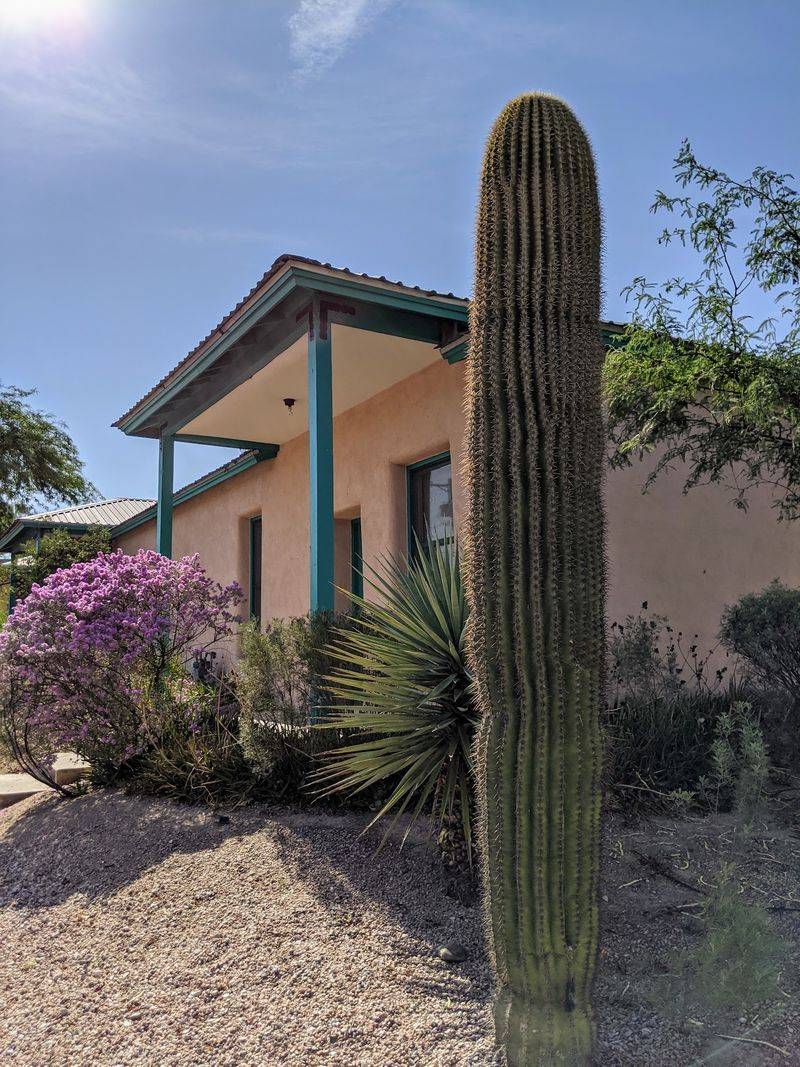
Few landmarks in Arizona invite quite this kind of participation. At El Tiradito, often called the wishing shrine, people light candles and leave prayer notes tucked into the crumbling walls.
The shrine is one of the most talked-about cultural stops connected to Barrio Viejo. It has deep roots in local folklore, and its story has been retold in different versions for generations.
What stands out is how personal the space feels. The folded notes and candles represent real hopes, from family wishes to quiet prayers, left by people from all walks of life.
That makes etiquette important. Many who stop here treat it as a sacred place, so a calm voice and a respectful distance go a long way.
Leaving a note or lighting a candle is part of the tradition, and newcomers are welcome to join in thoughtfully. Moving or reading other people’s notes is a firm no.
For Tucson families, the shrine often becomes a small ritual passed down through the years. Kids who once watched parents leave a wish sometimes return as adults to do the same.
It is a small spot with a big emotional footprint. Just a short trip away, another landmark tells a very different but equally meaningful piece of Arizona’s story.
A Museum in Arizona’s First Synagogue
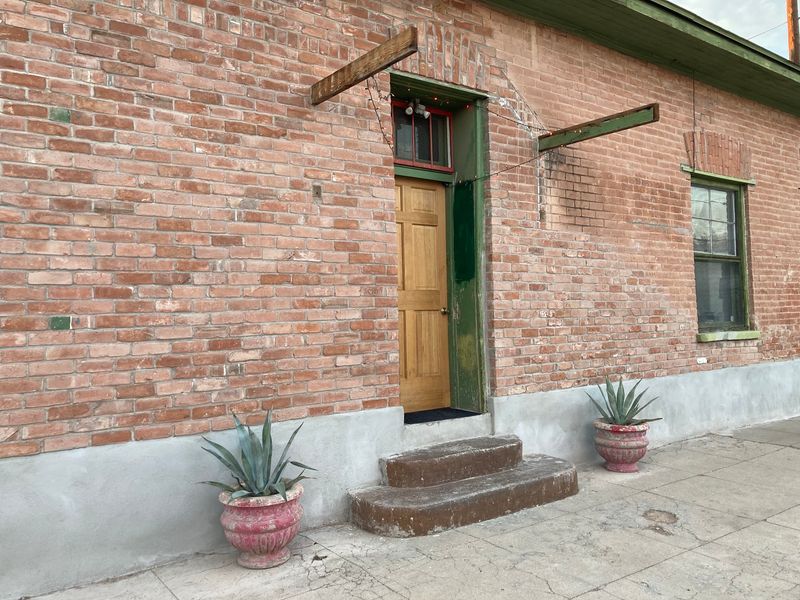
Here is a bit of trivia worth pulling out at the next family gathering. Arizona’s first synagogue still stands in Tucson, and it now houses the Jewish History Museum.
The building is one of the cultural draws associated with Barrio Viejo, and it adds a layer many people do not expect. Tucson’s early history was shaped by a wide mix of communities, and this museum helps tell part of that broader story.
The synagogue dates to the early 1900s, which places it firmly in the era when Arizona was making the jump from territory to state. Its survival alone makes it a notable piece of the state’s heritage.
Museum visits here tend to feel reflective rather than rushed. Exhibits focus on Jewish history and experience, connecting local stories with larger themes.
Pairing this stop with a walk through the painted adobes gives a fuller picture of old Tucson. The city grew through many hands, languages, and traditions, and that diversity shows up in its buildings.
Hours and admission can change, so checking with the museum directly before heading over is the smart move.
A few blocks of history can hold a surprising amount of perspective. Next up, a former firehouse proves Tucson’s creative streak is just as strong as its historic one.
Contemporary Art Inside an Old Firehouse
Fire trucks once rolled out of this building, and now modern art rolls in. The Museum of Contemporary Art in Tucson occupies a converted firehouse, making it one of the more creative reuses of a civic building in the state.
Its presence near Barrio Viejo creates a fun contrast. Centuries-old building traditions sit just a short distance from exhibitions focused on art being made right now.
That mix appeals to a wide range of people. History lovers get their adobe fix in the barrio, while art fans can round out the day with something bold and current.
Contemporary art museums typically rotate their exhibitions, so each trip can offer something different from the last. That makes the museum a reason to come back to the neighborhood more than once.
The firehouse setting adds its own charm. Old civic architecture and new ideas share the same space, echoing the way the surrounding area blends past and present.
As with any museum, schedules and admission details can shift. A quick check of the museum’s own information before leaving home saves a wasted drive.
Between the shrine, the synagogue, and the firehouse, the cultural stops are covered. Now comes the part that locals arguably love most: simply wandering.
The Art of the Slow Stroll
Nobody rushes through Barrio Viejo, and nobody should. The neighborhood rewards a slow pace, with details that only show up when the walk turns into an unhurried ramble.
A doorway here, a window frame there, a wall with decades of patched repairs. These small things add up to a sense of place that a quick drive-by simply cannot deliver.
The atmosphere is relaxed and residential rather than touristy. Neighbors come and go, and daily life carries on around anyone taking in the scenery.
Several types of people tend to fall hard for this area. Photographers, architecture fans, history buffs, and Arizona families looking for an easy, low-cost outing all find something to enjoy.
Couples looking for a laid-back date afternoon also do well here. A stroll, a museum, and a meal can fill a day without any need for a big itinerary.
Good manners keep the neighborhood welcoming. Staying on public sidewalks, keeping noise down, and respecting private property all matter, since these homes are not props.
A camera helps, but patience helps more. And after enough wandering, even the most dedicated history fan will start thinking about where to sit down and refuel.
Where the Neighborhood Gathers to Eat
Good walks deserve good meals, and the area around Barrio Viejo delivers. The neighborhood is known for Mexican restaurants, many of them tied closely to the cultural roots of the barrio itself.
Tucson takes its Mexican food heritage seriously, and eating near the old neighborhood feels like a natural extension of the history lesson. These spots are part of the local identity, not an afterthought.
Beyond the Mexican kitchens, the surrounding area has grown a lively collection of retro-style gathering spots. That mix of old and new mirrors the rest of the district, where tradition and fresh energy share the same streets.
For Arizona locals, this is one of those parts of Tucson worth planning a whole day around. A morning of wandering flows easily into a leisurely lunch or an early dinner.
Popular places can get busy, especially on weekends. Arriving a little ahead of the usual mealtime rush usually makes for a calmer experience.
Menus, hours, and offerings vary from place to place, so checking ahead with specific restaurants is always wise. That small step helps avoid showing up to a closed door.
With appetites handled, a few practical details can make the whole outing even smoother.
Practical Notes for a Smooth Visit
Good news for budget-minded Arizonans: strolling the streets of Barrio Viejo costs nothing. The neighborhood is made up of public streets, so there are no gates, entry fees, or set opening hours for simply walking around.
The cultural stops are a different story. The Jewish History Museum and the Museum of Contemporary Art each keep their own schedules and admission policies, so confirming details directly before visiting is the best plan.
Getting there is straightforward for anyone familiar with Tucson. The barrio sits just south of downtown, which makes it easy to combine with other downtown errands, events, or sightseeing.
Timing matters in southern Arizona. Mornings and the cooler months tend to make walking far more pleasant, while midsummer afternoons can be tough on even seasoned desert dwellers.
Water, sunscreen, and a hat are smart companions year-round. Comfortable walking shoes also help, since the best way to see the neighborhood is on foot.
Because people live in these homes, early mornings and evenings call for extra courtesy. Keeping voices low and giving residents space keeps the area welcoming for everyone.
With the basics sorted, the only question left is whether the trip is worth making. Spoiler: it is.
Why Old Tucson Still Lives Here
Plenty of places call themselves historic, but few manage to stay this lived-in. Barrio Viejo remains a real neighborhood, and that is what gives it such lasting pull.
The painted adobes carry the story of early Tucson right to the sidewalk. The wishing shrine keeps a local tradition alive through candles and folded notes.
Nearby, Arizona’s first synagogue and a firehouse turned art museum widen the lens. Together, they show a city shaped by many communities and constantly finding new uses for old spaces.
For Arizona locals, the appeal goes beyond pretty photos. There is real pride in knowing that one of the Southwest’s most distinctive historic districts sits just south of downtown Tucson.
It is the kind of outing that works for a solo wander, a family day, or a visit with friends from out of state who need convincing that Arizona has deep roots. No ticket, no rush, and no script required.
A few hours here will not cover every story these walls could tell. That is part of the charm, and it is exactly why so many Tucsonans keep coming back.
Next time the urge for real old Tucson strikes, skip the replicas and head for the painted adobes. The neighborhood has been waiting patiently for well over a century.