
Affiliate disclosure: As an Amazon Associate I earn from qualifying purchases. Learn more
Some buildings are old, and then there is one small adobe chapel in Southern California that still holds parts of its walls from 1777. The year the Declaration of Independence was signed, a mission was being founded on the West Coast, and it is still open to the public today.
It has survived a major earthquake, centuries of rebuilding, and a flock of famous birds that inspired a hit song. Keep reading to learn its story, what to see on the grounds, and the simple tips that make a visit easy.
A 1776 Landmark on Old Mission Road
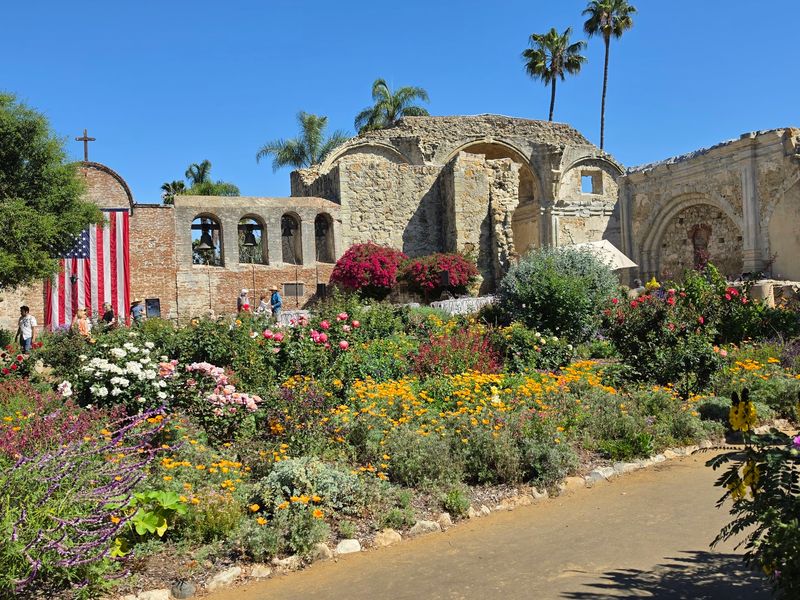
Mission San Juan Capistrano sits at 26801 Old Mission Rd, San Juan Capistrano, CA 92675, in Orange County, California, United States. It was founded in 1776, and in 2026 it marks 250 years.
Today the site works as both a historic Spanish mission and a museum. Exhibits, artifacts, cultural events, and a gift shop share space with gardens and ruins.
The mission is part of the chain of Spanish missions that stretches along the California coast. It is often called the seventh mission in that chain.
Its reputation is hard to argue with, given its 4.8 star standing across more than 5,000 opinions online. Many people remember it from elementary school, when a mission report was a rite of passage for California kids.
That tradition is still going strong. School groups remain a common sight, and some grandparents now bring grandchildren who are building their own model missions for class.
The location also makes it an easy stop for travelers. It sits on a convenient route toward Laguna Beach, so a history break fits neatly into a coastal day.
So what makes one small chapel here so special? The answer starts with a priest, a very old altar, and walls that refused to give up.
Serra Chapel, Still Standing Since 1777
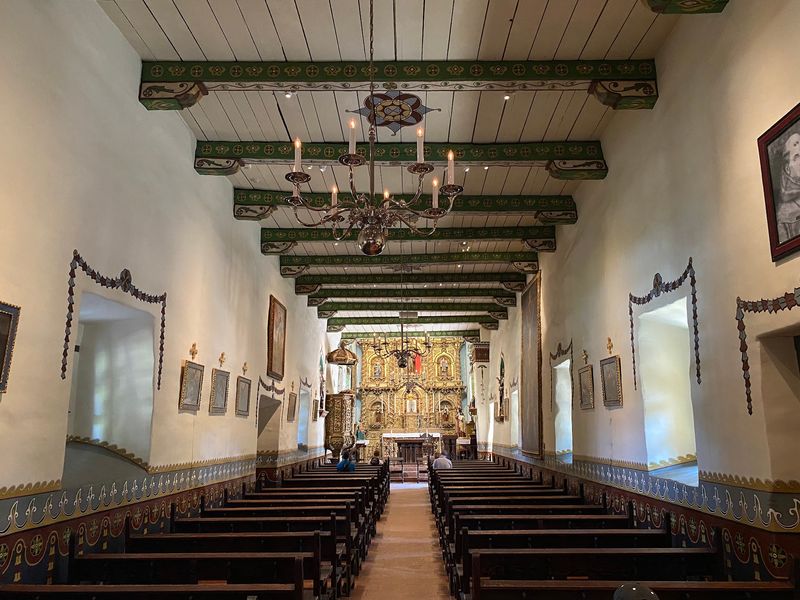
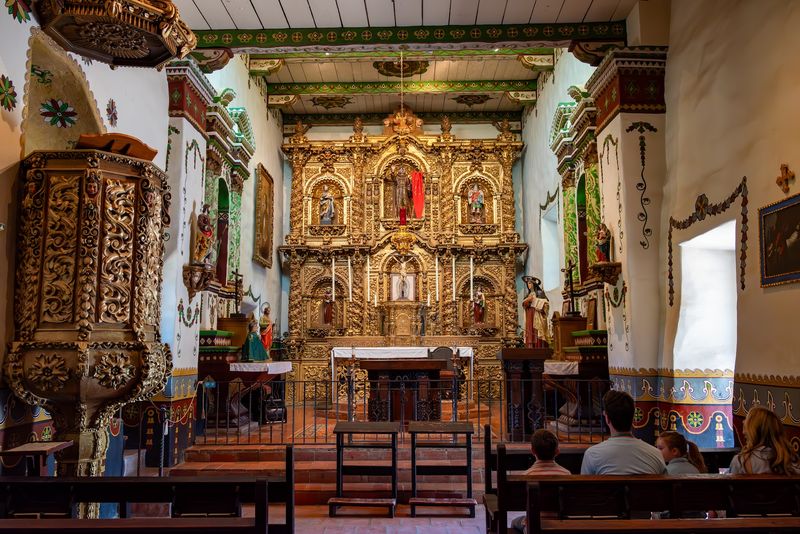
California has plenty of historic sites, but only one can claim the oldest building still in use. That title belongs to the Serra Chapel, with portions dating back to 1777.
The chapel is named for Father Junipero Serra. In October 1783, he confirmed 213 people over just two days here.
Its altar has quite a travel record of its own. It was brought from Barcelona around 1806.
Like much of the mission, the adobe structure has been rebuilt over time. Natural disasters were the main reason, and the repairs are documented on site.
That honesty about its history is part of the appeal. The signs explain what is original, what was restored, and why.
The chapel is widely described as a beautiful and calm place. Many people treat it as a spot for quiet reflection or prayer.
Mass is still held at the mission, so it remains a working place of worship. Arriving early for services is wise, because seating and parking fill quickly.
A room from the 1770s that still hosts gatherings is rare anywhere in the country. Here, it is simply part of the tour.
The Great Stone Church Ruins
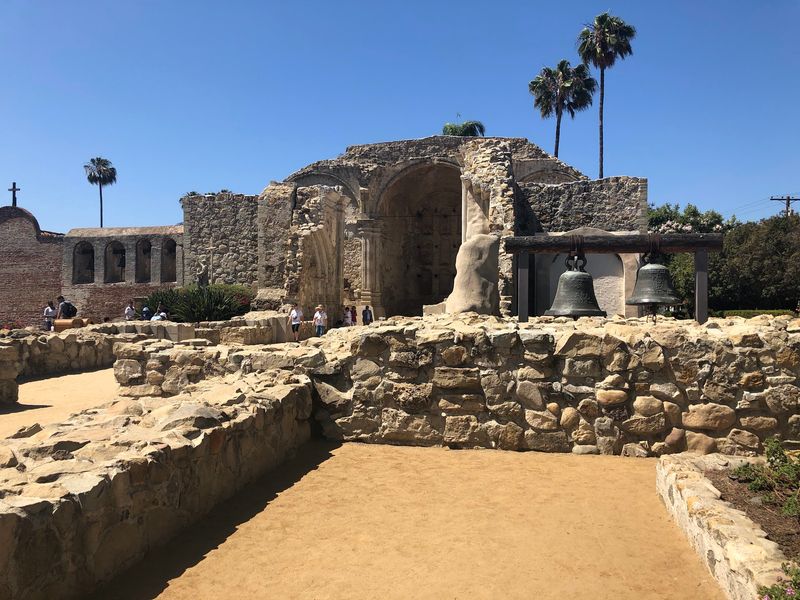
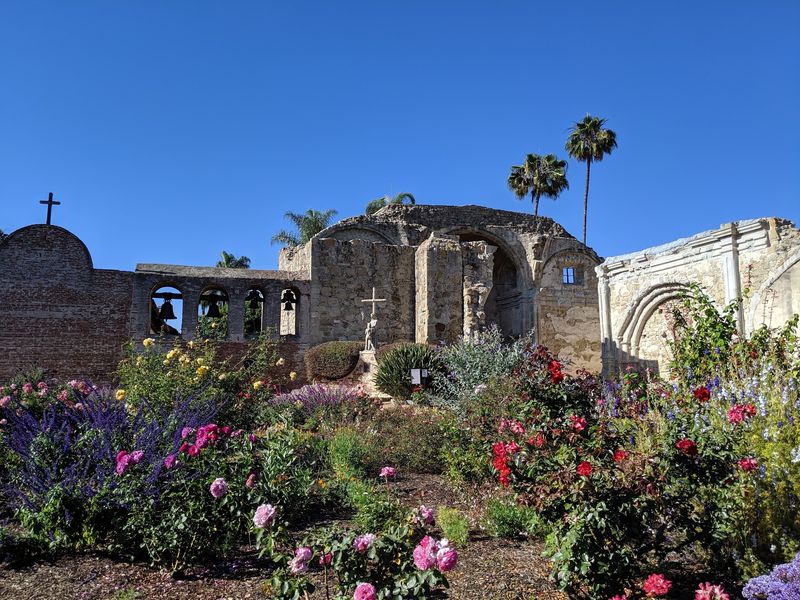
Some of the most talked-about architecture on the grounds has no roof at all. The Great Stone Church stands as ruins, the remains of the 1812 earthquake.
Open-air walls and empty timber holes invite people to fill in the blanks. It is easy to spend time guessing how the full church once looked.
The ruins also show how building methods changed across generations. Adobe, exposed brick, wooden beams, and stone all appear around the property.
That mix gives the mission a layered feel. It can seem like three or four sites combined into one visit.
Some of the most interesting spots are where one style meets another. The preservation work leaves those seams visible instead of hiding them.
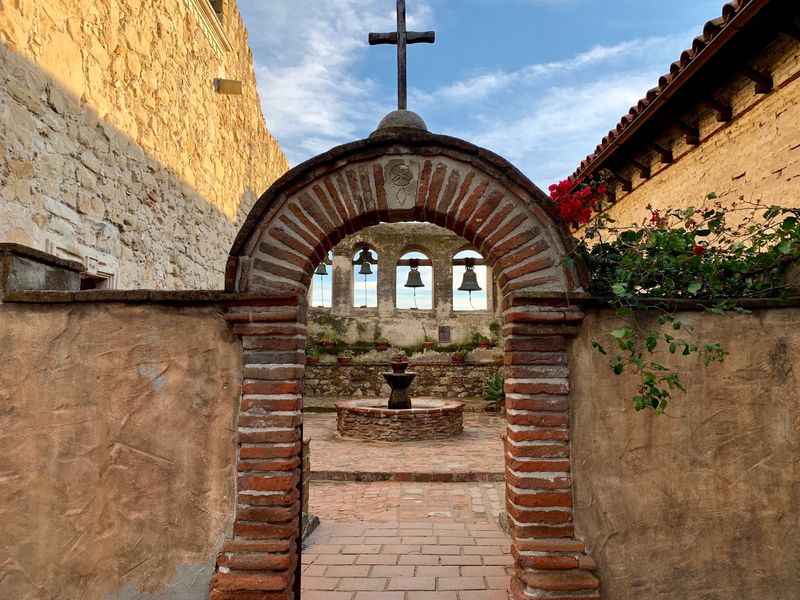
Near the ruins, the original bell towers and older buildings help tell the story of the mission’s early decades. Historic markers point out key locations along the way.
Photographers tend to gravitate here, and for good reason. Broken arches against the sky make a strong frame.
An earthquake took down the roof, but it could not take down the story. That tale continues with four bells that still have work to do.
Bells, Swallows and a Famous Song
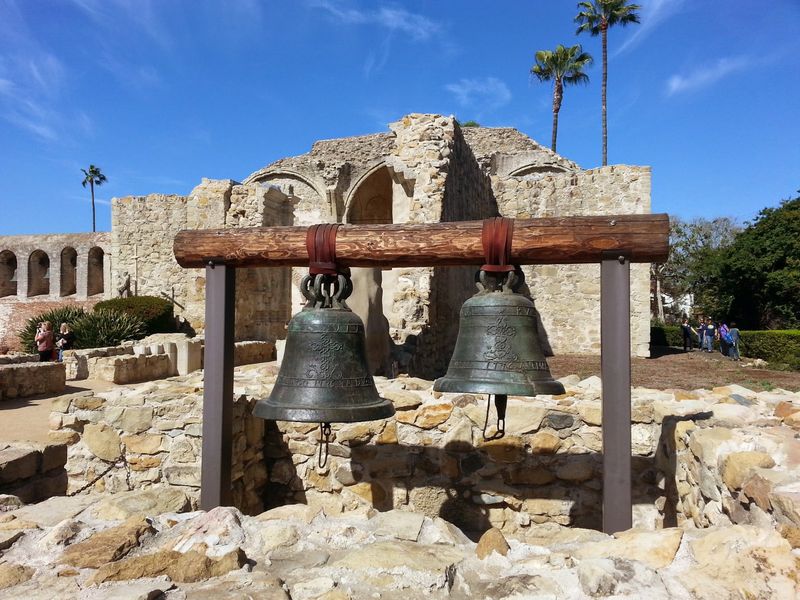
Every morning at 9 AM, four historic bells ring out across the mission. Two are original, and two are replicas.
The damaged originals were not thrown away. They are preserved on site for people to see.
The bells are closely tied to another local legend: the swallows. The St. Joseph’s Day Return of the Cliff Swallows is one of the best known events here.
The celebration has grown into a full day of pageantry. Mariachis, parish school performers, military recognition, and bell ringing all play a part.
Fair warning, the birds do not always cooperate. Some years the festivities go on with few swallows in sight, and the crowd still has a great time.
The story has traveled far beyond Orange County. Leon Rene’s 1939 song “The Swallows Come Back to Capistrano” made the tradition famous.
It also shows up in the book Capistrano Nights and in silent-era Hollywood work linked to Mary Pickford and D.W. Griffith.
Paintings of these scenes followed too.
Not bad for a few feathered commuters. The birds may be fickle, but the bells show up on time every day.
Gardens, Koi Ponds and a Fountain Courtyard
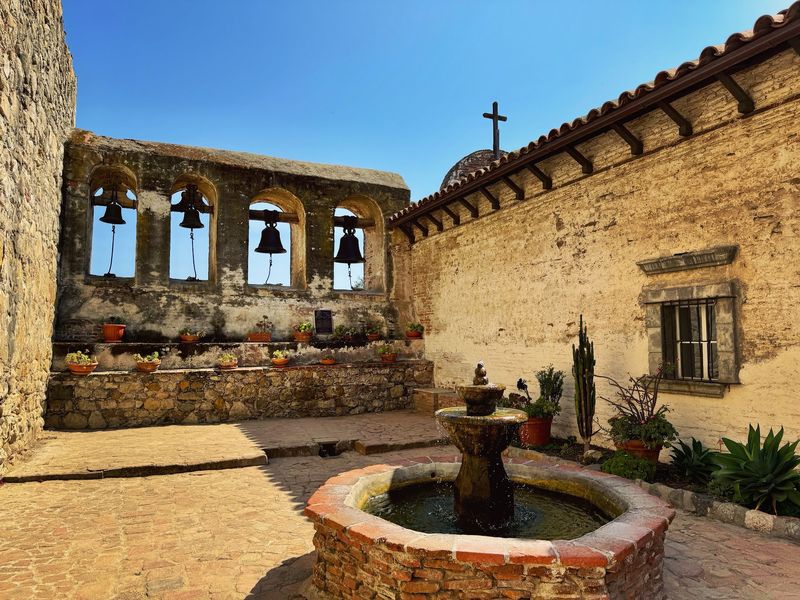
History buffs come for the chapel, yet plenty of people leave talking about the plants. The gardens are one of the most mentioned features of the mission.
Succulents, rose bushes, native plants, and flowering beds fill the grounds. Colorful blooms appear in many corners.
Water features add another layer. Ponds hold large koi and goldfish, which tend to steal attention from younger guests.
The gardens also attract wildlife, adding to the calm mood. Birds and other small creatures are regular residents.
A vegetable garden is part of the grounds as well. It gives a practical glimpse of how the land can be used.
Many describe the whole property as peaceful. Paths are easy to wander, with plenty of places to pause.
The landscaping is well kept, which makes the grounds popular for photography. Couples in formal attire and portrait sessions are a common sight.
There is a catch for anyone planning a shoot, though. The rules around cameras and props are worth reading before packing a tripod.
Tallow Vats and Mission Workshops
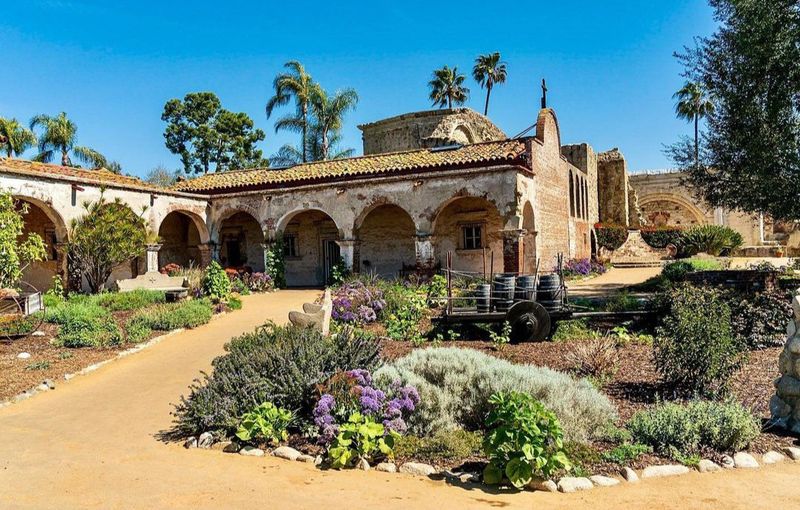
Missions were not only places of worship. They were busy centers of production, and the grounds here make that very clear.
Tallow cooking stoves were excavated as far back as 1935. They are remnants of a time when the mission produced candles, soap, grease, and ointments.
Nearby, an outdoor kitchen area offers a close look at daily routines. It feels like a step back in time without needing a costume.
Displays also cover brick making and other trades from that era. These exhibits show how much work went into keeping a mission running.
The old missionary barracks are another highlight. They help explain where people lived and how the community was organized.
Inside the museum spaces, artifacts, relics, statues, and art add detail. Many find the collection much larger than expected.
Kids might not follow every historical fact. Still, the hands-on feel of these areas tends to keep them interested.
All of this raises a practical question. What is the best way to learn the stories behind each wall?
Audio Tours and a Short Film
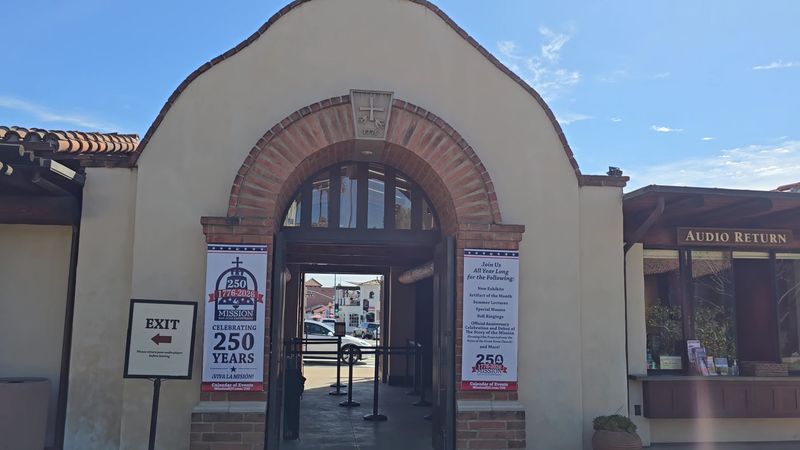
The single most mentioned feature of the mission is not a building. It is the free audio tour.
After paying admission, guests can pick up a handheld device. Numbered stations around the property unlock stories about each room and area.
The audio tour is available in several languages. That makes the history accessible for international travelers and multilingual families.
The details go deep. Some people spend three hours with the guide and still leave with areas unseen.
Not everyone likes holding a device to their ear, and that is fine. A roughly 10 minute film about the mission offers a quicker overview.
Signs and historic markers also explain key sites. Guided tours of the art, statues, and artifacts are another option on some days.
Doing a bit of reading before arriving can help too. A little background makes each stop more meaningful.
Photography rules deserve a mention here. Props and tripods are not allowed without paying a fee, reported at $200, and weddings are not held on site.
Knowing that ahead of time saves disappointment. Casual phone photos, however, are part of most visits.
Hours, Tickets and Parking Tips
A little planning goes a long way here. The mission is open Tuesday through Sunday from 9 AM to 5 PM and closed on Mondays.
Admission has been reported at around $18 to $20 per person. Discounts are available for seniors, and other discounts are worth checking on the official website.
Budget time generously. Arriving in the early afternoon may not leave enough hours to see everything before closing.
Parking takes some strategy. Street parking right in front is limited, but public lots nearby are within easy walking distance.
Crowds can fill spots quickly, especially around services and events. Arriving early is the simplest fix.
The train is another handy option. Riders coming from places like Oceanside can walk a short distance from the station to the mission.
Weather is rarely a deal breaker. On rainy days, umbrellas have been provided for guests to use.
Save time for the gift shop before heading out. It is large, organized, and offers a wide variety of items at fair prices, though history lovers may wish for more books.
There is even more to explore nearby. Around ten adobes from the late 1700s remain in the area, some just down the street.
Worth the 250-Year Wait
Few places let a family trip double as a history lesson without anyone groaning. This mission pulls it off with gardens, ruins, bells, and a chapel older than the country’s first birthday.
It suits many kinds of travelers. Students on field trips, couples seeking quiet, photographers, and returning locals all find a reason to come.
Families with small children should know the audio content is detailed. The ponds and open paths help keep little ones busy.
People of faith will appreciate the working chapel and the shrine to St. Peregrine. Architecture fans will enjoy tracing centuries of building styles side by side.
Many who return after decades say the place feels just as meaningful as it did in childhood. Some bring their own grandchildren now.
The mission is not free anymore, as older fans sometimes note. Still, admission helps preserve the grounds for the next generation.
Bring comfortable shoes, allow a few hours, and check the calendar for swallow season. The 9 AM bells are a fine reason to arrive right at opening.
After 250 years, the mission is still welcoming guests. The only real mistake is waiting too long to go.